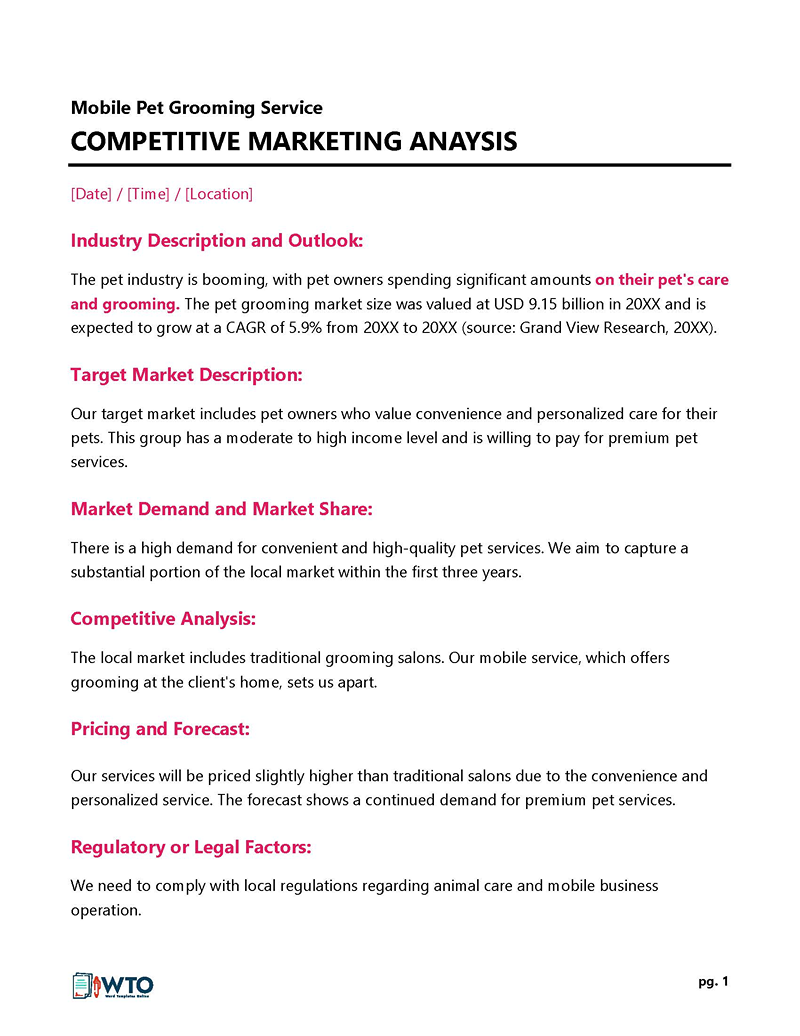
Articles of incorporation are legal documents that bring corporations into existence. They define a corporation’s rights, responsibilities, and structure while also serving as a cornerstone for good corporate governance. They also provide legitimacy and protection as the foundational corporate structure by ensuring compliance with statutory requirements and act as a legal reference for future corporate activities and decision-making. Articles of incorporation are filed with relevant government authorities to identify a company as a separate entity from its owners.
Core Legal Framework
Articles of incorporation are governed by state law. However, specific requirements and procedures included depend on the jurisdiction in which a corporation is being formed. The Secretary of State normally does the filing and is responsible for recording a corporation’s existence, making sure it complies with governing laws, annual reporting, and reviewing and maintaining the incorporation document.
Articles of incorporation also contain mandatory and optional provisions. Mandatory provisions are required by law, and they usually include a corporation’s details, such as the name, purpose, duration, registered office, and share structure information. Filing may be rejected if these provisions are not included in the article.
On the other hand, optional provisions may not be required by law; however, they help strengthen corporate governance and prevent disputes. Such provisions include restrictions on share transfers, defining shareholder rights, etc. Optional provisions also give corporations flexibility to tailor governance.
Essential Sections of Articles of Incorporation
Corporate name
All corporations select unique names that differentiate them from each other in the same jurisdiction. To use names such as banks, insurance, etc., corporations need to get a license first. It is required in most jurisdictions that corporations use suffixes such as Ltd., Inc., etc. to highlight their liability status.
Business purpose
Corporations are formed to serve a purpose, i.e., a general or specific purpose. General-purpose corporations engage in any lawful business, which gives room for corporations to expand. On the other hand, specific-purpose businesses operate in a narrowly defined area, such as a supplier of pharmaceutical products, which is preferred by investors in specialized industries. This section should indicate the purpose of the corporation.
Duration
This section indicates the duration of existence for a corporation being formed. Most corporations choose perpetual duration, meaning continuous existence until formally dissolved. However, some corporations adopt a limited duration, for example, project-specific corporations.
Registered agent and office
All corporations are required to have a registered agent with a physical office in the state where the article of incorporation is formed. The agent will be the official recipient of tax notices, legal documents, and service of process. Failure to designate a registered agent goes against compliance and may lead to the dissolution of a corporation.
Authorized shares
This section specifies the number of classes (i.e., normal or preferred) of shares a corporation is authorized to issue. Some states require information on value per share, while others may not require the same details. Classification of shares provides structure concerning ownership and voting rights.
Incorporator(s)
An incorporator is the one who signs and submits the articles. It could be an individual or an entity. However, they only play a role in the formation stage unless specified otherwise.
Initial directors (if included)
Some states require the articles of incorporation to include the names of the first board of directors. However, sometimes directors are appointed later at an organizational meeting through the incorporator’s actions.
Limitations of liability and indemnification
Many states allow corporations to protect directors and officers from liability through corporate actions except in cases such as fraud, unlawful conduct, or gross negligence. Also, indemnification clauses allow a corporation to compensate its directors or officers for costs incurred while defending lawsuits that affect their role. However, these provisions vary from state to state.
Compliance and Filing Considerations
Filing process review
Filing involves typically four steps:
- Submission – The incorporator submits the article to the relevant governing authority, such as the Secretary of State, via online submission, mail, or in person, depending on state requirements.
- Review – The governing authority then reviews the filing to see if it complies with statutory requirements, such as name, payment of fees, availability, etc.
- Approval – Once the governing authority approves the article, it is stamped and recorded. Thereafter, a Certificate of Incorporation is issued, and the corporation becomes legally existent.
Common rejection issues
Articles are often rejected due to underpaid or unpaid filing fees, missing mandatory provisions such as business purpose, using existing corporate names, missing signatures from incorporators, and conflicts with statutory requirements.
Amendments and restated articles
When changes are made, for example, increasing shares or changing the name, corporations are required to amend their articles to reflect those changes. The amendment process begins with board approval, followed by shareholder approval, and finally filing with the governing authority.
Alignment with bylaws and shareholder agreements
The legal foundation provided by articles of incorporation, bylaws, and shareholder agreements governs its internal operations. Bylaws outline operational procedures, such as meeting protocols, while shareholder agreements establish rights and responsibilities among owners, including voting rights and dividend policies.
Comparison Across Templates
Article of incorporation templates differ in structure due to differing requirements by different states. For example, countries in the USA may require par value information, while in countries like Kenya, share par value information is not a requirement.
Certain states offer flexibility to corporations by allowing them to customize an article of incorporation template, which can include optional provisions such as multiple share classes and indemnification. However, some states only allow the use of standard templates with little modification, which promotes uniformity.
Our collection of templates is designed to help readers choose one that best suits them by comparing the various templates offered and identifying the ones that are most appropriate for their specific requirements and jurisdiction.
Article of Incorporation Template 01

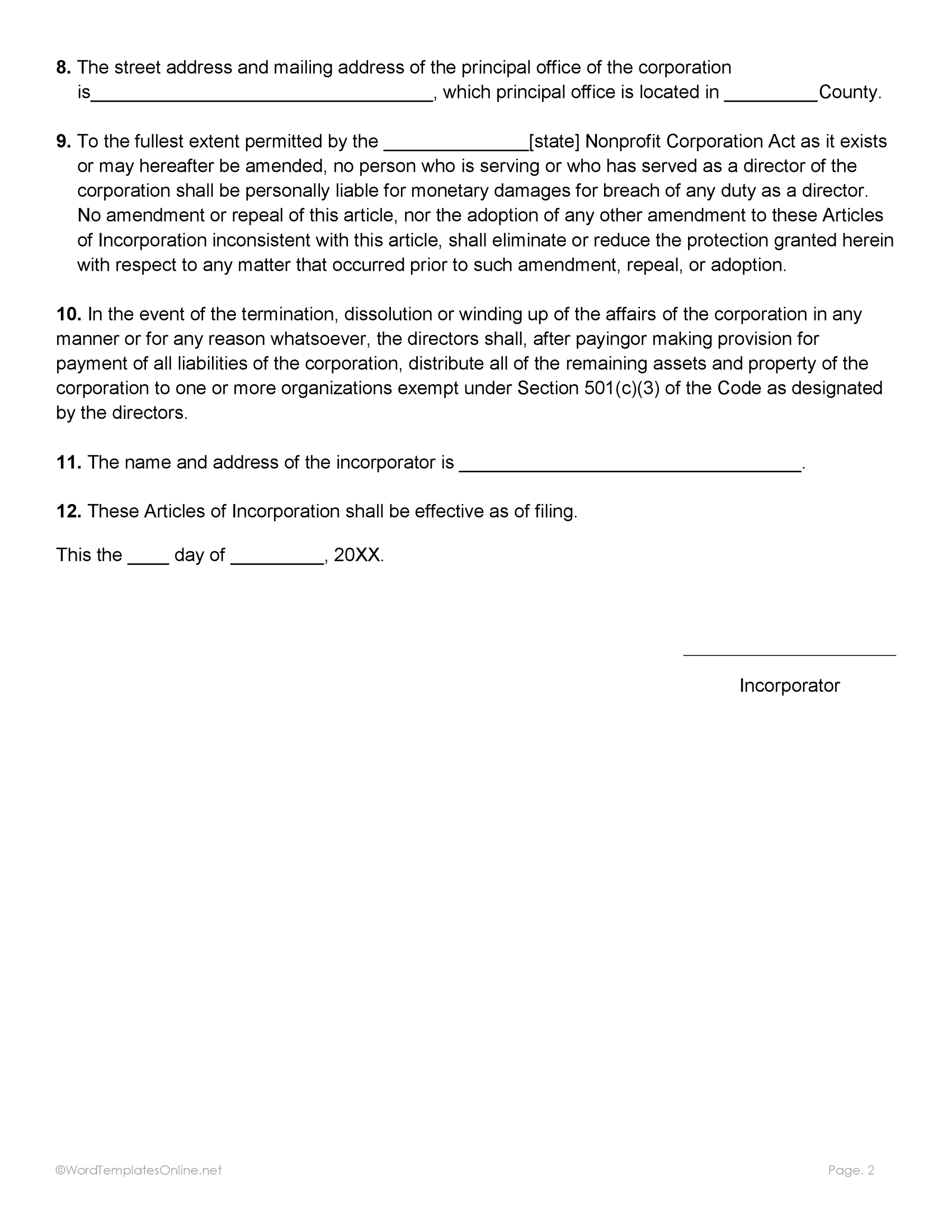
Article of Incorporation Template 02
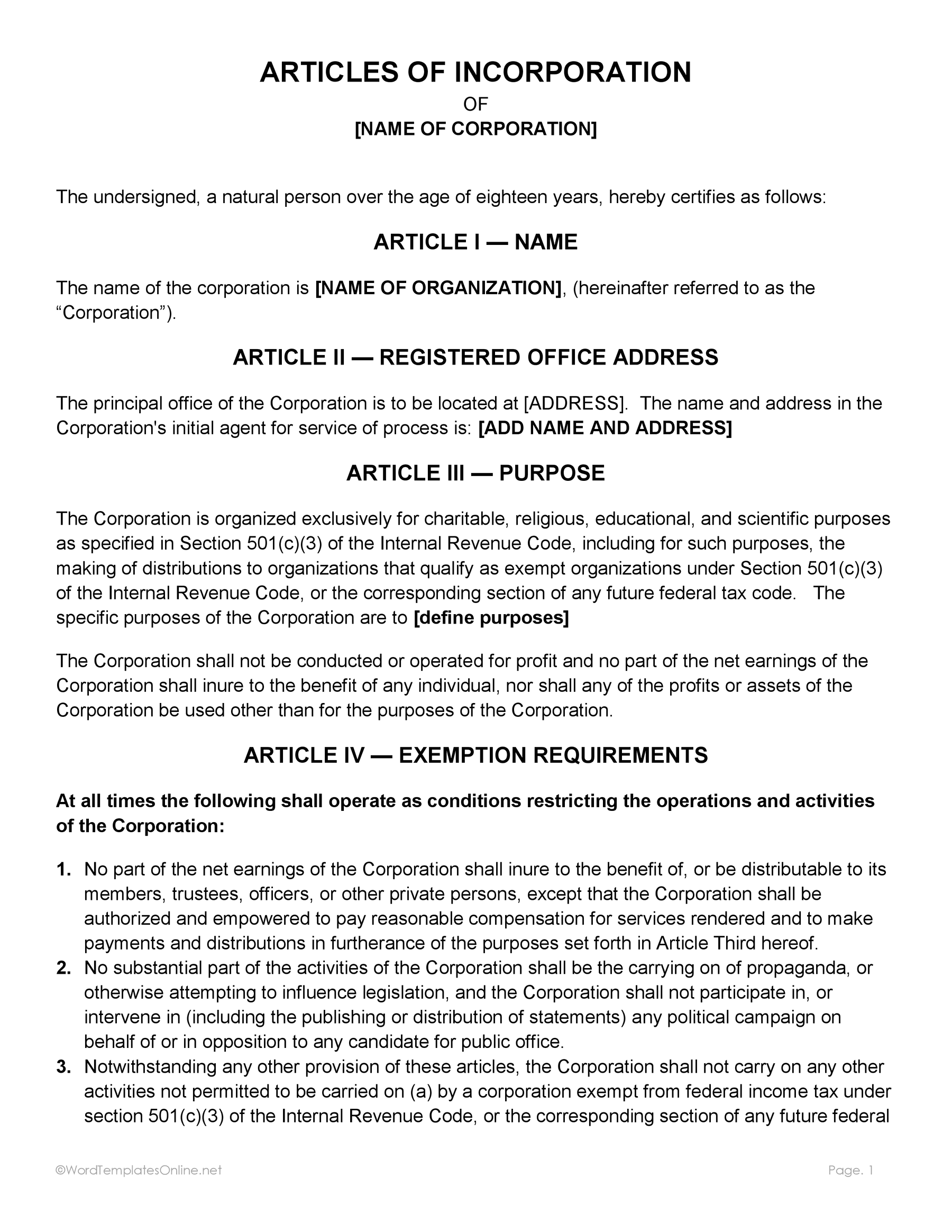
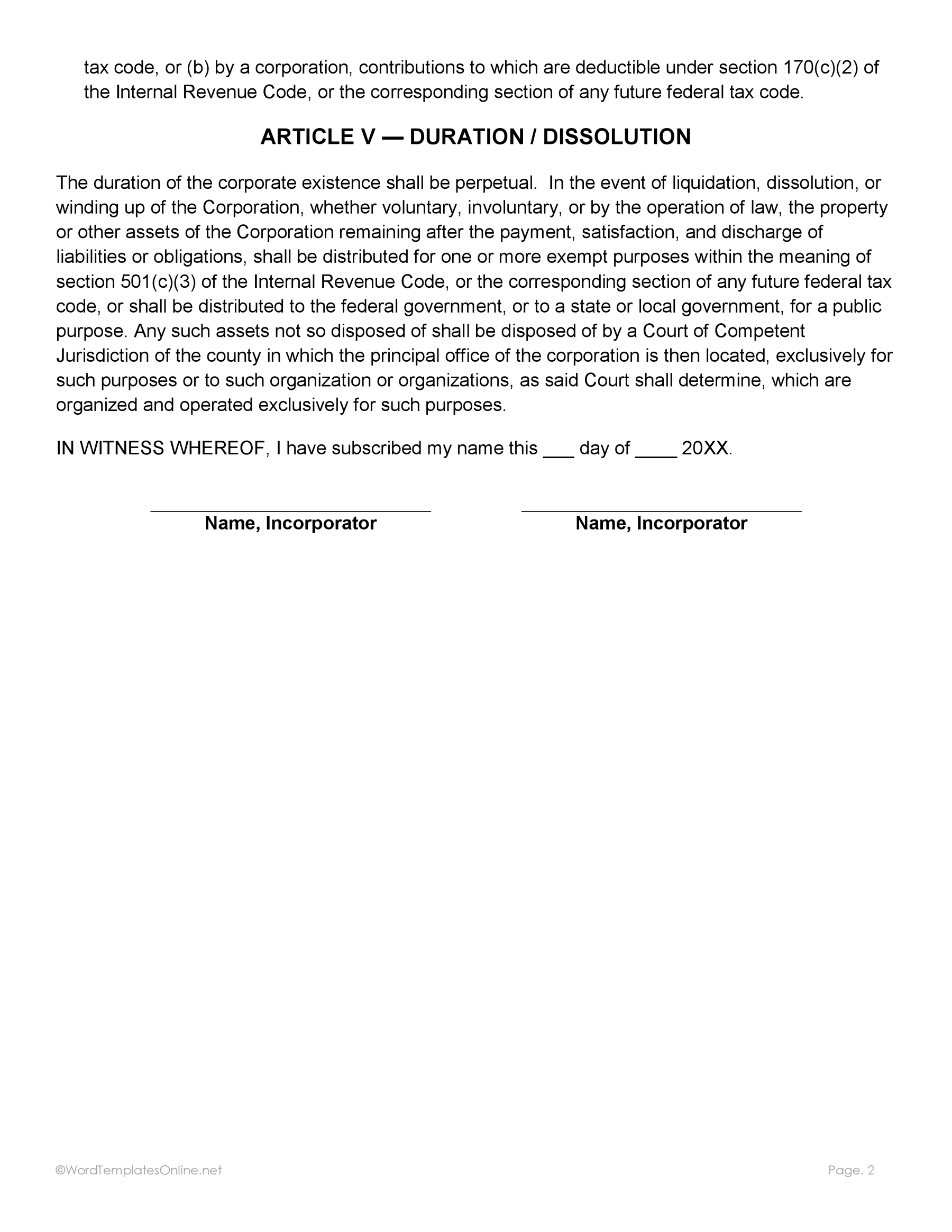
Article of Incorporation Template 03
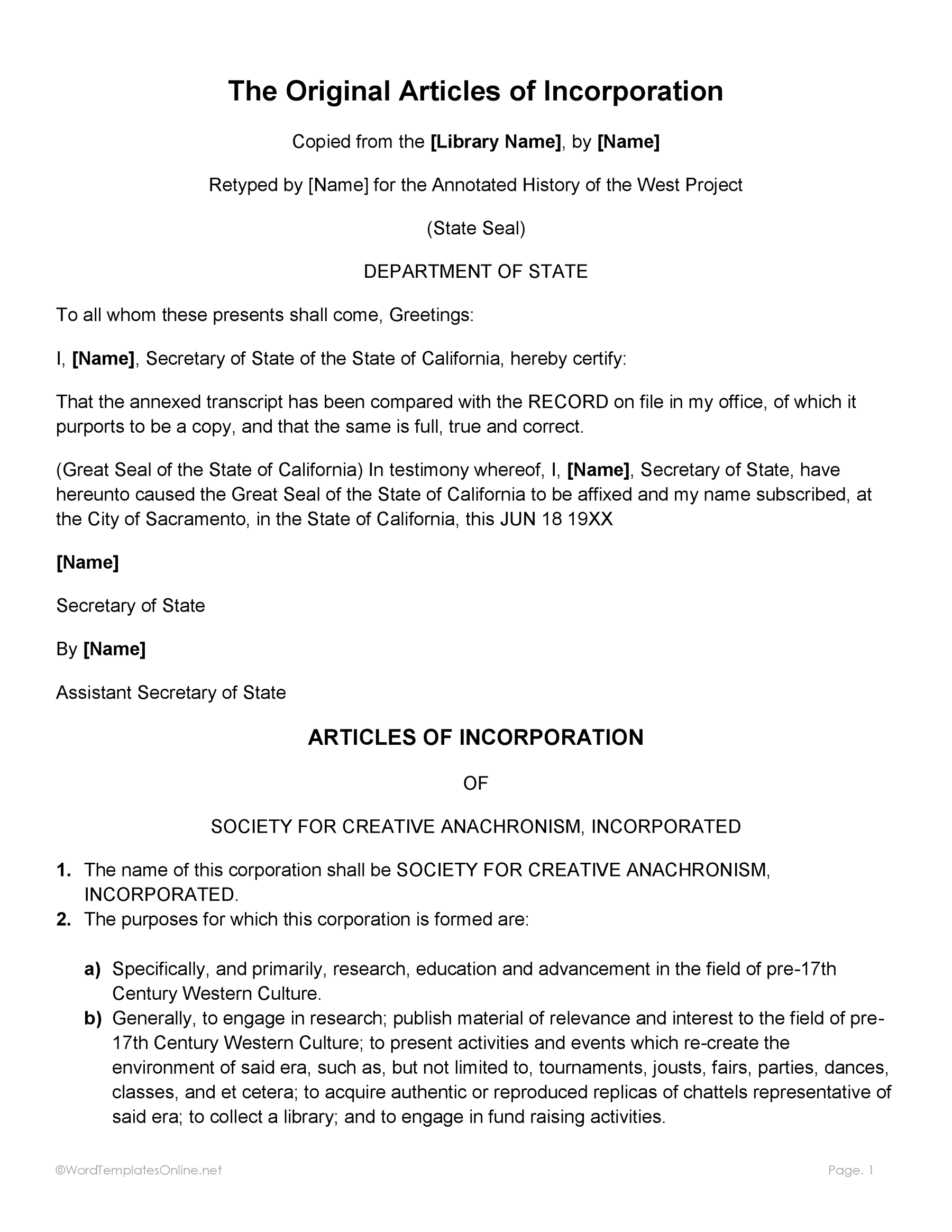
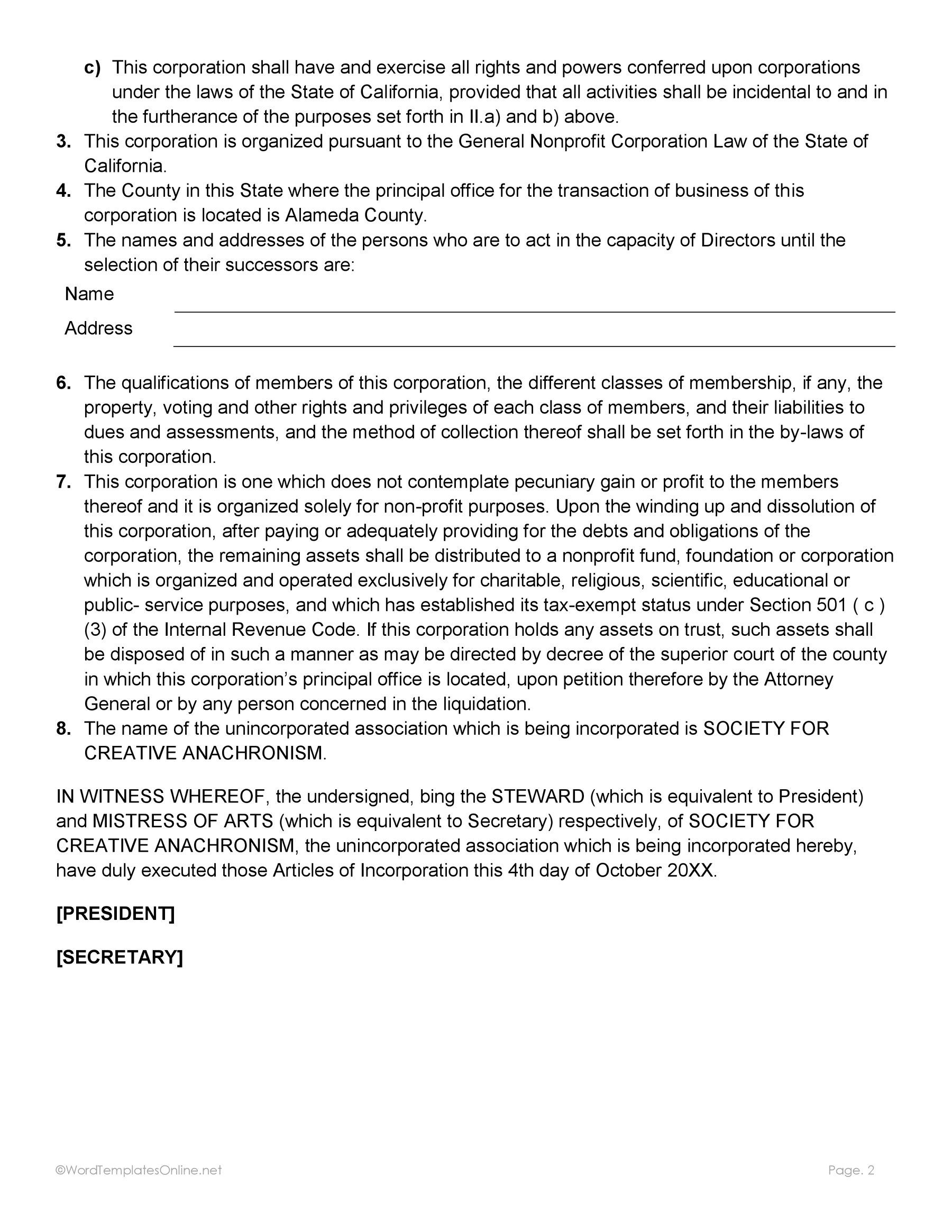
Article of Incorporation Template 04
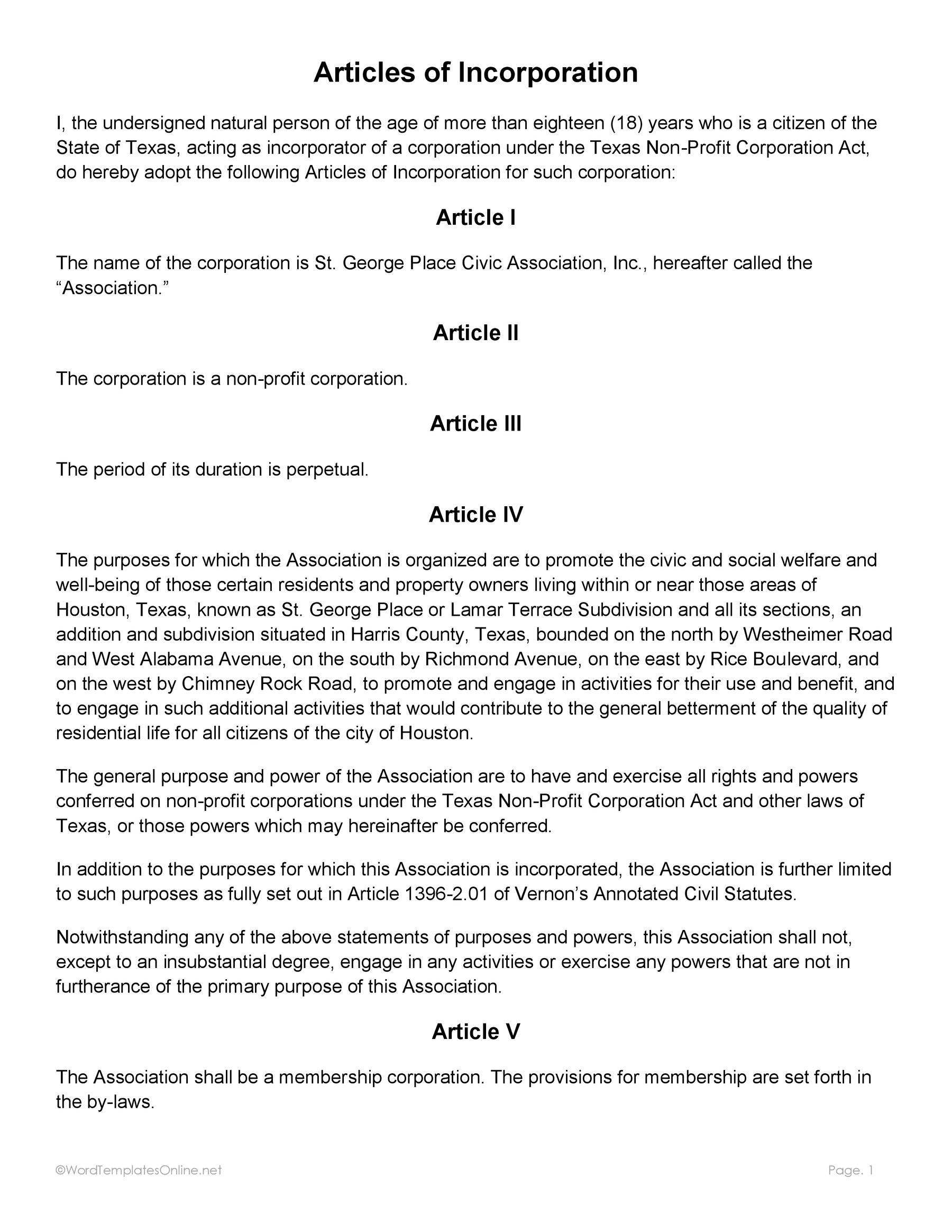
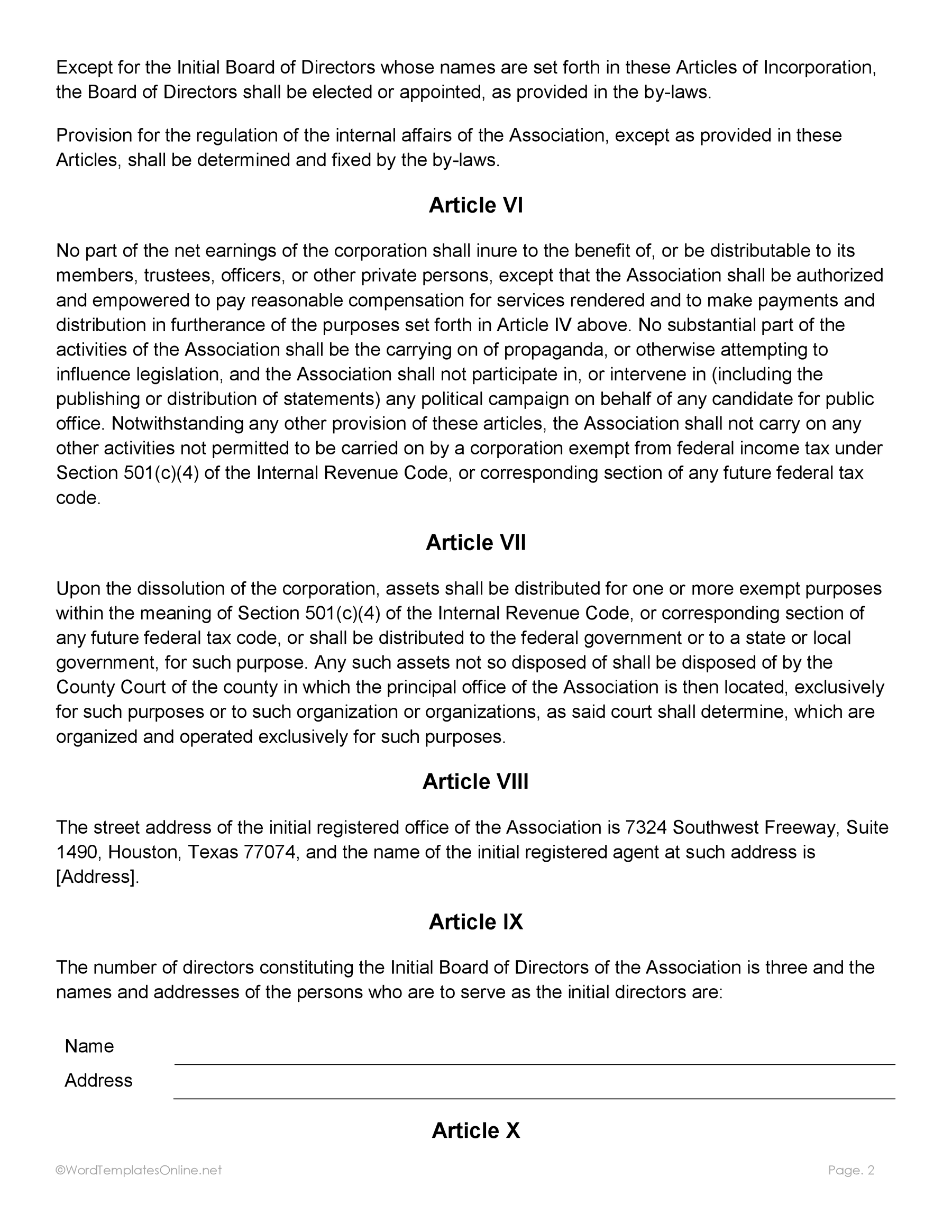

Article of Incorporation Template 05


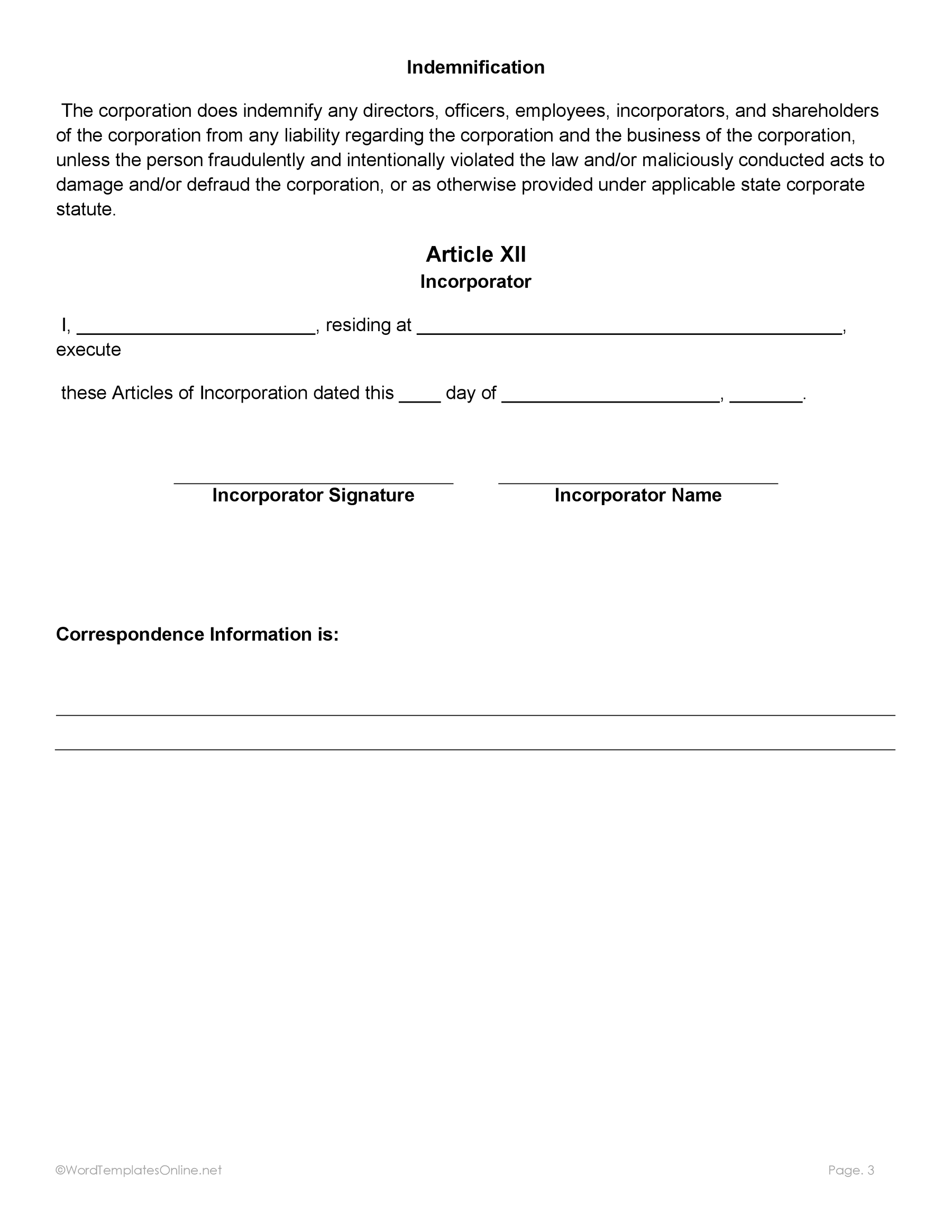
Article of Incorporation Template 06
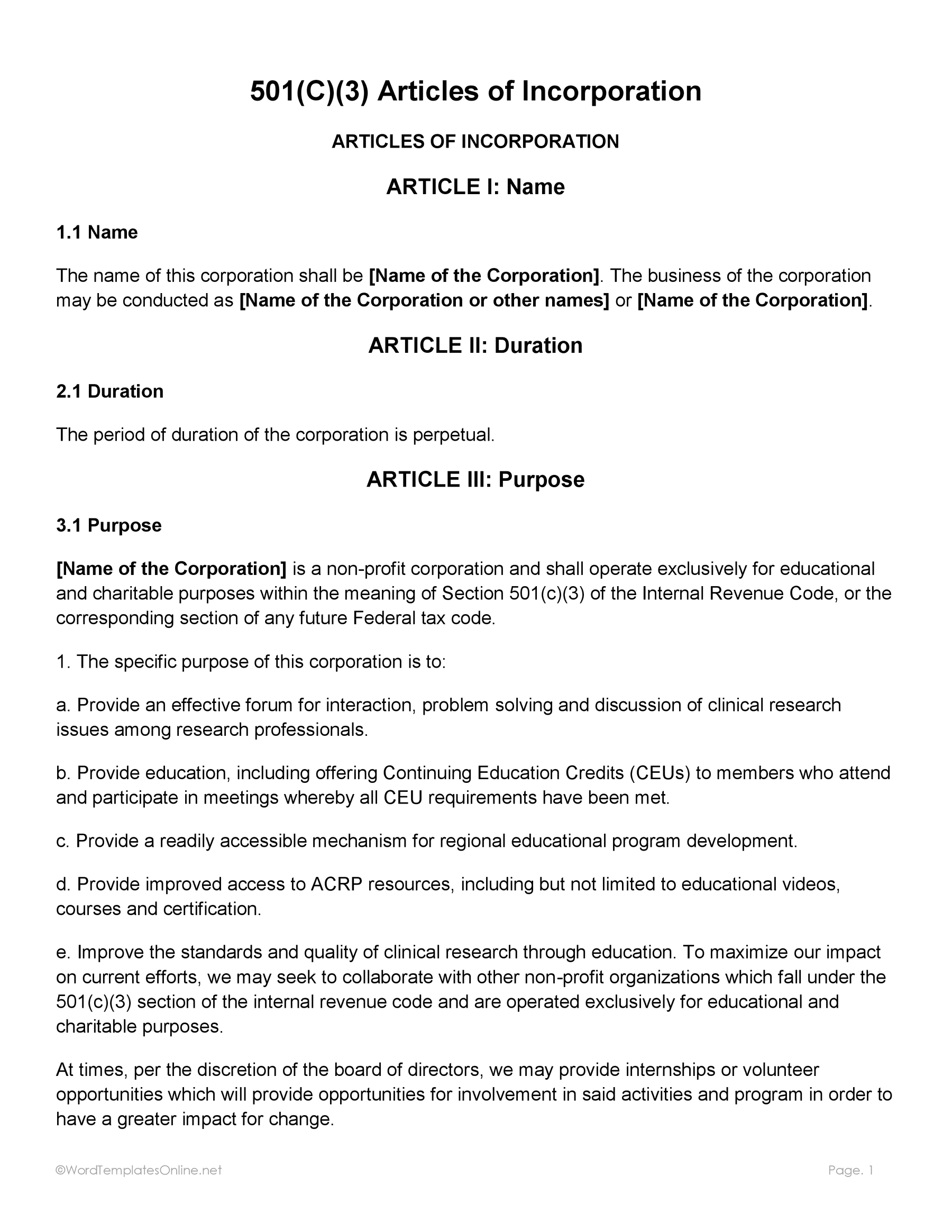

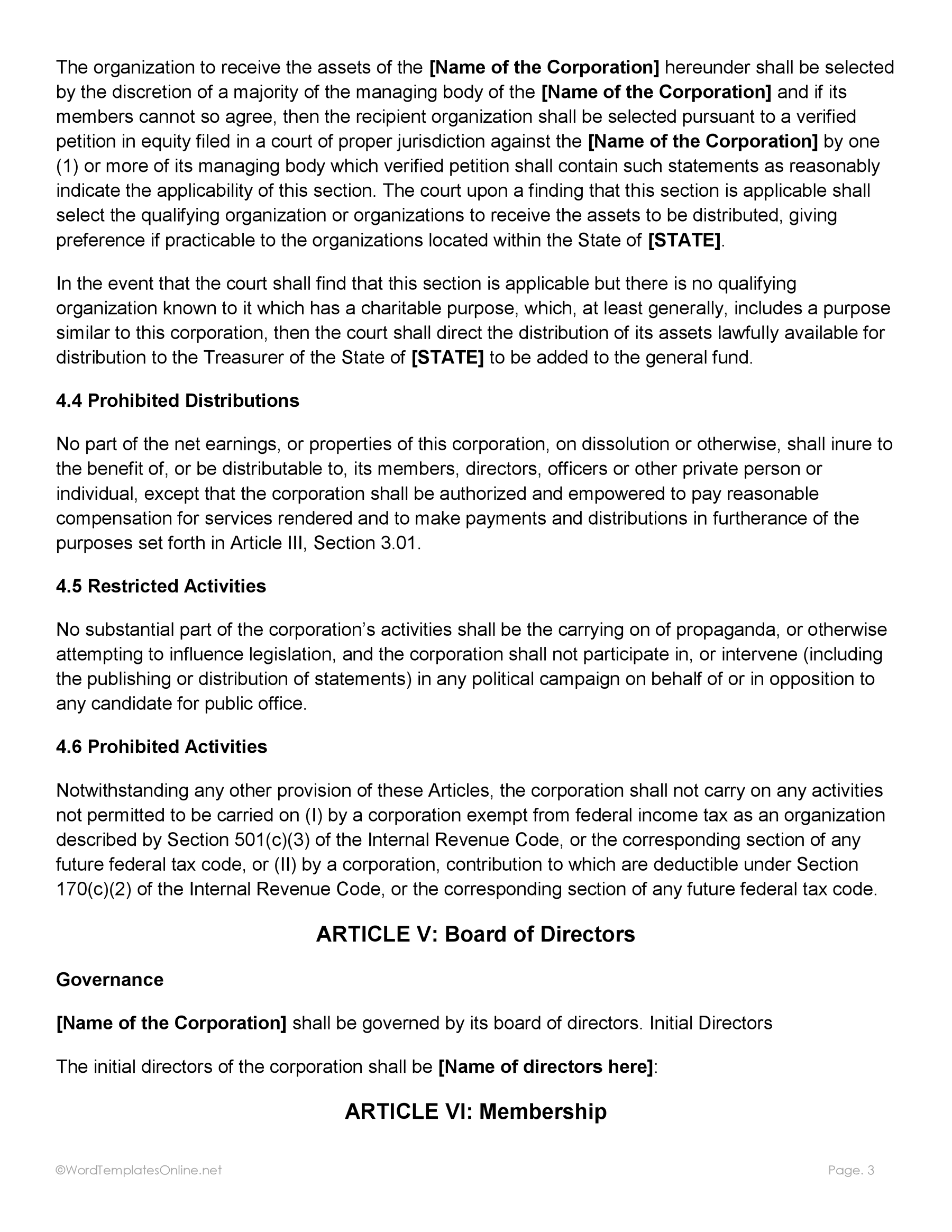

Articles of Incorporation Vs. Other Founding Documents
| Document | Users | Purpose | Filing Requirement | Key Components |
|---|---|---|---|---|
| Articles of Incorporation | Corporations | Establishes a corporation as a legal entity | Filed with governing authorities like the Secretary of State | Corporate name, purpose, share structure, registered agent, and liability clauses |
| Bylaws | Corporations | Establishes rules for legal governance | It is an internal document (no filing with the state) | Voting rules, meeting procedures, director elections, and officer duties |
| Shareholder Agreements | Private Corporations | Protects shareholder rights and regulates ownership relations | It is a private agreement shared among shareholders | Dividend policies, voting rights, exit strategies, and share transfer restrictions |
| Operating Agreements | Limited Liability Companies | Governs management, ownership, and operations | It is an internal document and is only filed when required by the state | Dispute resolution, profit distribution, management structure, and member contributions |
An article of incorporation, as the constitution, provides the legal and structural framework for the corporation. Also, the operating agreement, as a bylaw, regulates management and internal operations, while a shareholder agreement, as a contract, guarantees equitable and consistent ownership relationships.
Practical Guidance for Businesses
- Since requirements differ according to state, choose the correct template that meets your state’s requirements to avoid rejection. Always check with the relevant governing authorities to confirm the latest version.
- Customize the template carefully by including all mandatory provisions such as business name, purpose, registered agent, etc. If applicable, include optional provisions such as share restrictions and, most importantly, make sure you customize the document in alignment with internal documents such as operating agreements, bylaws, and shareholder agreements.
- Always consult legal professionals when expanding operations to different states, when planning to issue multiple classes of shares, when forming a corporation in a complex state, and when including indemnity or liability clauses that will affect shareholders.
- Always amend and review the article when making changes such as changing the company name, increasing shares, expanding the company’s purpose, or any other change. This makes sure that the company still complies with the law.
Conclusion
Articles of incorporation are used when individuals want to bring a corporation into existence legally. It defines its structure by including details such as company name, share structure, purpose, and liability clauses. Their effectiveness depends on alignment with other internal documents, such as bylaws, shareholder agreements, and operating agreements.
The components of the articles of incorporation vary from state to state due to differing requirements. Therefore, it is recommended that individuals seek legal counsel when choosing and customizing an article of incorporation template to make sure it complies with a jurisdiction’s statutory requirements.
About This Article