
Imagine you make a strong vow to change a specific behavior, like maintaining a healthy routine, or to overhaul a bad workplace habit. You’re all enthusiastic and ready to go for a change. The first few days feel like you’re doing great, and after that everything starts slipping.
That’s where a behavioral contract can make a huge difference. Instead of relying on vague promises, “I’ll do it later for sure,” it puts behavior, expectations, timelines, and rewards on paper. But the thing is, how do you know where to put that?
A behavioral contract template gives you a complete structure for turning those intentions into clear actions without any need to do paperwork. So, whether you’re a teacher, parent, coach, or counselor, the right template can help both sides know what needs to happen,
What Makes a Behavioral Contract Actually Work?
A good behavioral contract isn’t about just filling a page with rules; it’s about making the goal so clear that there’s little room for the classic, “OH, I WILL BE BETTER FROM NEXT WEEK” moment. Here’s what makes this contract really work:
- Pick one target at a time, such as hitting the gym or finishing homework before screen time, and make sure to give it full attention.
- Everyone should know the exact definition of a win, so set clear, realistic expectations.
- Skip the overnight miracle expectations and give the plan room to breathe with doable milestones.
- Ditch the cheesy stickers and swap them for perks people care about, like extra downtime or a favorite treat. A positive reward always keeps people going.
What’s Inside a Behavioral Contract Template?
Not all templates are made the same. A good template is designed with care and includes everything you need. Here’s what to look for in a reliable one:
1. The behavior or goal to work on
First, you need to get specific about what needs to change. That’s why this section comes at the top. Instead of “behave better,” try something solid like “complete homework before screen time” or “arrive at school on time.” The more transparent the goal, the easier it is to work toward.
2. When and how often it should happen
A goal needs a schedule, too. This part basically answers the when, where, and how often questions. For instance, whether the behavior should happen every day, three times a day, or during a particular activity.
3. A way to measure progress
Well, no guessing games here. Add a simple way to track progress, such as check boxes, completed tasks, number of successful days, or another right way. This makes improvements easily noticeable.
4. Confidence or commitment check
Now, what does this section mean? It is a quick reality check: “How confident are you that you actually do this?” If the answer is low, the goal needs to be adjusted before anything starts deteriorating.
5. Reward and consequence details
People are doing everything for a change. Here’s the part of the template where the contract answers the big, “What happens if I stick with it?” Make sure you write a meaningful reward for meeting the goal.
Because at the end, the better the reward, the easier it is to achieve the result. If possible, also outline what happens if you don’t follow it, something called negative reinforcement.
6. Review date and reflection
Behavior change isn’t a one-and-done deal. A review date basically gives you a chance to look back, discuss what worked, spot what didn’t, and adjust the plan instead of leaving it to fall apart.
7. Signatures and agreement
This part is important when more than one person is involved. It’s a simple way of saying, “Yep, we understand the plan, and we’re on the same page.”
Behavioral Contracts Aren’t One Size Fits All: The Template Showcase
One behavior contract might go perfectly for a student, while another makes more sense for personal use. In short, it all comes down to who’s using it and where the agreement fits into the picture. That’s why we have designed multiple templates that work for different situations.
Behavioral contract template for health & lifestyle goals
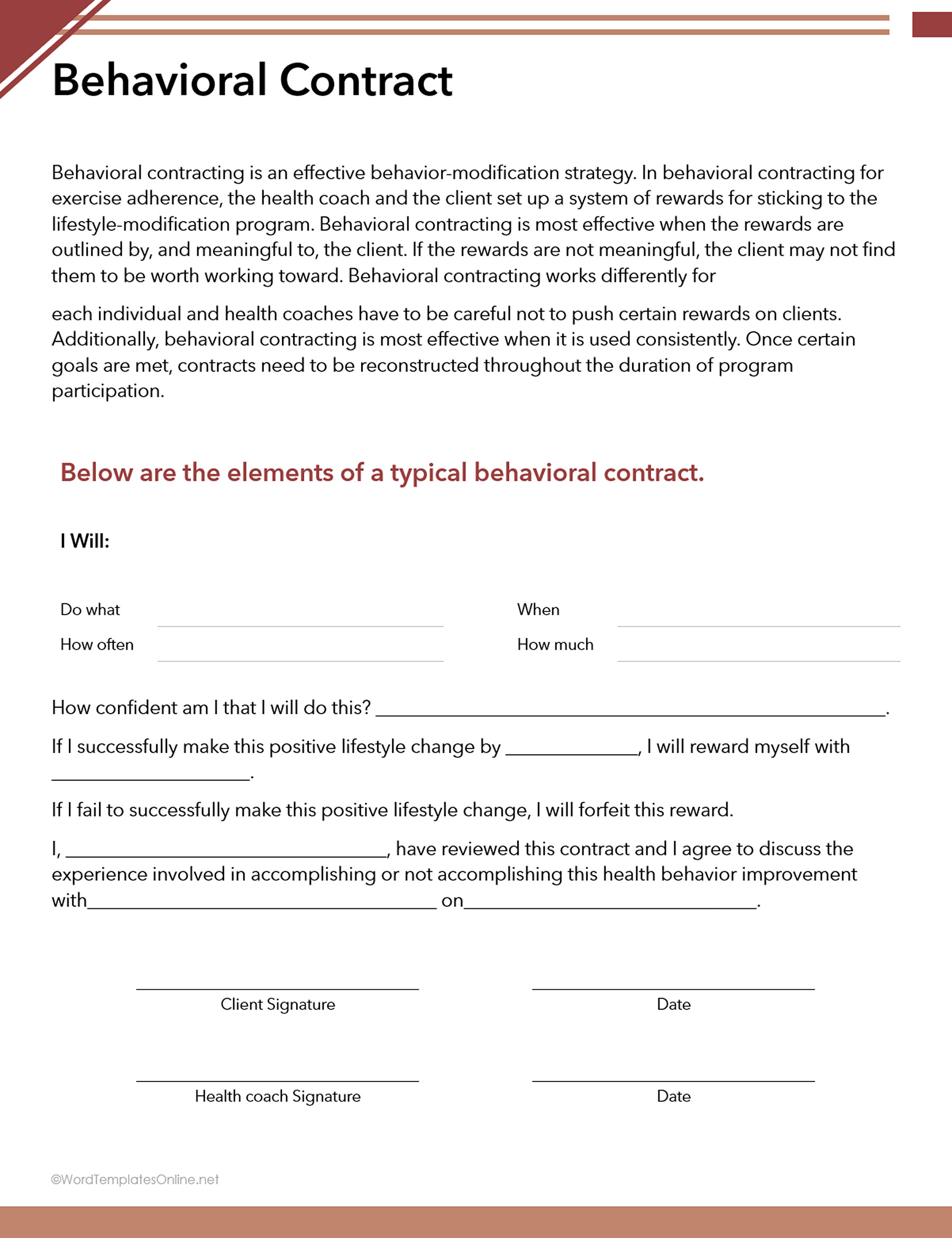
This type is a best fit for health coaching and lifestyle changes. Here, a client commits to a specific behavior and sets a reward for following through. Rather than keeping the goals unclear, the template shapes them into a clear agreement and makes sure you stick with it.
Behavior Contract Template 01
Behavior Contract Template 01
As you can see, it includes spaces for a particular behavior, timing and frequency, confidence level, goal deadline, reward and follow-up discussion, plus signatures from both client and health coach. Overall, it’s a practical way of turning “I should exercise more” into something more concrete, like “I’ll exercise three times a week until (date), then review how it went”.
Behavior contract template for children
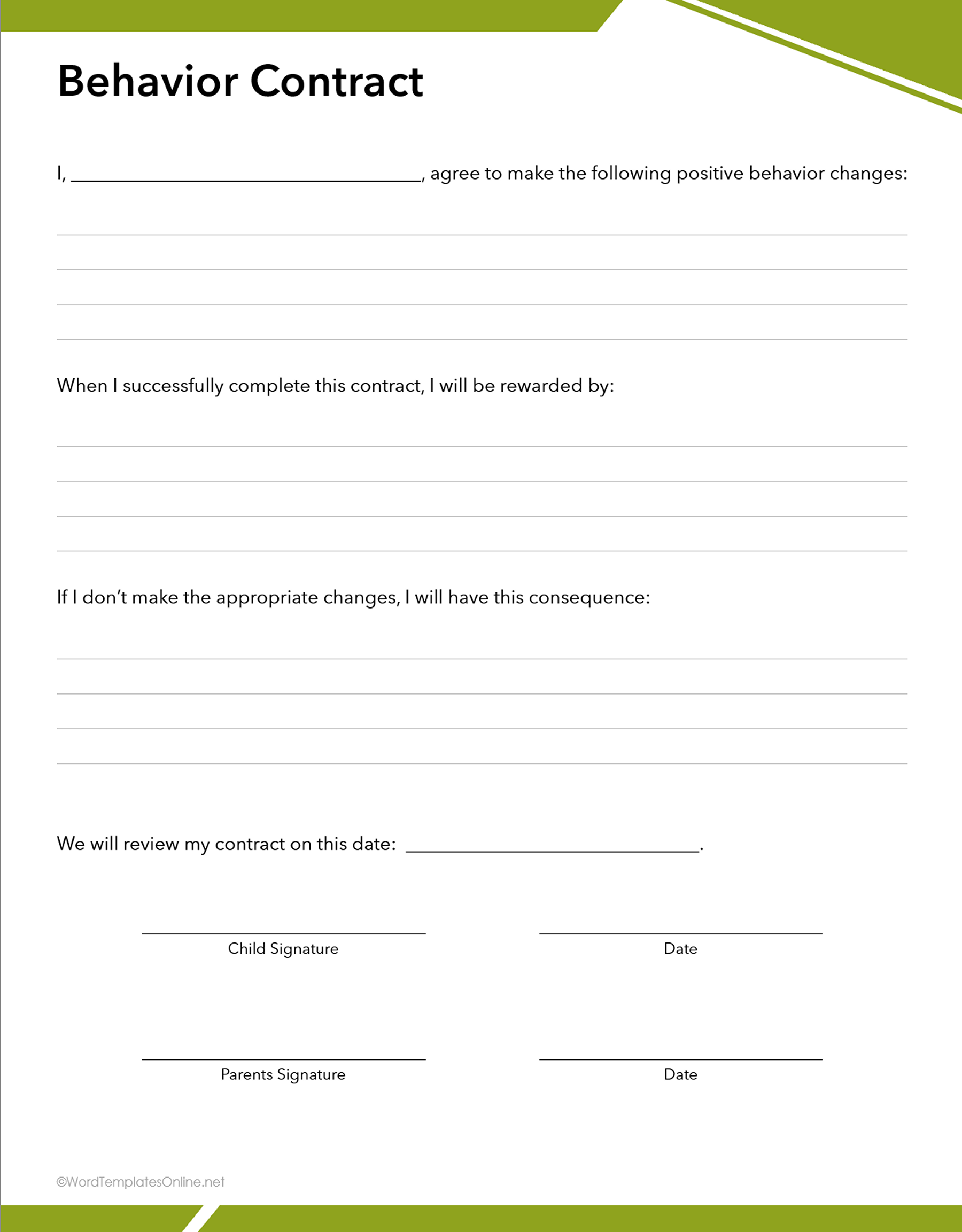
Managing a child’s behavior is another level of patience. However, this version turns this hassle into a simple parent-child behavior agreement whose goal is to shape a behavioral goal into clear, two-way commitments. This means that the child writes down the positive changes they’ll work on, followed by a reward and consequences section that makes it clear what happens if they follow through or don’t.
Behavior Contract Template 02
Behavior Contract Template 02
In addition to that, it also has a review date to look at how things are going. With both child and parent signatures, it feels less like a lecture and more like a team agreement.
Behavior Contract Template 03
Behavior Contract Template 03
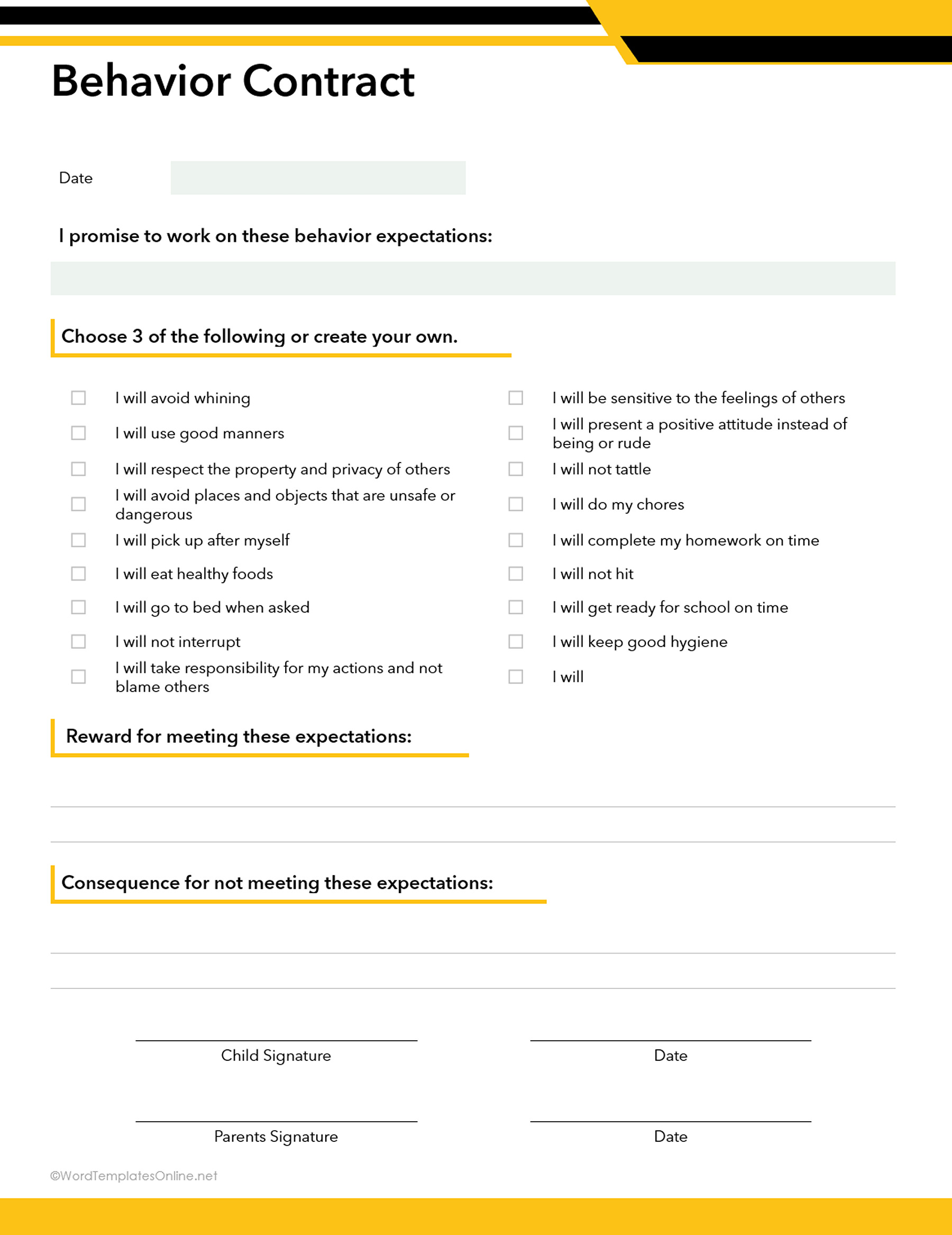
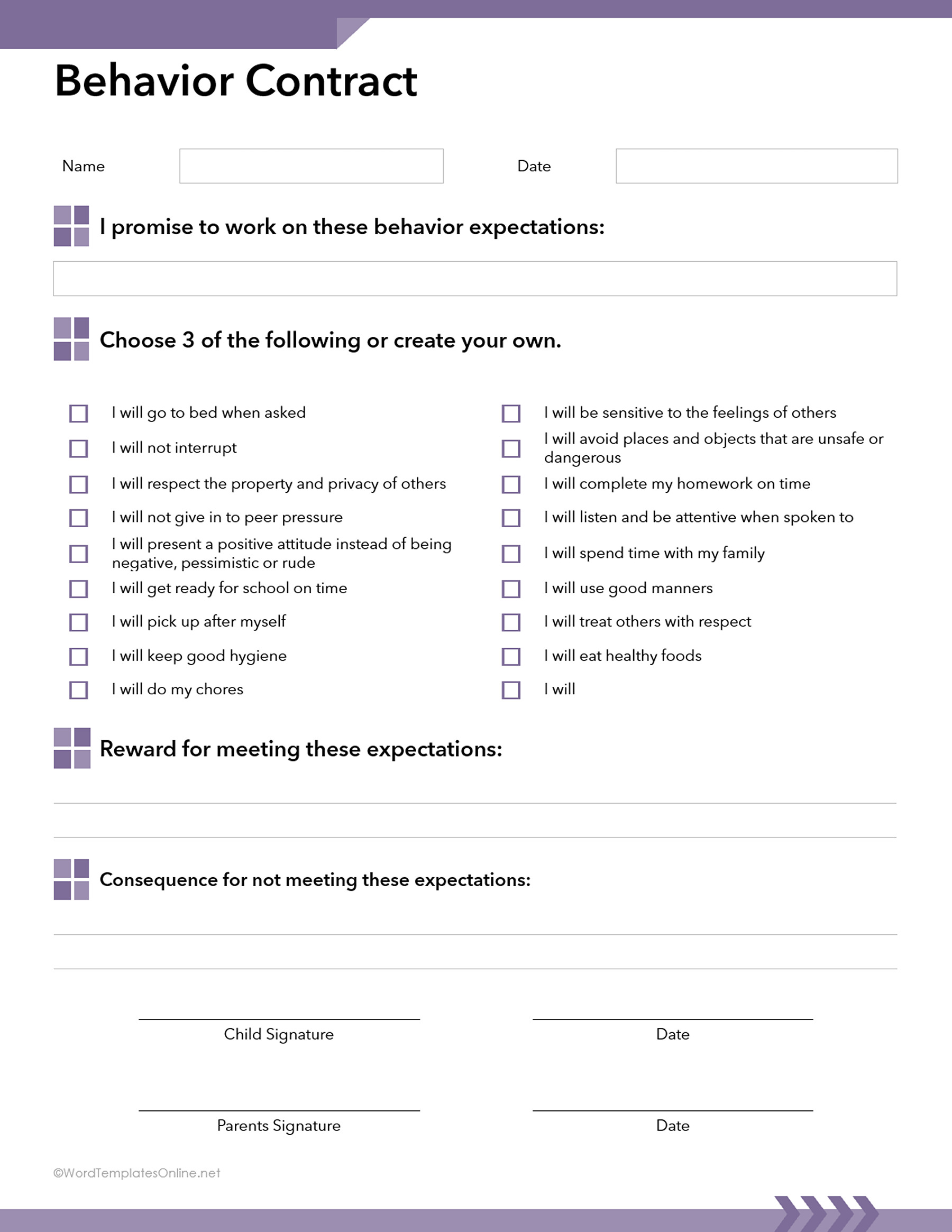
Sometimes, parents want their child to make their own set of expectations and work on them. If you’re looking for one such template, this might help. Here, you will allow your child to pick a few behaviors instead of throwing a giant rulebook at them. Let’s say it suggests choosing three goals, such as good manners, behaving respectfully with others, or getting ready on time, or creating your own.
Once the goals are picked, the contract covers the reward for meeting them and the consequences for not following through.
Simple behavior contract template for goal tracking
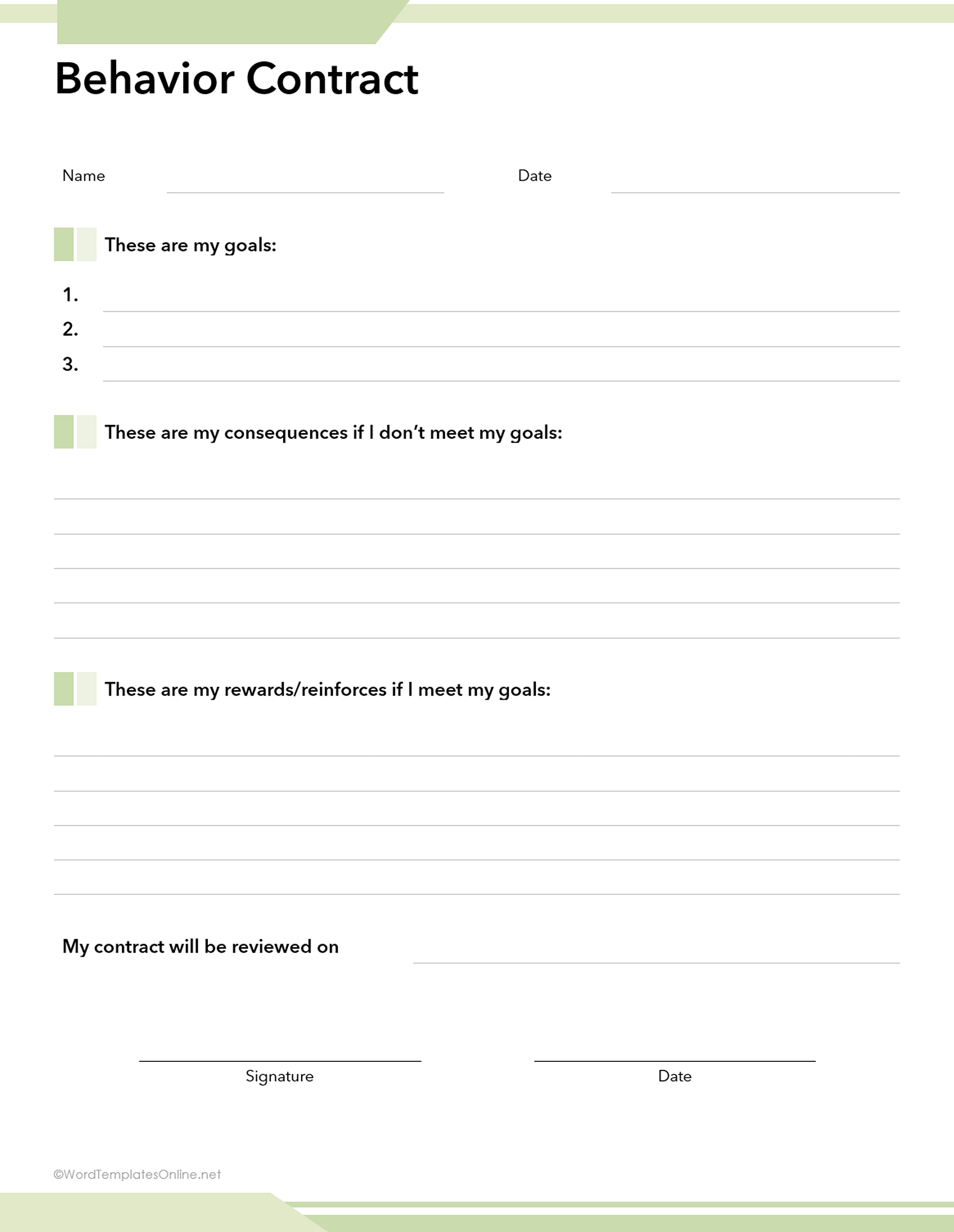
Sometimes, you just need to work on yourself by setting and tracking goals. This straightforward template keeps things nice and simple. By giving users three spots to write down their goals, consequences, timeline, and positive reinforcement, it makes sure you stay on track.
Behavior Contract Template 04
Behavior Contract Template 04
Furthermore, there is also a review date section where you add a useful checkpoint, while the signature section turns this whole document into a clear commitment.
Behavior Contract Template 05
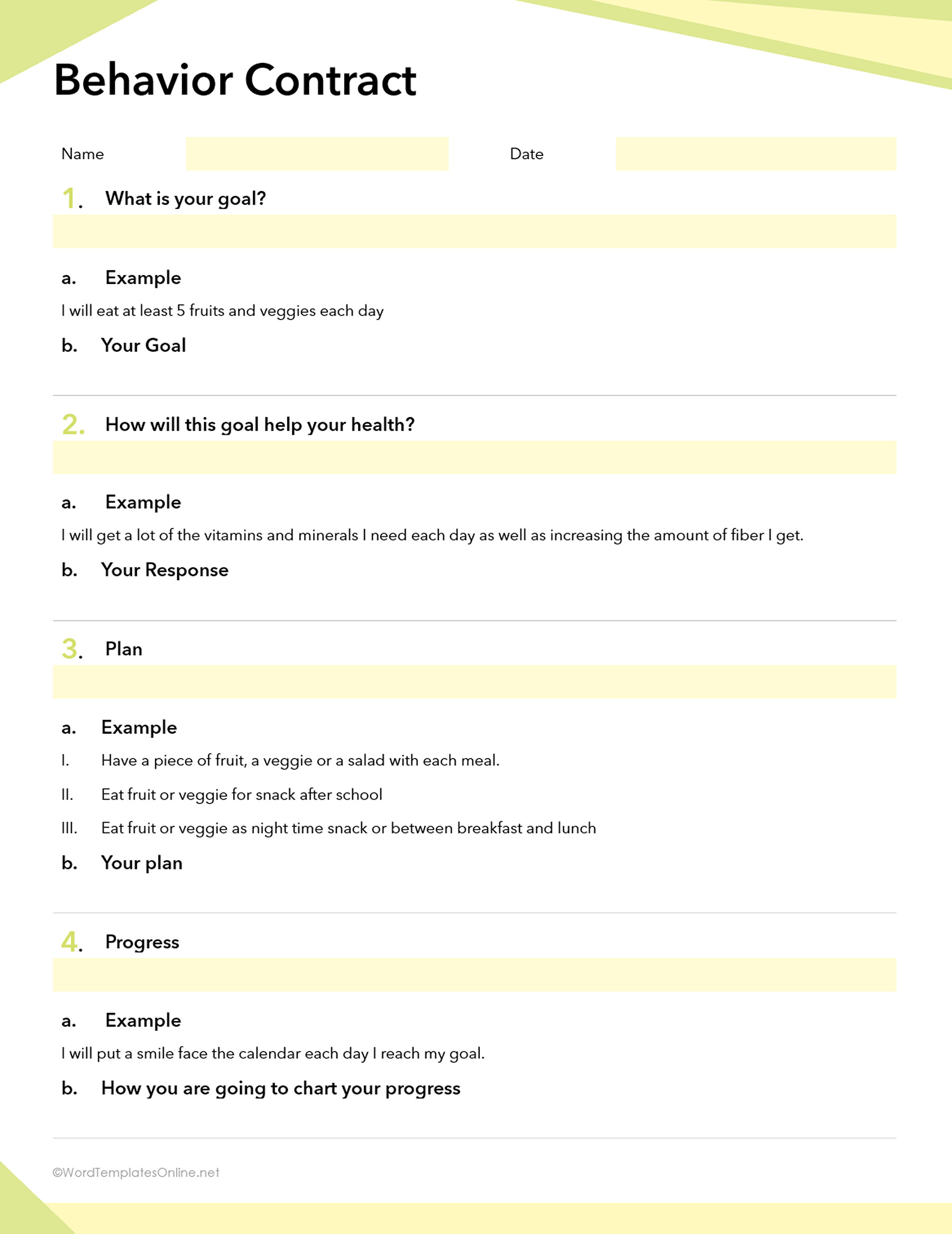
Behavior Contract Template 05
If you don’t want to hire a health coach and try to do it on your own, this template is best for you. It takes a slightly different route by ditching the generic rules or consequences system and helps you set a healthy behavior goal and actually stick with it.
How? It does this by walking you through four simple steps: choosing a goal, explaining why it matters, creating a realistic plan, and deciding how progress will be tracked. The progress section, at the end, gives you a way to celebrate those small wins.
Household rules behavior contract template
This one is all about turning everyday household rules into a clear checklist. With this, you don’t need to shout “behave yourself” anymore. It spells out specific actions such as doing chores, using polite language, finishing homework, respecting others, and getting ready for school on time.
Behavior Contract Template 06
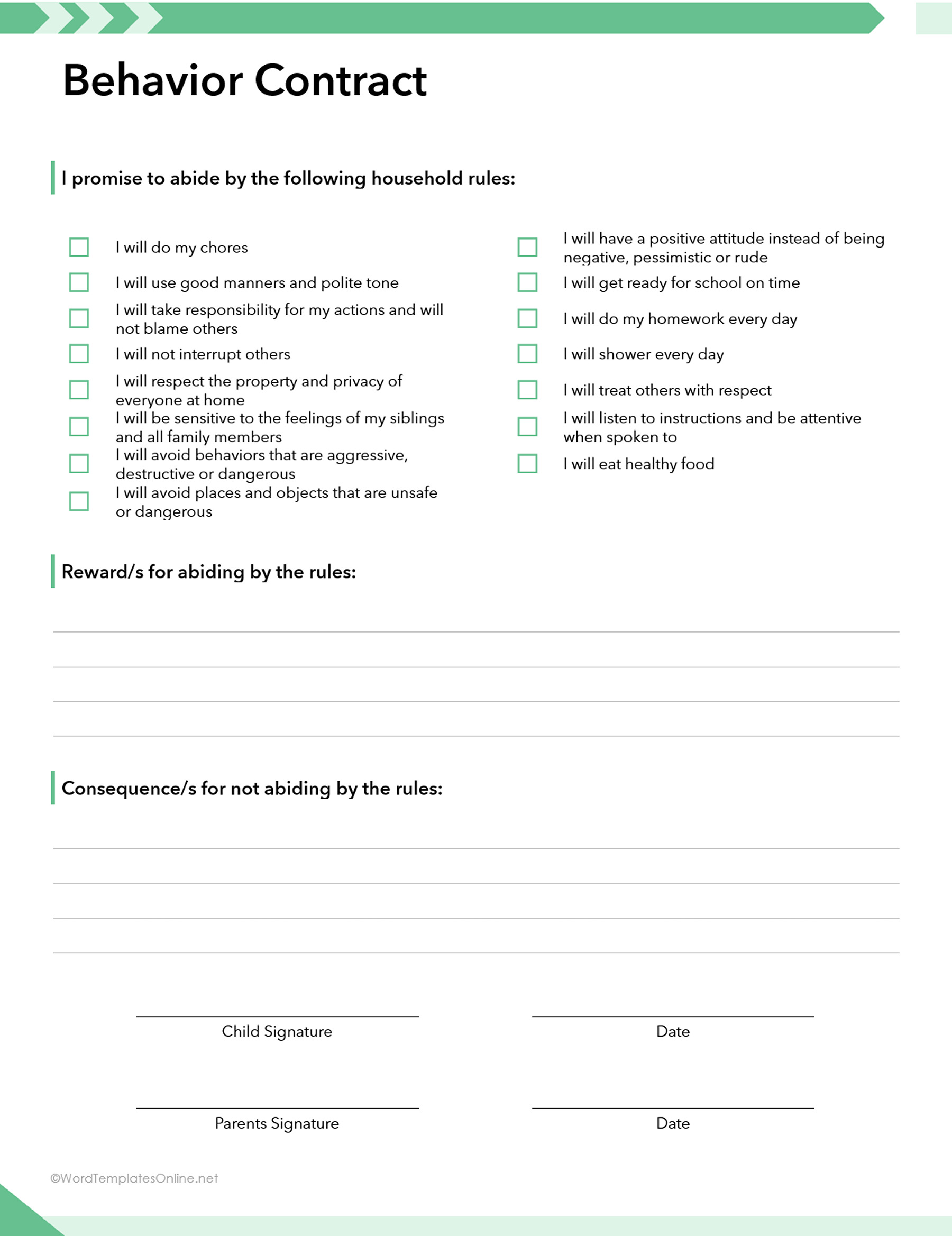
Behavior Contract Template 06
The checkboxes given in this layout make it easy to choose or track the rules, while the reward and consequences add a little accountability. At the end, when both the child and parent sign this document, it becomes a shared agreement rather than another list of rules on the fridge.
Behavior contract template for students
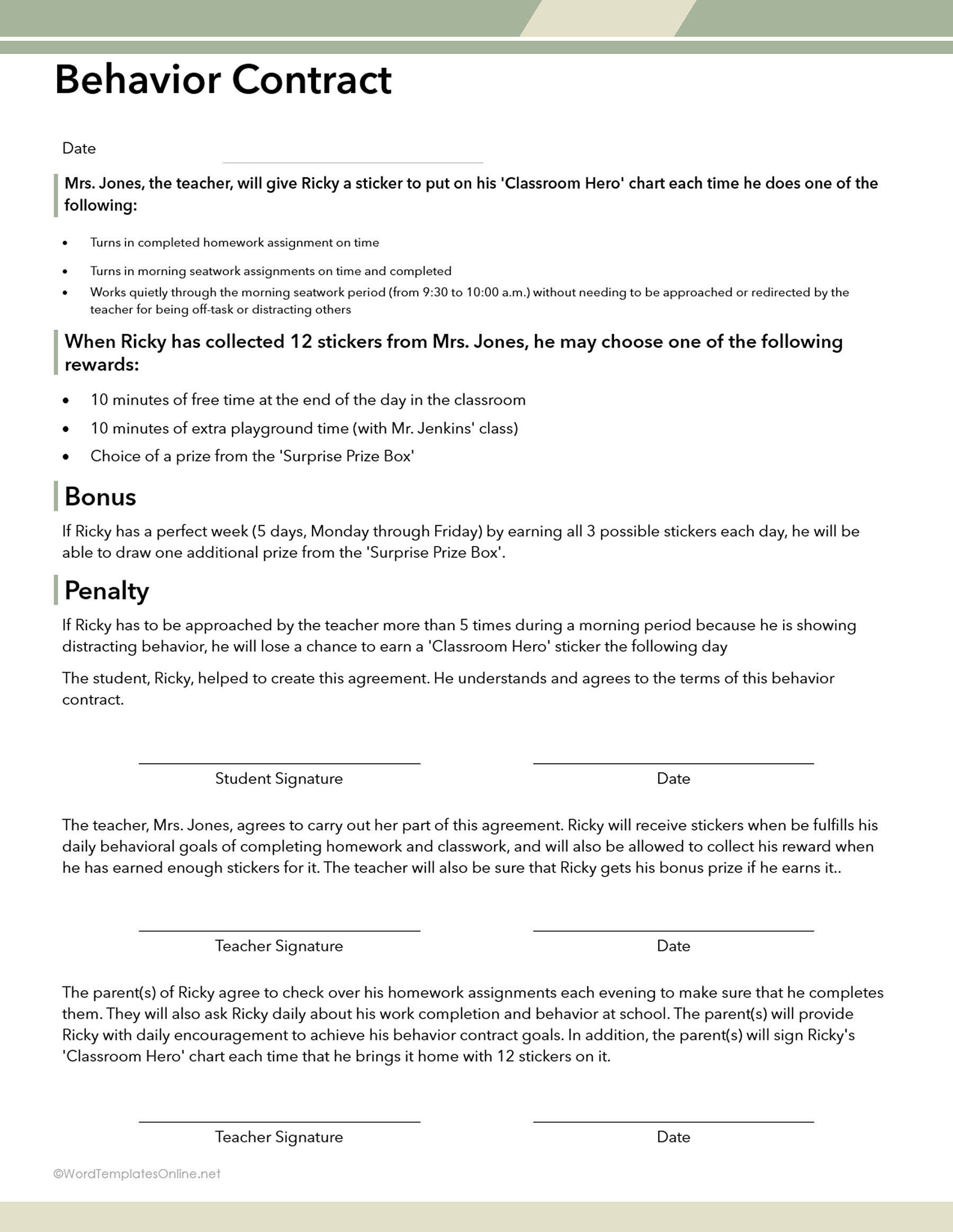
Turn behavior management into a collaborative win for everyone with this reliable template designed to keep students motivated and on track. It clearly outlines positive daily goals, like doing homework on time and staying focused during class. By doing this, it helps teachers to shape student behavior by giving them rewards, from extra playtime to surprise prize box items.
Additionally, it keeps expectations crystal clear with pre-built bonus incentives and gentle guidelines for handling distractions, turning daily accountability into an empowering challenge.
Behavior Contract Template 07
Behavior Contract Template 08
How to Set Rewards, Consequences, and Accountability Piece
This is what makes a contract move from “Here are the rules” to “Here’s how we’ll handle the results.” Your main goal is to focus on encouragement and learning, not turning every missed goal into a courtroom drama.
- Make Rewards Relevant to the Person: The best reward is one that feels worth working for. Think about what motivates the person and then set rewards.
- Keep the Focus on Positive Reinforcement: Go for catching the wins! If a person recognizes progress, it can make a new behavior rewarding in itself, particularly when someone is still building the habit.
- Keep Consequences Clear and Proportionate: It doesn’t mean that there should be no after-effects. If the goal isn’t met, try to add consequences that are reasonable. No surprise penalties or over-the-top reactions.
- Avoid Punishment-Heavy Agreement: The fact is, a behavior contract is a life-changing document, and it shouldn’t feel like a list of threats. If your focus is heavily on the punishment, it makes the whole process negative and makes people skip it.
- Review What Worked and What Didn’t: When it’s review time, look at the contract honestly: What went well? What got in the way? What needs changing? This goal isn’t perfect; it’s finding a plan that actually works.
Common Slip-Ups That Can Waste Your Behavioral Contract
Things look perfect when you think in your mind. However, doing them in practice is a different story. So, before you finalize a contract, here are a few mistakes to look for:
- Setting too many goals: it looks super cool trying to fix everything in one sitting. But it will only exhaust you. So, start with one or two behaviors, and if possible, go for adding more.
- Using Behaviors That Can’t Be Measured: “Be good” sounds nice, but how do you actually check it off? Instead, use something that can be easily observed, such as “use a polite tone when asked to do something.”
- Making the Rules Impossible to Follow: If the goals require superhero perfection, frustration will come before progress does. Always try to set realistic goals based on the person’s age and situation.
- Choosing Rewards that Don’t Motivate: A reward only works if it is set according to the person. You can check the above section to realistically set the reward.
In Conclusion…
A behavioral contract doesn’t need to feel like a stick of rules or a mini courtroom agreement. It’s a simple and honest way to turn “I’ll do better” into a clear, doable plan. The best way is to pick one or two realistic behaviors, decide what success looks like, and check in along the way. In short, with the right template, everything feels on track and is something you can actually stick with.
Frequently Asked Questions
Are behavioral contracts only for children?
Not at all. Anyone who wants to adopt a good behavior or change a specific action can use this contract.
Should a behavior contract include consequences?
Yes, it might have this section because it develops a sense of accountability for those using the contract. However, make sure to keep it clear, fair, and realistic.
Can I customize a behavior contract template?
Of course! All our templates come with this flexibility so that you can use and edit them seamlessly. And that’s what makes them unique.
About This Article