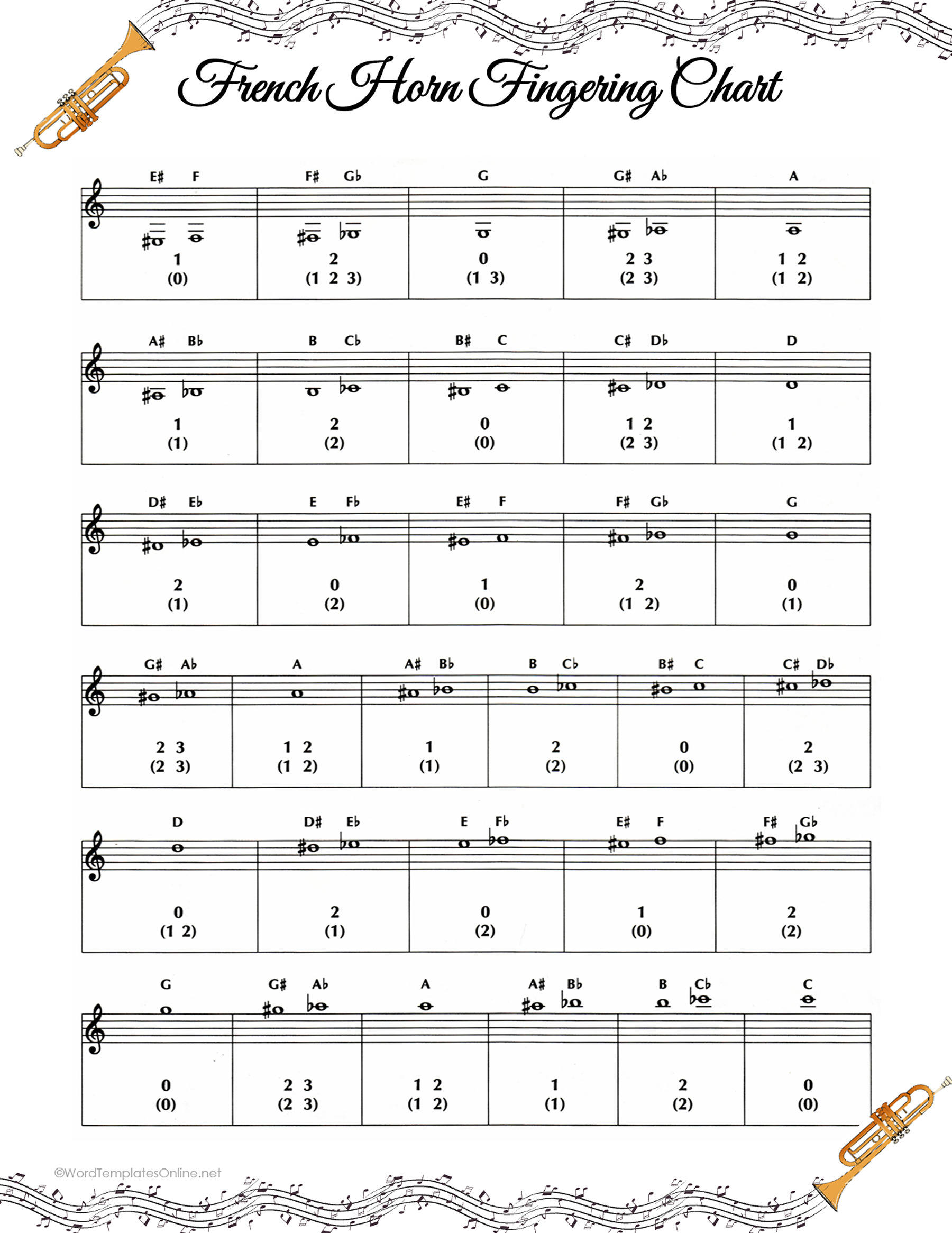
These four French horn charts are available in Word, ODT and Google Docs. Find the note at its exact position on the staff, then read the entry for your horn or the side of your double horn you’re using.
French Horn Chart 01
French Horn Chart 02
French Horn Chart 03
French Horn Chart 04
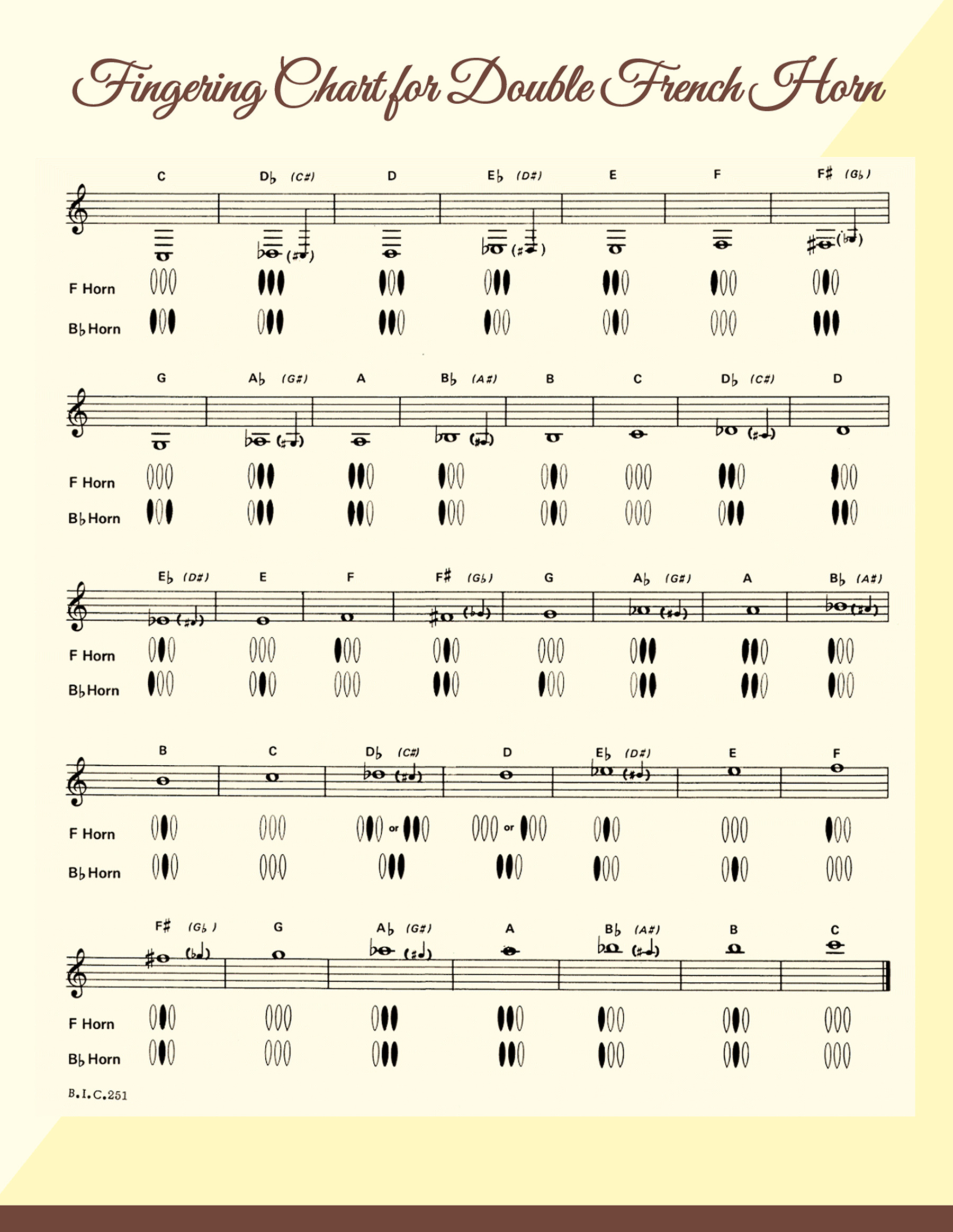
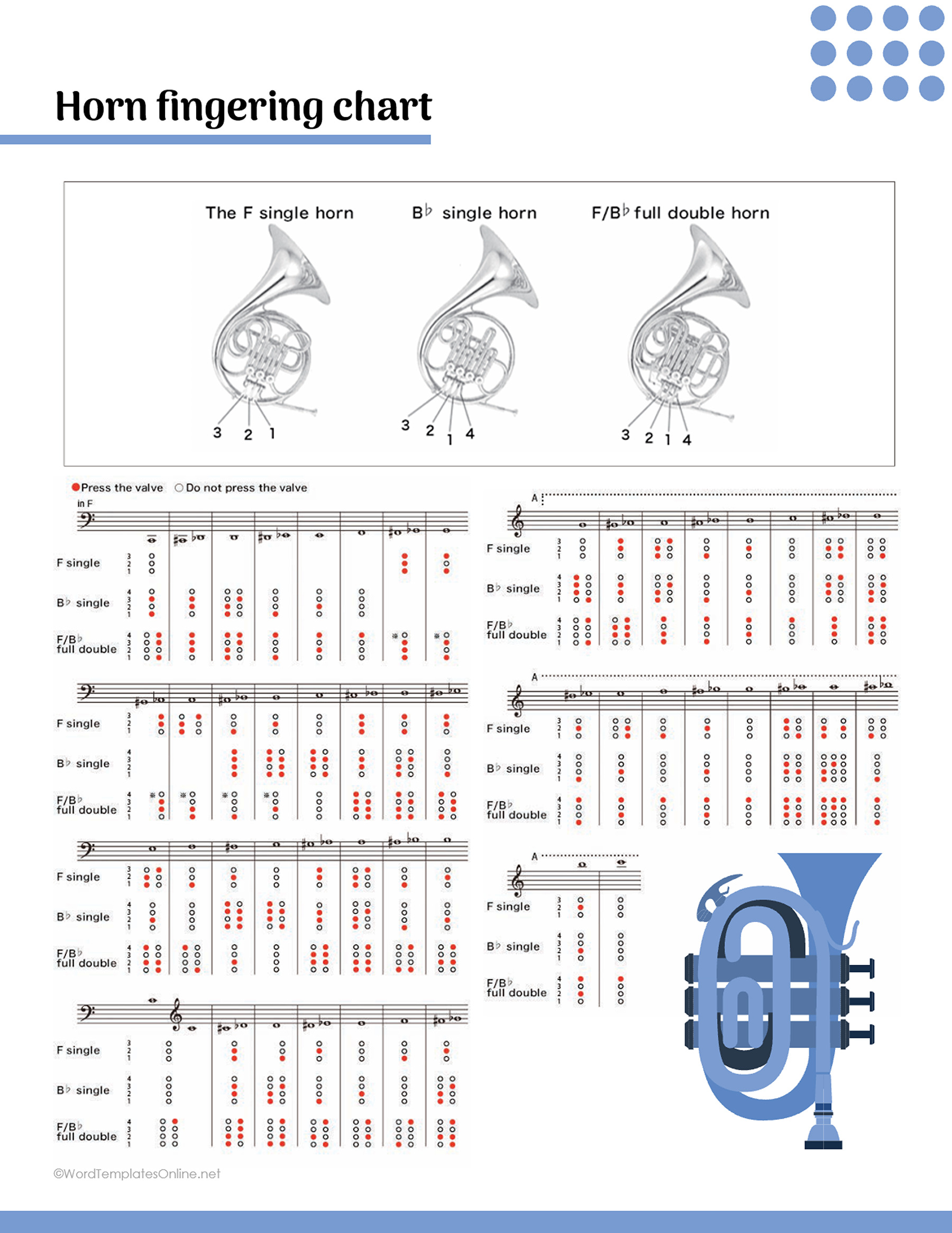
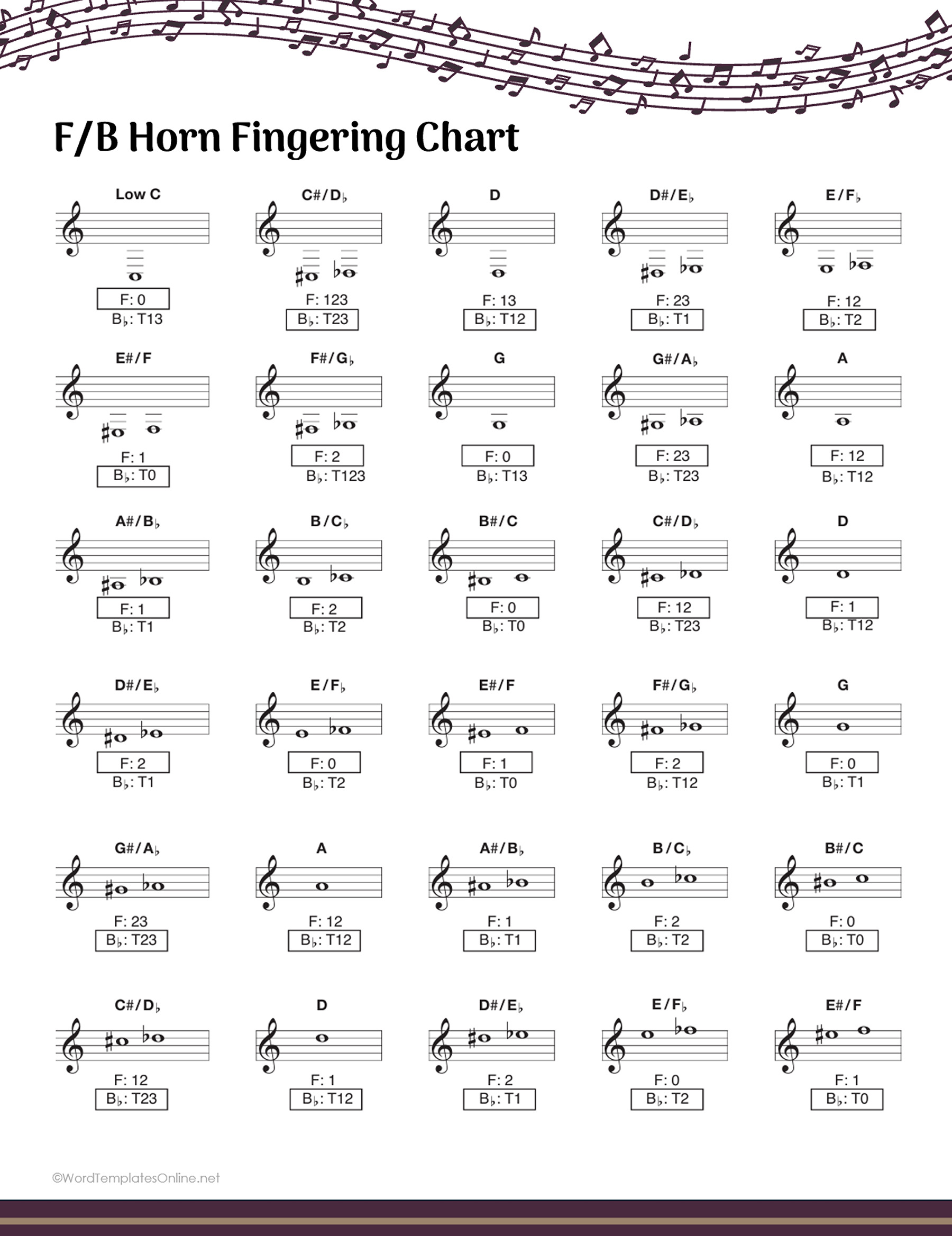
Chart 03 uses labeled F and B-flat rows with numerical fingerings. Chart 02 offers separate instrument rows and a key for its valve circles. The other two references remain alongside them in the collection. The Word downloads are DOTX templates; the musical notation in these files is embedded artwork, so individual notes and valve symbols aren’t editable text.
Reading the valve symbols
Numbers and the thumb valve
In chart 03, find the written G on the second line from the bottom of the treble staff. Its entries are F: 0 and B-flat: T1.
For the F entry, 0 means leave the three numbered valves open. For the B-flat entry, T1 means use the thumb trigger together with the first valve. That trigger convention assumes a double horn that stands in F: pressing the thumb valve selects its B-flat side, as explained in Colin Dorman’s fingering guide.
Read the appropriate row as one complete combination. Don’t combine the F and B-flat entries. If you’re unsure how your horn’s thumb valve is configured, have your teacher identify it before applying the T marking.
The G’s position matters as much as its letter name. A G in another octave has a different place on the chart and may call for a different fingering. This example follows written horn notation; it doesn’t convert the note to concert pitch.
Filled and open circles
Chart 02 uses a different key: a filled red circle means press that valve, while an open circle means leave it unpressed. Use the numbered instrument drawing to identify the valves, and follow the row labeled for your horn configuration.
For the A and asterisk marks on this diagram, consult Yamaha’s accompanying chart notes. A symbol’s meaning belongs to the chart’s own key; a mark used on one reference doesn’t automatically explain the others.
Why one fingering can produce more than one note
A valve combination can produce several notes in the harmonic series. A fingering chart points you toward a combination for the written note, but the valves alone don’t determine which pitch sounds. Dorman’s guide explains this limitation alongside its harmonic-series reference.
If the fingering looks right but the note sounds wrong, check the staff position and the horn-side row again. Once those match, work on finding the intended pitch with your teacher rather than assuming every wrong note needs a different valve combination.
About This Article