Well, nobody starts their day thinking, “You know what I need? A hold harmless agreement.” Yet somehow these documents show up behind the scenes of construction projects, business deals, event planning, selling or purchasing goods, and numerous other situations where things don’t always go exactly how we planned. After all, where people, property, money, and responsibility are involved, adding a little protection is everyone’s legal right.
A hold harmless (indemnity) agreement is usually a fancy version of saying, “If something unexpected happens, let’s be clear who is responsible.” We know legal talk can be intimidating, but its goal is actually super simple: to protect you and prevent costly drama.
In this guide, we are going to pull back the curtain and show you how this agreement works, what the key clauses are, and how to use a template to lock down a reliable deal without getting lost in the jargon. Let’s get started:
So, What Does “ Hold Harmless” Actually Mean?
You must be thinking where this phrase comes from. Well, it simply means that one party agrees not to hold the other party responsible in case of certain losses, damage, or claims. In practice, it’s an official way of saying, “If a covered issue arises, I won’t come after you for it”. The exact level of protection depends on the language used in the agreement and the laws that apply to it.
These agreements are commonly used whenever there is a possibility of accidents, property damage, financial loss, or legal claims. You’ll usually find them in construction projects, event planning, business agreements, volunteer activities, and equipment rentals. If you have defined the responsibilities behind this agreement, it can benefit you in reducing misunderstandings, protecting involved parties, and offering an extra layer of confidence.
How does an “indemnity clause” work?
A hold harmless is almost glued to an indemnity clause, which is the section that spells out exactly how you’ll be protected if a legal claim comes out. It basically says the one party promises to step up and foot the bill for specific costs, damages, losses, or lawyer fees that party gets slapped with. This clause is the absolute core of the whole deal. laying out exactly who takes the financial and legal burden if things go sideways.
Who are the parties in the agreement?
In this agreement, usually two main parties are involved. The indemnitor is the person or organization agreeing to consider certain liabilities; on the other hand, the indemnity is the party receiving protection under the agreement.
What Should a Hold Harmless Agreement Template Look Like? A Breakdown of Key Elements
Let’s be real, the document might look like a boring wall of text, but it’s actually your savior when it comes to protecting your business. Here’s what a comprehensive template looks like:
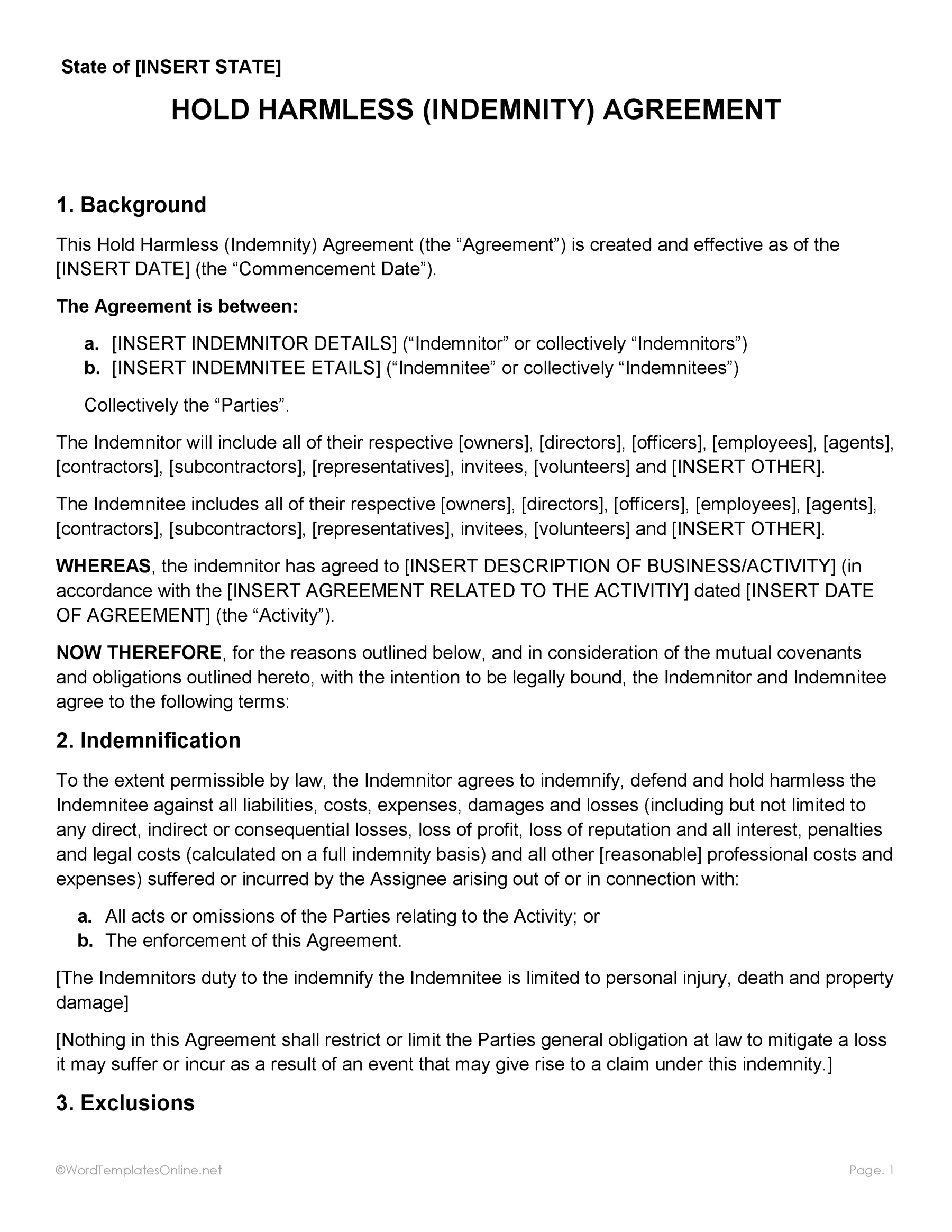
1. Background
Every agreement starts with the previous context section, which usually identifies the parties that are entering into it, explains the purpose of the arrangement, describes the activity or business relationship involved, and most importantly, verifies the effective date of the agreement. In simple words, you can say it’s the “who, what, and why” part of the document.
2. Indemnification
So, we have already discussed this clause above, and you all know this is the core of the agreement. The crux of this part is that one party agrees to protect, defend, and compensate the other party for certain claims and damages that arise from the activity described in the agreement.
3. Exclusions
Not everything is covered in the above part, and that’s why this section comes in. The exclusion generally defines circumstances where the hold harmless protection will not apply. For example, you can say the agreement may not cover claims caused intentionally, gross negligence, or misconduct by the other party.
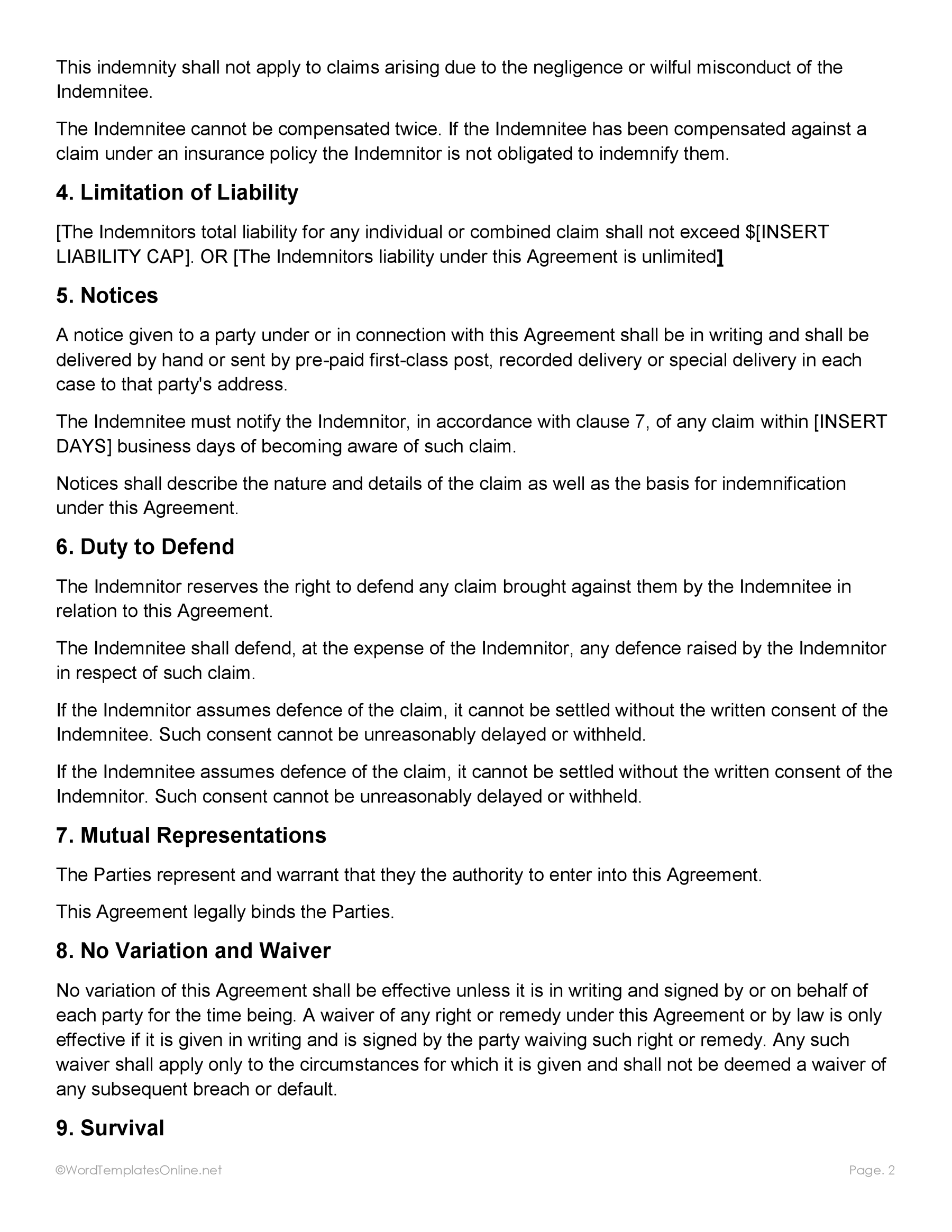
4. Limitation of liability
The section puts the full stop on the financial responsibility. In some agreements, the indemnifying party’s liability may be capped at a specific dollar amount, while others may go for unlimited liability. This part helps both parties understand to what extent the potential obligation applies.
5. Duty to defend
The hold harmless agreement also consists of this provision, which addresses the legal defense responsibilities. Let’s say a claim is filed against the protected party; the indemnifying party must pay for or provide legal representation. Plus, this section also briefly outlines how settlements and legal decisions will be handled during the defense process.
6. No variation and waiver
In case changes are made to the agreement, it must be in writing and approved by both parties. This section explains those ground rules and also points out that just because a party decides to let something slide once, it doesn’t mean they’re permanently waiving their rights.
7. Survival
There might be certain obligations that may continue even after the agreement ends. The survival clause is added here to check out which provisions remain effective after the activity, project, or business relationship has ended.
8. Entire agreement
The clause usually states that the document indicates the complete understanding between the parties. If there are any previous discussions, emails, verbal agreements, or negotiations, these are replaced by the terms written in the final agreement.
9. Assignment and other dealings
People may ask whether they can transfer their rights or obligations to another individual or organization under the same agreement. This section clarifies such queries. In many cases, assignments require prior written consent from the other party.
10. Third parties
The third-party section ensures that only parties named in the agreement can enforce its terms. It means that individuals and organizations that are not directly involved generally do not get rights or benefits under the agreement.
11. Joint and several liability
If several indemnity parties are involved to protect you, this section explains that each party may be held responsible for the full amount of an obligation, instead of their individual share. Through this, the indemnified party can get stronger protection.
12. Governing law and jurisdiction
Laws behave differently from state to state and country to country. The section is given in the template to let you know which jurisdiction’s law will govern the agreement and which courts will handle disputes in case of legal action.
13. Disputes
Last but not least, this section is all about how disagreements will be handled. If some kind of dispute occurs, then it requires parties to provide written notice of the dispute, attempt negotiation, mediation, or any alternative resolution before stepping towards legal action. This helps make a process for resolving conflicts efficiently and fairly.
Completing a Hold Harmless Agreement Template Without the Confusion
If you understand the main clause and how it works, filling the template is pretty simple. Grab the template first and identify who is actually entering into the agreement. Add their full name so there’s no confusion about who the document applies to.
After this, simply explain what’s happening, such as what the activity is and what’s covered in the agreement. Now, you need to specify who is responsible for what (If claims appear out of nowhere). Make sure to fill out the exclusion section carefully and include under what expectations and limitations this agreement will not apply. After you thoroughly fill out the whole section, check out what the rules of the agreement are in your state. Once done, all parties need to sign the agreement and keep copies for their record. That’s it.
Hold Harmless Agreement Template
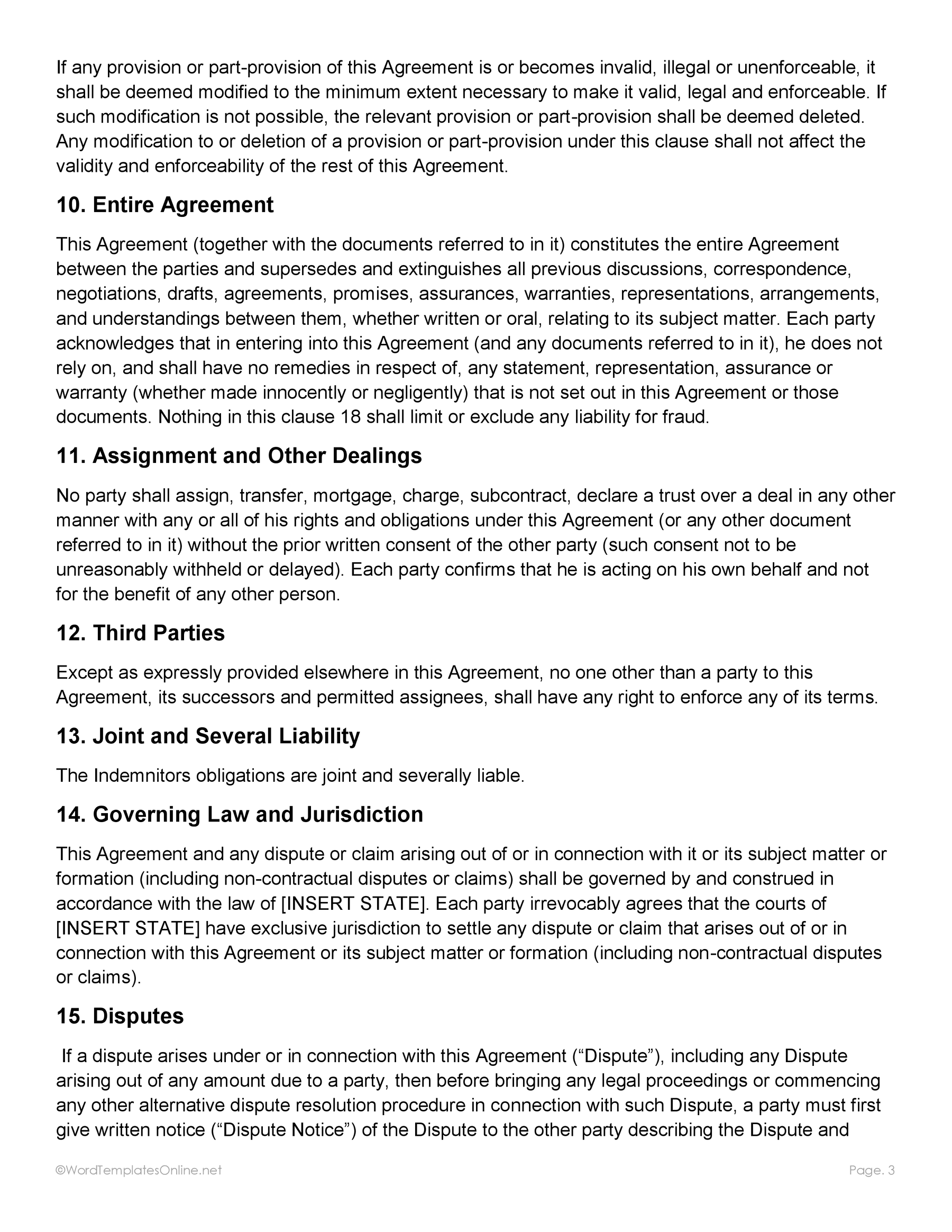
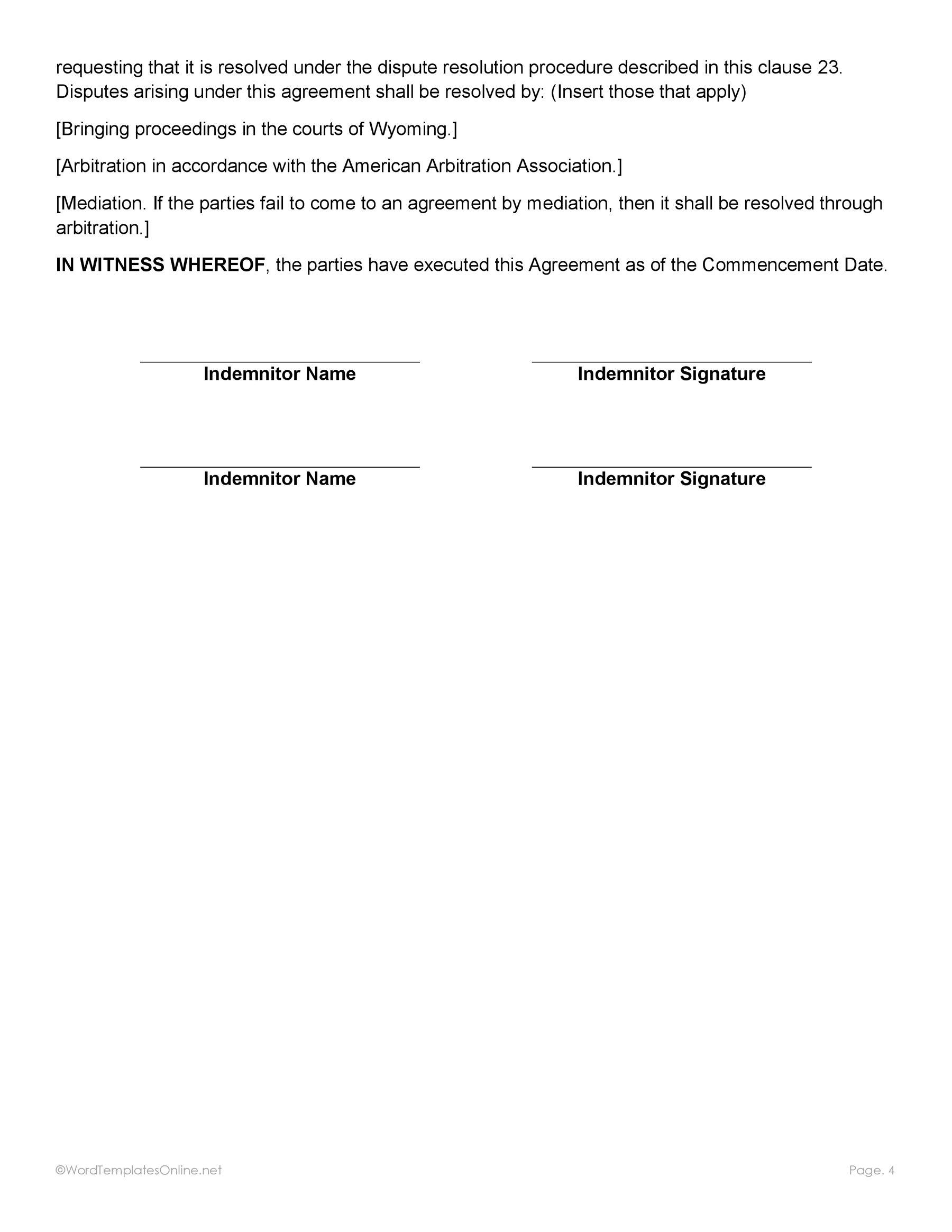
Hold Harmless Agreement Template
Hold Harmless Agreement vs Similar Legal Documents
This agreement is something people often confuse with other legal documents when it comes to dealing with risk, responsibility, and liability. Well, if you don’t want to make the same mistake, it’s better to understand the difference.
| Document | Main Purpose | Best Used For |
|---|---|---|
| Hold Harmless Agreement | Protects one party from specific legal claims, damages, or liabilities. | Common in construction projects, business agreements, property use, and risk management situations. |
| Waiver of Liability | A party or individual understands potential risks and agrees not to hold another party accountable for certain injuries or losses. | Sports activities, events, fitness programs, and recreational activities. |
| Indemnity Agreement | One party agrees to compensate another for losses, damages, or legal expenses. | Contractor relationships, business contracts, and commercial transactions. |
| Service Agreement | Explains services, responsibilities, payment terms, and expectations between parties. | Freelance work, consulting services, vendor agreements |
| Release of Liability | Prevents future claims after a specific activity has occurred. | Recreational activities, tours, adventure sports |
Common Slip-Ups That Can Cause Problems Later
Templates cover the layout and pattern. It doesn’t mean what you write is going to make the agreement perfect. Small mistakes can literally ruin your agreement. So, beware of these common pitfalls:
- Being unsure about the activity: If you think simple writing “services” or “project work” will tell the full story? No, it’s not. The agreement should clearly list what’s happening inside so everyone has an idea about what the risks and responsibilities are.
- Assuming everyone knows the liability terms: One big mistake people commonly do without knowing the impact is leaving the responsibility section for guessing. If there’s any room, you’re welcoming disputes. So, make it clear who is responsible for what.
- Forgetting the Final Details: It may sound extra, but missing signatures, dates, or party information can raise serious questions and impact the credibility of the document.
- Skipping the fine print: It means most of the time, people focus on the main liability clause and don’t cover expectations. Including situations where agreement does NOT apply is just as important as defining when it does.
No Loopholes: Making Sure Your Agreement Actually Holds Up
Look, a template is a superb head start, but if you want real peace of mind, you’ve got to add some extra muscles to it. A few simple things and you’re good to go:
- Use layman’s language: What’s the point of using difficult terms when no one is going to understand what’s written in them? In short, the more straightforward the agreement, the better it is.
- Talk about the risks face-to-face: The smart move for both parties is to understand the risks first and then sign anything. Having such conversations beforehand can avoid surprises later and make sure everyone is on the same page.
- Don’t let it collect dust: Well, business, projects, and even responsibilities change over time. Checking agreements periodically makes sure that the information is still accurate and according to the current situation.
- Get a second set of eyes on complex situations: For small, simple stuff, a basic template might be enough. But the second you’re dealing with big money or business deals, you really need a pro to look over it. So, it’s better to review the document with a lawyer before finalizing the deal.
Is Your Next Deal Properly Protected?
No matter how well you’re prepared, mistakes happen. This doesn’t mean you’ve to ruin your project. That’s why a hold harmless agreement comes to the rescue to explain exactly who is responsible when things go wrong. In short, removing the guesswork from liability. Getting protected is easy when you use the right template. So, grab yours now, protect your business, and move forward with total peace of mind.
Frequently Asked Questions
Is a hold harmless agreement legally enforceable?
Well, in most of the cases, yes. It is legally binding as long as it is written properly, signed by the parties, and complies with state laws.
Does this agreement need to be notarized?
No, mostly! If it has the right signatures, it’s valid. But it’s always better to check with your local jurisdiction to know if notarization is required or not.
Does this agreement eliminate all liability?
Not always. It can provide essential liability protection, but it doesn’t automatically protect someone from every possible claim. So, always be mindful.
About This Article