It also establishes the roles and responsibilities of both parties which makes sure that they are on the same page. The contract also documents the agreed terms, which help prevent disruptions during service delivery brought about by misunderstandings. Lastly, the contract makes sure that the caterer complies with food safety standards and local laws.
Key Components of a Catering Contract
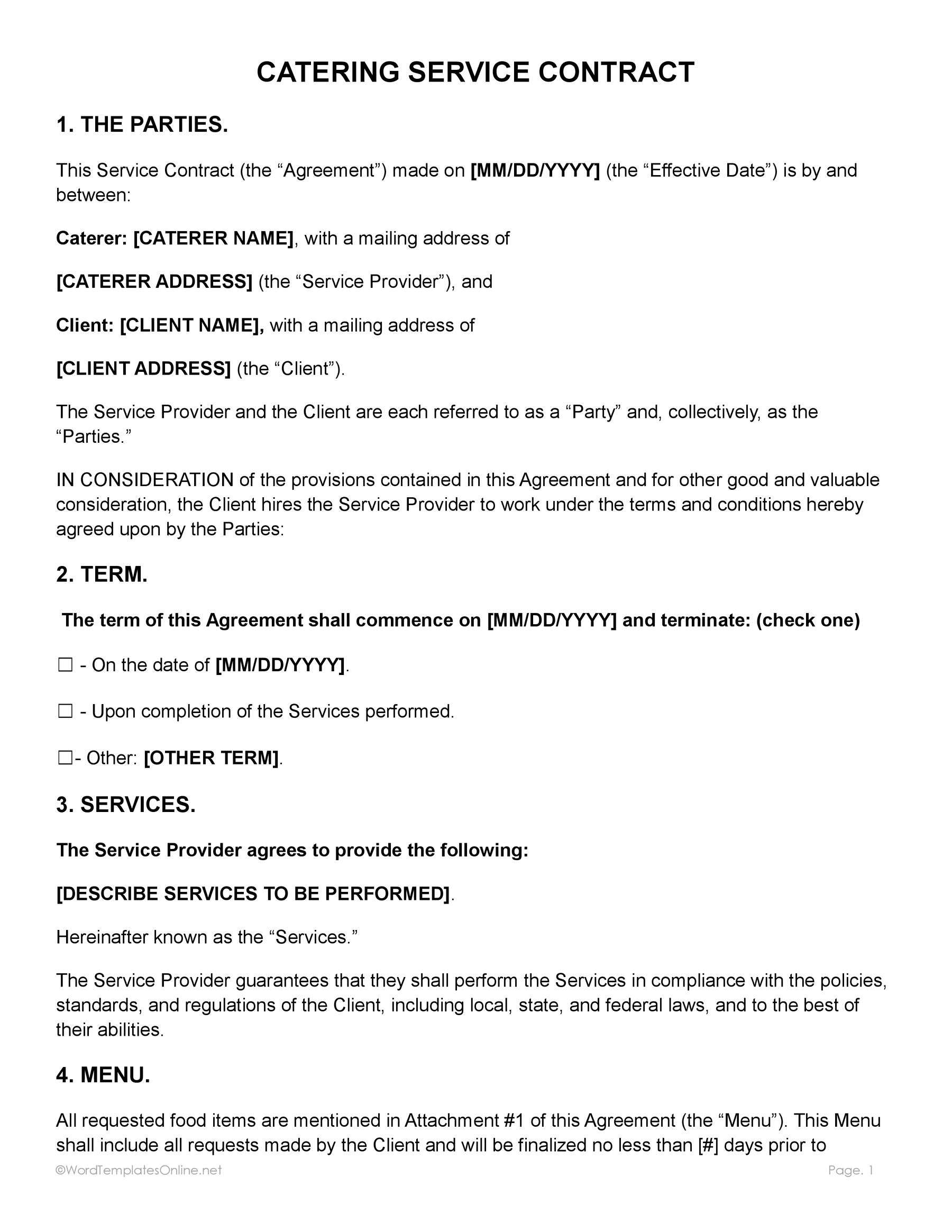
For a catering contract to be effective, it has components that make it a complete document that covers every detail to make sure nothing is missed or overlooked. The components are:
Event details
This is the first component. Here, write the date, time, i.e., start and end time, location, and type of event, for example, wedding, graduation party, etc. This makes sure that the client and caterer follow the same schedule and avoid timing disputes.
Service provided
It identifies the service that will be provided by the caterer. List all the services which include menu items, staffing arrangements, service style, i.e., food stations, buffet, plated service, etc., and equipment provided such as tables, cutlery, etc.
Payment terms
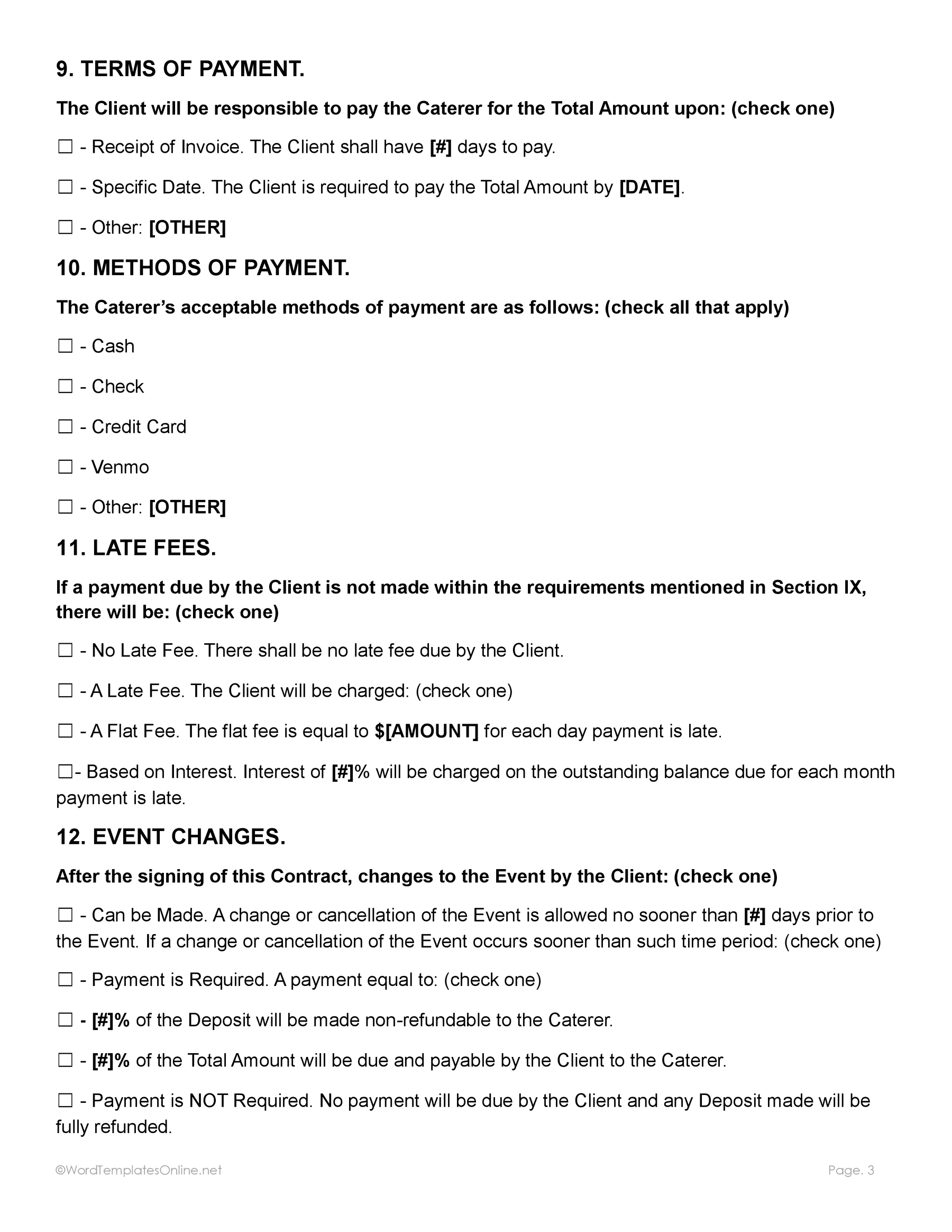
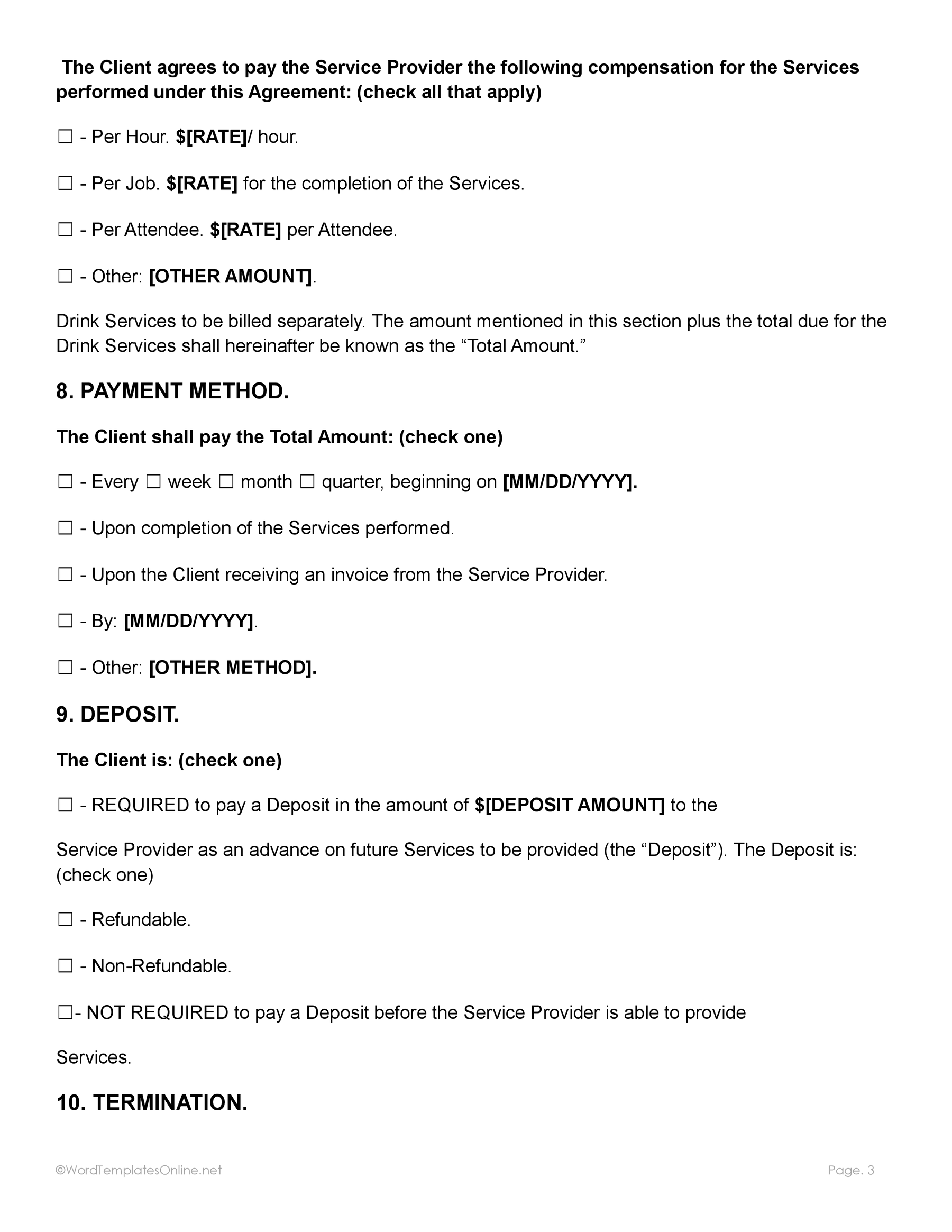
This is where you include information regarding payment terms, pricing structure, and methods of payment. You could include details such as deposit requirements for booking, penalties for late payments, and dates for initial and final payments.
Cancellation and refund policy
This section stipulates the terms under which the contract will be terminated and details concerning refunds. State the notice period required for cancellation by either party and how repayments will be made. Indicate whether deposits are refundable or non-refundable, and the conditions for partial refunds.
Liability and insurance
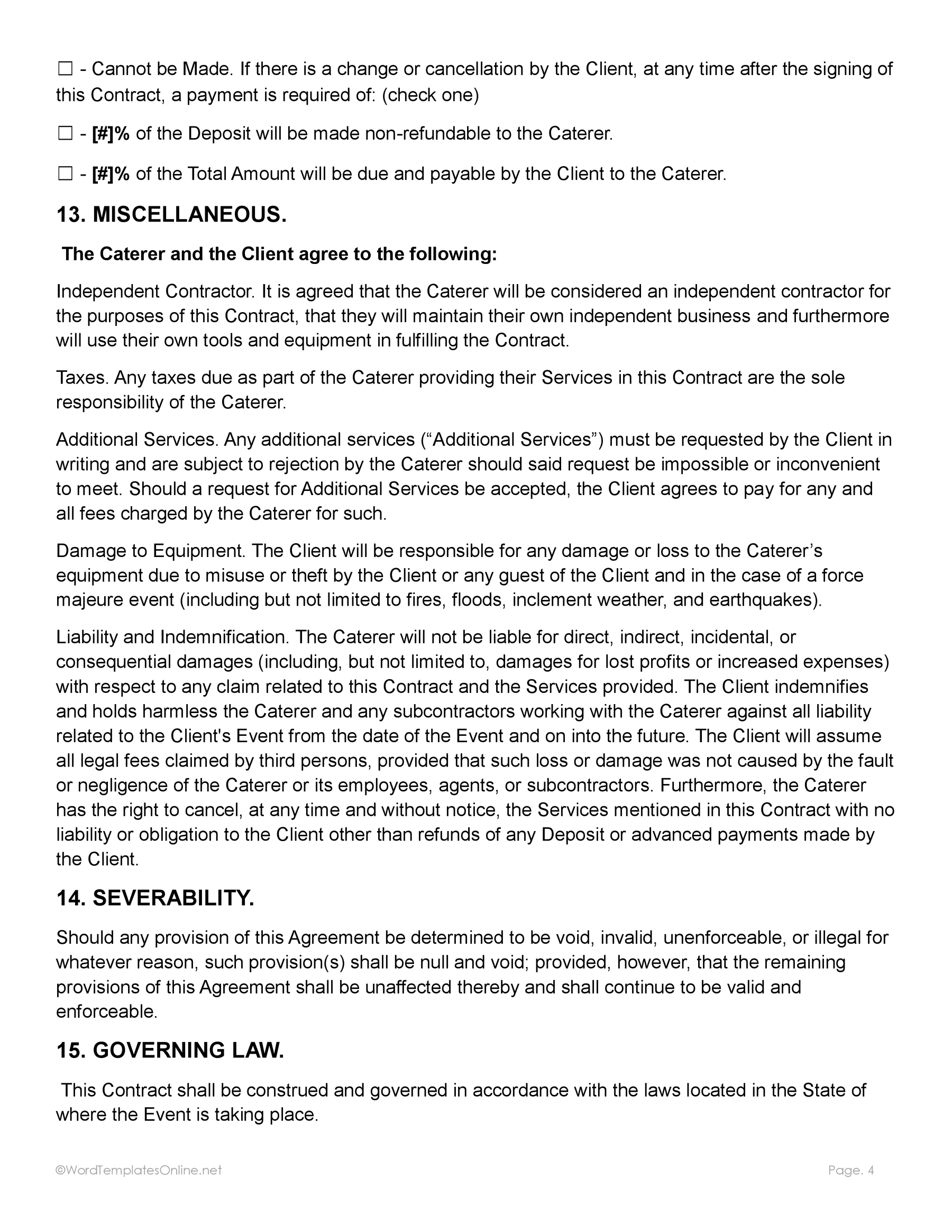
Indicate who will be financially responsible for any injuries and damages to property or equipment in the course of the event. You can also indicate whether the caterer has insurance that covers illnesses, damages, and injuries.
Client responsibilities
Outline what the client will provide, for example, access to the venue, utilities such as electricity and water, and permits for operating in a certain location or for alcohol (if applicable).
Force majeure clause
Include clauses for handling unforeseen events outside of either party’s control, such as pandemics, natural disasters, power outages, etc., and whether there are refunds in case of rescheduling.
How to Customize the Template for Your Needs
Caterers should customize portion sizes, staffing details, menu descriptions, and equipment requirements. They can also include clauses that cover foodborne diseases and safety standards. On the other hand, event planners should focus on coordination, for example, décor setup, entertainment schedules, etc.
Also, you can adjust clauses to cater to different events. For example:
- For weddings, you can include food displays, special food requests, guest count changes, contingencies for event delays, etc.
- For corporate events, you can add a confidentiality clause preventing either party from sharing sensitive information with unauthorized personnel.
- For private parties, you can include clauses that address last-minute guest changes, alcohol service, overtime payments, etc.
Most importantly, you should review the contract to see if it complies with local regulations. Depending on the jurisdiction, you may be required to include licensing requirements for alcohol, insurance requirements, or permits for operating in certain areas.
Related: 9+ Best Catering Invoice Templates for Decor Business
Best Practices When Using a Catering Contract
- Consult a lawyer if you want to make major revisions to a contract to make sure it complies with local laws.
- Always have both parties sign and retain a copy of the contract.
- Schedule a final review meeting before the event to confirm timelines, menu items, and special requests.
- Use clear and specific language to avoid ambiguity.
Common Mistakes to Avoid
- Leaving out cancellation or refund terms may lead to disagreements when an event is cancelled.
- Describing food or services offered vaguely.
- Ignoring health and safety obligations could lead to fines and cause liability issues when things go wrong.
- Not updating the contract for repeat clients or new services could lead to disagreements due to the usage of old terms.
Download Your Free Catering Contract Template
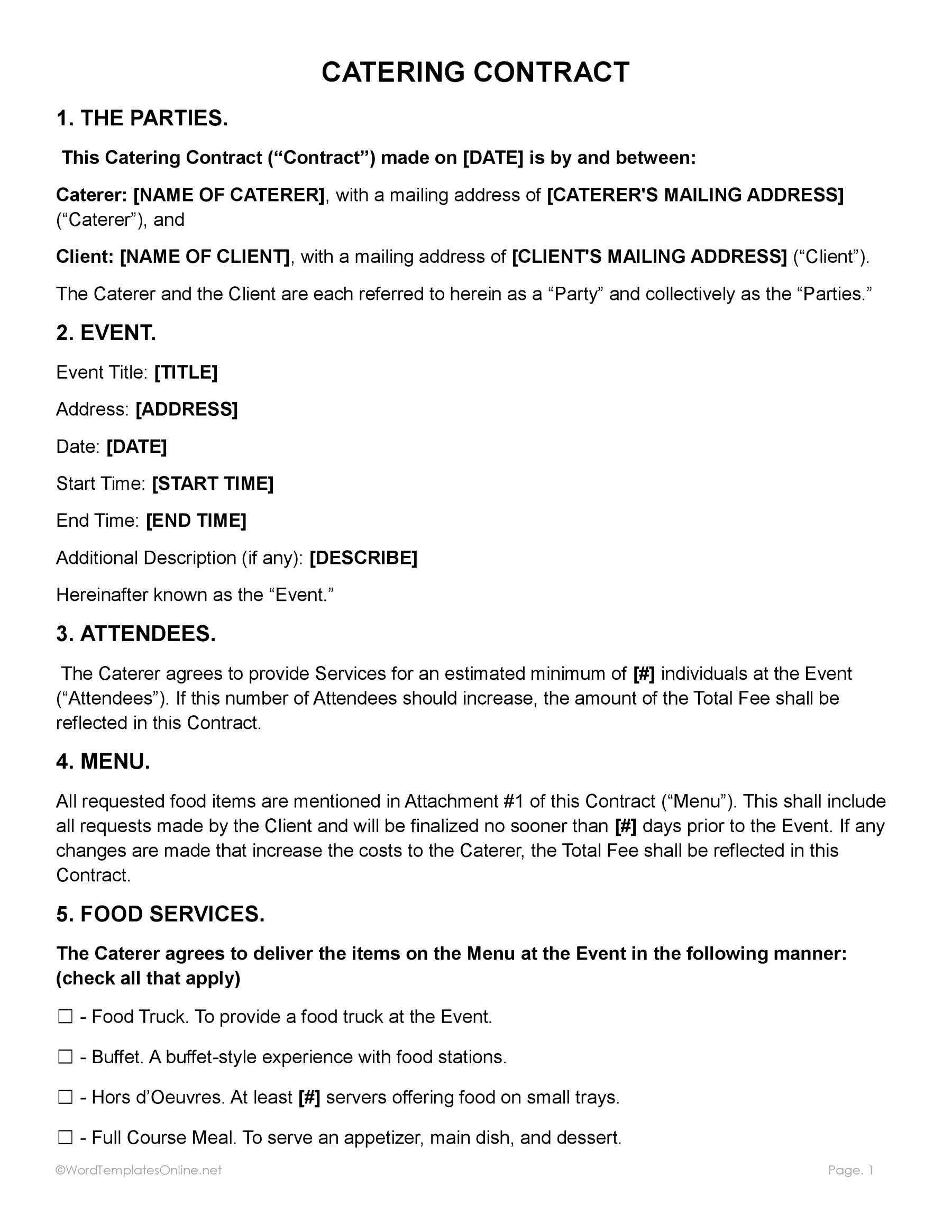
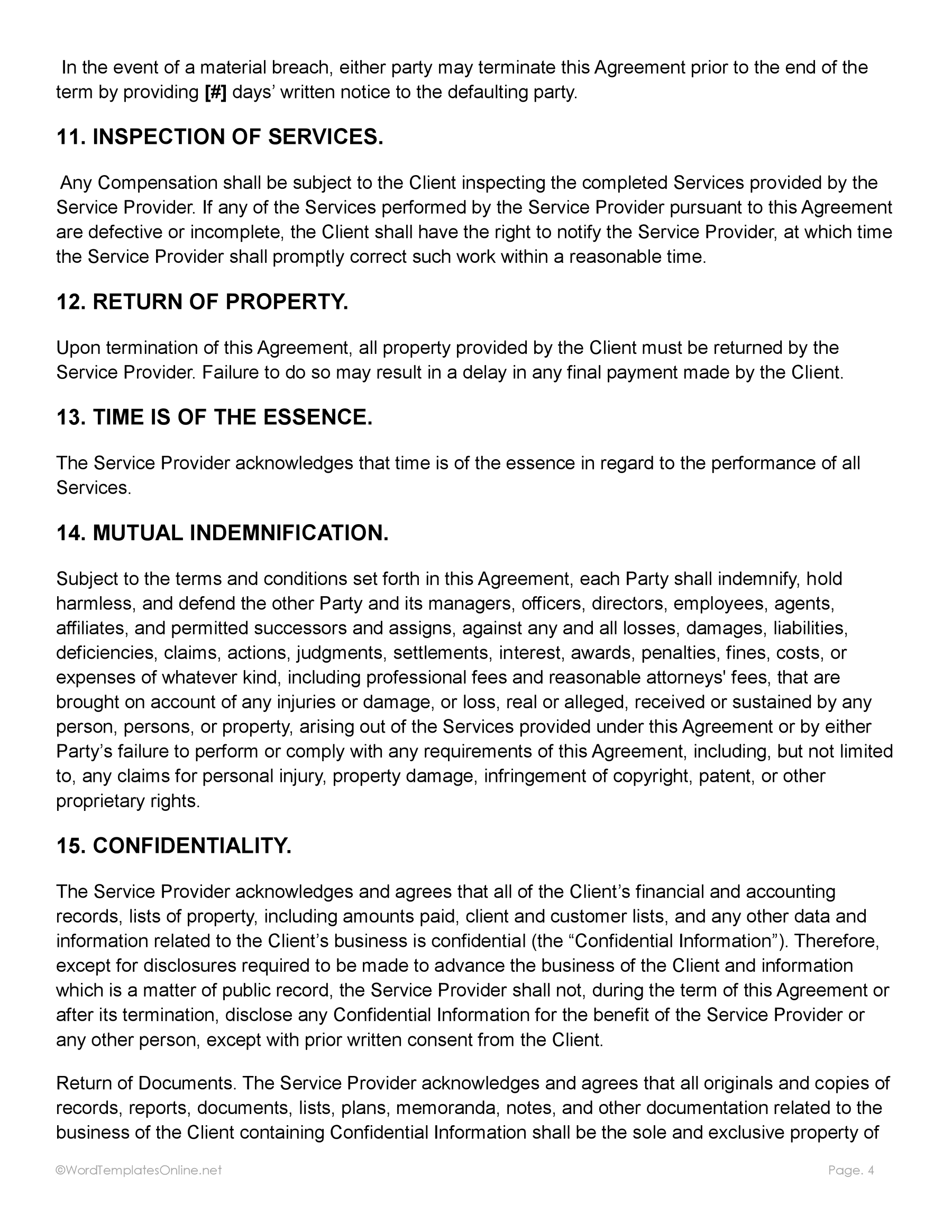
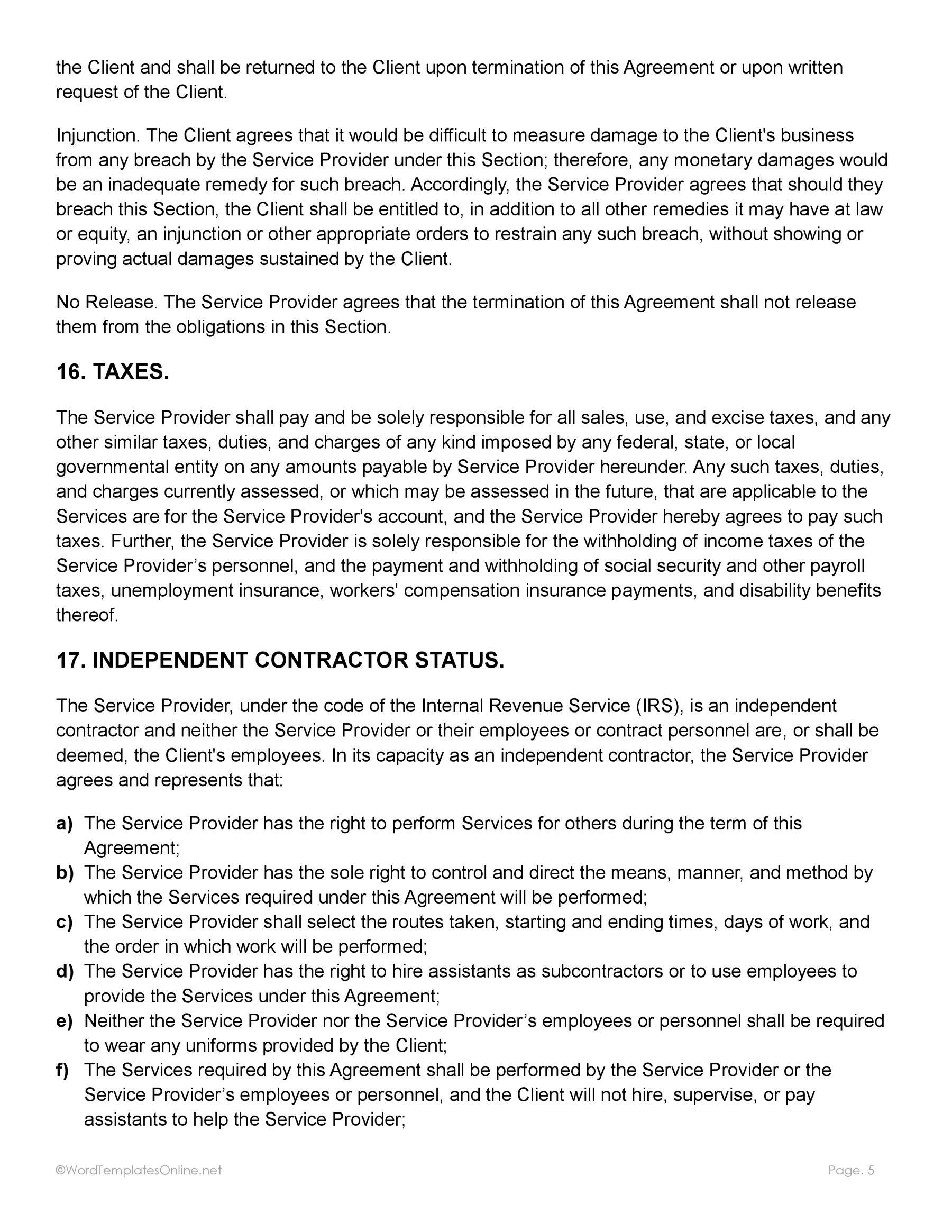
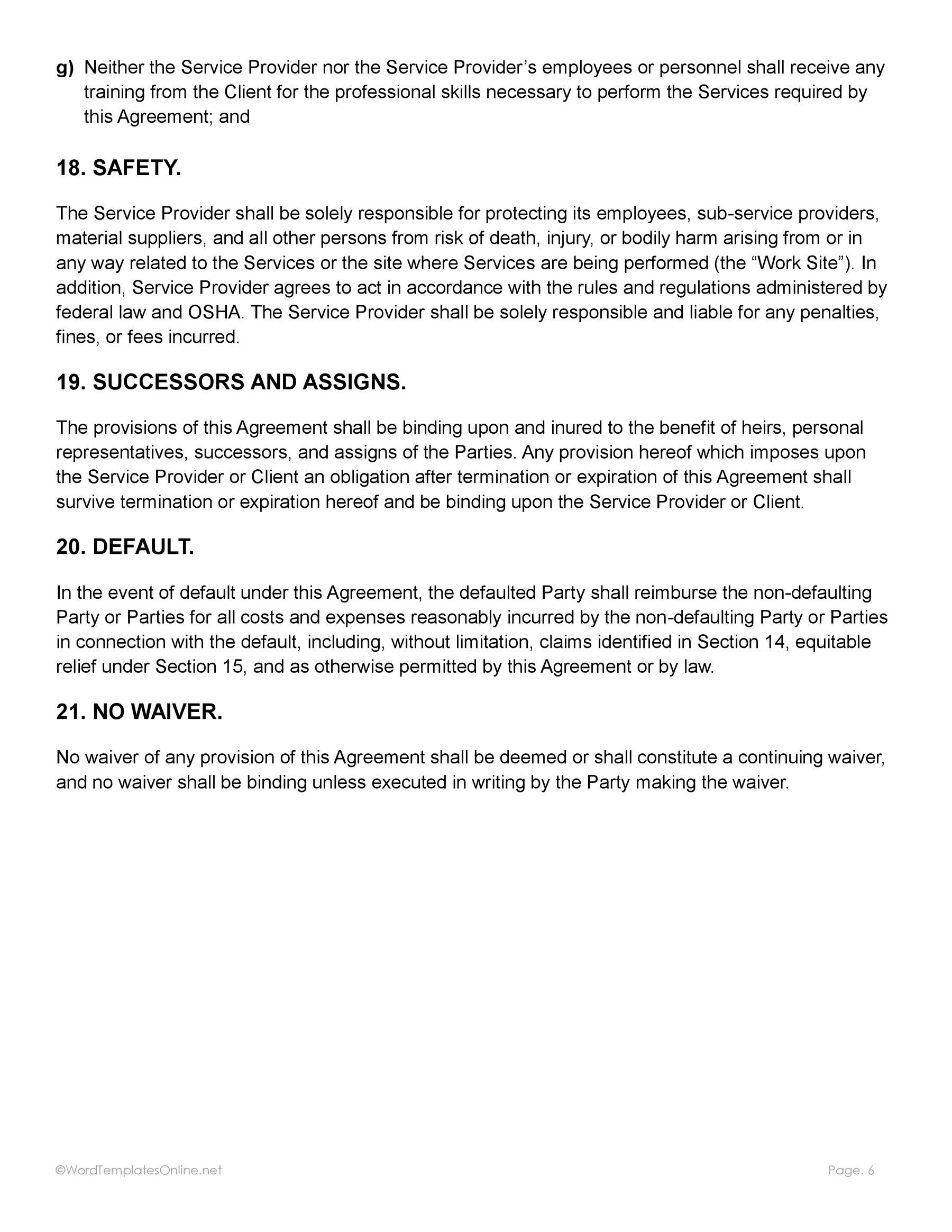
Are you looking to acquire or provide catering services? Download our catering contract template that will make the process of making a contract easy. It includes pre-written sections such as payment terms, services provided, liability clauses, event details, and cancellation policies. Also, the template is available in formats compatible with Word, Google Docs, and other common software. Always review and adapt the template to suit specific events and legal regulations.
Catering Contract Template 01
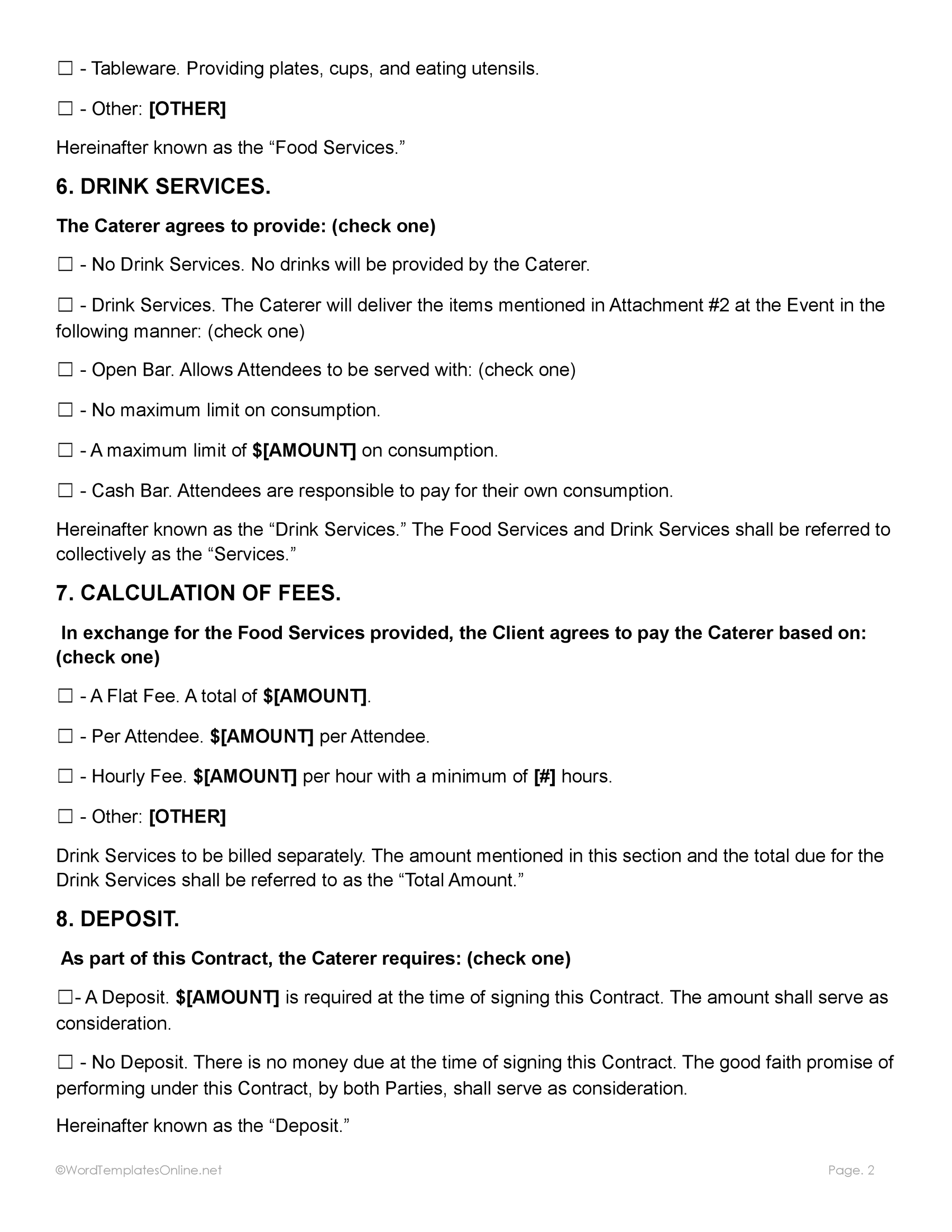

Catering Contract Template 02


Conclusion
A well-crafted catering contract safeguards the interests of both parties and outlines all the details for clarity purposes. It helps in creating a smooth event experience by highlighting responsibilities, expectations, and legal protection. However, you should use the contract appropriately and responsibly to safeguard your business or event and avoid legal implications.
About This Article