Big goals are exciting. Turning those goals into reality? That’s the real thing!
Suppose you’re putting energy and time into an idea, but the finish line keeps moving because no one is on the same page. It happens all the time, at work, in class, and even in our own personal goals, where we get so busy “doing” that we forget why we’re doing it in the first place.
A logic model is all you need to make sure your program doesn’t just end up with nothing. It’s basically about taking big goals and breaking them into small steps. Moreover, this also helps you stop the guessing game and get a clear map from the start, showing how your time and energy will lead to real outcomes.
But the real question is: do you need to build a logic template all by yourself? The good news is no. Our templates take this effort from you and give you a ready-made layout that you can use to create a simple project plan or detailed evaluation model. So, let’s get started:
Logic Models: What’s the Big Deal?
Think of them as a simple planning tool that lets you visualize how a project or program can work from start to end. In this way, you can keep your goals, activities, and expected outcomes on one page rather than putting them in scattered files.
These models are versatile enough and can be used by all kinds of organizations. The rule is pretty simple: whenever you need to plan a project, track your success, secure funding, or explain your program values to stakeholders, these models are your go-to resource.
Is a logic model template just a tool? Or a roadmap for results?
It’s easy to look at the template and think, ‘Oh, it’s just another chart.” But in reality, it’s doing a whole lot more than that. Take it as your roadmap that keeps you on the straight and narrow by showing you exactly how your resources, effort, and goals actually fit together. Plus, you get to skip the mental fatigue of trying to figure out where everyone belongs, as you’re handed a ready-made layout that gets your thinking organized from day one.
Templates, on the other hand, also make working with others a lot smoother. When everyone is staring at the same layout, it’s much easier to stay focused on your goals and actually see how each piece of the puzzle fits together. Additionally, they give a nice layer of consistency to your planning and reporting, so you can track your progress over time without constantly wondering if you’re measuring things the same way.
On top of everything, a template can be incredibly useful when you’re communicating with funders, stakeholders, or decision-makers. It removes the need to explain your project through lengthy documents; you can present a simple visual roadmap that transparently shows how your effort leads to meaningful results.
Understanding the Anatomy of a Logic Model Template
A template might look like a simple chart, but each section plays an important role in telling the story of your project. So, every part acts as a building block for a successful plan. Let’s have a look:
1. What’s the problem you’re trying to solve (problem statement)
Every project exists for a reason, and that’s why this section is put in first place. It identifies the challenge, need, or opportunity that the program is designed to address. Think of it as a “why” behind everything that comes after.
2. What resources are you bringing to the table (input)
No project runs only on good intentions. You need proper funding, tools, resources, partnerships, facilities, and a team to support the work. This section lists everything you need for a project’s success.
3. What will you actually do (activities)
Once all resources are in place, it’s time to put everything in action. From here, things get real. This part explains the activities, services, events, workshops, training sessions, or strategies that will be carried out to achieve your goals.
4. What will be delivered along the way (output or immediate results)
Think of this as the quick results of your activities. For instance, it could be the number of workshops conducted, participants trained, and resources distributed, or services provided. They’re the tangible signs that show that work is happening.
5. What changes do you expect to see first (short-term outcomes)
You can refer to short-term outcomes that focus on the early wins. Here, you will write what they can look like, such as increased knowledge, improved skills, greater awareness, or a change in attitude among participants shortly after the program begins.
6. What does long-term success look like
These are actually the big-picture goals. For instance, you can show the long-term impacts and showcase the lasting changes that a project hopes to create, whether it’s more job opportunities, improved educational outcomes, or long-term social change.
7. What could influence the results (assumptions)
Even the best plans don’t exist in a vacuum. This is the section where you write any assumptions you’ve made or outside factors that can affect the success. For example, it can be economic conditions, participant involvement, demographics, etc.
8. How will you know it’s working (progress tracking)
Goals are most likely to be achieved when you actually know how you can measure them. In this section, you will define indicators, metrics, and success measures through which you can track progress and that determine whether your project is on track or not.
Choosing the Right Logic Model Template for Your Project: Discovering the Types
If you think one template is enough to fit in every situation, you might not get the point. Different projects have different needs; that’s why we have designed several templates that go with the specific situation. Let’s find out:
1. Basic/blank logic model template
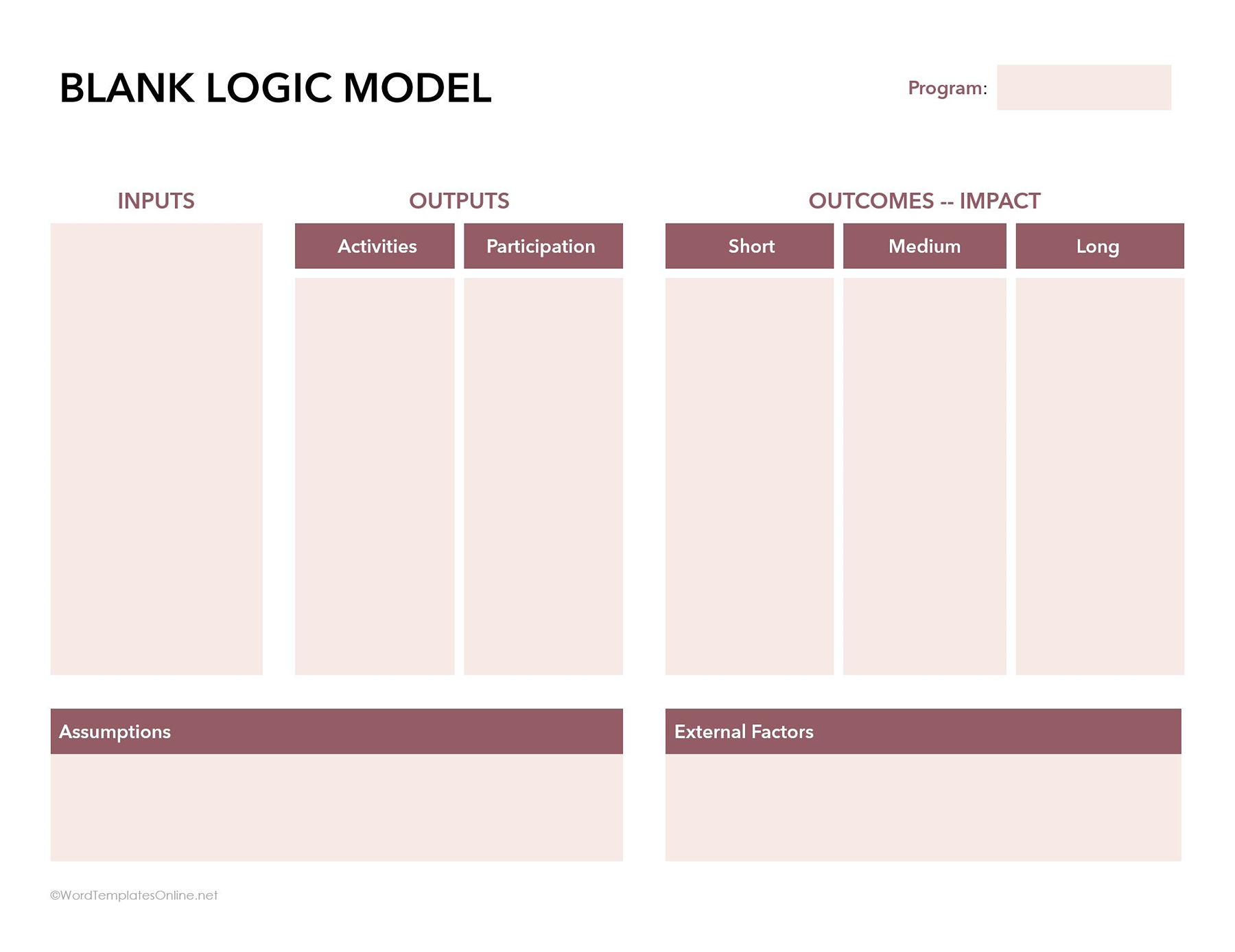
If you like starting with a clean slate, this template is a good option. It lets you build a logic model from the ground up by giving you space to define your resources, planned activities, participants, and expected outcomes. The best thing is that it might seem simple, but it has everything a logic model should include. Lastly, it also has extra sections for assumptions and external factors that help you think beyond the plan and consider what could influence success. Overall, it’s fit for every situation, such as nonprofits, community organizations, educators, grant writers, business and project teams.
2. Fillable logic model template
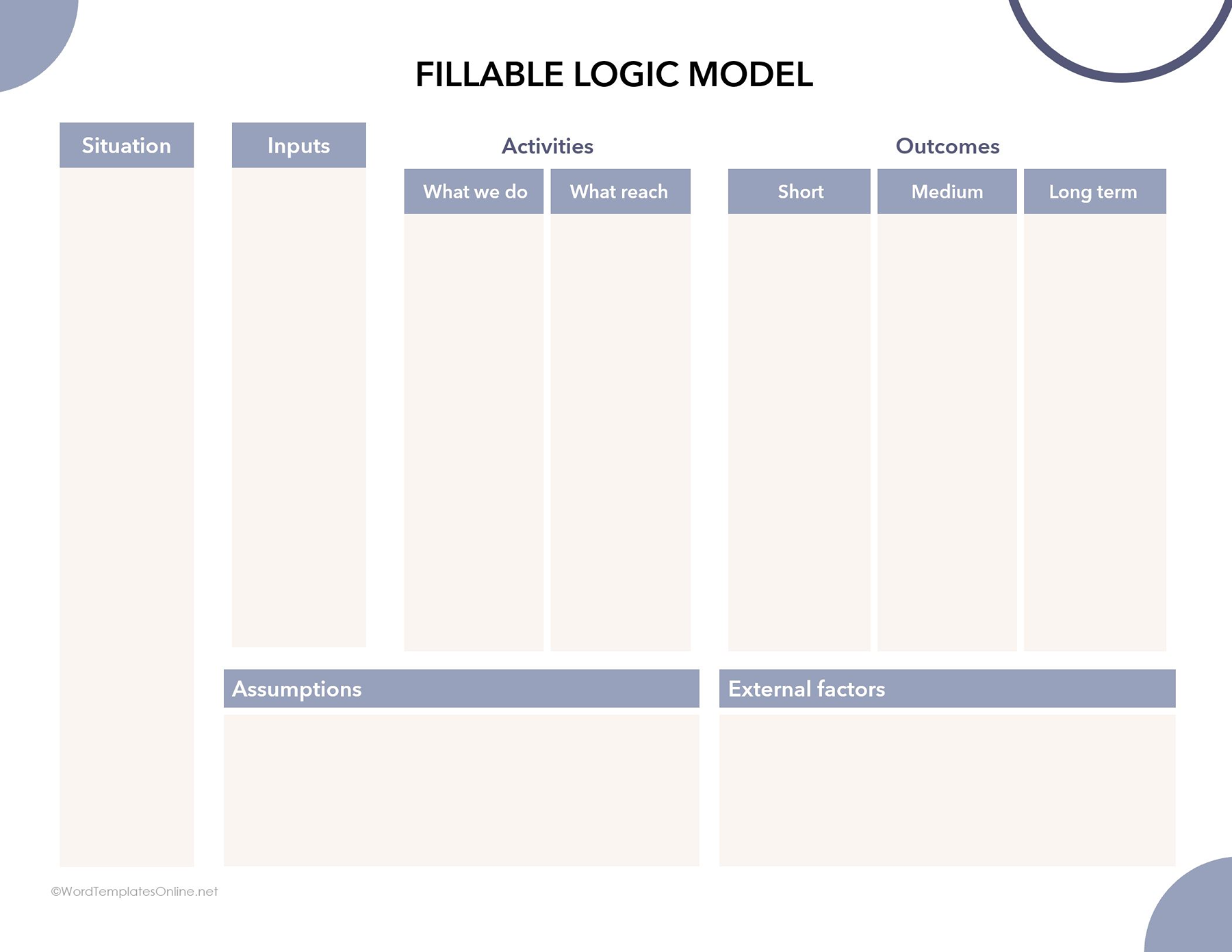
This is a “grab and fill ” template as it has a simple way to map out a project from start to end. As you can see, it initiates with the situation or problem. After that, you need to fill out what resources you have for the project. Just like basic templates, it has an activities section that outlines what you’ll do and what things you’ve done in order to reach it.
Finally, it has a detailed outcomes section where you track the short, medium, and long-term results you want to achieve. At the end of the format, you’ll also see an assumptions and external factors section, which is important for determining what factors can alter your success.
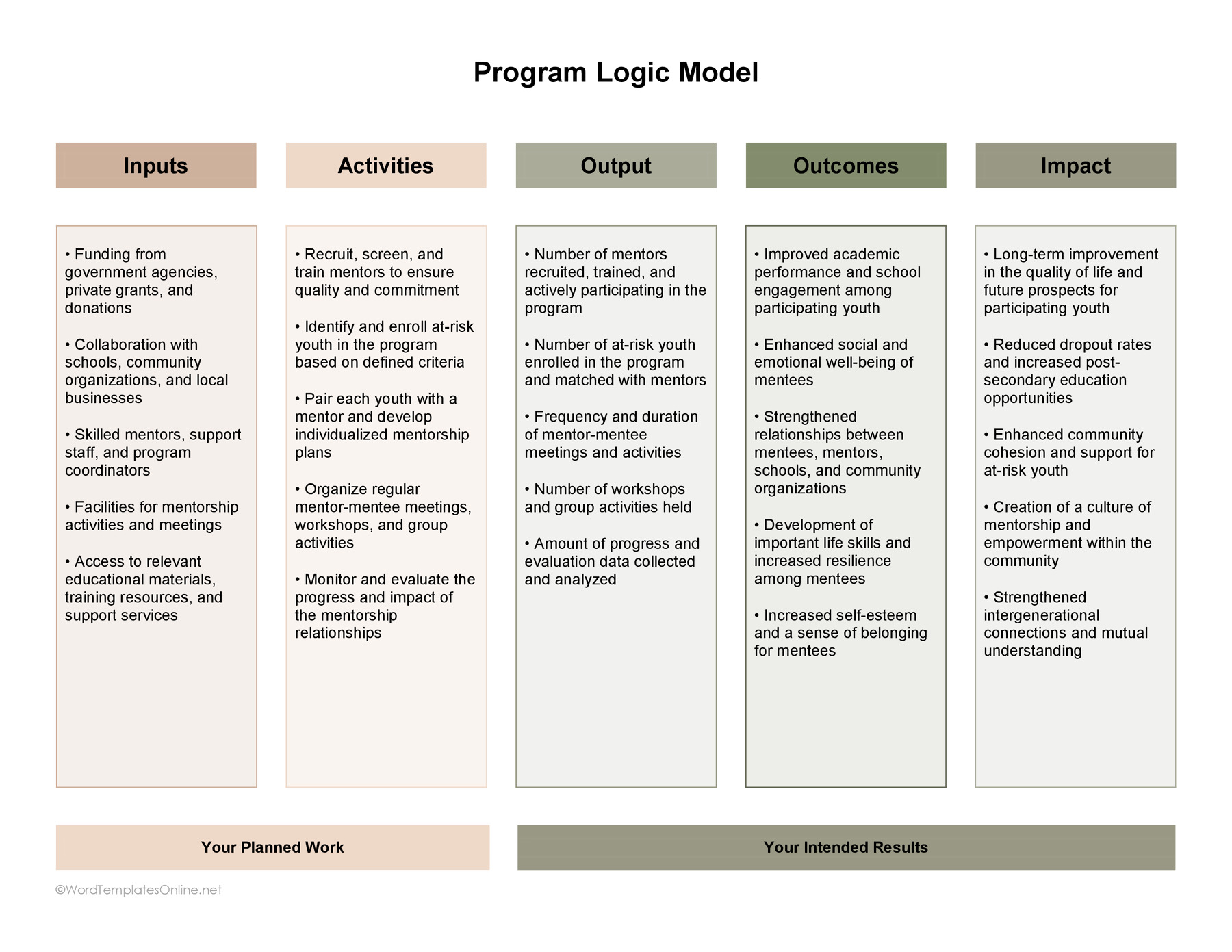
3. Program logic model template
The template is designed specifically for organizations that want to clearly show how a program is expected to create results. It walks you through the entire process seamlessly, starting with the resources and support available, moving into the activities you’ll carry out, and then describing the outputs, outcomes, and long-term impact you hope to achieve.
What makes this template highly useful is that it doesn’t focus on what you’re doing; it also mentions why those activities and how they add up to achieve bigger goals over time.
It’s a great fit for nonprofits, educational programs, community initiatives, and grant-funded projects that need a simple way to plan, communicate, and measure success.
4. Project logic model template
The template is built to manage a specific project from start to end. It lets you connect the resources you have, the tasks you’re handling, and the results you expect to see along the way. Unlike extensive program models that focus on general ongoing activities, this version is laser-focused on a single project, wrapped with defined goals, timelines, and specific deliverables.
Furthermore, it’s a tidal game-changer for project managers, business teams, researchers, and anyone else who wants to keep projects on the rails while making sure every daily task actually leads to the big win.

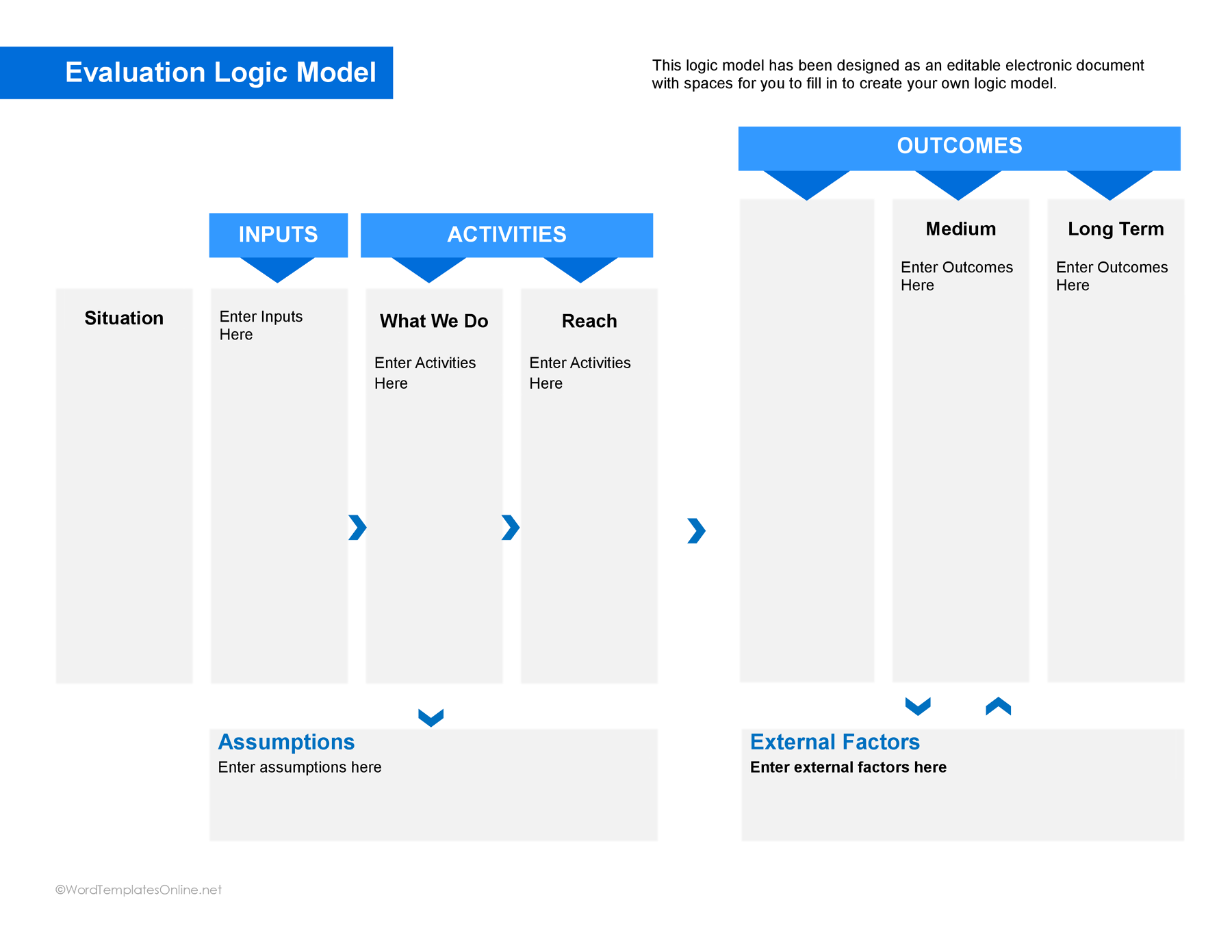
5. Evaluation logic model template
An evaluation logic model template is a highly powerful tool for organizations looking to verify if their projects are actually hitting the mark. While standard models emphasize the planning phase heavily, this specific version goes further by prioritizing the tracking of performance, outcomes, and long-term impact.
This template can link daily activities and output to transparent, definite results, which makes it easier to see what’s actually working, what’s falling flat, and where you need to get back on track. It is useful for any business or organization that needs to present solid, evidence-based progress reports to funders, stakeholders, and higher authority.
6. Decision logic model template
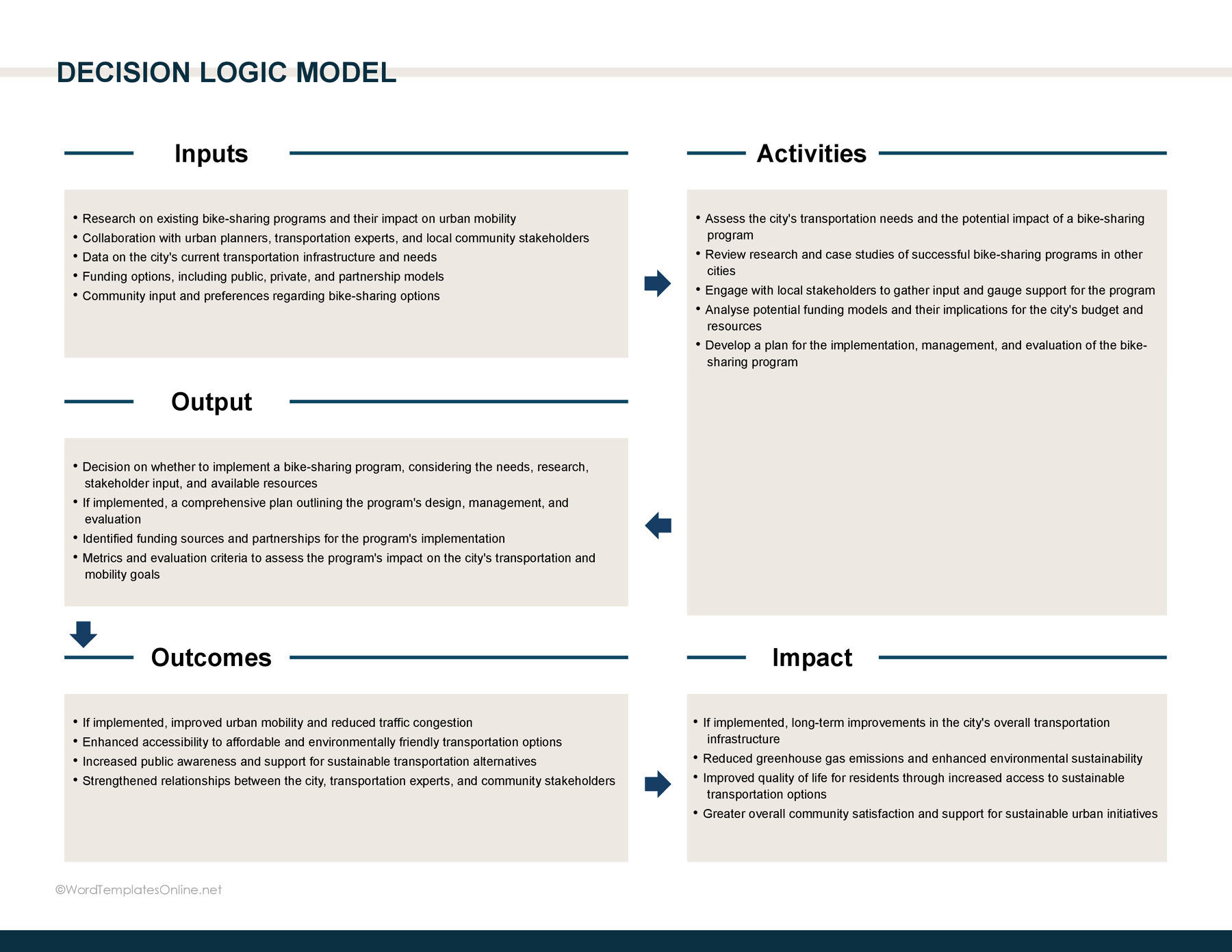
This type of template is built for individuals and organizations to help them make better, more informed decisions. With this one, you don’t need to come straight to the conclusion; in fact, you break down the decision-making in simple steps such as finding the problem, checking the available resources, deciding what actions to take, and looking at the potential outcomes for each choice.
Furthermore, it’s helpful when you need to compare different options, weigh the risks and benefits, and get a clearer picture of how those decisions can impact your result later on. Overall, you can utilize this template for business planning, policy development, and complex projects where several factors need to be considered before moving forward.
7. Education logic model template
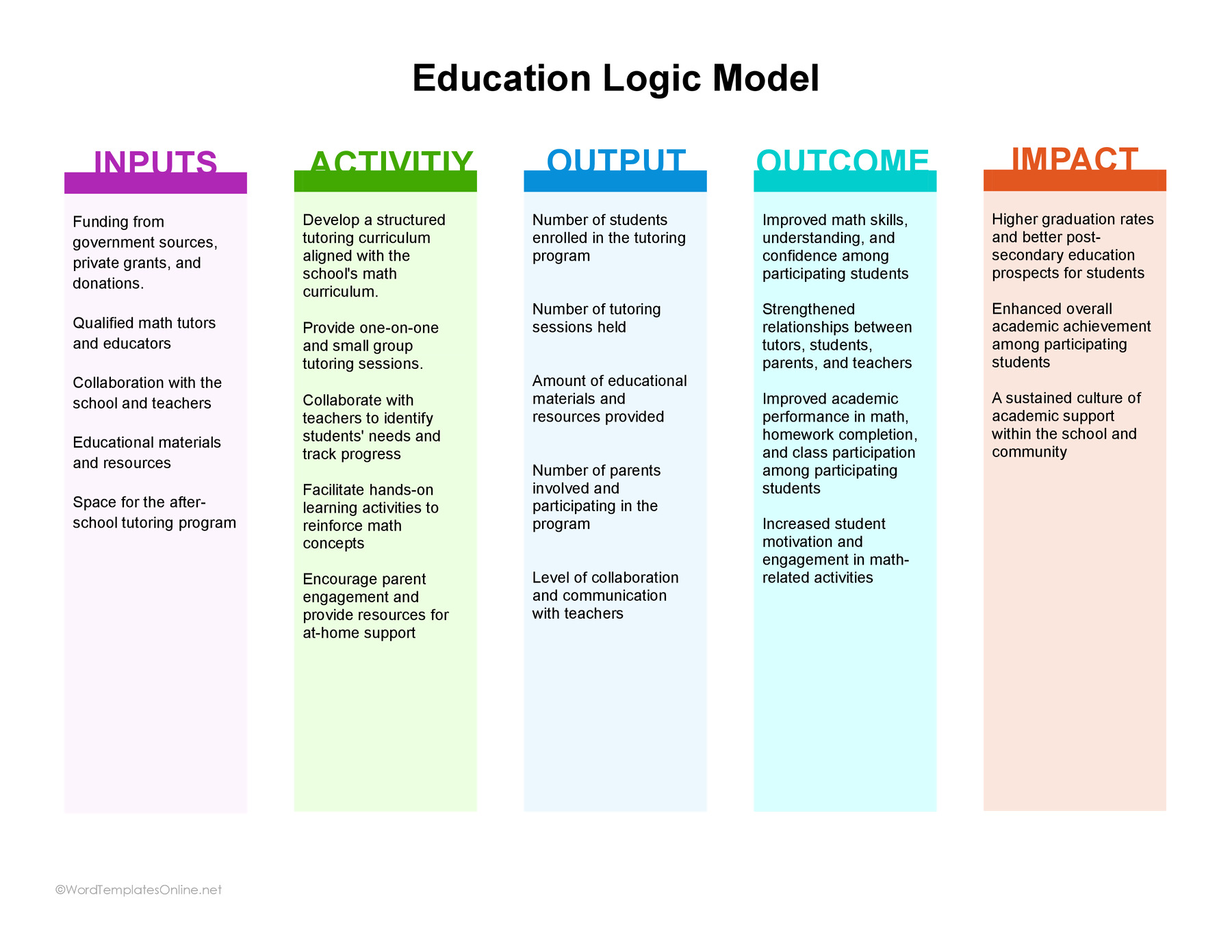
This template follows the basic pattern and shows how an educational program can use resources and activities to achieve meaningful student outcomes. Let’s say it starts with inputs, such as funding, teaching staff, learning materials, and school partnerships. These resources lead to initiating activities that can be training sessions, parent engagement, and other learning opportunities. These activities lead to outputs, such as the number of students who get educated, the number of sessions conducted, and the number of resources distributed.
From there, the template focuses on outcomes, which are the short-term goals such as better academic performance, stronger student engagement, and increased confidence in learning. Finally, the impact section gives you the bigger picture, meaning long-term goals of your activities, such as higher graduation rates and better educational opportunities.
Overall, the template is highly valuable for educational institutes, teachers, tutors, and non-profit education programs to plan and evaluate how an educational initiative will come out eventually.
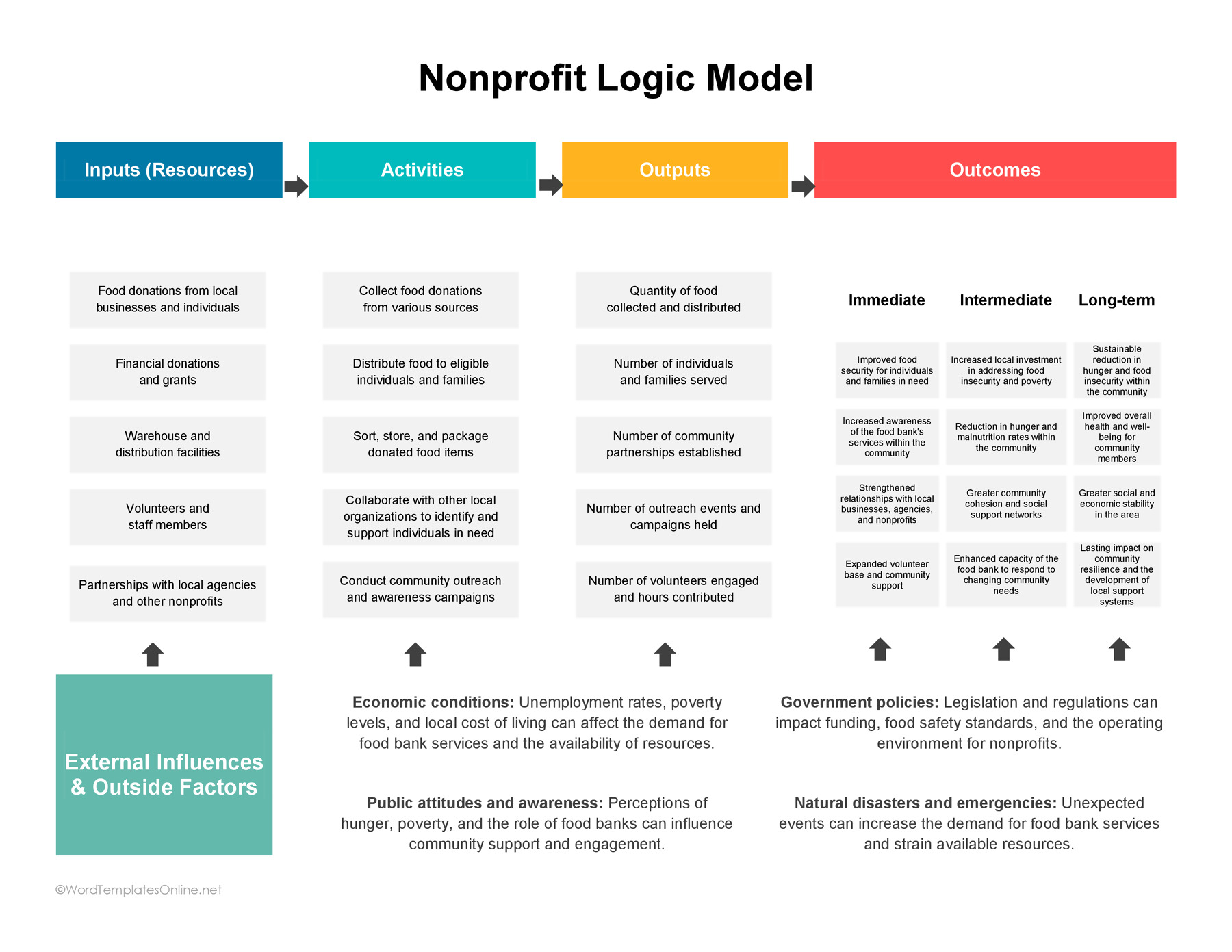
8. Nonprofit logic model template
The layout offers you a clear picture of how a nonprofit converts resources into better community outcomes. First, you need to add inputs, such as what materials you need (donations, grants, volunteers, facilities) that support the organization’s work. These resources fuel the activities, including gathering donations, delivering services, running outreach programs, and collaborating with local partners.
From here, you will map out short, medium, and long-term outcomes, showing how quick support can lead to increased awareness, strong community involvement, and improved well-being. Plus, what makes this template especially useful is its focus on external and outside factors, such as economic conditions, government policies, and unexpected factors that affect program success.
Note: The examples given in templates are solely for understanding purposes. You can edit and use them accordingly.
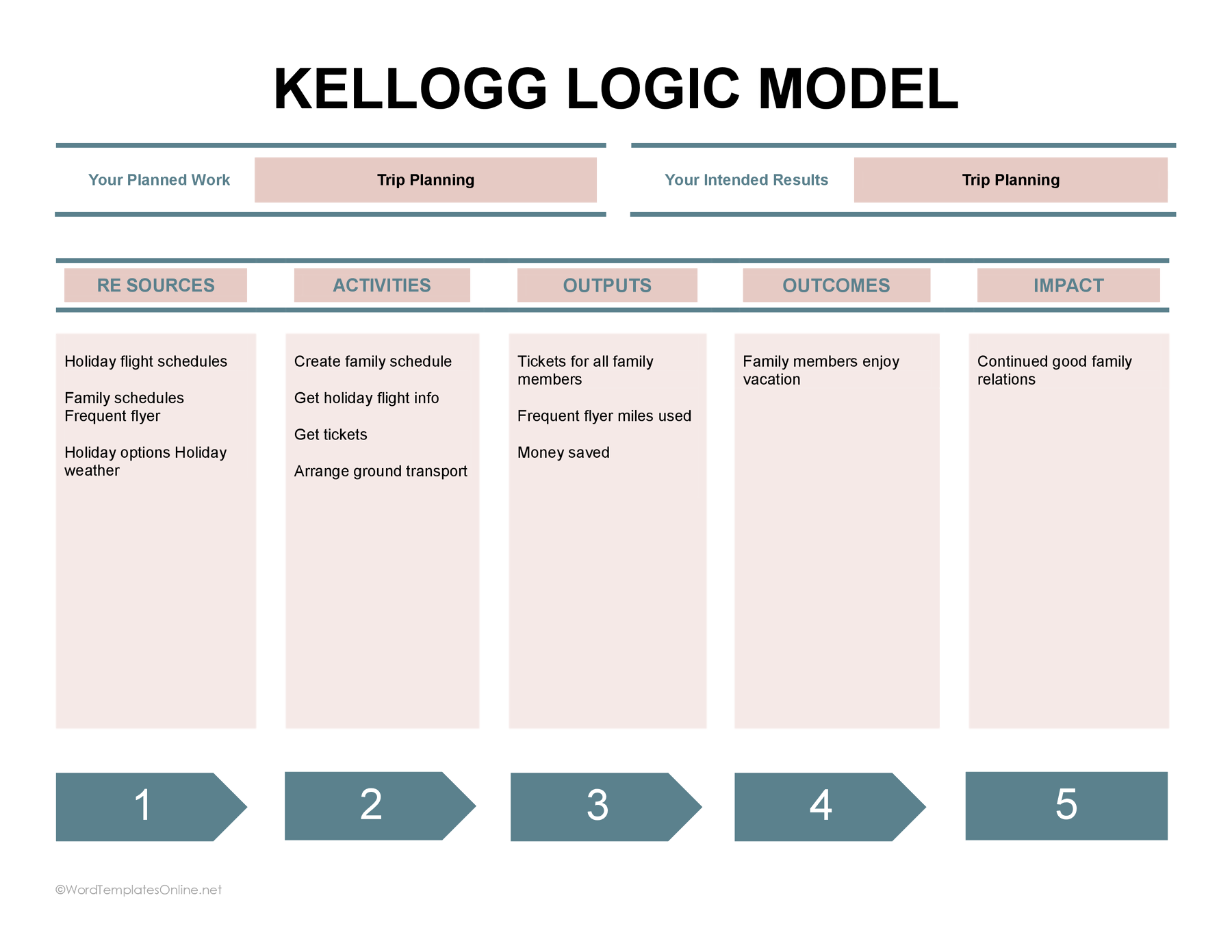
9. Kellogg logic model template
If you’re working on a program, seeking grants, or just need a solid way to show your results, you’ve probably heard of the W.K. Kellogg Foundation’s logic model framework. It’s the most popular, structured way to map out everything, from resources you’re investing to the long-term impact you’re hoping to make. Because it’s clear and focuses heavily on evaluation, it’s the go-to for nonprofits, schools, and public agencies that really need to prove value to their funders and community partners.
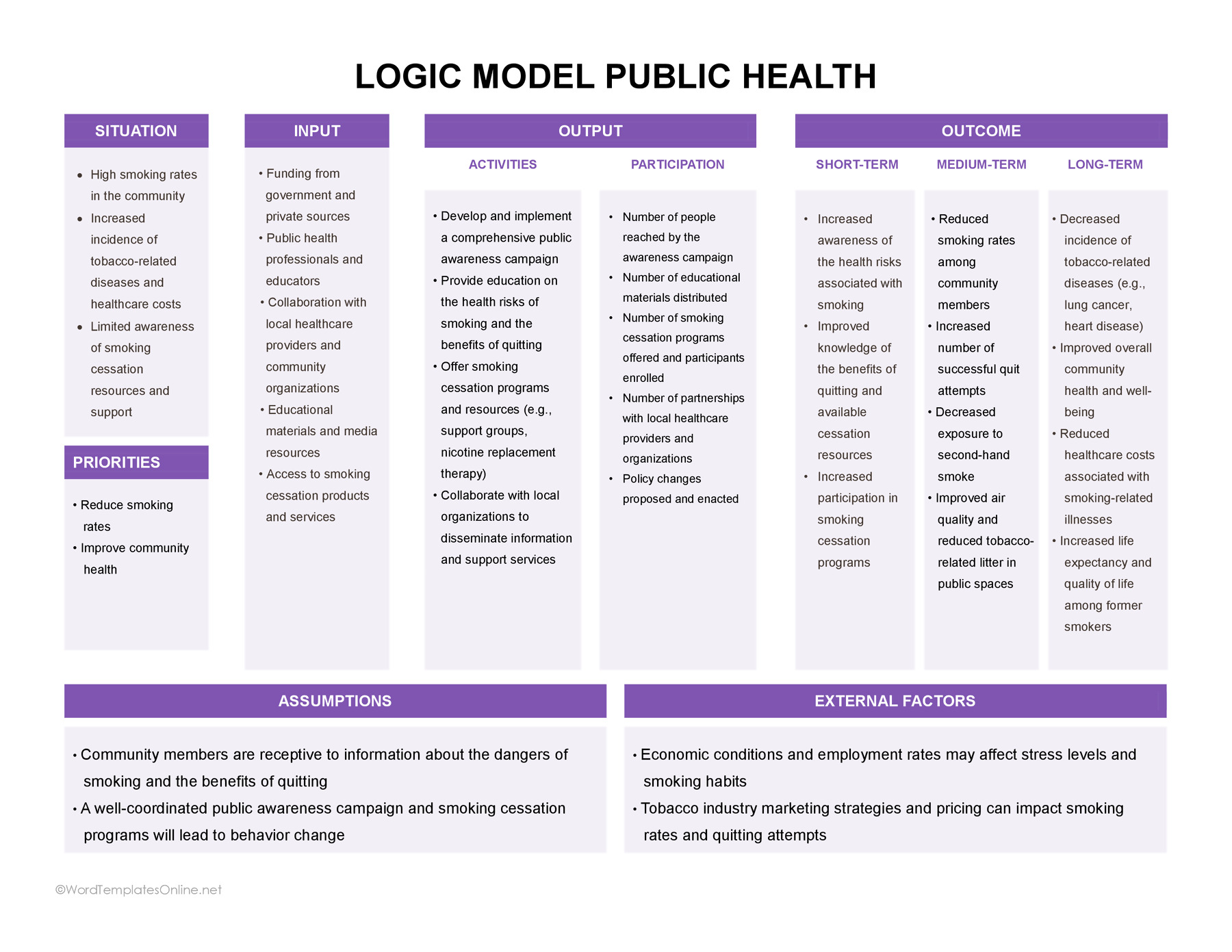
10. Public health logic model template
This one is designed for programs that circle around the health and well-being of the communications. These templates are ideal for organizations to find out exactly how their resources, health initiatives, educational campaigns, or screenings actually lead to better habits and improved health.
It is perfect for public health agencies, hospitals, healthcare and government groups that need to plan their programs, keep an eye on results, and want to see the real impact they’re having on the health of their community.
Logic Model Public Health
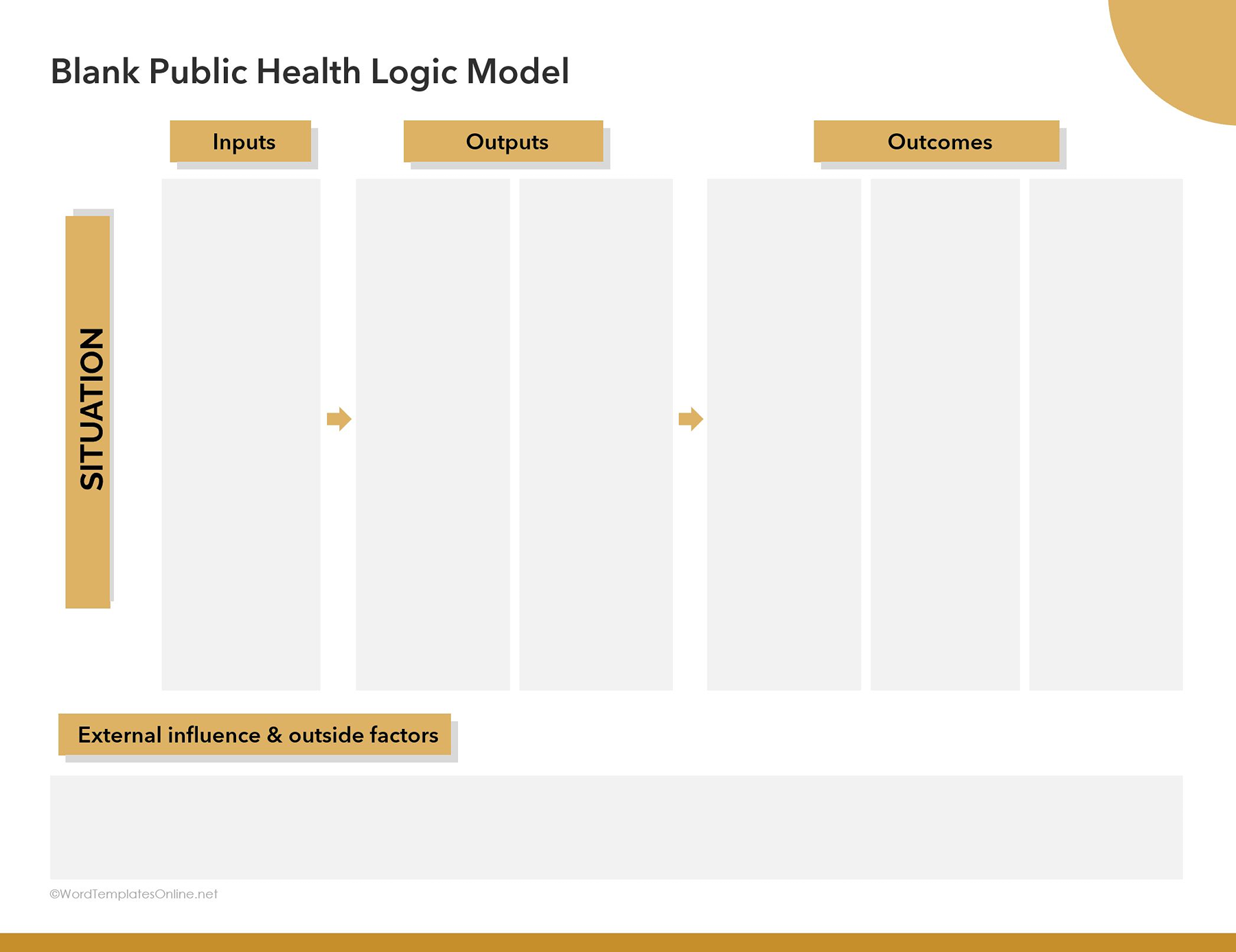
Blank Public Health Logic Model
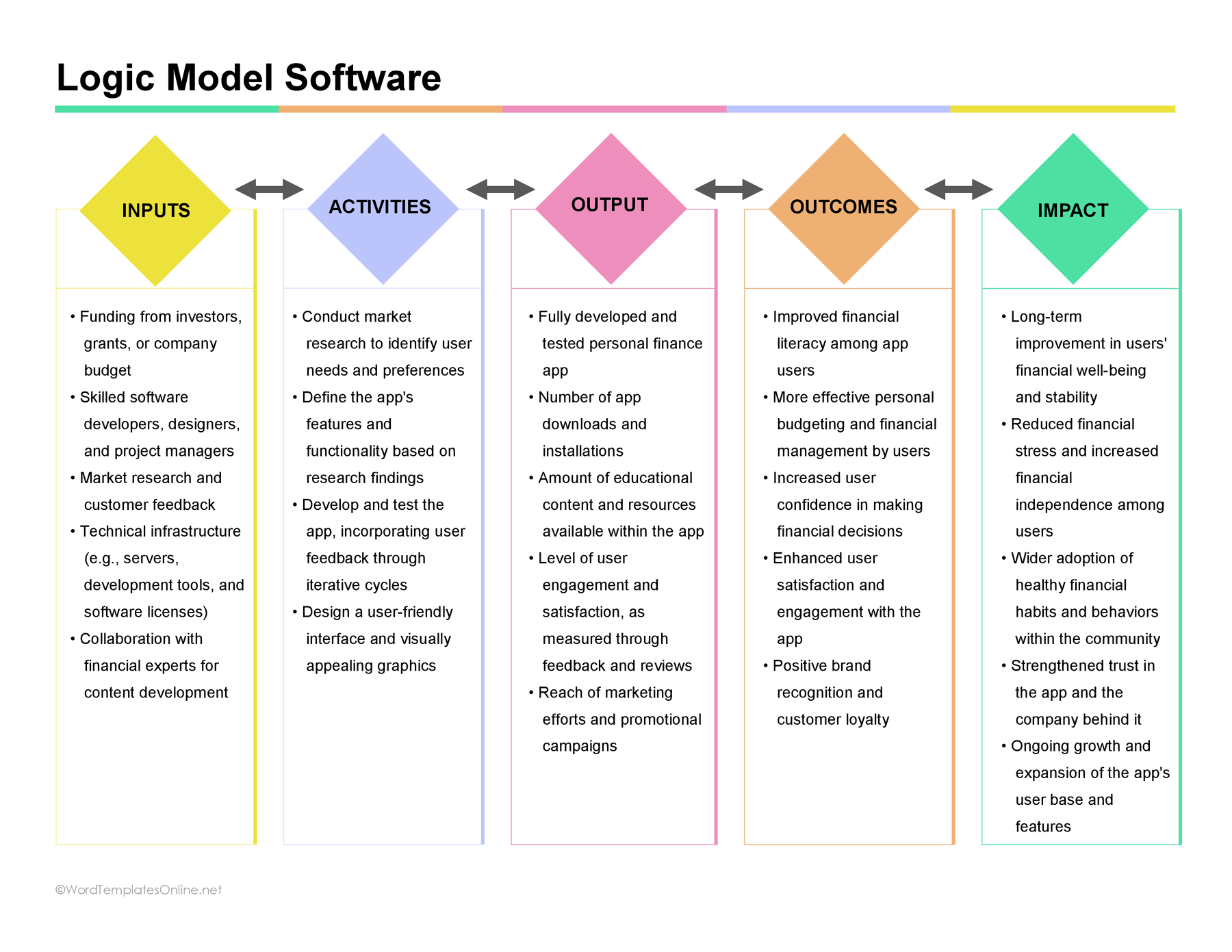
11. Software development logic model template
This particular type of template helps teams connect technical work to business goals. They define the resources available, development activities, product features, and expected outcomes. Basically, the template makes it super easy to see how your actual coding work connects to things that matter, like happy users, better operations, or overall business growth.
Overall, this template is a huge win for software companies, dev teams, IT folks, and project managers who want a clean way to plan out their projects and prove they’re winning, beyond just pushing out another product.
Common Logic Model Mistakes That Can Throw a Project Off Track (And How the Template Can Help)
People assume that any logic model will get the job done, but the truth is that even the best-laid plan can fall short if you let some mistakes slip through. The best possible way is to look out for these mistakes and use a reliable template.
- Mixing Up What You Do With What You Achieve: A frequent mistake most people make is confusing activities and outputs with outcomes. Just because something was completed doesn’t automatically mean it created better change. A good template is all you need to keep everything separate so you can focus on both work being done and the results it produces.
- Setting Goals That Sound Good But Can’t Be Tracked: It’s super easy to set big goals that sound great on paper, but if you can’t actually track them, you’ll never know if you’ve crossed the finish line. The beauty of using this template is that it forces you to rethink goals in terms of what is actually checked and evaluated.
- Trying to Fit Too Much Into One Model: Sometimes teams want to capture every tiny detail, goal, and activity. This makes the result confusing and difficult to follow. The best way is to keep things focused and organized so that it makes the model easier to use and understand.
- Forgetting About Factors You Can’t Control: The truth is, projects don’t exist in a vacuum. There are several factors such as economic conditions, policy changes, community support, and outside influence that can affect results significantly. Ignoring these factors can lead to unrealistic expectations and make evaluation more difficult later on.
- Creating It Once and Never Looking At It Again: Don’t let your model take the dust after you make it. Projects evolve, goals change, and so does the model to actually show what’s happening.
So, Is a Logic Model Worth the Effort?
Honestly, it’s a big yes. A model is not just a chart that you need to fill out to get funding and forget about. It’s a practical way to get everyone on the same page, connect big ideals to real actions, and see whether your efforts are actually making a difference. Whether you’re running a nonprofit, handling a project, planning a public health program, or building a new initiative, a good model helps you turn “we hope this works” into “here’s how we’ll make it work.”
And what’s more exciting? You don’t need to build it from scratch. You just need the right template to let everything into work. THAT’S ALL!
Frequently Asked Questions
Is a logic model the same thing as a strategic plan?
Not at all. People often take them as the same thing, but they are very different. A strategic plan focuses on the bigger picture, such as where an organization wants to go, and its long-term priorities. Whereas a logic model zooms in on a specific program or project.
How detailed does a logic model need to be?
As detailed as it needs to be, but no more. A good one has clearly mentioned resources, activities, and results without overwhelming readers with unnecessary information.
About This Article