Marriage is not just about signing papers, cutting cake, and clicking charming photos. It’s about making a lifelong vow of sticking together through every up and down. Couples literally talk about everything before coming into marriage: where to live, how to manage money, who handles what, and what the future might look like.
But one topic that is often ignored is how financial matters would be handled if life takes an unexpected turn. That’s why many couples use a postnuptial agreement.
Despite the big legal-sounding name, this agreement isn’t particularly about preparing for divorce or expecting the worst. In many cases, it’s used as a real-life document that helps married couples get on the same page about debt, assets, business interests, inheritance, and responsibilities. Plus, you can also consider this as a protection and clarity wall in big financial decisions.
Now you might be thinking, what actually goes into this agreement? Well, this article is all about postnuptial agreements, what it might take to create one, and how templates can help you put everything in writing. So, time to delve into this topic.
So, What’s Actually A Postnuptial Agreement?
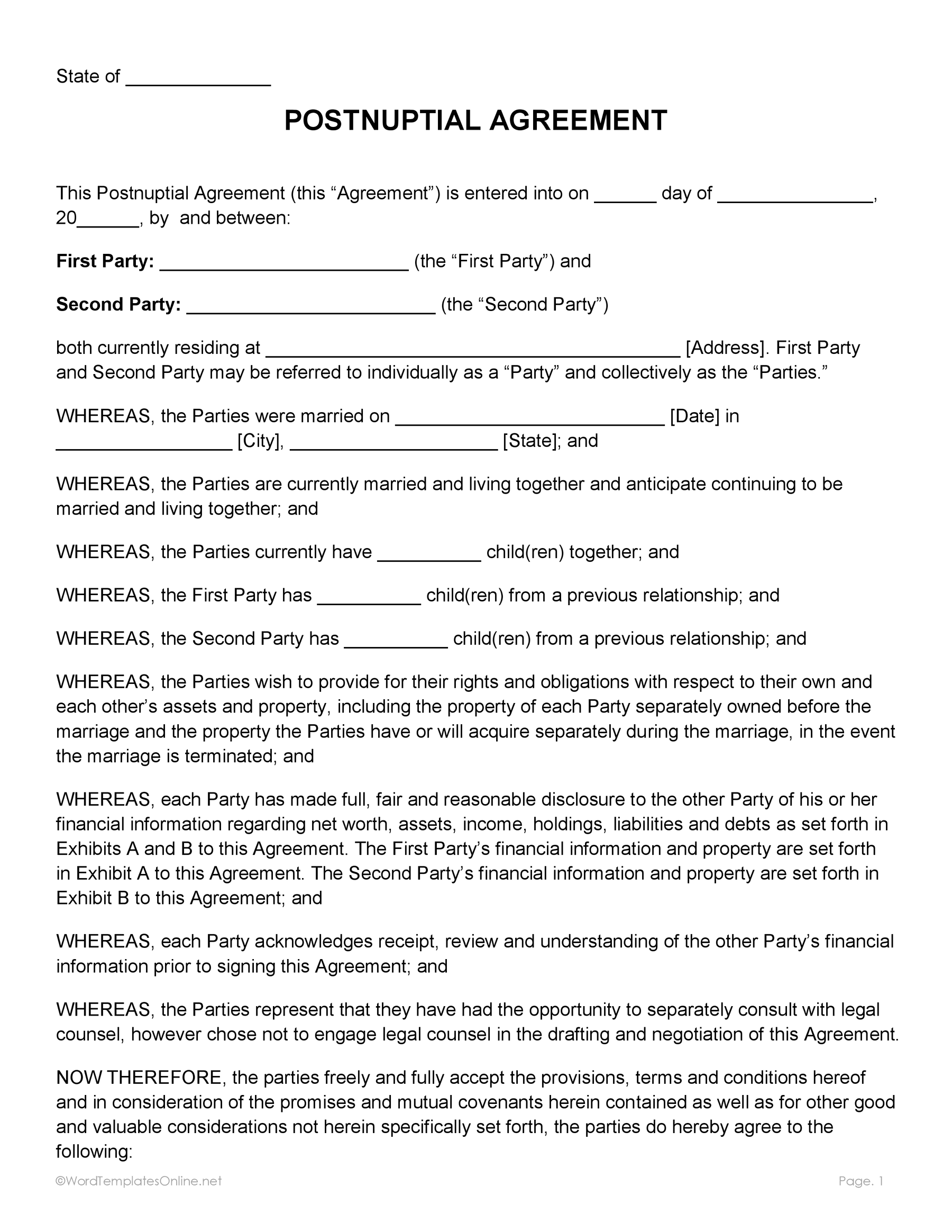
This agreement is a legal contract, as mentioned, made by spouses after they are in a marital relationship. It defines how certain financial matters, such as loans, assets, and property rights, will be managed during the marriage or if the relationship ends in separation, divorce, or death.
People say it might sound similar to a prenup; it might be to some extent, but the key difference is that it’s signed after the wedding, not before. Usually, this agreement works by documenting financial arrangements that both spouses voluntarily agree to. Once both parties have signed, it acts as a written record of how money matters should be treated.
Why you must use a postnuptial template
Handling an agreement can feel a little overwhelming, especially in cases where you have never dealt with legal documents before. That’s why a template comes to the rescue for you. They have everything pre-defined and formatted, so you don’t need to figure out what information belongs to which section of the agreement.
Moreover, templates help couples to know what things come in them so that they have more productive conversations about money and future expectations. This removes the stress of thinking about what should come in the document, as it naturally guides you through areas that deserve your attention.
Most importantly, using a template literally saves plenty of time, reduces stress, and gives a practical starting point for building an agreement that fits your specific situation.
What exactly comes in a postnuptial agreement template
Inside a postnuptial document, it looks like a lot is happening, which intimidates a lot of people. But once you break it down, you will get to know that it’s just a document setting clear financial expectations between couples. Let’s find out what a template must have
1. Spouse identification and agreement details
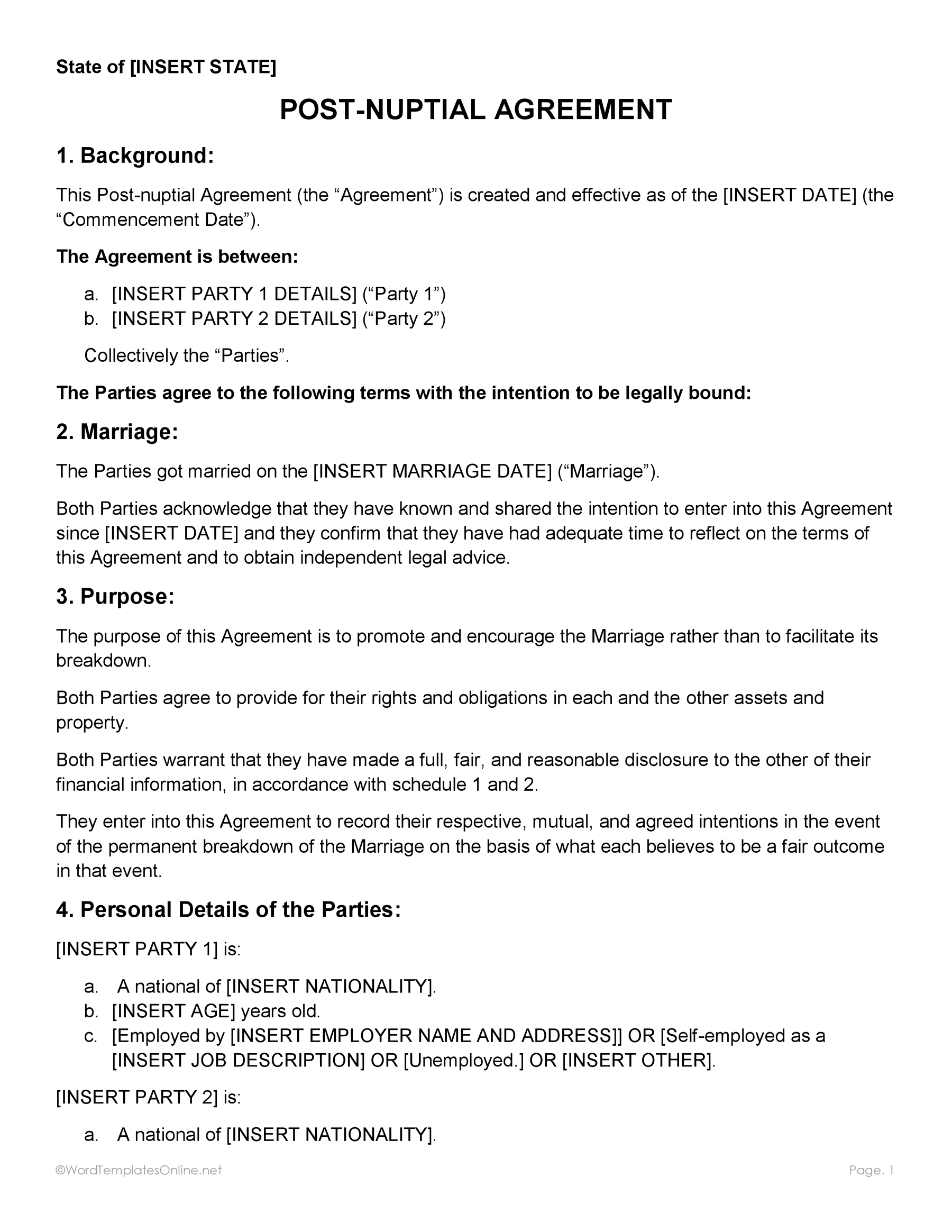
Every agreement starts with the basics. So, it goes the same here. First of all, you need to identify both spouses, add important dates, and officially confirm who the agreement applies to. Think of this section as the introduction that sets everything in motion.
2. What this agreement is really about (intent)
This is where your agreement explains why it exists in the first place. Maybe the couple wants to protect certain assets, address debt concerns, or simply wants to create financial boundaries. Whatever the reason, this section puts those purposes transparently into writing.
3. Separate property provisions
Not everything in marriage is automatically shared. This section deliberately confirms which assets belong to each spouse individually and makes sure those assets will remain separate property moving forward.
4. Joint property arrangements
While some assets belong individually, some are owned together. So, for this reason, this segment of the template clarifies how shared property, investments, savings, or other shared assets will be handled so everyone has a clear idea where they belong.
5. Keeping finance fair (debt clause)
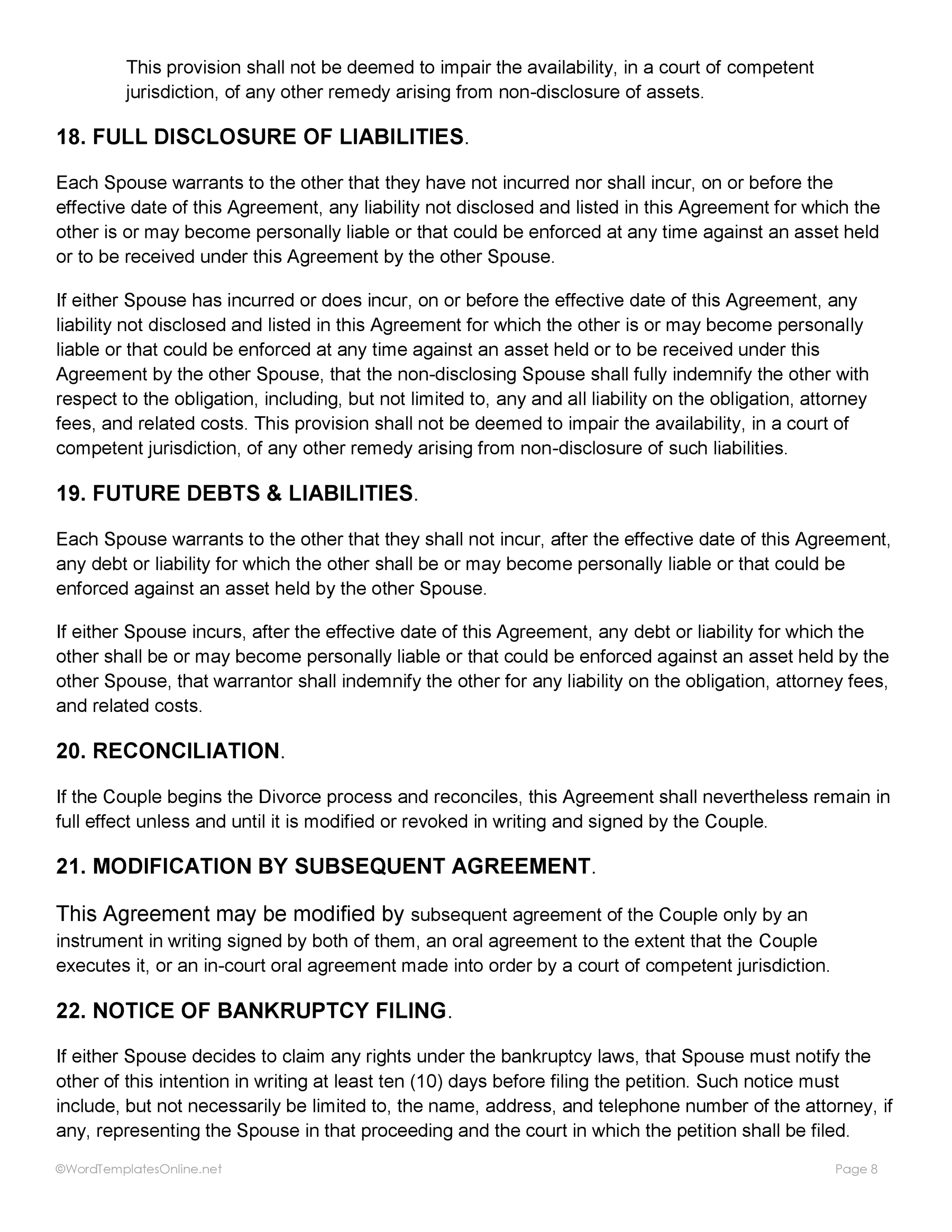
Drawing a financial boundary is very important even if you’re in a happy marriage. That’s why most of our templates have this part, which clearly describes that any debt you or your spouse takes individually remains your responsibility, not the other person. The only situation where it is “shared” is if you both openly take it on together or if there is any legal proof that you both are responsible for it.
6. Matrimonial property release
Some templates also have this clause, which is generally a “no state interface clause”. It spells out that you both are informed about your state’s default rules about splitting property, but you’re choosing to ignore them and make your final deal instead.
7. Dower, curtesy, and homestead release
Not all, but some of the detailed layouts focus on this section, which is usually about old-school legal rights. Adding this means you’re both promising to give up automatic “spousal claims” you might face each other’s property under state law. However, your assets will remain separate.
8. Waiver of right clauses (what’s mine is mine)
Consider this part as the mutual agreement to leave certain things alone. It clearly lists any legal rights or property claims that either spouse is agreeing to give up. The goal of putting these boundaries in writing here is to both know exactly where you stand so that there’s no stress over financial claims or disputes.
9. Sorting out spousal support (alimony terms)
Money talks can definitely feel a little awkward when you share a spousal bond. However, this section handles the heavy lifting for you. It transparently lays out whether one spouse will pay support to the other if things change, how much that payout would be, and how long it would last. Addressing this all upfront takes the emotion out of the math, giving both of you financial clarity and security for the future.
10. Retirement and benefit rights
Let me clear one thing: financial planning doesn’t stop with bank accounts and property. That’s why it is important to address retirement plans, pensions, benefits, and other long-term financial assets that may need special consideration.
11. Additional documentation requirements
This agreement is usually supported by financial records and disclosures. Here, you attach the proper documentation required so that the agreement has everything to stay organized and transparent.
12. Dispute and contest provisions
Nobody makes an agreement expecting a disagreement, but it’s still smart to plan this instead. So, in this part, you will explain how conflicts related to the agreement would be handled if questions come up later.
13. Entire agreement & modification clauses (the final word)
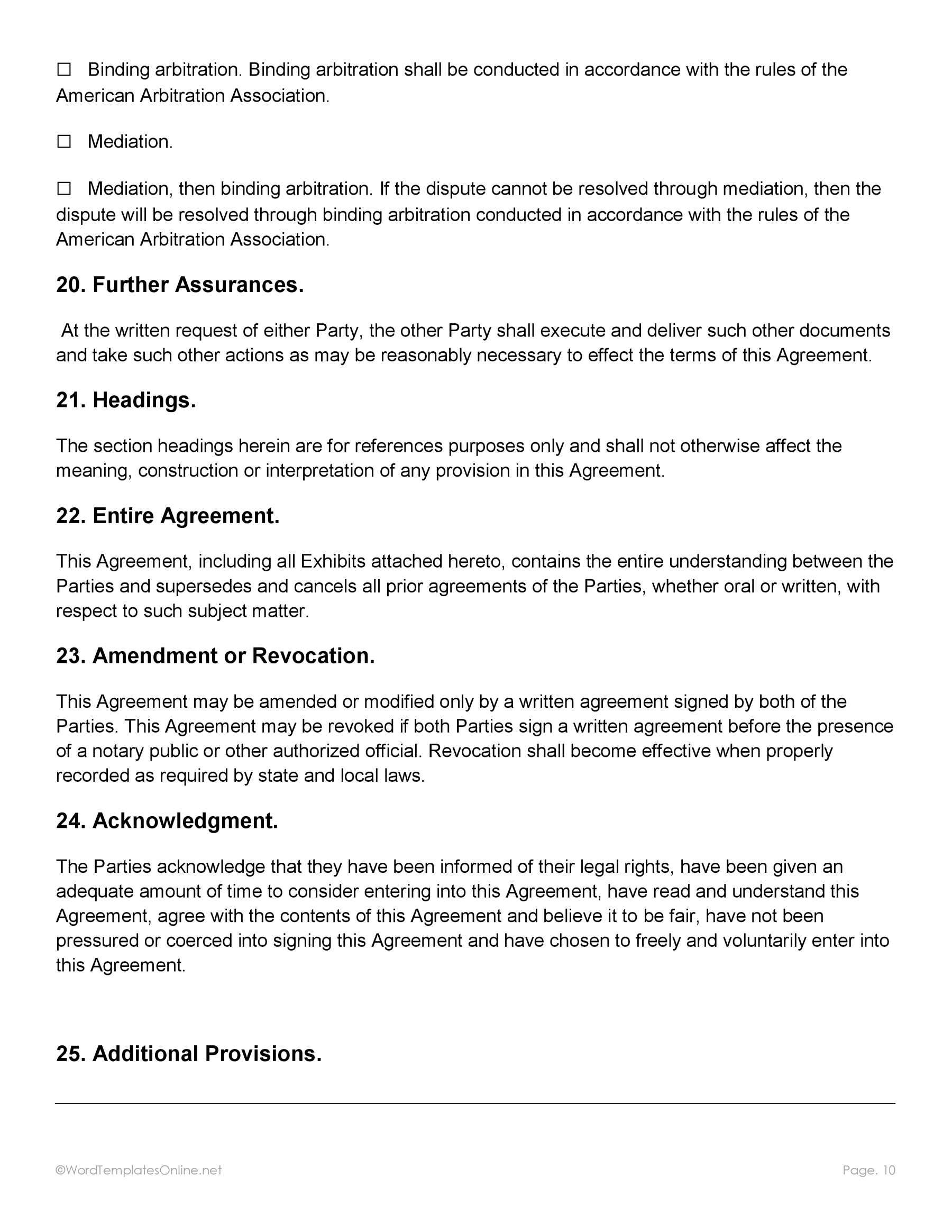
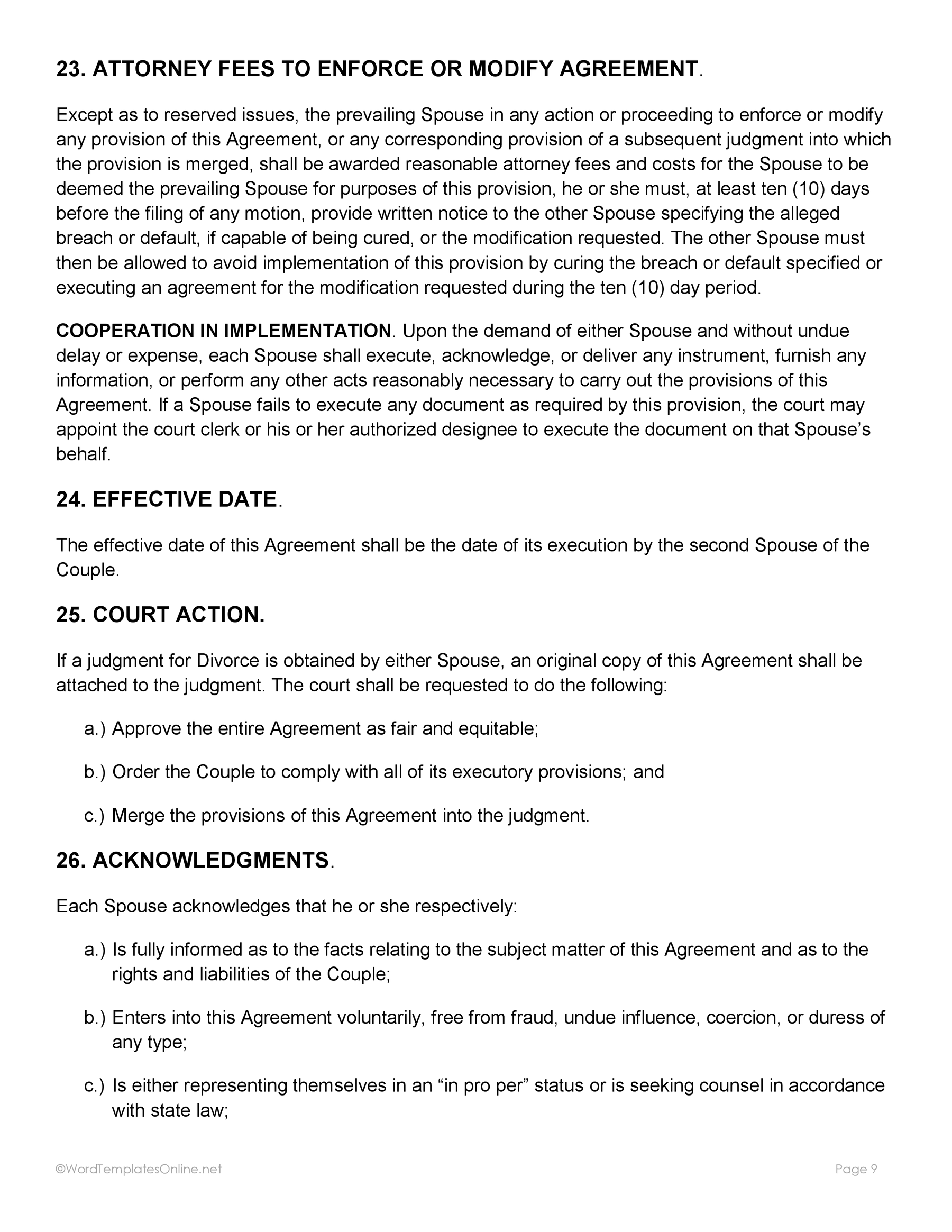
Here, you will lock everything in. For instance, it indicates that this exact document is the official, complete agreement between both parties, and no other verbal promise or side deals will count anymore. But life is unpredictable, so it also includes rules for how you legally update or change the agreement.
14. Signatures, acknowledgment, and governing law
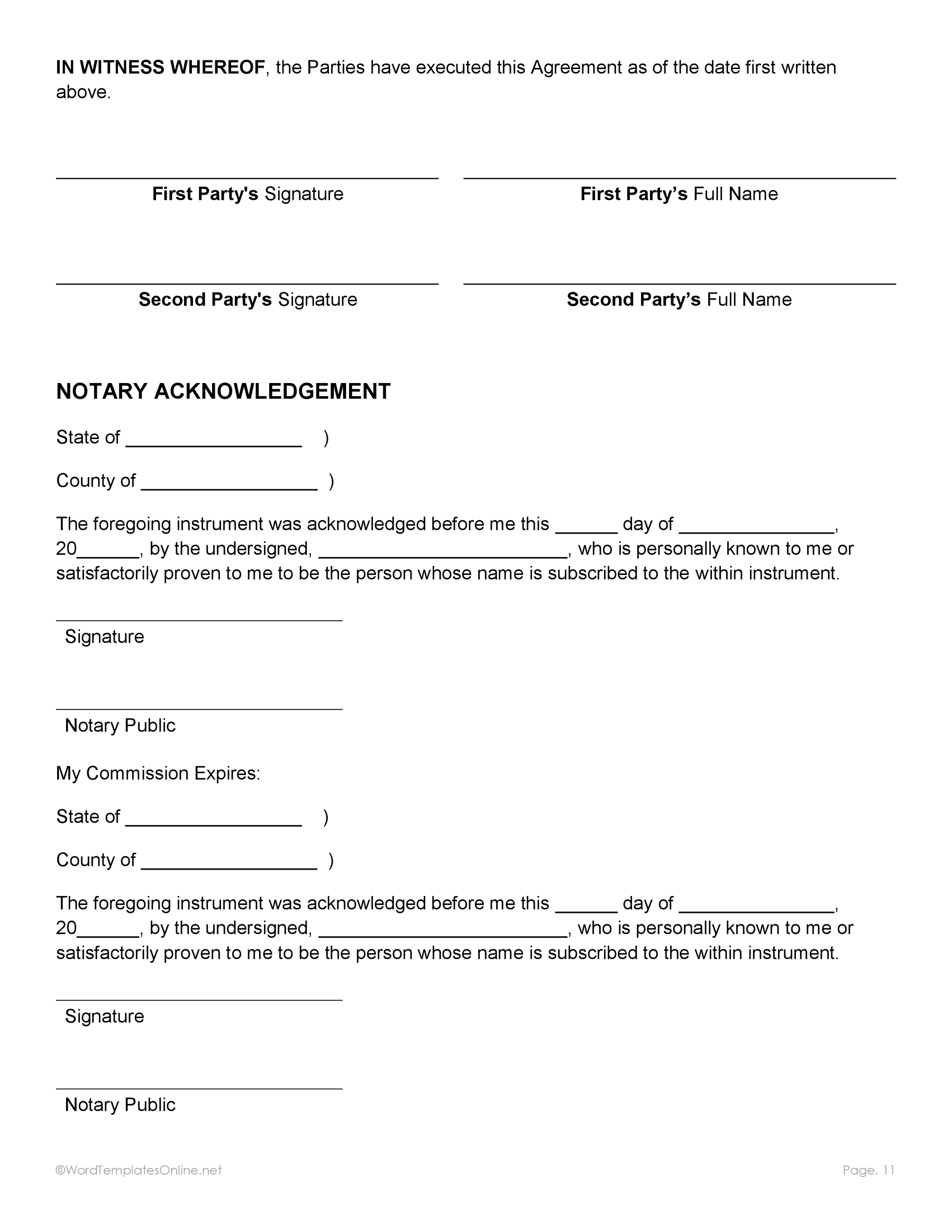
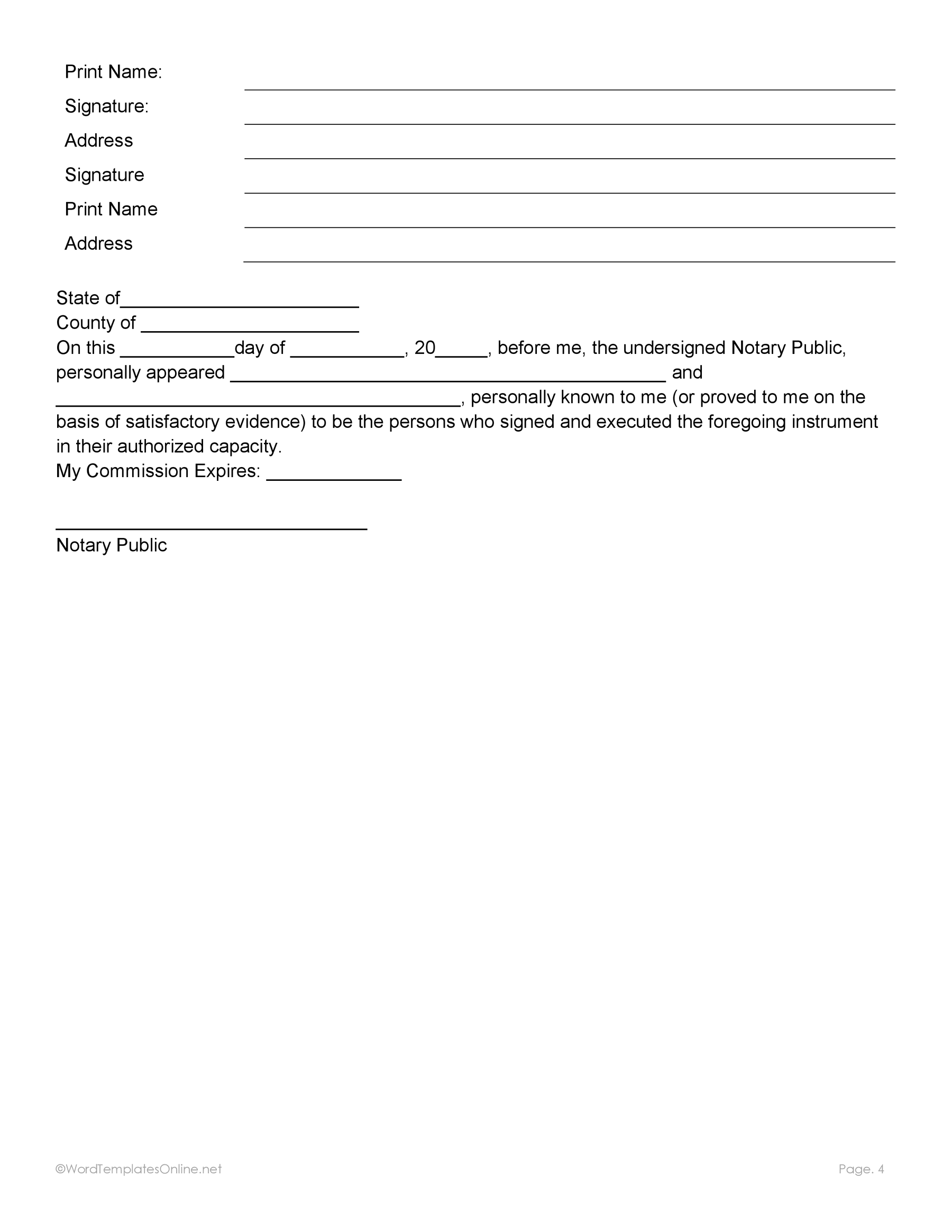
Once you’re done with everything, this part of the template acts as a seal and sets everything official. Both spouses sign the agreement to show they understand and agree to the terms outlined in the document.
Moreover, if there’s any local requirement, there’s also a space for a witness or a notary acknowledgment. In addition to that, this section might also specify which state’s law will be used to read and enforce the agreement, helping avoid confusion if legal questions ever come up in the future.
15. Certificate of independent legal advice
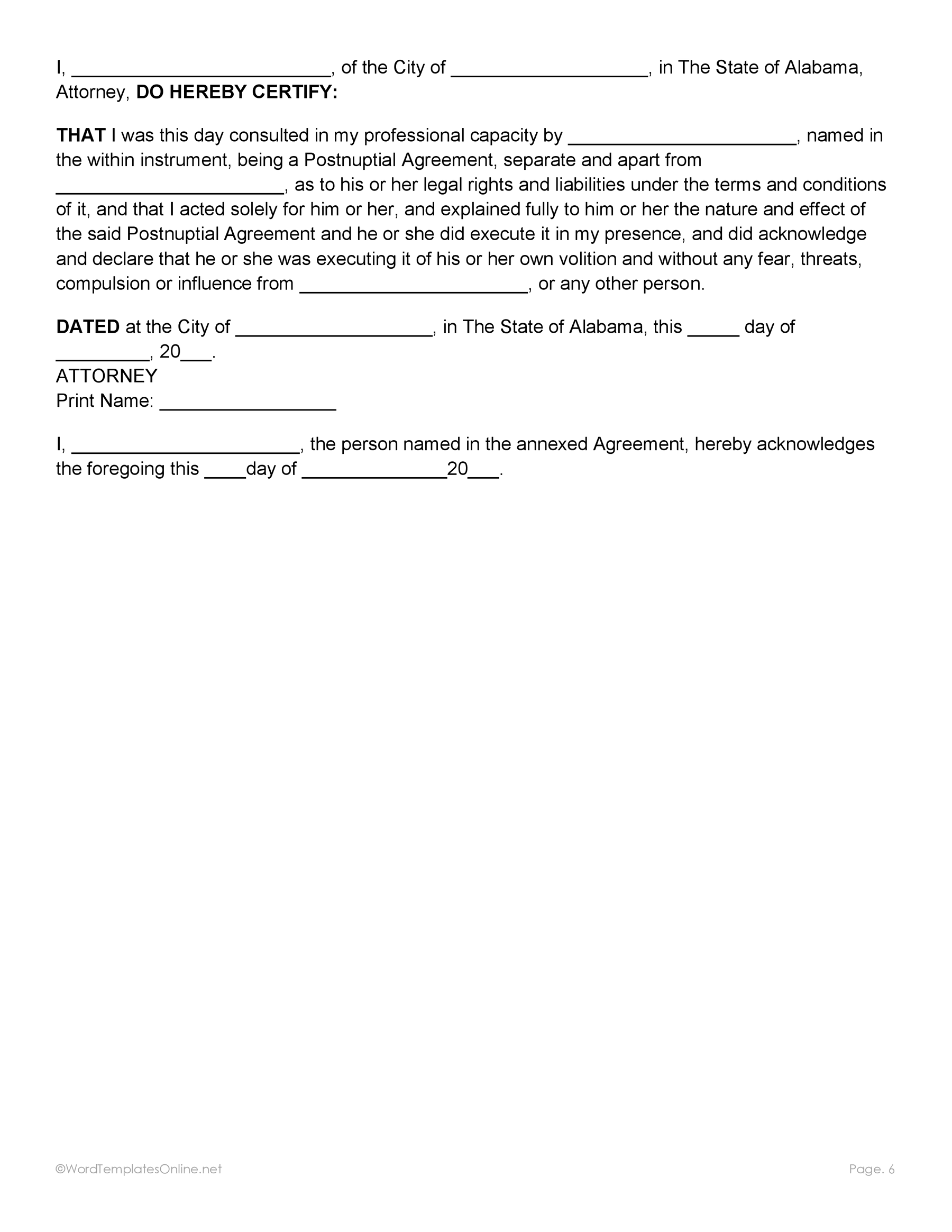
It is basically a formal verification that each spouse has consulted with their own lawyer separately and privately. By signing this, the attorney certifies that they explained the full nature and legal consequences of the postnuptial agreement to their client. Moreover, it also verifies that the client is signing the agreement voluntarily, of their own free will, and without any pressure, threats, or influence from their spouse or anyone else.
Types of Postnuptial Agreement Templates
The purpose of the agreement is always the same, but how detailed couples want to go into it tells a different story. That’s why different templates come to market to meet the financial needs and comprehensive planning of different people.
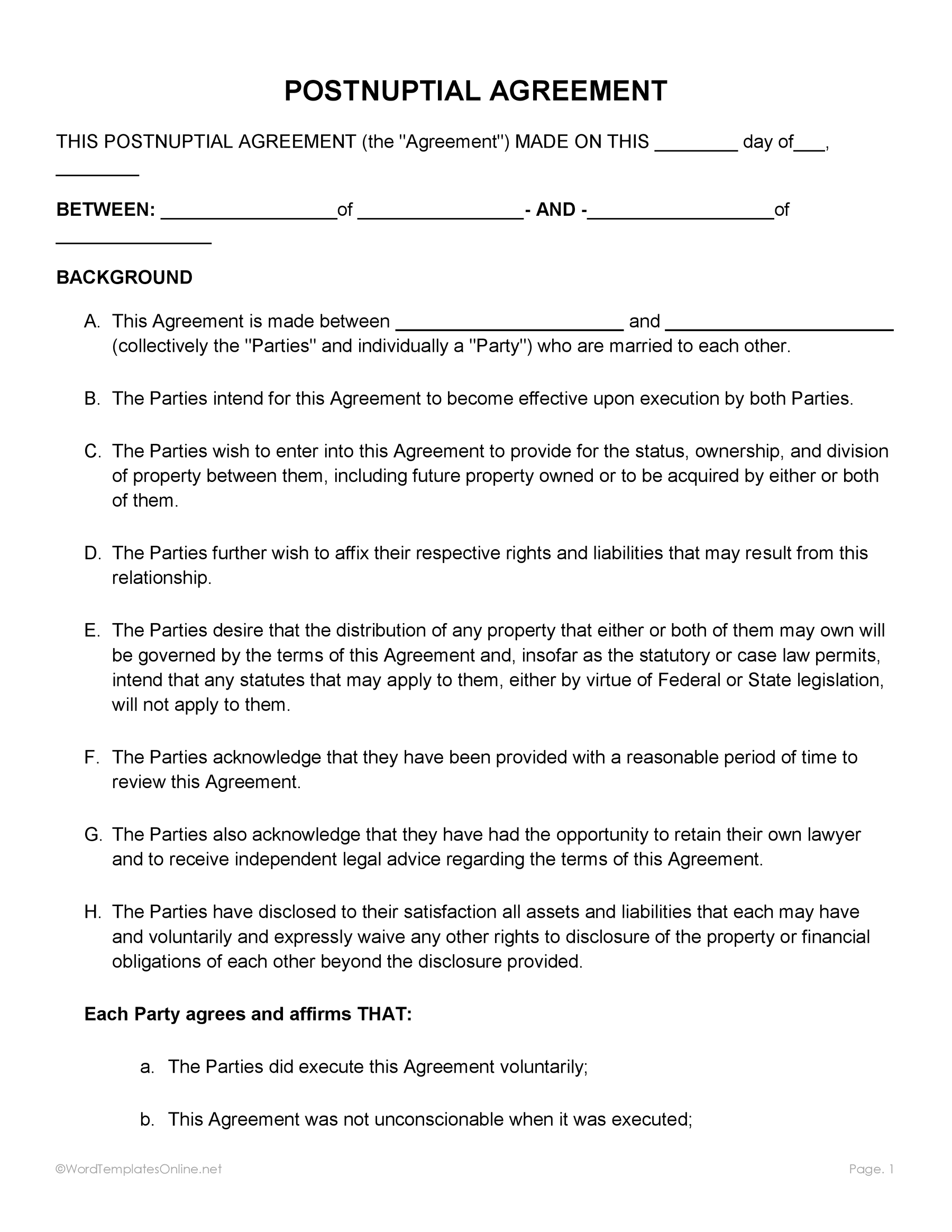
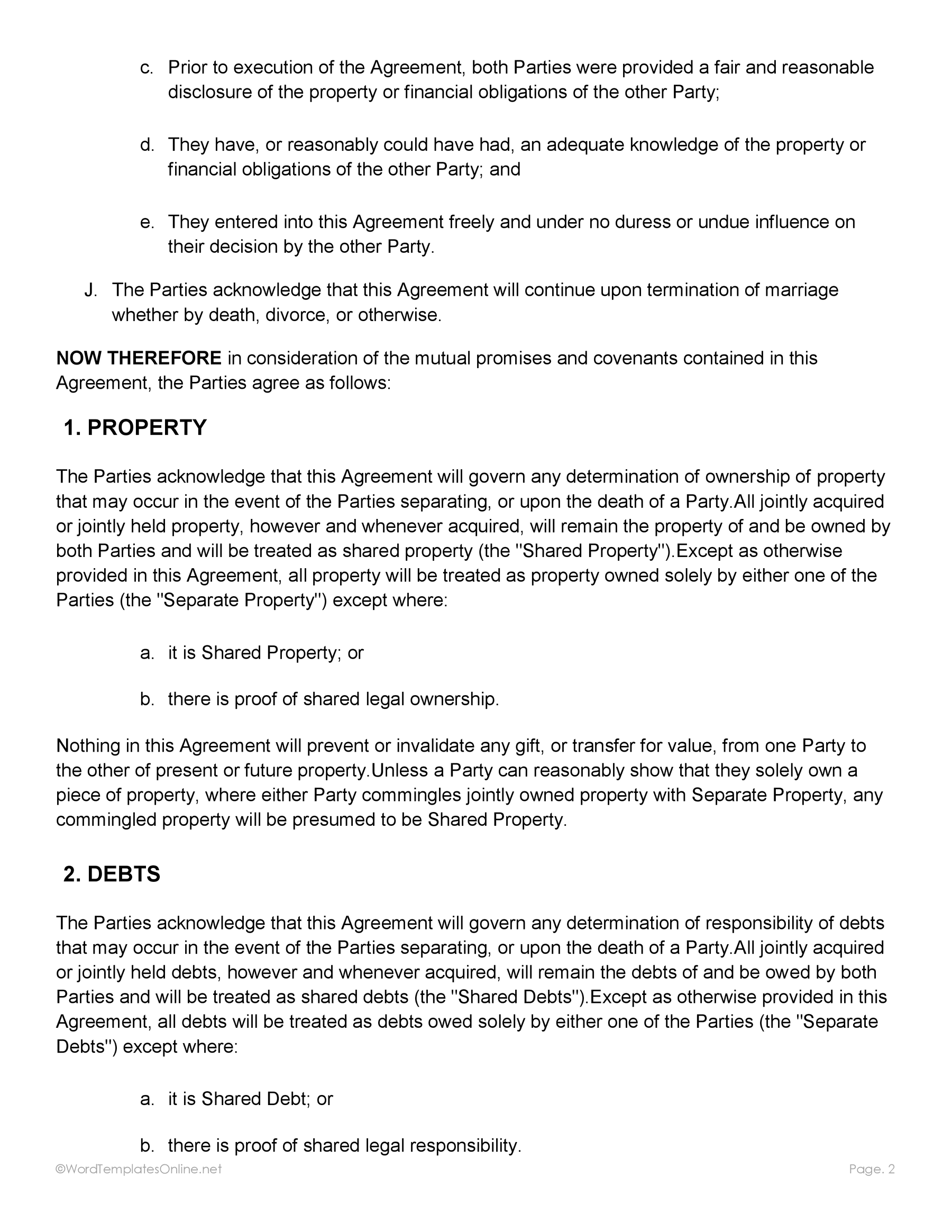
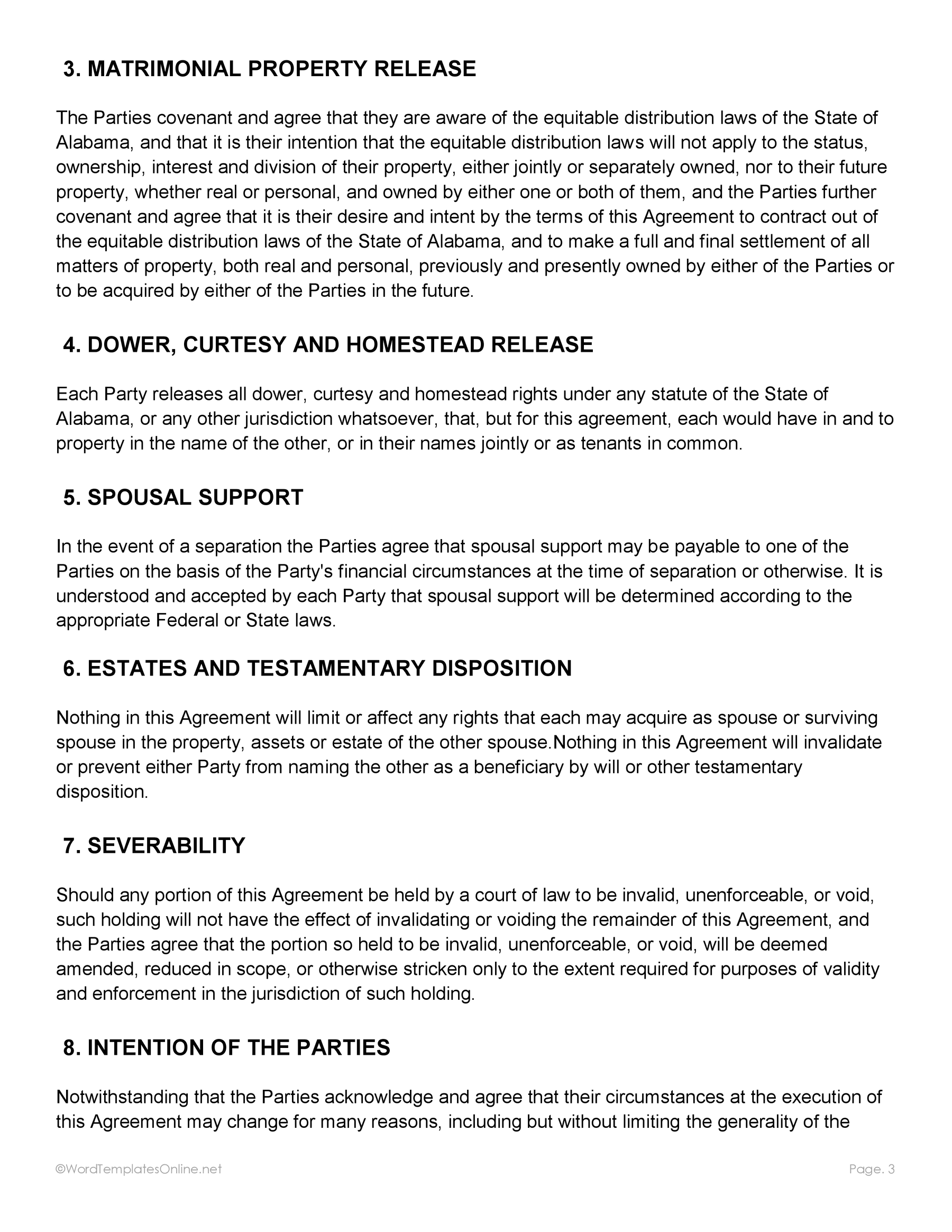
Basic financial arrangement template
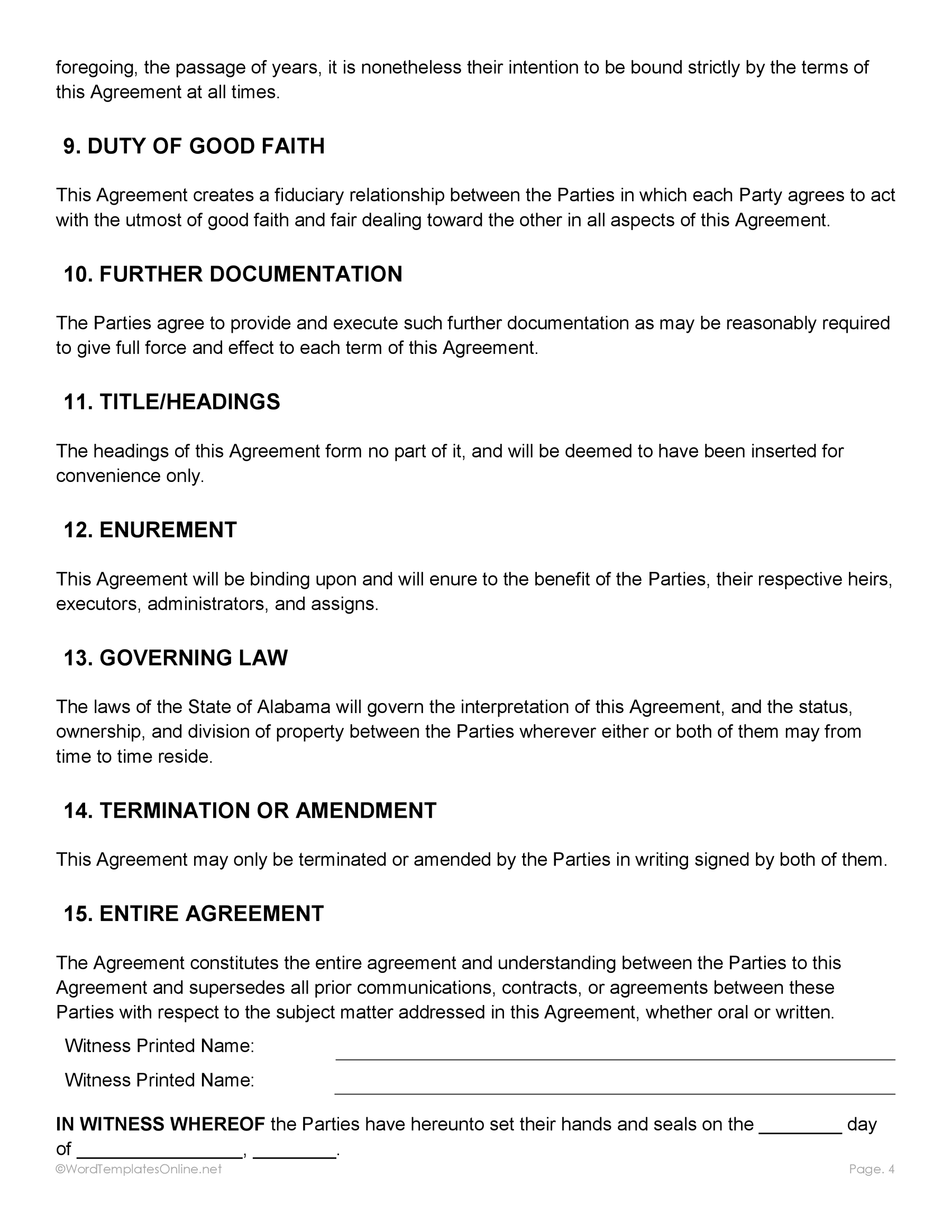
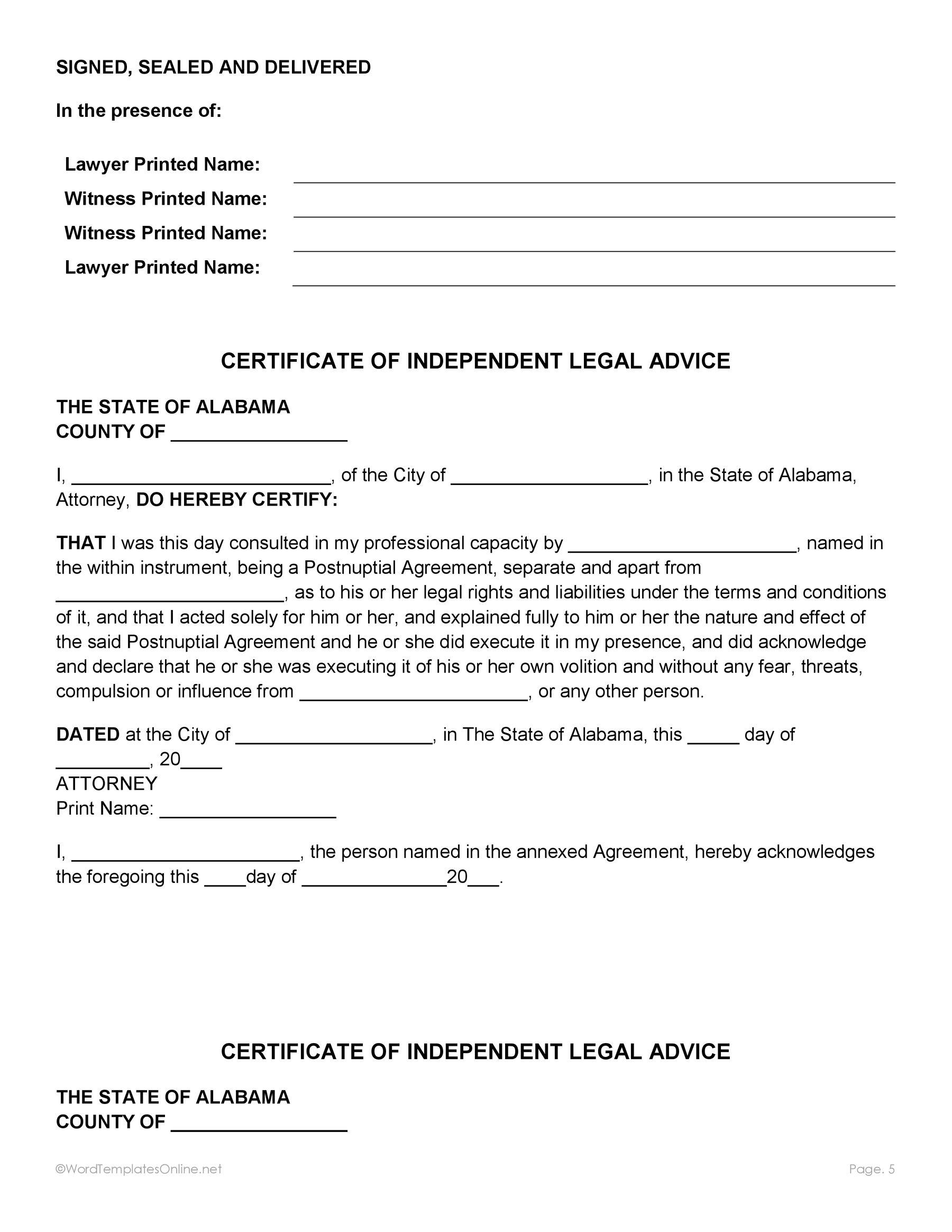
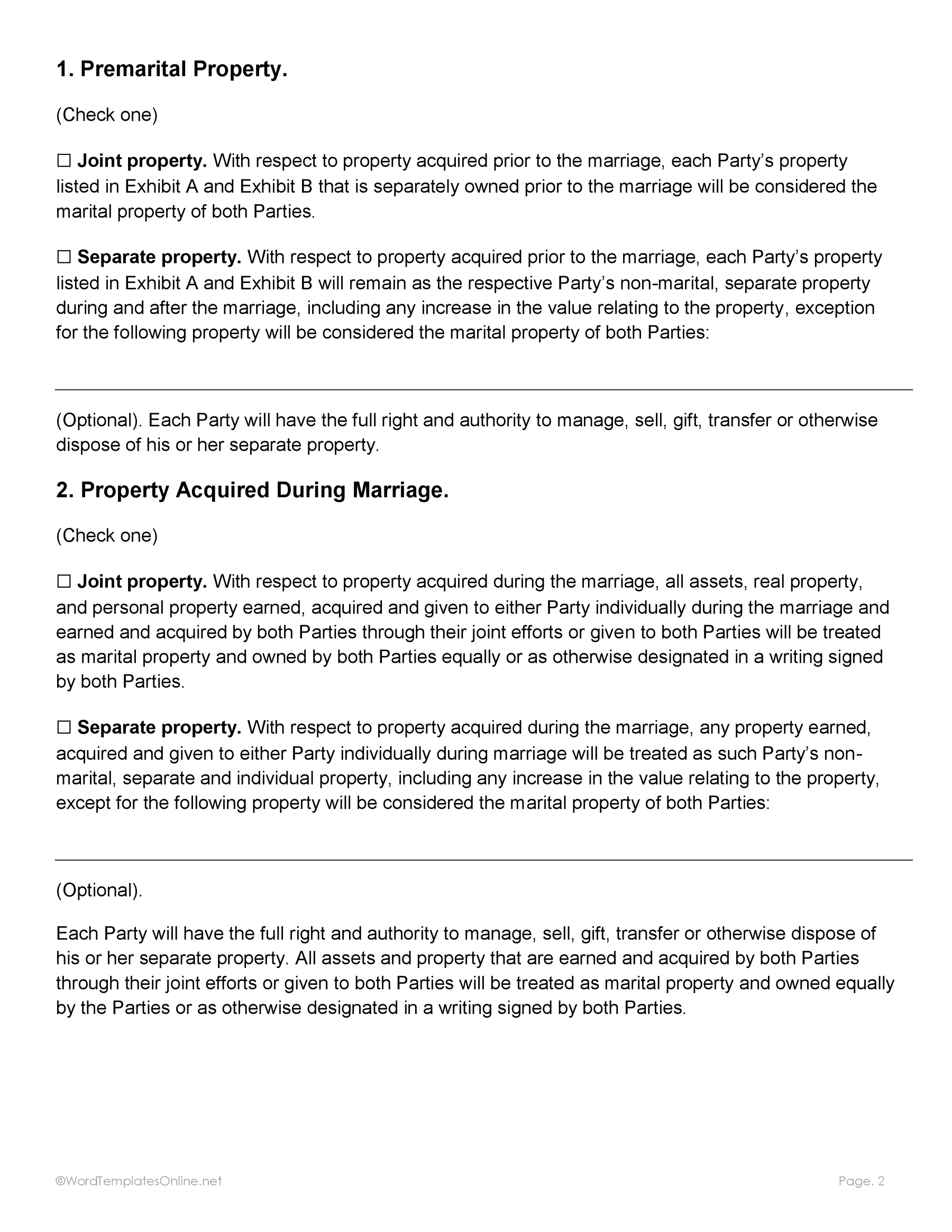
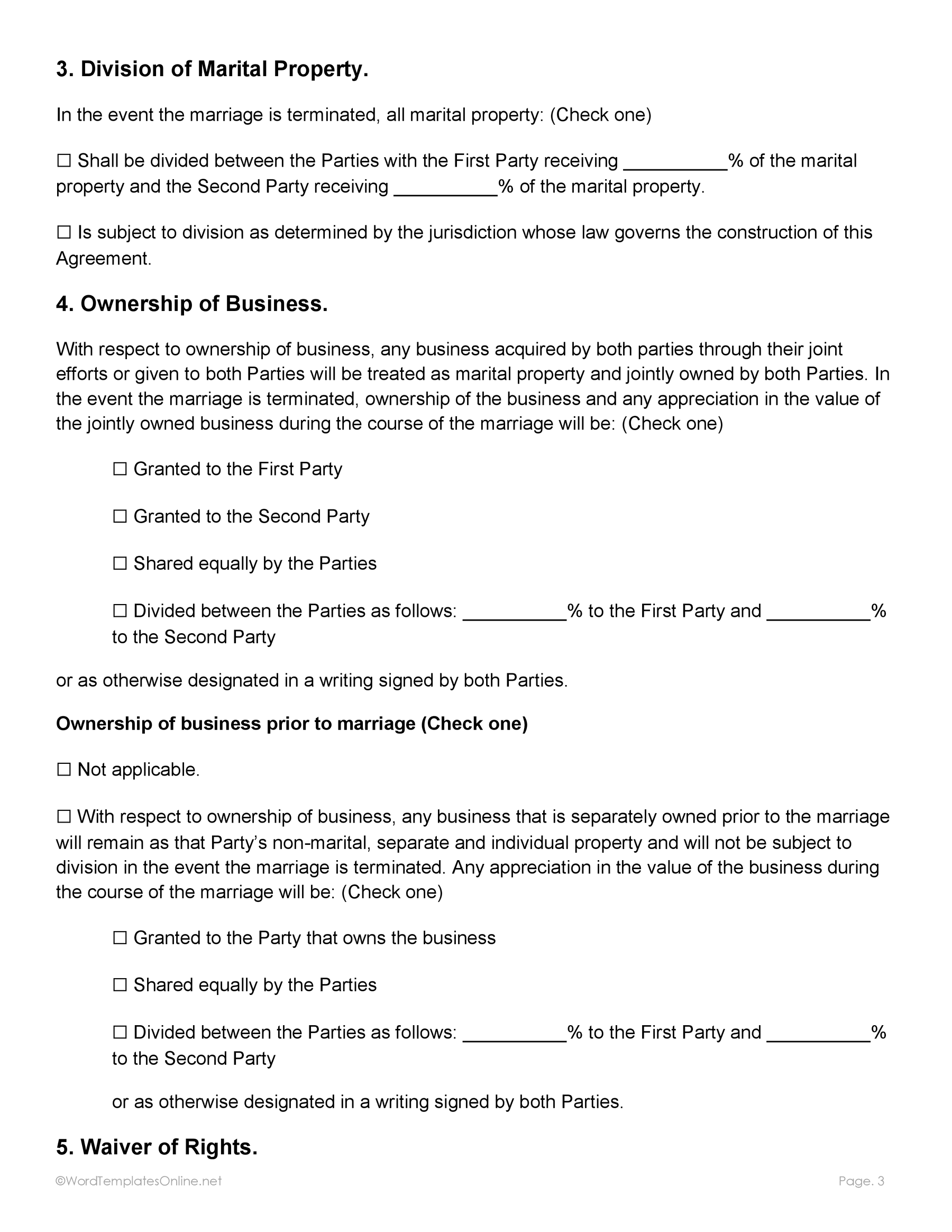
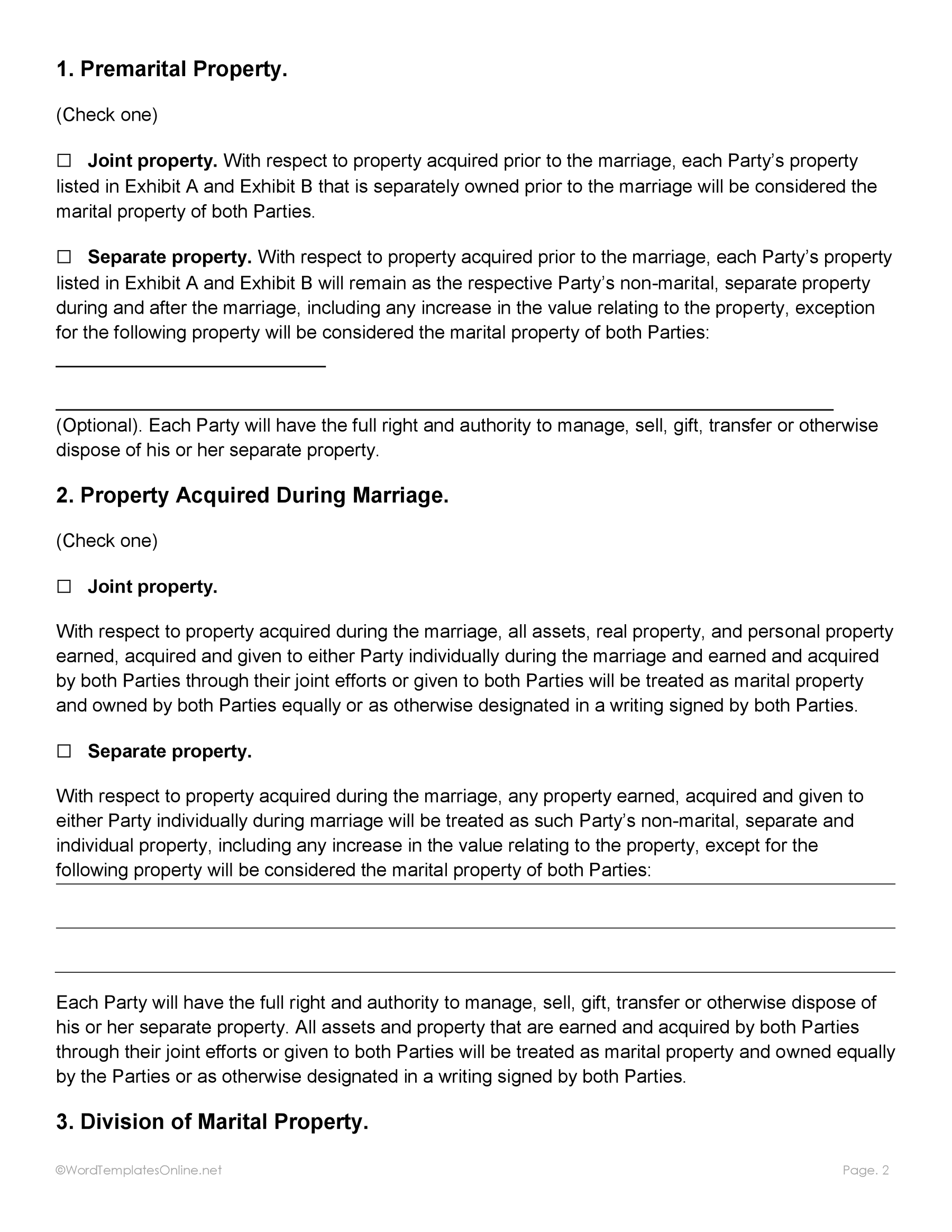
This is the most straightforward postnuptial document that acts as an all-in-one financial protection plan for married couples. The whole purpose of this template is to divide basic belongings and map out exactly how separate and shared property will be handled.
Cherry on top? Apart from the basic clauses, it also covers some advanced legal protection clauses like overriding state distribution defaults, securing inheritance, and adding strict court-proof clauses.
Divorce focused agreement template
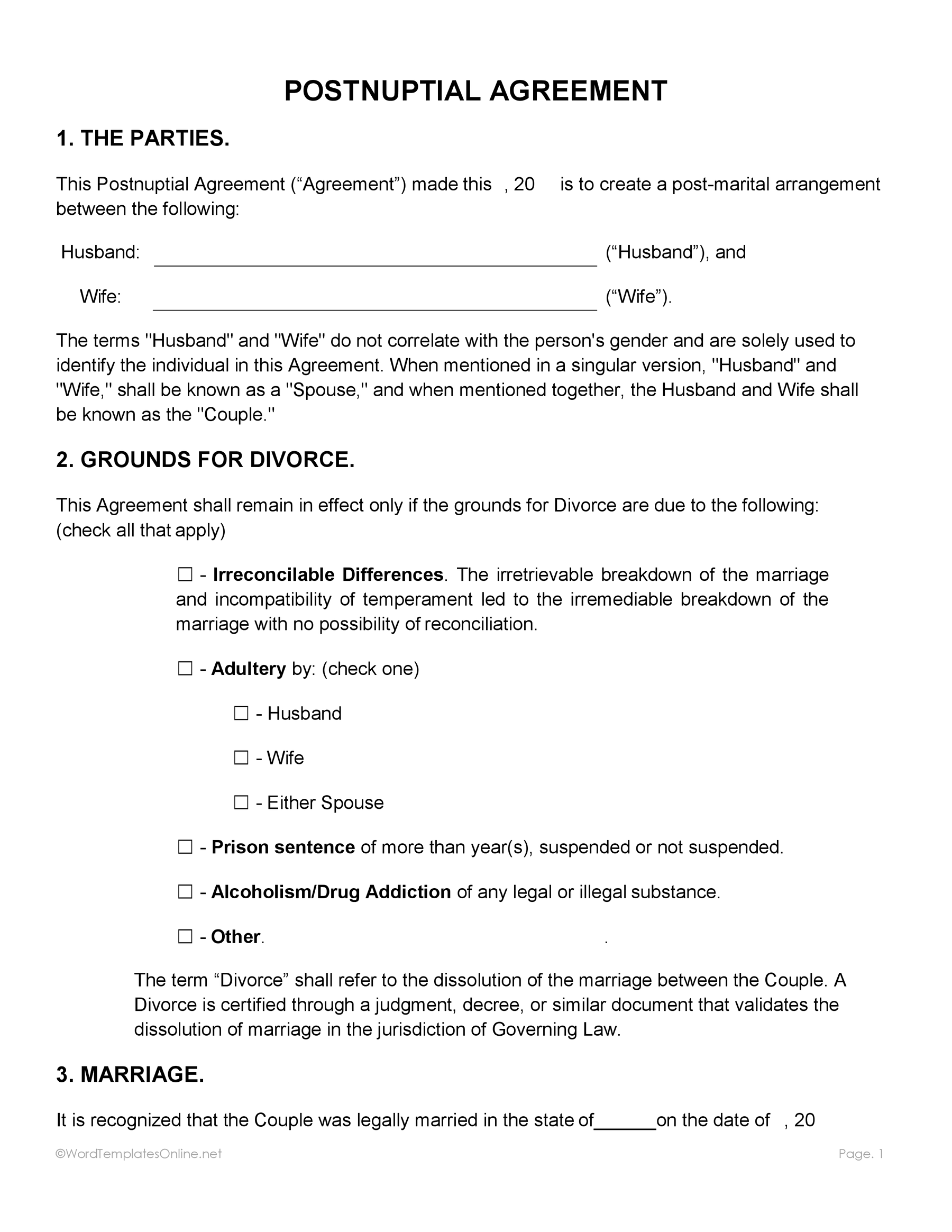
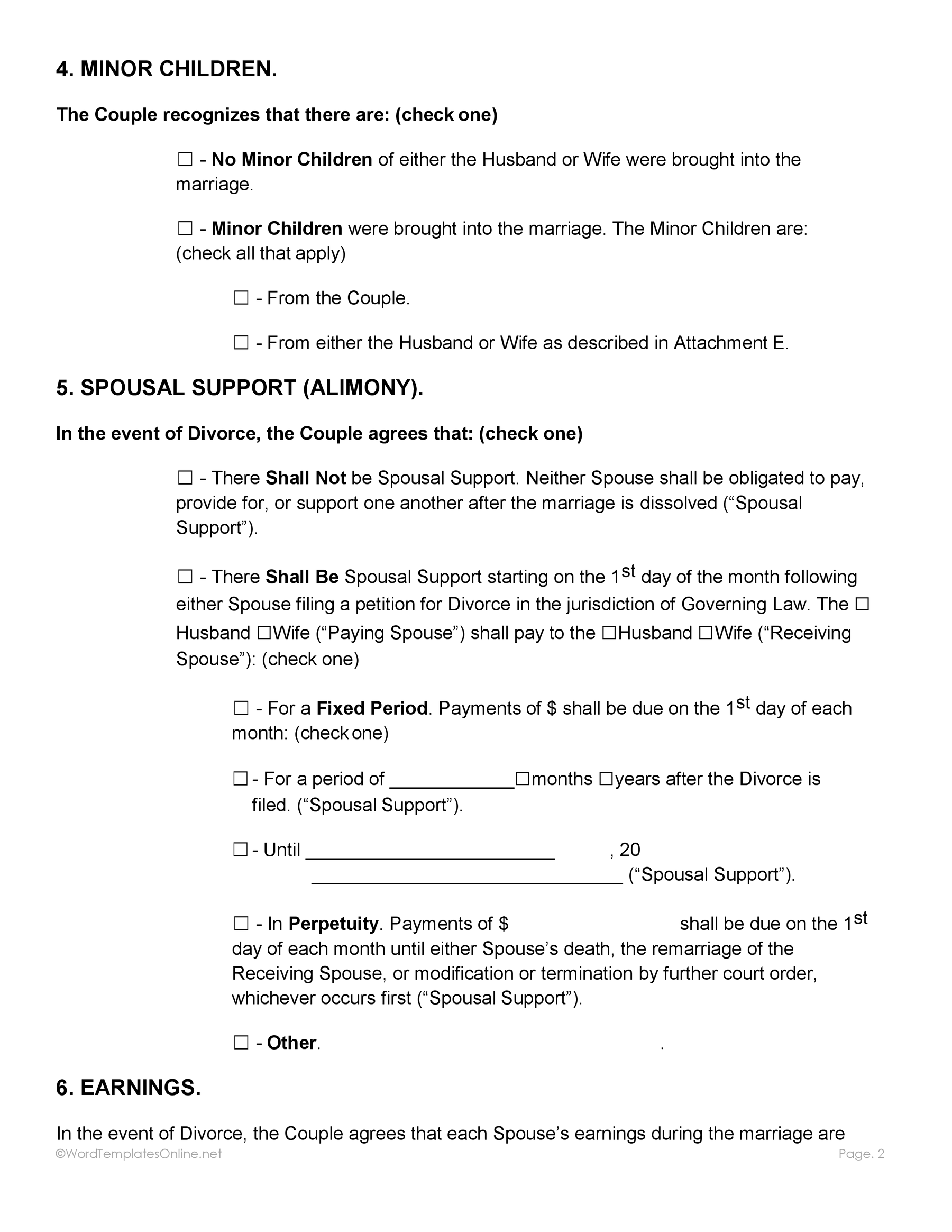
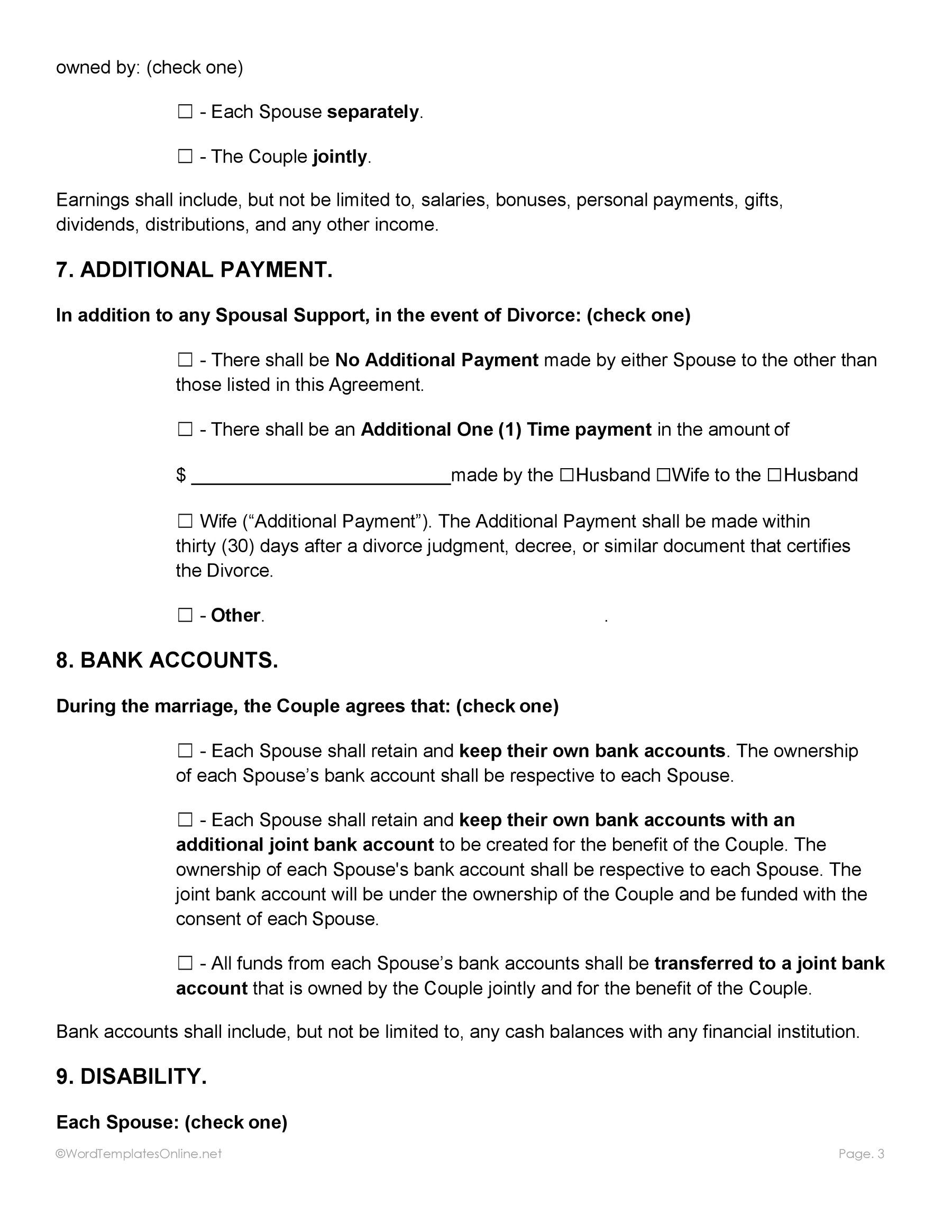
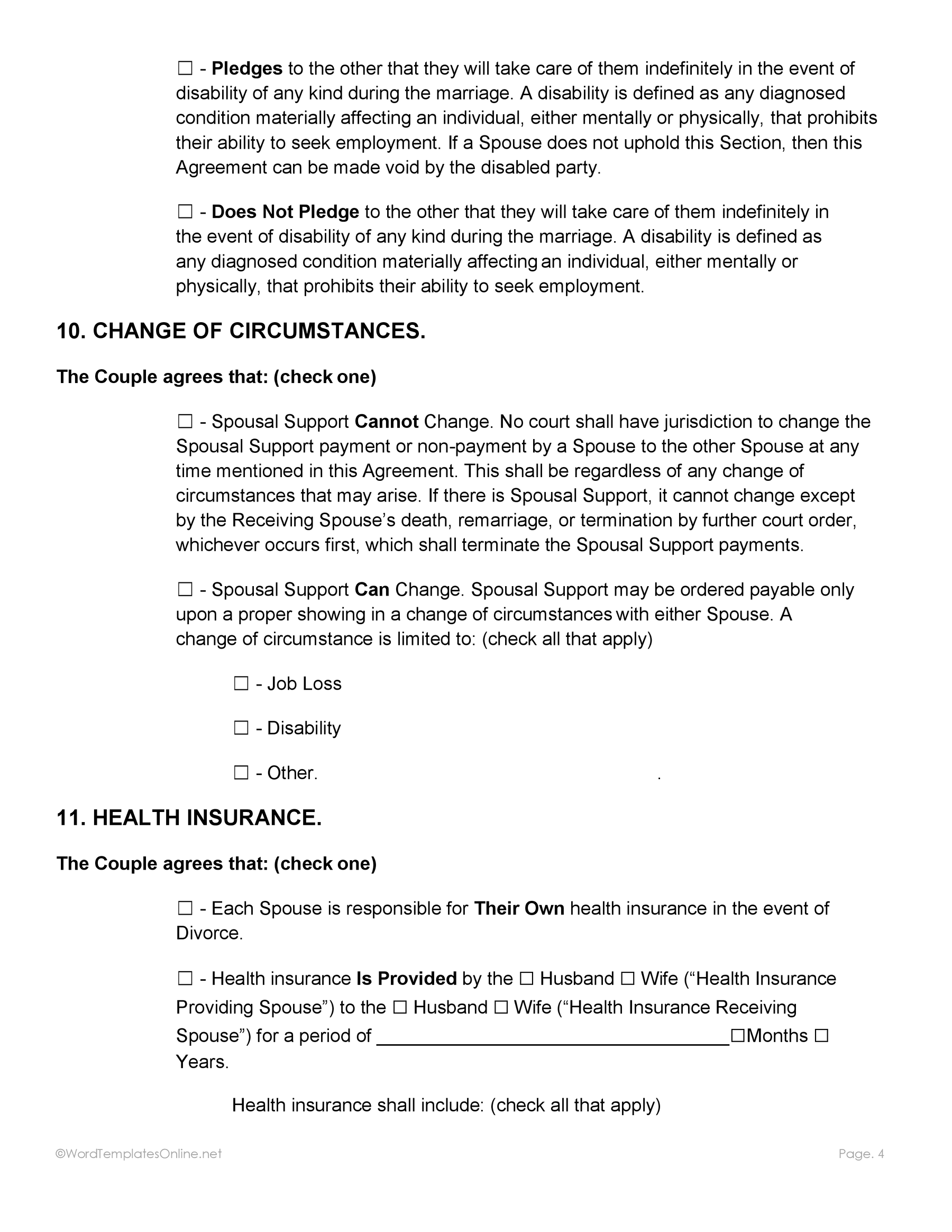
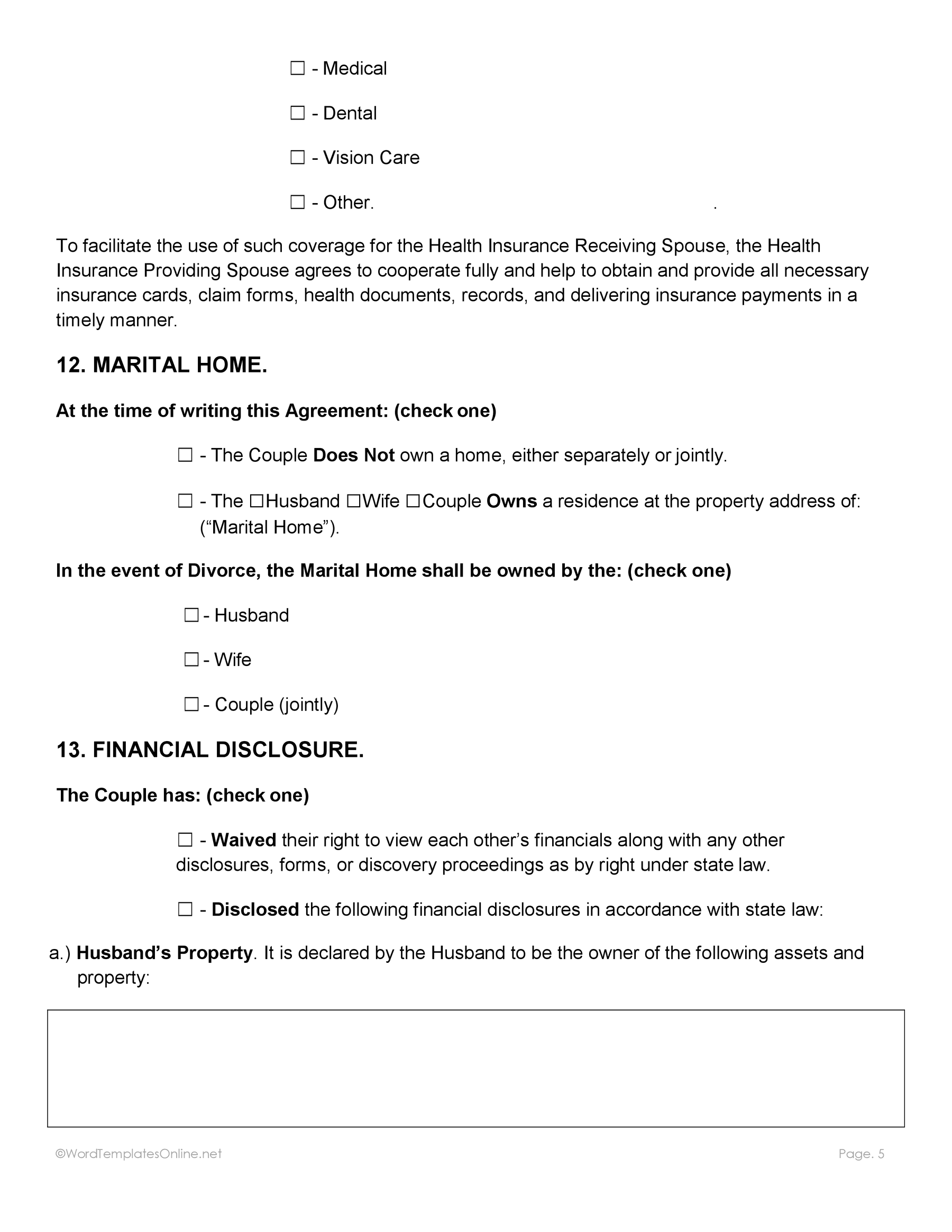
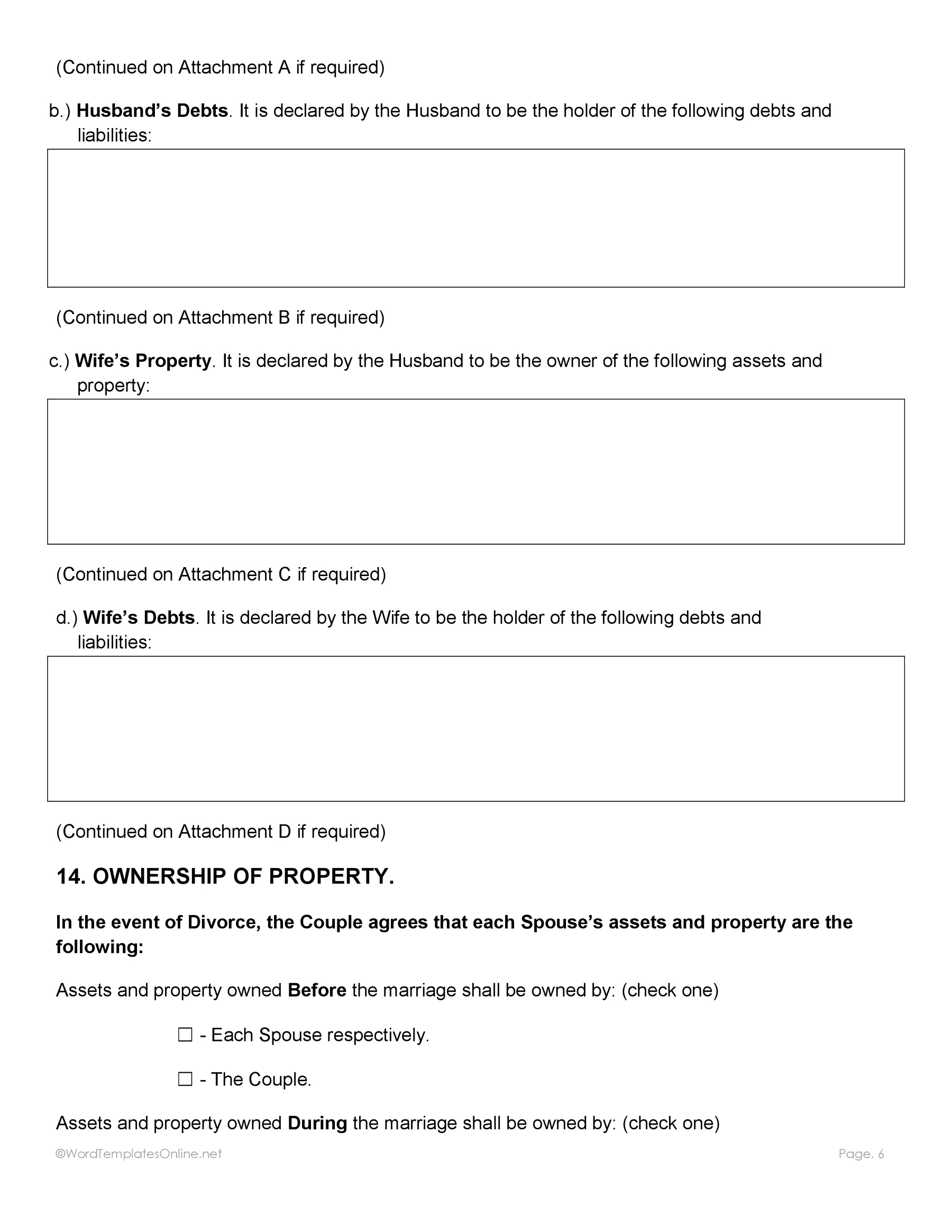
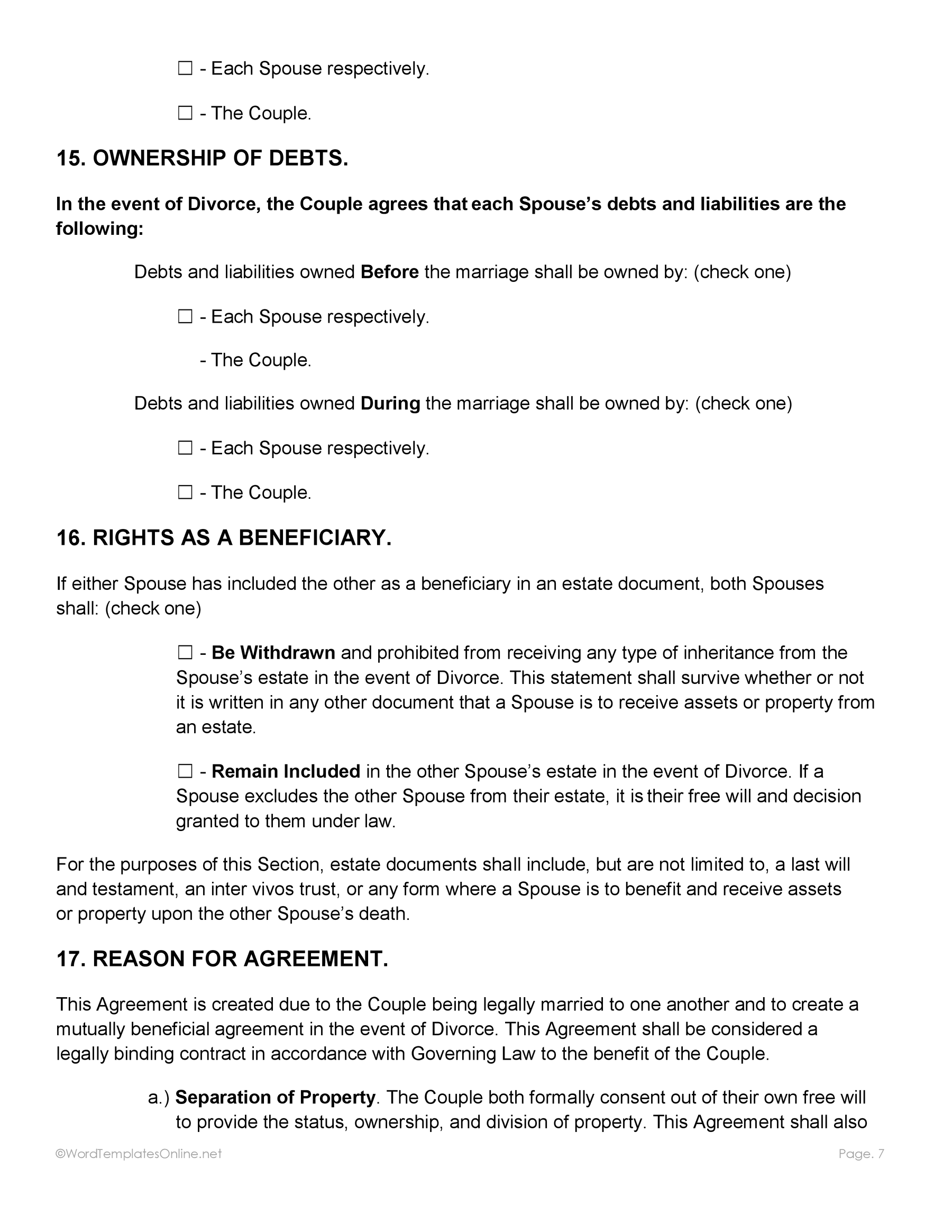
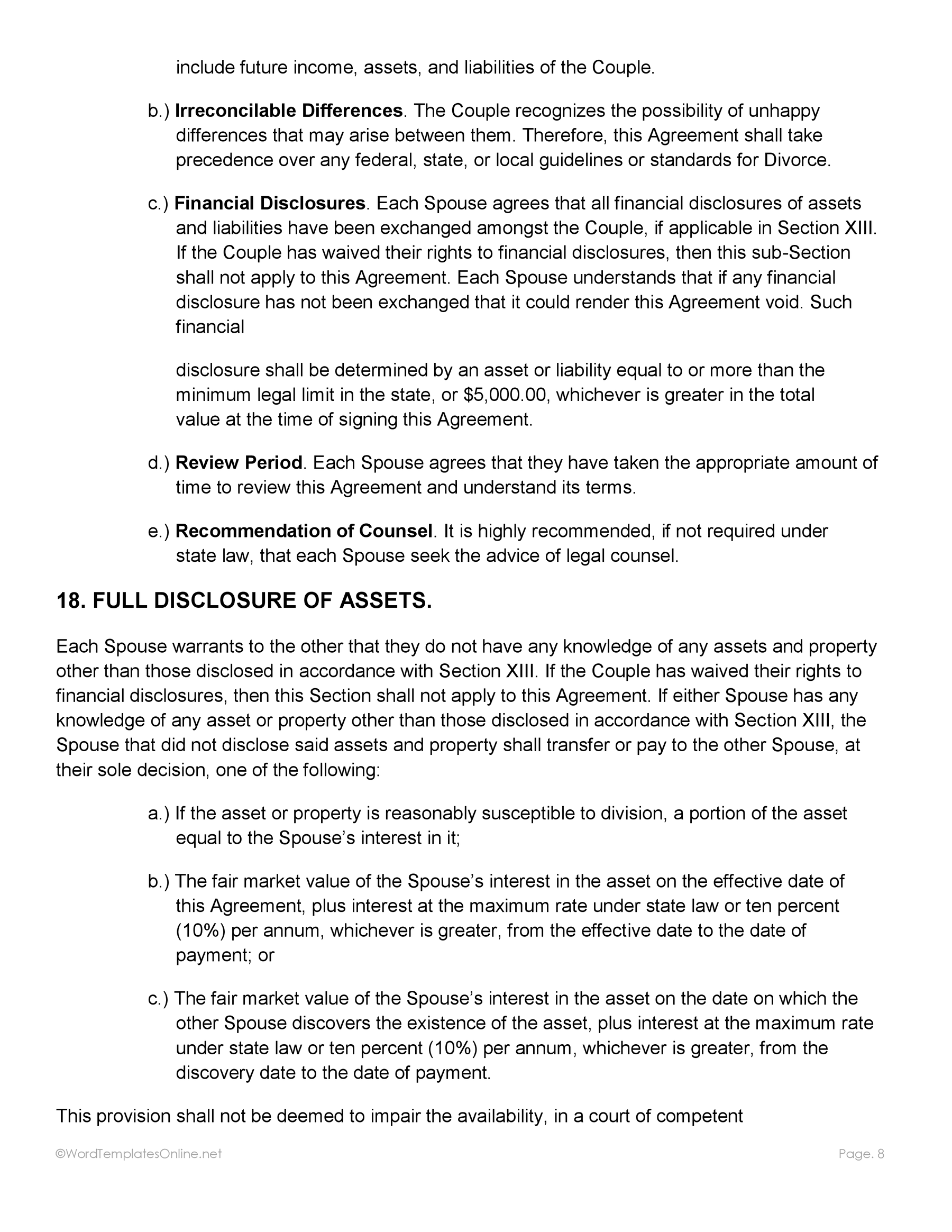
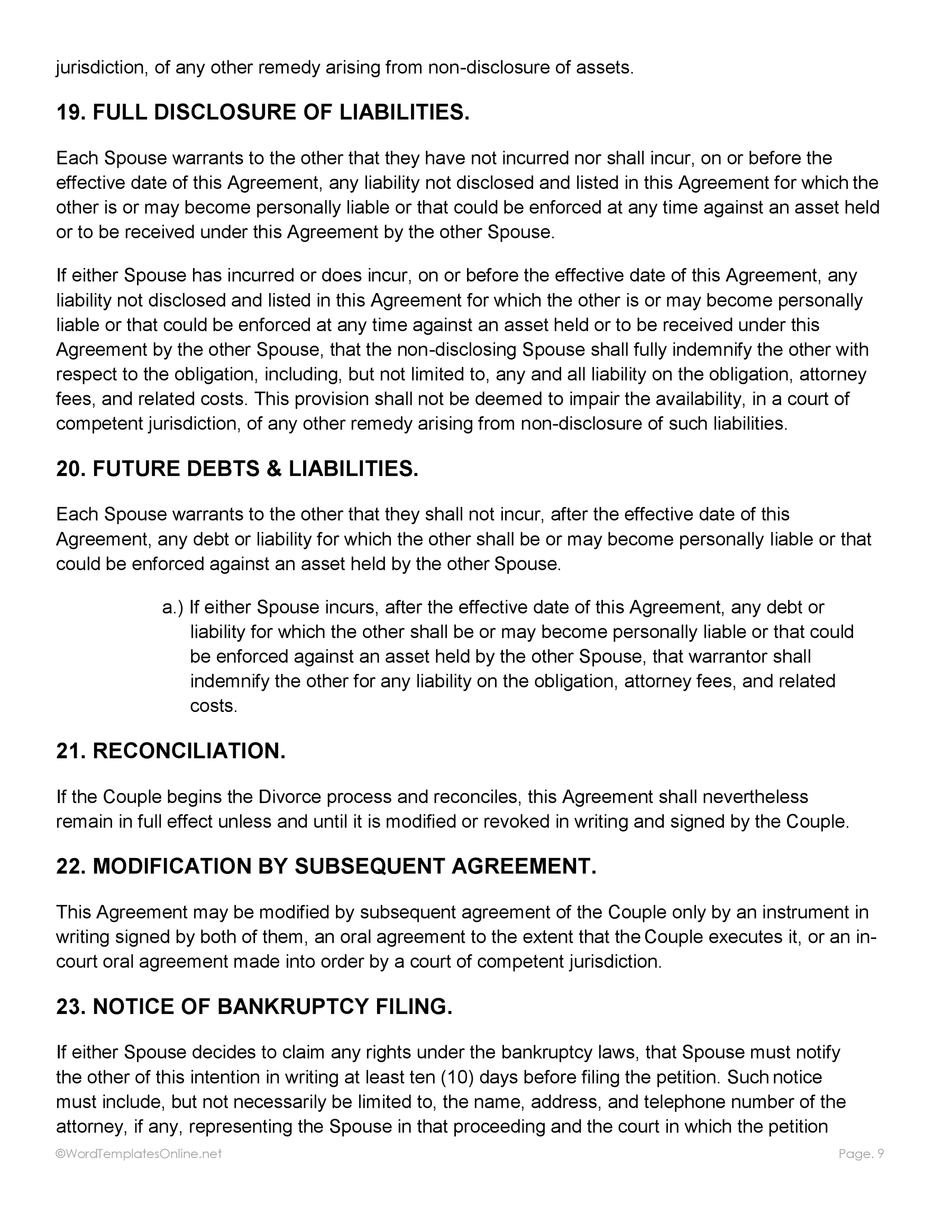
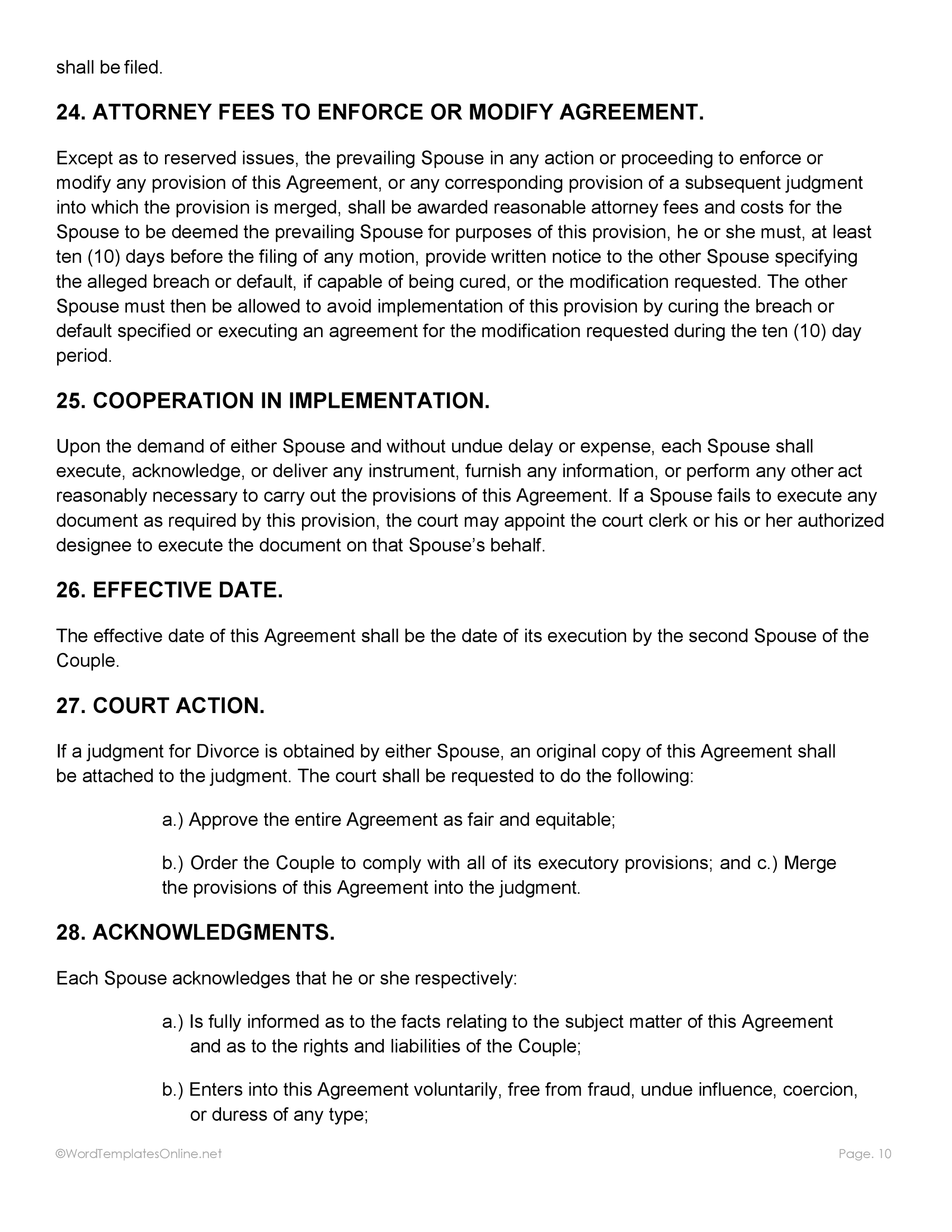
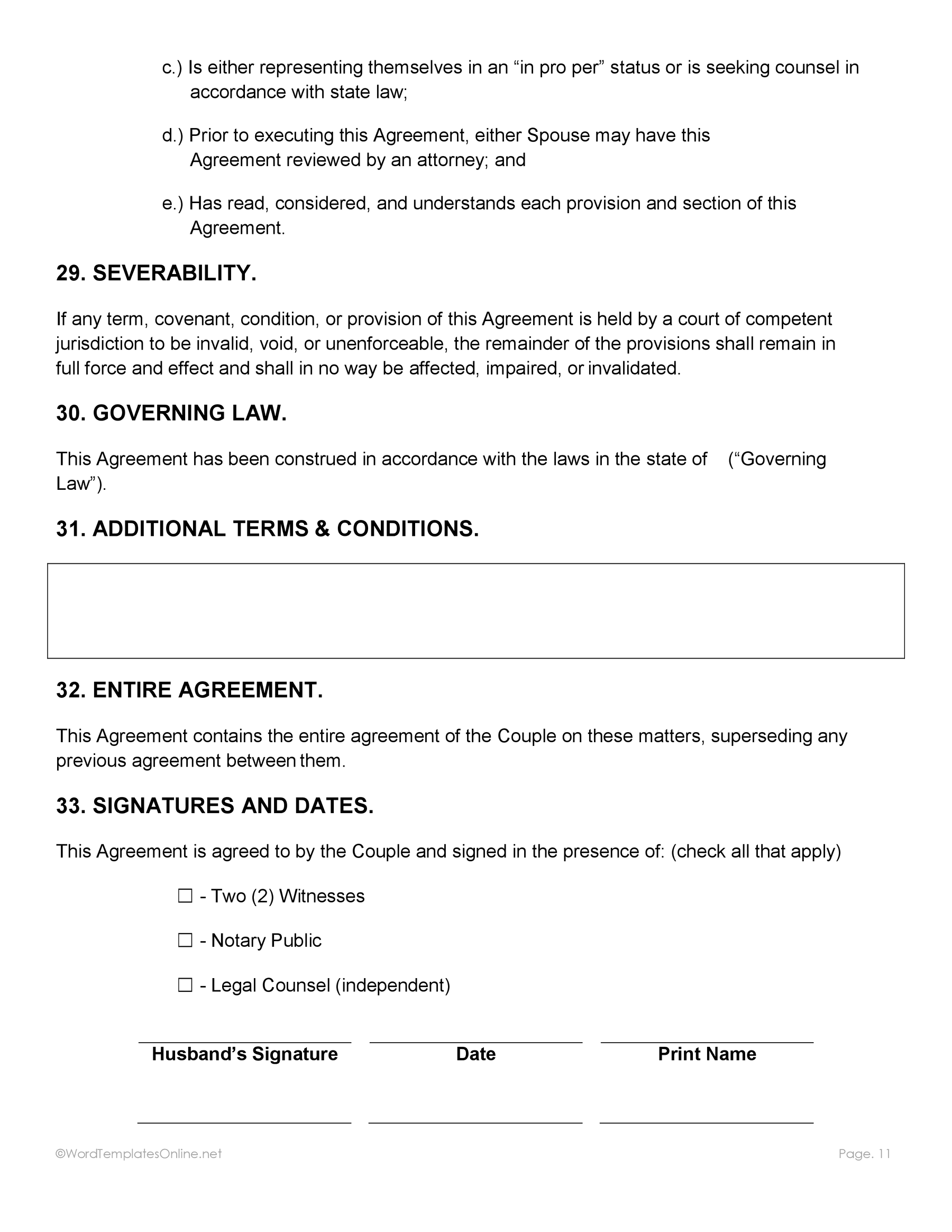
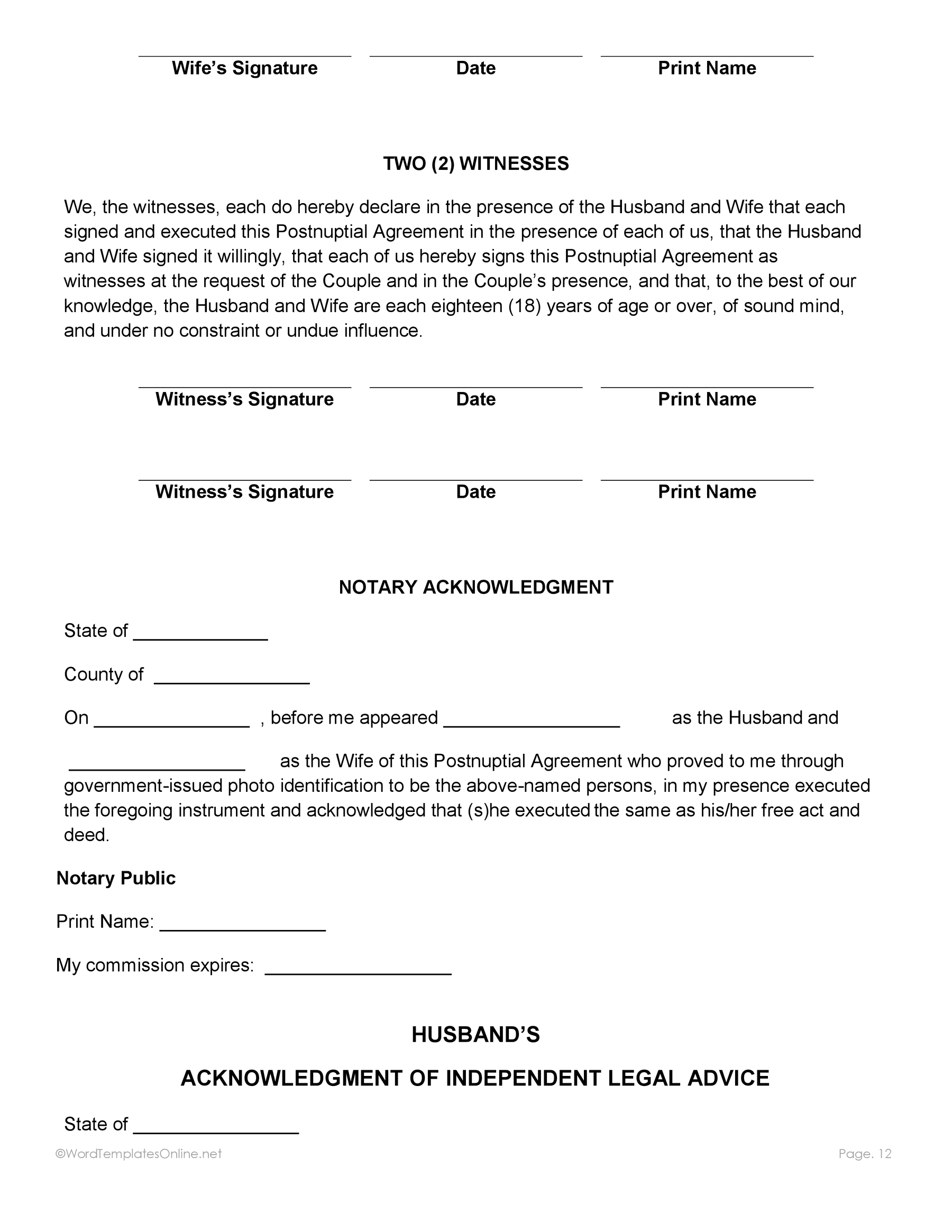
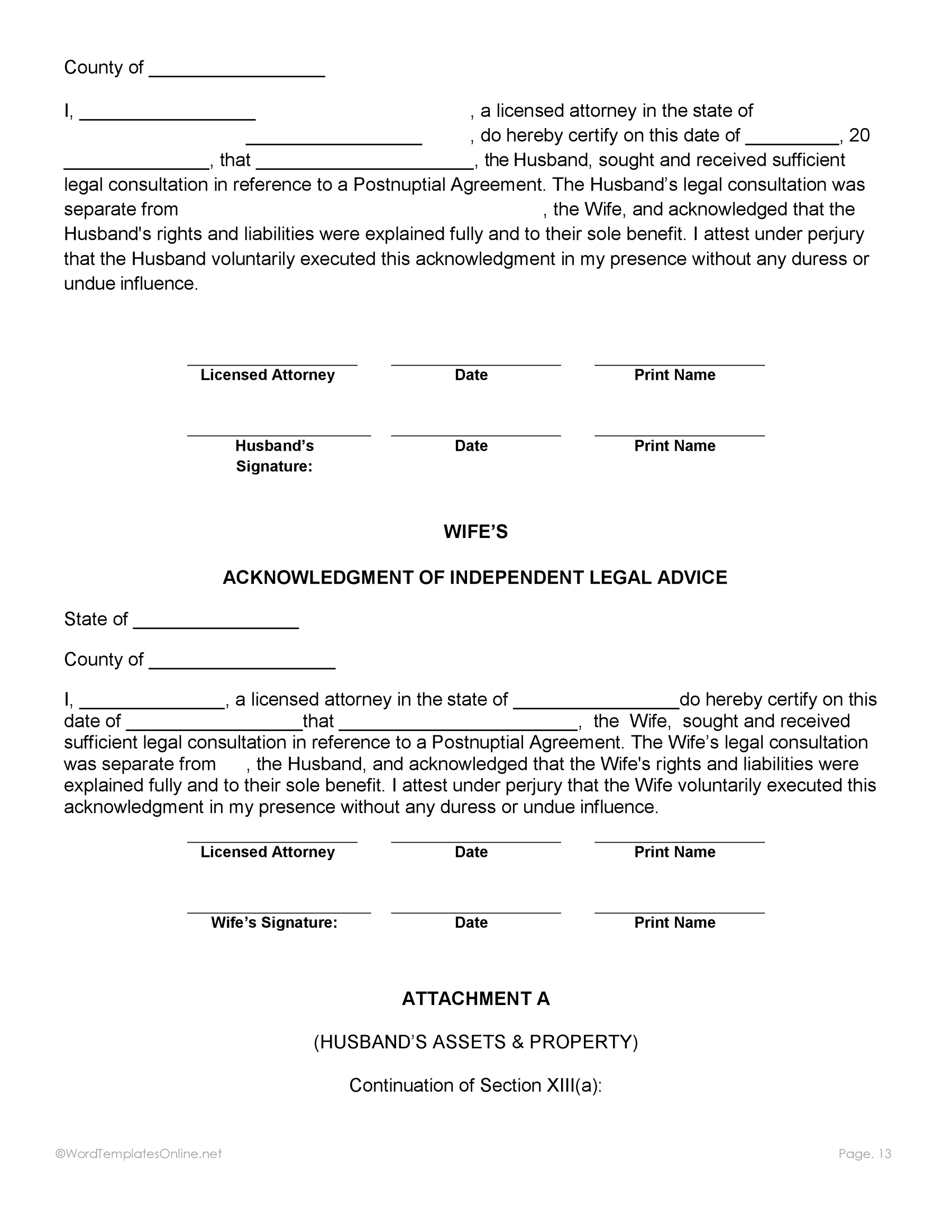
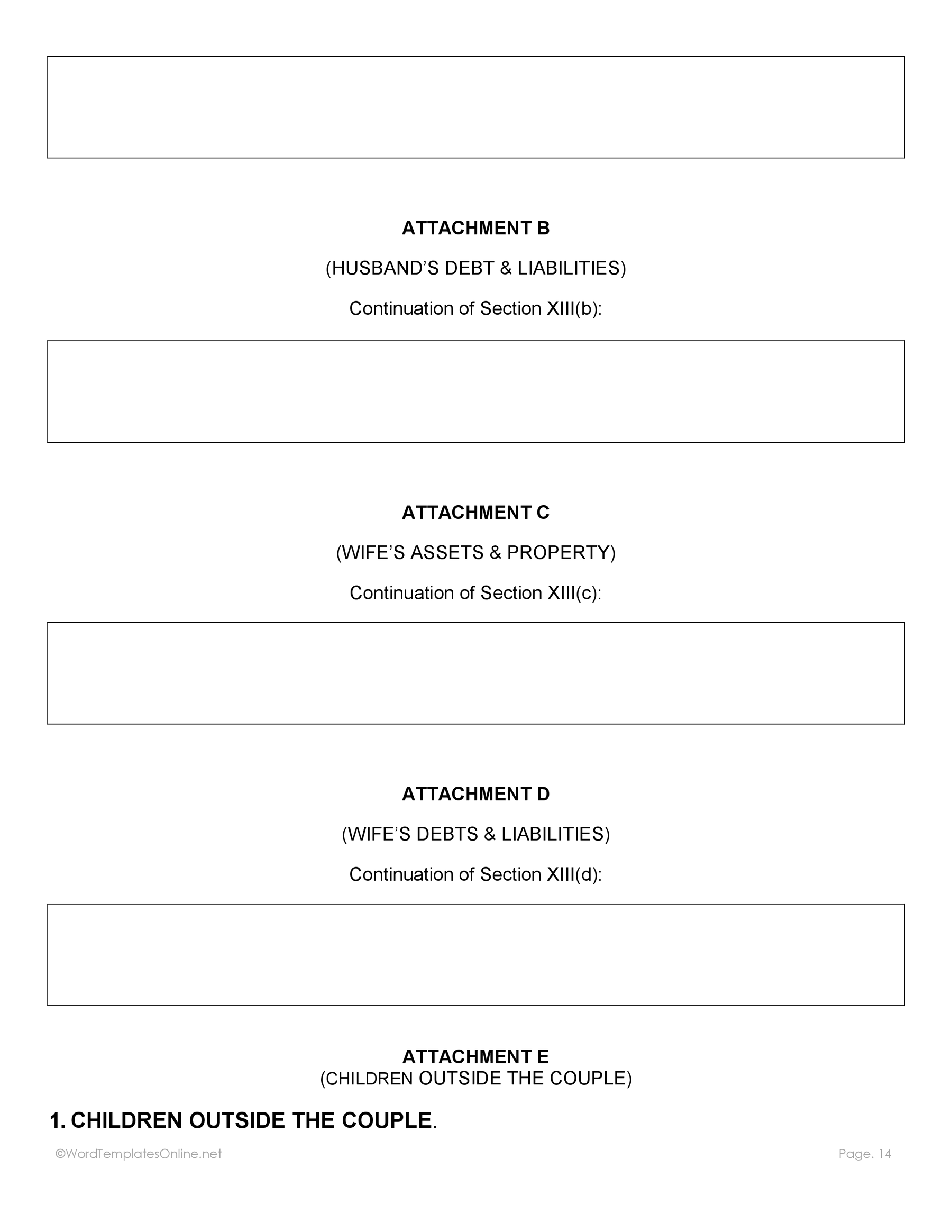
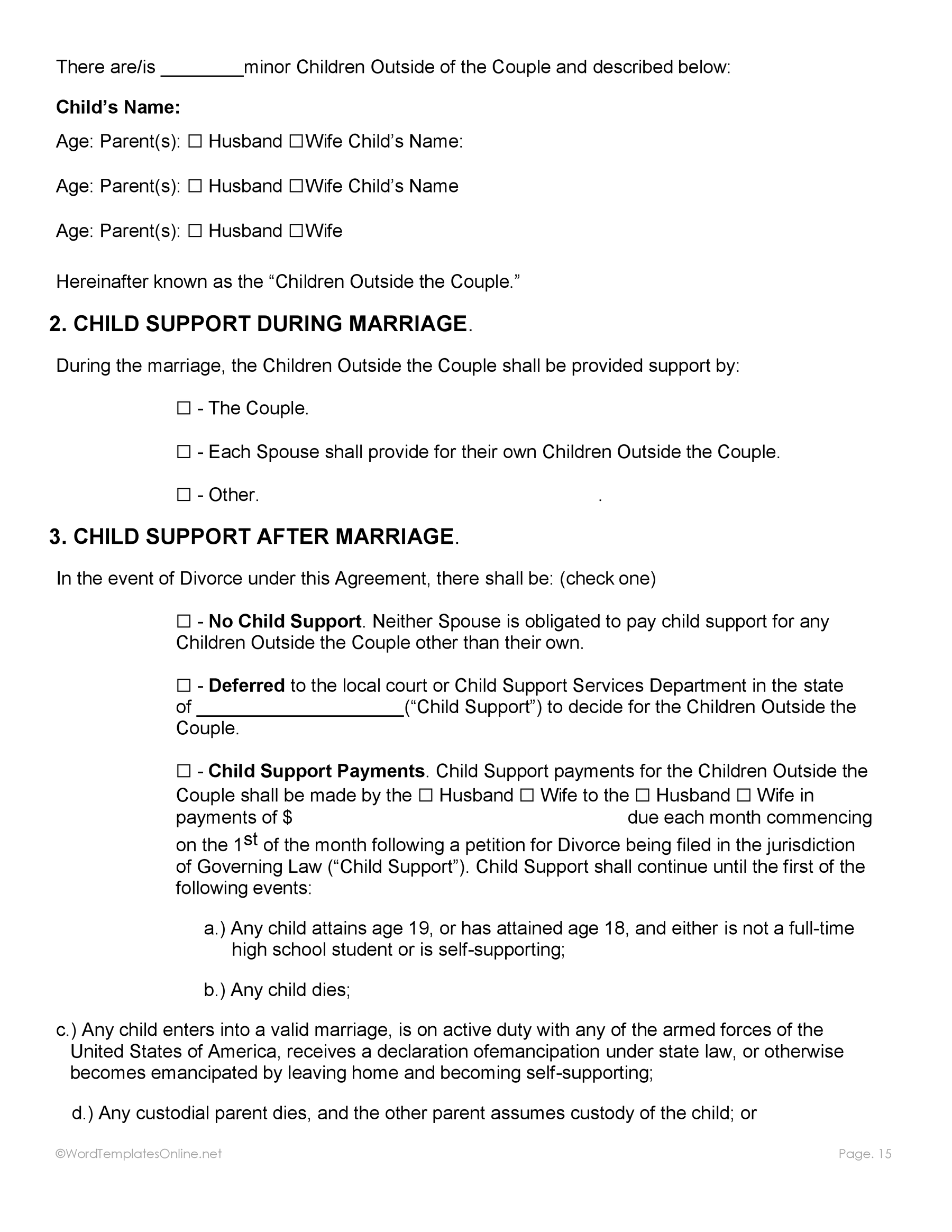
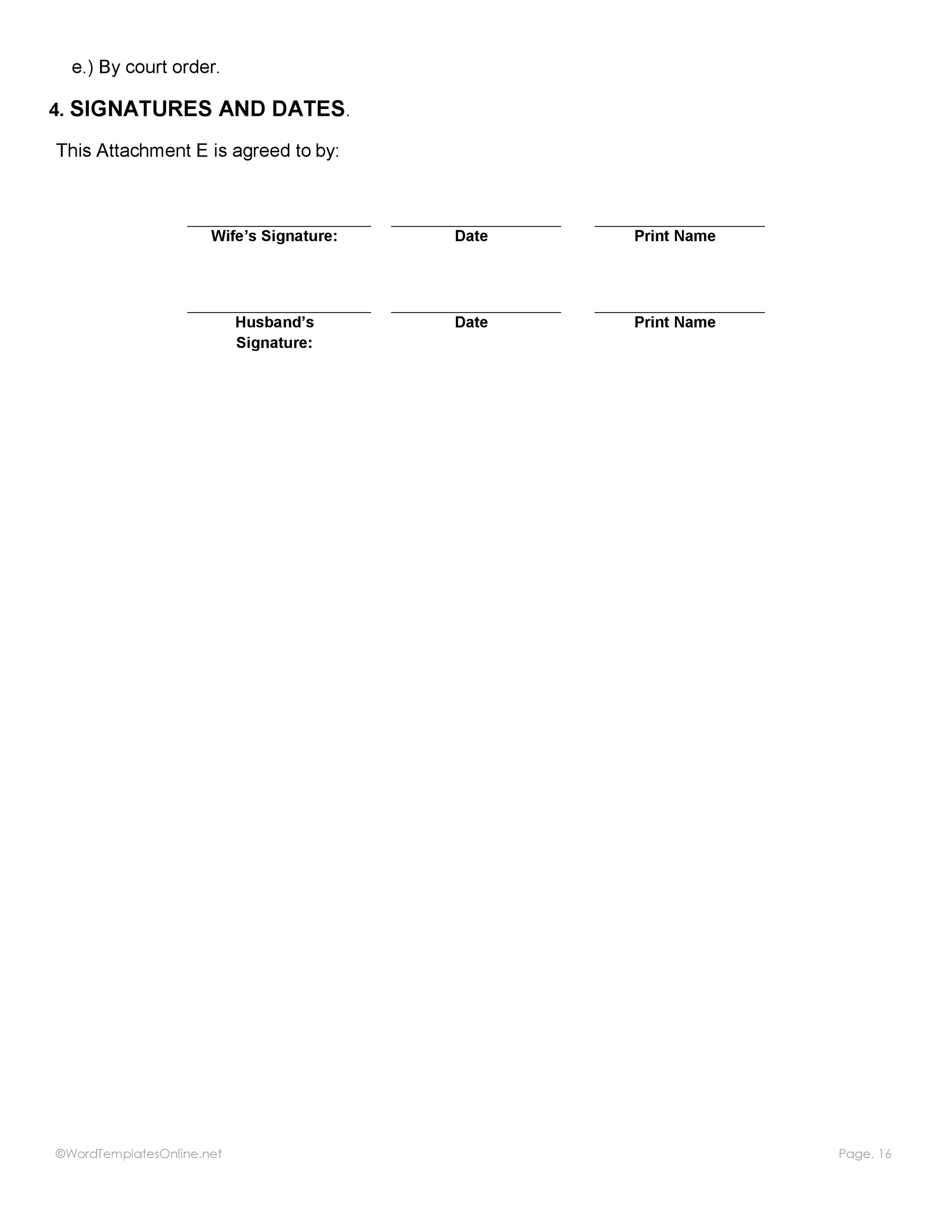
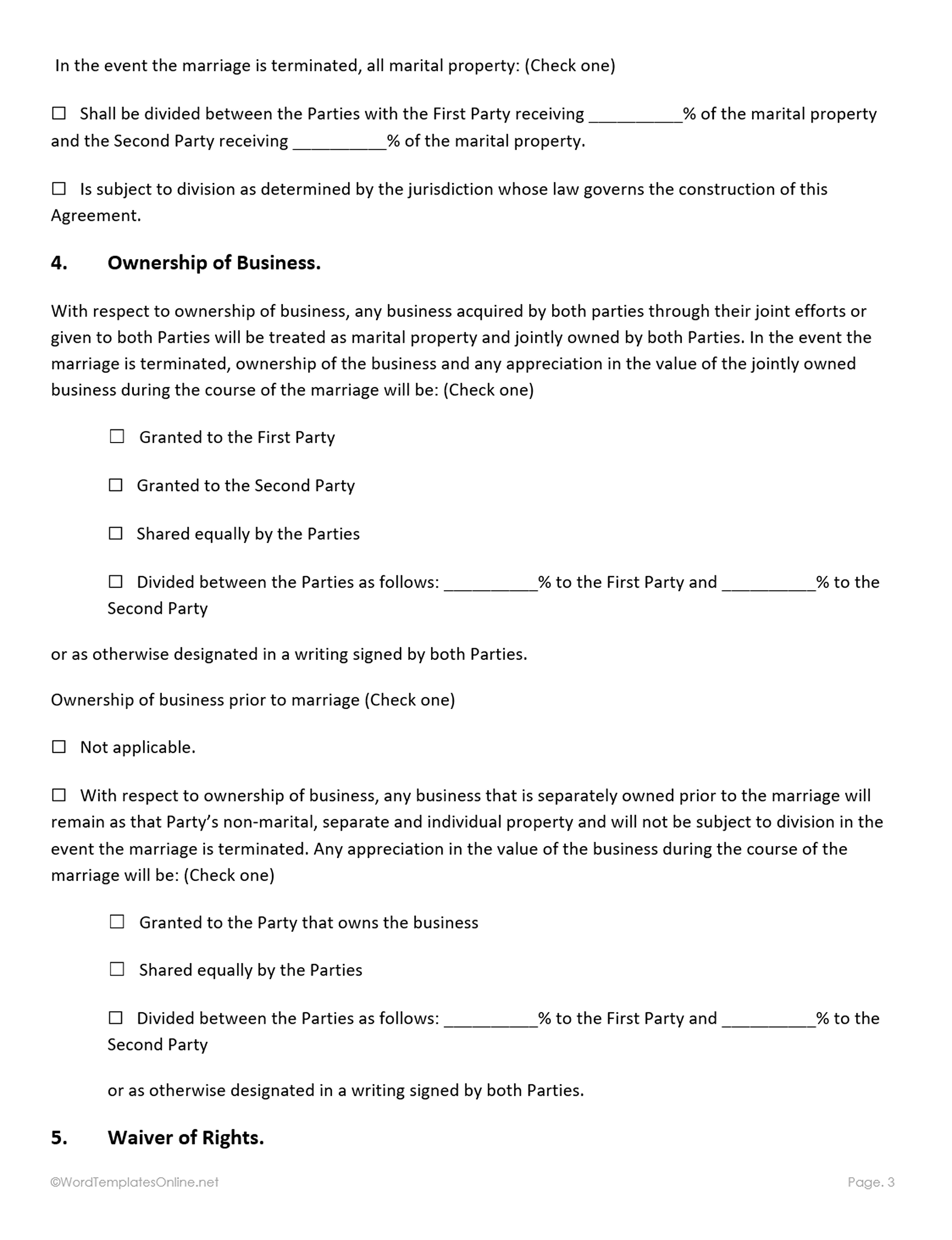
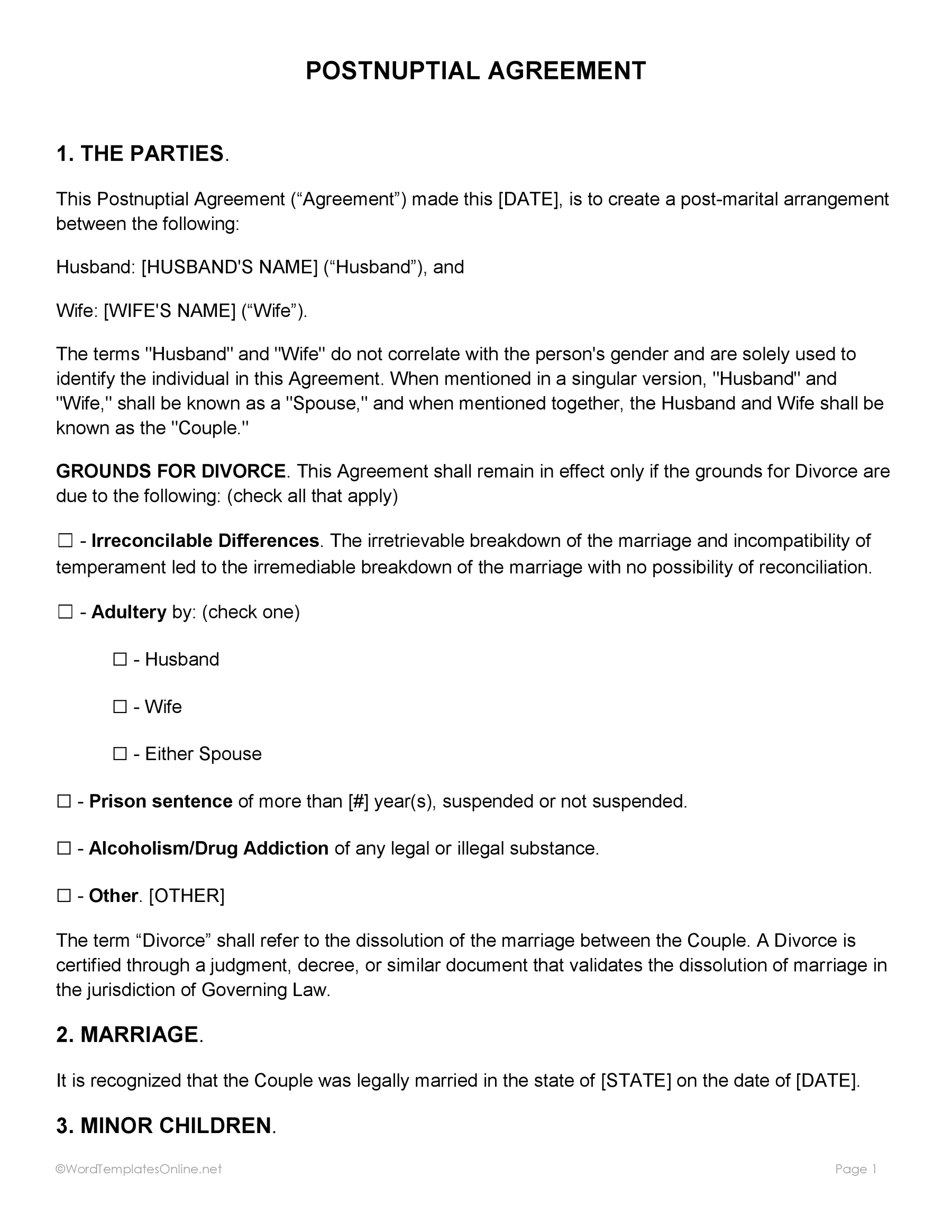
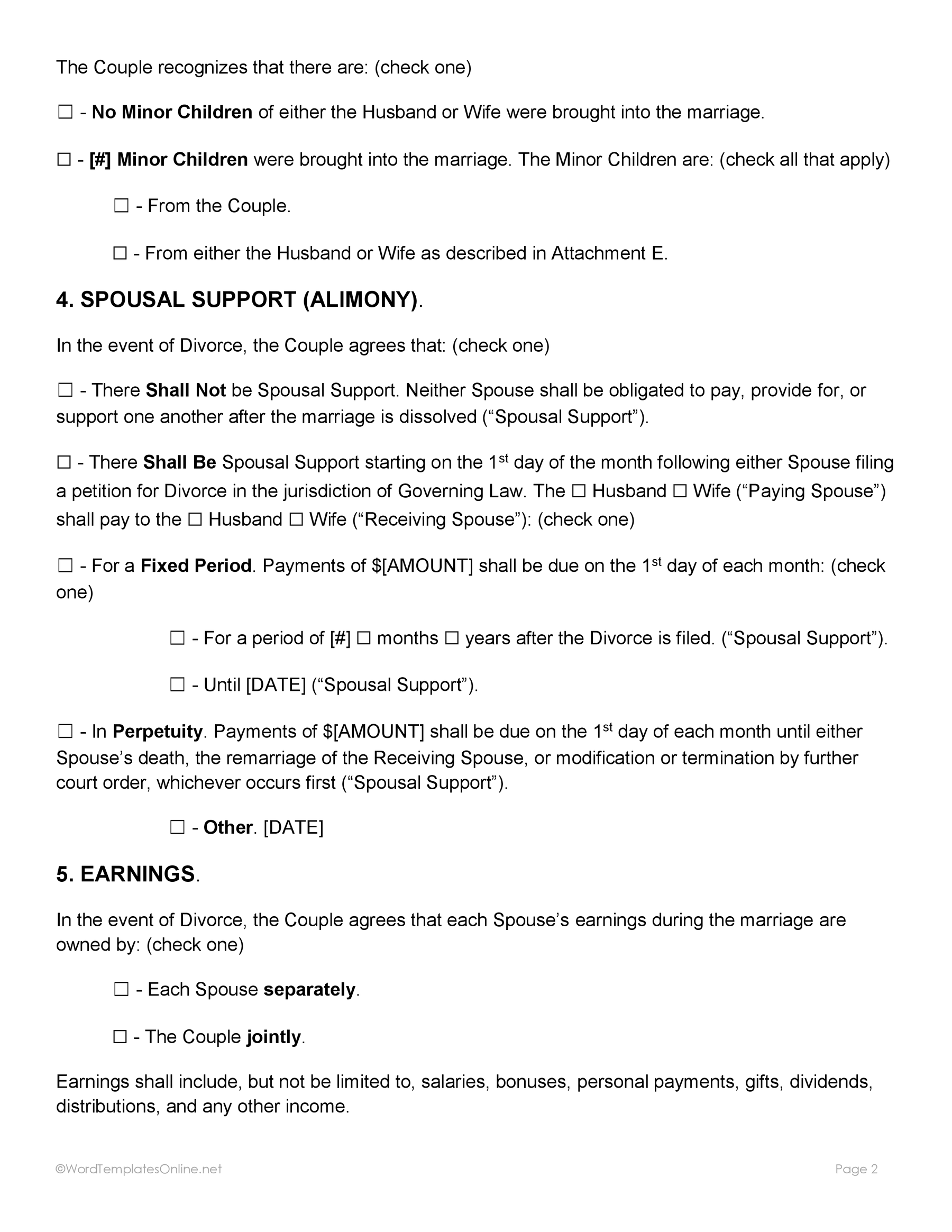
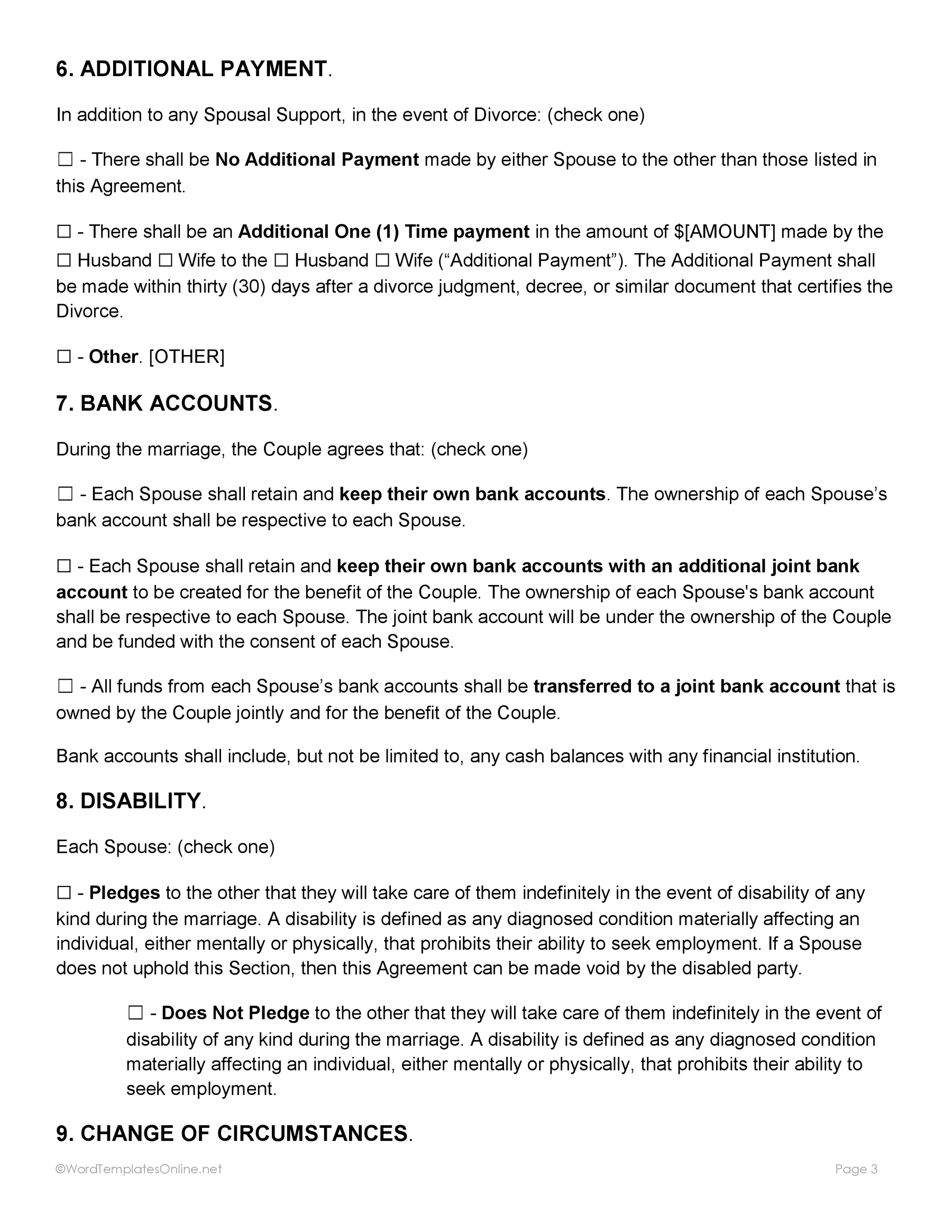
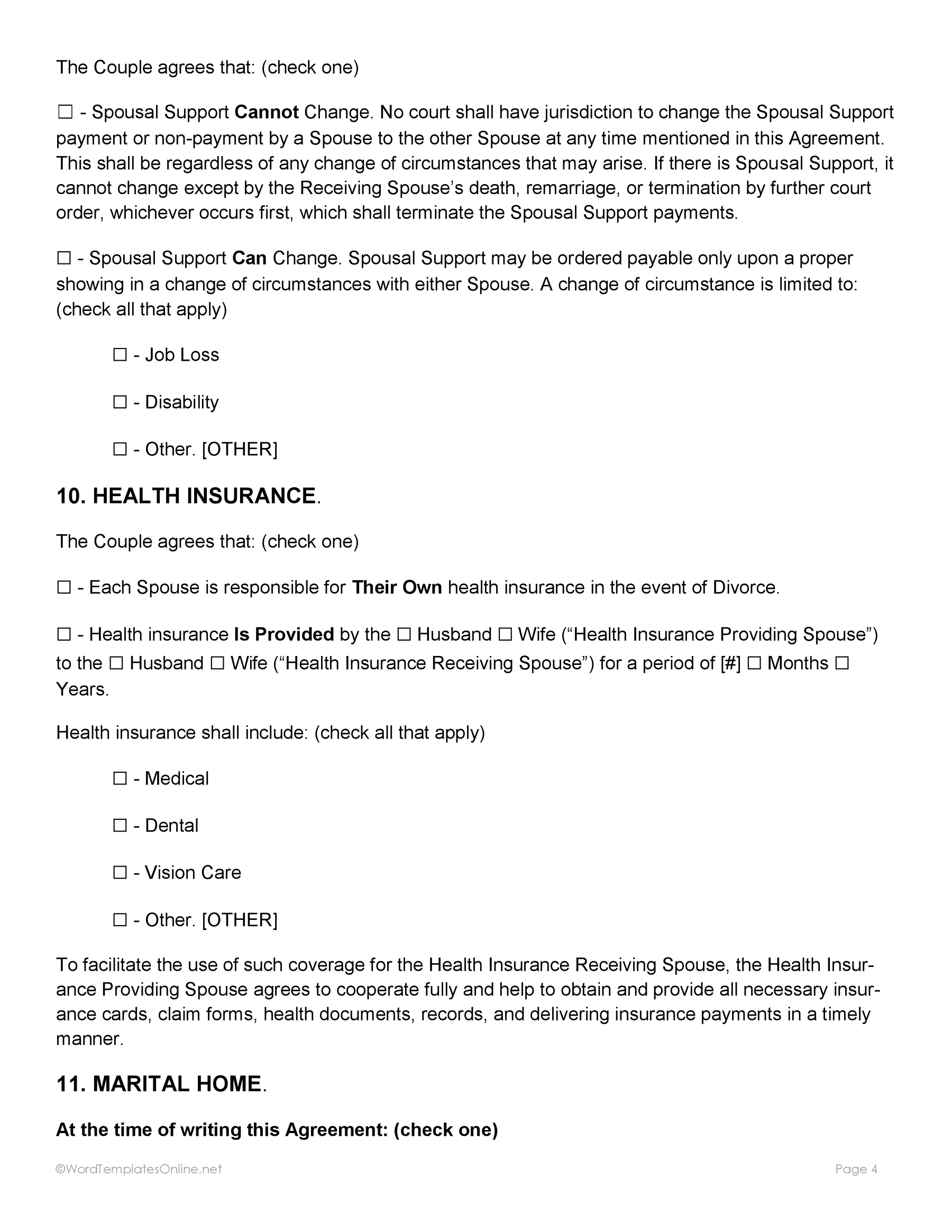
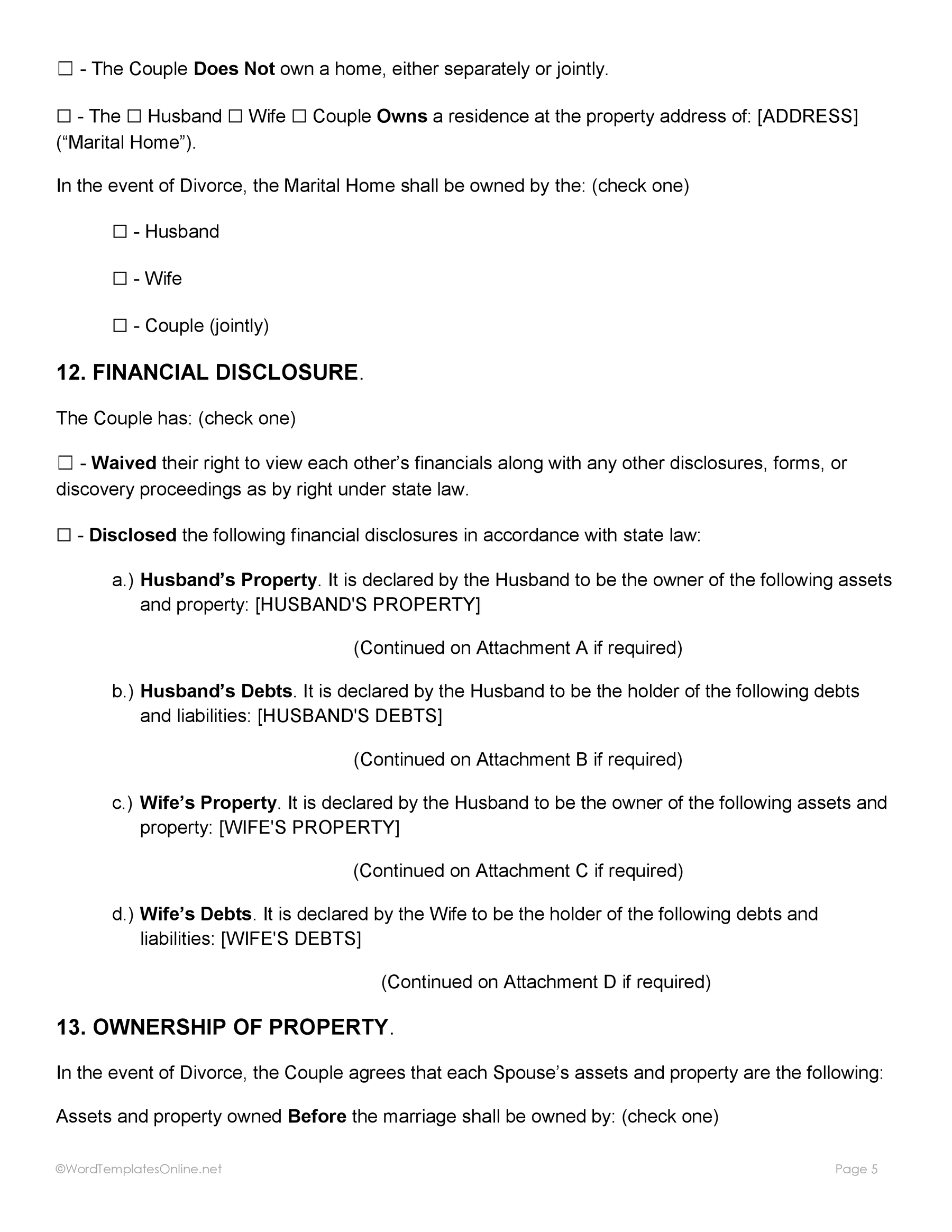
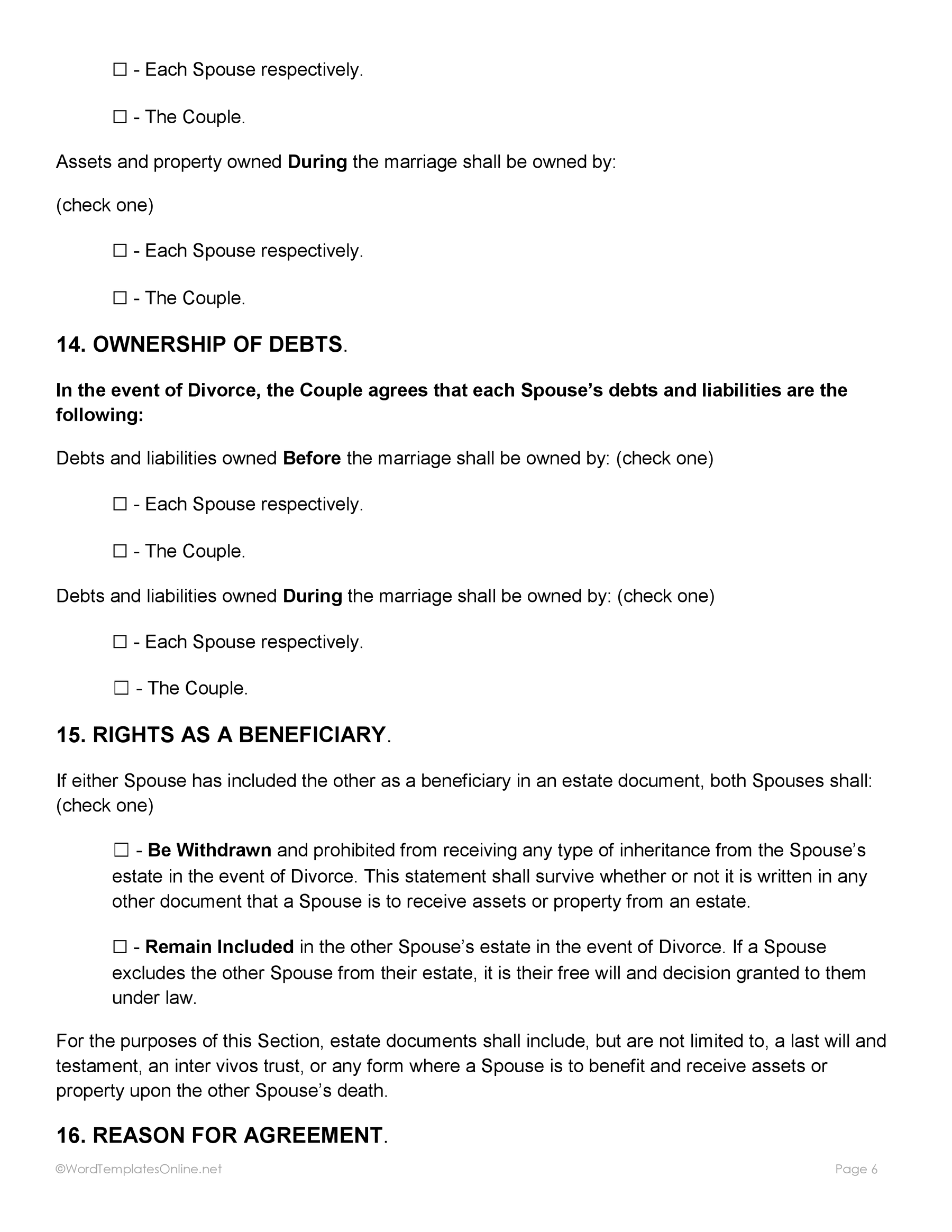
The template is beyond the basic financial postnup setup. Comprising 33 clauses, it’s designed for couples who want to create a comprehensive plan for handling financial matters if their marriage ends in divorce.
As you can see, this template covers a broad range of topics, from basic ones to detailed ones such as grounds for divorce, minor children information, earning ownership arrangement, bank account, additional post-divorce payments, disability provisions, health insurance, change of circumstance clauses, marital home ownership, and detailed financial disclosures.
Debt allocation agreement templates
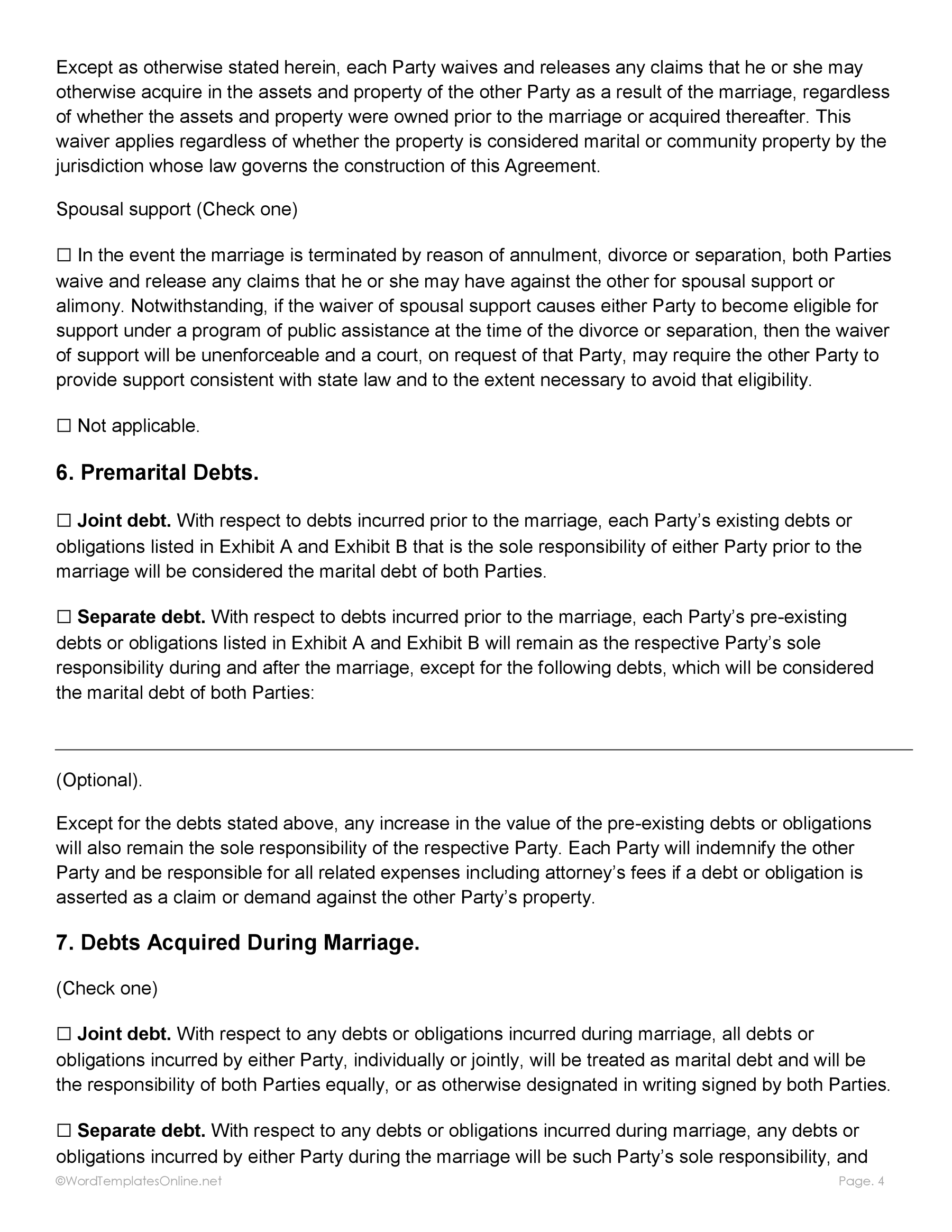
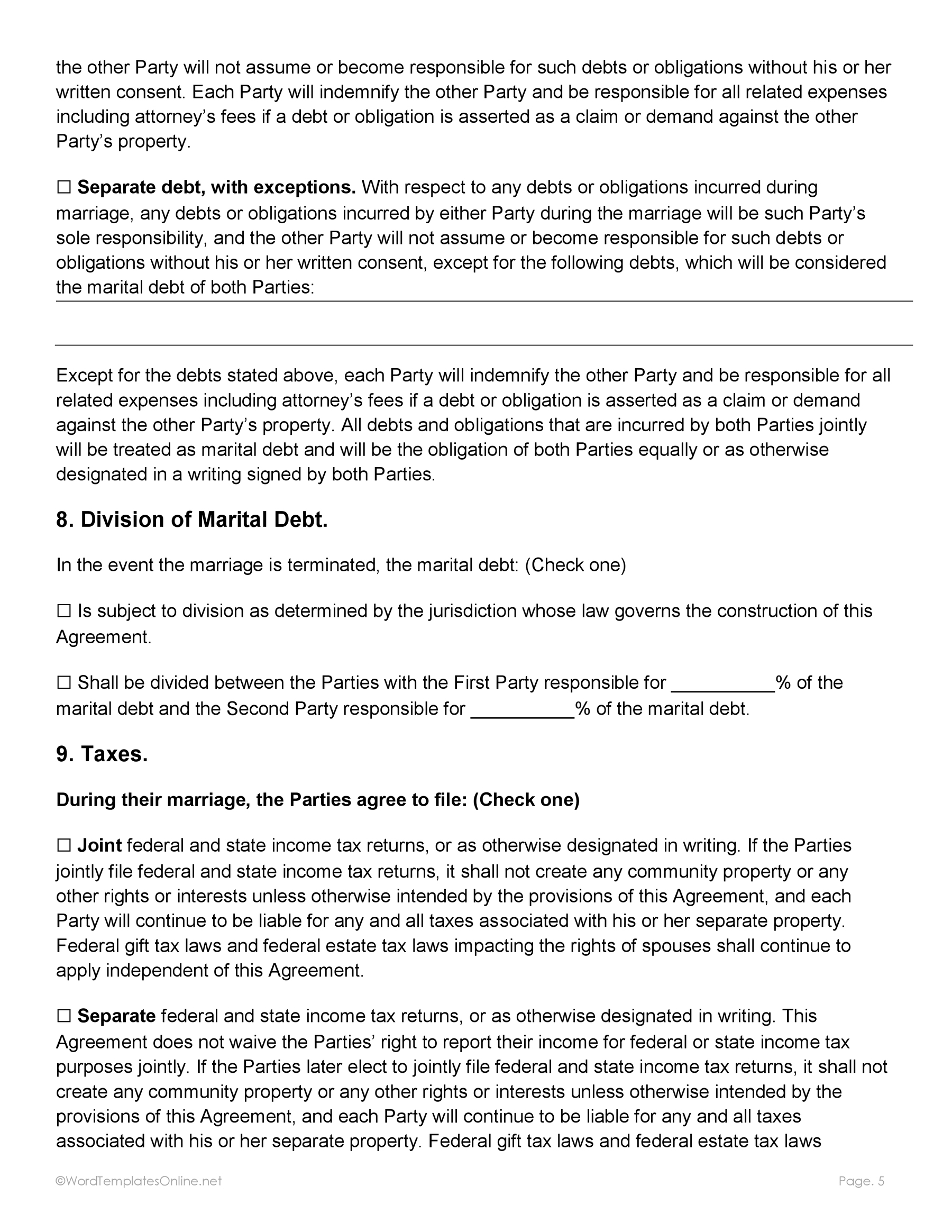
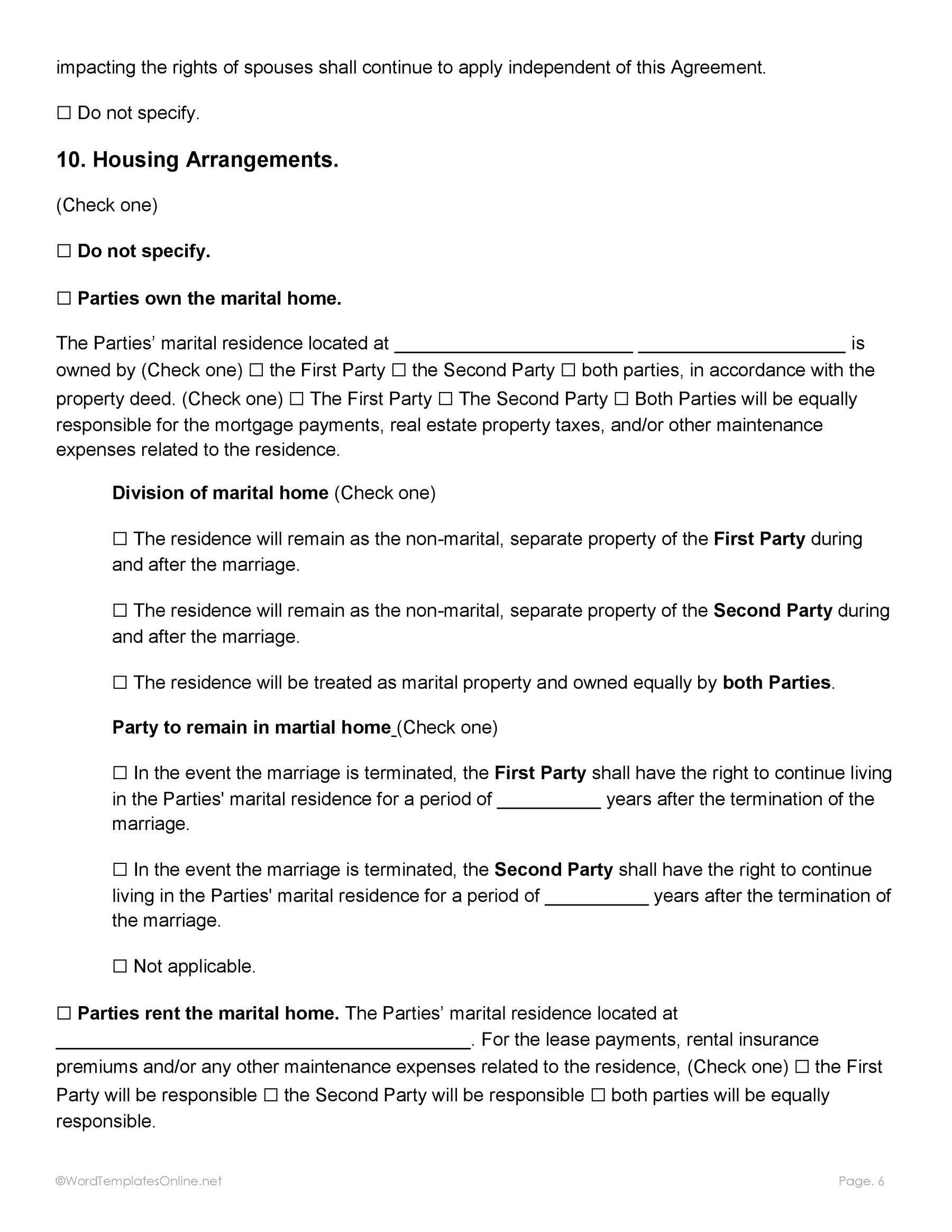
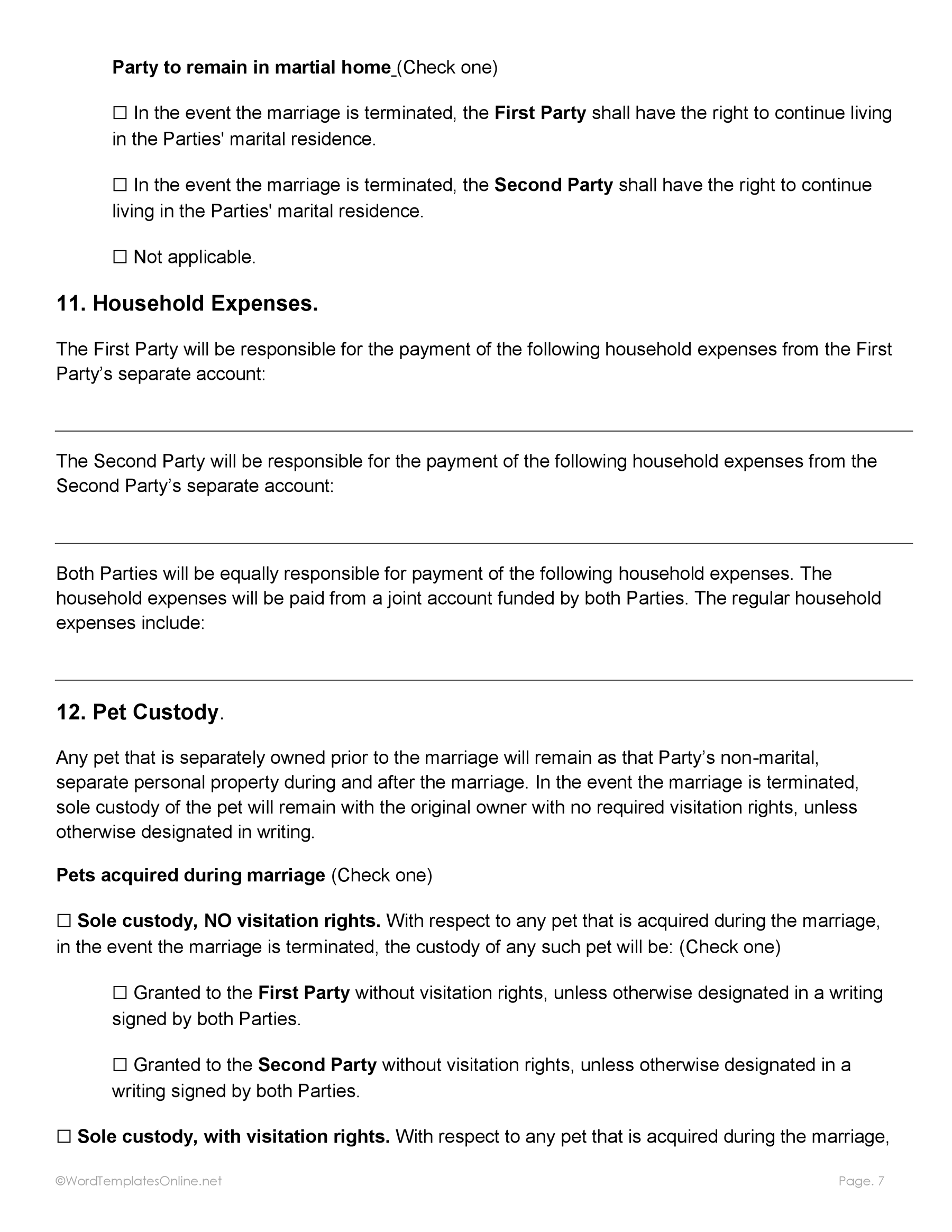
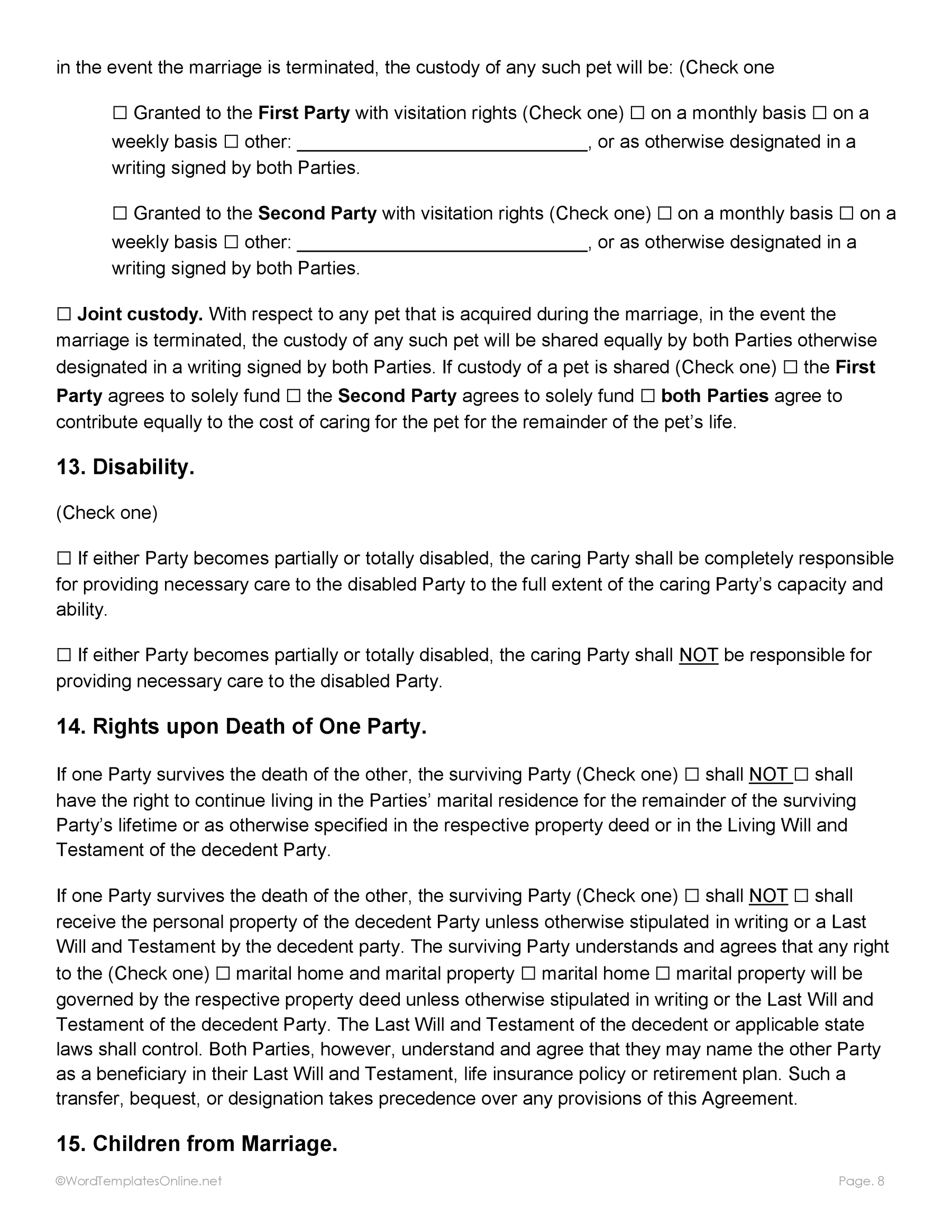
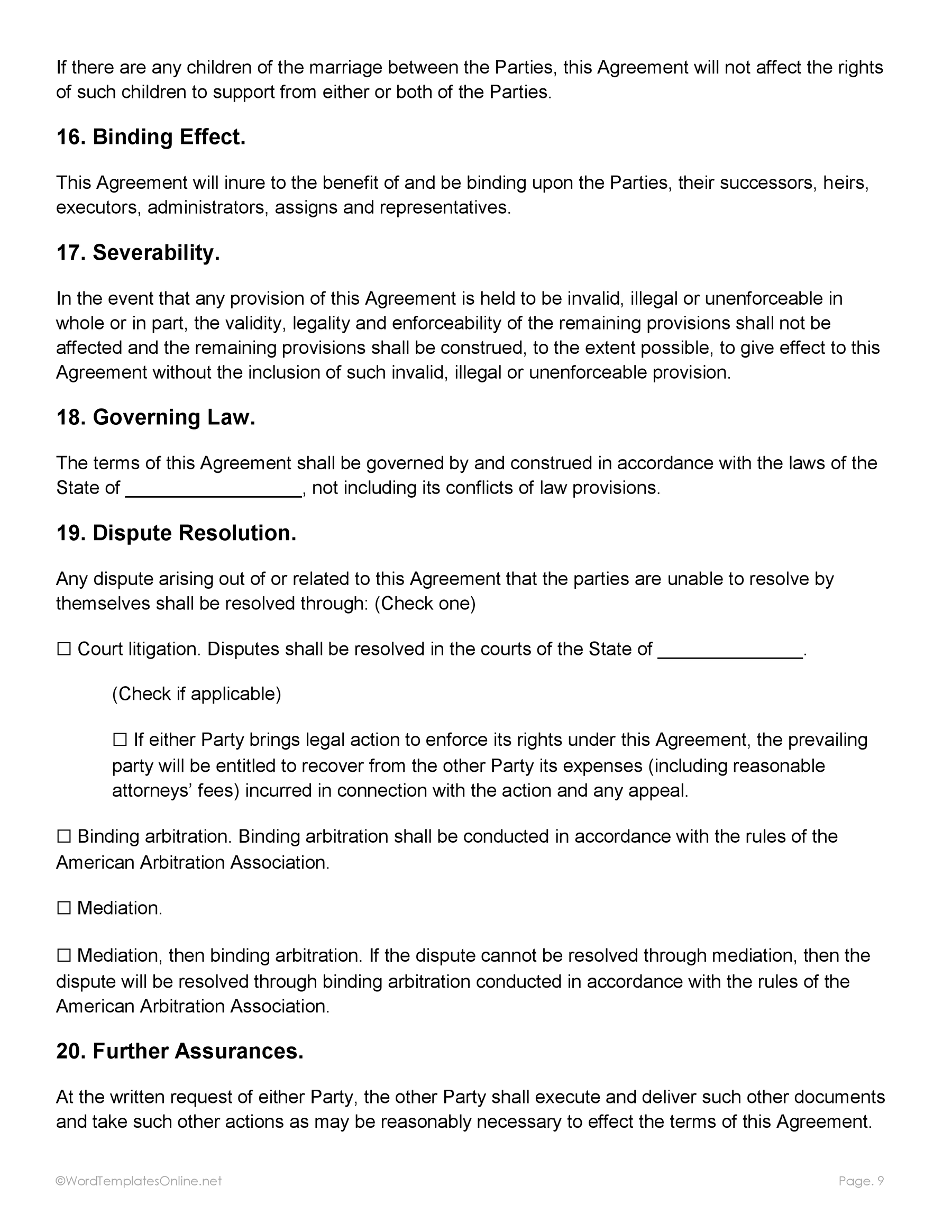
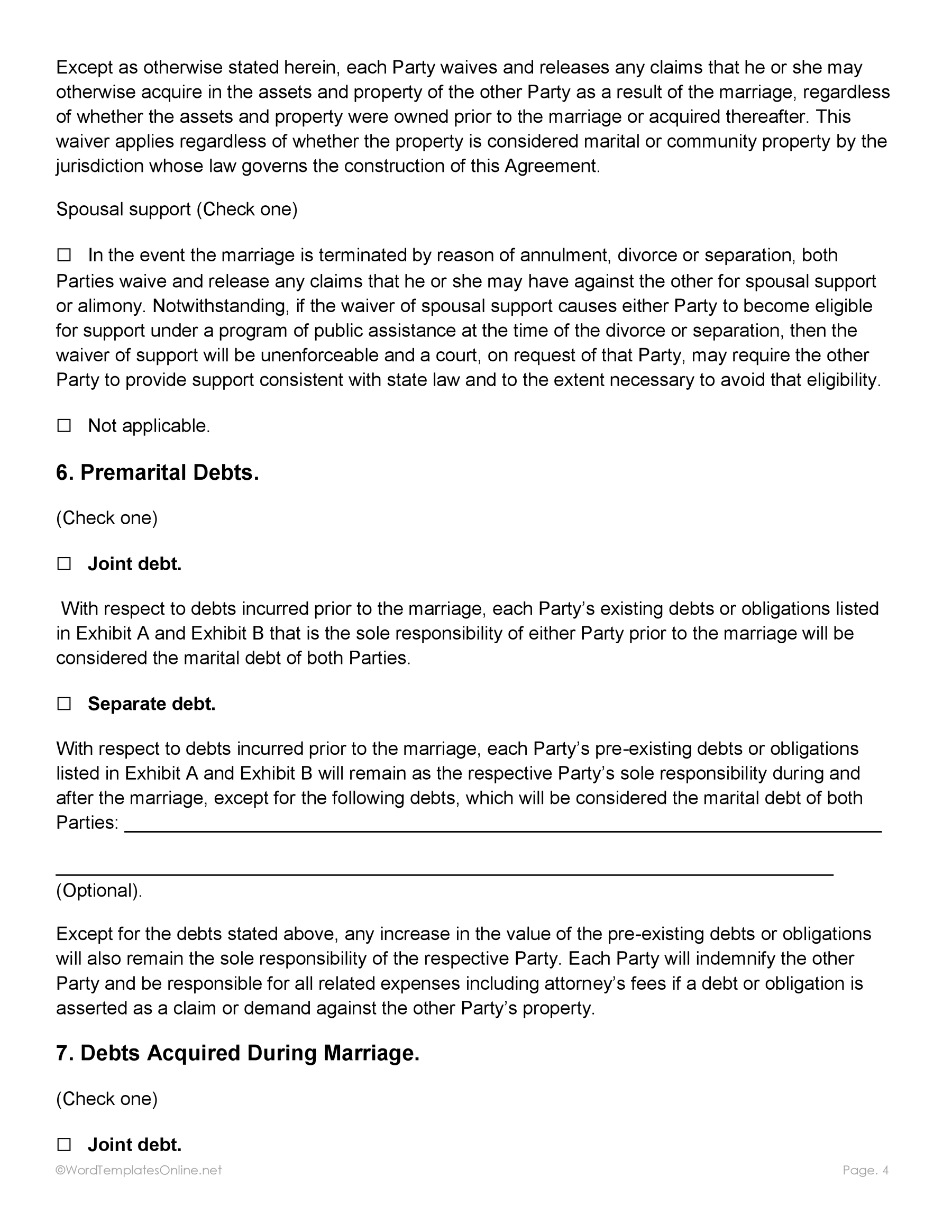
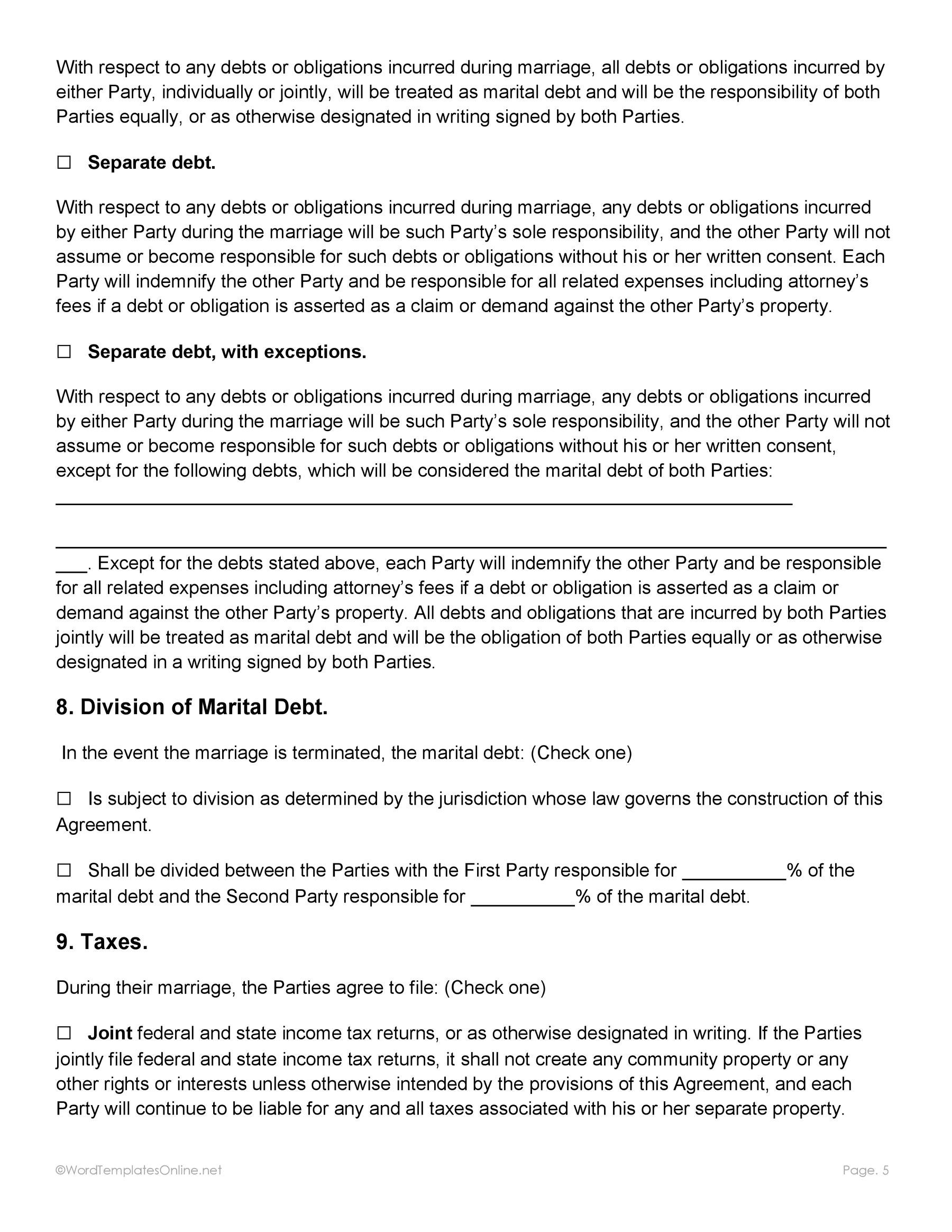
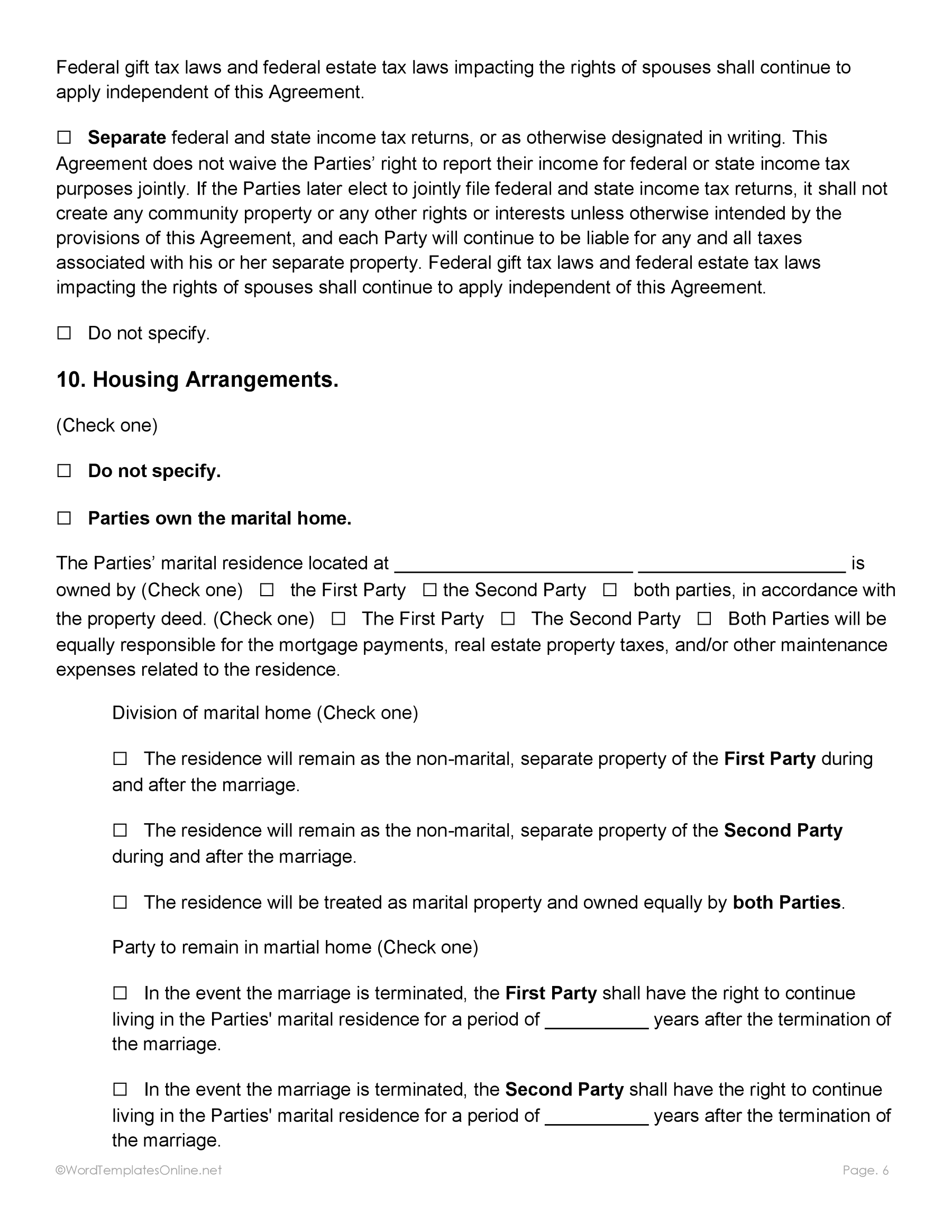
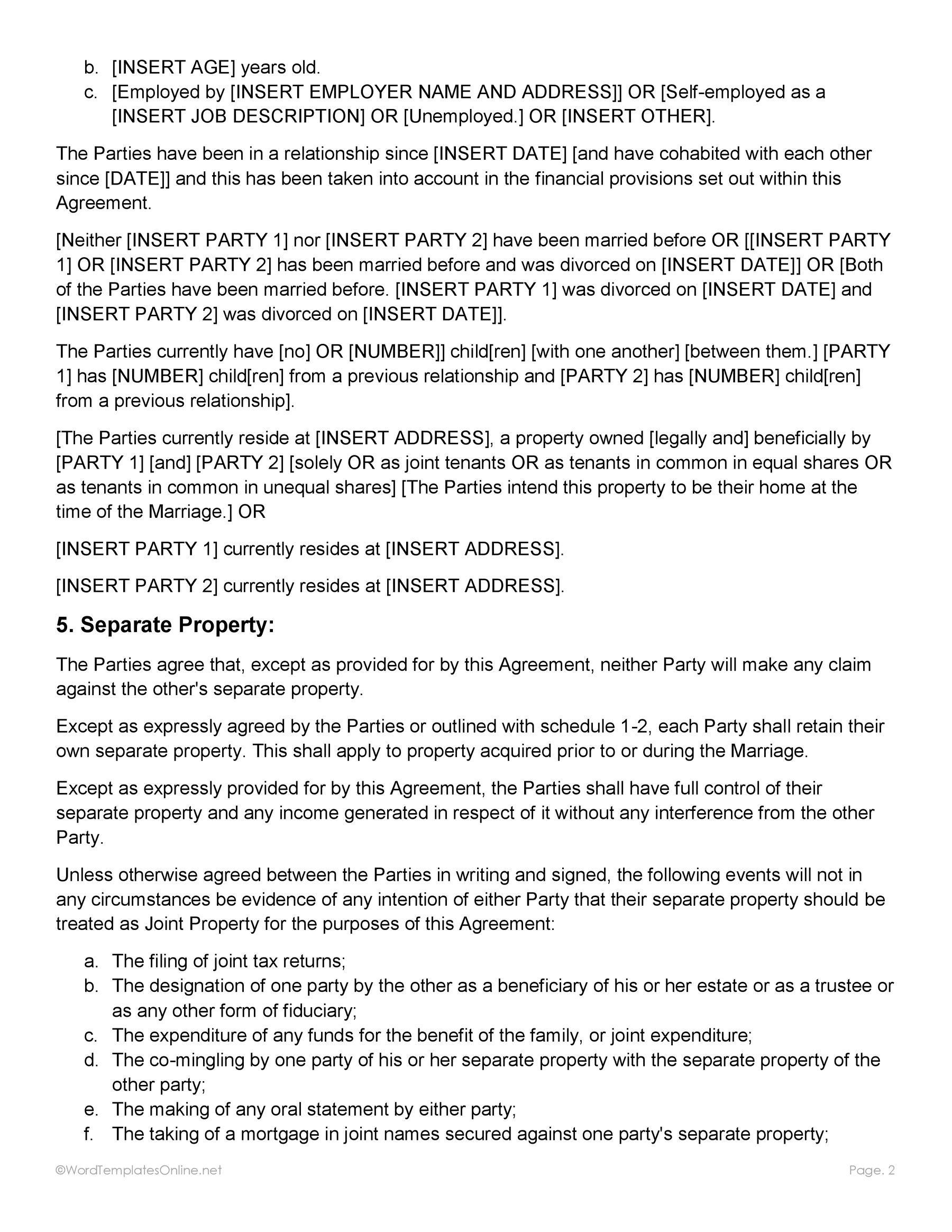
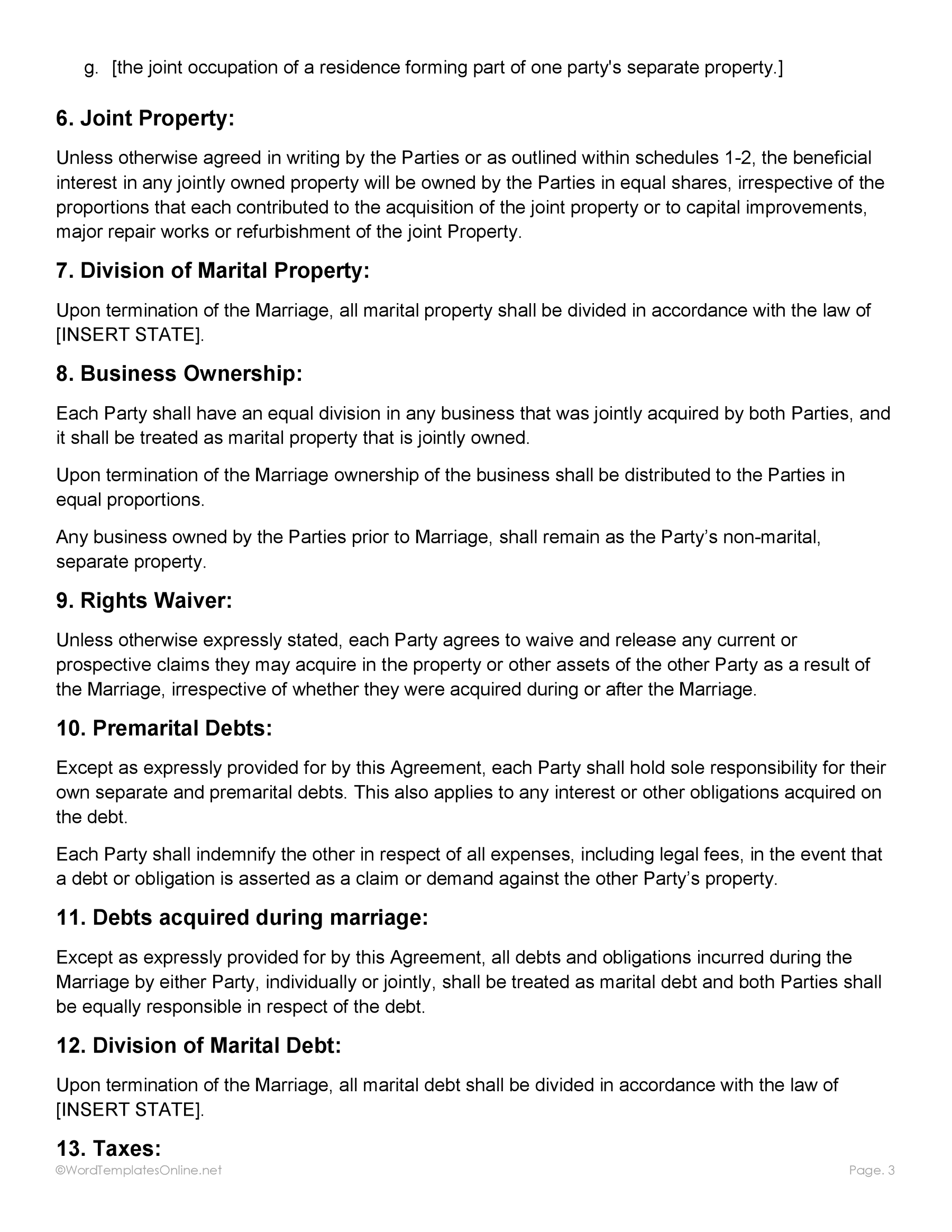
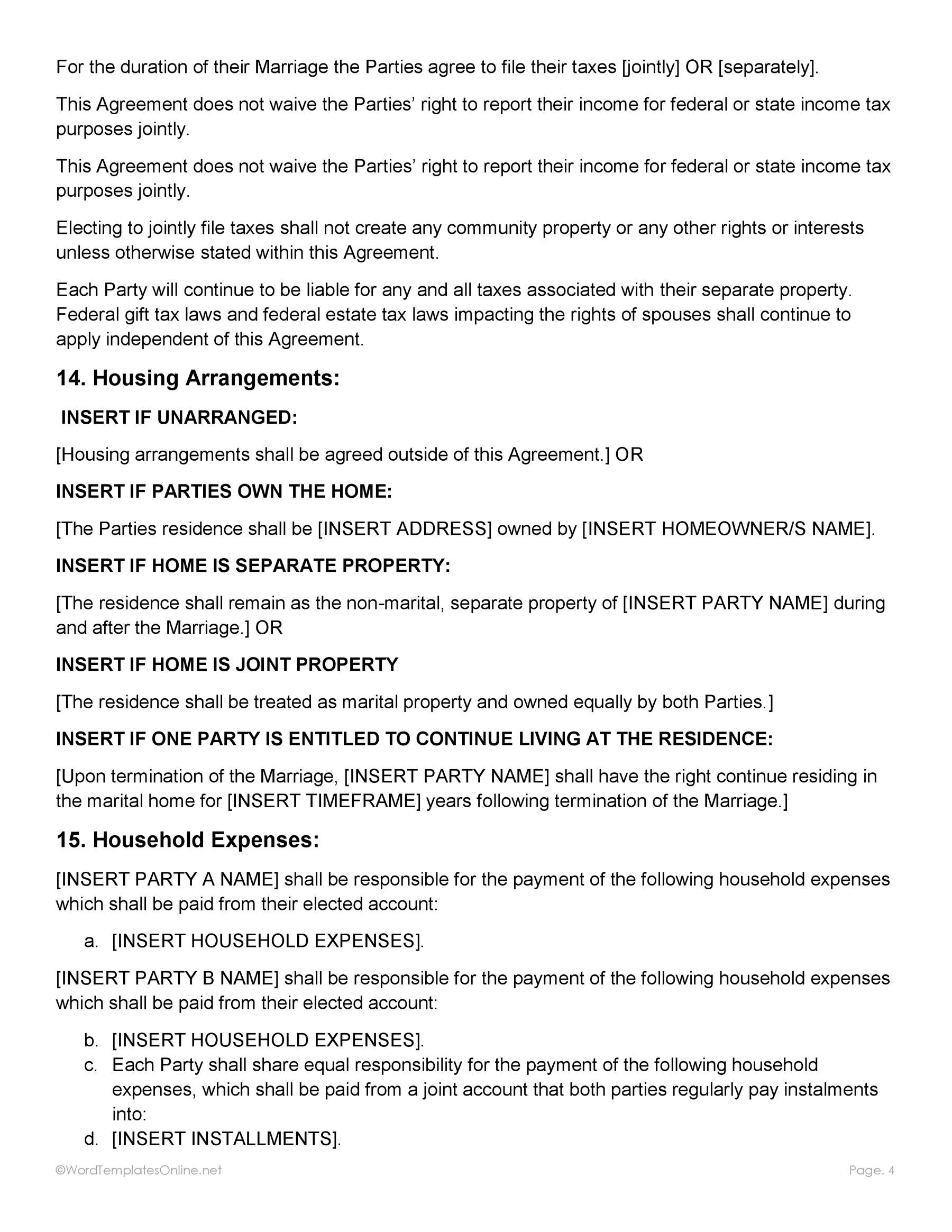
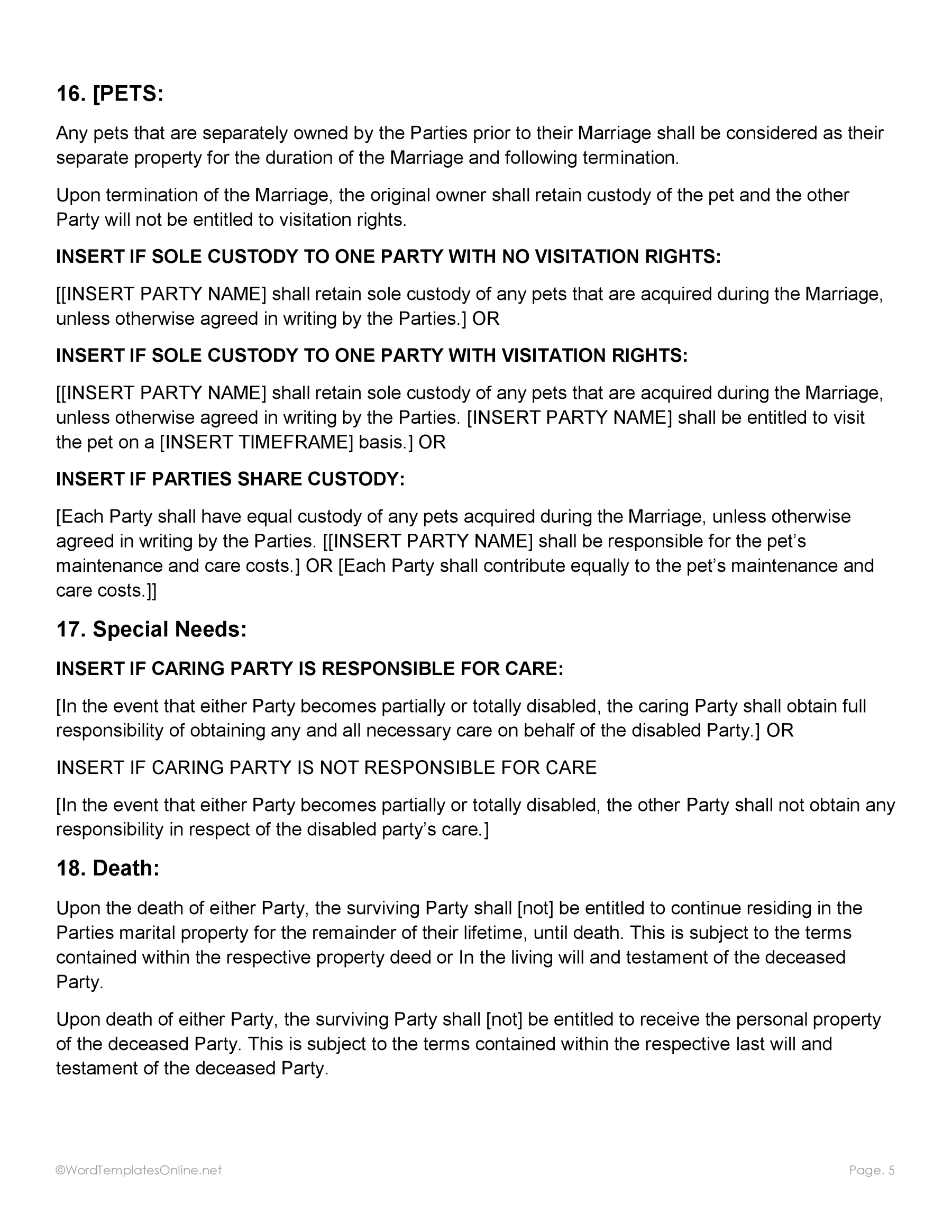
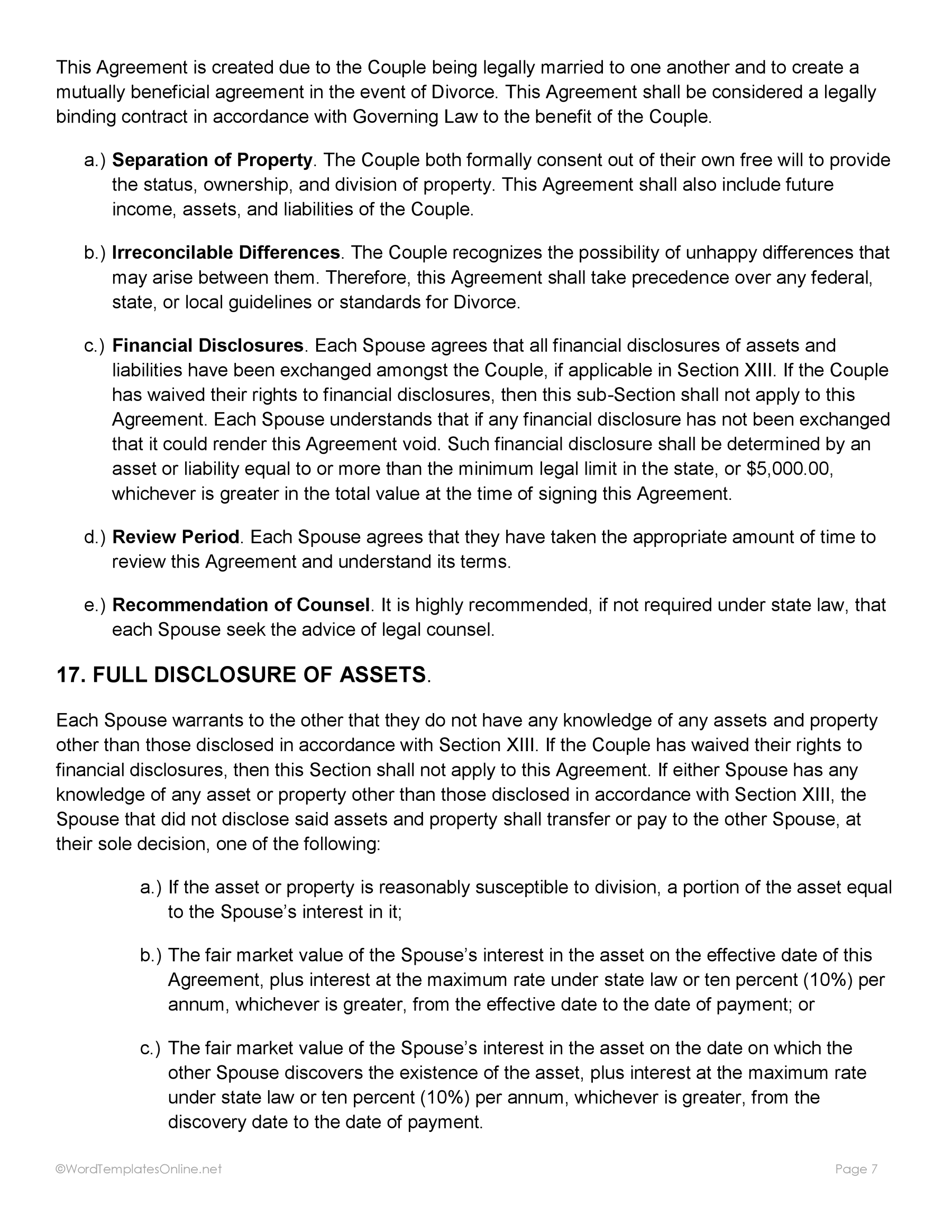
Following the general template layout, this one goes more into detail about who will be responsible for debts if the marriage ends. For instance, it includes sections like premarital debt (both joint and separate), debts acquired during marriage, and how the marital debt is divided among the couple.
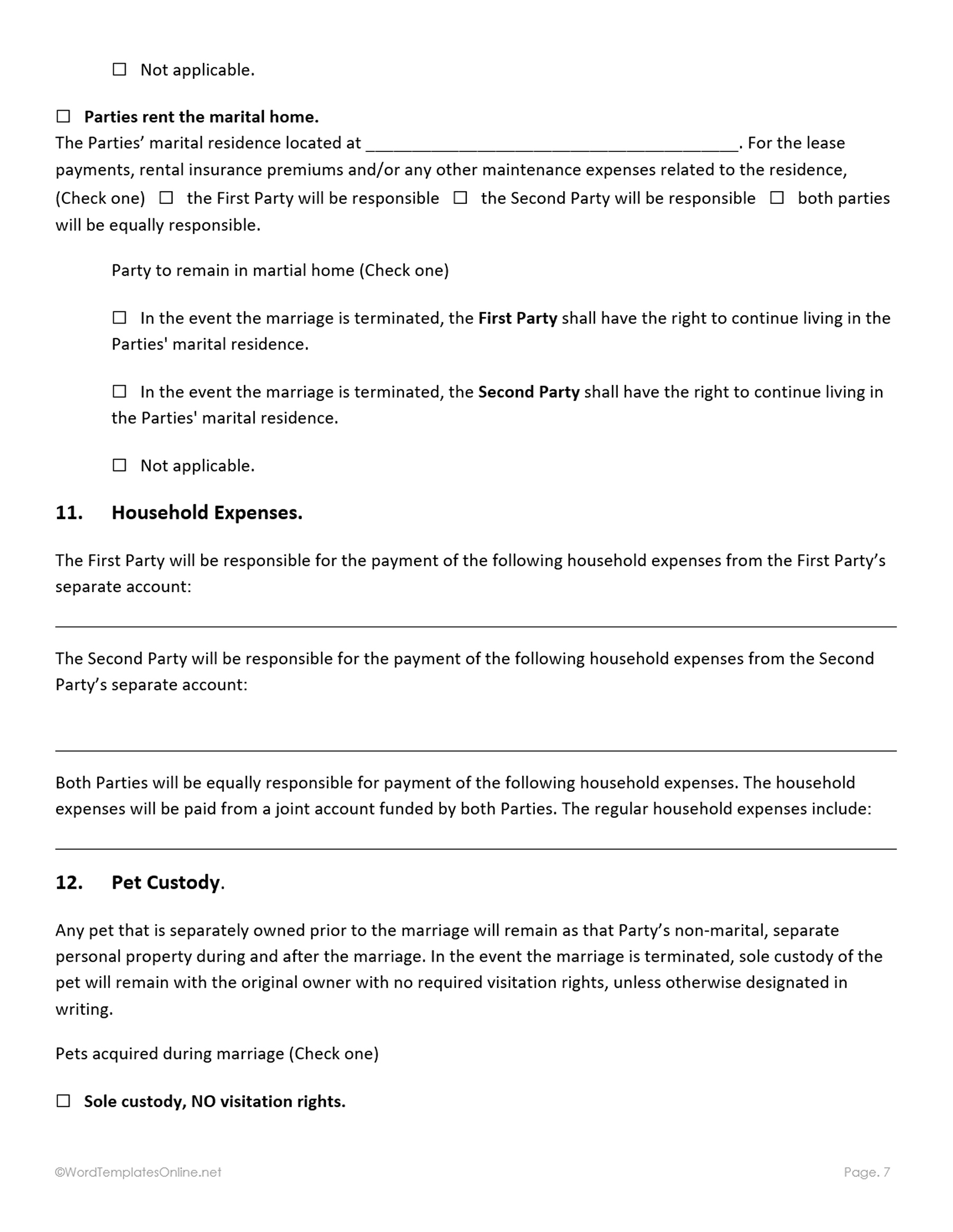
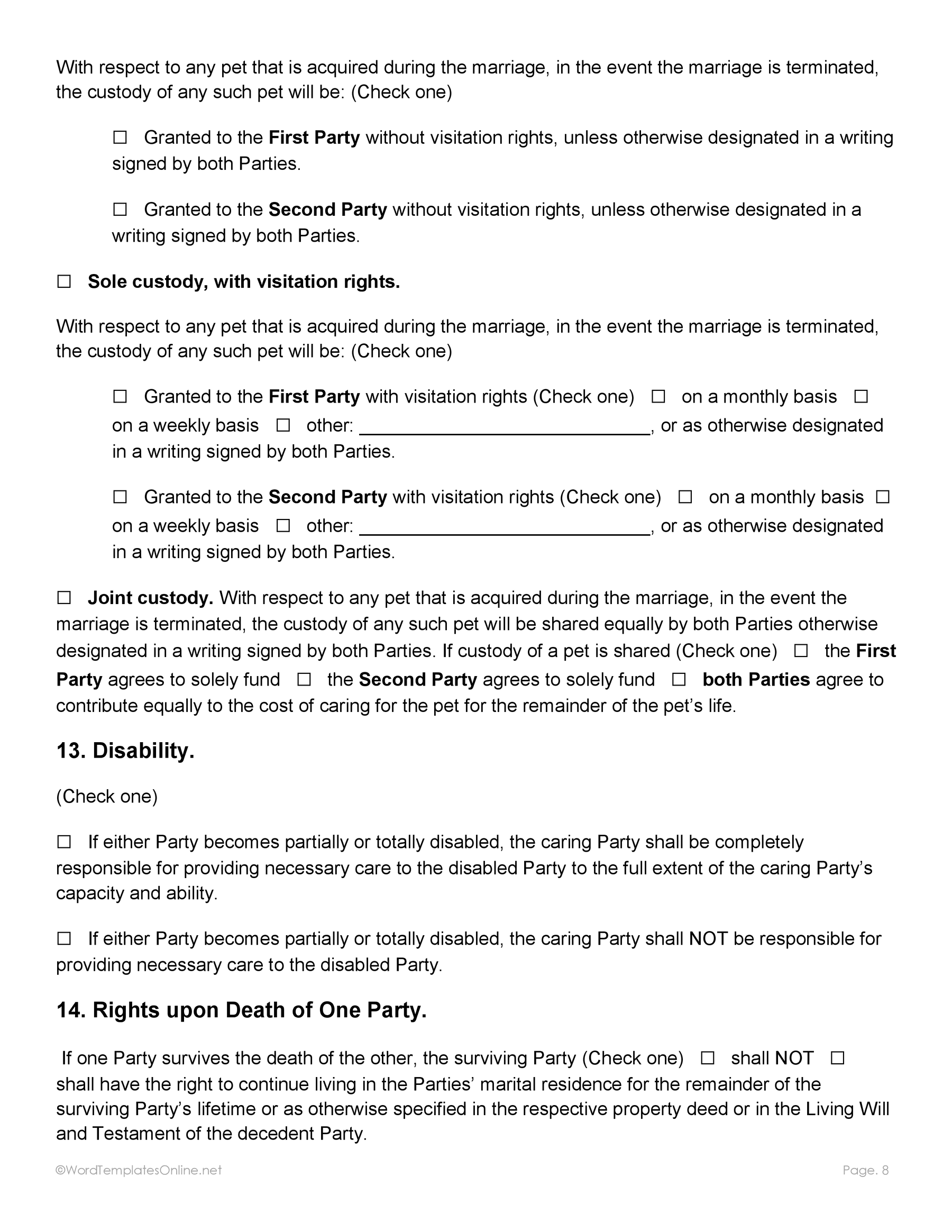
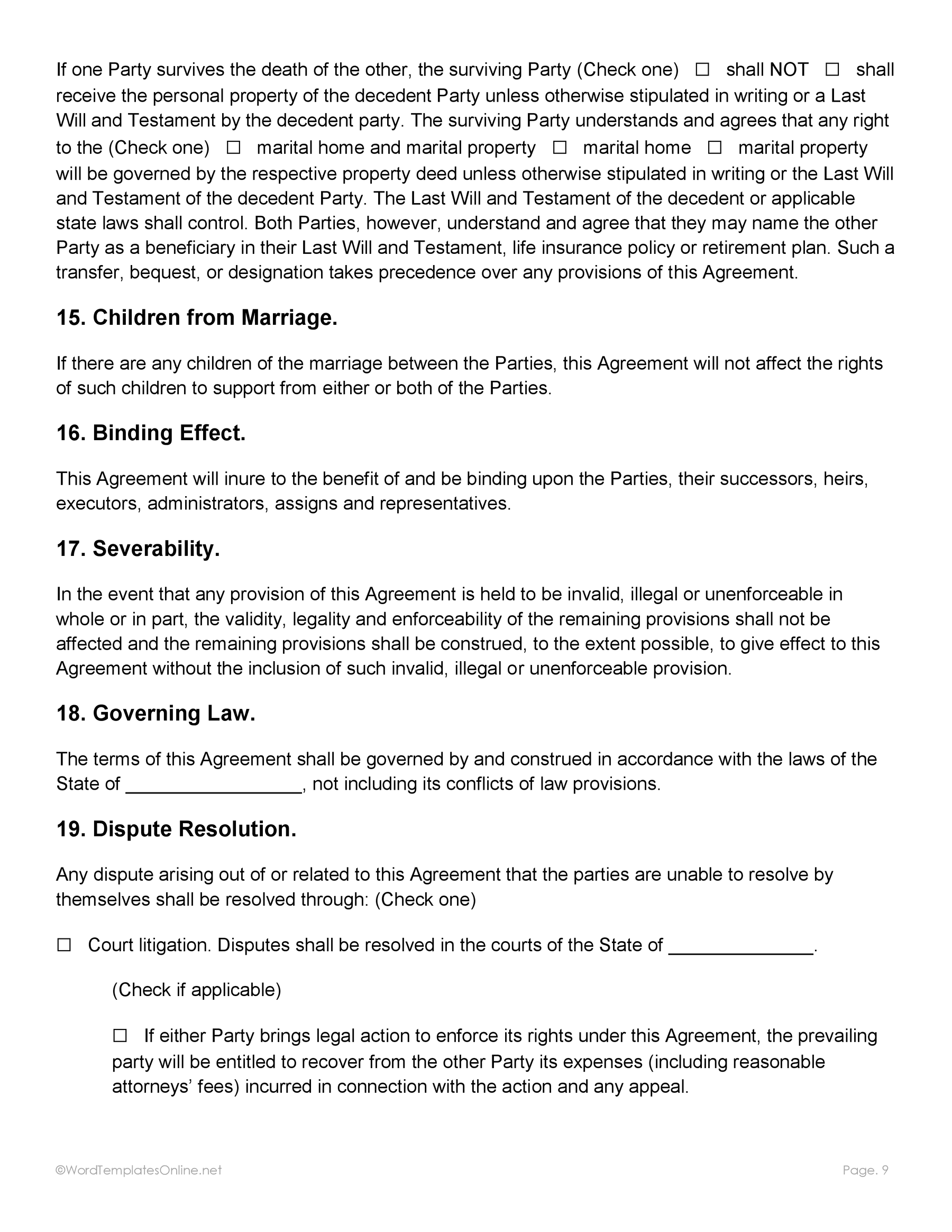
The document also covers taxes, housing arrangements, expenses, and pet custody so that everything remains sorted out about debt and how future payments should be managed. You can use this template if you have accumulated significant debt or various financial obligations over time.
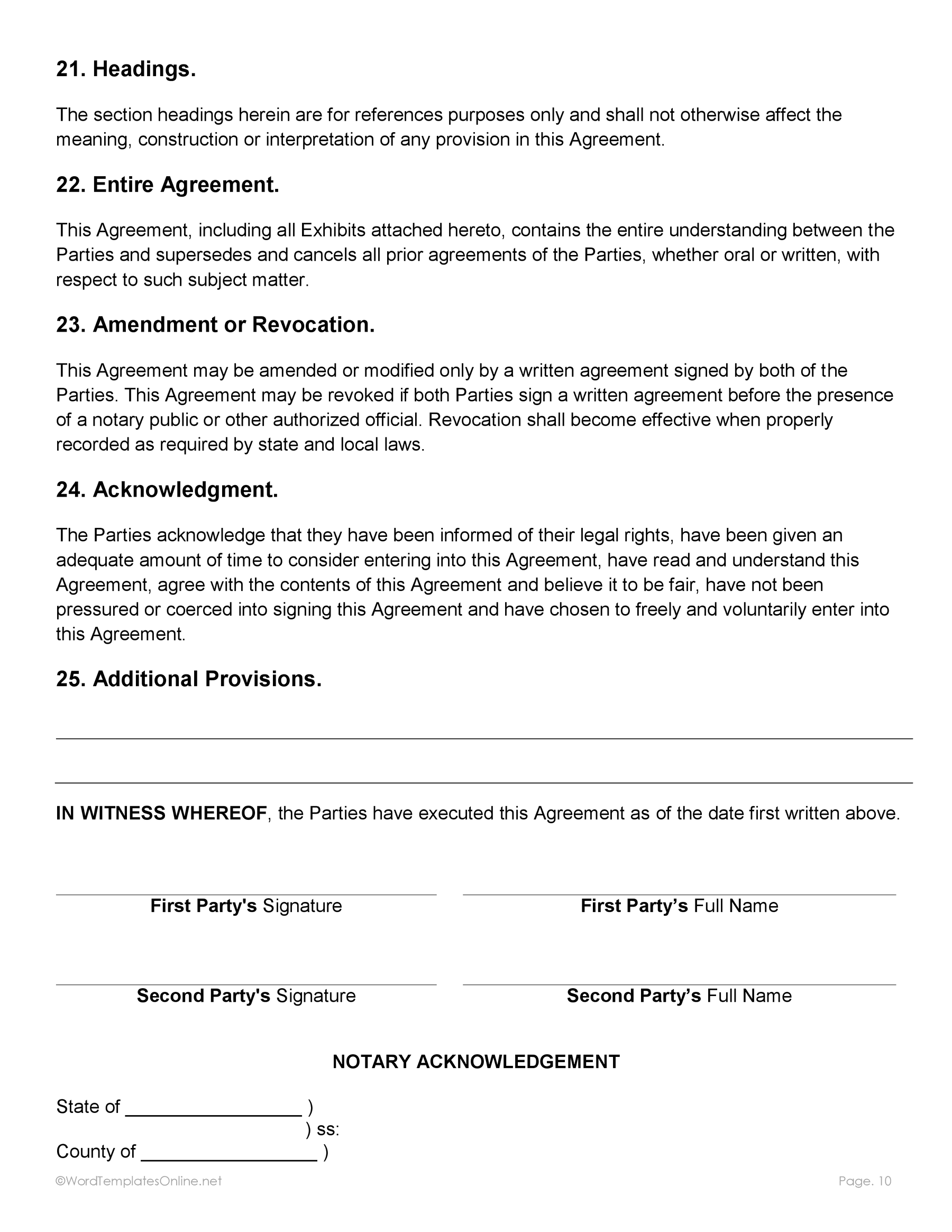
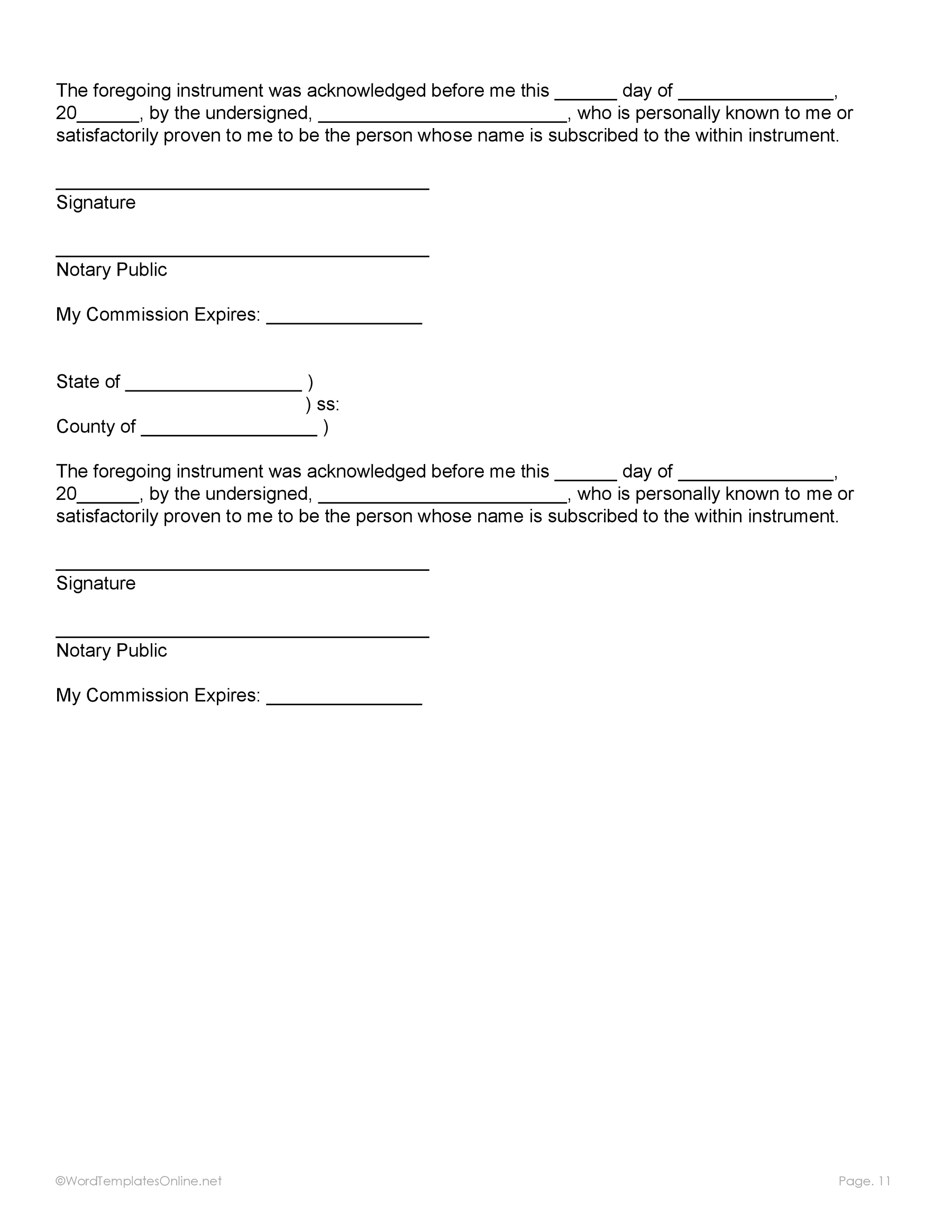
Postnuptial Agreement 03
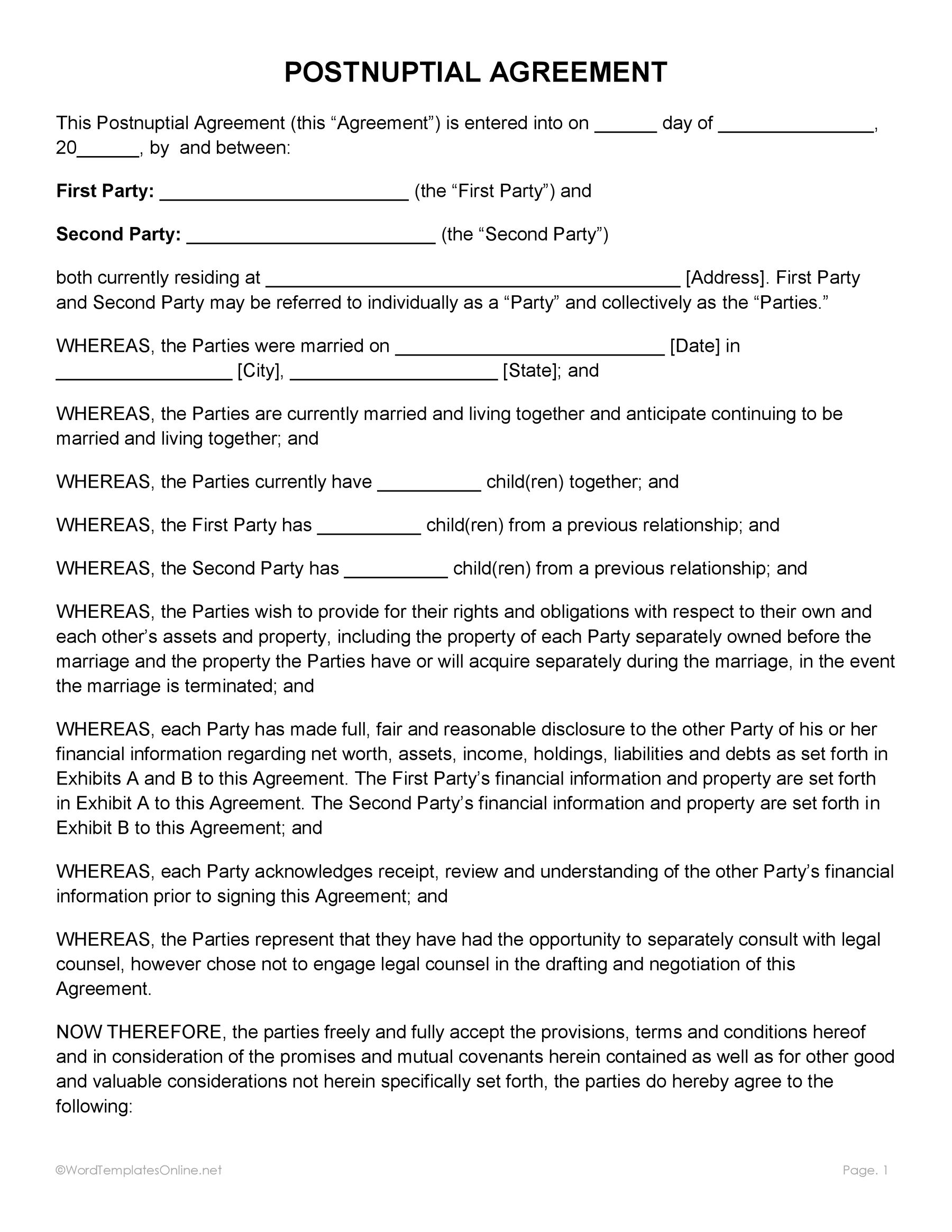
Postnuptial Agreement 04
Ready to use the templates!
Once you understand what all the sections are about, it’s time to put everything in writing. First, you need to figure out which template best fits your needs. After this, you can download the editable format so that you can bring everything in order.
Postnuptial Agreement 05
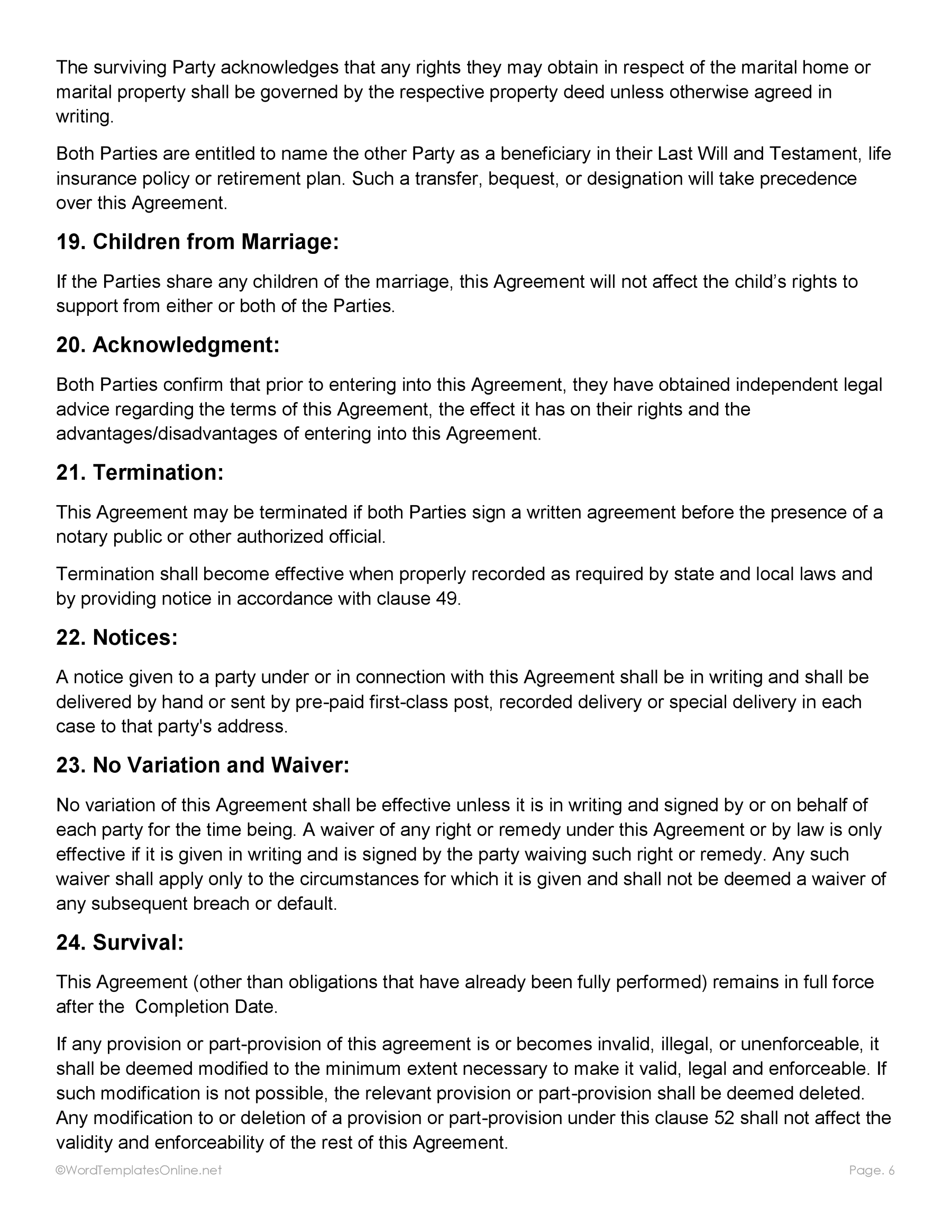
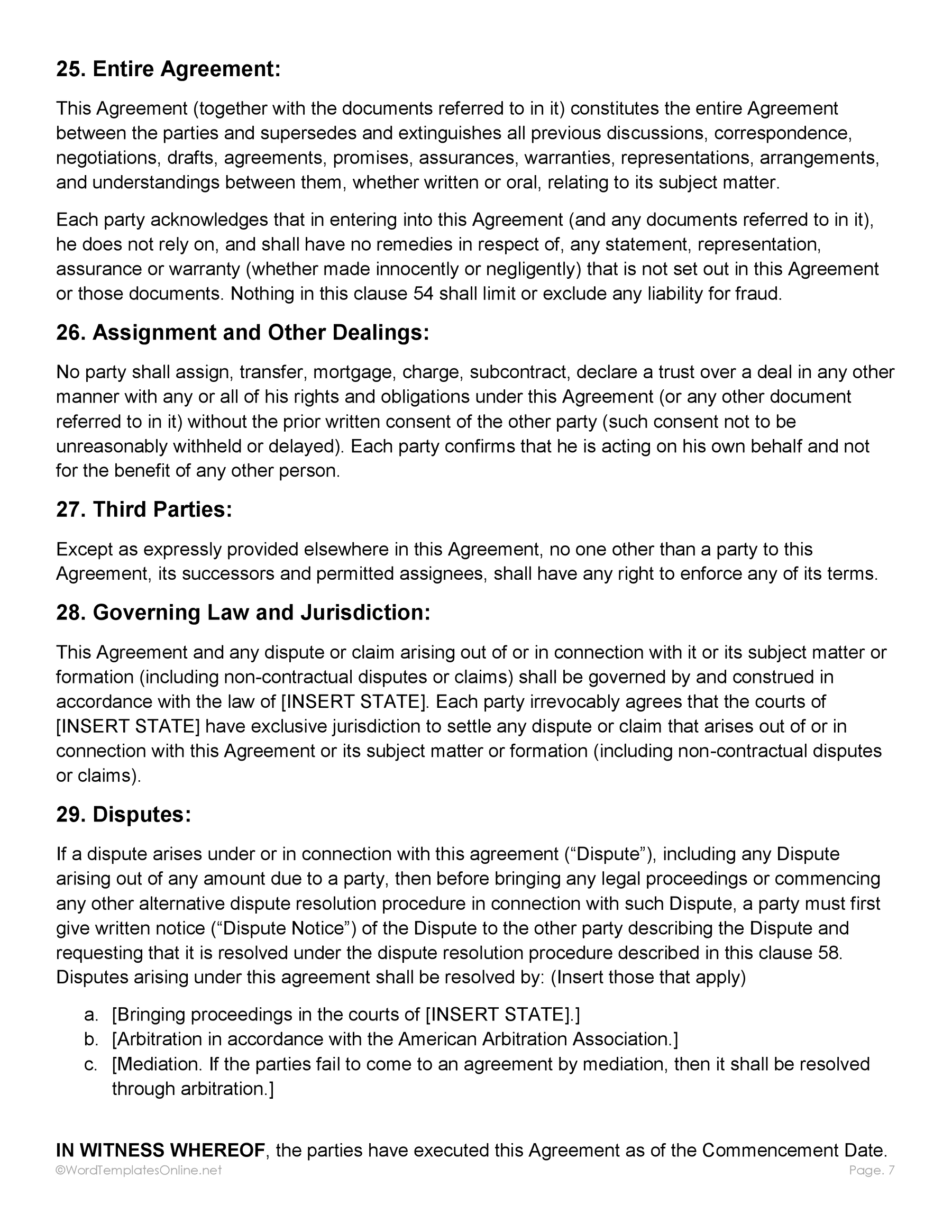
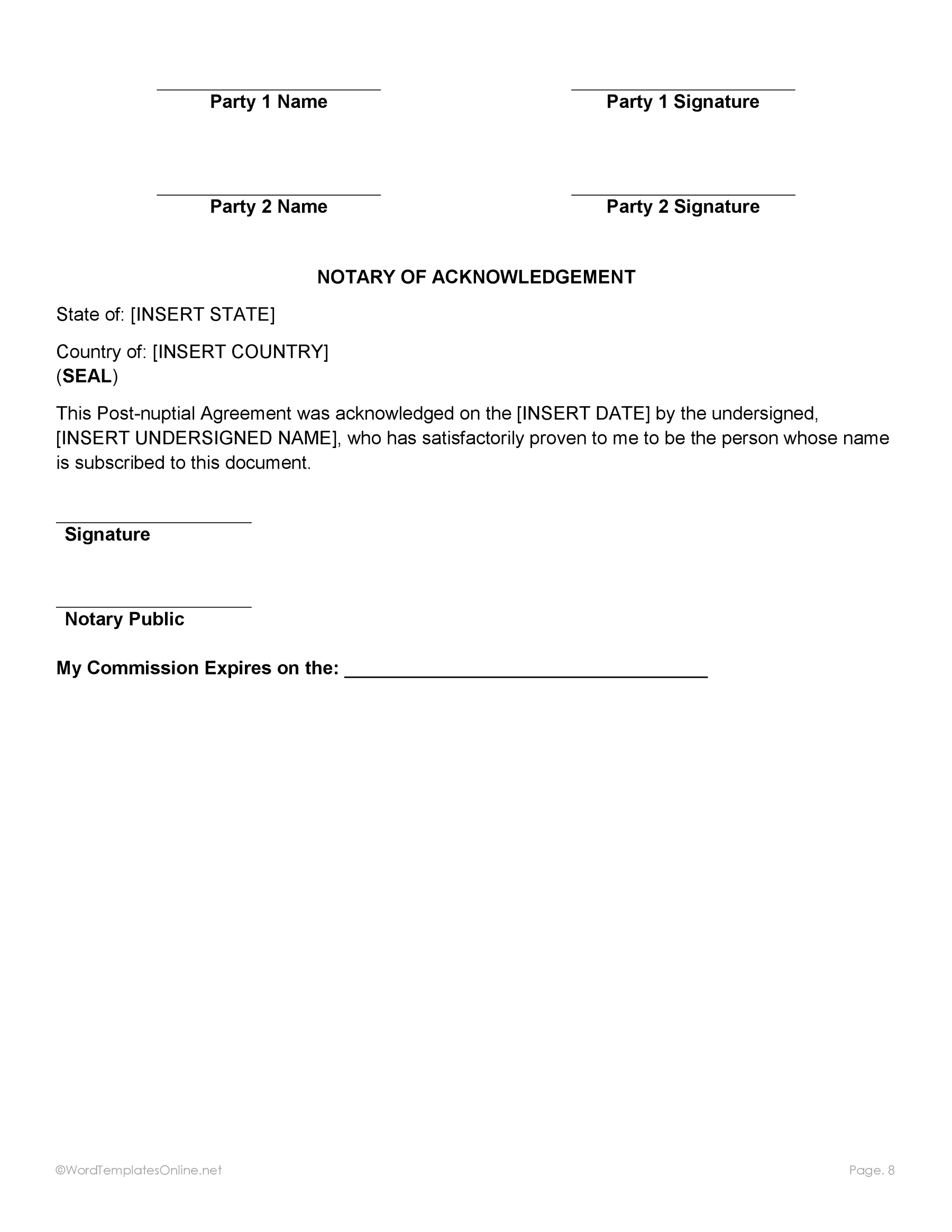
Postnuptial Agreement 06
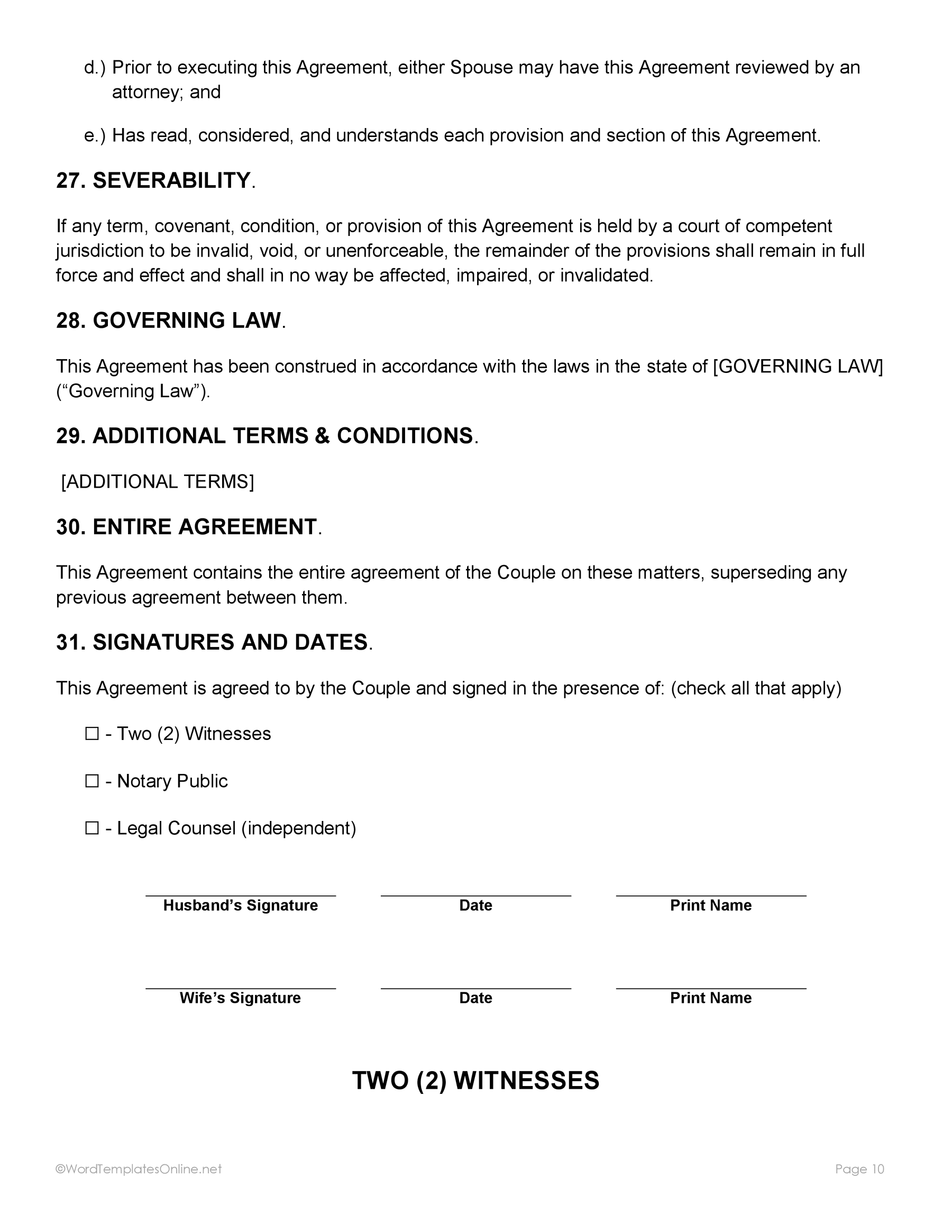
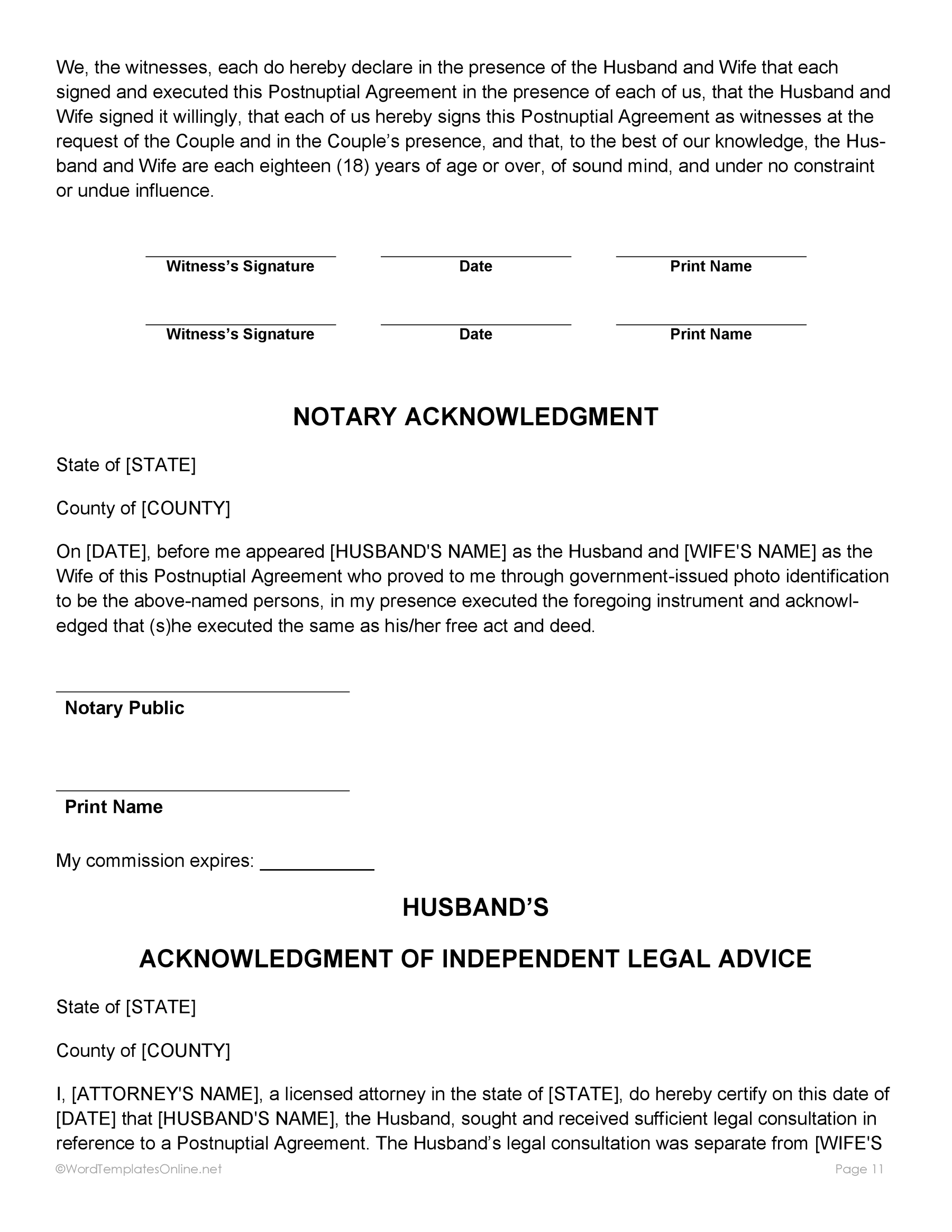
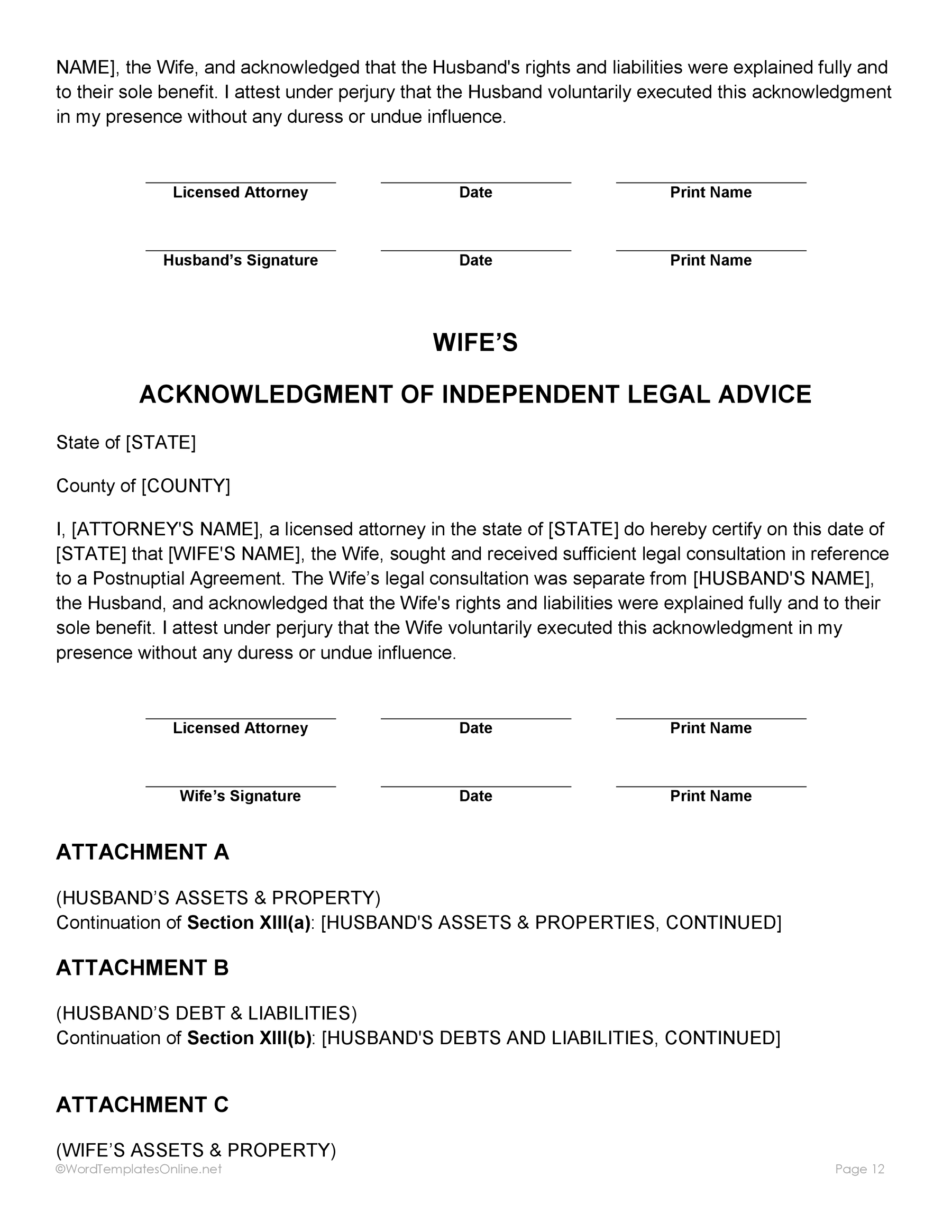
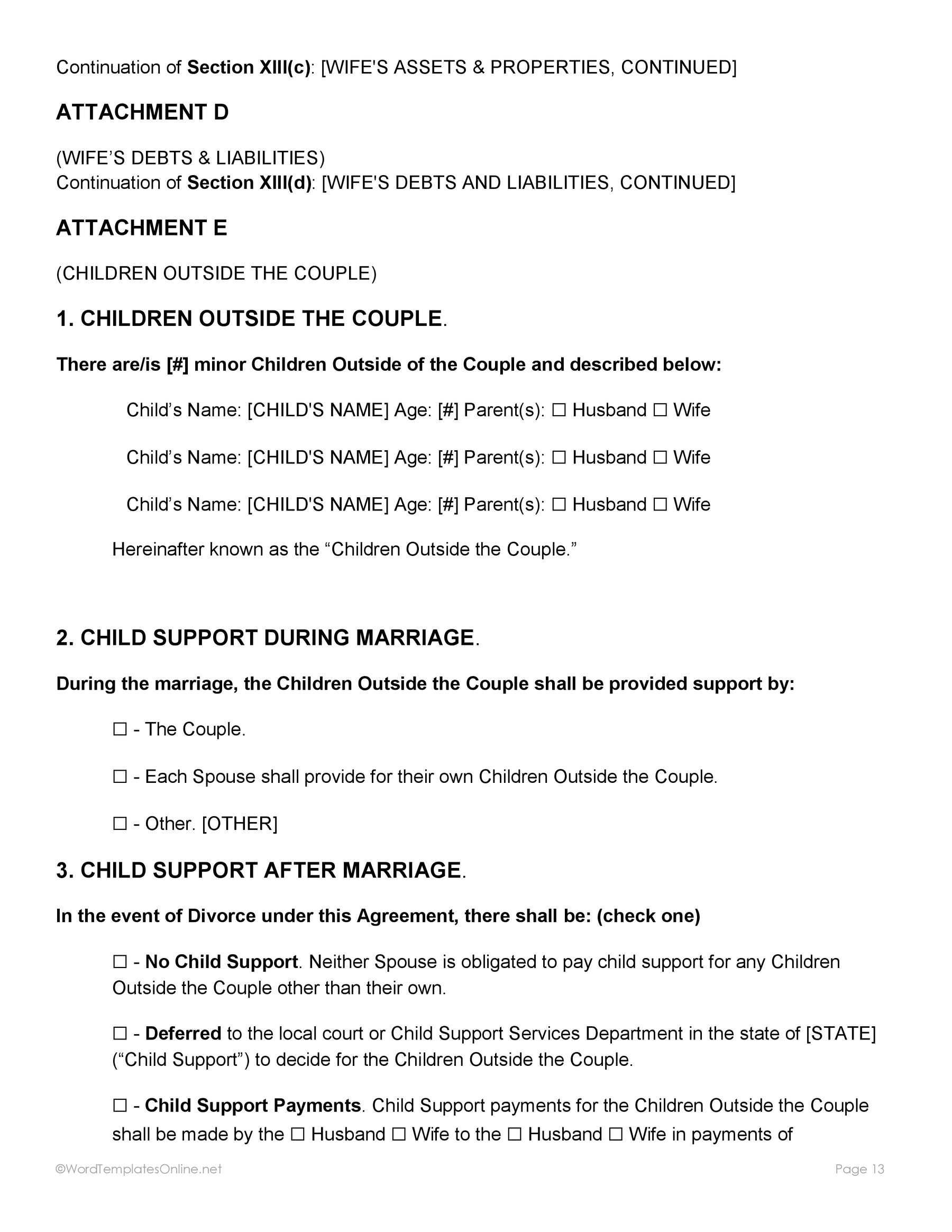
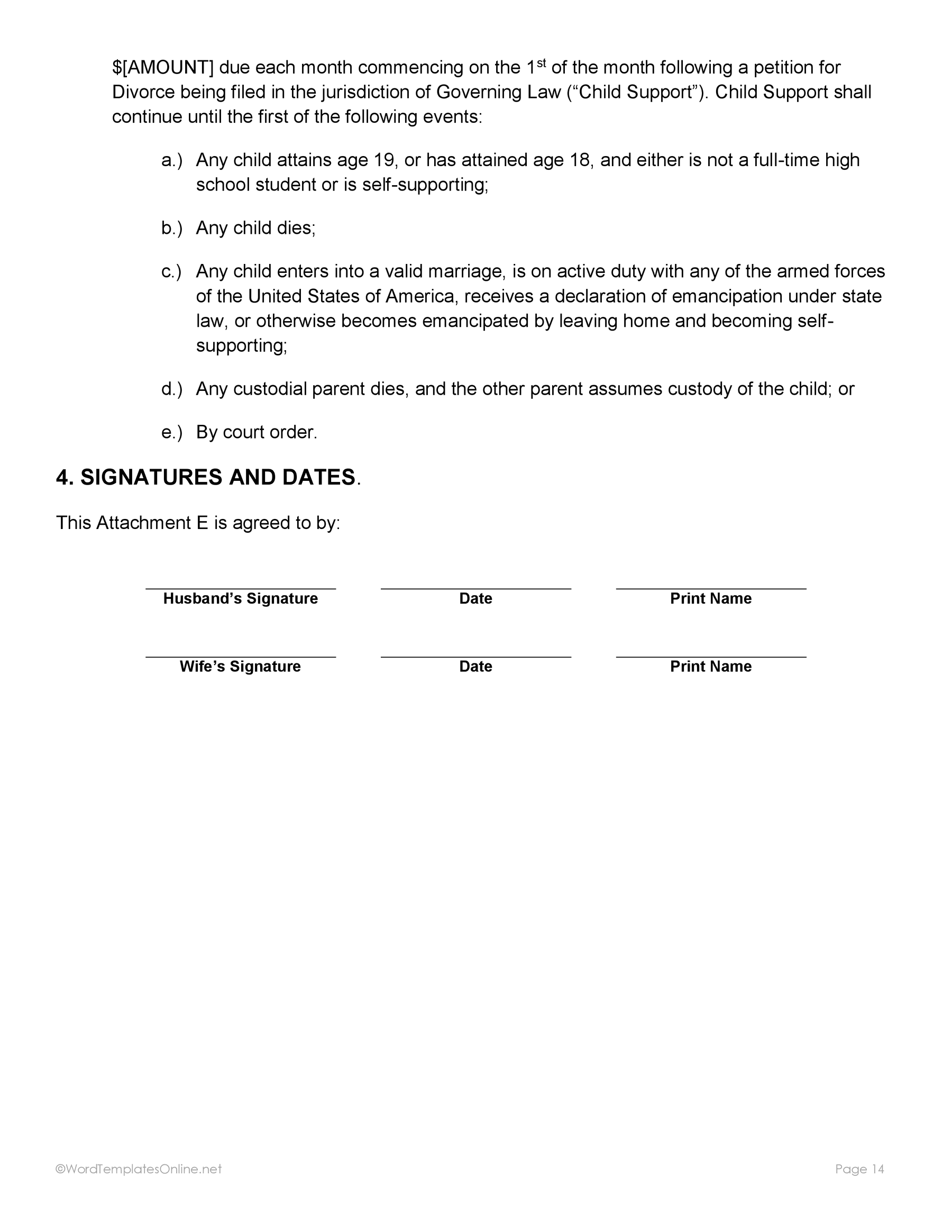
Postnuptial Agreement 07
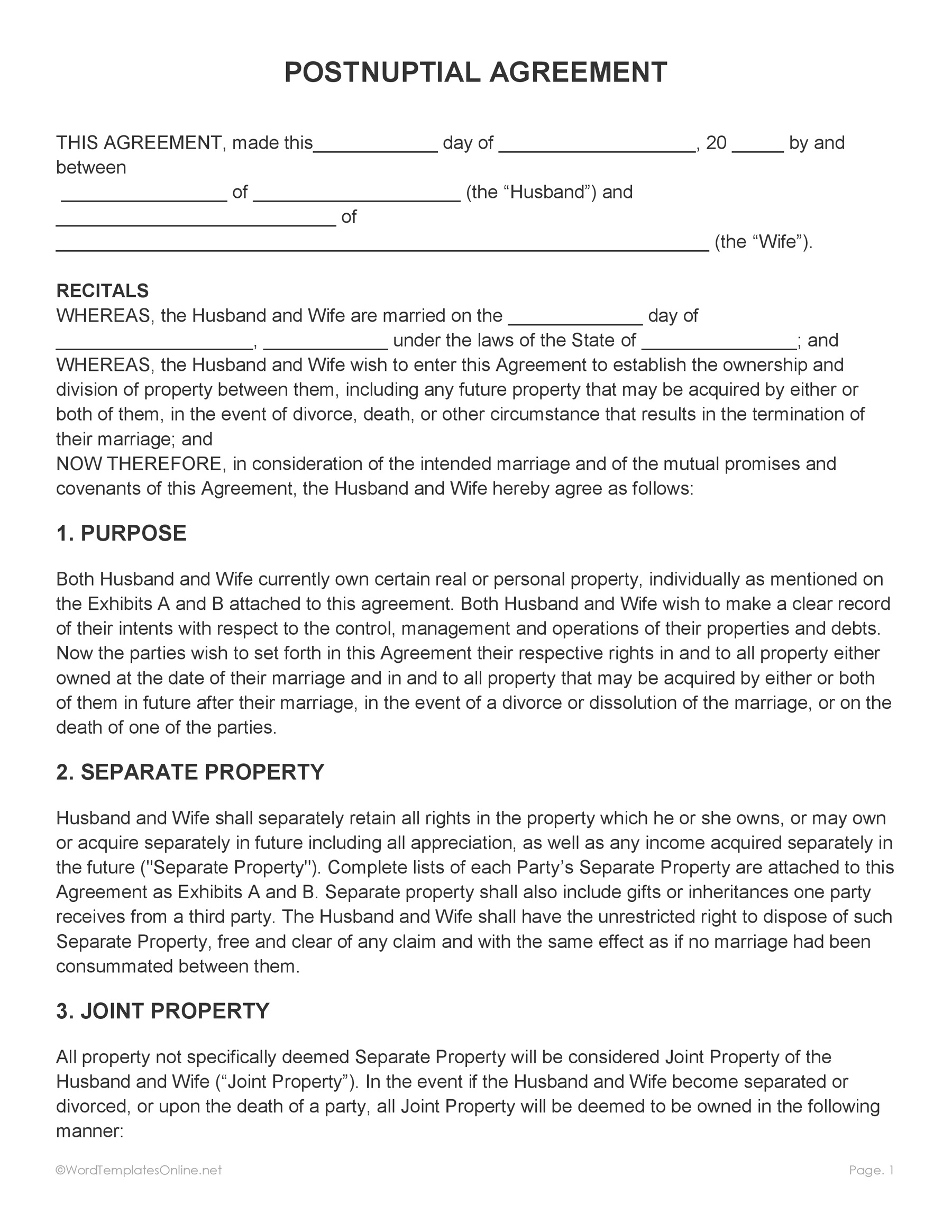
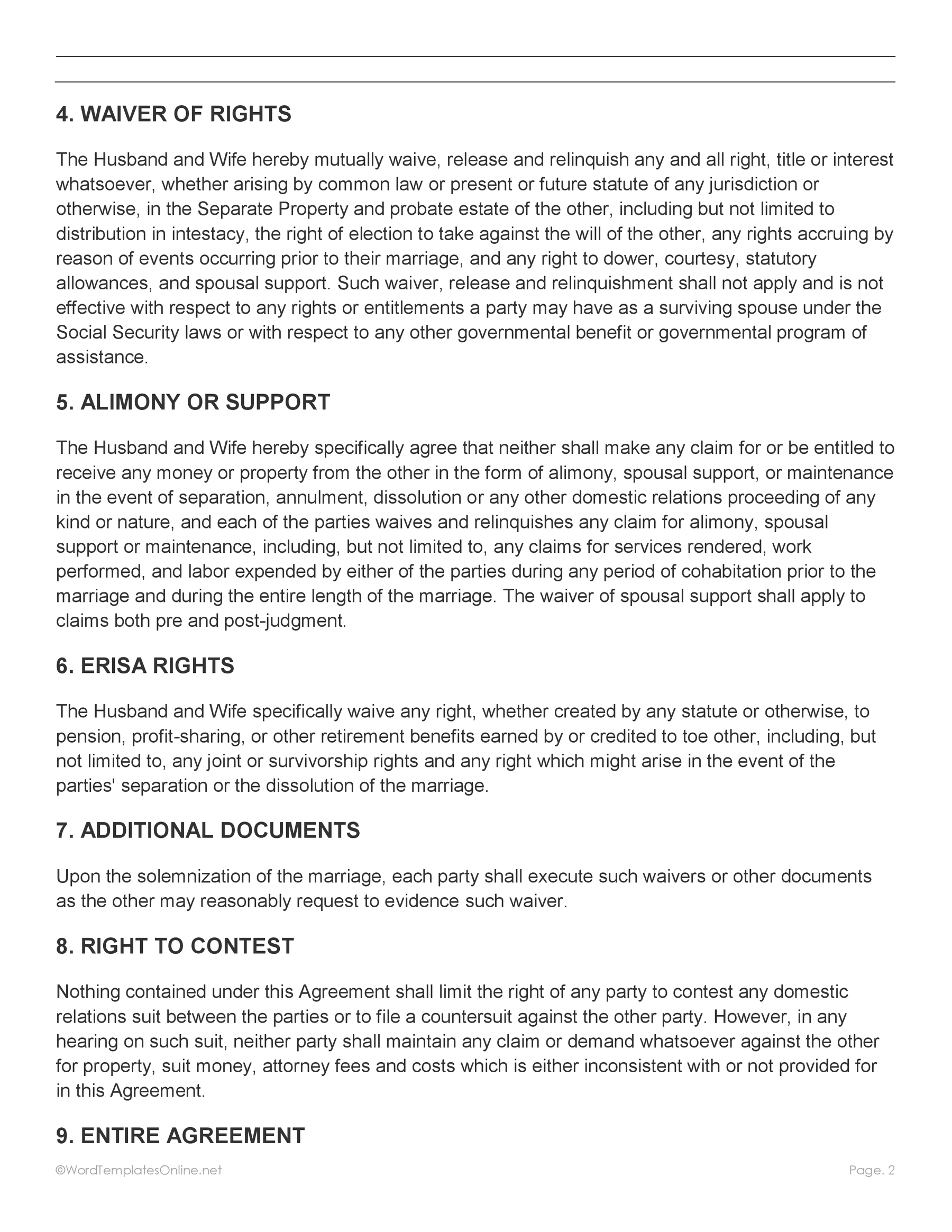
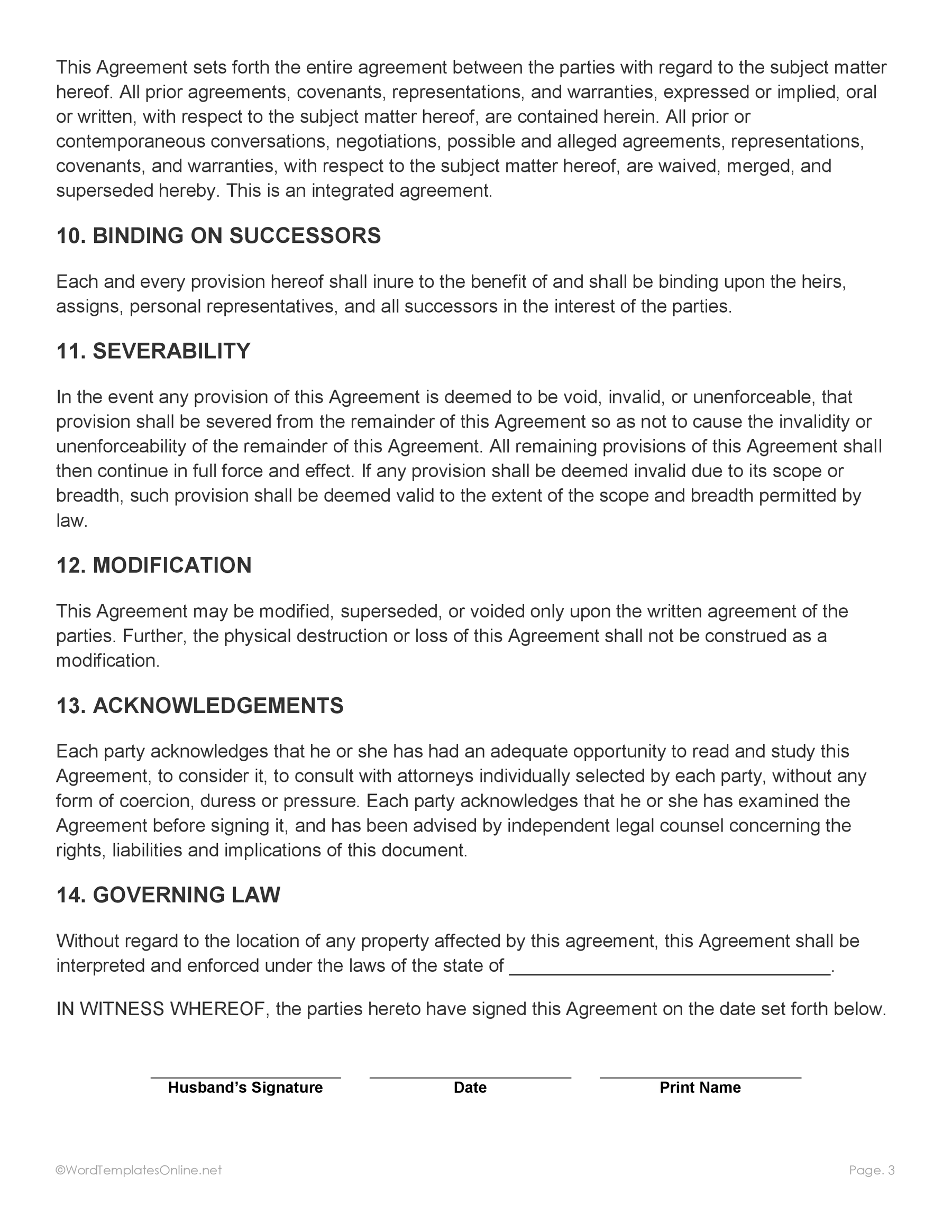
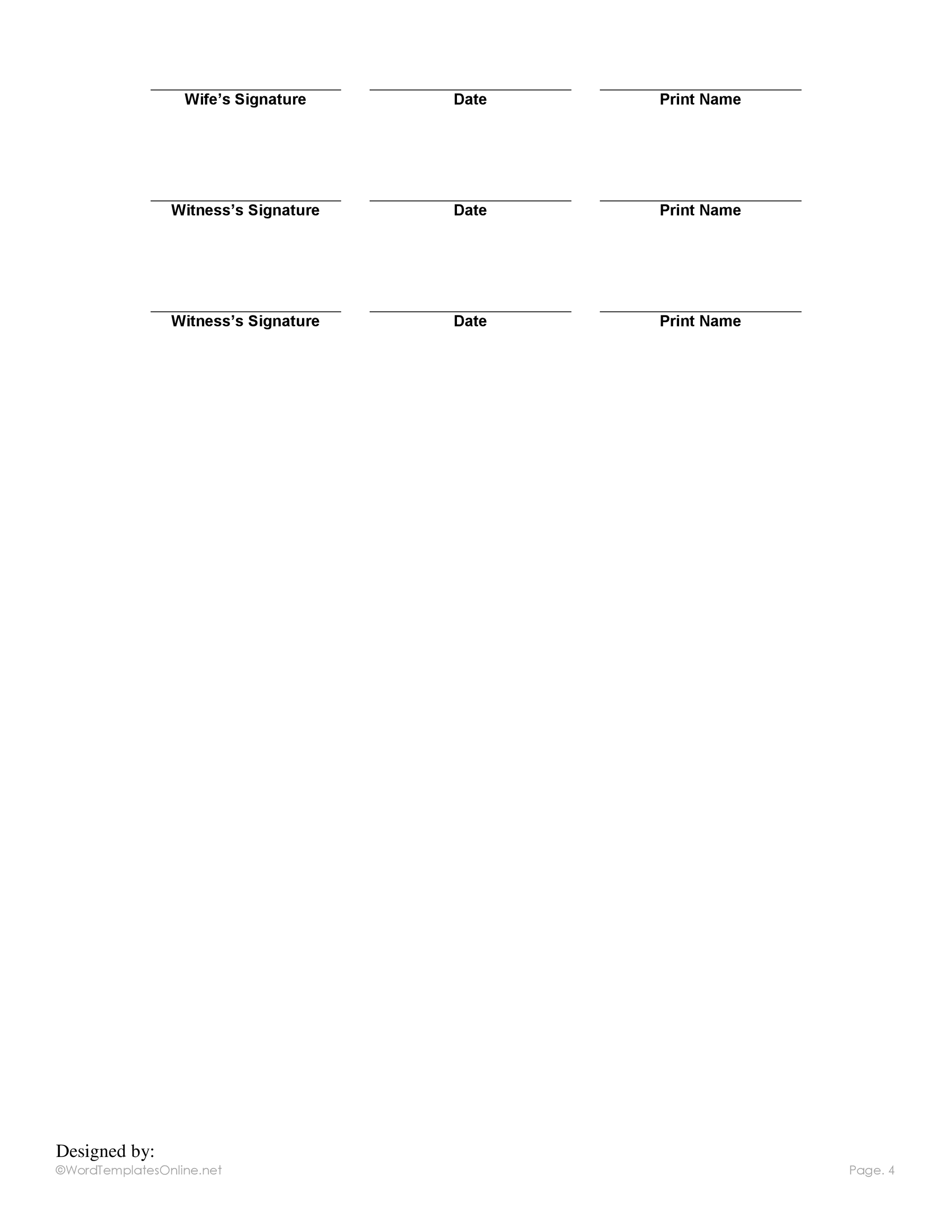
Postnuptial Agreement 08
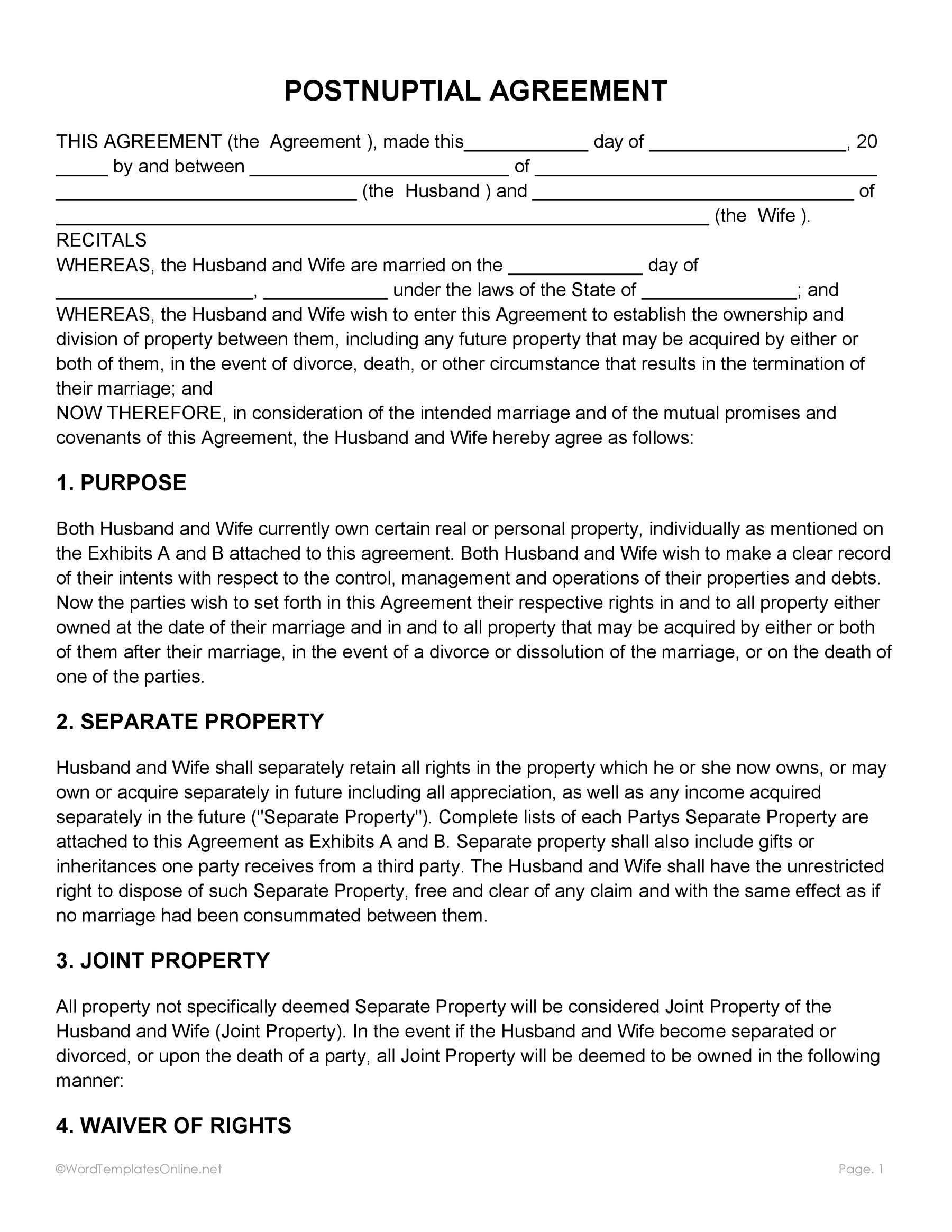
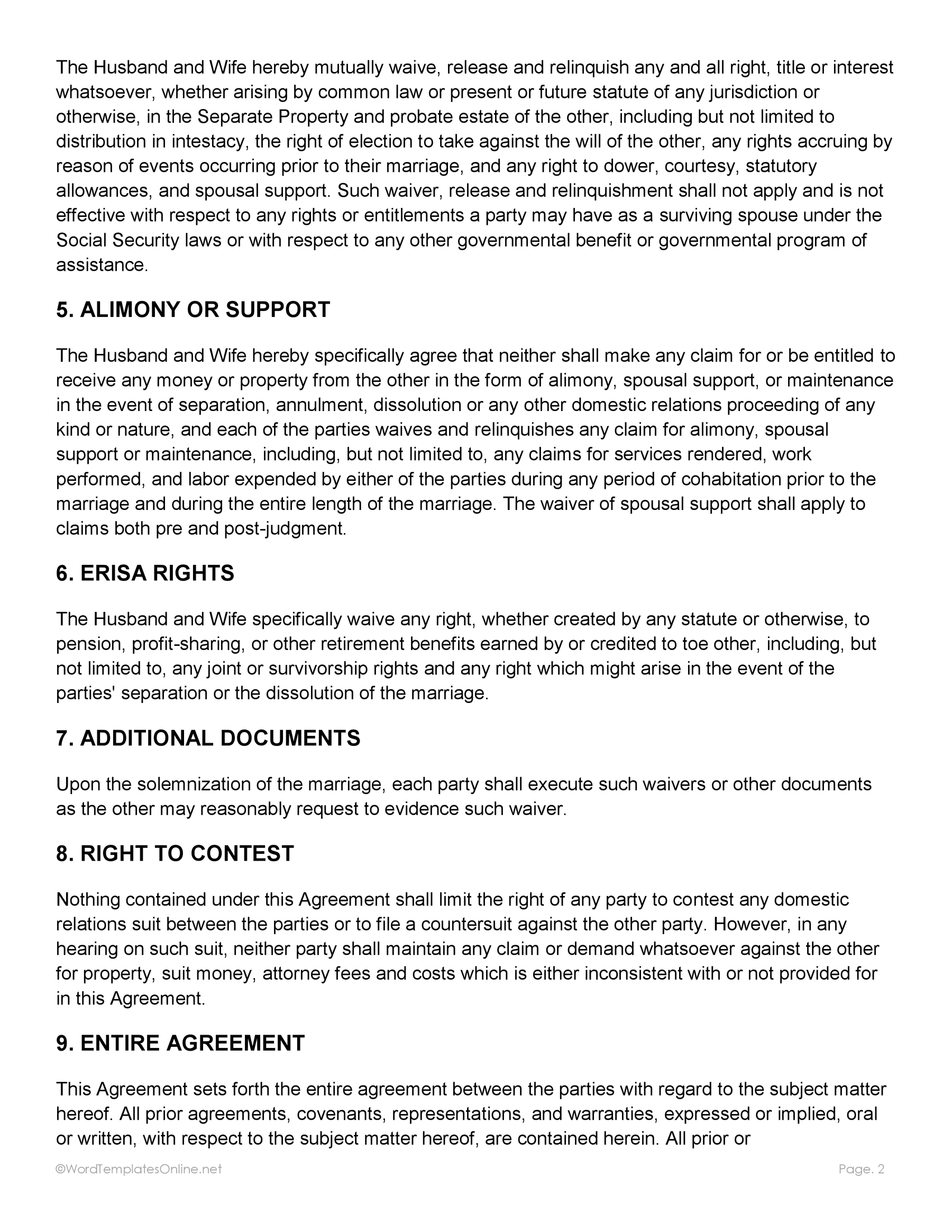
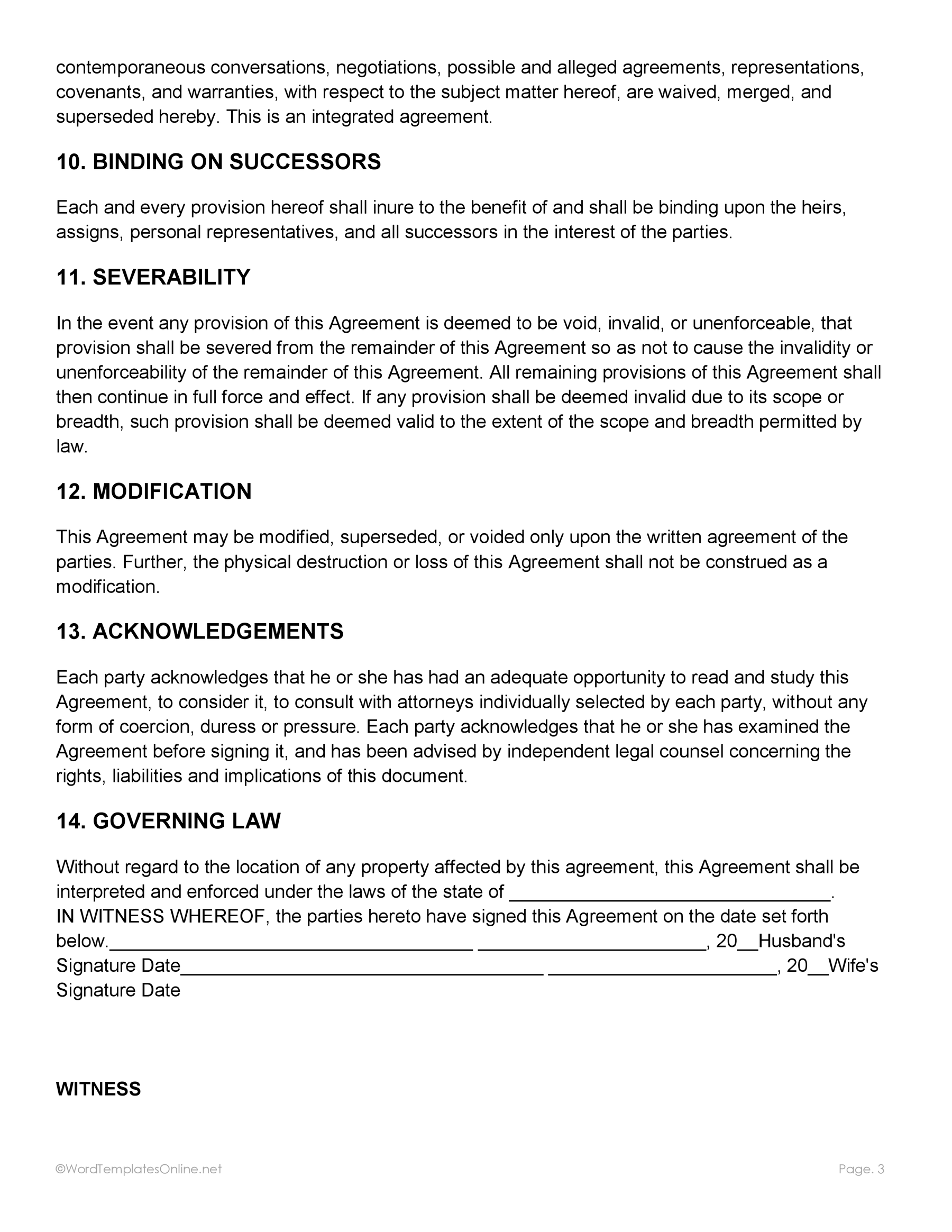
A Few Things You’ll Want to Get Right the First Time
An agreement is all about bringing clarity, not confusion. But even a well-intentioned agreement can cause problems if important details are overlooked. You know what the best part is? Even the mistakes are completely avoidable.
Here’s what you need to look for:
- Don’t Leave Assets Hiding in the Fine Print: It’s good to focus only on important assets like a property or savings account, but smaller investments, retirement accounts, and valuable personal property matter too. Leaving such assets out of the agreement can lead to whole new confusion.
- Be Specific About What’s Yours, Mine, and Ours: Vague wording might seem harmless today, but it can be contagious later. That’s why it is a must-have to write who owns what and how property will be treated in order to avoid misunderstanding and confusion.
- Remember That Future Assets Count Too: Life doesn’t stop after the agreement is signed. People buy new properties, make investments, and acquire new assets over time. While mentioning previous purchases is a must, addressing how future purchases will be handled is one of the smart moves.
- Update the Agreement When Life Changes: Don’t treat your document as a “set it and forget it” thing. Whenever a major life event happens, such as starting a business, getting an inheritance, having children, or making important financial changes, update the document.
- Honesty is Better Than Surprises: An agreement only works best when it is based on full financial transparency from both spouses. Hiding debts, assets, or other important financial information can weaken the agreement and create issues later. So, being open from the start is always the best move.
- Revisiting it During Estate Planning Conversations: Well, estate plans and postnups often overlap more than people realize. So, if you’re updating a will, trust, or other estate planning documents, you must review your agreement and make sure everything works together.
Is a Postnuptial Agreement About Protection or Peace of Mind?
BOTH, I guess! The agreement is surely not about expecting problems or planning for the worst, but it is about bringing clarity and drawing boundaries when it comes to finances, property, and future expectations. If you’re a married couple, you can use it to put every important decision in writing and literally avoid any misunderstanding coming your way.
The highlight of this article is that you don’t need to waste your effort creating an agreement from scratch. You have got the right templates that give you the ease to just fill in the sections. That’s it! In the end, it’s less about legal paperwork and more about making sure both spouses are on the same page moving forward.
Frequently Asked Questions
Is this agreement legally enforceable?
Yes, generally. The agreement is valid if it is governed by state laws, covers full financial disclosure, and is signed by both spouses. But the legal requirements are not the same everywhere, so it’s better to have a check.
Do both spouses need to agree to the terms?
Absolutely! It only works if both spouses willingly agree to these terms. If anyone backs out, there is no point in this agreement.
About This Article