
Have you ever thought about it: you got an email from your key employee with the title “Resignation”? Would your company crumble, or would someone else step right in a single moment? It’s definitely not a fun thing to brainstorm, but that’s the exact gap a succession plan closes.
If you have a reliable plan in place, it means you’re ready for any curveball, from planned retirements to sudden exits. Whether you’re running a small shop or leading a major team, getting this locked down saves you from major future drama and gives your current employees a great reason to stay and grow.
But how? In this guide, we’ll talk about everything: succession planning templates, why they matter, and how you can use them to build a stronger organization for the long run.
Why Succession Planning Templates Matter More Than Most Companies Realize
Most companies don’t take succession planning seriously until they are hit with the reality that their most important employees are retiring, switching companies, or suddenly leaving.
That’s the exact moment a company starts to panic, and scrambling to plug the hole is a nightmare. Replacing a key team member is a whole lot more than just dragging and dropping a new body into any empty chair. When someone walks out, they take a massive chunk of the company’s brainpower with them. The goal here isn’t to fill the empty palace quickly; it’s to build such a plan that keeps the transition smooth without halting daily operations.
In short, not having a solid strategy can lead your business into costly hiring delays, leadership gaps, and workflow chaos. No one really wants it. That’s why a succession planning template is what you need, and it’s basically a structured document that helps organizations and corporations prepare for future leadership and staffing changes.
A typical template works by gathering information about key positions, current role holders, required skills, potential successor candidates, and training or development goals. In this way, HR and managers keep an eye on employee growth and make informed decisions when needed.
Let’s clear one myth here: this planning is not linked with executive and senior leaders; it’s particularly valuable for any role that would be difficult to replace quickly. Businesses of all sizes, from startups to enterprises, can use this template to maintain leadership continuity, protect operations, and for other varied reasons.
Breaking Down a Succession Planning Template
A succession planning template at first glance looks like a lot of boxes and tables at first, but it’s really just a tool for answering one important question: “Who’s ready to step up when key roles become available?” Each section in the template revolves around this question to help you reach the answer. Let’s have a look at what sections a basic template should have:
Succession Planning Template-01
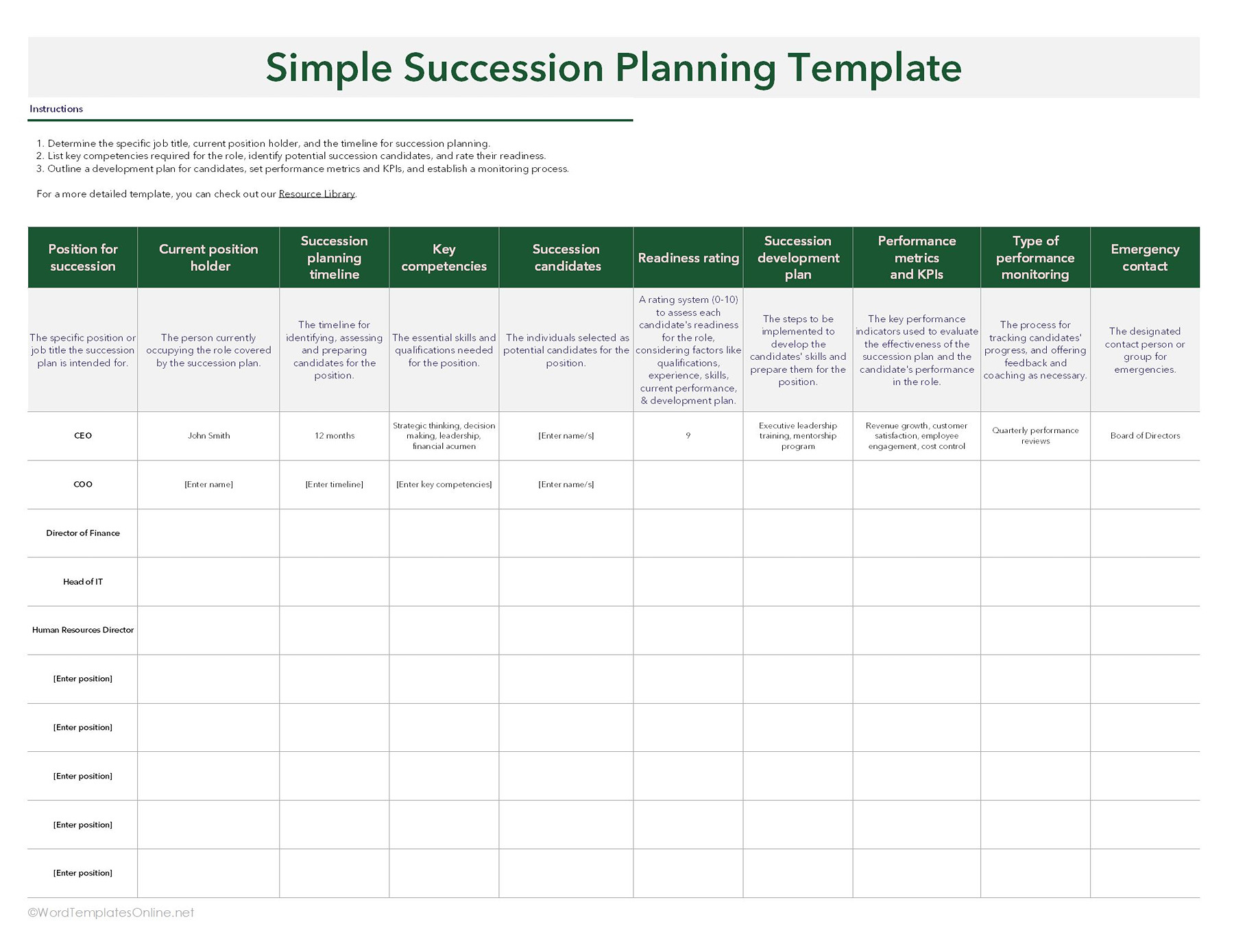
1. Position and role identification
The section is where you identify what position you’re planning for, whether it’s CEO, department manager, team lead, or another important role. This always comes first because, through this, people can identify why the position is important and why planning for its future matters.
2. Current position holder information
Here’s basically where you give a heads-up on who is currently working in this role. You will provide basic details such as job title, what’s on their plate, and whether there is any plan to move out soon. Nailing down these details is what allows you to predict exactly when and where the plan will work right on the mark.
3. Succession timeline and transition goals
Let’s be real, not every open seat requires an emergency hire. This section focuses heavily on timing, explaining exactly when a transition is expected to go down. It gives you a clear glance at how much runway your potential candidate actually has to get trained up and comfortable before they officially step into the spotlight.
4. Core skills and competencies required
Honestly, what works for one job won’t work for another. Every role needs a totally different mix of experience and skills. This is where you write the ultimate wishlist for future hire: their background, technical expertise, capabilities, and other traits they must have in order to fill the position without skipping a beat.
5. Potential successor candidates
This is the fun part where you get to look at your rising stars. Here, you will add all the candidates who think best to fill the position. Mentioning them here will give you a quick, honest look at who’s ready to jump into the hot seat right this second, and who needs extra training to build their skills.
6. Readiness assessment and rating
Well, everyone is at a different point in their career journey, and that’s completely normal. This section is all about figuring out who is ready for the big leagues today and who still needs a little more work. In addition to that, it helps you find the areas where a candidate needs coaching so they aren’t set up to fail when they take the job.
7. Development and growth plan
Every template must have this section, which is known as the ultimate action plan for leveling up your team. In this part, you will write how your potential candidates are going to bridge those skills gaps. Are they going to use formal training, attend mentorship programs, get certifications, practical real-world opportunities, or a blend of all? In short, this part shows how you’re preparing your successors for the big role.
8. Performance metrics and success indicators
You definitely don’t want just to wing it when it comes to the company’s future. That’s why this section is included to keep things transparent and simple by tracking real, measurable goals and wins. It gives you a simple way to check everyone’s progress and see who is putting effort and getting closer to stepping up.
9. Monitoring process and emergency backup plans
You can’t just make a plan and forget it; regular check-ins are a must. Here you’ll keep check on everyone’s progress and check who’s in charge of playing coach. It also covers your “break glass in case of emergency” scenario, spelling out who can jump in to take charge in case someone leaves, and the next one is not ready yet.
Different Types of Succession Planning Template
If you think every organization approaches succession planning the same way, you might get it wrong. A small business preparing for future growth will have a different POV than a large corporation planning senior transitions. That’s why succession planning templates come in different formats, ranging from simple employee development plans to more advanced leadership strategies.
Simple/basic succession planning templates
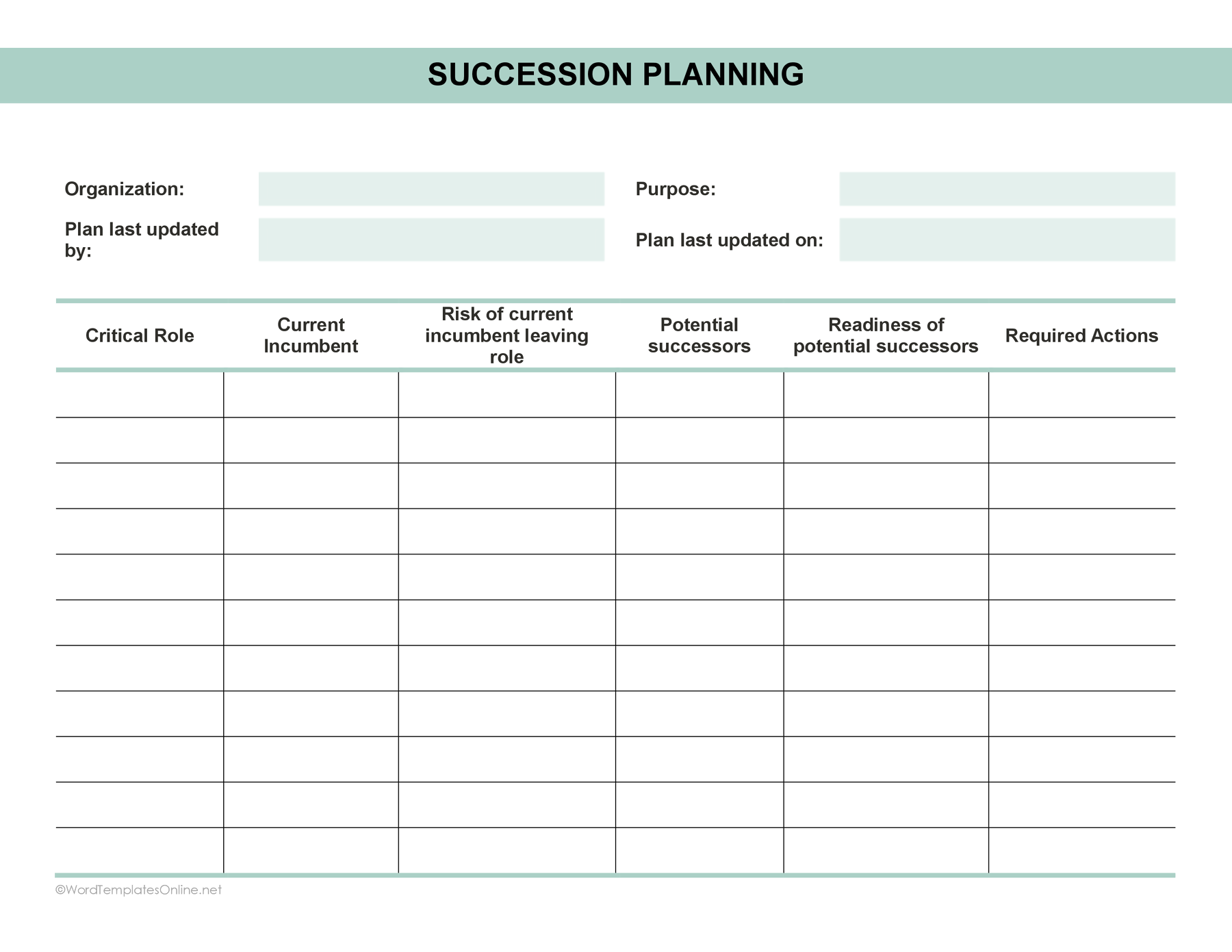
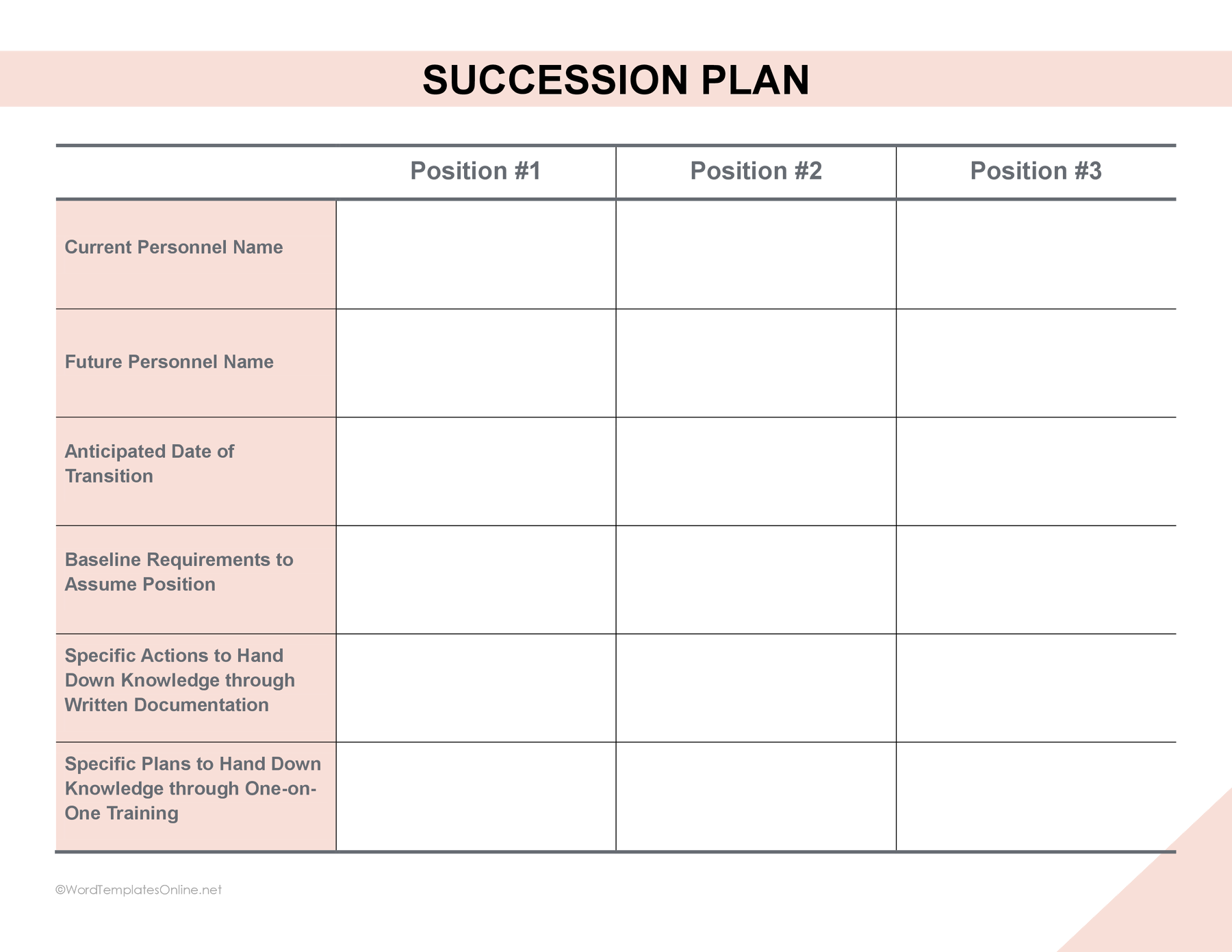
These are often the simplest succession planning templates. Starting with identifying promising employees, they track their strengths and go on to create development plans to help them grow into future leadership roles. They’re ideal for organizations that want to start building a talent pipeline early.
Succession Planning Template-02
Succession Planning Template-03
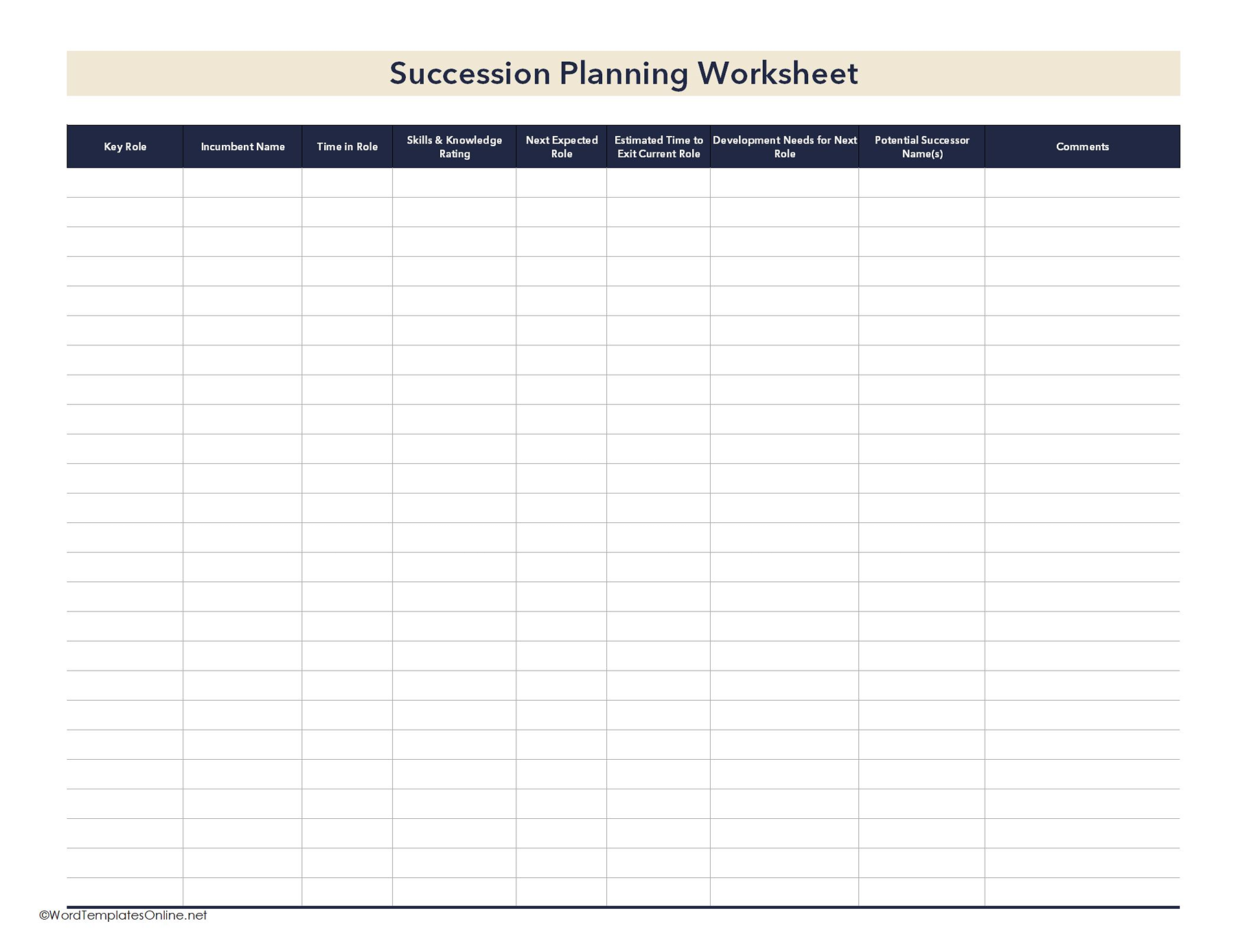
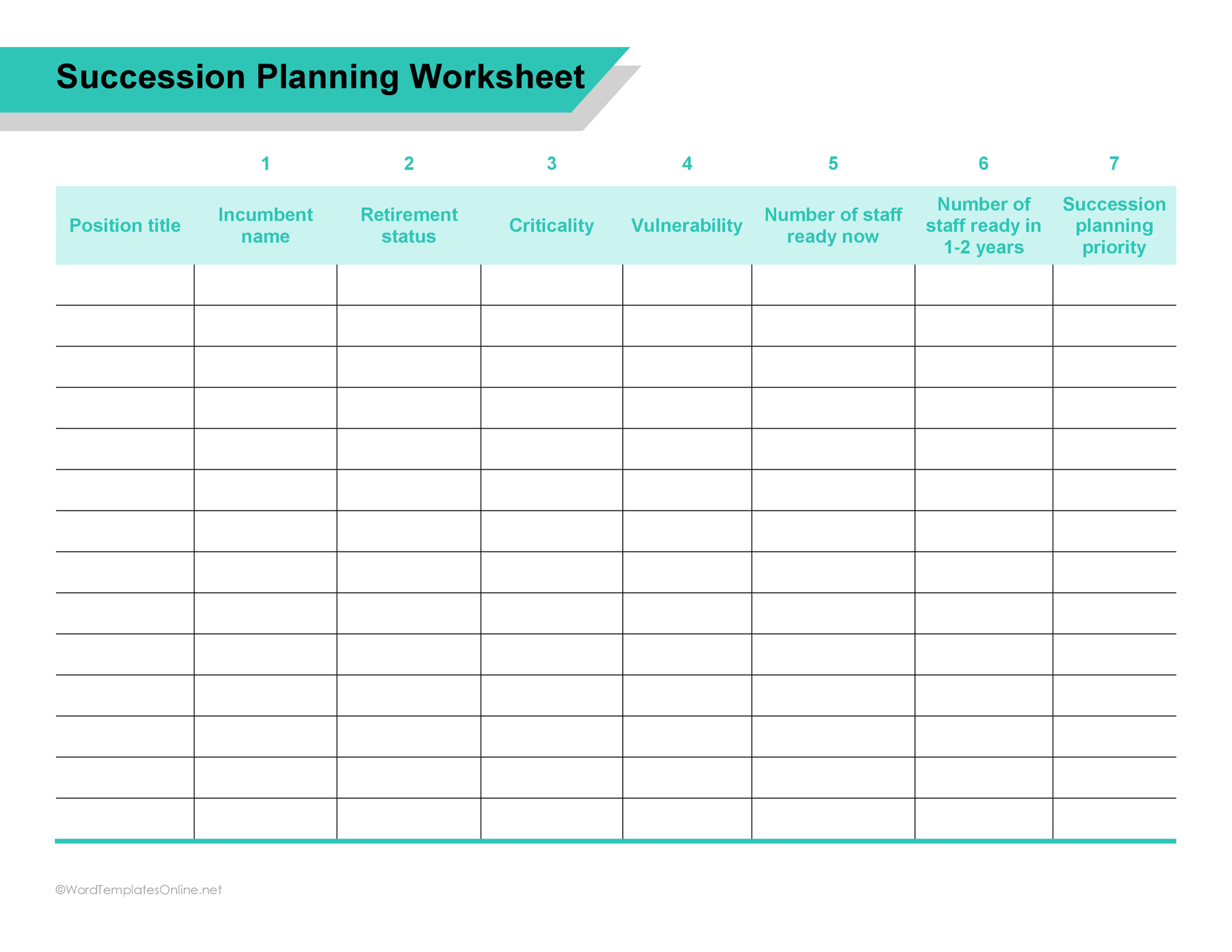
Succession planning worksheets
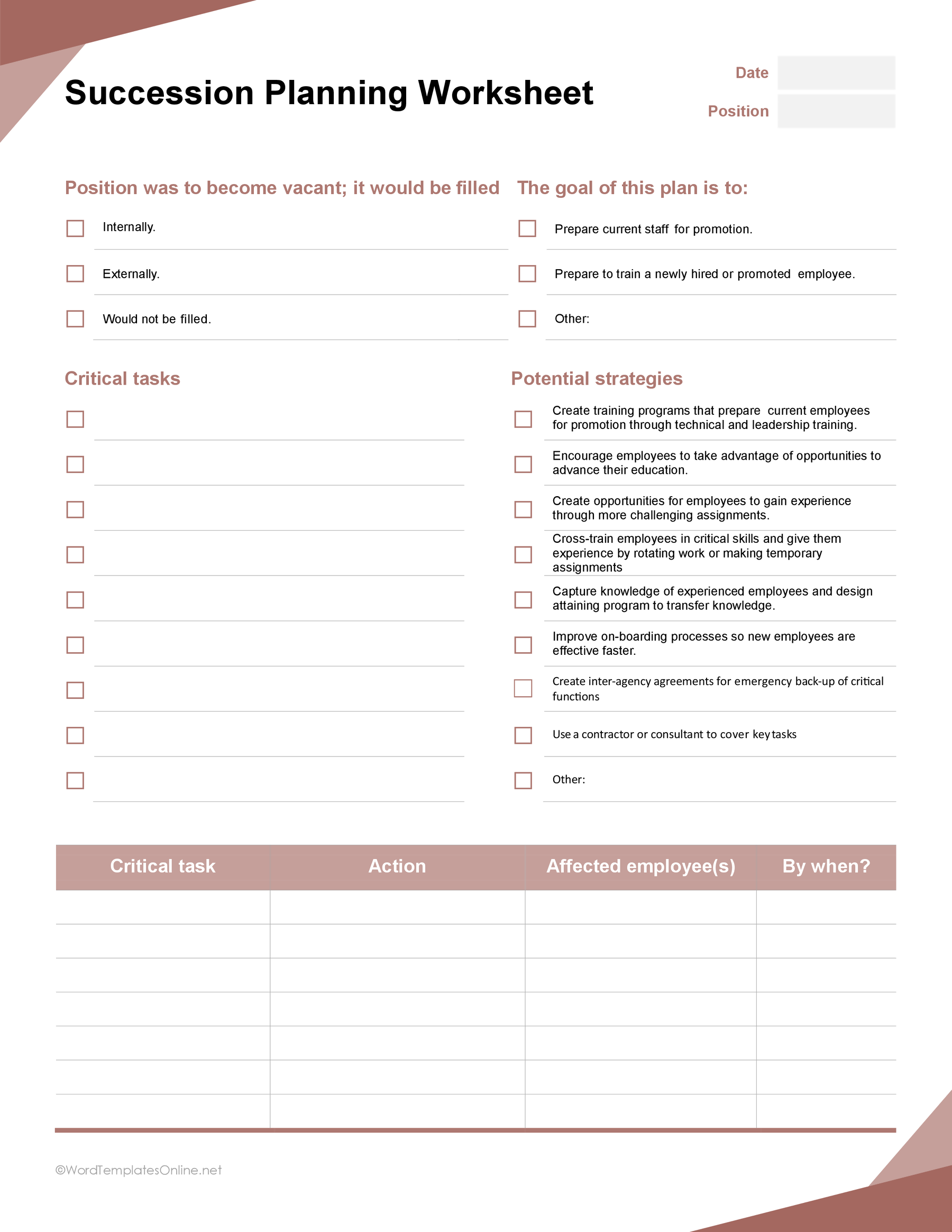
In addition to simple templates, you will also find worksheet-style templates crafted for hands-on planning. Simply put, they are designed to make the planning process easy and breezy.
As you can see, they don’t have a focus on complex charts or detailed evaluation; they have a series of questions, checklists, or action items that let you identify important questions, staffing gaps, and future development needs. They’re particularly useful for businesses that need a straight, practical approach for planning- no fluff!
Succession Planning Template-04
Heads up: These aren’t a rigid, set-it-and-forget-it PDF. We’ve got you covered, as our templates are fully editable and plug right into MS Word, Excel, Google Docs, and Google Sheets.
Succession Planning Template-05
Succession Planning Template-06
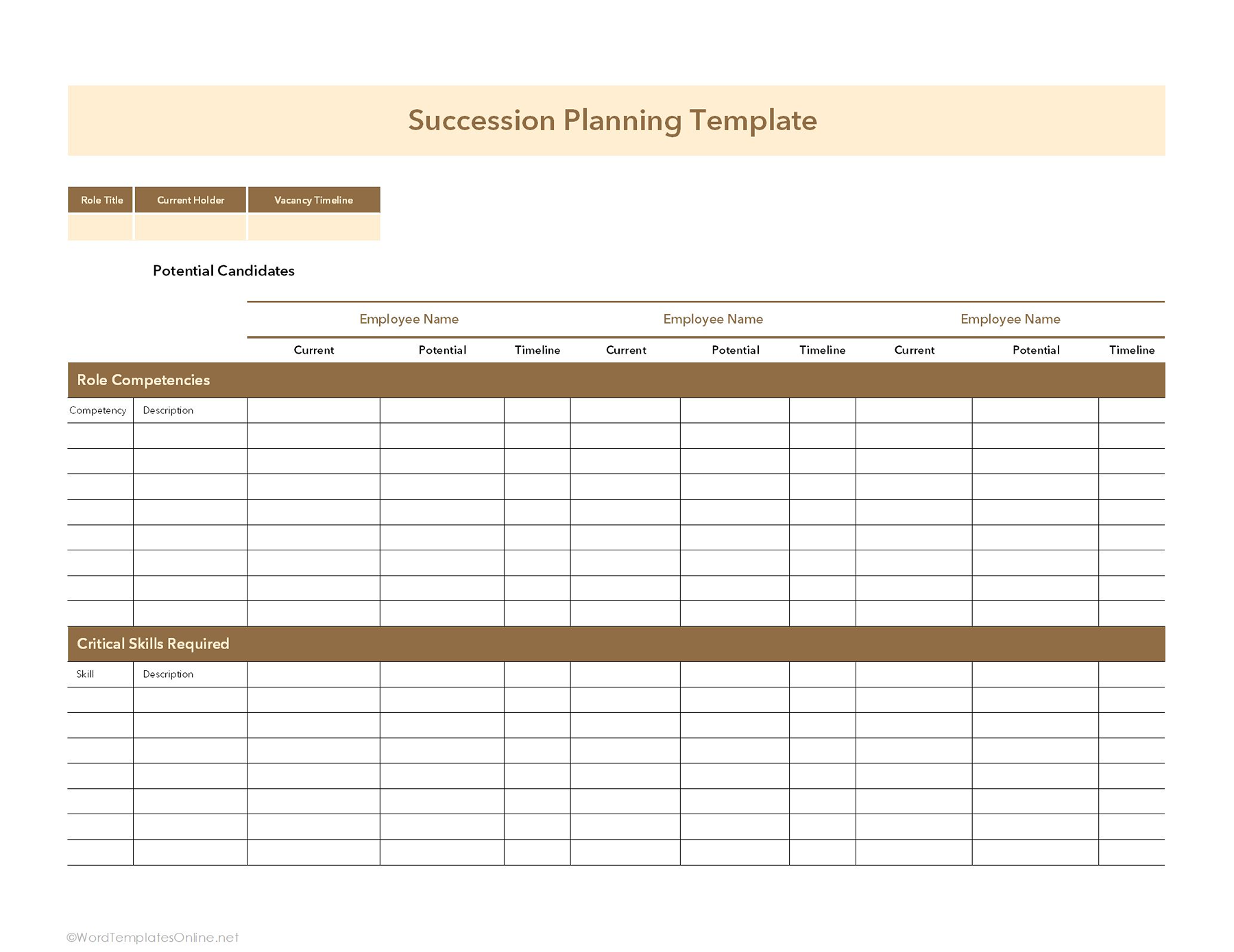
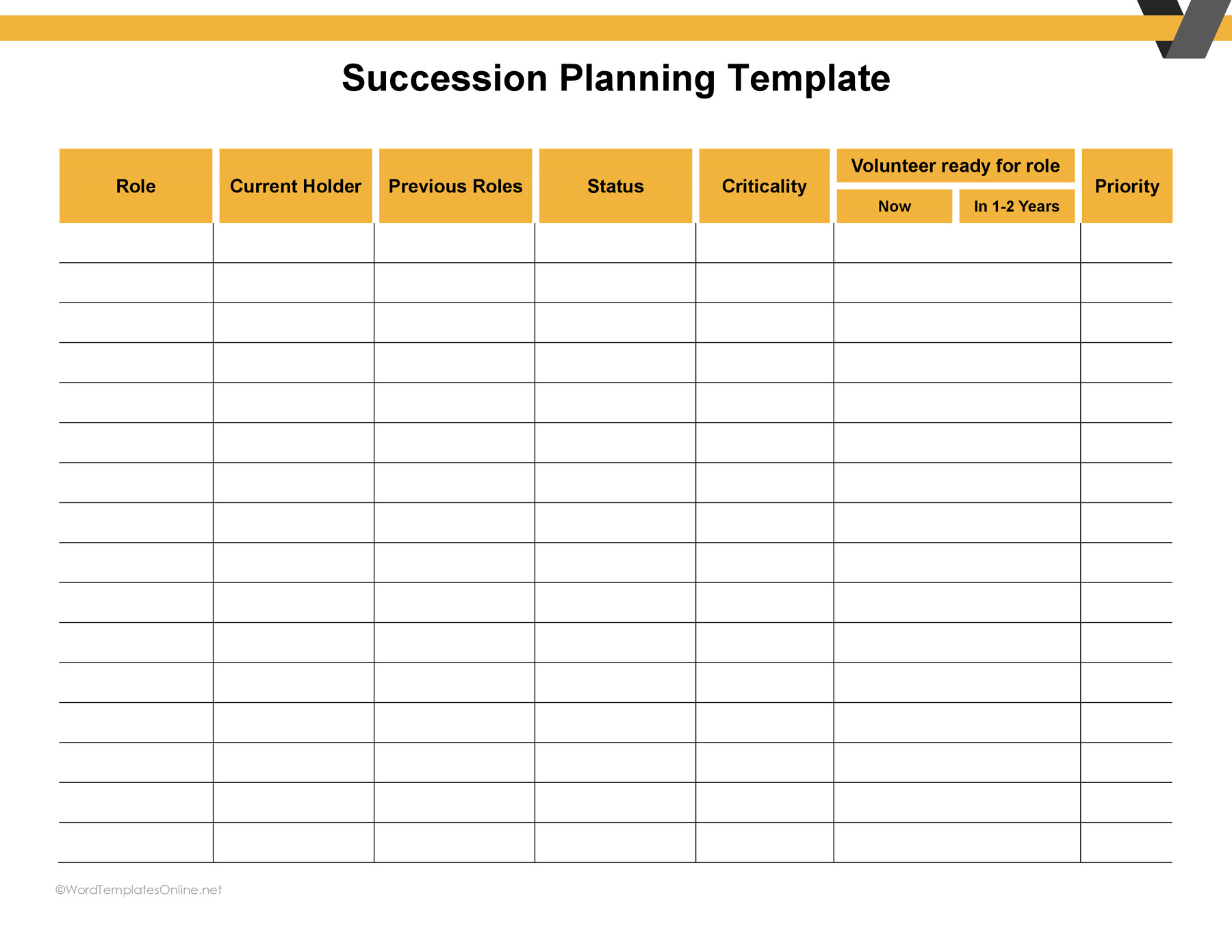
Detailed succession planning templates
These are usually the advanced templates built for more integrated leadership structures. In addition to finding out the successors, they include readiness ratings, competency evaluations, leadership development plans, risk assessments, transition strategies, and long-term work planning. Overall, these templates give a deeper look at leadership continuity and future organizational needs.
Succession Planning Template-07
Succession Planning Template-08
Succession Planning Template-09
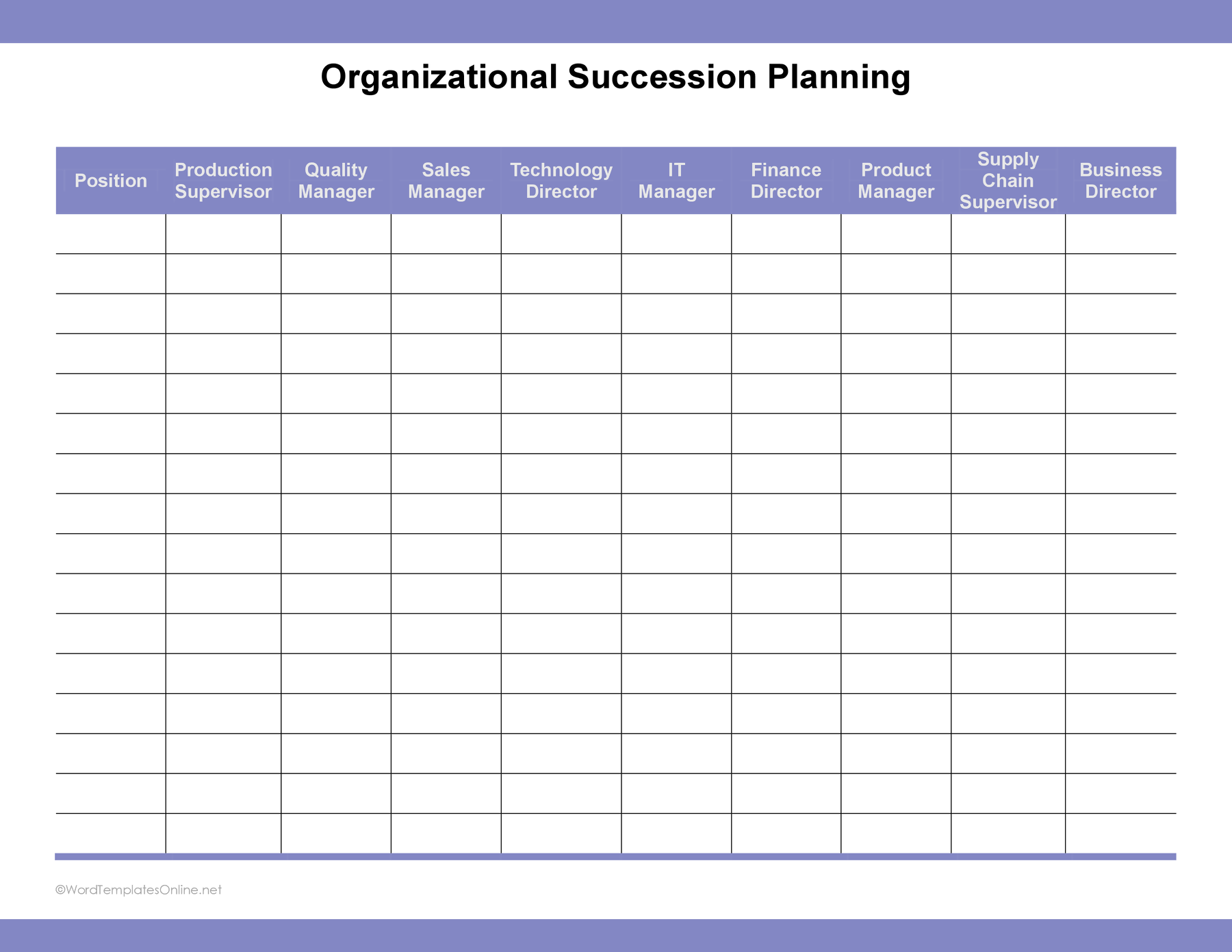
Succession Planning Template-10
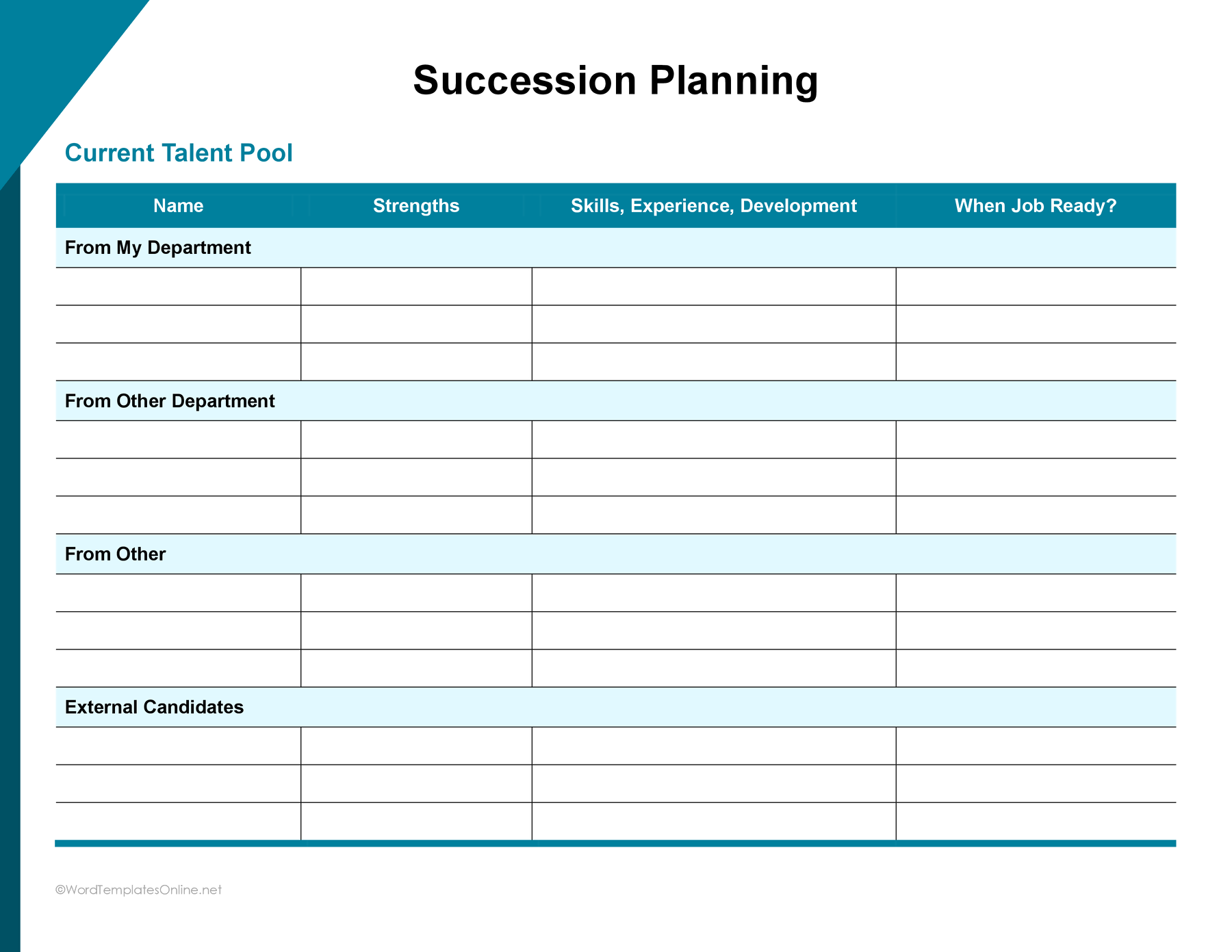
Succession Planning Template-11
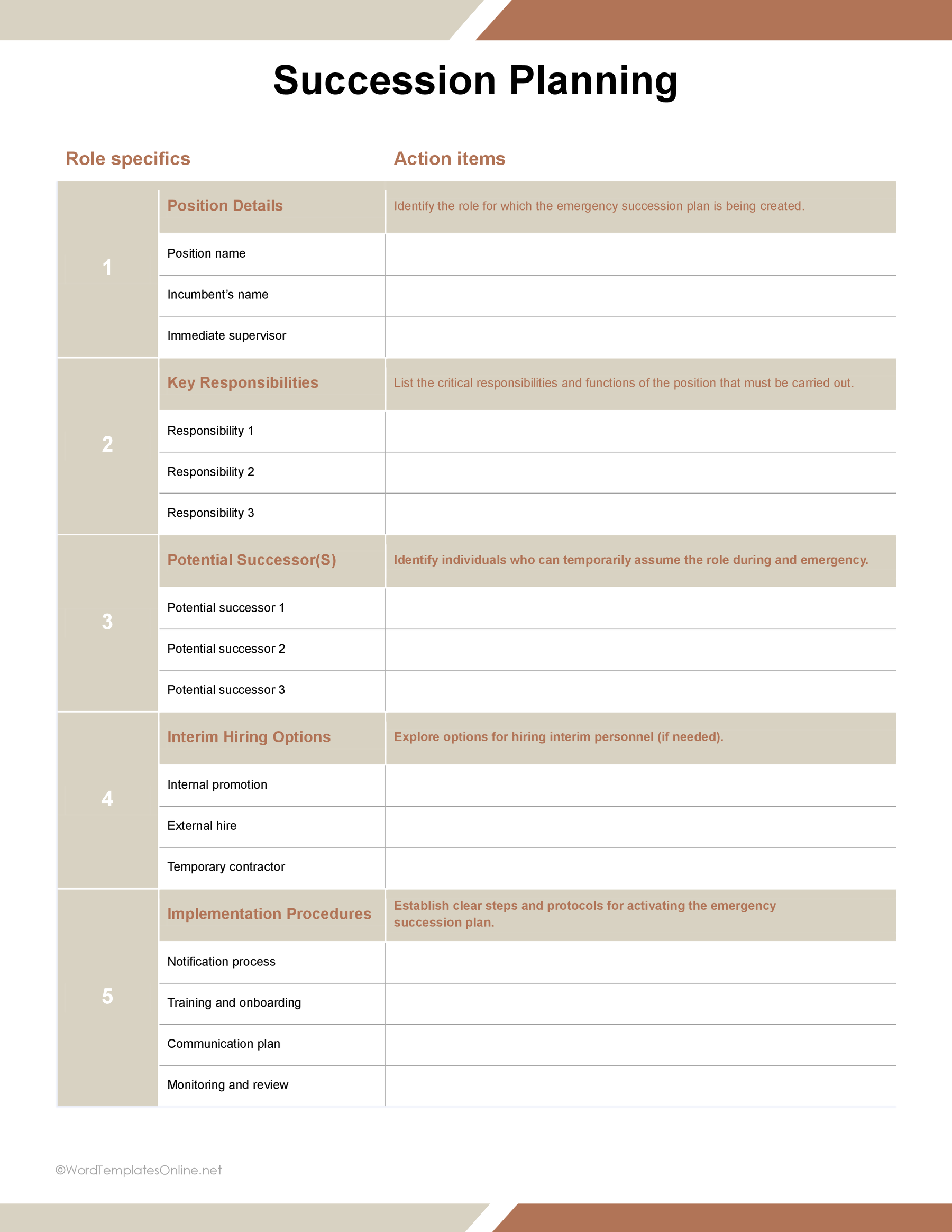
Succession Planning Template-12
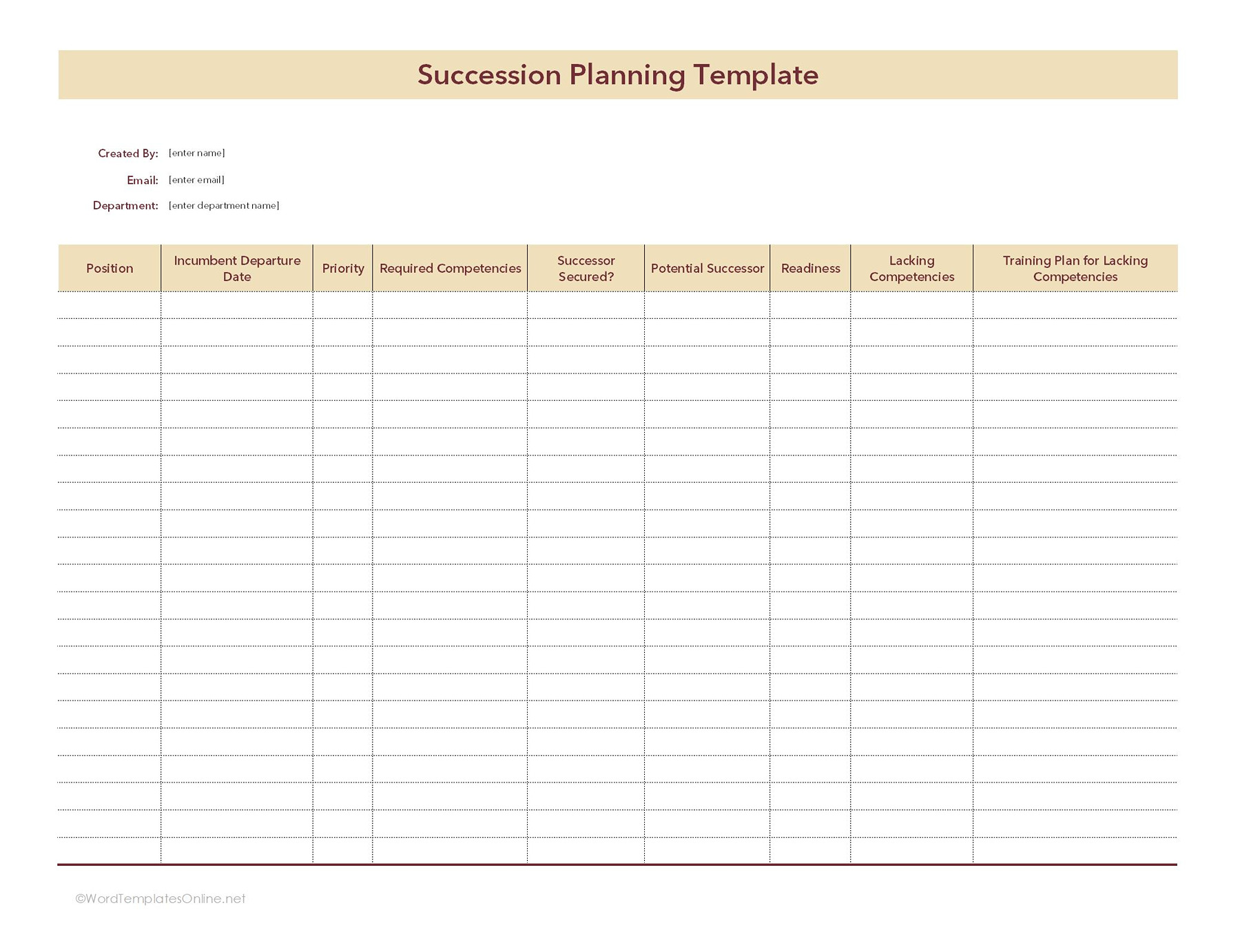
Building a Succession Plan From the Ground Up: A Few Secret Tips
You find out your type of template. Great. Now the question is how to make a succession plan using a template straight away. The key is to start early and take one step at a time. Here’s how you can make an effective plan:
- Identify the Roles that Matter Most: First things first, you need to find out which position would cause the biggest headache if it suddenly became empty. If you pinpoint this early, it’s easy to plan what’s coming.
- Think Beyond the Next Replacement: Now, the next step is to spot employees who are hungry for growth and have potential. You can use the successor candidates section to mention the name of that employee and their readiness to support future opportunities. A strong plan includes both short-term backups and long-term future leaders.
- Setting the Clear Benchmark: Your goal should not be filling the seat; it’s about defining what it takes to own it. If you know the exact skills, milestones, and mindset needed for each role, you can create a benchmark. Moreover, it cuts out the favoritism, streamlines evaluation, and hands your team the exact champ they need to level up.
- Turn Development Into a Plan: Once you have identified everything, it’s time to turn the plan into action. Develop mentorship programs and other training that are required for the employees to prepare for larger responsibilities.
- Let the Facts Talk: If you’re given a promotion on the basis of gut, this isn’t the right way. To make smart choices, you need actual data, like performance reviews, milestones, and skill assessments. Once you’ve got it, it’s easy to make the talent decision.
- Keep the Plan Updated: A plan works to its full potential when it’s considered as an ongoing process, not a static document. For this, you need to regularly review and update the template to make sure all information stays relevant as employees grow and business needs evolve.
Common Succession Planning Roadblocks (And How Templates Can Fix Them)
Well, even organizations that know the value of succession planning can run into challenges. The good news is that most problems aren’t caused by the lack of talent, but by poor planning or wrong tracking. Here’s what to look for if you don’t want anything to slip through the cracks:
- Putting All Your Hopes on One Person: The concept of “single successor” might be fascinating, but it doesn’t work in the actual scenario. What if that person leaves or isn’t ready when the time comes? If you want to avoid such a situation, you need to track different candidates as your backup option, and a good template allows you to do that.
- Waiting Until a Position Becomes Vacant: Playing the waiting game until someone hands in their resignation and then thinking about a replacement is what leads you to panic and operational chaos. The best thing is to watch out for your team’s rising stars so you’re always one step ahead of an empty desk.
- Overlooking the Hidden Talent: The next person you want to give the chair might not be the one who’s loudest in the room. It’s easy to overlook quiet gems across the organization, but a structured template levels the playing field, making it simple to evaluate actual skills and potential, so no talent goes unnoticed.
- Make Future Leader Future-Proof: Spotting a future leader is only half the battle; you actually have to prep them for the big stage. If employees aren’t given the right opportunities to grow, they’ll struggle when larger responsibilities come their way. With the right template, you can track development plans so leadership preparation stays on schedule.
Ready for the Future, or Just Hoping for the Best?
Let’s face it: nobody likes the stomach-drop feeling when a key player drops their resignation letter on the desk or emails it. That’s why succession planning isn’t considered some tedious HR check-the-box exercise; it acts as an ultimate lifesaver that keeps the business moving without skipping a single beat.
At the end of the day, this planning is really about being prepared. A little planning today can save a lot of scrambling tomorrow. So, if you’re not into it, it’s time to pick up the pace.
Frequently Asked Questions
Can small businesses benefit from succession planning?
Why not? In fact, small businesses can make the most of it because they are usually based on a few important people to keep things running. If you’re running a startup, you can grab a simple template and make a plan for a smooth transition if unexpected changes ever occur.
Can succession planning help with employee retention?
Well, it surely does. Employees look for advancement and growth opportunities; if you have set them right with the planning, they’ll be eager to achieve what’s coming.
About This Article