Imagine getting your rented car back with dents, scratches, or damage, and having no way to hold the renter accountable. For many rental companies, this nightmare becomes a reality when there’s no solid rental agreement protecting the vehicle. What seems like just paperwork is actually your rental business’s safety net. A rental agreement protects the rental company by clearly defining the renter’s rights, responsibilities, and obligations.
So, don’t let your next rental become a headache. Pause for a moment and read this blog. It will help you understand why these contracts matter, what they should include, and how you can use them to shield your business.
What is a Car Rental Agreement?
A car rental agreement is a legally binding contract between the renter and the rental company. It outlines terms and conditions that both parties must follow during the rental period, such as security deposit, rent, vehicle condition, insurance, scope of use, vehicle maintenance, operators, mileage limitations, hold harmless, and more.
In simple terms, it makes sure both parties are clear about their responsibilities before the rented car is handed over.
Why do Car Rental Agreements Matter?
Renting a car isn’t just about handing over the keys and collecting payment. You also have to ensure that your vehicle stays safe and protected, and that’s exactly what a rental contract does for you.
A well-drafted rental agreement safeguards your car and business by detailing legal responsibilities, insurance, payment, driver eligibility, late returns, and terms and conditions.
It’s very important to understand and implement this agreement thoroughly, as missing details can lead to unwanted disputes.
What a Good Car Rental Agreement Should Include?
A good rental car agreement is the backbone of your rental business. According to US contract law, every good agreement should cover the following legal elements: mutual assent, consideration, capacity, and legality.
- Mutual assent: A strong rental agreement starts with a mutual assent, i.e., a clear offer from you, and acceptance from the renter.
- Consideration: It means something of value is exchanged, such as a security deposit or an advance rental fee, in return for which you hand over the car. It makes the agreement mutually binding.
- The capacity clause ensures the renter meets requirements like age, driving eligibility, and mental fitness. You can also set additional criteria to safeguard your business.
- Legality: It guarantees that the entire process is lawful, helping secure businesses from potential financial risk and damage.
Beyond these legal basics, you can also include terms you and the renter agree to, like damage liability, scope of use, fuel policy, mileage limit, rental term, hold harmless, indemnification, and return policy. Including these details can reduce misunderstandings and strengthen your control over the rental process.
Types of Car Rental Agreements
Not all rental agreements are the same; using the right agreement based on your customer’s demand is crucial. The contract you use mainly depends on the rental period and client type. There are two basic types of car rental agreements:
Short-term rental agreements
As the name suggests, short-term rental agreements are designed for daily or weekly rentals. They are straightforward, short, and perfect for individual customers, tourists, or anyone looking to rent a vehicle for a short period. These agreements cover basic information such as rental period, fees, mileage limit, scope of use, insurance, security deposits, vehicle operators, and terms of use, providing clear guidelines to both the renter and rental company.
Long-term rental agreements
Long-term rental agreements are used for extended periods. These are ideal for customers who need a vehicle for a longer time, like six months to a year or longer. They can also be used for businesses leasing cars for employees, or contractors renting trucks or loaders for commercial use.
Such agreements usually feature more detailed terms to ensure the vehicle’s safety, like maintenance, warranties, and extended insurance coverage. They can also contain the details of the renter and owner obligations, termination of the binding contract, notice period, force majeure clause, and other provisions to guarantee that your vehicle is properly maintained throughout the rental period.
Why Opting for a Pre-Built Template Works Best?
Drafting a car rental agreement from scratch can be tricky and time-consuming due to the nitty-gritty of clauses, but the good news is, you don’t have to. At Word Templates Online, we have developed professional templates to help you save time, making the process simple, fast, and reliable.
Our templates are available in multiple formats, including DOCX, Google Docs, and Microsoft Word. You can edit and customize them as per your needs.
Our products cover all essential clauses and follow standard legal practices. All you need to do is fill in the details and hand over the keys.
Car Rental Agreement Templates
We have designed these templates with a focus on rental duration. Now, without any further ado, let’s explore these templates!
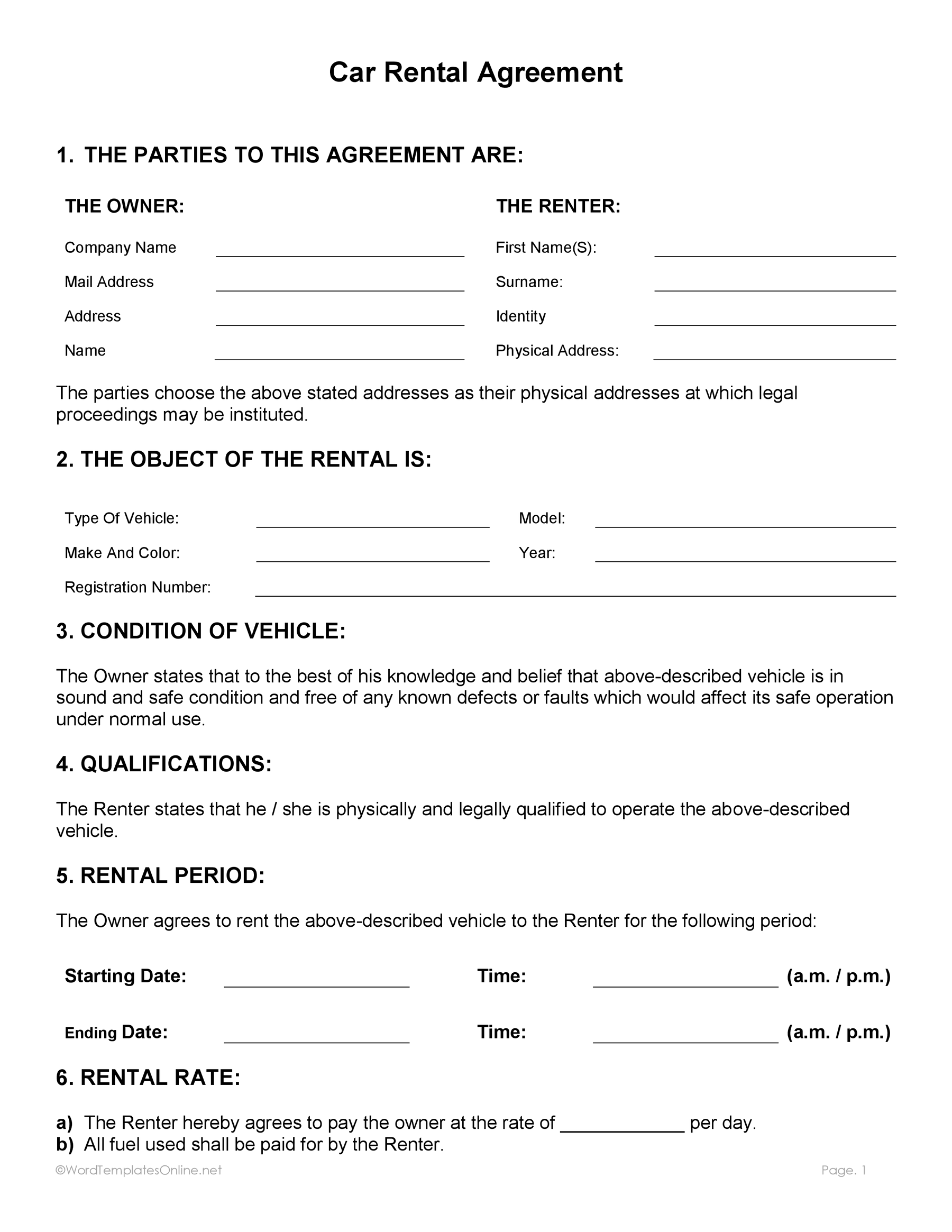
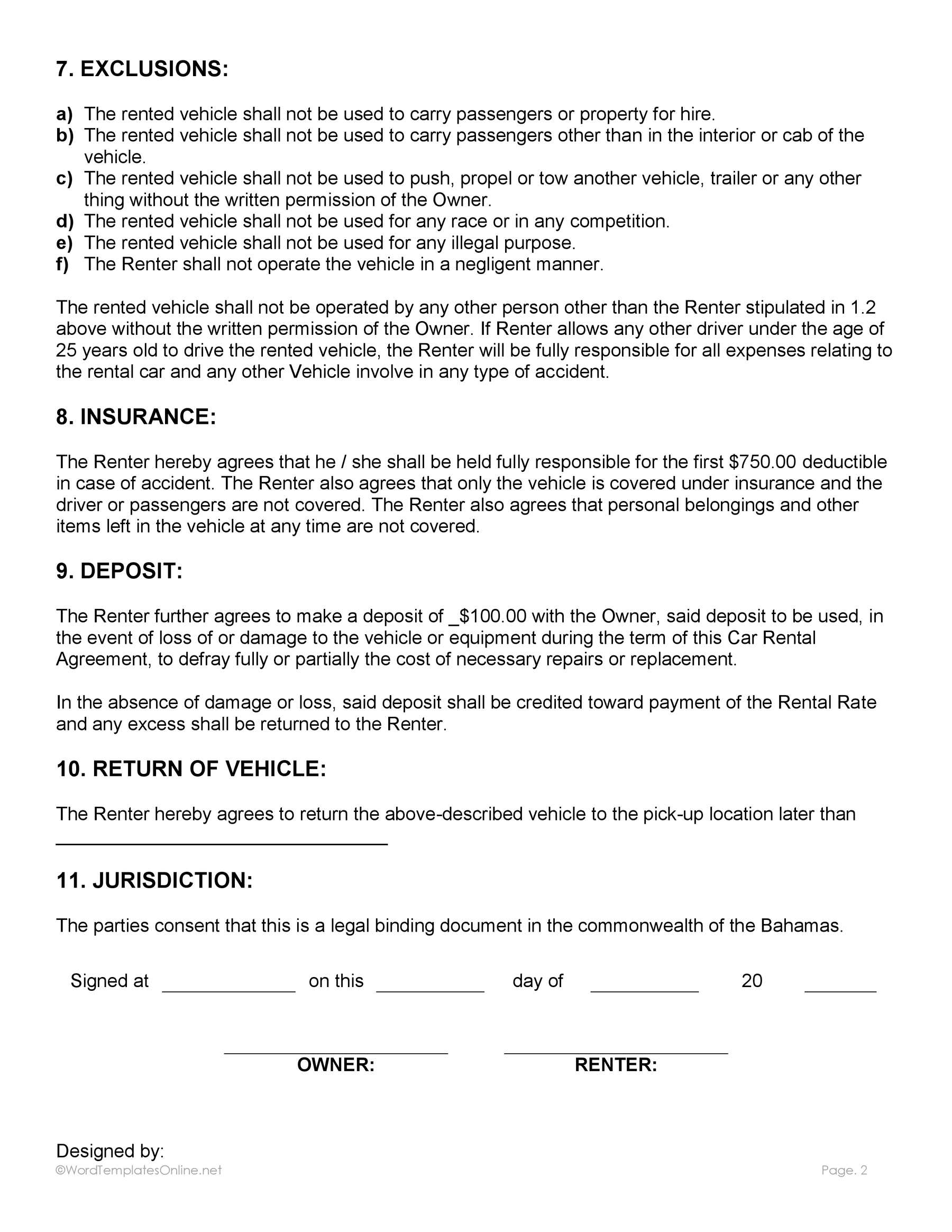
Car rental agreement form
This template is designed with attention to operational boundaries, which help rental companies control rental car usage. It clearly states geographical limitations, who is allowed to drive the car, and where it can and can not be operated. These limits secure your rental unit and prevent unauthorized usage. They also reduce the risk of unsafe driving and unauthorized operators, helping companies avoid liability and damage claims.
Along with these standout features, it also contains basic information such as names of both parties, car model, mileage limits, insurance requirements, etc. It is a balanced agreement that protects both parties from legal disputes.
One-page Car rental agreement template
This template is a good pick for companies that prefer a simple, one-page agreement but also don’t want to miss out on important protection clauses. Its concise structure makes it user-friendly and ideal for quick rentals where time matters, for example, like airport pickups.
Despite it being single-page, it still covers core elements like rental periods, mileage, terms of use, hold harmless, and insurance clauses.
If you want to read more about Hold Harmless Agreements, you can check: Free Hold Harmless Agreement Template.
It also allows flexible return location and vehicle inspection, which allows rental companies to record the car’s condition before and after rental. It makes sure that damages are properly accounted for.
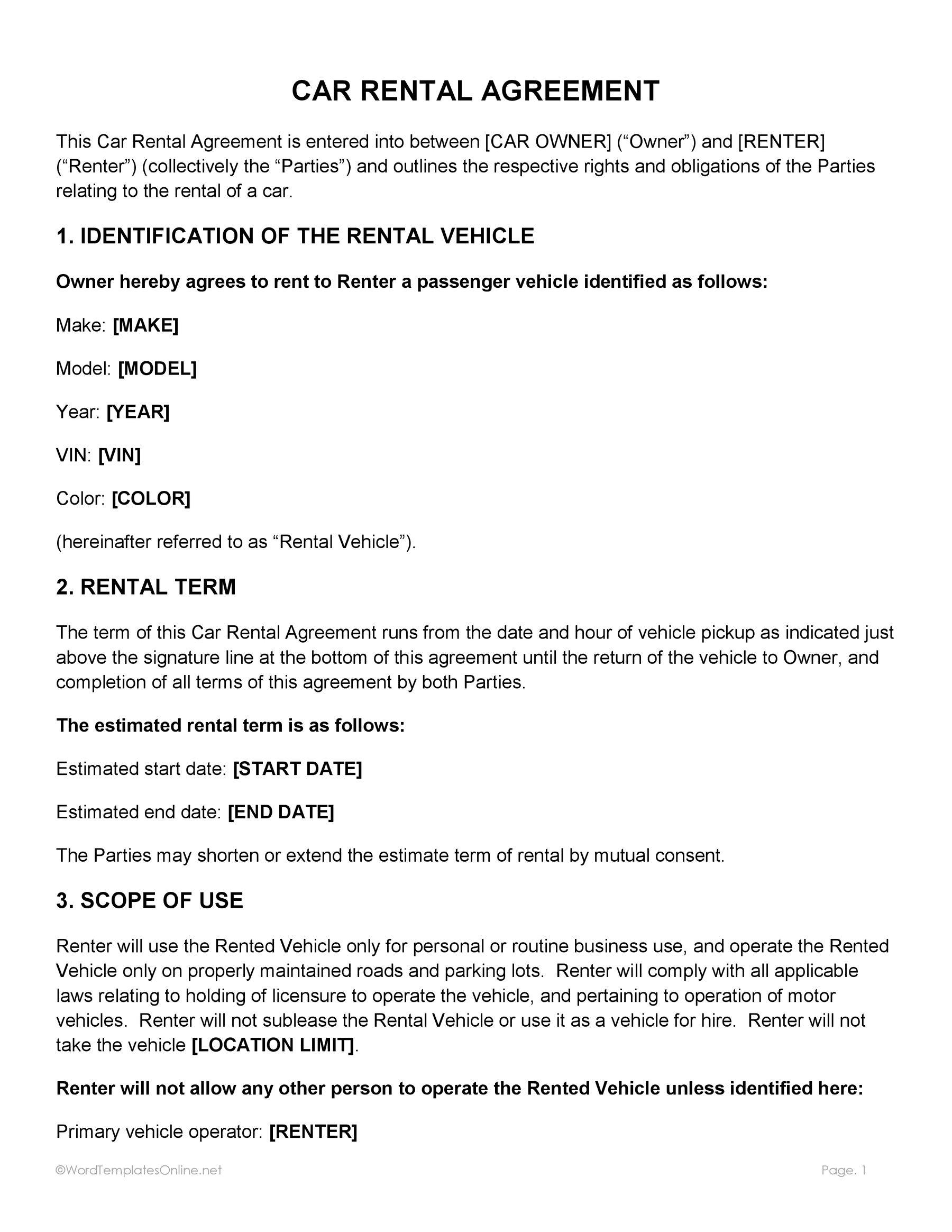
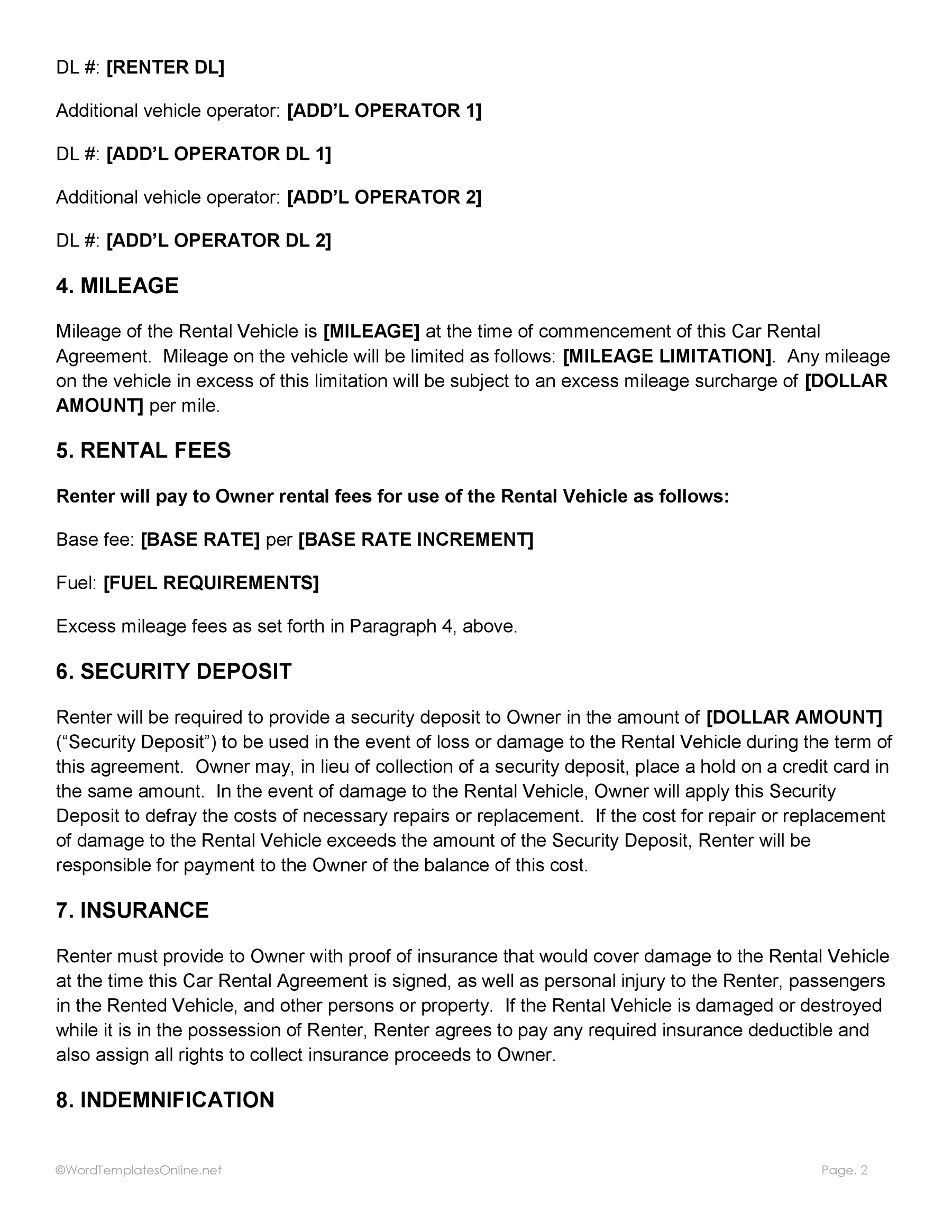
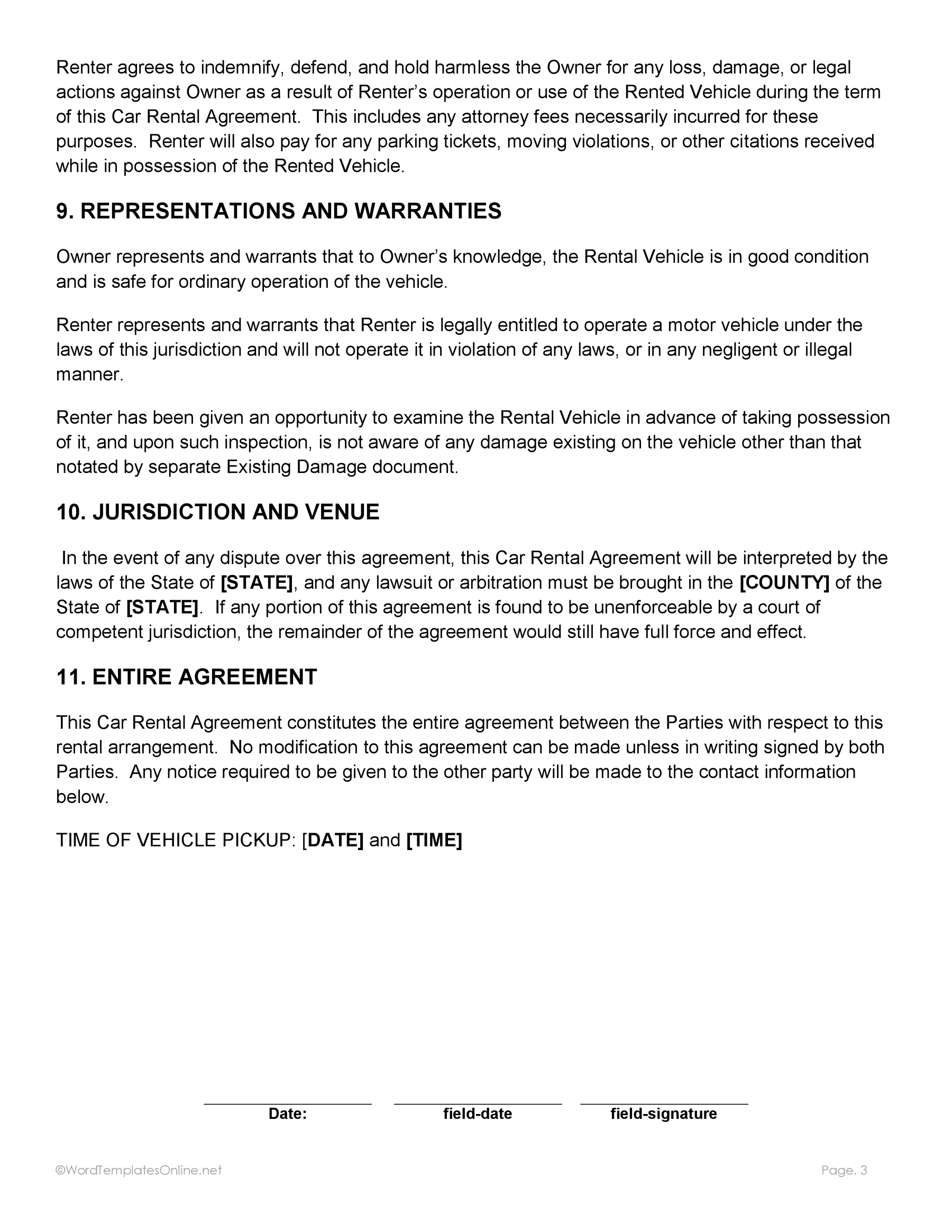
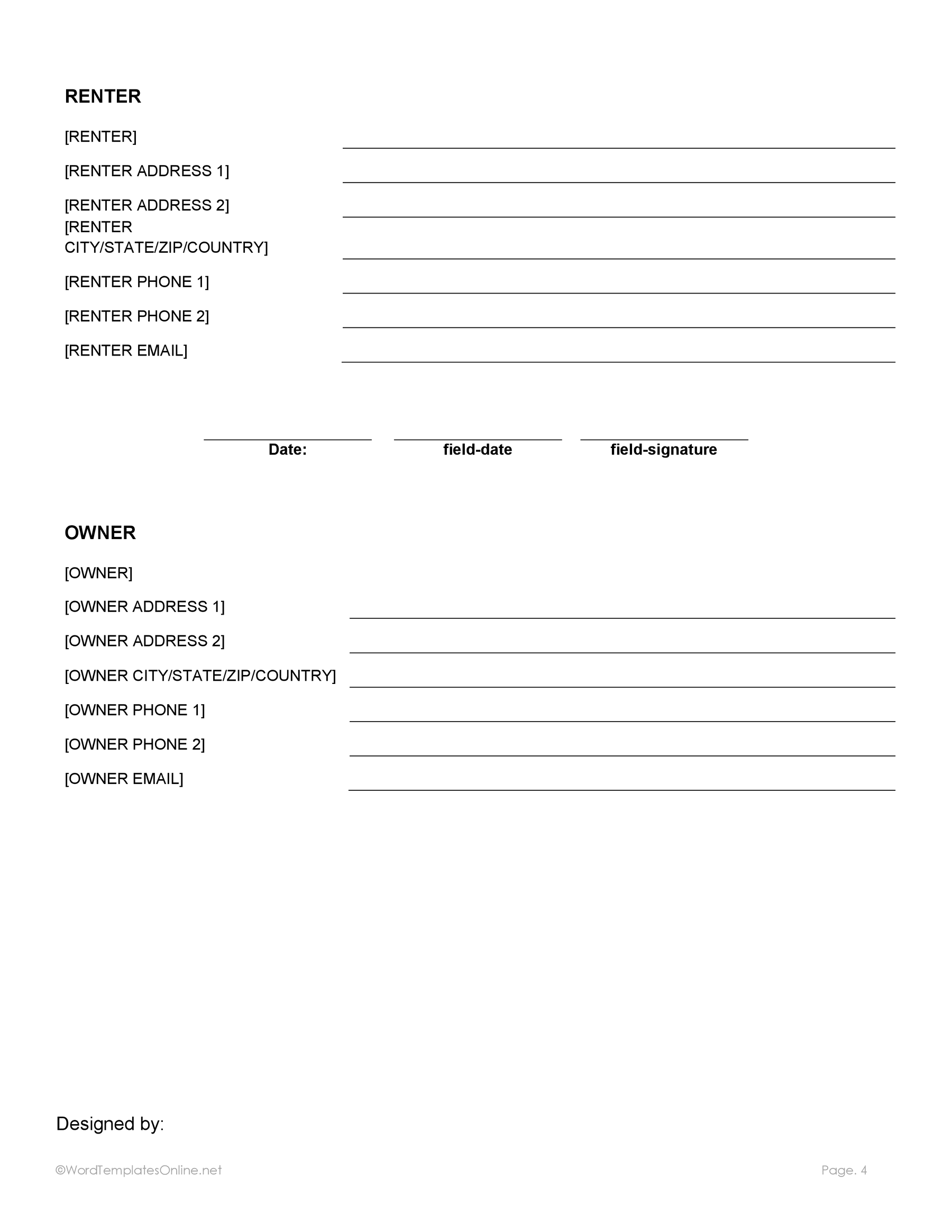
Short-term Car rental contract template
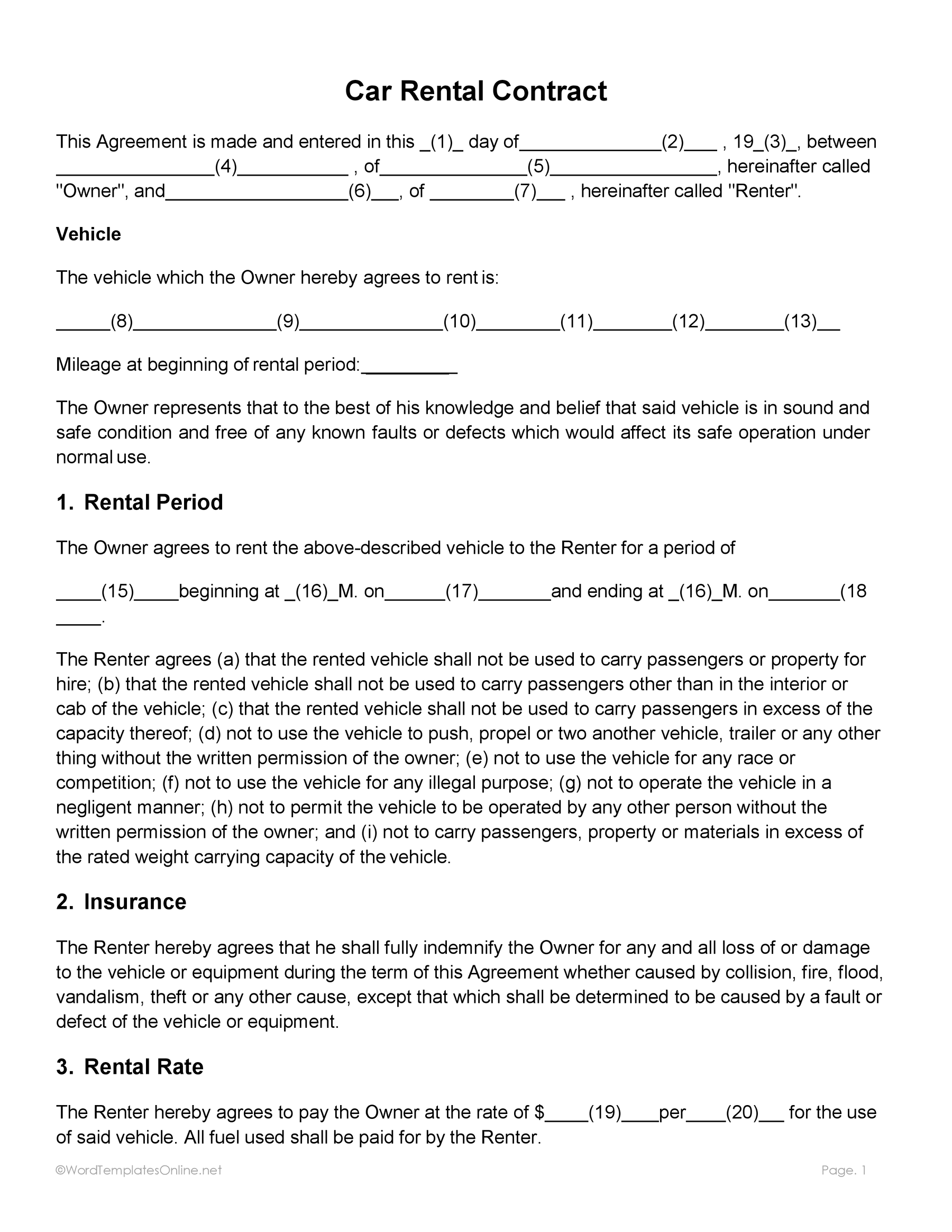
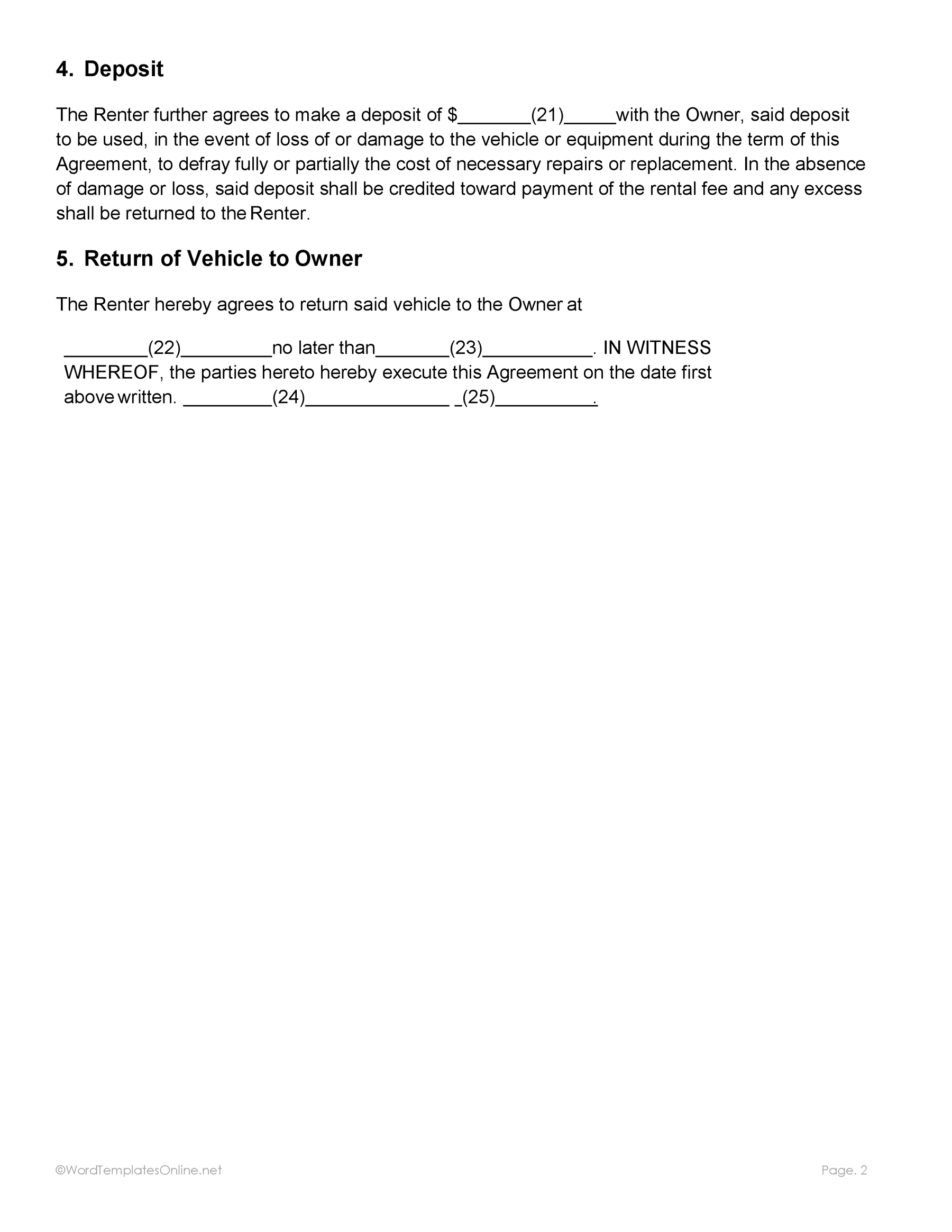
Car rental contract template is designed for short-term rentals. It lists the standard details, but what makes it unique is the fact that it is brief and to the point. It contains only five main clauses that are the essence of a good car rental contract: rental period, insurance, rental rate, deposit, and return to owner.
Its brevity makes it quick and easy for rental companies as well as renters while still covering essential protections.
Car rental agreement templates
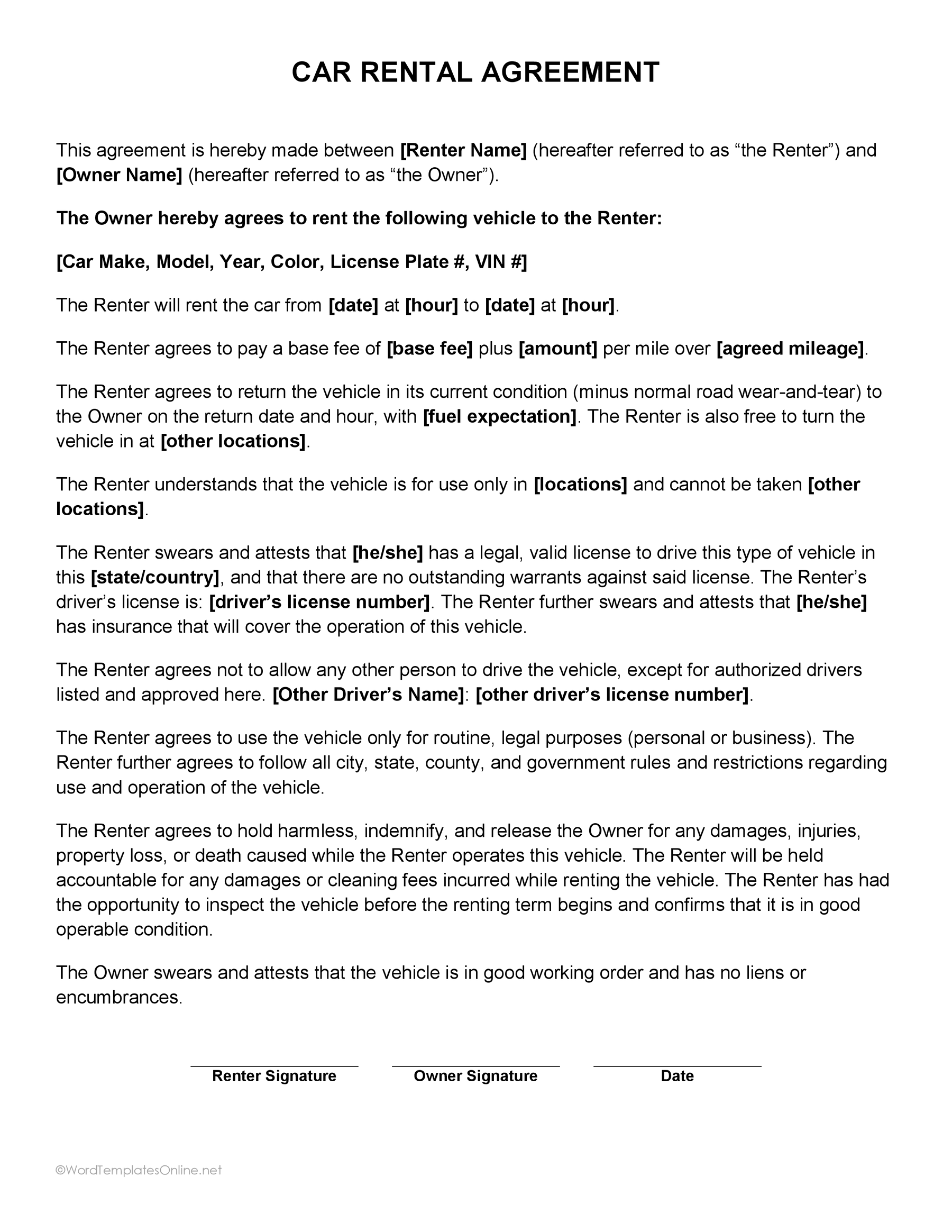
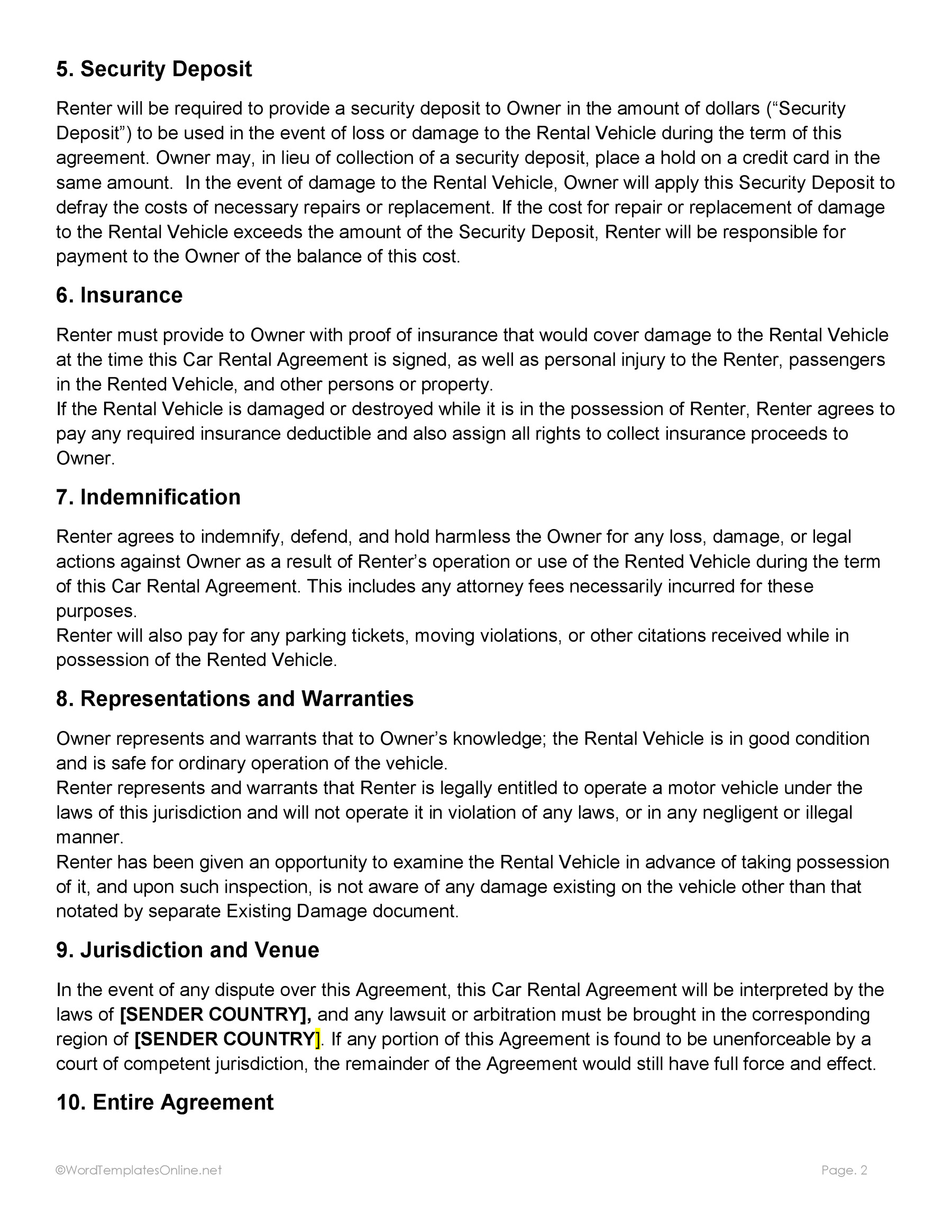
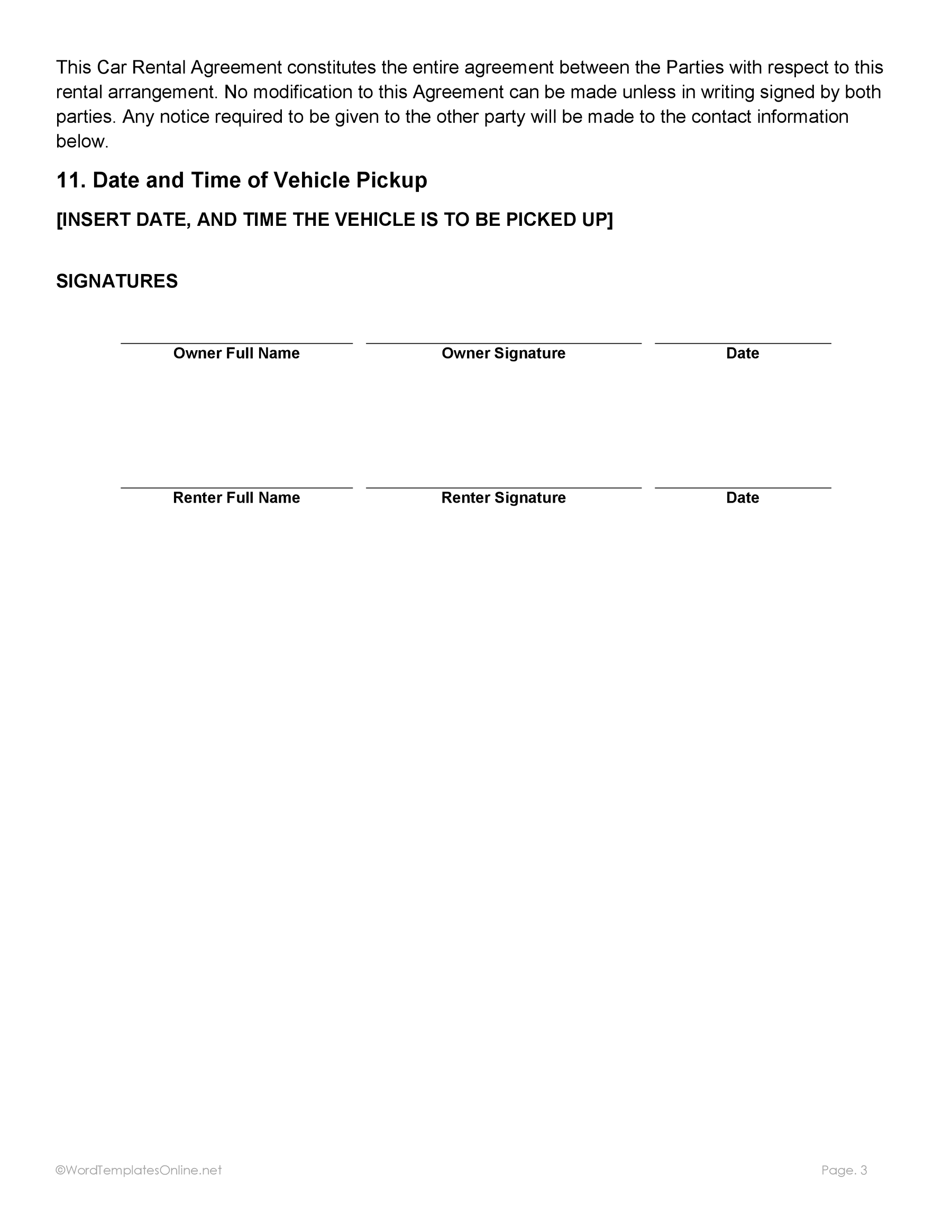
This template emphasizes the representations and warranties clause, to make sure the rented car is safe to use and renter is legally eligible to drive. This also allows flexibility to change rental terms by mutual consent of both parties, which makes it a practical choice for short-term rental needs.
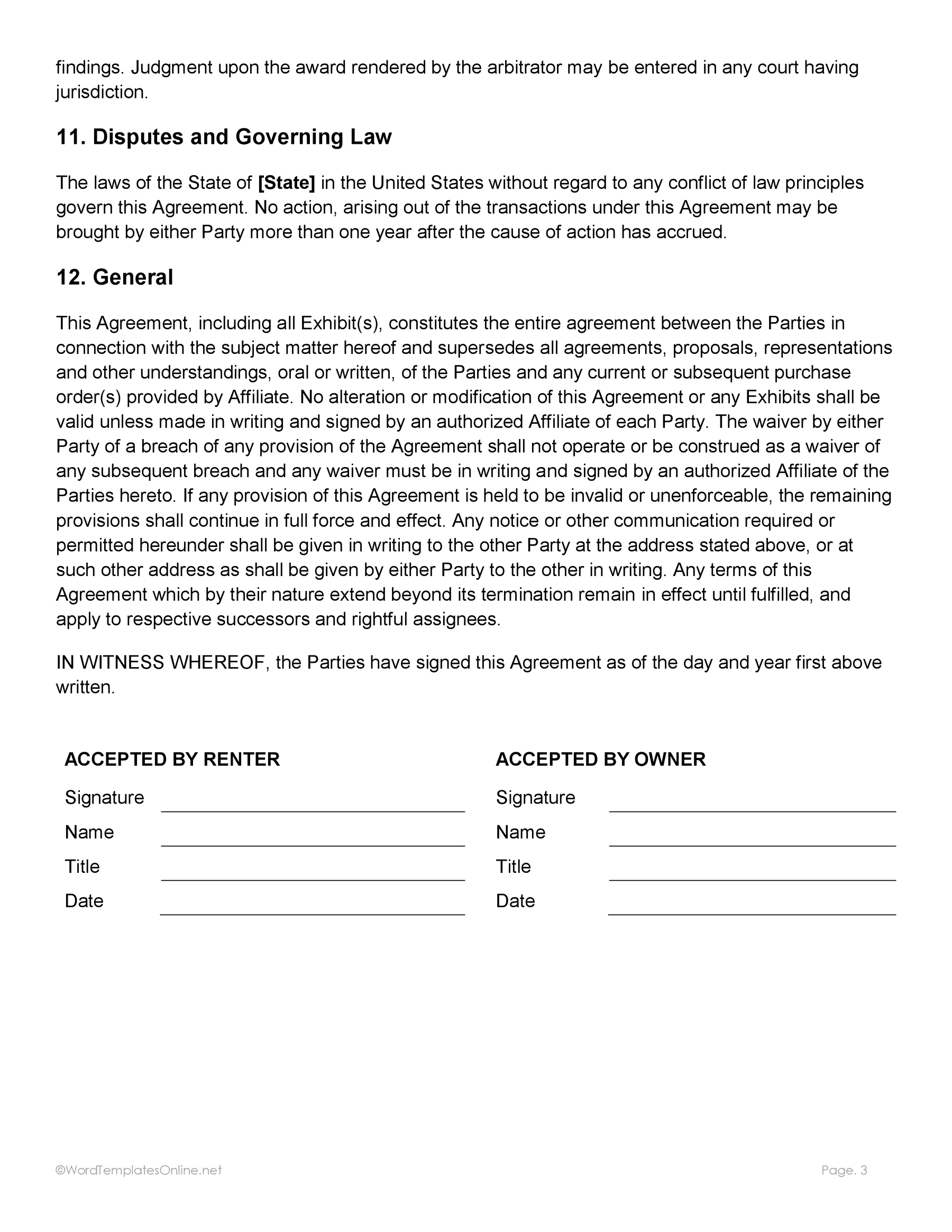
Sample car rental contract
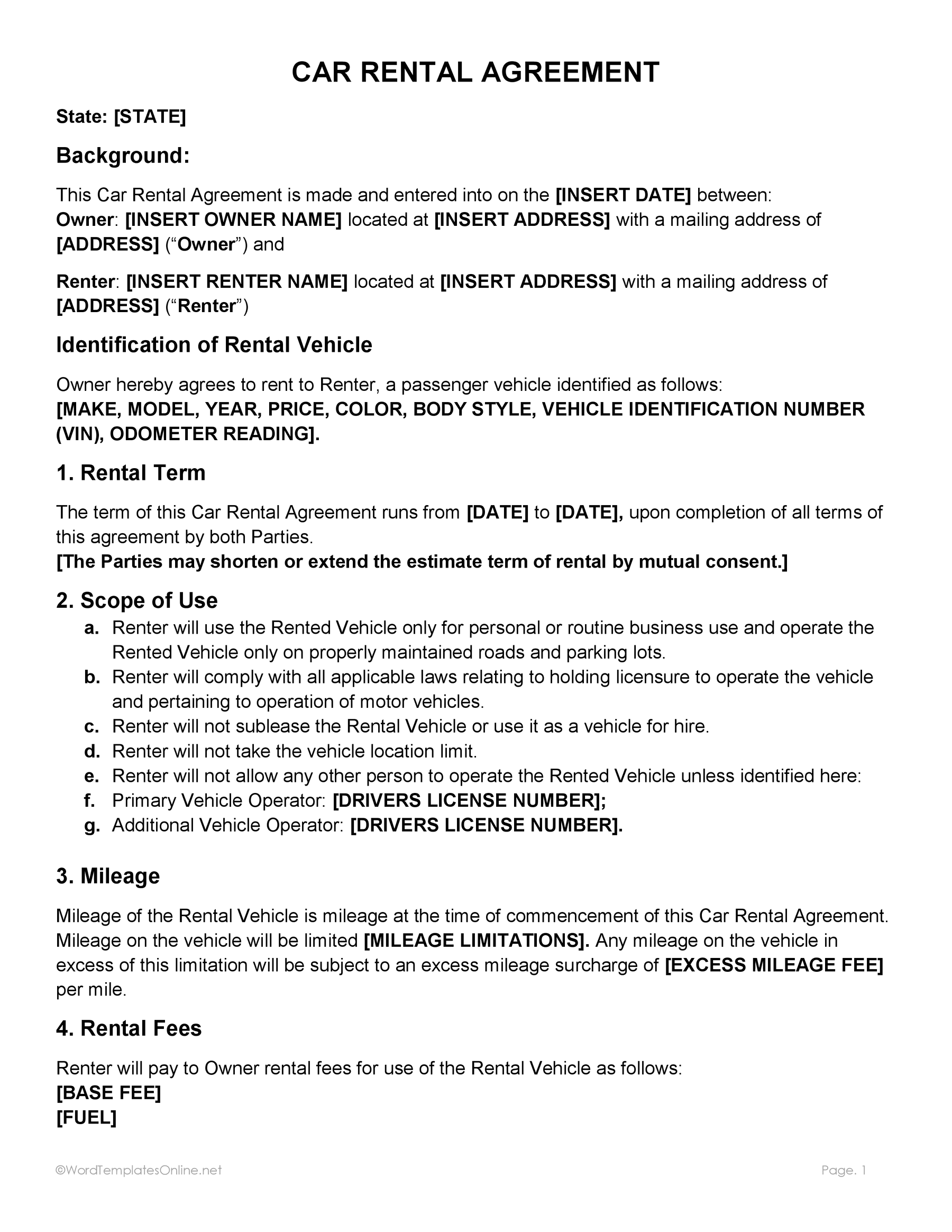
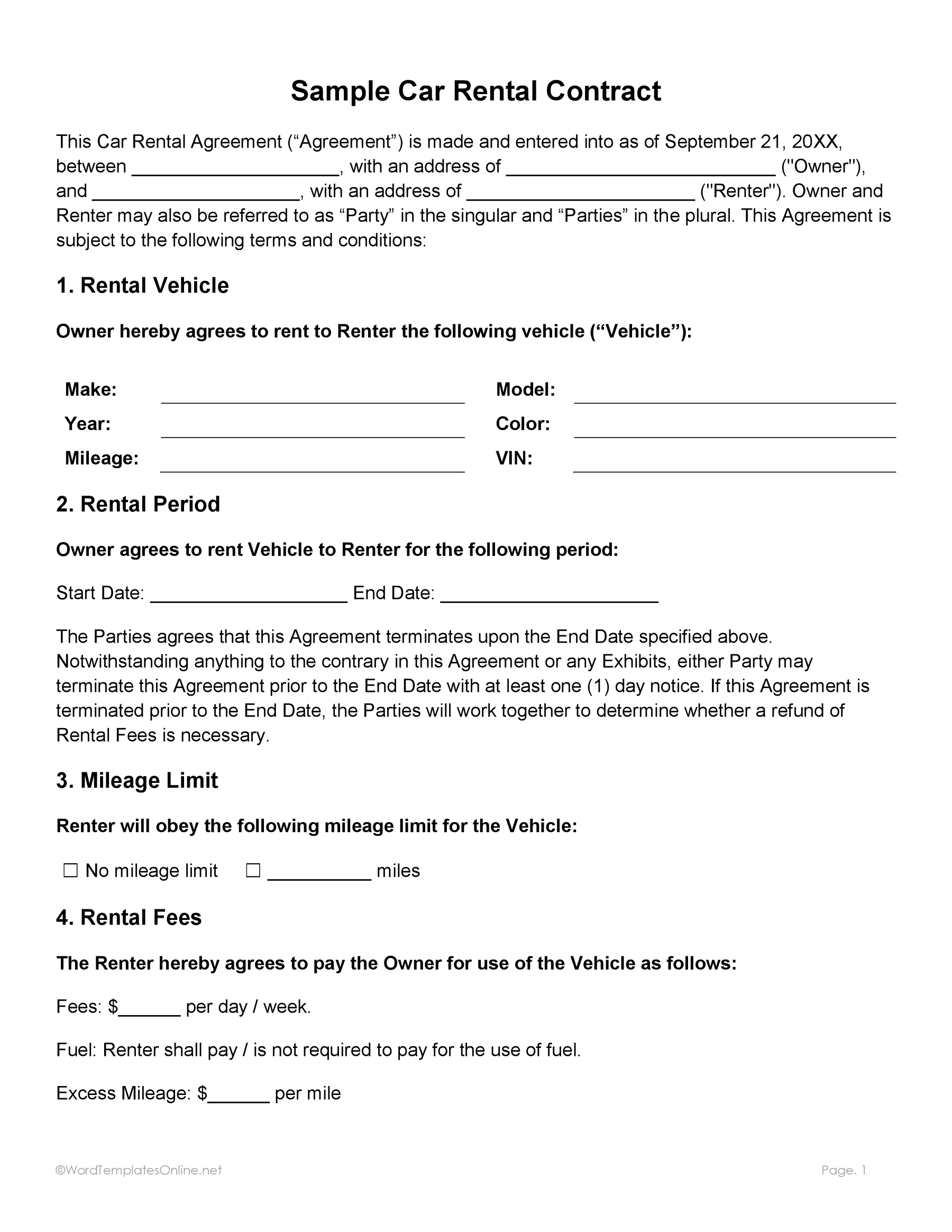
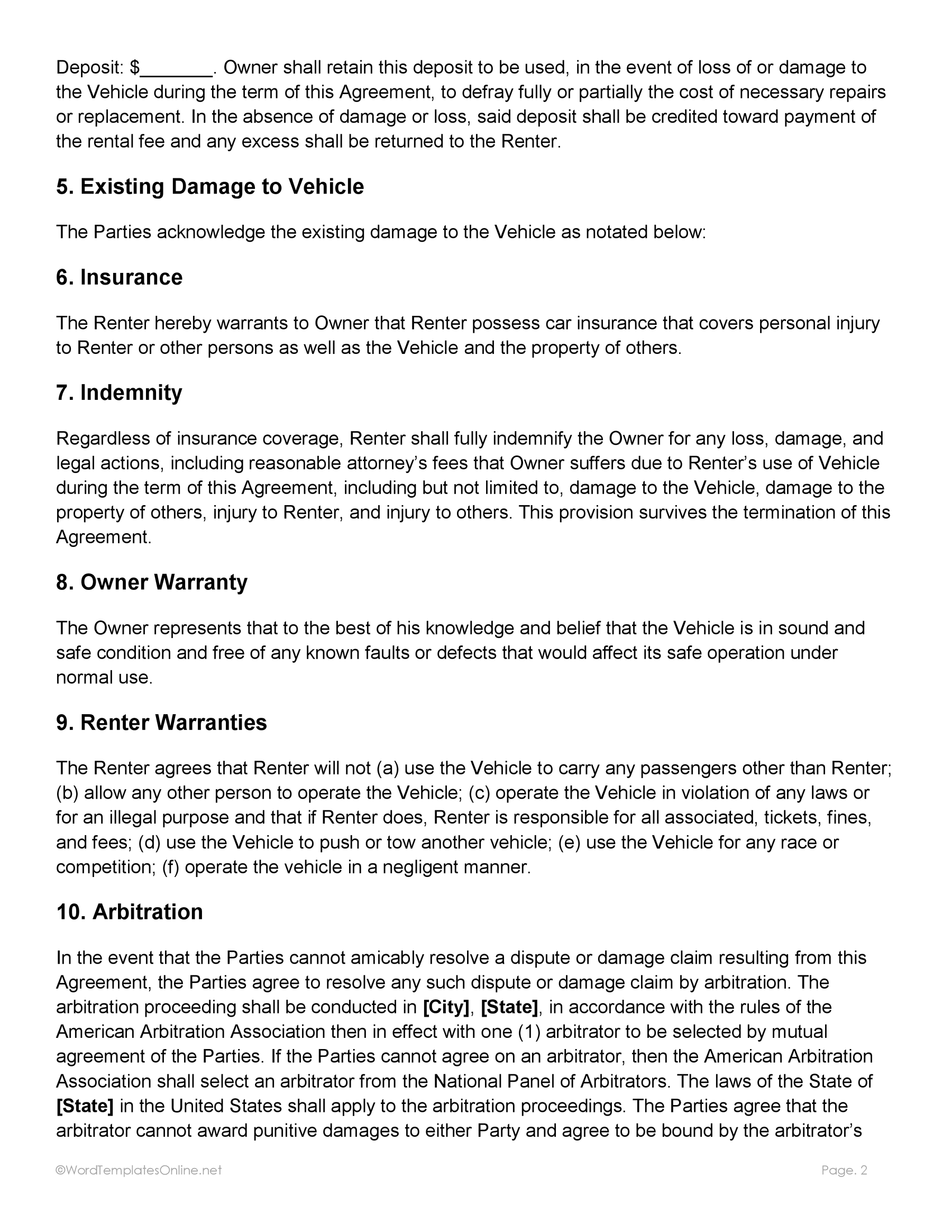
This sample car rental contract is also useful for short-term rentals. One feature that makes it stand out is the early termination option, which allows both parties to end the contract with just one day’s notice.
Another highlight is the warranties section, where the owner confirms the rental unit is in a safe, operable condition. It also guarantees the renter’s legal and responsible use, helping prevent illegal use.
Other than that, the template focuses on ten clauses: rental vehicle, rental period, mileage limit, rental fees, insurance, indemnity, owner warranties, renter warranties, arbitration, disputes, and governing Law. Overall, this template is the best fit for you if you prefer clear warranties and flexible termination.
Long-term rental agreement templates
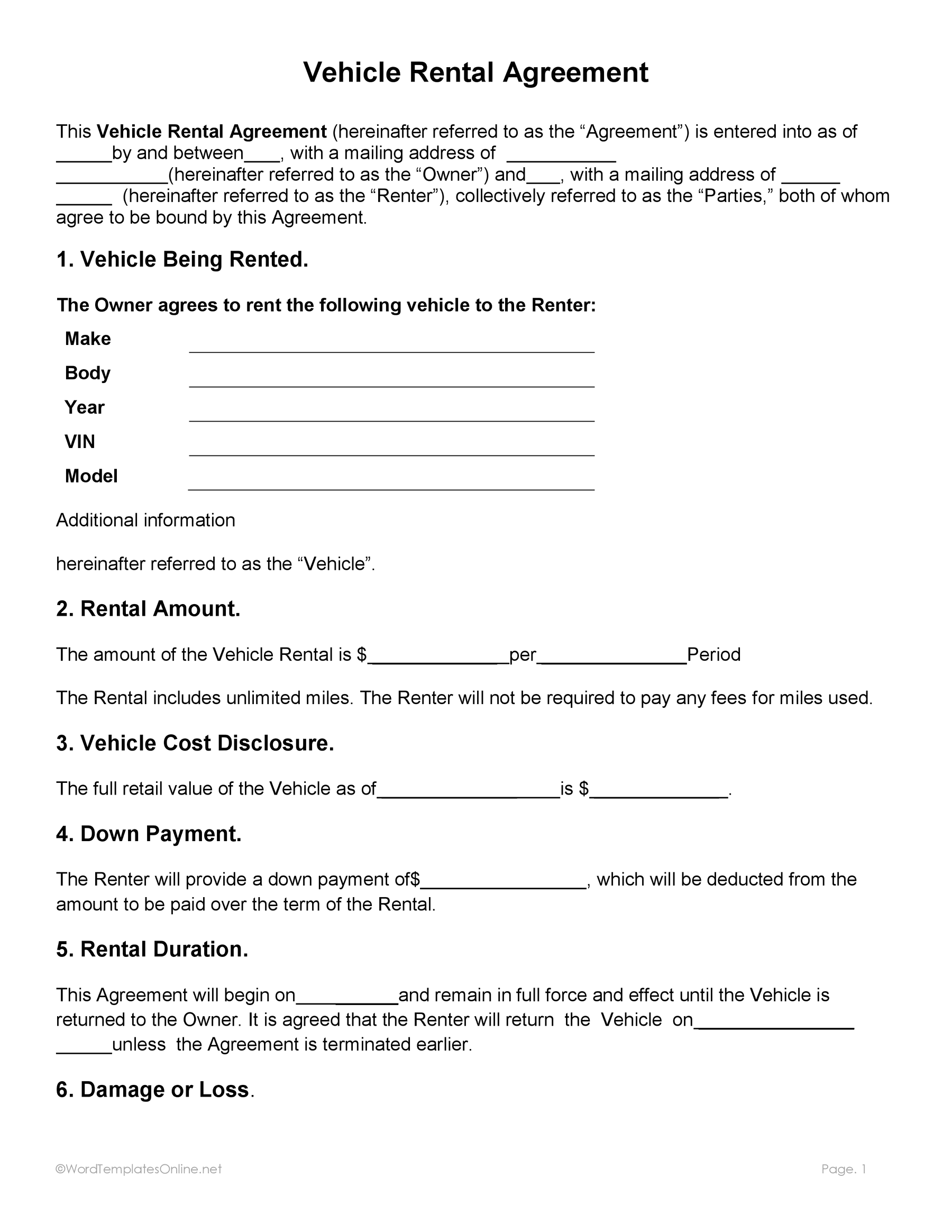
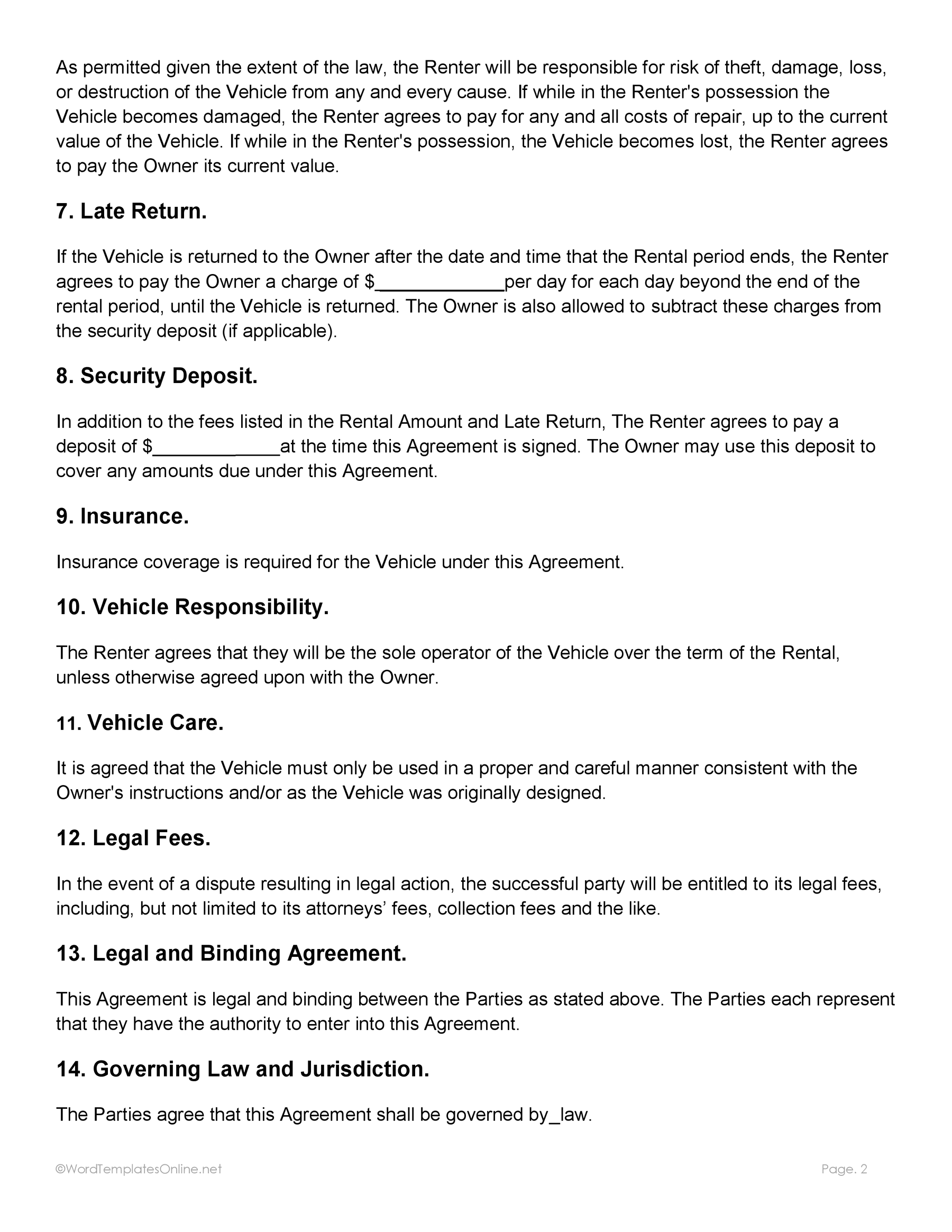
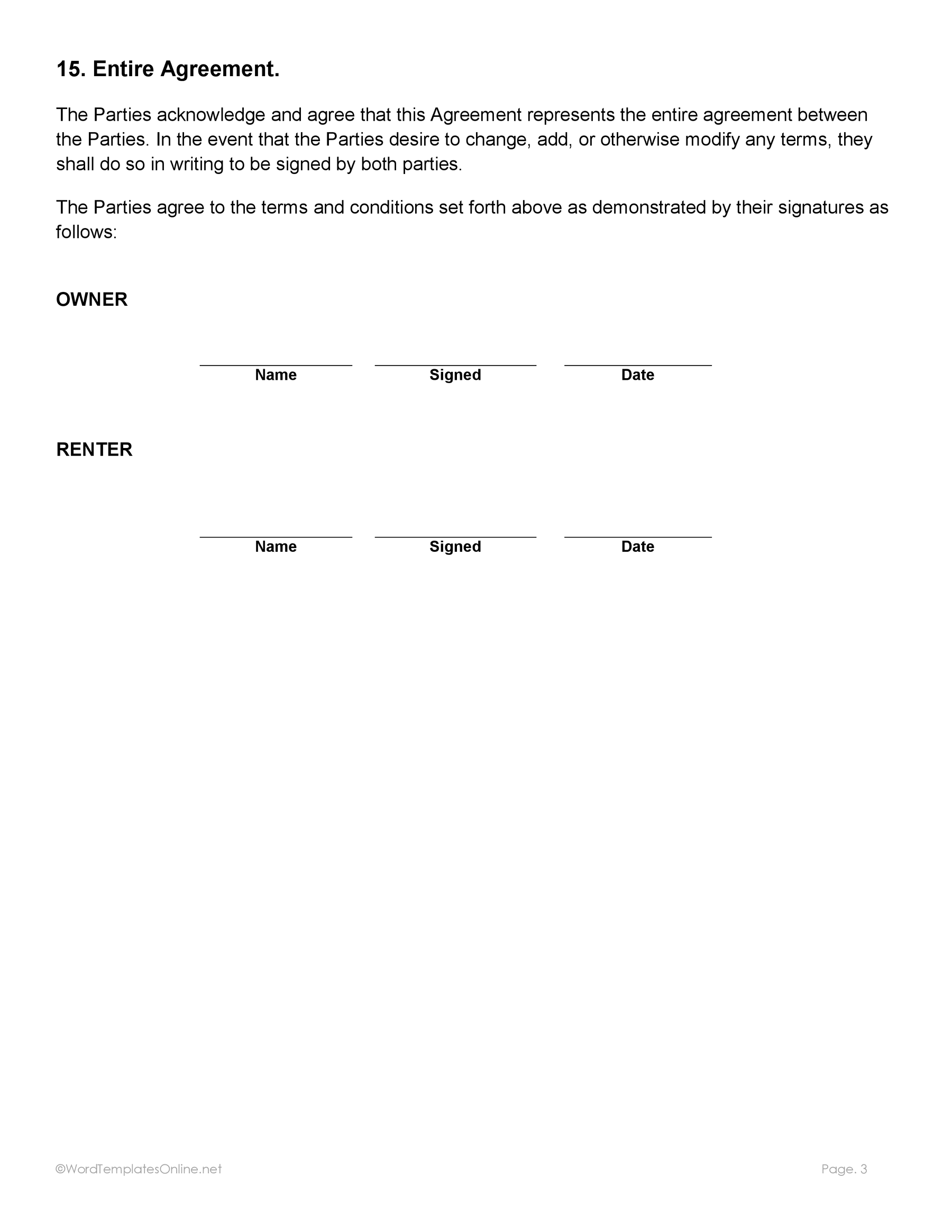
Vehicle rental agreement
This template is perfect for a customer who wants to rent a vehicle for a longer period of time. It provides rental companies protection over extended periods. Its Vehicle Cost Disclosure clause clearly mentions the current value of the vehicle, which helps rental companies assess liability in case of damage. The Down Payment clause guarantees an upfront financial commitment from the renter, reducing the risk of non-payment.
Additionally, vehicle responsibility and care provision hold the renter accountable for any damage, loss, and mishandling. These clauses make this vehicle rental template ideal for long-term rentals.
(This template is not limited to cars only.)
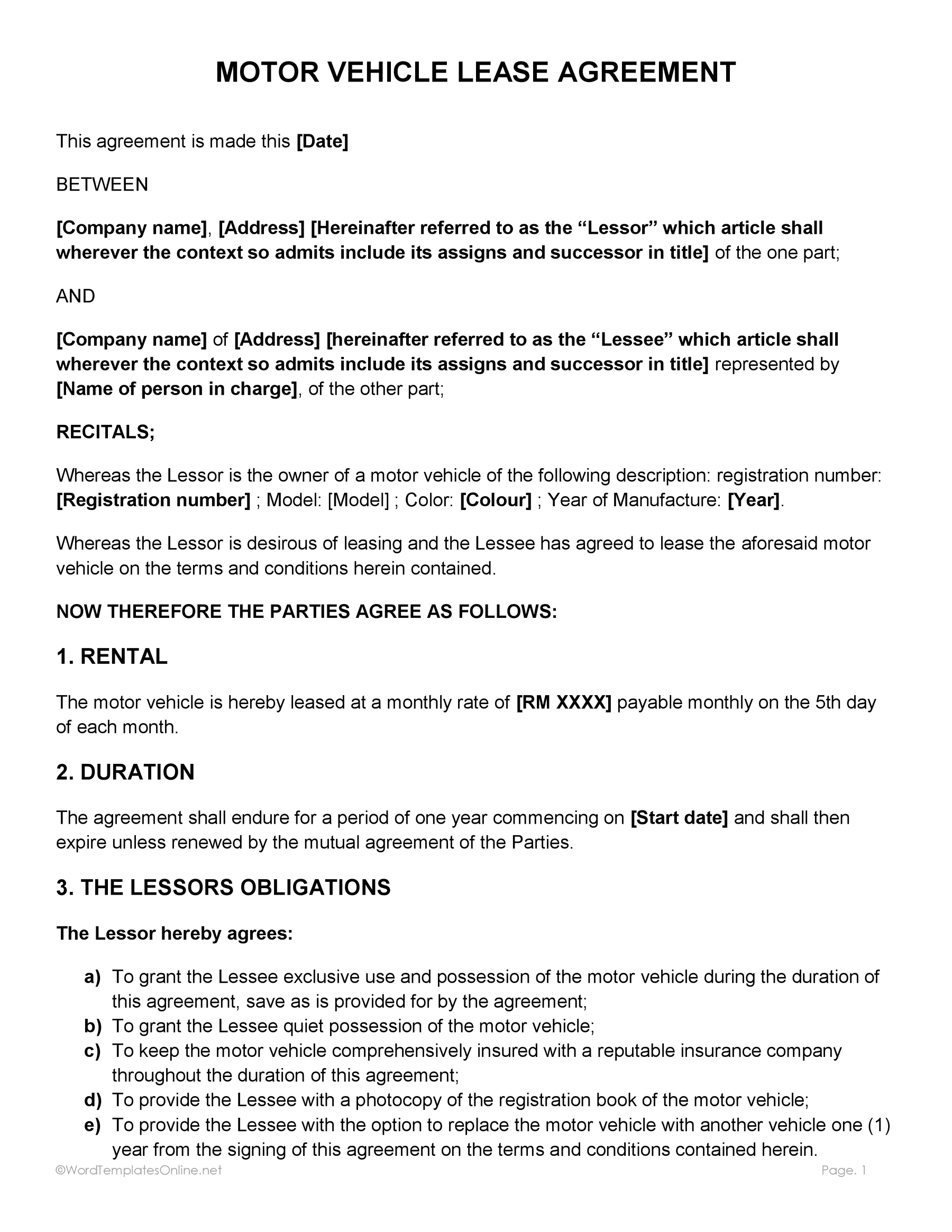
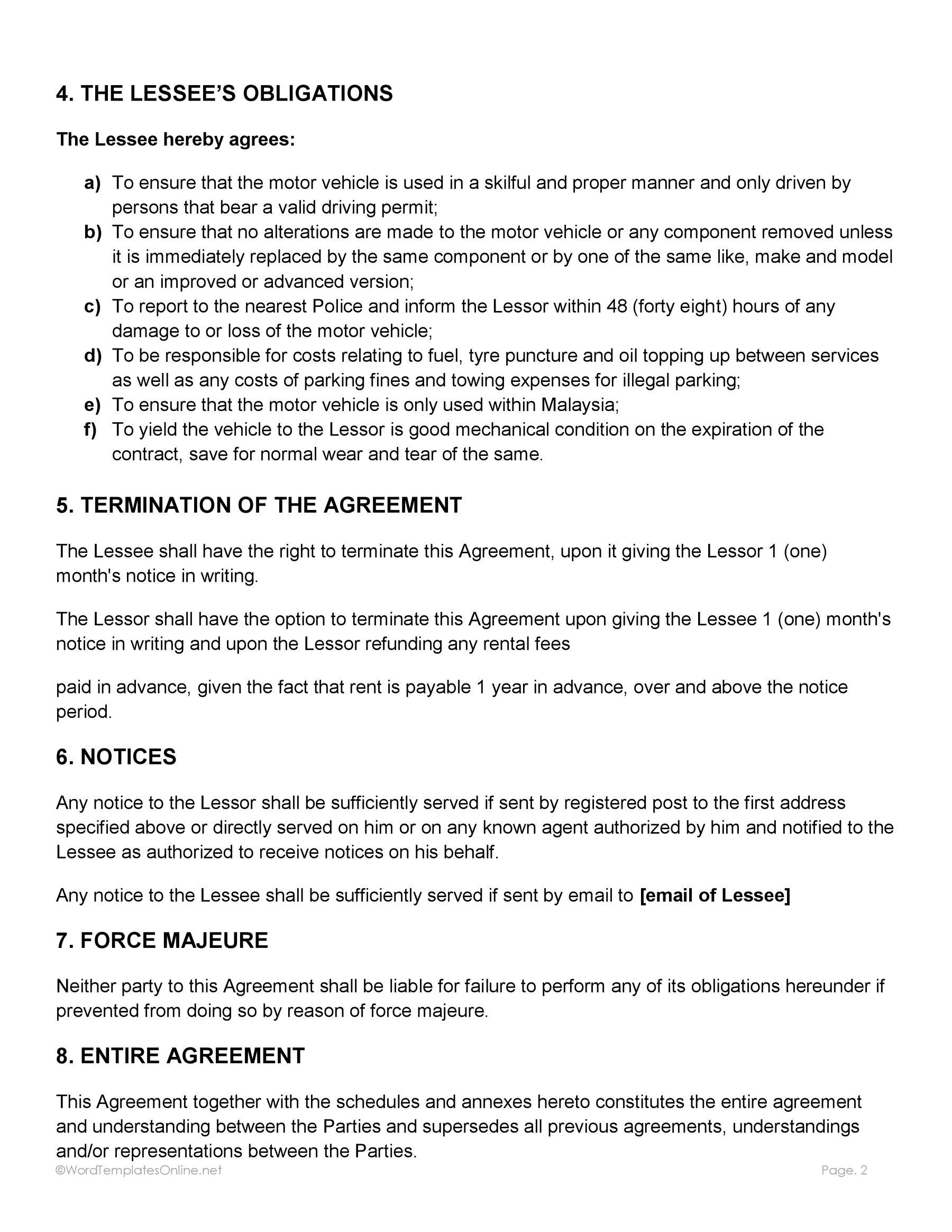
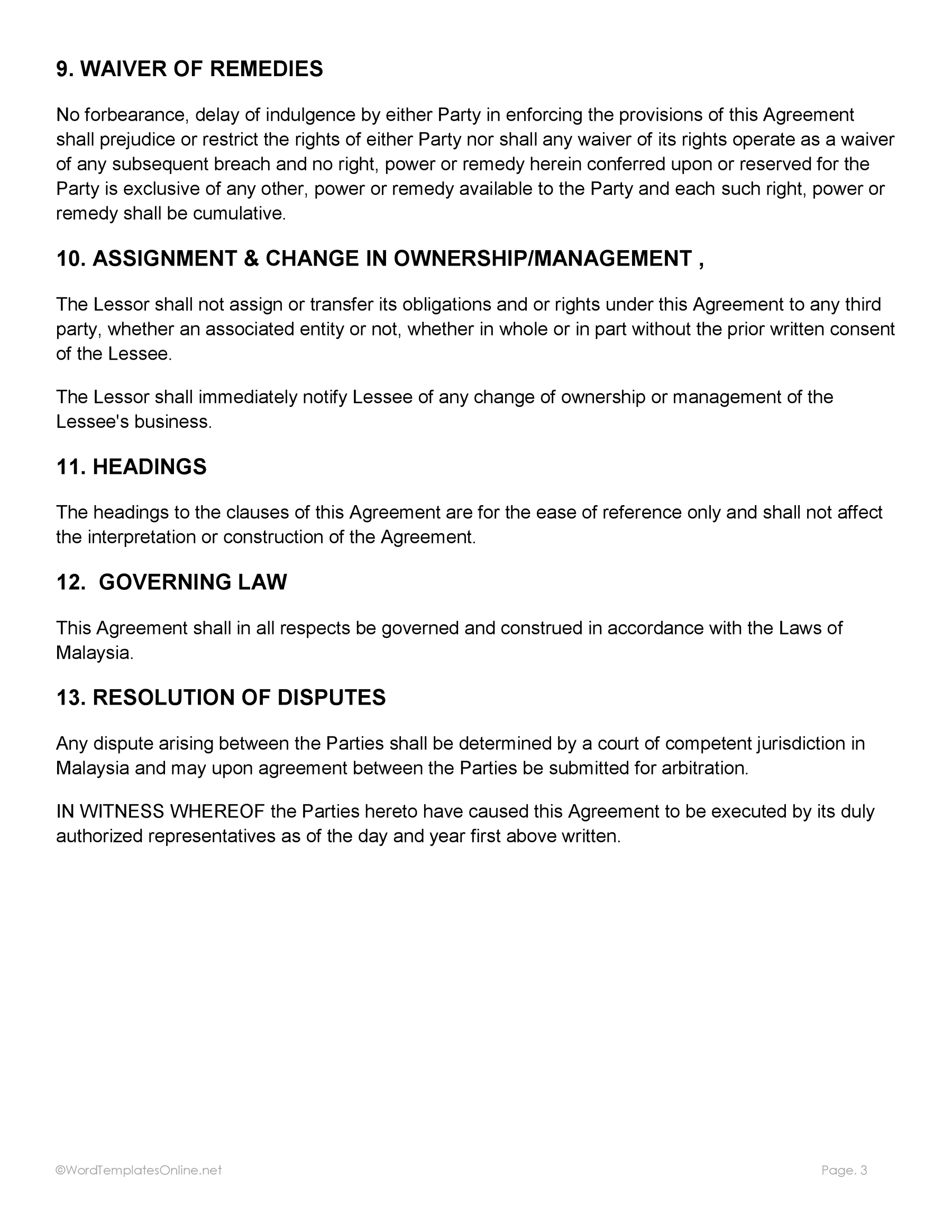
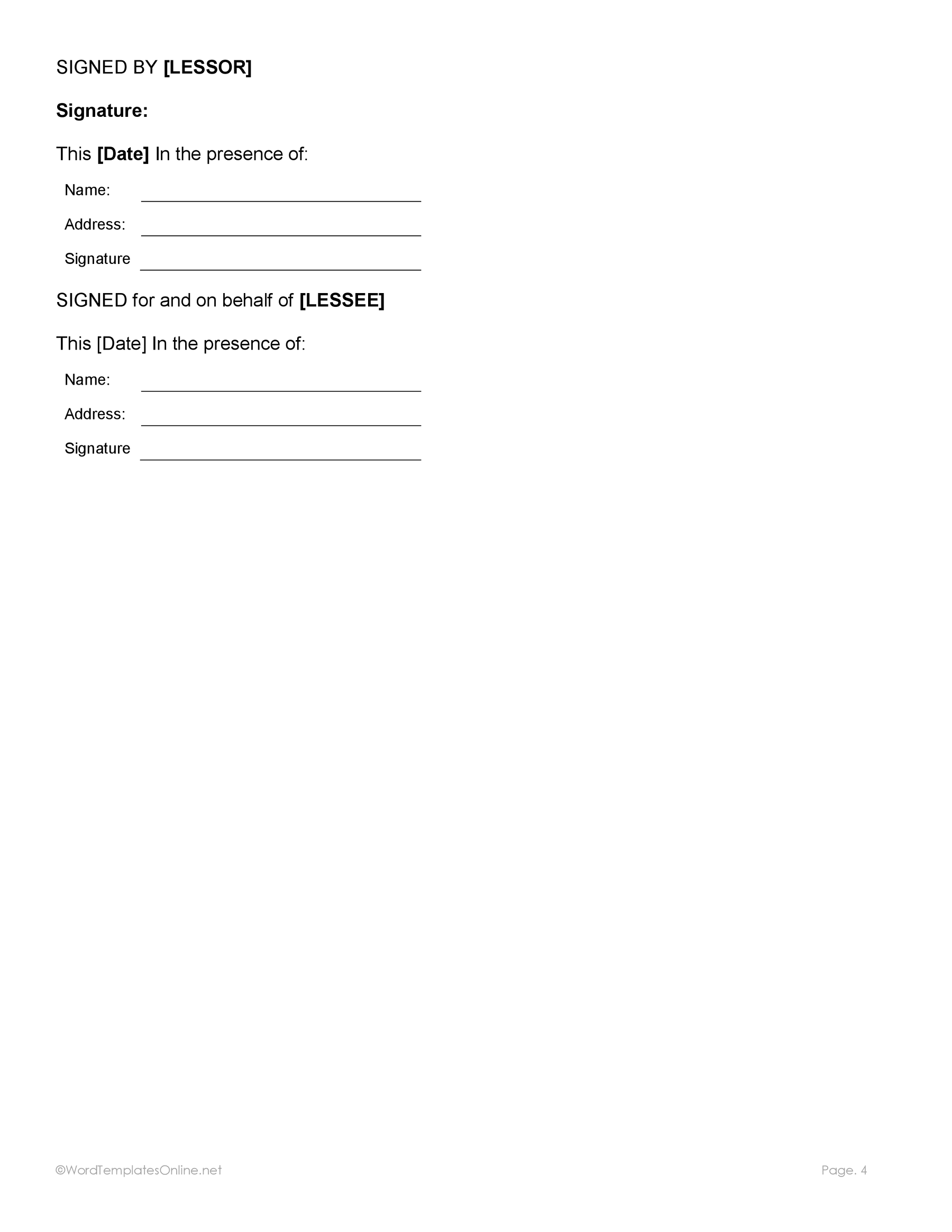
Motor vehicle lease agreement template
This template is designed for vehicle rentals over a year. It contains many protection clauses for guidance for both parties. The Lessor’s obligation clauses secure the rental company’s assets by ensuring that the vehicle is insured and well-maintained. This clause even allows replacement of the vehicle after a year.
Another important clause is the Lessee’s obligation clause, which prevents misuse and damage to the vehicle while holding the lessee responsible for its maintenance.
Other highlights include a termination clause that gives the liberty to end the agreement with one month’s notice. Then it has a Force Majeure clause, which protects both parties in case of unforeseen events beyond anyone’s control. All these features make this template suitable for long-term leases.
Frequently Asked Questions
How do I choose the right car rental agreement template for my rental business?
When choosing the right car rental agreement template for your rental business, consider the rental period that best suits your customers’ demands.
A short-term rental contract is used for people renting a car for vacations, temporary business travels, weddings, or special occasions, and short excursions to other cities.
While long-term rentals are perfect for corporate fleets, bulk vehicle needs. It is also suitable for individuals looking to rent for over a year, and for long-term job assignments, etc.
Can my contract make the renter responsible for vehicle damage?
Yes, but you must follow state law. Renters can be held liable for damage that occurs during the rental, including collision, theft, or vandalism. However, they are generally not responsible for normal wear and tear, mechanical issues unrelated to accidents, or pre-existing damage.
It’s better to mention what counts as renter-caused damage, pre-existing issues noted at pick-up, and how repair costs are calculated in agreement.
Are car rental agreements in the US governed by federal law or state law?
Car rental agreements in the US are mainly governed by state law, which sets rules on consumer protection, fees, and other protections. Other than that, the federal law’s Graves Amendment (49 U.S.C.§ 30106) protects rental companies from liability if the renter causes an accident as long as the company was not involved in illegal activity. It protects your company by clearly making the renter responsible for driving, licensing, traffic tickets, and other misuse-related costs.
Can I charge “loss of use” when a renter damages my car?
Loss of use is the revenue your car loses while it can’t be rented because of the damage during the rental period. You can hold your renter responsible for this cost, but some companies don’t charge it if they have insurance. If you are charging, the cost must be reasonable and based on actual repair time and rental value.
Even if your vehicle is insured, your agreement should clearly state that the renter must cooperate with the claims process and provide all necessary information.
Do I still need a lawyer if I use the car rental agreement template?
A template saves time and ensures consistency, but it can’t replace a state-specific legal review. Laws on insurance, fees, waivers, privacy, and dispute resolution vary by state, so it’s wise to have a local lawyer review your template.
What should my rental agreement mention about pick-up, return, and authorized drivers?
It is very important to mention the car’s condition at pick-up and return. Both parties should inspect the vehicle together, and for documentation, you can take pictures and videos to avoid any dispute.
If you notice any damage upon return, notify renters as soon as possible, ideally during a joint inspection at return. If after-hours or automated drop-off is used, set a clear short period (e.g., 10 days) to report damage.
You should also mention authorized drivers with their license numbers in your template. It can include renters and two additional drivers. It helps renters understand who is authorized to drive the car.
Can I use GPS or telematics data to charge renters?
Using GPS isn’t illegal; it can be used to track your vehicles for theft recovery, mileage, or location limits. Most State laws, like New York, don’t allow charging renters penalties just for how they drive. However, your agreement should clearly explain GPS use and which situations might affect fees.
What’s the difference between fleet insurance and CDW/LDW, and are there rules for selling them?
Your fleet insurance protects your vehicles. A Collision Damage Waiver (CDW) or Loss Damage Waiver (LDW), on the other hand, is a contractual agreement in your rental contract.
CDW covers damage from collisions, while LDW covers theft, vandalism, loss of use, and certain fees.
It is important that optional protection like CDW/LDW is clearly mentioned, priced per day, and shown as optional. Renters should know if they already have coverage through a credit card or auto insurance.
Waivers can only be voided for issues like DUI, intentional damage, or unauthorized drivers. Clear terms protect both the company and the renter.
About This Article