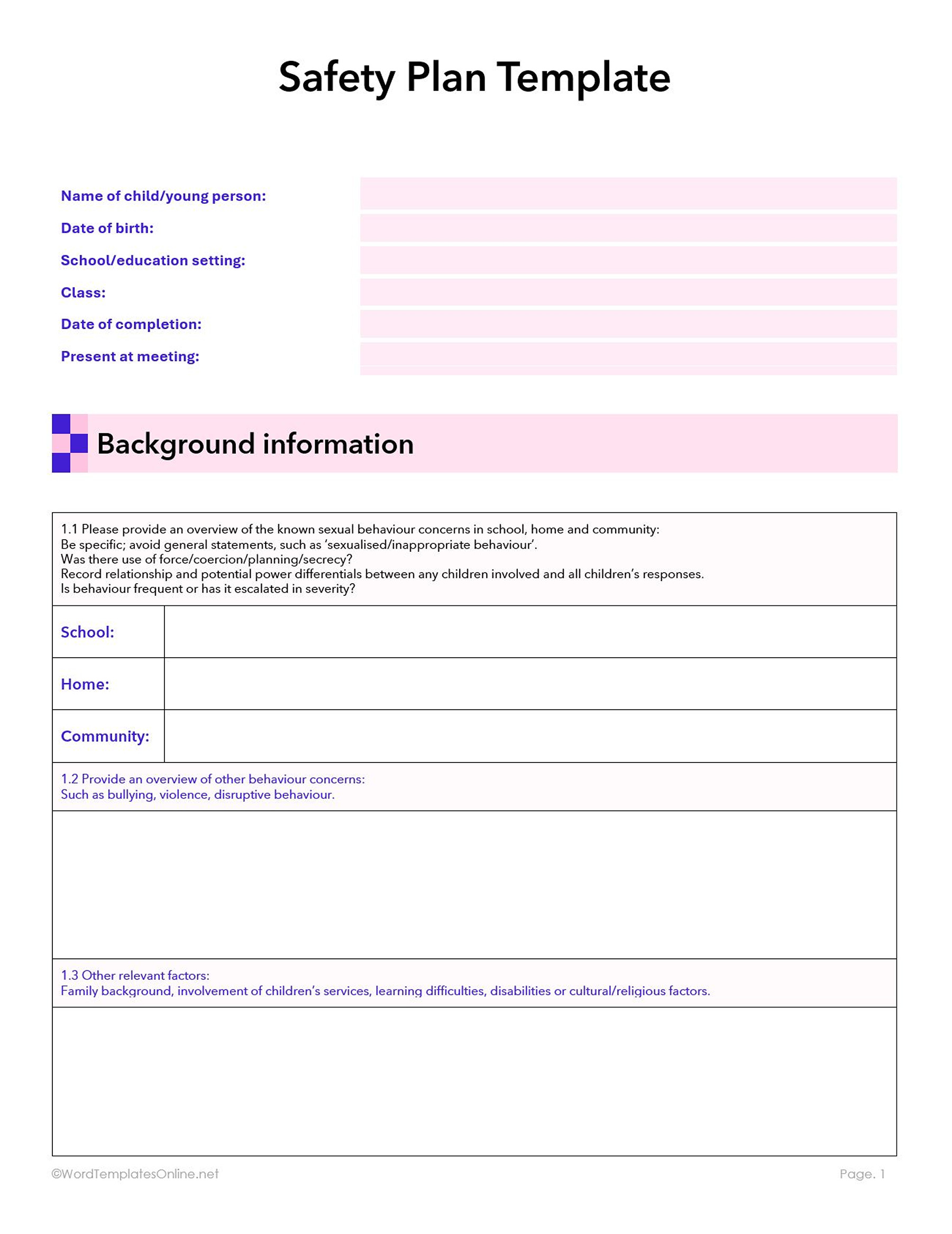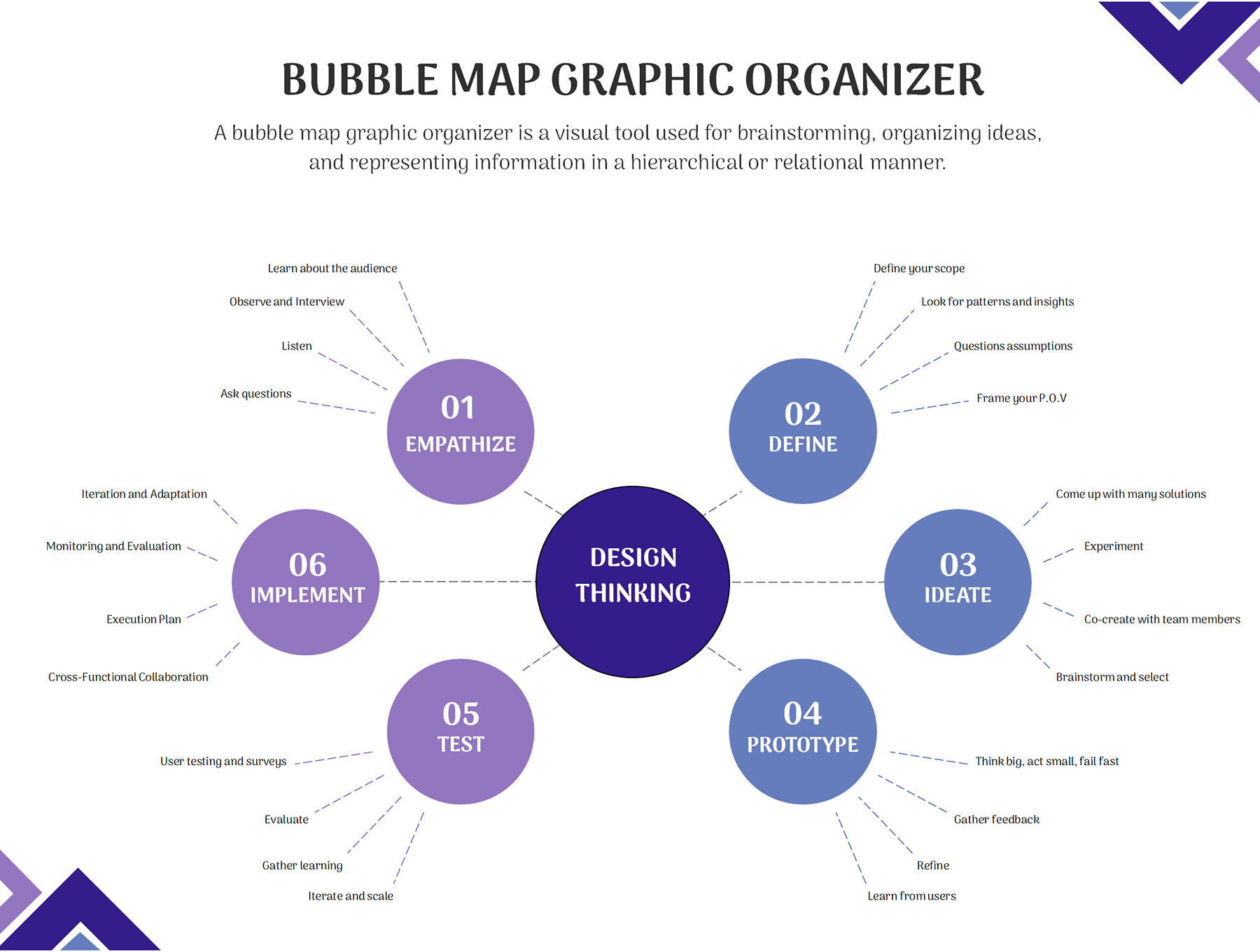
A corrective action plan template (CAP) is a structured document that organizations use to address performance gaps, non-compliance, or solve identified issues.
The document outlines steps to be taken, enabling organizations to use a systematic approach when solving issues by defining root causes, assigning roles, setting deadlines, and tracking progress.
Using a template will help you develop an effective corrective action plan. Its pre-designed format will save you time, provide clarity by making sure that corrective actions are documented and communicated uniformly, and ensure that the CAP complies with organizational and regulatory standards. We have provided readers with a collection of downloadable and ready-to-use templates in this article for reference.
Importance of a Corrective Action Plan
A corrective action plan helps organizations to make sure that they comply with internal, regulatory, or industry requirements by systematically addressing problems. It also promotes accountability by identifying who is responsible for a specific action, which in turn reduces ambiguity.
By providing a structured approach, organizations can solve issues efficiently, thereby minimizing errors, saving resources, and time. Also, the template includes timelines and measurable outcomes, which makes it easy to assess a CAP’s effectiveness, track progress, and make changes where necessary. Most importantly, CAPs promote a culture of continuous improvement by learning through corrections, which leads to long-term success.
Key Elements of a Corrective Action Plan Template
A corrective action plan template has elements that serve unique purposes that make the CAP effective in solving problems. They are:
- Problem identification: This is the first section of the template where you describe the issue clearly and provide supportive evidence, such as performance complaints, performance reports, audit reports, etc. This provides a clear understanding of the issue at hand that needs correction.
- Root cause analysis: This section allows you to identify the underlying cause of the problem. You can use tools such as the 5 whys or the Fishbone Diagram, which categorizes the causes into people, equipment, process, etc. Root cause analysis allows you to go beyond the symptoms to identify the actual problem cause.
- Corrective actions: This is where you outline the steps to take to resolve the problem. Each step will include details of what will be done, who will do what, and set timelines and deadlines for completion. Each step should be specific, measurable, and relevant.
- Preventive actions: These are measures put in place to make sure that the problem does not repeat. Such measures could include re-designing processes, training, process improvements, policy changes, etc. These actions usually address weaknesses identified by the root cause analysis.
- Responsibility assignment: This is where you assign various tasks to individuals for accountability purposes. Indicate their names and what action item they are responsible for. This provides a reference point for when certain steps are not taken or when there are delays.
- Timeline and milestones: Give realistic timelines and progress checkpoints. This provides a framework for task completion and reviews. The milestones will help track progress.
- Verification and effectiveness review: This is where you conduct audits and reviews to see if the corrective actions implemented have been effective, if the problems have been resolved, and if desired outcomes have been achieved. This can be done by including customer feedback, performance monitoring metrics, etc.
- Sign-offs and documentation: This is the last section of the template. It includes formal approvals from relevant compliance officers, regulatory representatives, and relevant managers. Have them sign the document to make it formal and provide a trail of accountability.
Overview of Provided Corrective Action Plan Templates
The following templates are available in Google Docs and Microsoft Word formats. Each type is designed for a specific use but provides a structured framework that provides accountability and compliance.
The templates include:
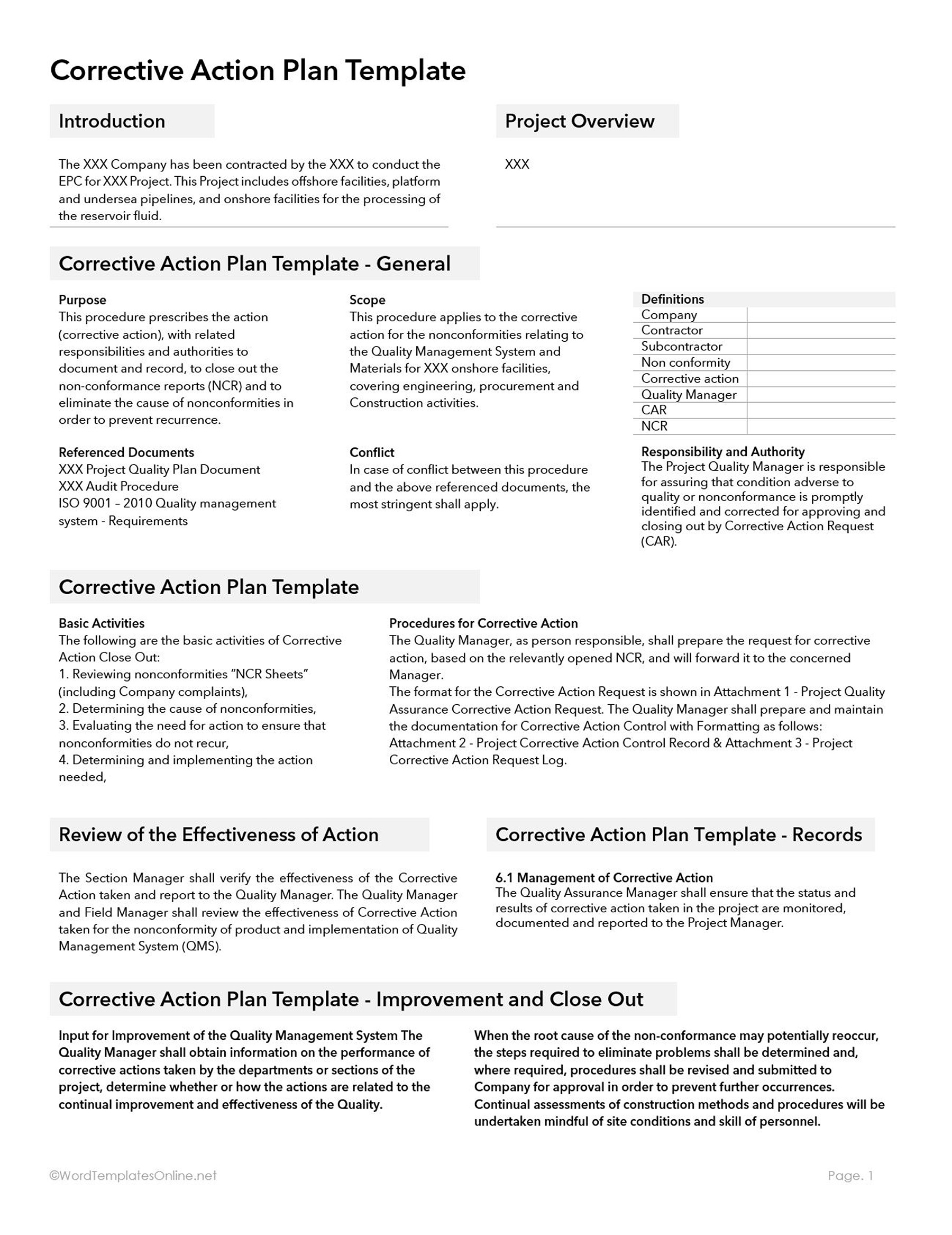
- General Corrective Action Plan Template: As discussed above, it contains sections such as problem identification, root cause analysis, corrective actions, set timelines, etc. This template is suitable for organizations that need a standard CAP that can be applied across different functions, such as compliance, quality assurance, etc. It is the most versatile template.
- 30-day corrective action plan template: Its structure is suitable for organizations looking for short-term or urgent corrective measures such as addressing audit reports. It is organized into daily or weekly timelines. It contains sections such as milestones, responsibility assignment, immediate priorities, and progress updates.
- Project Management Corrective Action Plan Templates: It is structured around project management principles and includes sections such as risk identification, resource allocation, deliverables, progress checkpoints, etc. It is suitable for project managers, especially when a project is behind schedule or when it exceeds budget. The template is mostly in table form.
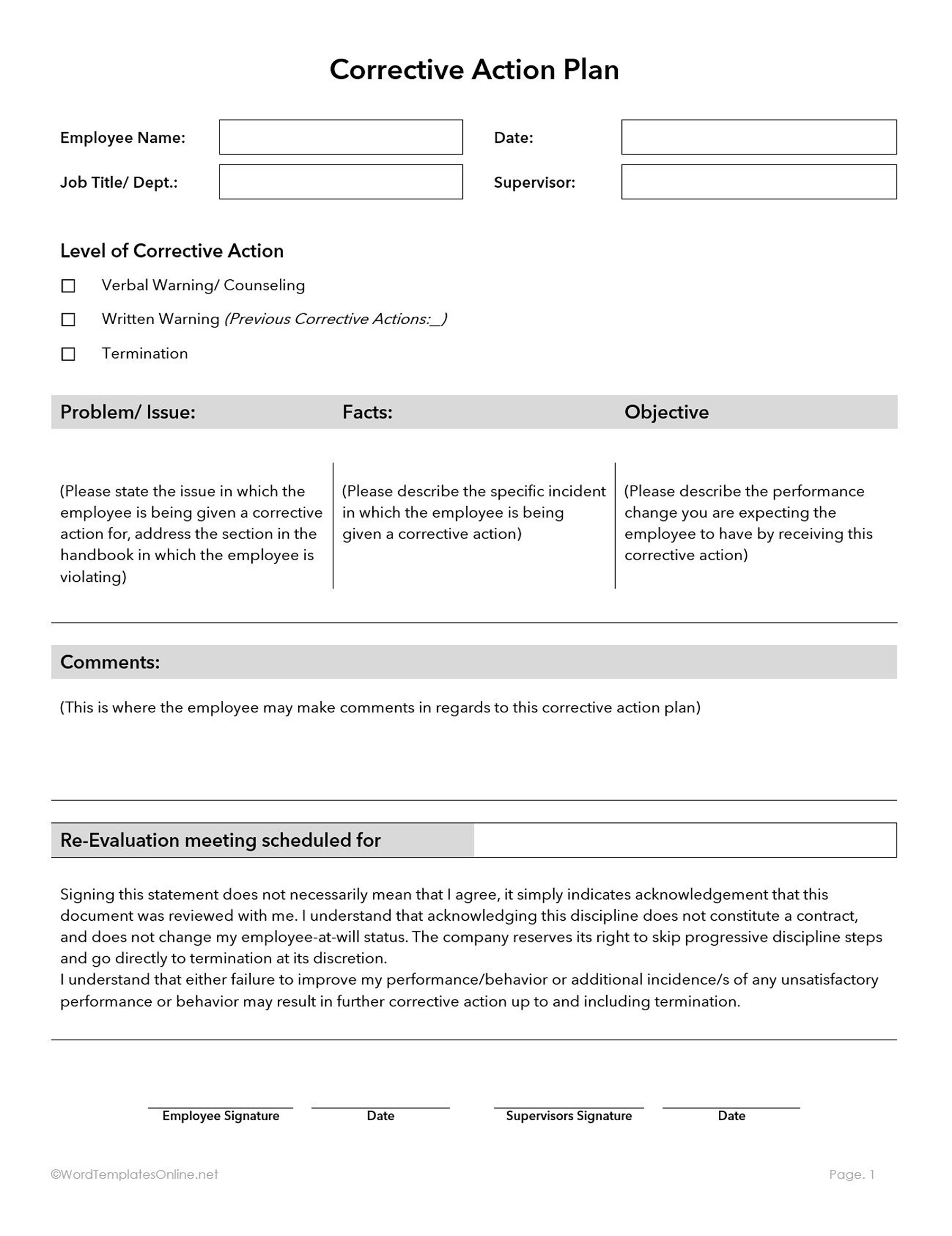
- Employee Corrective Action Plan for HR: The template includes details such as employee details, corrective actions, performance description, review dates, sign-offs, etc. It is suitable for HR professionals who are handling employee performance. It helps address workplace issues while making sure employees meet expectations.
Corrective Action Plan Template 01
Corrective Action Plan Template 02
Corrective Action Plan Template 03
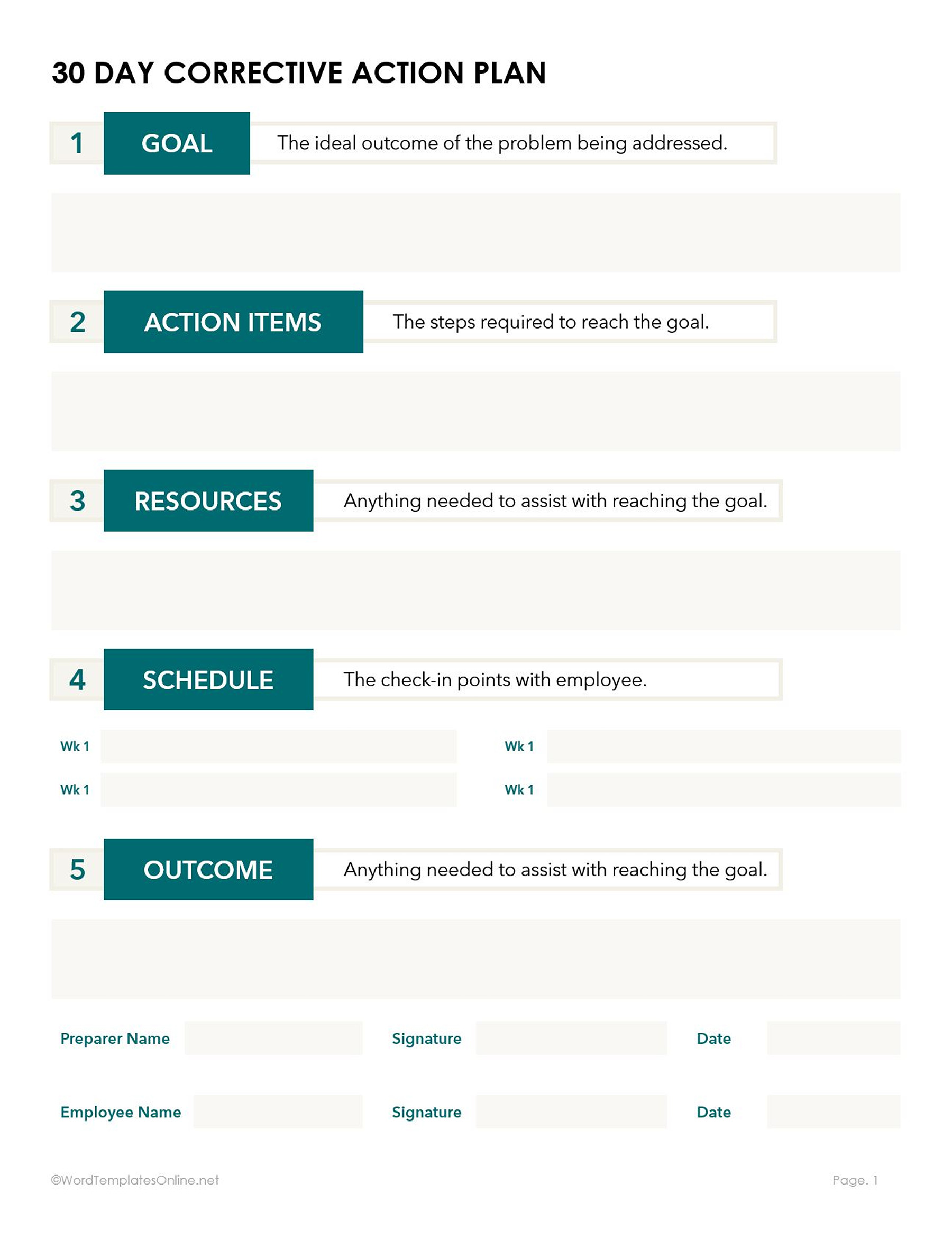
Corrective Action Plan Template 04
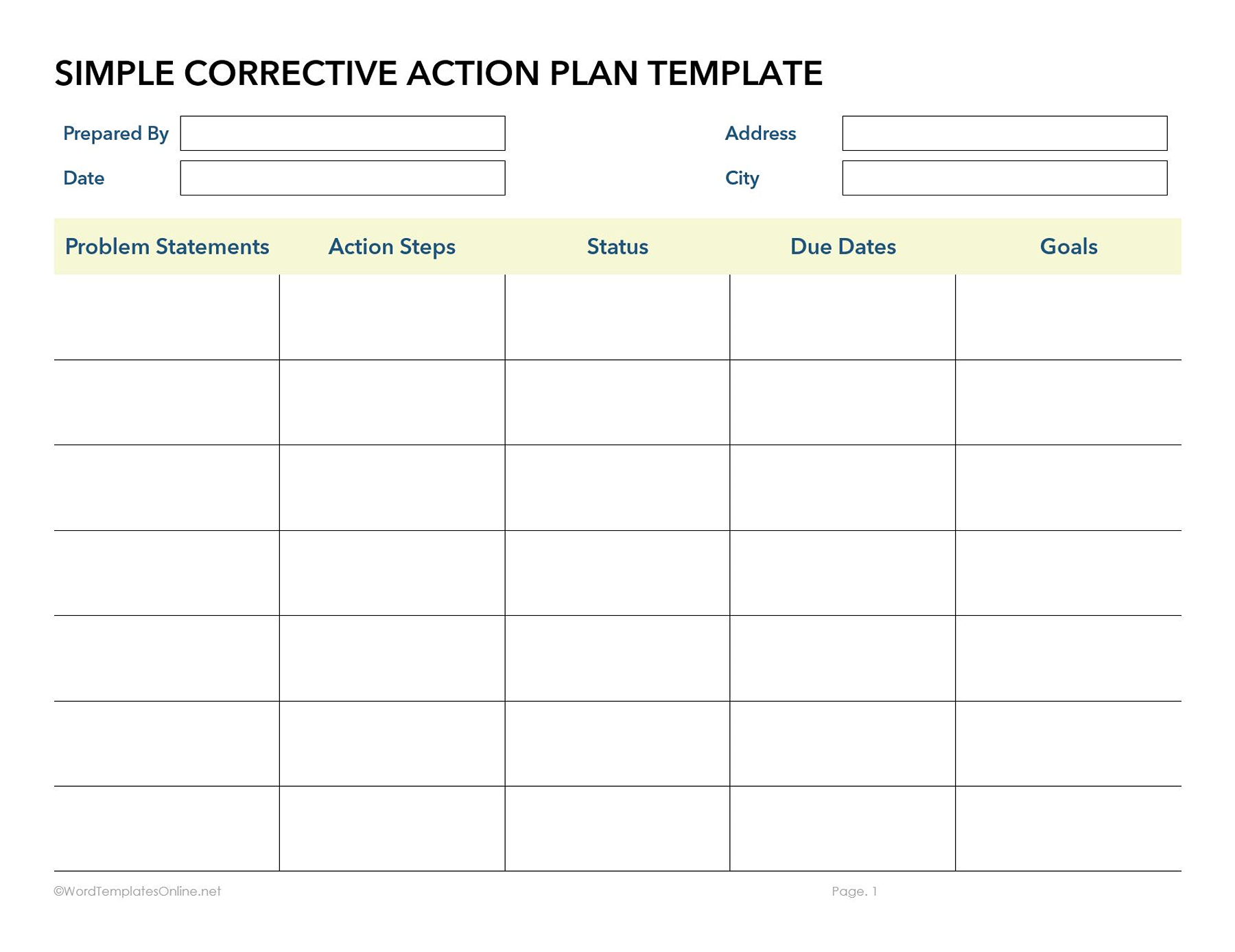
Corrective Action Plan Template 05

Corrective Action Plan Template 06
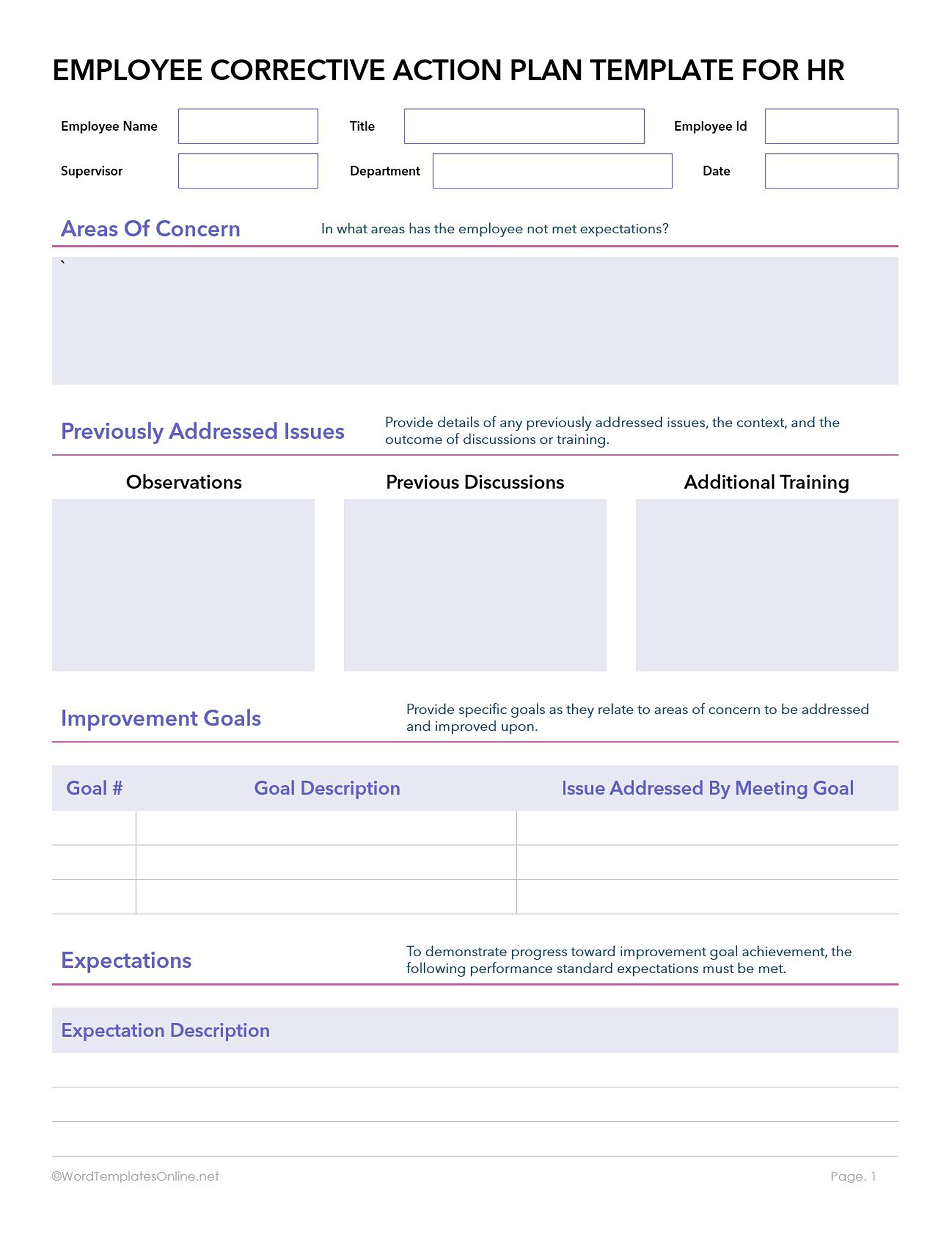

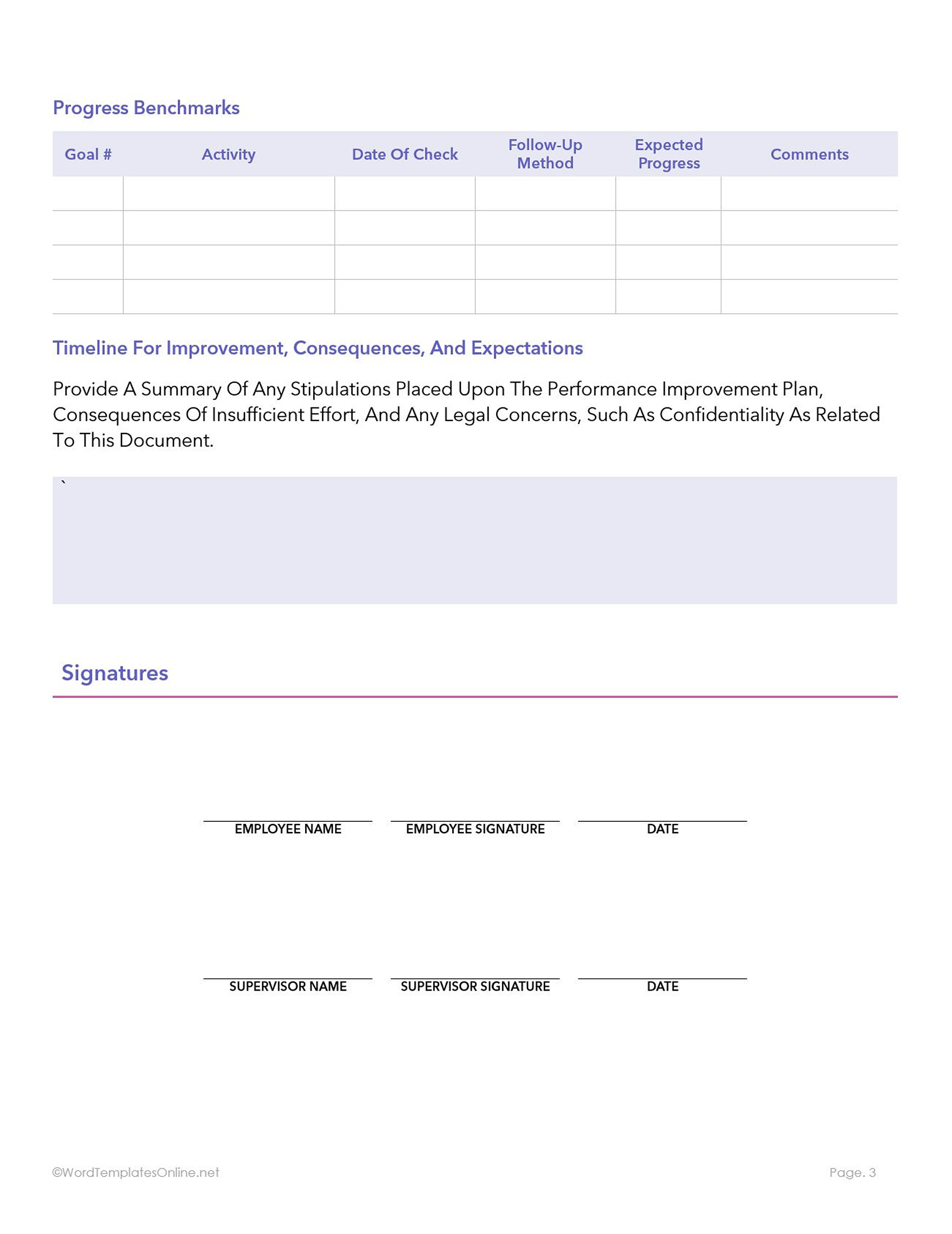
Benefits of Using Templates vs. Creating from Scratch
- Templates save time by providing a pre-designed structure that allows users to focus on problem-solving rather than creating from scratch. They are also standardized to comply with company and industry requirements.
- Templates are standardized to provide a uniform approach to document corrective actions. This means it can be used across various departments, which makes it easy to compare and review results.
- Templates cover all sections from problem identification to sign-off and documentation, which ensures that nothing gets overlooked and errors are prevented.
- Templates provide professional and organized documentation for auditing and regulatory reviews. This shows the accountability and credibility of an organization.
Conclusion
Structured corrective action plans allow organizations to solve problems, prevent repeats, and encourage continuous improvement. Its systematic approach enables businesses to improve efficiency and accountability. You can download our ready-made templates that you can customize to adapt to your needs to simplify the process of developing CAPs. The templates are designed to save time and reduce errors. Start using the templates today to develop corrective action plans that will help you achieve desired outcomes for your organization, such as compliance, improvements in organizational performance, etc.
About This Article