Imagine a hospital floor for a second. Healthcare is high stakes, and there is zero room for “oh, I missed it”. Suppose a nurse is calling a doctor about a patient who’s crashing. In such a critical situation, if the info is rushed or incomplete, you don’t just get a communication gap; you lose important minutes of follow-up questions. Plus, in those moments, it’s not just about the lost time; it’s the difference that results in a quick response to an adverse event.
Clear and structured communication in healthcare is not just a nice-to-have; it’s essential for patient safety!
That’s why many hospitals rely on the SBAR framework. Because it’s really a simple way to put every patient information in order without confusing the receiving end. And if you’re looking for an easy way to put this framework in practice, these ready-to-use templates are a great place to start.
But before we dig into what SBAR is!
Why Does the SBAR Framework Exist in the First Place
Well, it’s not rocket science. Healthcare professionals still rely on this because they’re working in high-paced and high-pressure situations where every second matters and every decision counts. In the case of patient handoff, a call to a physician, or an emergency, it’s quite possible to lose important information as it is shared in a random or unclear way.
Here comes this framework that makes sure conversations are arranged in a consistent format and scatters information into a clear message so that everyone involved in patient care is on the same page and makes more confident decisions. In addition to that, if healthcare professionals have the same structure for everything, it lets them spend less time clarifying information and more time focusing on what matters most.
What Does SBAR Stand For?
SBAR, as you know, is a framework that typically stands for Situation, Background, Assessment, and Recommendation. Instead of sharing information randomly, this gives you a logical flow through which you can guide everyone involved in patient care. Let’s break down the elements one by one:
Situation: What’s happening right now?
As you can tell from the name, here you will mention the reason you need this communication. So, start by explaining the situation comprehensively without digging into unnecessary info.
For example, don’t say, “ I am calling about Mr.Smith,” and start with the trigger: “I’m calling about Mr. Smith because his blood pressure dropped significantly in the last half an hour.” It is the statement that differentiates between a casual check-in and an urgent alert.
Background: What information matters?
Healthcare professionals have a lot on their plate 24/7, and in between everything it’s easy to forget which patient need imemdiate attnetion. So, this section is built for memory recovery. Here you provide background details that are relevant to the current situation. It might be patient diagnoses, recent treatment, medication, or medical history.
Let’s say you can describe the background like this: “ Mr Smith was admitted yesterday with pneumonia and has been on IV antibiotics. He also has a history of hypertension.” These two or three lines are enough to give context without overwhelming the listener.
Assessment: What do you think is going on?
If you’re handed off a patient, this part tells the physician about your professional observation or concern about what you’ve noticed. This is not about making the final diagnosis; it’s about simply explaining what you think is happening.
For example, “I think he’s becoming septic because his BP is failing, his heart rate has increased, and he’s becoming less responsive.” This helps the other clinician receiving the patient know what your concern is right now.
Recommendation: What needs to happen next?
Finally, finish this framework by stating what you’re requesting or recommending. Don’t end this conversation abruptly by just stating a random problem. Rather, suggest the next step such as, “I’d like you to assess the patient as soon as possible, and I recommend ordering blood cultures and additional fluid. “
Why do you need an SBAR template?
Knowing the framework is one thing, and putting it into practice in a busy healthcare setting is another. A template is one such thing that gives you a clean way to follow, so that your only focus is sharing the right information instead of thinking about what to say next. Let’s check out what should come in the right template.
What Makes a “PERFECT” SBAR Template
In the sea of templates, finding the perfect one is really tough. Plus, not all are created the same. A good template actually makes conversation easy and does not add more paperwork. Moreover:
- It follows a natural flow: Well, this is what makes every healthcare sector go for it because it takes you from “what’s happening” to “what should be recommended” in the right order. By following the correct structure, you can arrange clinical details accurately and give the receiving end a complete picture of the patient’s health.
- It helps you remember the important details: When things get busy, it’s really easy to lose track of important details. However, a good template includes unique prompts for each section, making it easy to fill everything in.
- It’s quick to fill out: Most importantly, healthcare professionals don’t have time to work through complicated forms. That’s why they need an effective one that is simple to use and fill in the details.
- It gives you a proper space for what matters: This means that the best template comes with enough space to pen down every important piece of information, observation, and recommendation without looking cramped. That way, you can include the details that really matter without messing with the form with unnecessary information.
Explore Our SBAR Template Collection
In healthcare, different situations need different levels of detail. For this very reason, you cannot rely on one “one-size-fits-all” template. You need a specific one for specific situations. Let’s explore them one by one:
Nursing SBAR template
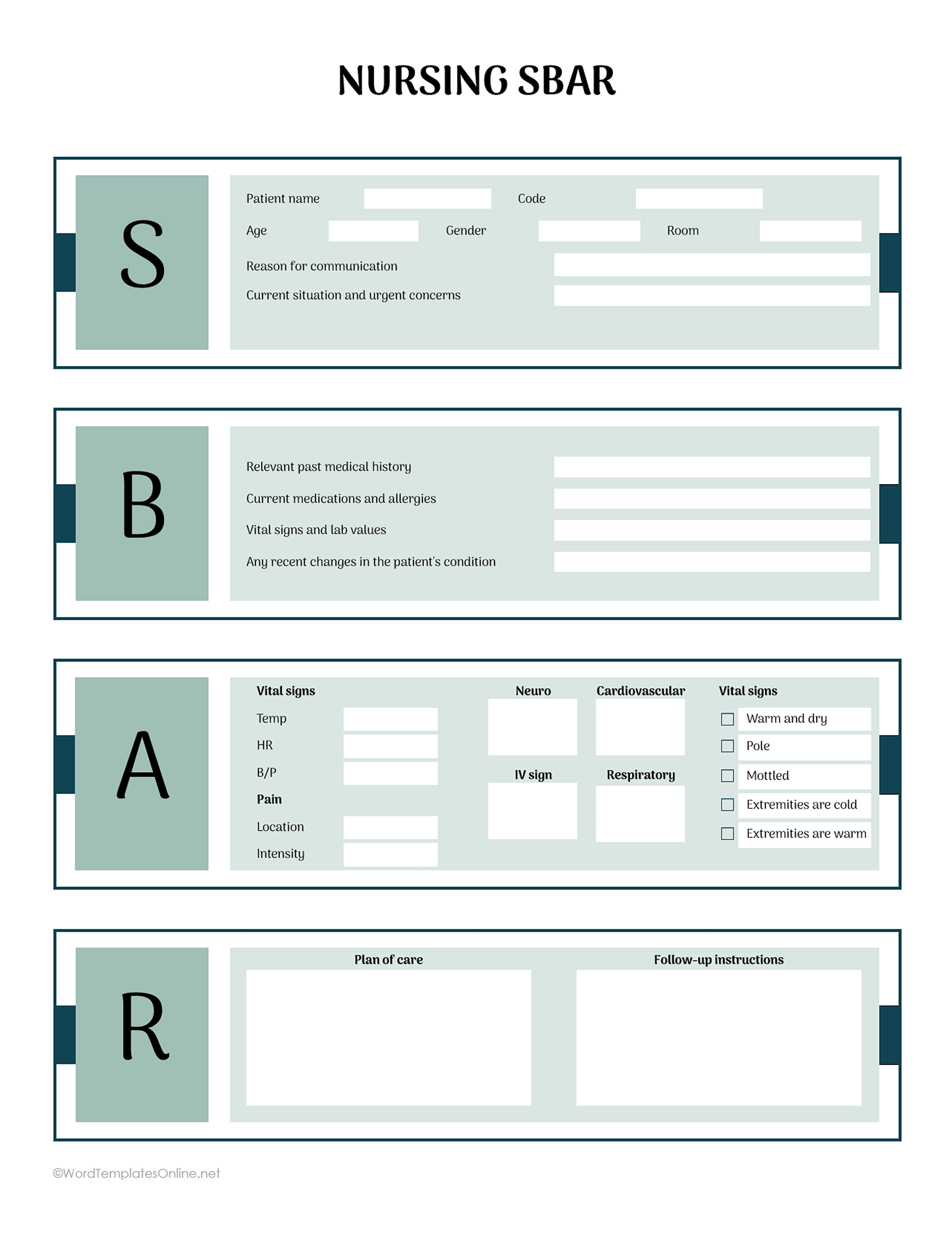
The first one on our list is the nursing template, which is designed with the busy nursing workflow in mind. By following the same SBAR structure, the template goes deep into how to communicate well during shift changes, bedside reports, or when contacting a physician.
Nursing sbar template
Nursing sbar template
Moreover, it has everything a nursing format should have, such as separate fields for the patient’s current condition, medical history, medications, allergies, vital signs, and nursing orders. Cherry on top? It also gives you an additional space to write what plan you think should be given or any follow-up instructions.
Psychiatric template
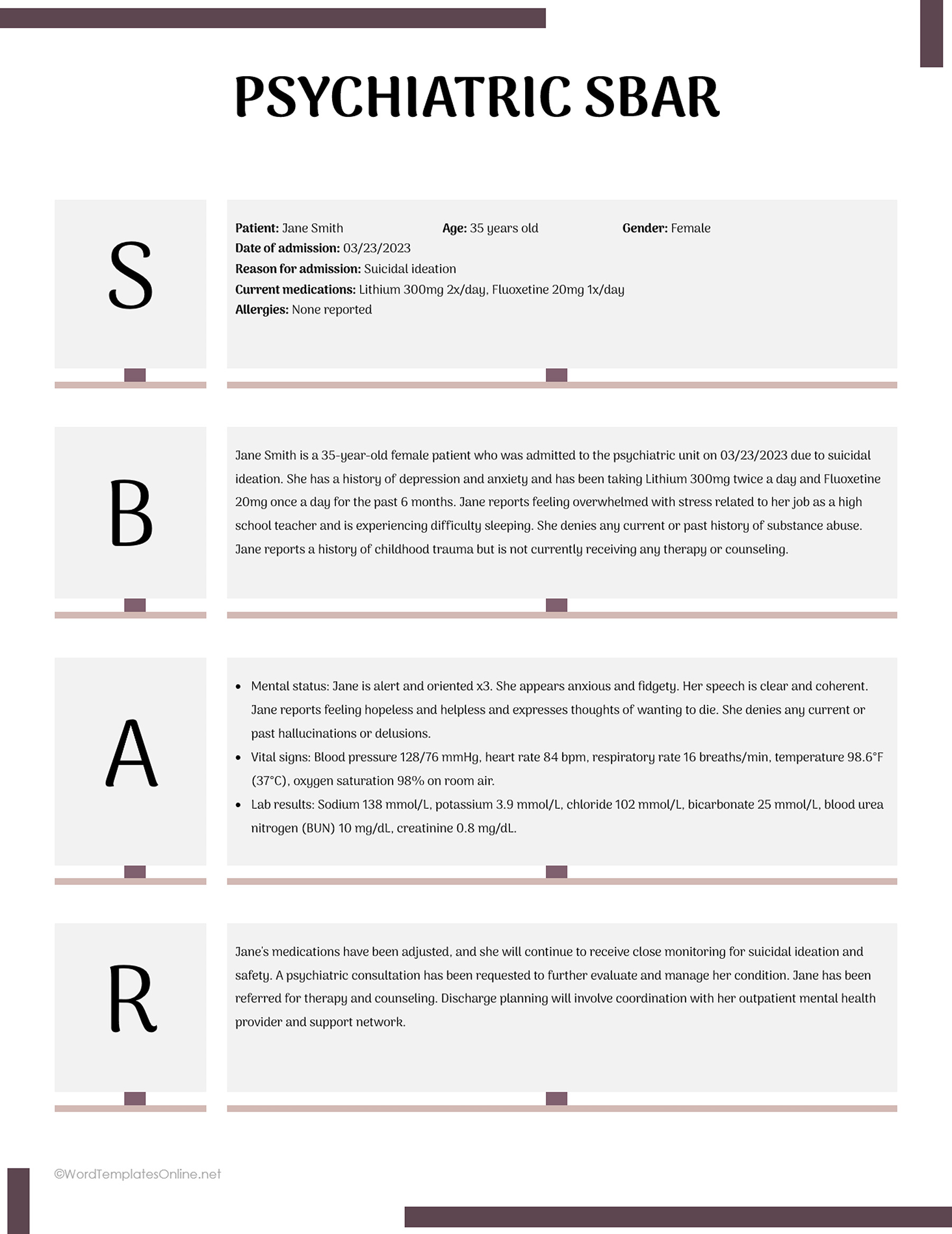
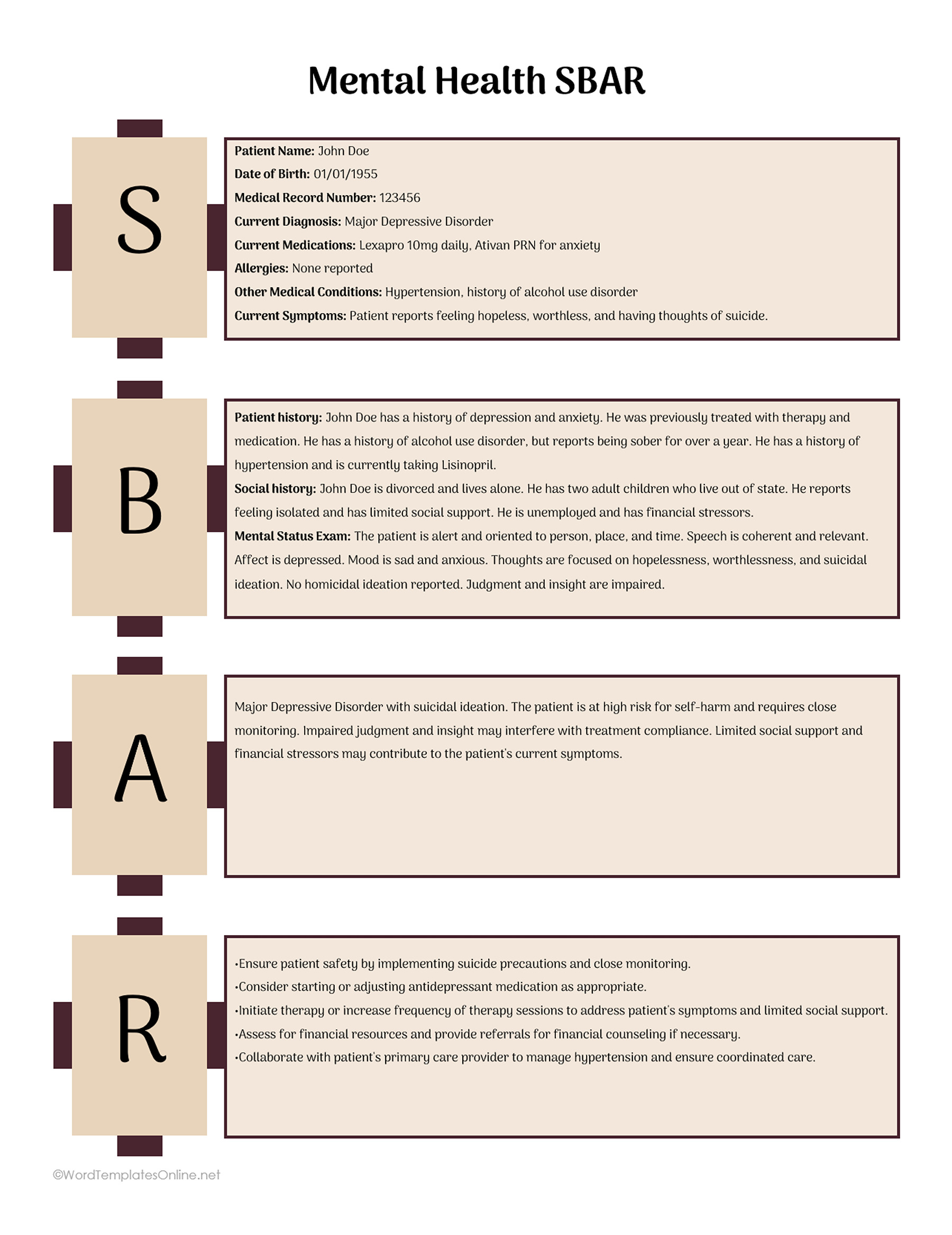
We know the SBAR model is solid, but psychiatric care needs a little bit more detail. For this reason, we’ve customized this template to make sure you’re covering the right bases, such as mental status, behavioral trends, and safety risk, without any need to be bogged down in extra paperwork. The template follows a simple layout that follows the generic SBAR model while also focusing on the most sensitive aspects of mental health and giving you a complete picture.
Psychiatric sbar template
Mental health sbar template
Pharmacy SBAR Template
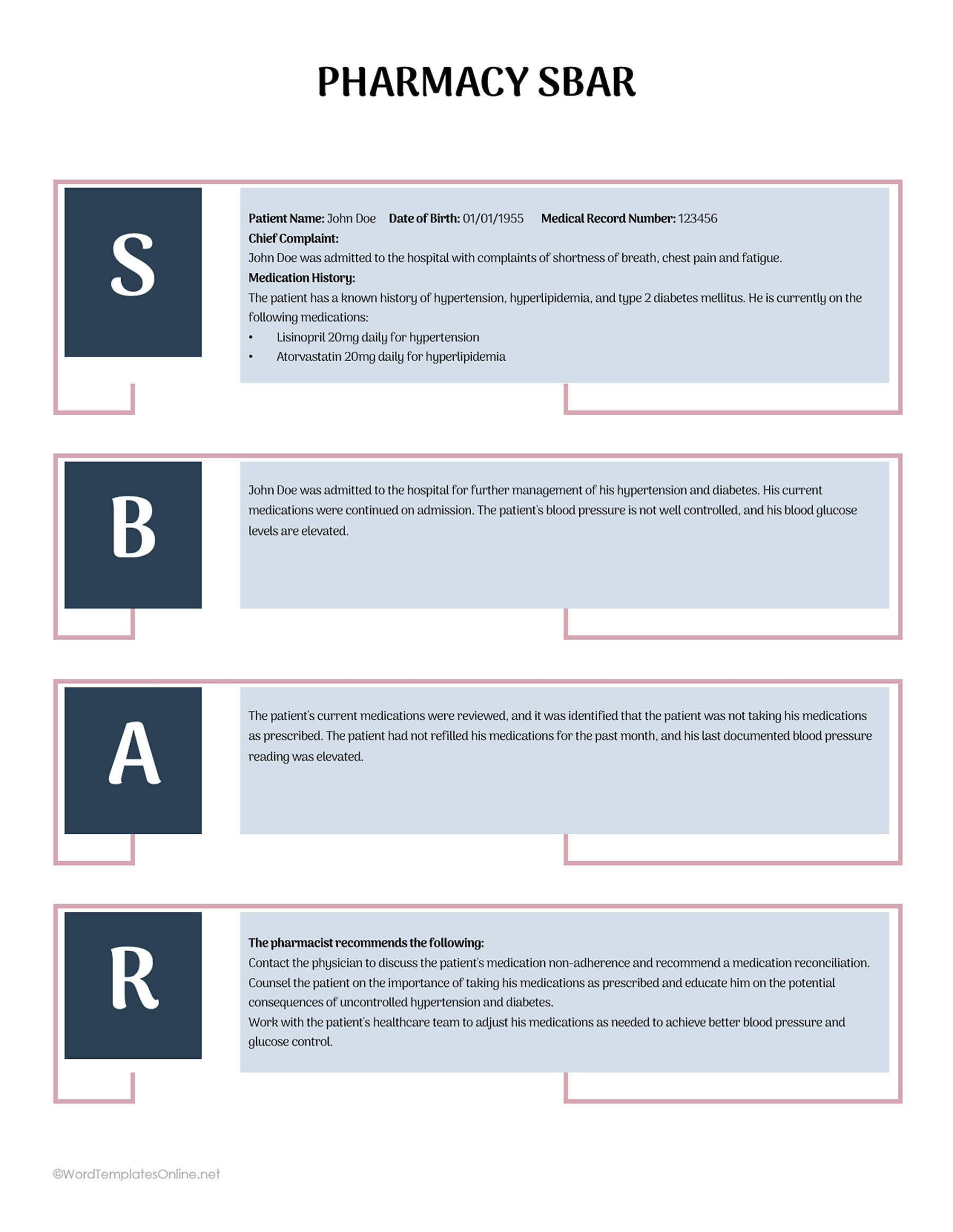
Need to flag a medication concern quickly and accurately? This template is designed to do exactly that. It’s got everything you need in one place: the patient’s history, their current meds, and the clinical findings that sparked your concern. It’s all about making sure your clinical voice is heard, without the back-and-forth, so that you can get the best plan of action in place.
Pharmacy sbar template
Pharmacy sbar template
In short, whether it is about defining medication non-adherence, finding potential drug interactions, or suggesting dosage adjustments, this template makes sure all information is shared in a comprehensive way.
Pediatrics SBAR template
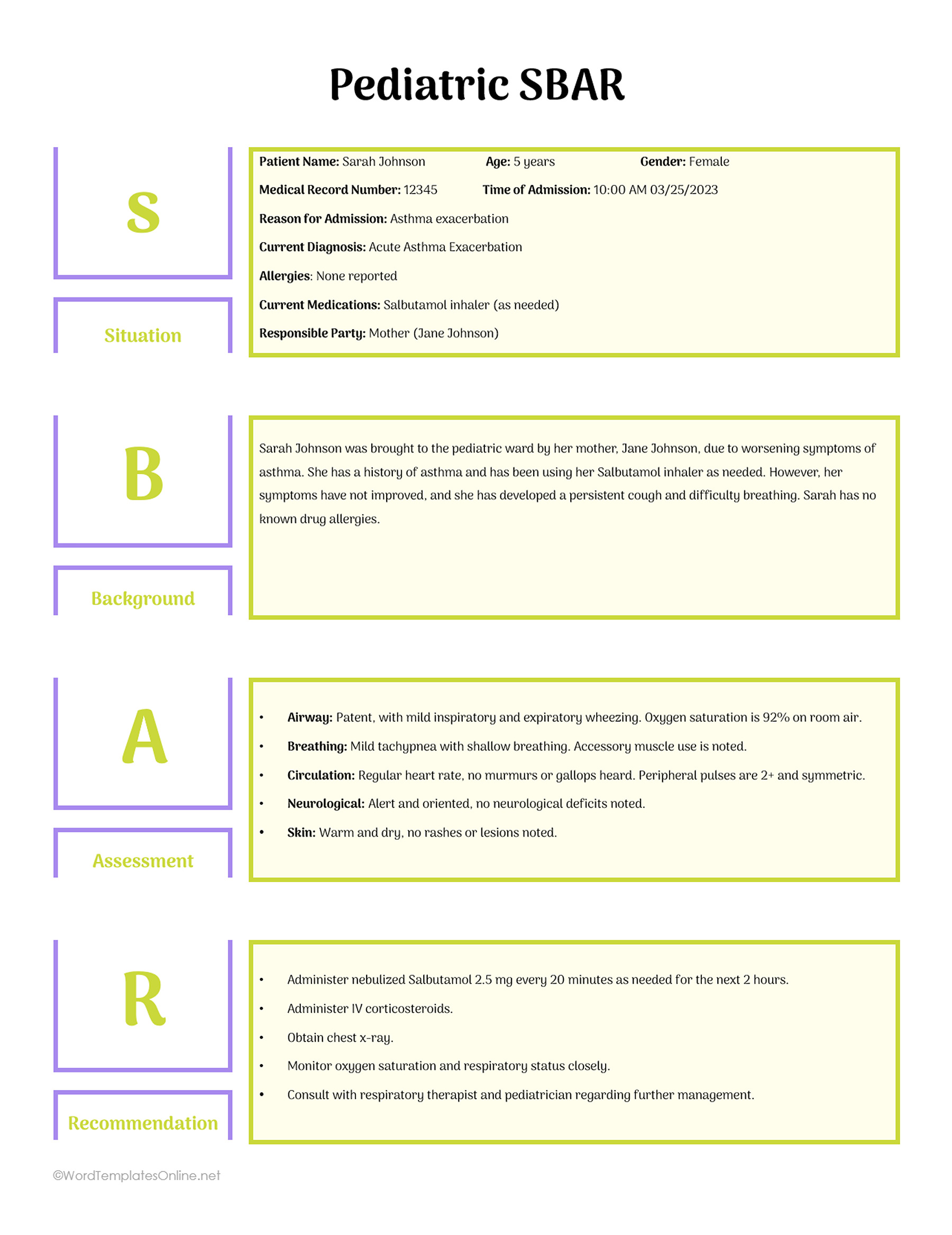
Caring for kids means dealing with a whole different set of variables, from developmental stages to immunization history. This SBAR template is designed to keep track of these needs front and center.
Pediatric sbar template
Pediatrics sbar template
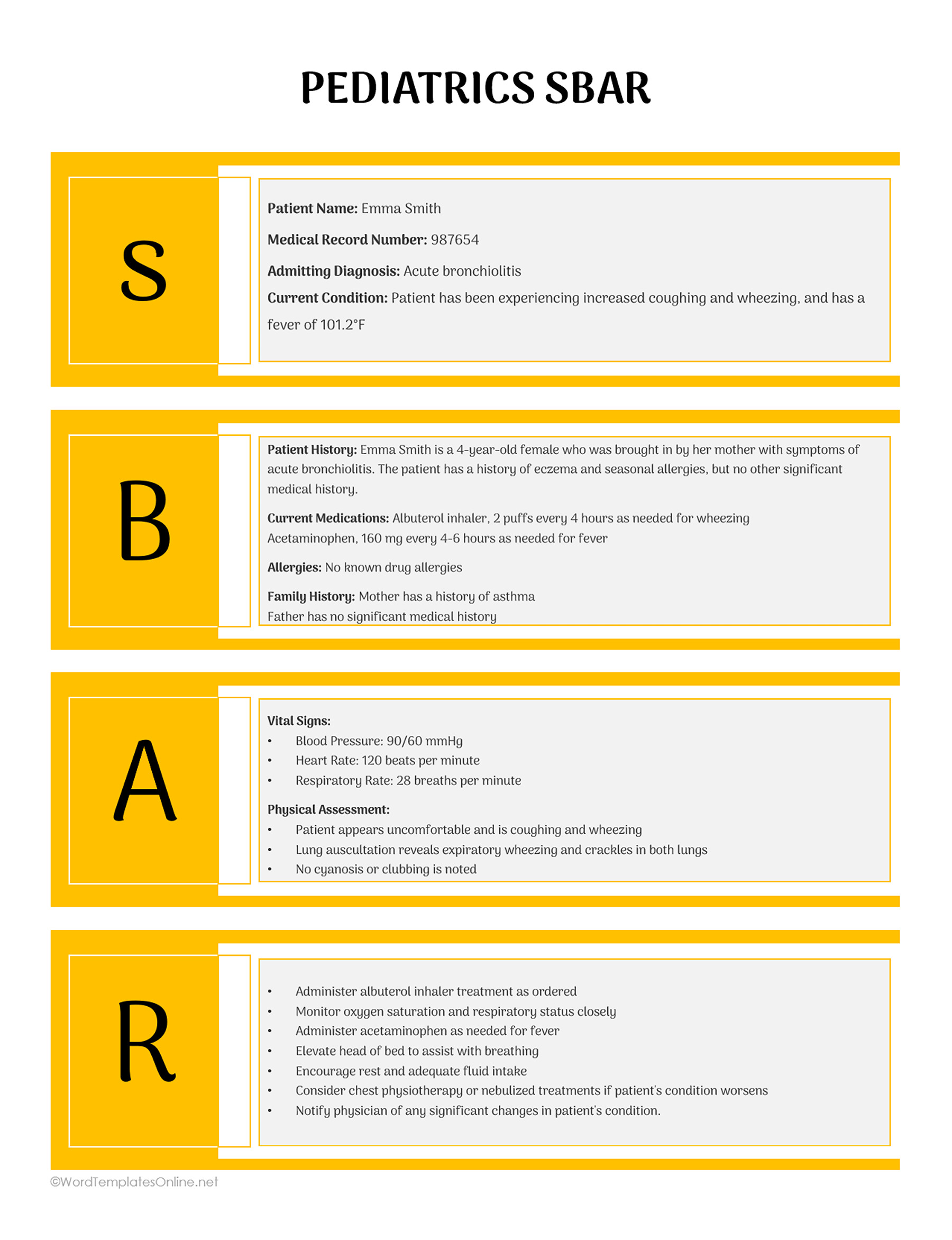
It structures the handoff to add everything that matters, like age-based assessments, family history, and weight-based considerations, alongside the main vitals and medications. By keeping the information intact, the template helps you spend less time explaining “what” and more time focusing on the “now” for your little patients.
Patient SBAR template
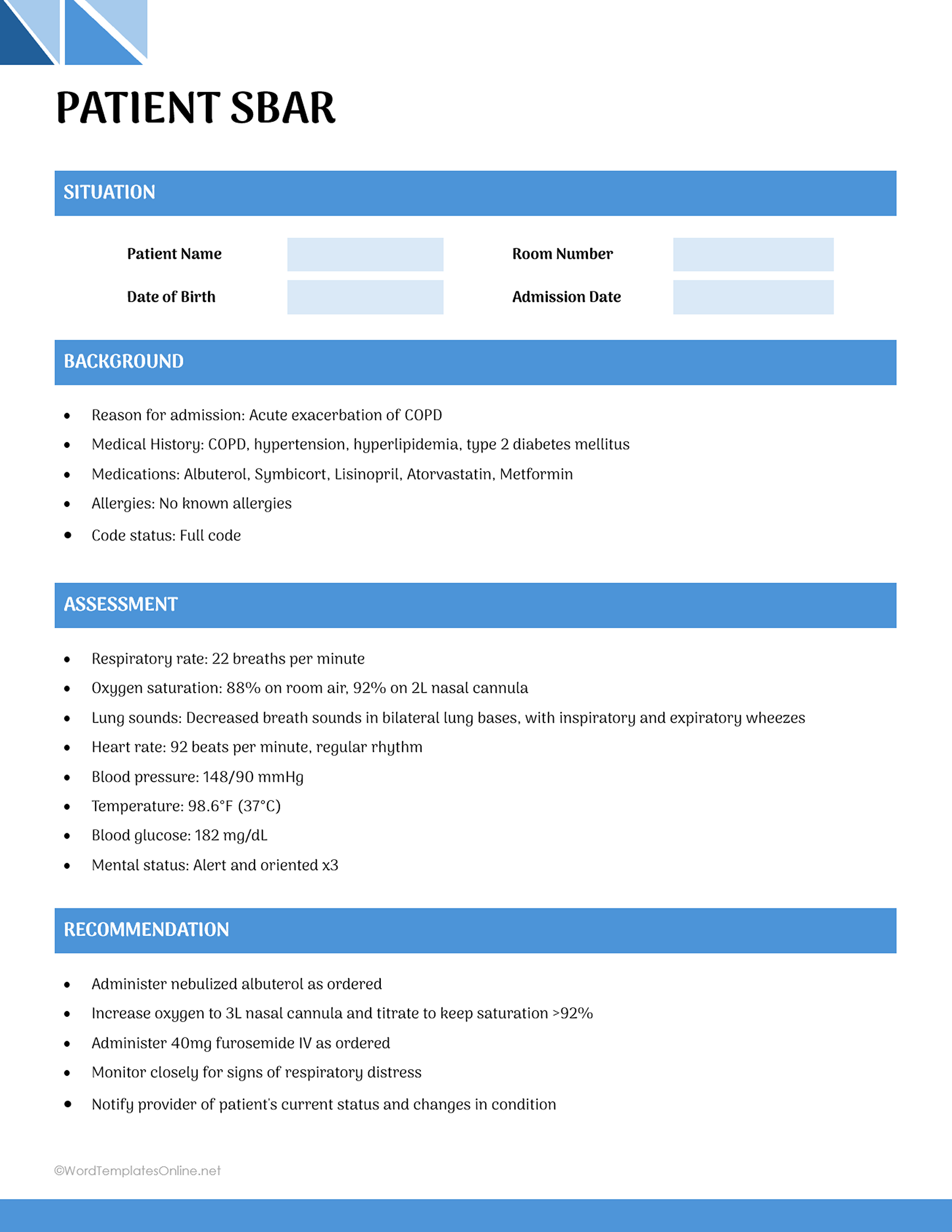
Think of this as your go-to quick sheet for patient updates. We’ve kept it simple and focused on four basic steps (situation, background, assessment, recommendation), so that you can get the important information really quickly.
Patient sbar template
Patient sbar template
Moreover, it covers everything from the basics, like code status and meds, to a quick-hit snapshot of vitals and clinical observation. Since you get everything in one place, it’s really easy to hand off or even consult a patient.
Handoff SBAR template
Well, shift changes and patient transfers are where the biggest communication gaps usually happen. The handoff template is typically built to fix that. How? Generally, it gives you an effective way to pass the baton, covering everything from why the patient is transferring to the nitty-gritty of their current conditions and next steps in their care.
In short, it is made to make sure the receiving provider isn’t left guessing, so you can both feel confident that the patient is in good hands.
Handoff sbar template
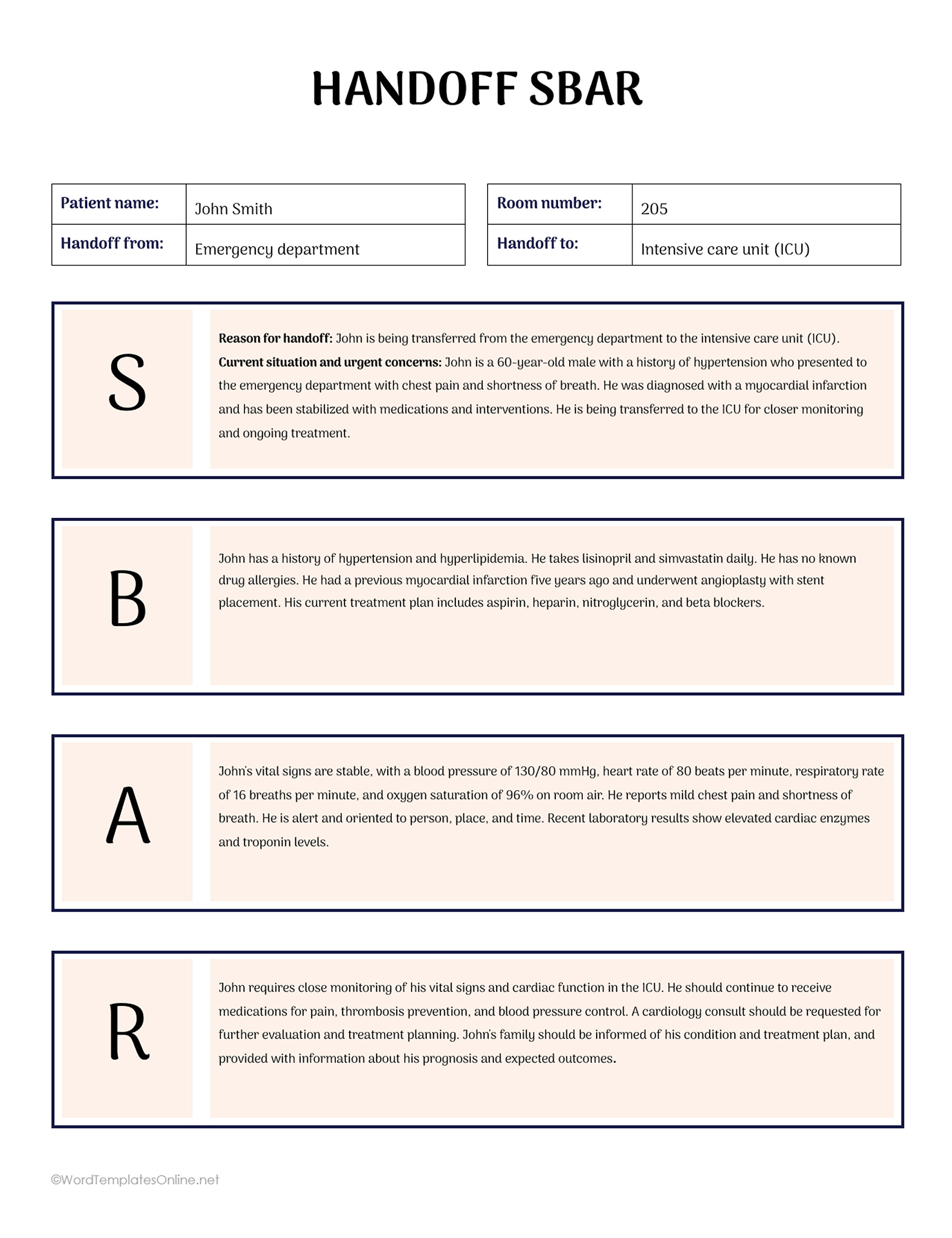
Handoff sbar template
Critical care SBAR template
In an ICU or ER, you don’t have time for fluff; you need to get to the point and fast. This template is built for these high-acuity moments where every second counts. It takes away the noise and lays out the critical data you need right now: vitals, lab trends, level of consciousness, and quick intervntions.
Critical care sbar template
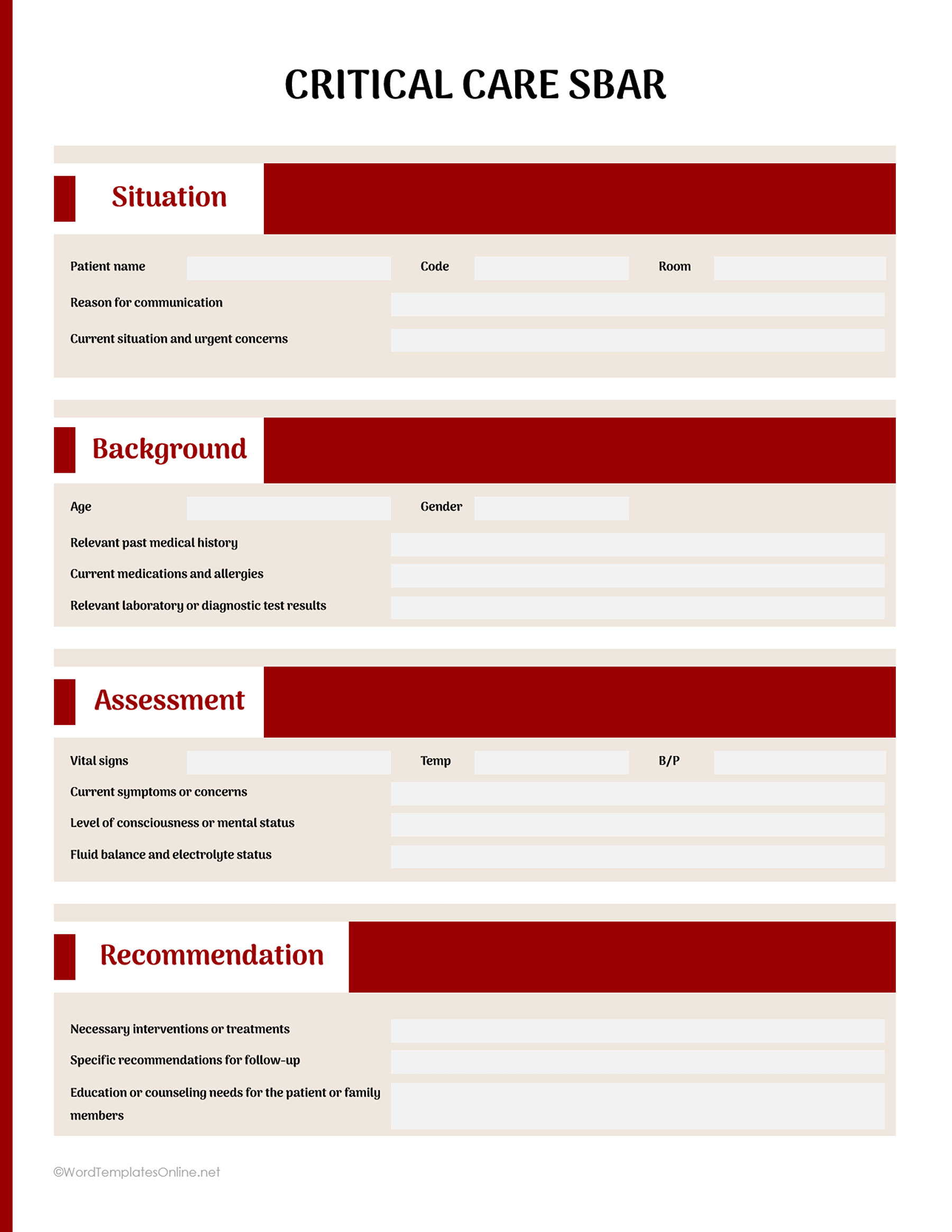
Critical care sbar template
Simply put, it’s made to ensure that when you’re handing off a patient who’s crashing or updating a physician on a sudden change, the critical information is clear, accurate, and ready for action.
SBAR template for business
The best thing is that this framework is not applied to healthcare, though it’s quite common; you can use it outside the medical world.
Business sbar template
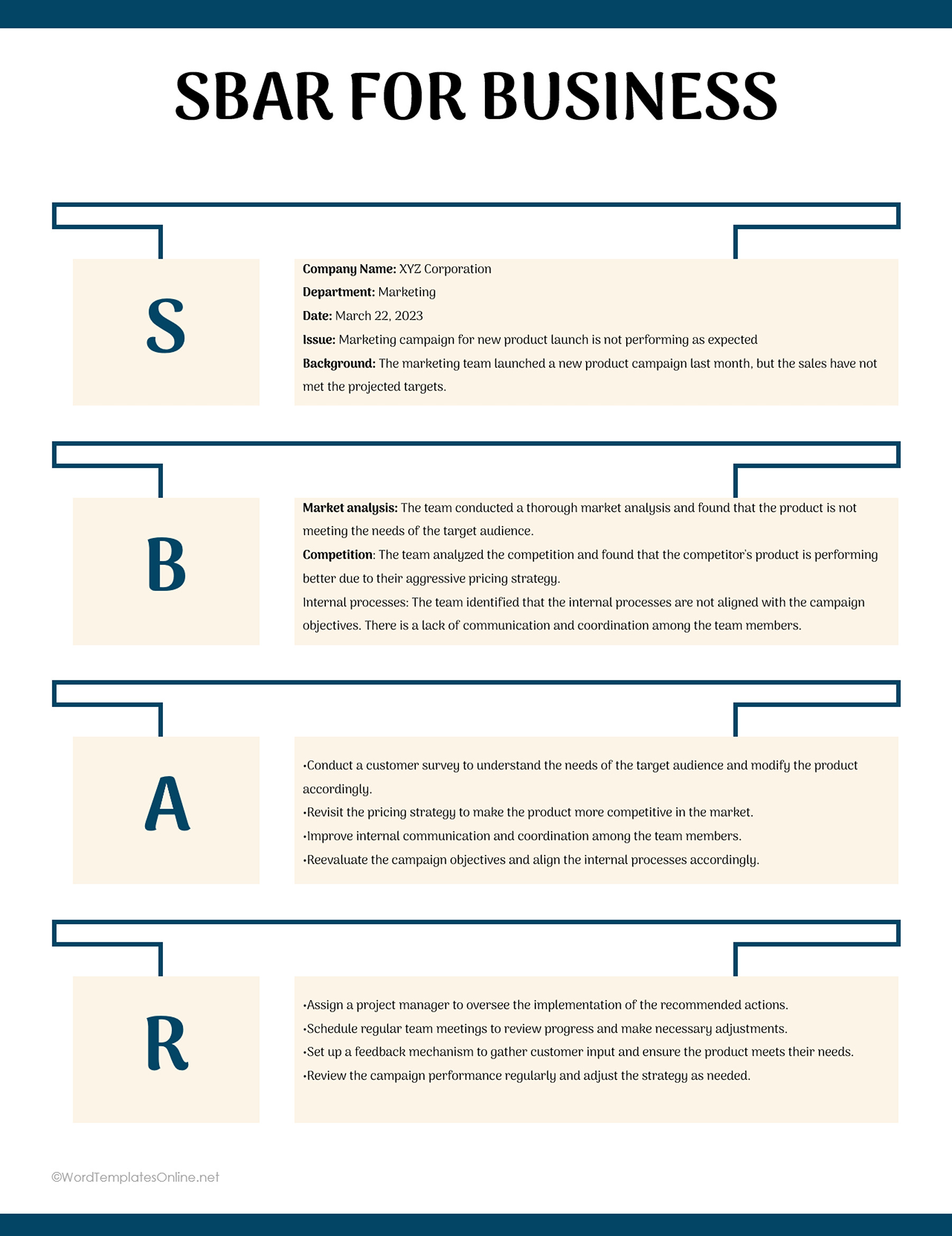
Business sbar template
Ever sit through a meeting where everyone is talking, but no one is actually getting to the point? This format is the fix for that. It follows the famous SBAR framework, whose main goal is clarity. Whether you’re dealing with a project delay or a tricky customer issue, this keeps the conversation moving by forcing you to get to the “why” and “what now.”
Don’t Let These SBAR Mistakes Get in the Way of Clear Communication
No doubt, a template gives you the frame, and you provide the substance. But even the best one can’t compensate for a lack of focus. The fix is simple: if you sidestep these common mistakes, you will literally see a difference:
- More information doesn’t always mean better communication: The best template is not always the one with every ins and out. It’s the one with the right and direct information. So make sure you always write what you think is necessary for patient well-being. If you can communicate in one paragraph, it’s better.
- Leaving out the details that actually matter: It is essential to be concise, but it doesn’t mean you need to ignore or leave out the background information such as patient history, allergies, or current medication. A little context helps the person receiving the update understand the situation and make better decisions.
- Ending the conversation in the vacuum: If you’re leaving the conversation without defining the next step, your SBAR is a failure. That’s why you should make sure that you’re ending the conversation with a proper recommendation or treatment plan.
- Never assume everyone knows the full story: The person you’re speaking with may not be familiar with the patient’s history or recent events. So, whenever you hand off any information, make sure it’s updated or give a brief context of recent events with it, assuming that they already know what’s happening.
In the End….
If you want to communicate clearly and without any errors in the high-stakes healthcare profession, you need an SBAR template. From situations to recommendations, it lets you know how to organize the most critical information in an effective way and make patient health or care your top priority.
So, in case you’re looking for well-formatted templates, whether to hand off a patient or for consultation, we’re here to help. Explore our different templates, choose the one that goes with your situation, adjust the content, and there you go.
Frequently Asked Questions
Can SBAR be used outside healthcare?
Absolutely! It’s just a framework, and you can apply it anywhere, even in business, project management, and other industries where you need to evaluate situations and context and come out with an assessment and recommendation.
What’s the difference between an SBAR template and a checklist?
A difference is sorted. A template gives you a layout to add information that follows a flow. On the other hand, a checklist is a reminder of the key points to cover during the conversation.
About This Article