You check your mail as part of your routine and spot a jury duty notice. Suddenly, your schedule started flashing before your eyes, and one thought rushed into your mind, “How will I manage this?”
When responsibilities pile up, managing jury duty feels like an unwanted task that you want to get rid of at any cost. But the worst thing is, you cannot brush it off, as skipping summons intentionally can certainly lead to fines or legal headaches you definitely don’t want.
So, what to do then?
Well, the smartest and safest move is to submit a clear, well-written jury duty excuse letter. Now you must be thinking, what to include in it, or how to phrase it? Don’t stress. In this guide, we will explain everything you want to know, from what a letter is to how to write properly, and what details you absolutely shouldn’t miss.
Plus, the best part is that we will share free, customizable templates you can download and use right away without any hassle to write a letter from scratch.
A Jury Duty Excuse Letter: Here’s What You Need to Know
If we put it simply, the excuse letter is the formal way of requesting a court, “I have a genuine conflict and need to be spared from the duty.” It is a professional document that explains the true reason why you can’t appear on the scheduled date and respectfully requests an exemption.
Now, when do you need to submit this letter? Usually, it is said that if serving would create a genuine problem, you have valid grounds to request an excuse. Common reasons might include serious medical conditions, demanding work obligations, caregiving duties, or proven financial strain.
Excuse vs deferral: Know which request to make
At first sight, both terms might sound the same, but they aren’t. Let’s explore the difference:
| Type | What It Means | When to Use | Outcome |
|---|---|---|---|
| Excuse | A formal request to be exempted from your duty permanently | Use when you’re stuck in serious, valid reasons (medical condition, financial hardship, or serving an ill family member) | You may be fully excused and not required to serve |
| Deferral | A request to move your duty to a later, more feasible date. | Choose if you can work later, but the current date conflicts with your commitments | Your service might get postponed. |
Jury Duty Excuse Letter Format: Key Elements to Include for Best Results
When it comes to writing an excuse letter, clarity wins every time. Courts don’t want long paragraphs; they need simple and authentic information presented in a clean layout.
Here are the key details that you should make sure to include in your format:
Header and personal information
First of all, a letter should include basic identifying details so that the court can easily match your request with your summons. Start strong with information that matters the most, such as:
- Full name
- Contact information
- Court name and address
- Date & summon number
Subject line and opening statement
The subject line is the essence of your letter. It must be written in a way that clearly indicates your purpose (excuse for deferral). This helps court staff to quickly analyze your request. Moreover, in the opening statement, make sure to include the summons date or identification number to provide context.
Make your request crystal clear
After introducing yourself, get straight to the point and explain exactly what the reason is for your request. Are you asking to be completely free from jury duty, or to serve at a later date?
Explanation of the reason
If you are writing a jury letter, you must know this is the part where most requests get rejected. To avoid this, the reason for the excuse, whatever it is, should be explained in a way that is brief, honest, and factual.
Supporting documents
Facts matter the most. That’s why it is recommended to include relevant documentation. Courts usually demand strong evidence to support your request. Depending on your reason, this could be a doctor’s note, a letter from your employer confirming work obligations, travel tickets, or financial documents.
Professional closing and signature
A formal letter must consist of a polite and professional closing statement that involves thanking the court for its time and consideration. Apart from this, if it is in print form, it must include a signature and contact information so that the court can reach you easily if needed.
How Templates Make Editing a Breeze
The fact that writing an excuse letter from scratch is stressful, particularly when you are not sure what to add. That’s where ready-made templates and sample letters level up the game, giving you a straight route to create a professional letter effortlessly.
The templates come with all the above-mentioned fields and pre-formatted layout, so that your main focus is on your reason for requesting a request instead of worrying about formatting. And samples serve as example letters that you can read and get an idea of how it should be written.
Jury Duty Excuse Letter Template
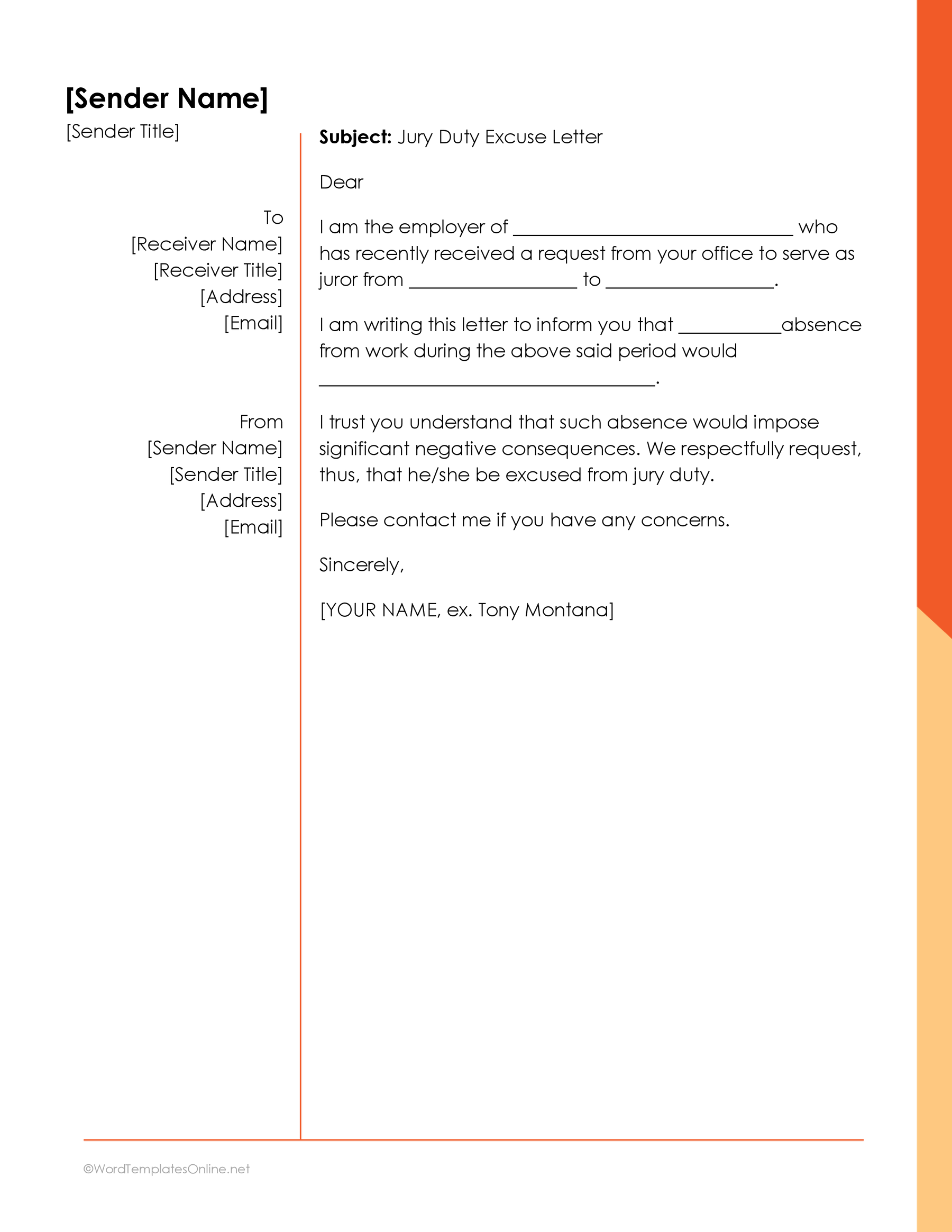
Jury Duty Excuse Letter (Mother Nursing)
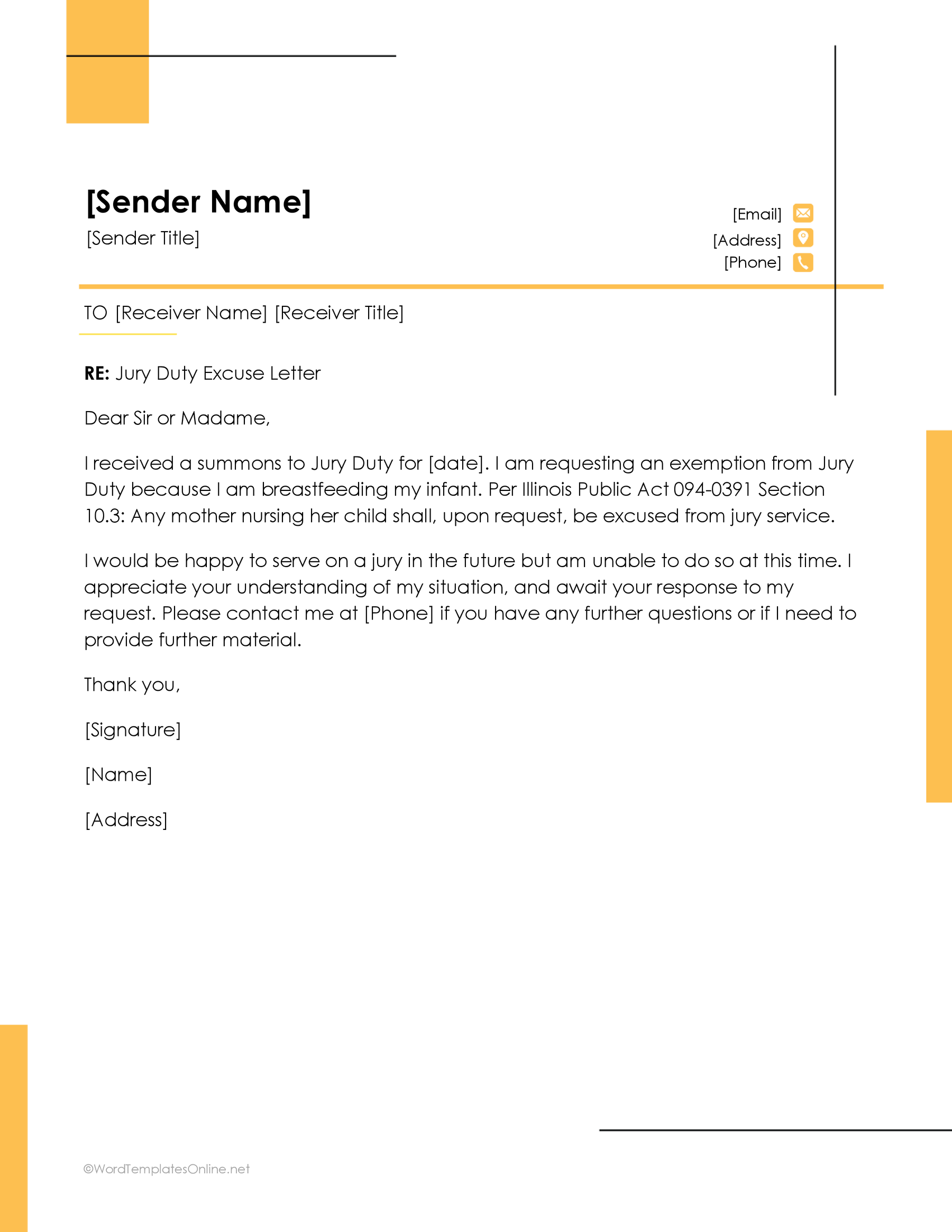
Jury Duty Excuse Letter (Babysitting)
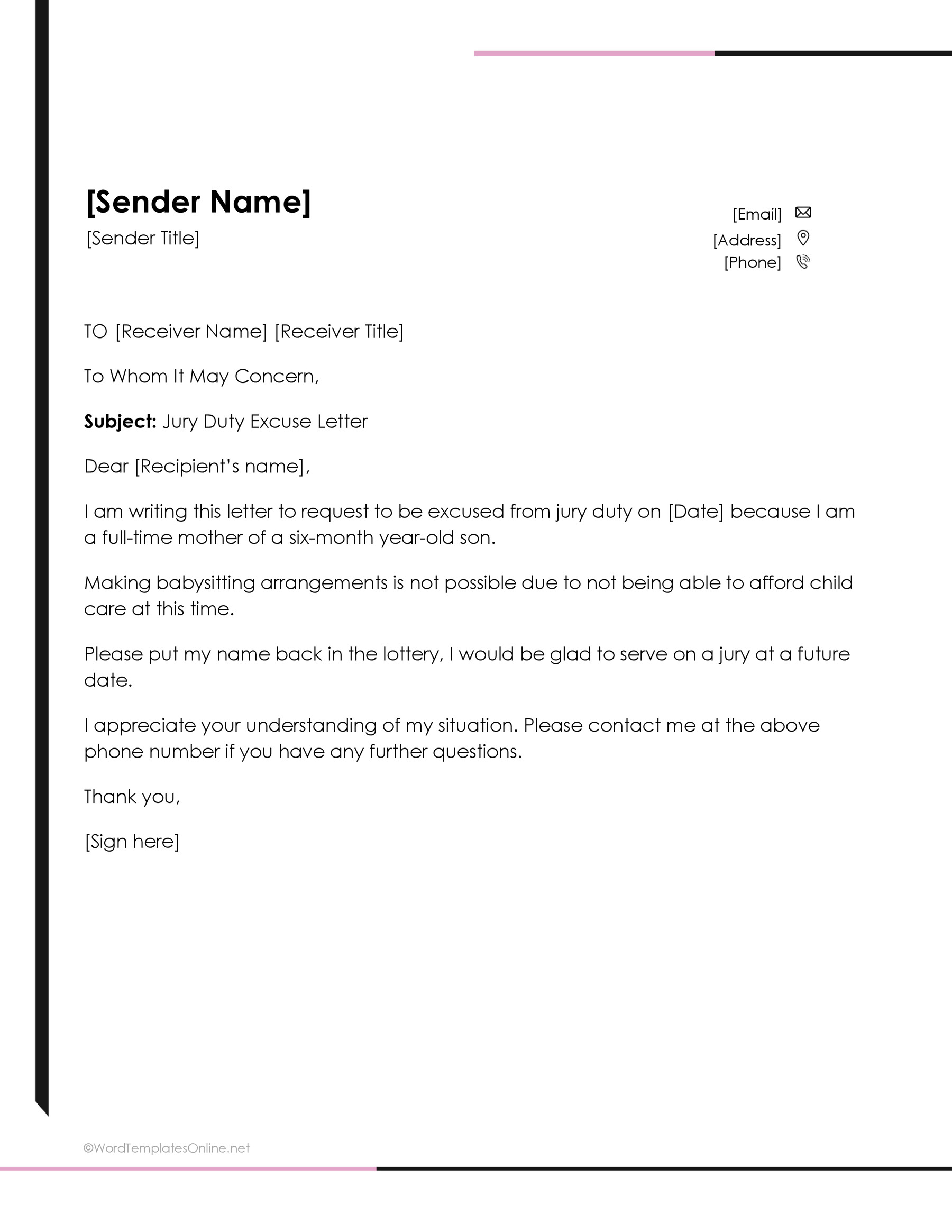
Jury Duty Excuse Letter (Due to Job)
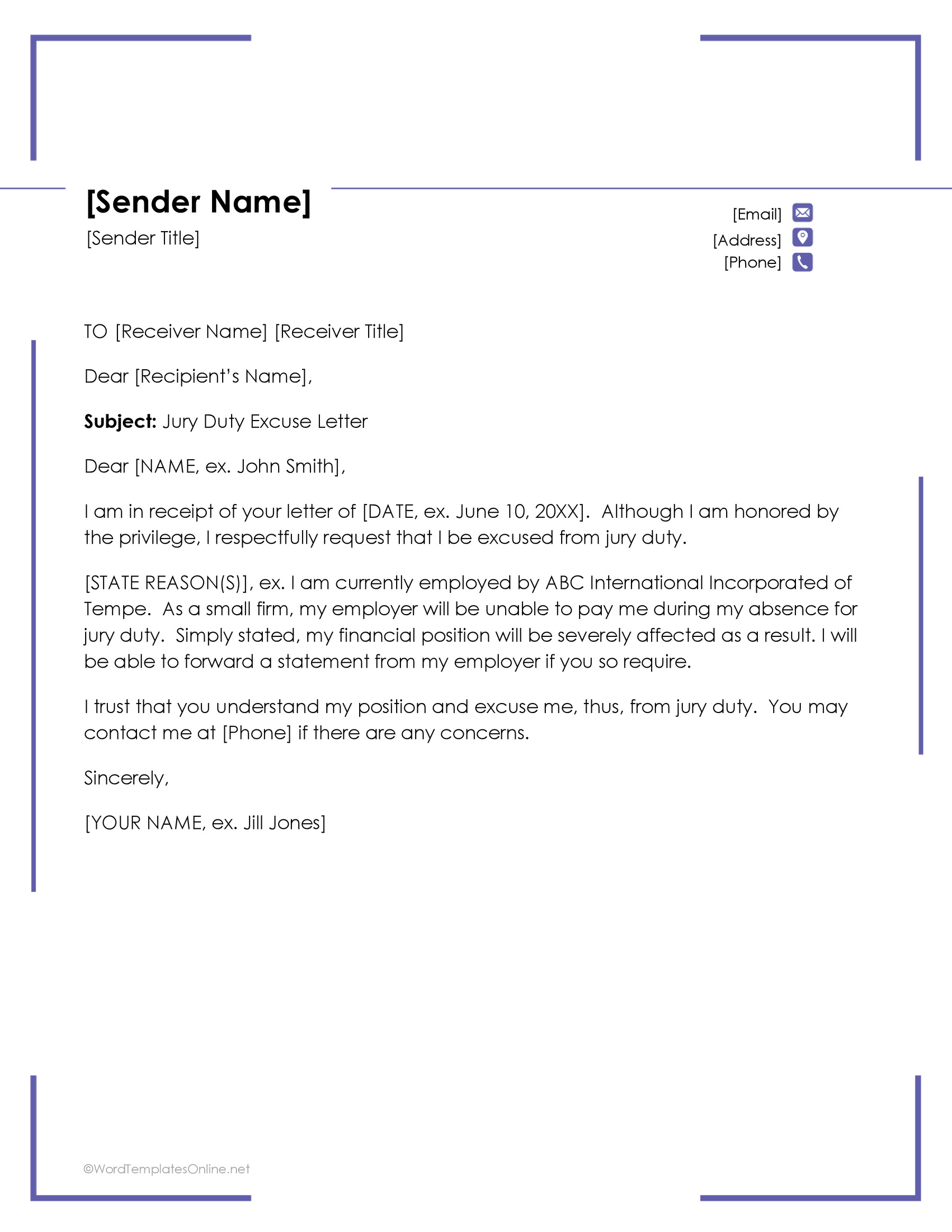
Jury Duty Excuse Letter Sample (Due to Job)
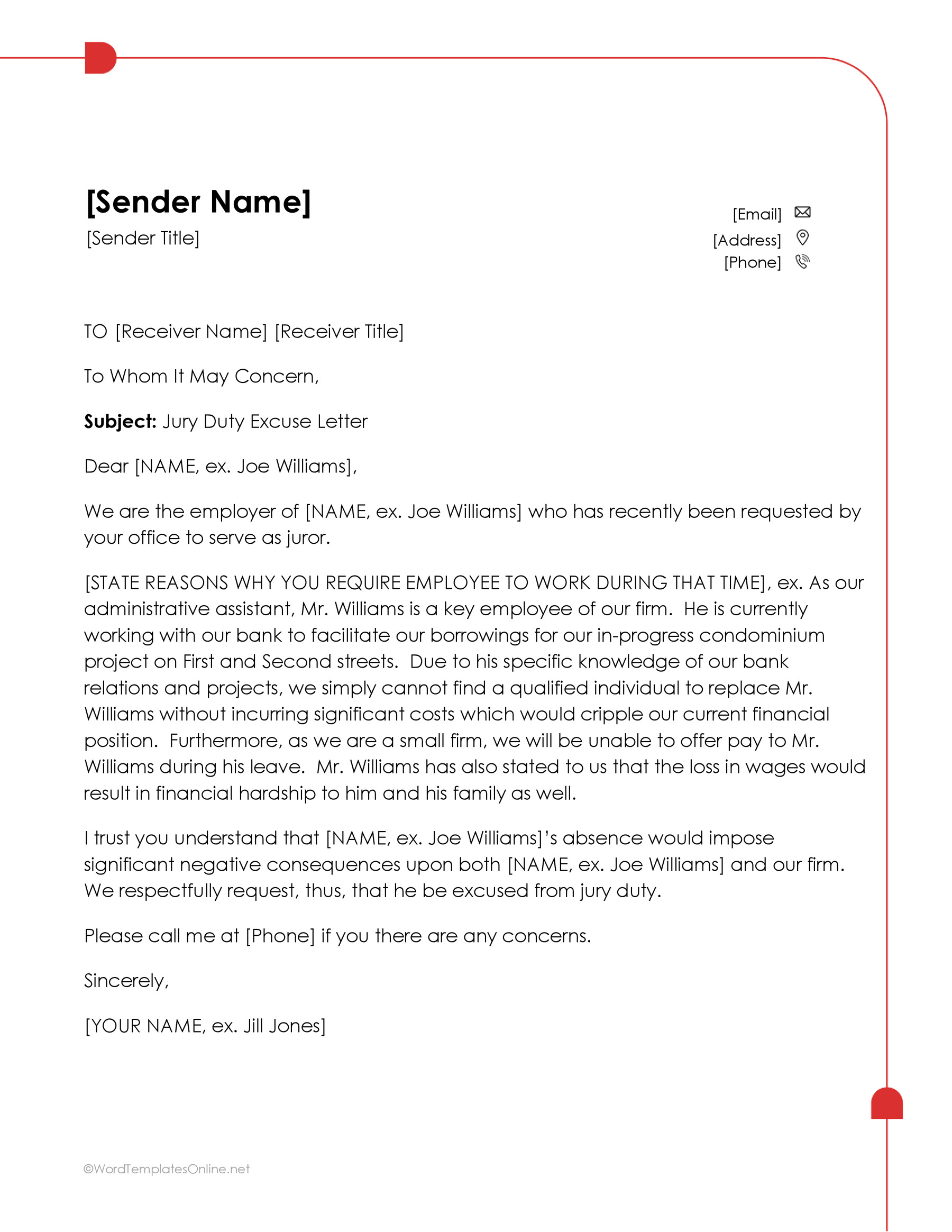
Jury Duty Excuse Letter (Mother Duties)
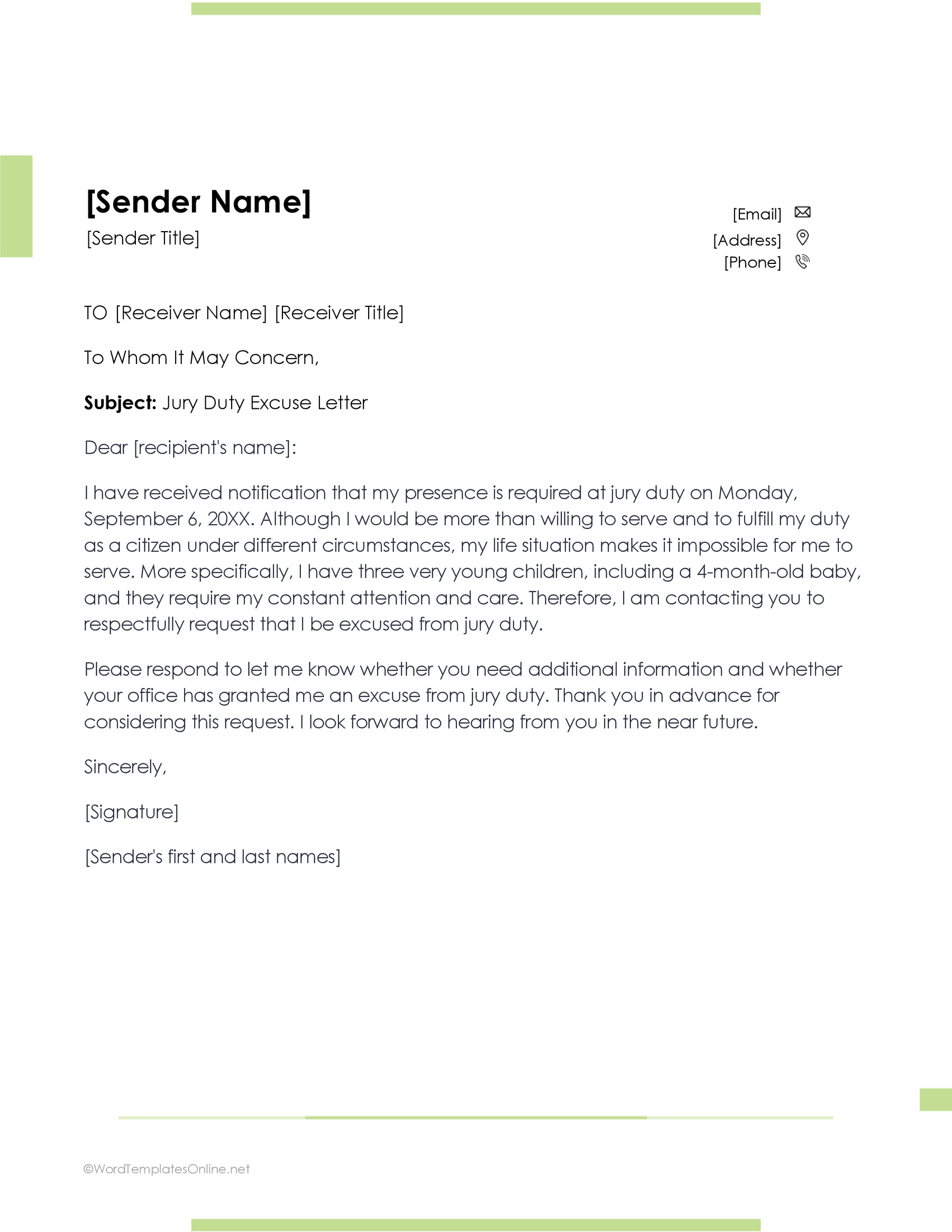
Jury Duty Excuse Letter (Medical Reasons)
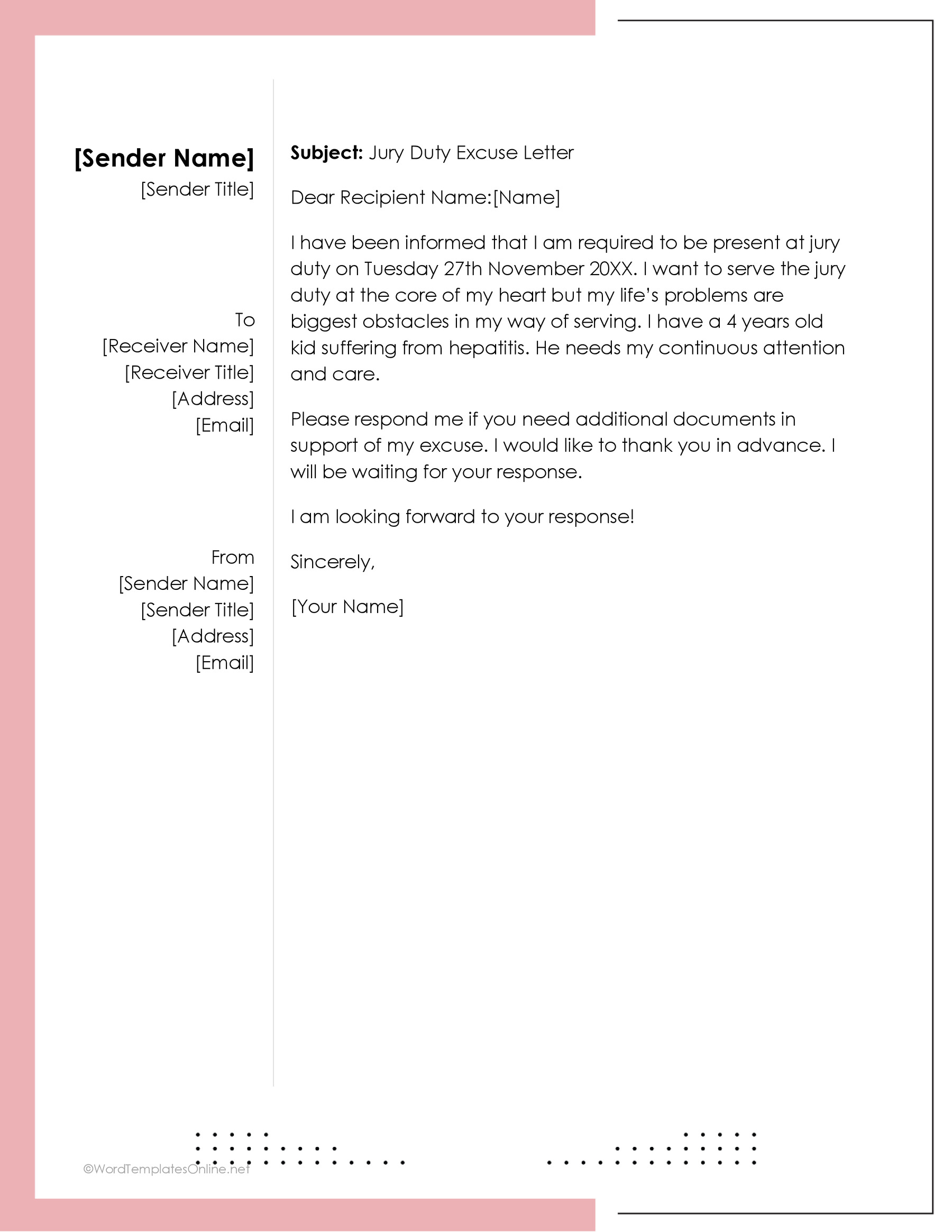
Jury Duty Excuse Letter (Medical Reasons)
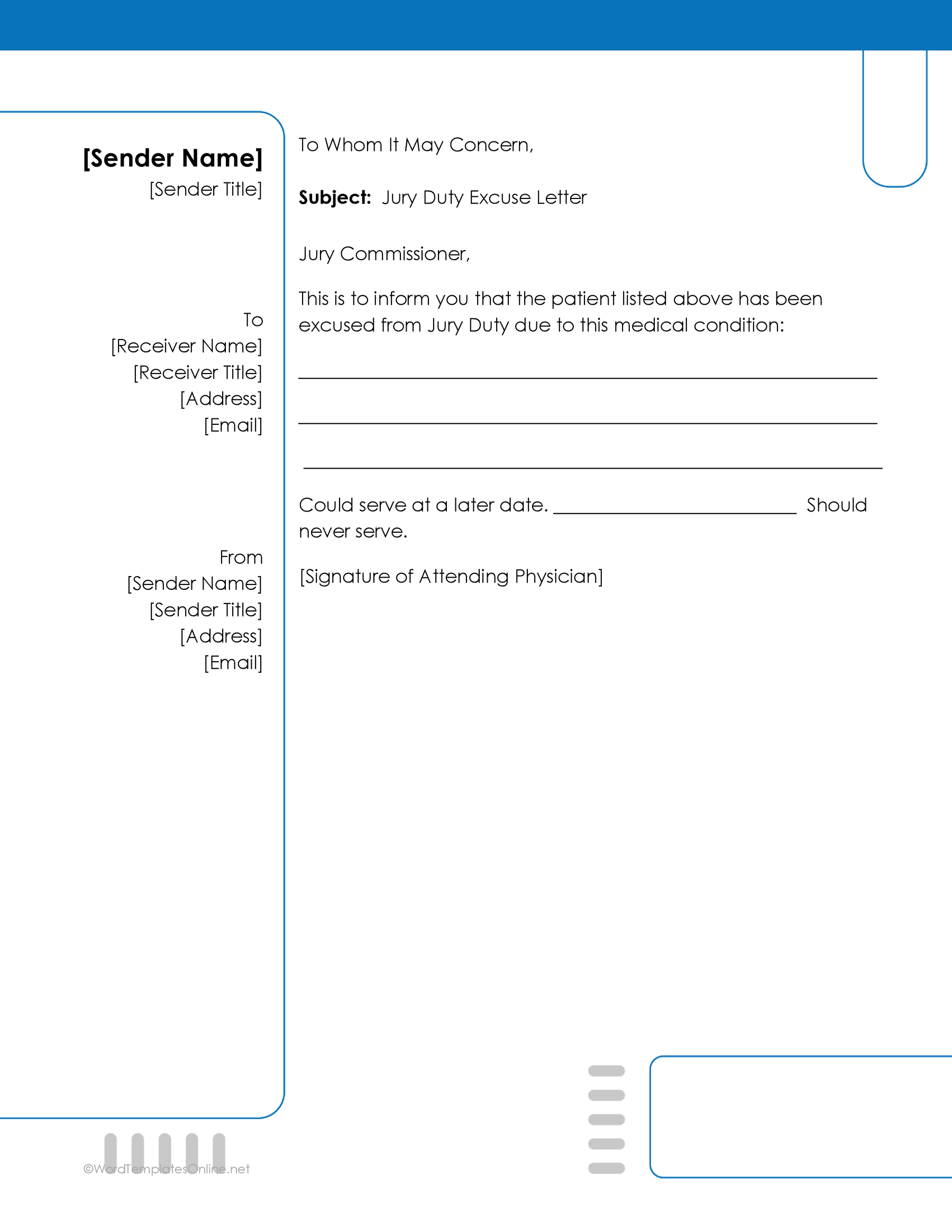
Jury Duty Excuse Letter (Medical Excuse)
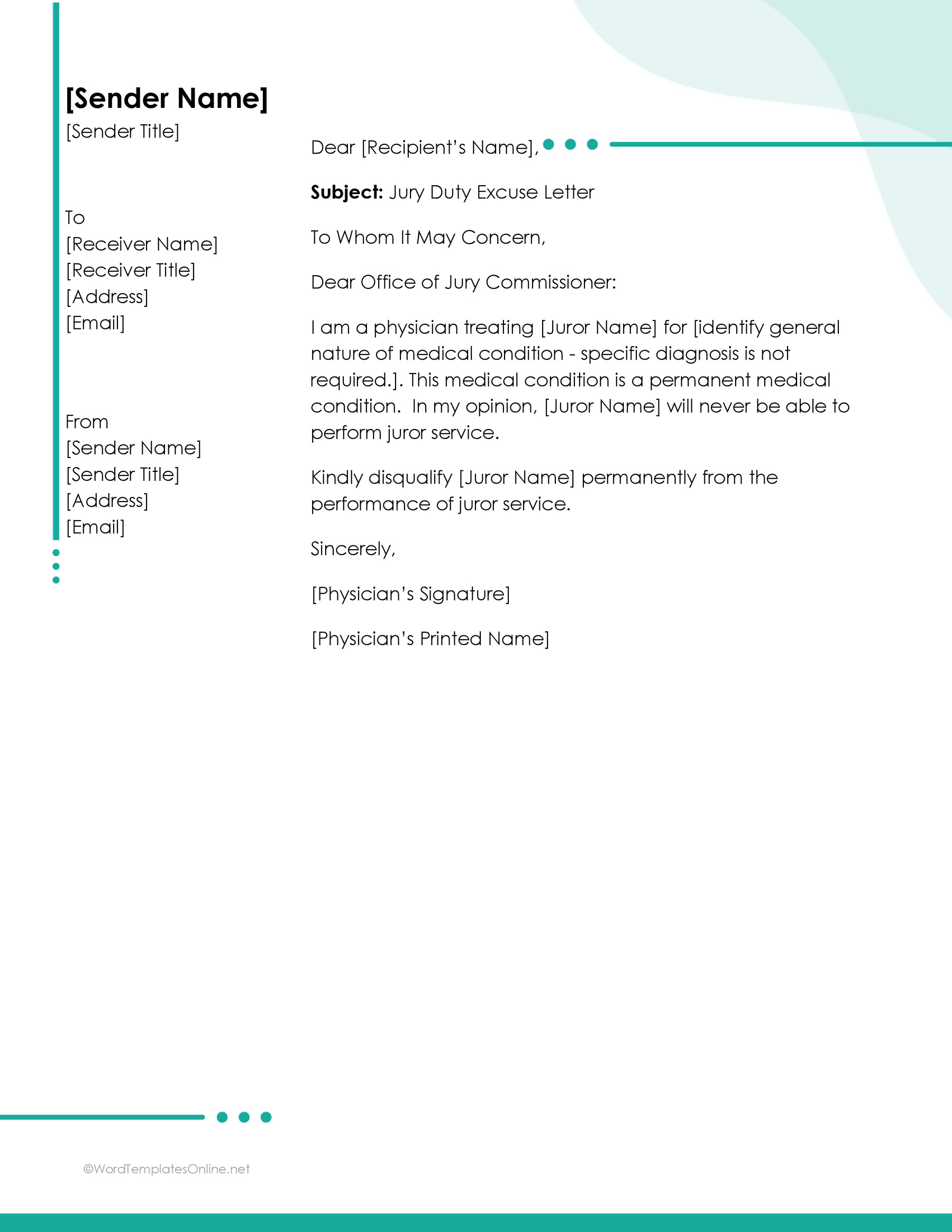
Jury Duty Excuse Letter 10
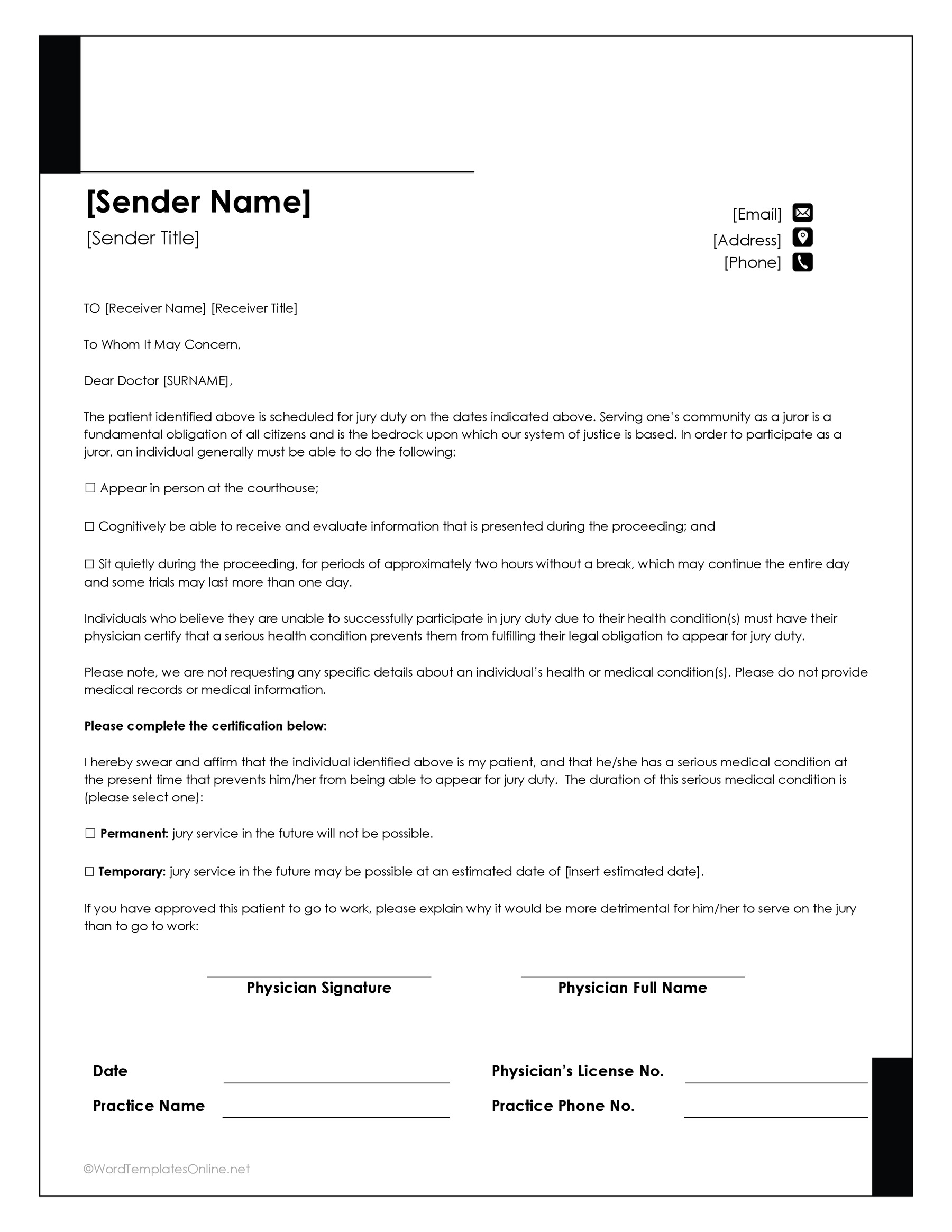
Watch Out for These Common Problems: Real Reddit User Threads
Here are some real frustrations coming from real people when trying to get their excuse letter approved. These are useful to know, so that you don’t make the same mistakes:
- “Why was my excuse rejected?” One of the users mentioned that I reported halfway across the world and still had my excuse denied simply because the court didn’t consider travel a valid reason without strong documentation.
- “I sent a letter and heard nothing back.” Some people say that they never get a response after sending the excuse letter, especially if it was mailed after the deadline.
- “Excuse denied because of lack of proof.” In another thread, a juror shared that their excuse was rejected because they couldn’t provide a doctor’s note for mental health, despite the fact that they had explained everything in detail.
- “Response time takes forever.” Users have complained that it can take weeks (sometimes 20 business days) to hear back from the court, creating uncertainty about what to do.
- “The court still says I have to show up.” A person shared that even though he requested an excuse due to language barriers, the court reviewed and still insisted on attending, leaving him unsure how to appeal.
Want to Get Approved Instantly? Follow These Tips
Well, as you see above, many people run into issues because their excuse wasn’t backed by solid documentation, they missed deadlines, or they assumed the court would respond quickly. If you want to avoid such issues and get approved quickly, here are some tips:
- Submit early, don’t wait: Many issues start with late submission. As soon as you know, you can’t attend, draft, and submit the letter. Usually, courts have deadlines for requests and early submission.
- Be concise & Back every claim with proof: Do not write any bogus explanation or exaggerate your situation so that it feels complicated to read. Moreover, always attach evidence that makes your case credible and gets it an easy approval.
- Follow the summons instructions as they are: Watch out for whether the court wants submission by mail, online portal, or in person. Many people get into trouble only because they used the wrong method.
- Monitor Court Communication: Response time may vary. Keep checking your mail, email, or juror portal so you don’t miss important updates
What happens after submitting an excuse letter
Done with the submission? Now the court usually responds to you in three ways. The first one and the best case? Your excuse gets approved, and you’re officially off the hook. But this does not happen in every case; sometimes, the court may offer a deferral instead. Additionally, in some rare cases, the request may be denied, which means you’ll still be expected to appear as summoned.
Conclusion
Handling jury duty conflicts is one of the most exhausting things, but it shouldn’t be if you know the proper way. You can manage everything easily with the right approach, clear wording, proper documentation, and timely submission.
Moreover, to make this process a walk in the park, take the smart route: use a structured template that keeps your message professional and follows court instructions closely.
Frequently Asked Questions
How long does approval take?
It depends, usually, on the court and the number of requests pending. Some people said that it may take 2 – 7 business days, while some mentioned it may take up to 20 business days.
Can I email a jury duty excuse letter?
Generally, it depends on the court rules. It is better to check the summons instruction on how they want you to submit an application, either online, in person, or through the portal.
Can my employer submit the letter for me?
Your employer can submit a supporting letter explaining work obligations, but in most cases, the excuse request itself must be submitted by you. The court requests your personal details and signature, even when employer documentation is included.
About This Article