It’s 8 p.m., and you’re standing in the kitchen thinking, “Wait… did I take all my medicines?” When you have different medications, doses, and times, it’s surprisingly easy to mix up or forget to take one of them. That’s where you need a medication log template. Instead of relying on memory or scattered notes, you have one place to record your medication names and other details. No matter whether you’re tracking your own medicines or helping someone else, the templates are for everyone and are designed to make everyone’s life easier.
What is a Medication Log?
Simply put, a medication log is basically your “what did I take and when?” cheat sheet. It can be a digital record or printed paper that can be used to track your medication name, doses, and time. However, a log is a little different from a prescription list or medication schedule. A list tells you what medications you have, while a schedule focuses on when they should be taken. A log, on the other hand, tells you what you took.
Why Keep a Medication Log?
We often take this thing lightly, but keeping a log is really important when you are managing several medications. This keeps things organized and makes it easier to check whether you’ve recorded a dose. Furthermore, it also gives you a handy record to refer to when discussing medications with a healthcare professional.
In addition to that, it can also be useful for caregivers keeping track of someone else’s medications. Most importantly, it takes some of the remembering out of your head and puts it neatly on paper or a screen.
What Information Should Go in a Medication Log?
Well, the purpose of a medication log is to help you stay consistent with your medications and make sure to take them on time. Here’s what should be in a perfect log:
1. Medication Name and Strength
First things first, it gives you a place to add your medication name and strength so you don’t end up wondering which bottle is which. Keeping all these details together makes the record much easier to understand.
2. Dose and Frequency
The other section that a template must have is where you note how much of the medicine should be taken and how often, such as once a day or at specific times. However, remember one thing: keep this information consistent with the instructions given by your healthcare professional.
3. Date and Time
This section is included so that you can easily add the date and time for each entry, based on how your log is set up. This makes it much easier for you to look back and see what was recorded.
4. Start, Stop, and Change Dates
Not every template, but usually templates have this section so that you can track when a medication was started, stopped, or changed, and your information doesn’t get mixed up.
5. Notes and Additional Instructions (Optional)
Some templates have an extra space to add reminders, questions, or instructions from a healthcare professional. Think of this as the “anything else I should remember?” section, but don’t use the log to change doses or prescribe medications for yourself independently.
Medication Log Template for Different Tracking Needs
Everyone has different medication needs, and that’s the reason you can’t use one template. Some need daily entry, while some need to track weekly or several medications at once. That’s why we have come up with different layouts, so that you can choose the one that fits your situation.
Medication Chart Template
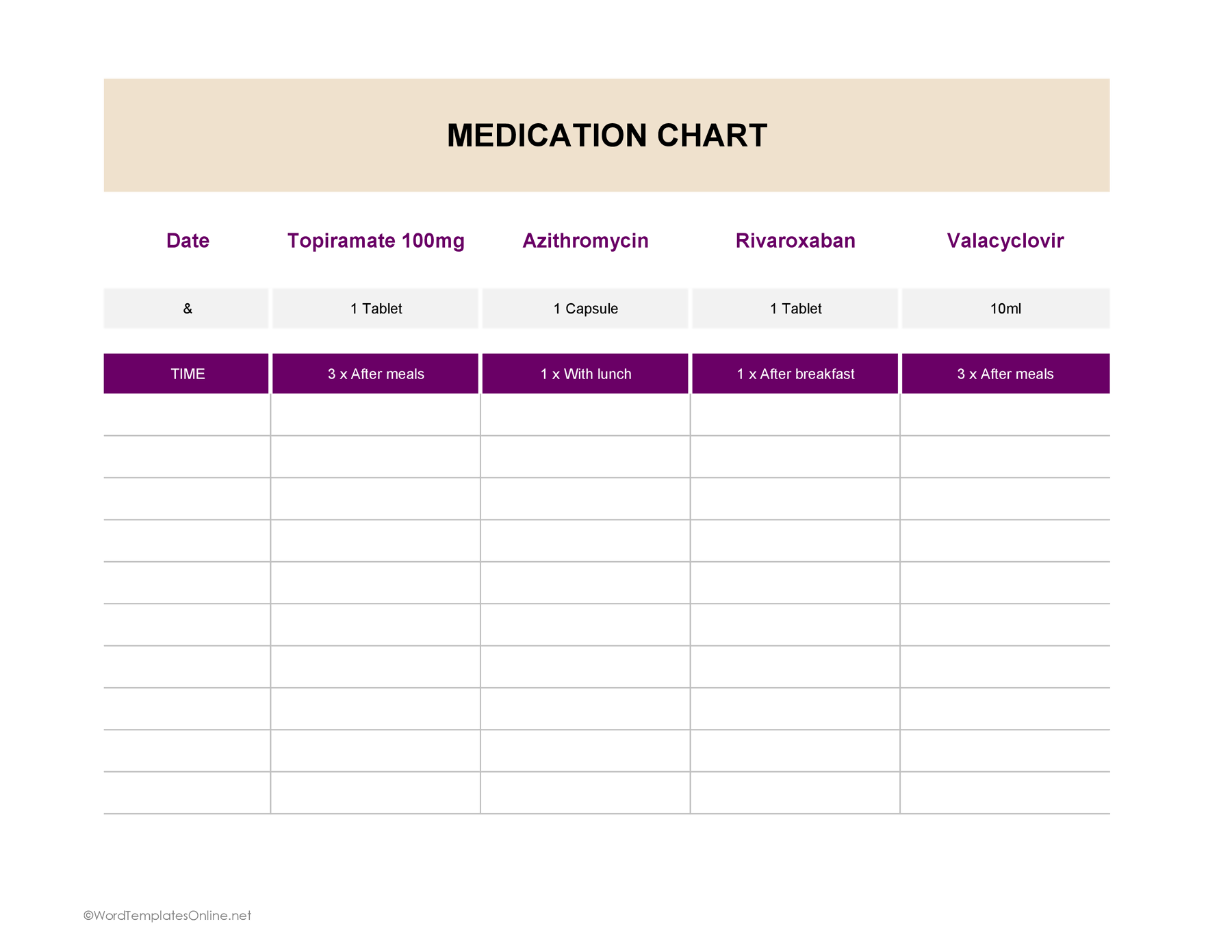
The first layout on our list is the Medication Chart and comes with the sole purpose of tracking multiple medications in one place. Every medicine has its own column, which makes the entry easy. At the top, you can see the date, followed by medication names. Additionally, each column also includes the amount and timing instructions, such as after meals, with lunch, or after breakfast.
Medication Log Template 02
Medication Log Template 02
The time column on the left gives space to record when each dose is taken. Overall, it’s a clean and simple layout that keeps your medication routine organized without any need to use messy notes.
Simple Medication Log Sheet Template
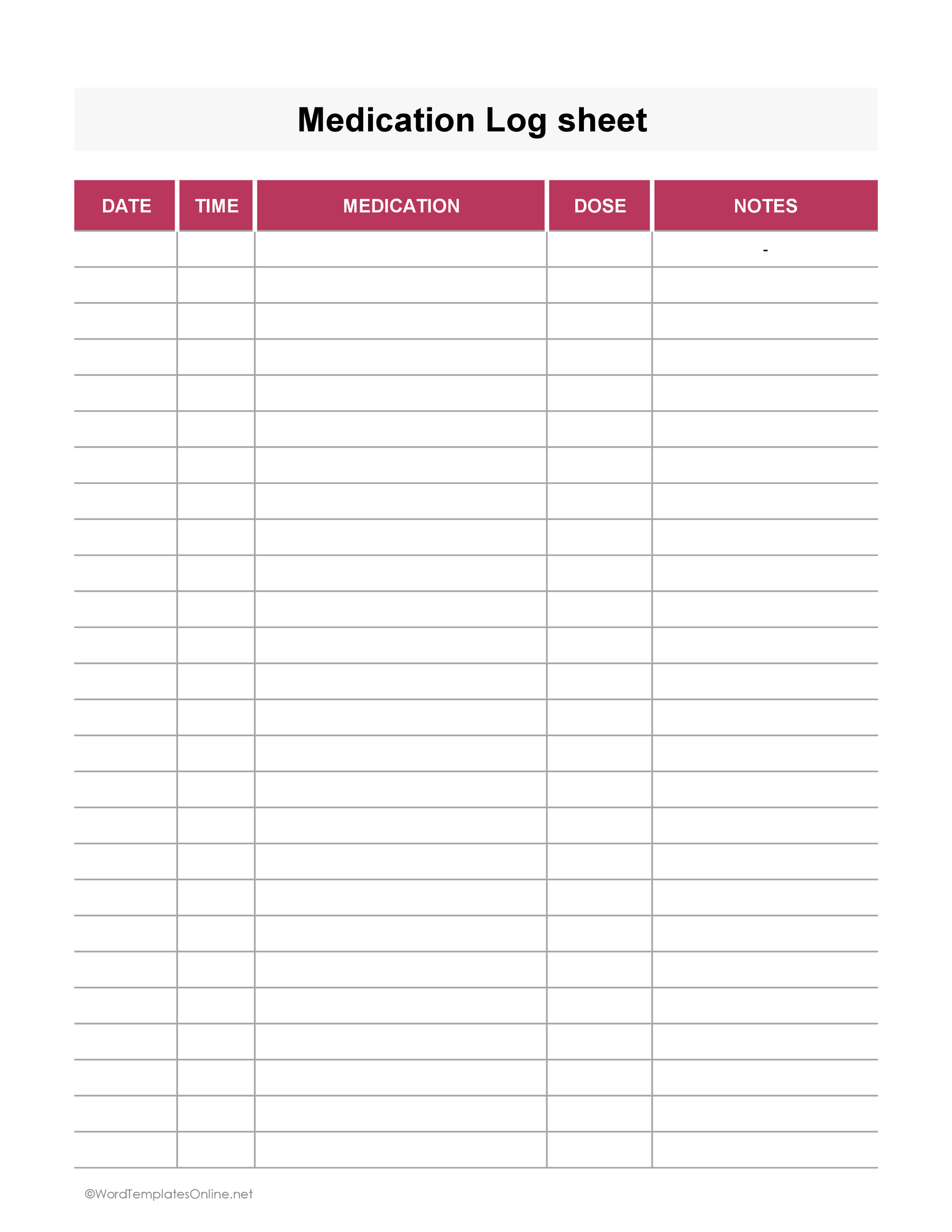
This is the very basic Medication Log Sheet Template for recording medicines the way you take them. It has separate columns for date, time, medication, dose, and notes, so everything stays neatly in one row. The template comes with plenty of space so that you can record doses throughout the day or over several days. In short, it’s a straightforward option when you want to keep it a quick record without dealing with a complicated chart.
Medication Log Template 03
Medication Log Template 03
Medication Tracker Template
Keep every dose completely on track with this clean, simple medication tracker! The best part about this template is that it’s not restricted to a strict weekly or daily schedule layout. It has ample space, which means you can use it for any timeframe.
Medication Log Template 04
Medication Log Template 04
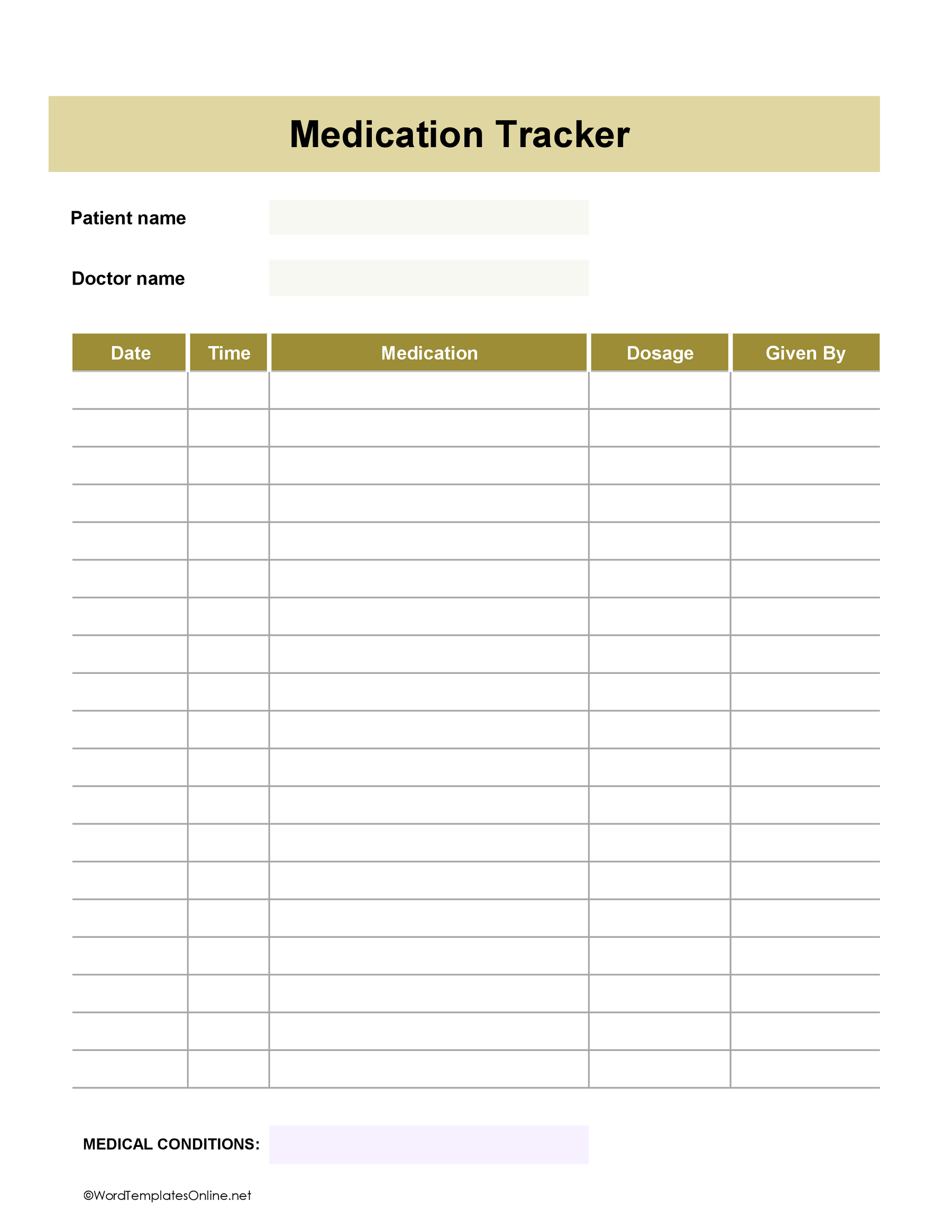
The top section offers clear fields for patient and doctor details, while the core table maintains dates, times, medication names, dosages, and administration initials. At the end, it has a space for a dedicated medical conditions note section that makes sure you have your vital details in one place.
Weekly Pill Log Template
Plan and record your doses with this clean, purpose-built weekly pill schedule. It is designed specifically to plan your seven-day routine and multi-medication management effortlessly.
Medication Log Template 05
Medication Log Template 05
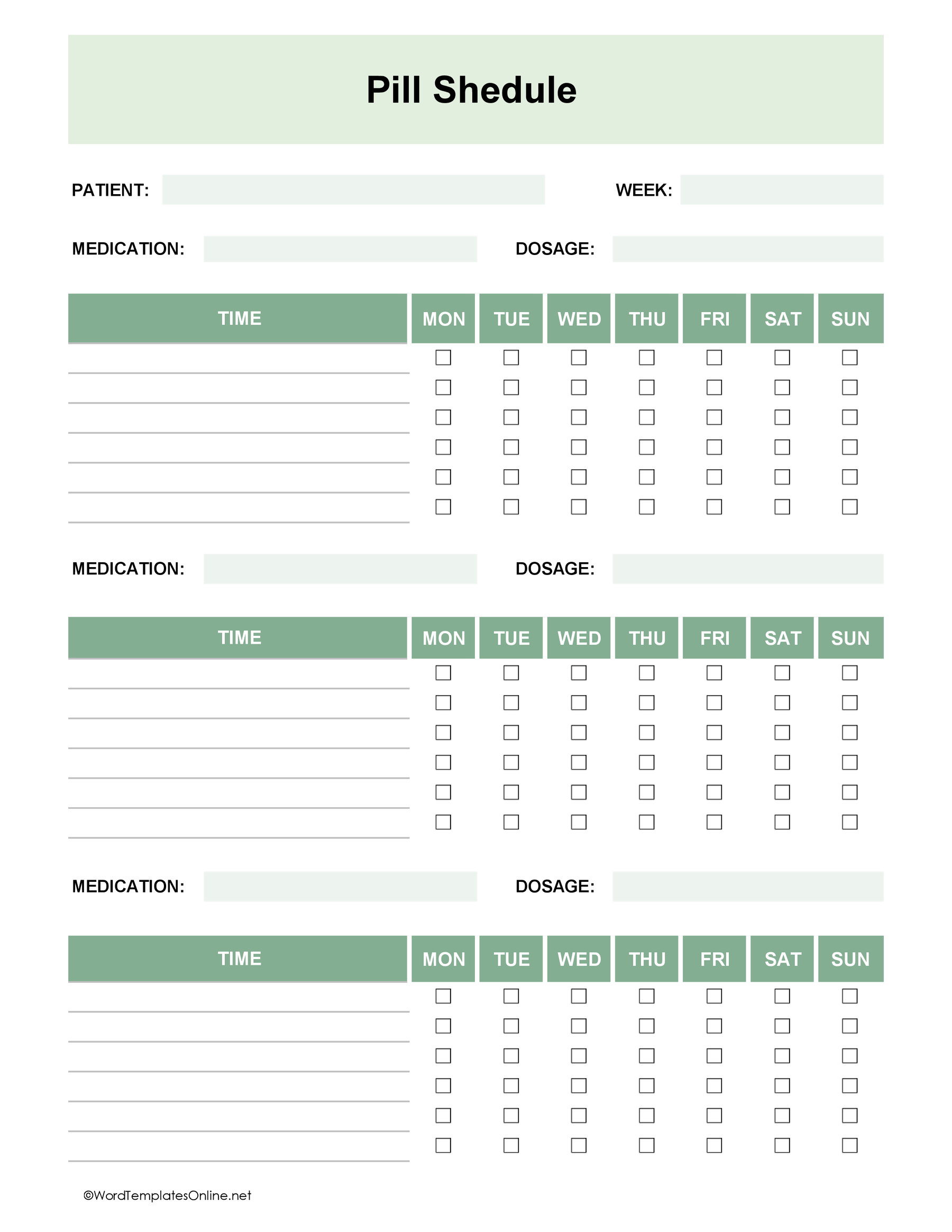
Talking about the template, at the top are dedicated fields that let you record the patient’s name and pinpoint the exact week. Below that, the page divides into different medication blocks where you can specify the medicine name and dosage. Moreover, the grid also has a time section where you specify when you take medication throughout the entire week. Complete with satisfying checkboxes for every single slot, it gives you a clear, visual way to check off your routine
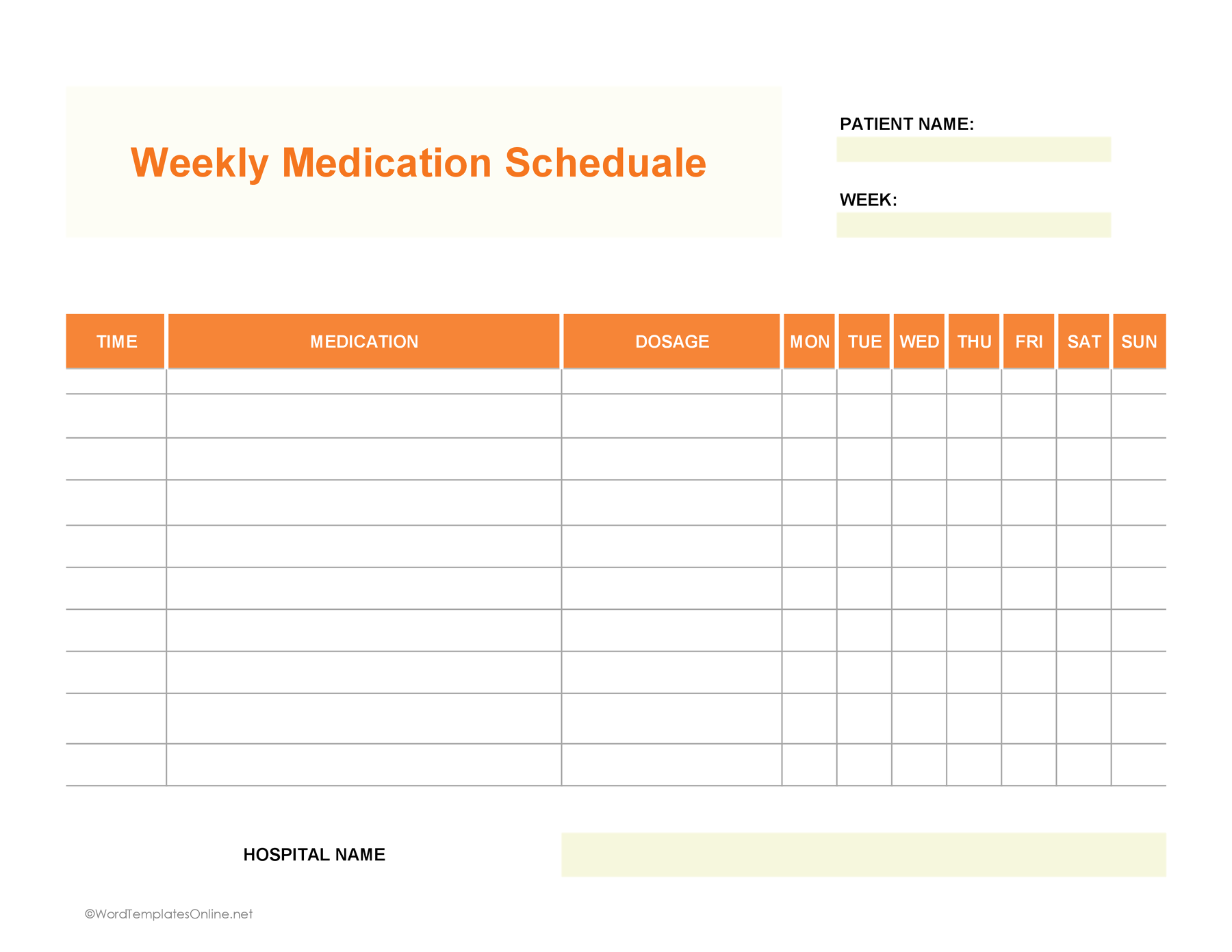
Similarly, if you don’t want split sections and need a simple weekly medication template, you can use this one.
Medication Log Template 06
Medication Log Template 06
28-day Medication Expiration Tracker
Use this 28-day tracker only when the product’s instructions or your pharmacist specify a 28-day period after opening. It is not a universal expiry rule for eye drops, liquid medicines, or every multi-dose product. Follow the product’s storage and discard instructions, and never extend its printed expiration date.
Medication Log Template 01
Medication Log Template 01
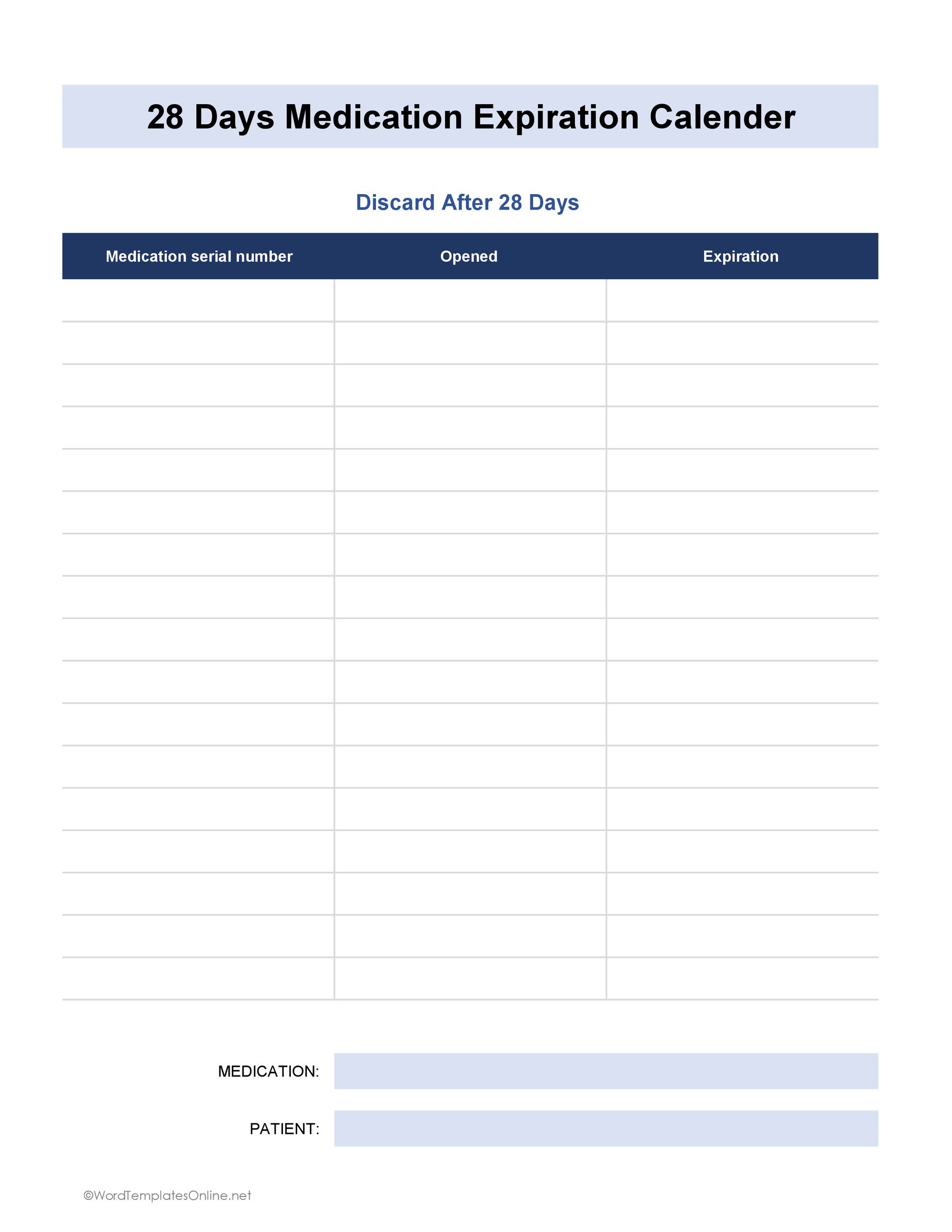
The title banner reads “Discard After 28 Days,” so check that this period applies to your medicine before using the form. The table records the medication serial number, date opened, and discard date. Medication and patient-name fields at the bottom identify the record.
Common Medication Log Mistakes to Avoid
The truth is: even a simple medication log can get messy if you’re not careful. However, a few small habits can keep your record clear and actually useful:
- Leaving Entries Blank Without an Explanation: A blank box leaves you thinking, “Was this dose missed, forgotten, or just recorded?” If something needs explaining, add a quick note instead of leaving everyone guessing.
- Mixing Old and Current Medication Information: If you have old medication details lingering around, it can turn your log into a mini mystery. So, make sure you write the updated information and clearly separate it from older entries when needed.
- Forgetting to Record Medication Changes: In case a medication is added, stopped, or changed according to professional instructions, update the log too. Otherwise, yesterday’s information can quickly become today’s confusion.
- Relying on the Log Instead of Professional Advice: Always remember, your medication log is there to organize information, not make medical decisions. If you need any info about doses, changes, or missed medication, contact your healthcare professional.
Best Tips For Keeping Your Medication Log Accurate
Take this advice as free tips and see how you make the most out of templates:
- Make it part of your routine: Keep your log as the consistent part of your routine so that recording information doesn’t become an “oops, I forgot” moment.
- Keep your writing clear: Don’t make it another doctor prescription. Use simple language so you and anyone helping with medication can understand the entries easily.
- Take it to medication conversations: Having an organized record can make it easier to share relevant information with your healthcare professional.
- Keep it simple: The best log is one you’ll actually use. Choose a layout that’s easy to read, quick to update, and doesn’t make tracking feel like a chore.
Keep Your Medication Routine on Track….
Juggling multiple pills, complex schedules, and confusing names quickly gets mixed up if you rely on memory alone. A dedicated medication log template gives every single detail a permanent place so you have a record to check. Ultimately, whether you’re managing your own daily prescriptions or caring for someone else, the right layout is what keeps the chaos away and welcomes clarity. Because at the end, spending just a few seconds recording your dose can reduce those frantic “Did I take that yet?” panics later.
FAQs
Is a medication log the same as a medication schedule?
No. They might seem the same, but aren’t. A medication schedule suggests what should be taken and when, while a log can record what was actually taken.
How often should I update a medication log?
It usually depends on the type of log, but the key is consistency. Update it as you track each dose and whenever relevant medication information changes.
About This Article