A personal balance sheet is a financial statement that shows a person’s financial position at a given period. It shows both your assets and liabilities. It also shows the net worth which is calculated by subtracting liabilities from assets and it can be positive or negative. A positive net balance indicates that your assets outweigh liabilities while a negative balance shows that you have no debt obligations.
Importance in Personal Financial Planning
Personal financial planning is important for any individual earning a living. It gives a clear and organized image of your financial position. It is helpful in the following ways:
It measures the overall financial health by tracking your spending to see areas where adjustments need to be made, for example, spending habits. It also allows individuals set future goals such as saving to buy a car, building a house, etc. Additionally, it promotes better budgeting by allocating funds effectively prioritizing important purchases such as food, clothing, shelter, etc.
It also builds a saving habit and prepares you for opportunities such as investment opportunities by showing how much liquidity you have. Financial planning also prevents over borrowing by showing your borrowing capacity. Lastly, it improves decision making i.e. investment decisions, loan decisions, etc.
Who Uses It?
- Retirees
- Young adults
- Professionals
- Families
- Entrepreneurs
Why Do They Use Them?
- To make informed financial decisions
- To get security against unexpected situations, such as medical emergencies
- To track finances
- To get financial clarity on their financial position
Key Components of a Personal Balance Sheet
Assets
Assets are things that you own and have monetary value. They are categorized into three groups:
- Liquid Assets: These are the most accessible assets, for example, physical cash, money market accounts, etc. They are referred to as liquid since they are readily available and can be used to cover daily expenses.
- Fixed and Tangible Assets: Physical and long-term assets that you cannot easily convert into cash but they have significant value. For example, cars, furniture, real estate, jewelry, etc. Their value can fluctuate depending on depreciation and market dynamics.
- Investment Assets: These are assets that you hold and expect to grow in value over time. They include stocks, bonds, ownership stakes, etc.
Liabilities
Liabilities are the debts that you owe others. They represent the assets that are funded via borrowing. They are categorized into two groups:
- Short-Term Debts – These are due within a year. They normally include small loans, utility bills, credit card balances, etc. They normally have high interest rates and can greatly affect your cash flow if not managed carefully.
- Long-Term Debts – These usually extend beyond the year. They include mortgages, business loans, student loans, etc. Payments are made monthly over a long period. This type of debt is necessary for major purposes.
Net worth calculation
This is the final outcome of your balance sheet. It is calculated by subtracting your liabilities from your assets. The balance is your net worth. A positive balance shows that your assets exceed the liabilities. This is a sign of good financial health. A negative balance indicates that you need to adjust your financial habits.
(Assets – Liabilities = Net Worth)
How to Prepare a Personal Balance Sheet
Gather financial information
The first step is to gather all information, such as your bank statements, title deeds, credit card bills, investment account details, etc. Compile an accurate list of your assets and liabilities as of a specific date. Organize your documents to avoid overlooking important details.
Value your assets accurately
After gathering all financial information, the next step is assigning value to your assets. For example, for liquid assets, use current values while for tangible assets, estimate their market value. Avoid overvaluing your assets as it will give a false picture of your financial health. For investment assets, use the current market pricing or your recent account statements.
List and categorize your liabilities
The next step is listing all your debt obligations, such as student loans, mortgages, etc. Categorize them into short-term and long-term loans. You can also include the interest rates. This will help you understand the depth of your financial obligations.
Calculate your net worth
This is the last step. After documenting your assets and liabilities, calculate your net worth by subtracting liabilities from assets to see if it is positive or negative.
Use Cases and Practical Applications
Budgeting and financial goal setting
A personal balance sheet will show you how much money you have left after paying for taxes and other expenses, such as food, rent, etc. It also helps you determine where you should allocate your spending. You could be aiming to save for a house, a car, a vacation, etc. The balance sheet will give you all the data you need to make financial plans.
Retirement and investment planning
A balance sheet gives you a glance at your long-term financial readiness. You will be able to see your investment assets and how diverse your portfolio is. It also shows you if you are on track to meet your retirement savings goals. You can also use the balance sheet to make contribution decisions. Advisors also require this document to help you with investing and plan for retirement.
Loan applications and credit assessment
When applying for loans such as mortgages or car loans, lenders will look at your personal balance sheet to assess your financial health and ability to repay. Low debts and a positive net worth increases your chances of accessing a line of credit.
Common Mistakes to Avoid
- Overestimating your asset values, such as cars which gives a false image of your financial health. For example, not using the market price to assign value.
- Overlooking certain debts such as unpaid taxes, personal loans from friends or family, etc. This can give a false sense of financial security.
- Not updating your balance sheet regularly which leads to relying on outdated data to make financial decisions. This leads to poor decision making.
Free Editable Balance Sheet Template
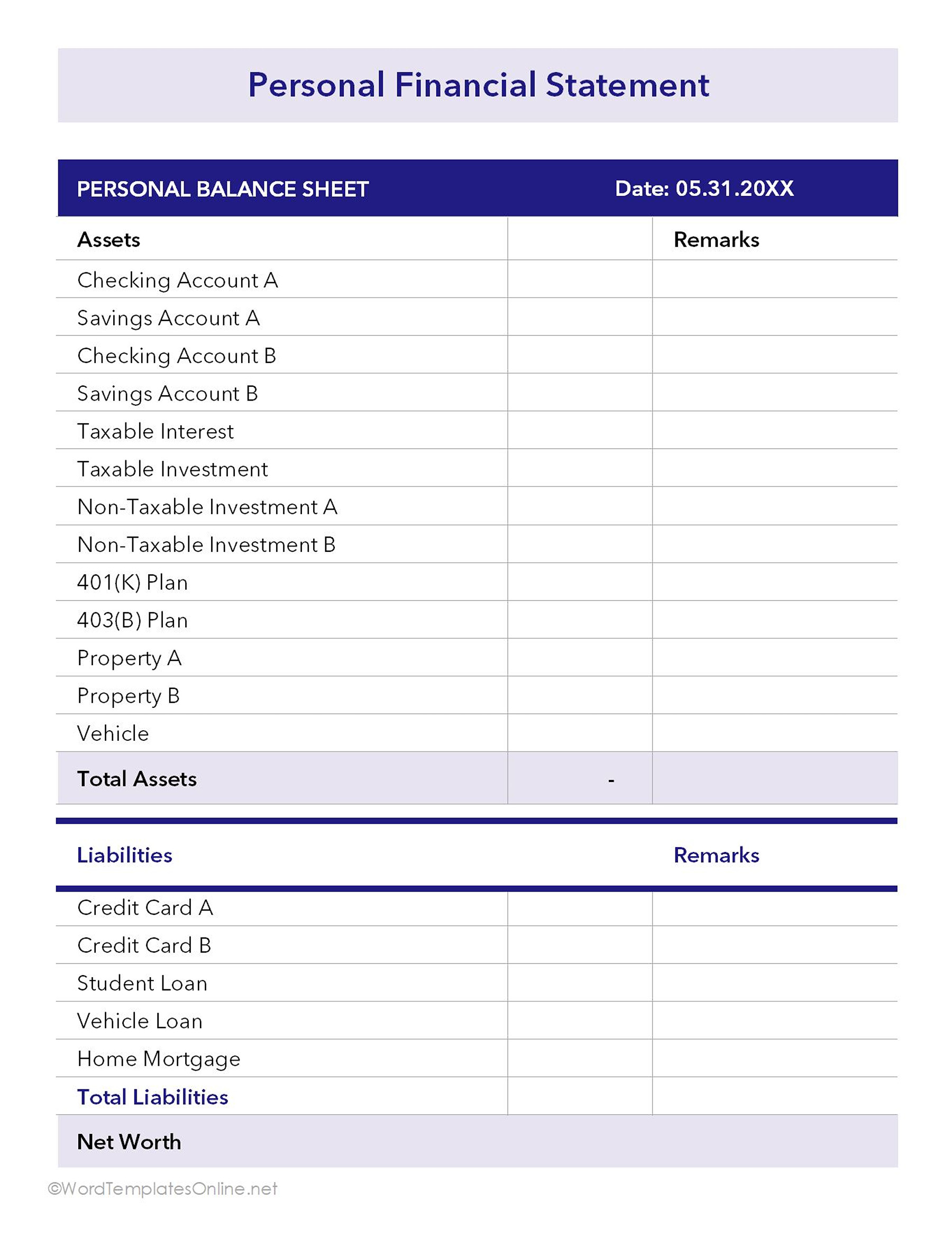
Making a balance sheet from scratch can be a difficult task, especially for new users. It can also be time-consuming even for regular users. Hence, we provide readers with free, downloadable, and editable templates that will make your work easier. You can also customize them when you want to make changes.
Personal Balance Sheet Template 01
Personal Balance Sheet Template 02

Personal Balance Sheet Template 03
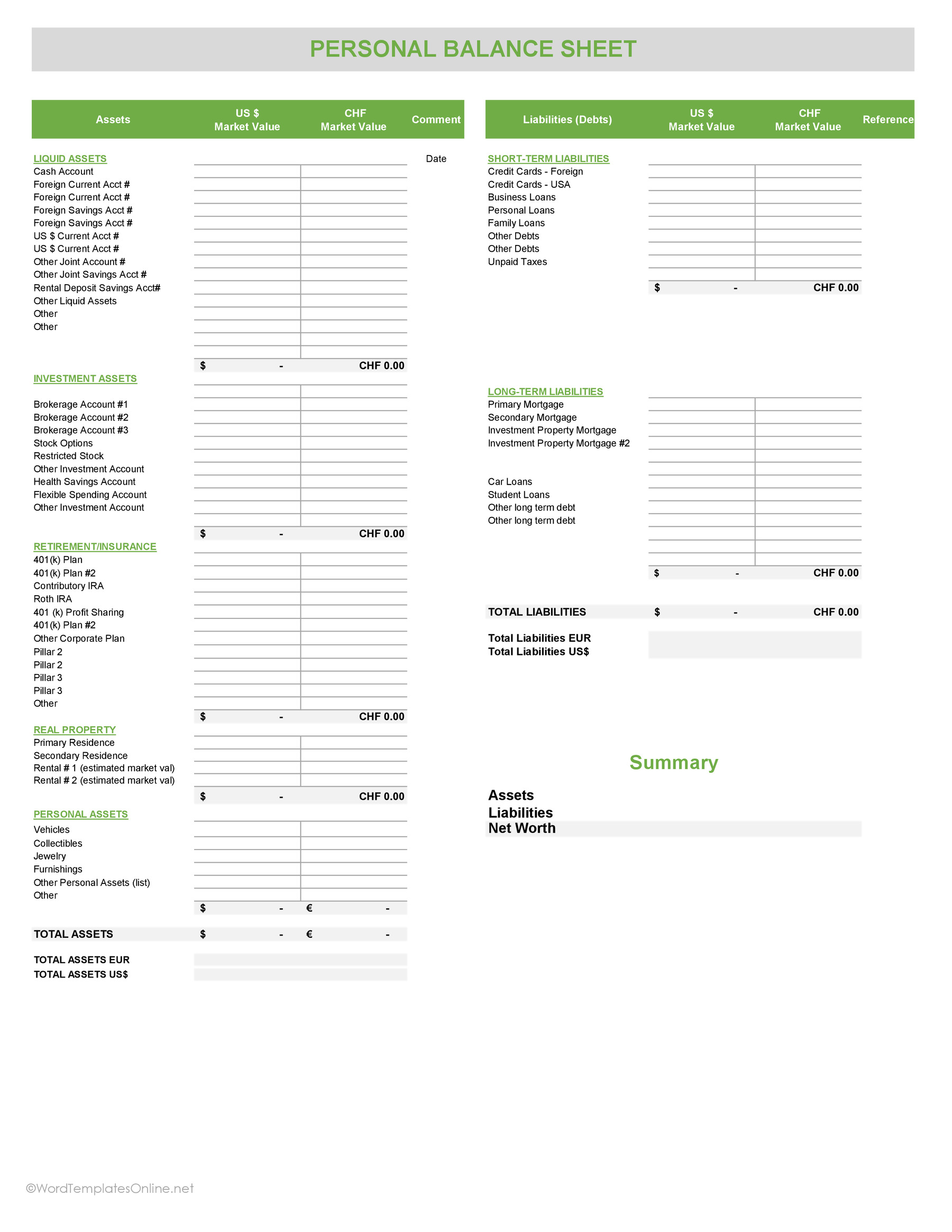
Personal Balance Sheet Template 04
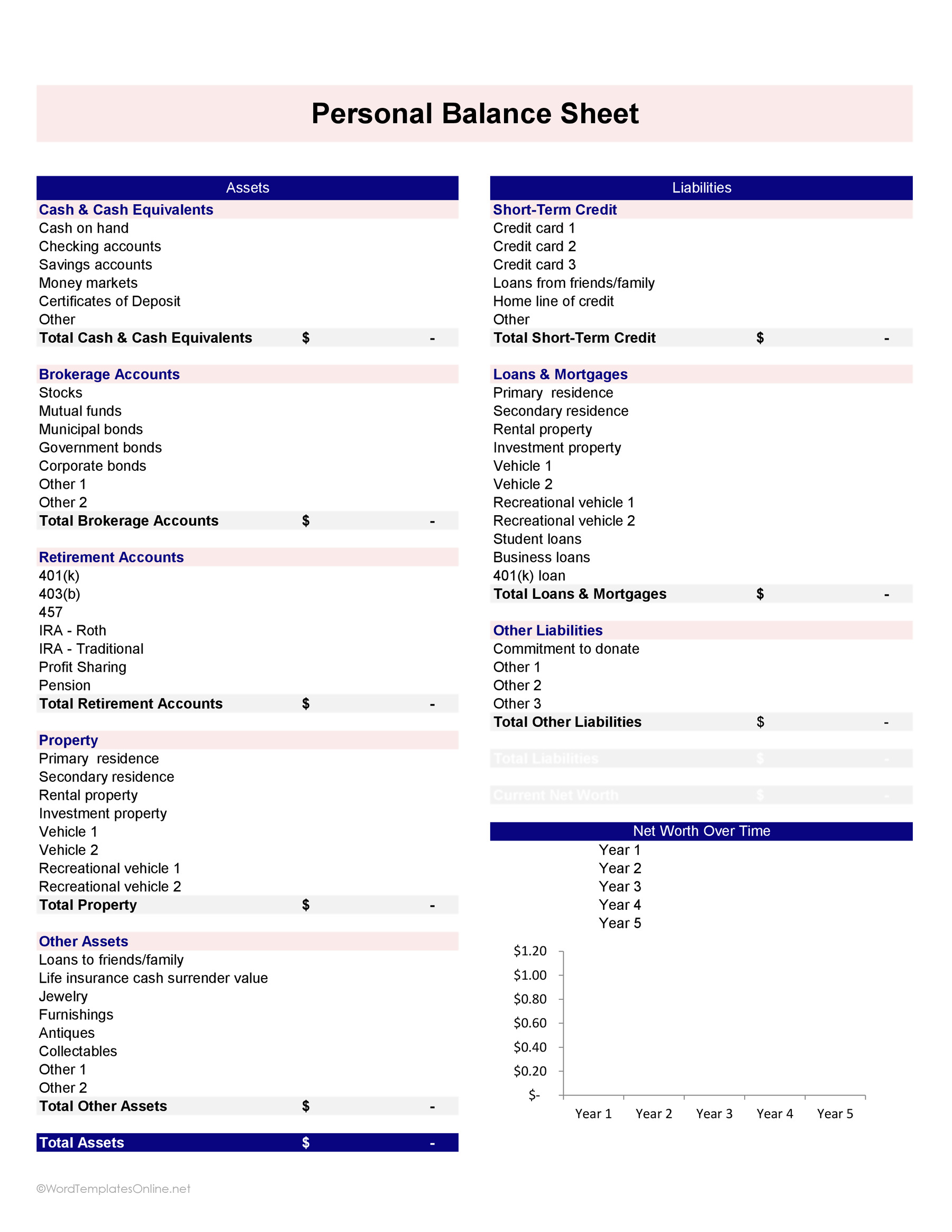
Final Thoughts
A personal balance sheet makes you more aware of your overall financial health, including savings, spending, and debts. It gives you control over your financial life, leading to better decision-making, especially in investments, retirement savings, borrowings, and budgeting. Start creating and using a personal balance sheet to guide your financial decisions, which will lead to better financial health and achieving your short and long-term financial goals
About This Article