Mess up the format, and your court document might not even make it past the clerk. Sounds harsh? But that’s the reality, and that’s how strict pleading paper rules can be. A pleading paper template is not just a “nice-to-have”; it’s a standard that courts expect for serious legal filings, such as motions, complaints, and responses.
Those numbered lines, the spacing, the case option at the top… none of it is optional. Additionally, courts, particularly U.S. federal and California courts, have strict rules around margins, fonts, and layout. Get it wrong, and you’re looking for delays, corrections, or outright rejection.
Now the main question that comes to anyone’s mind is, “Do I need a legal expert to get it right”? Well, no. Once you know how this paperwork works, it’s actually pretty simple. The good news? This guide is all about the pleading paper template, when to use it, and how to fill correctly without second-guessing every detail.
Why Courts Expect Pleading Paper in the Right Format
The thing is, courts aren’t being picky for no reason. This format makes everything consistent and easy to read. Judges and clerks have a billion documents to look through, so having the same structure makes their job faster and smoother.
Not only this, but it’s also a fallback when there’s no official court-issued form available; you’re still expected to present your document in a proper legal format. And honestly, the biggest reason? To stay away from mistakes. If your document doesn’t meet formatting rules, it can get rejected or sent back to correction, which slows down every single thing.
What A Standard Pleading Paper Format Looks Like (Core Structure Breakdown)
Before you write anything down, you need to get the structure right, because in every legal document, format comes first. Here’s how a standard paper is typically set up from top to bottom:
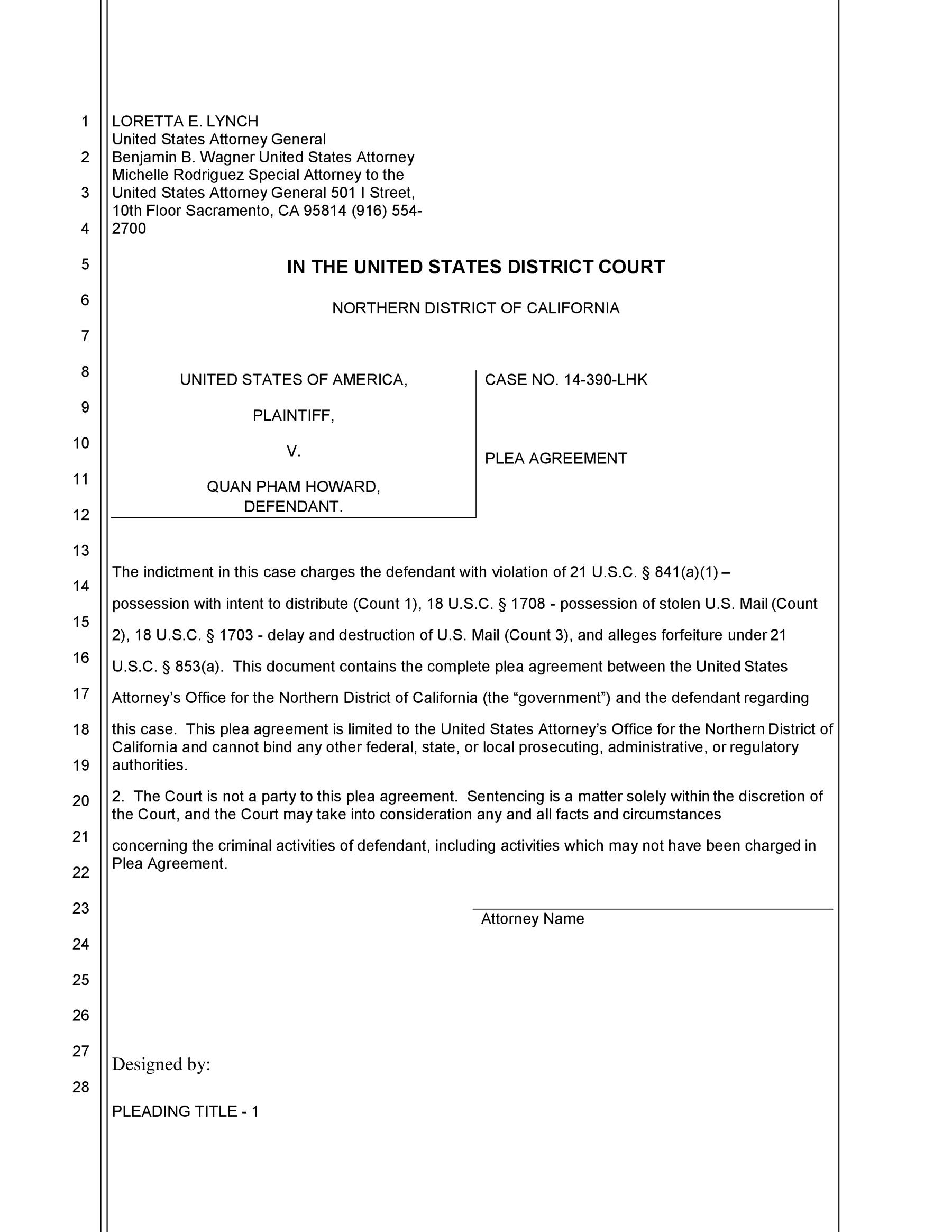
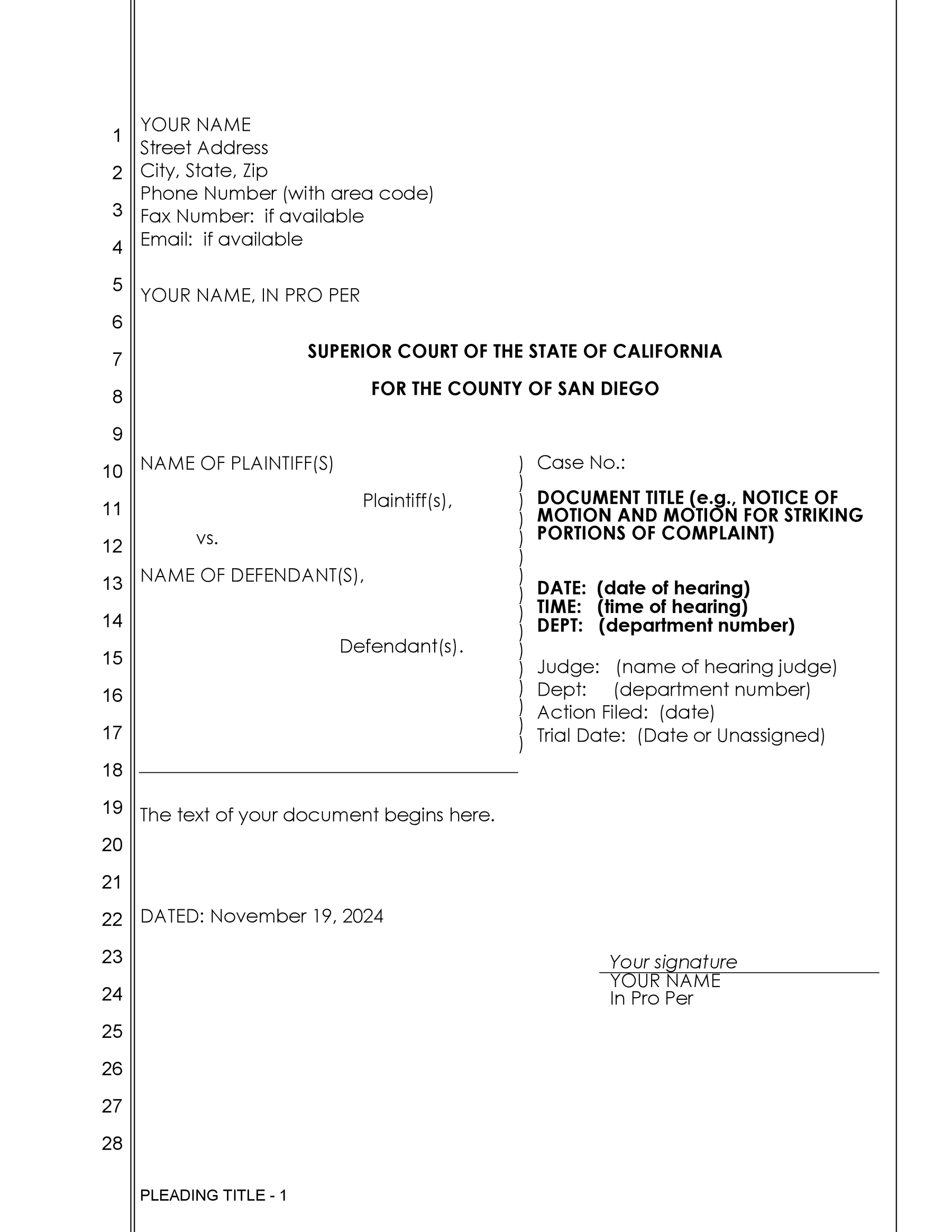
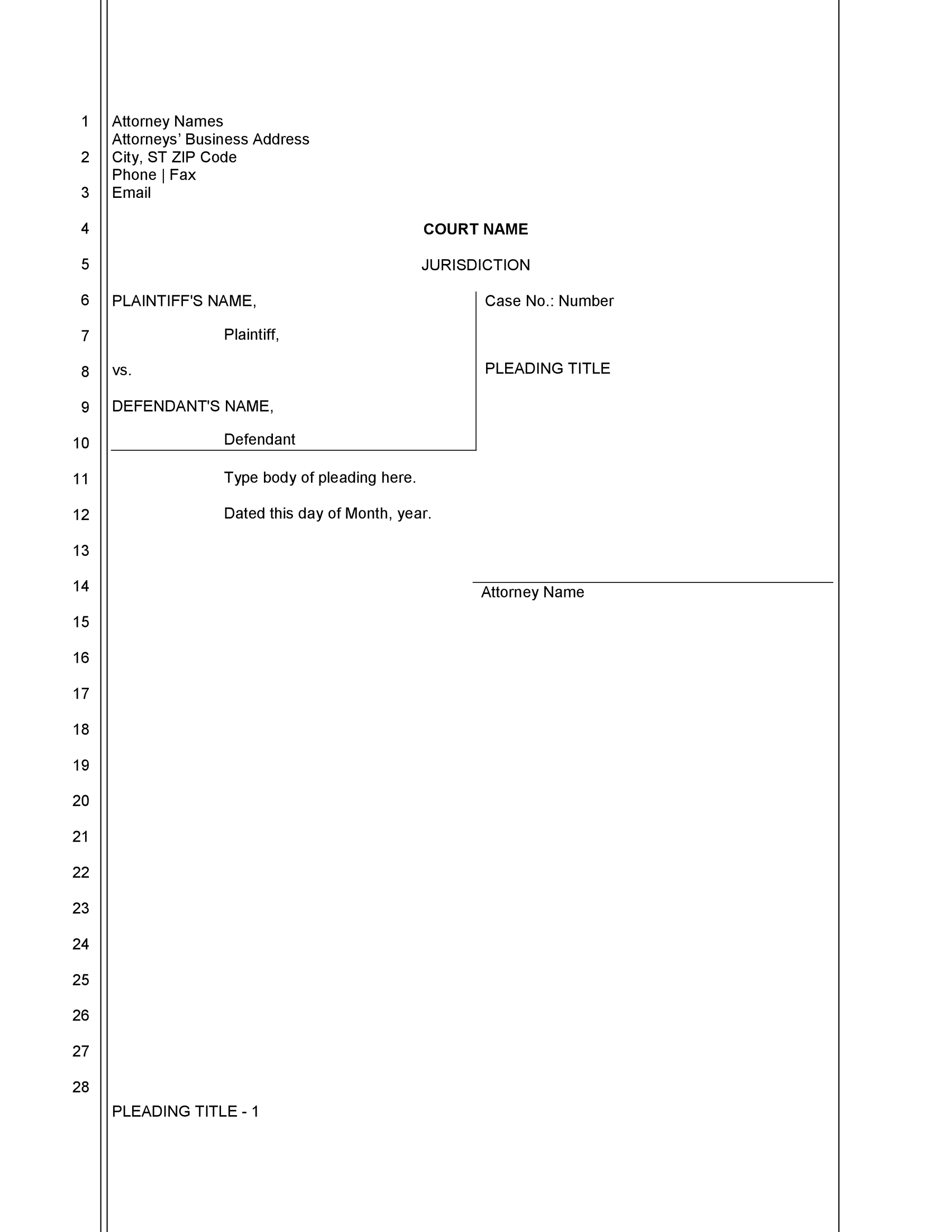
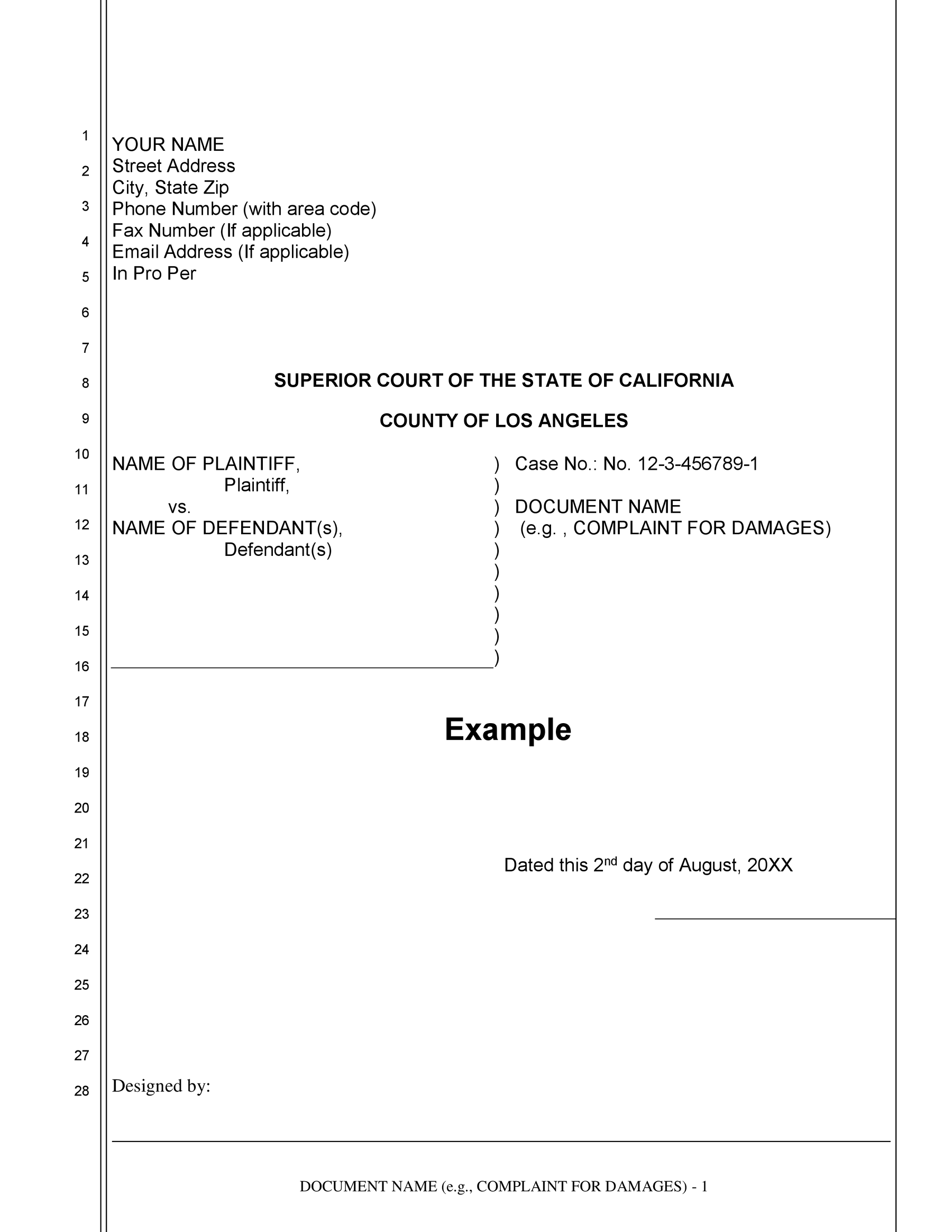
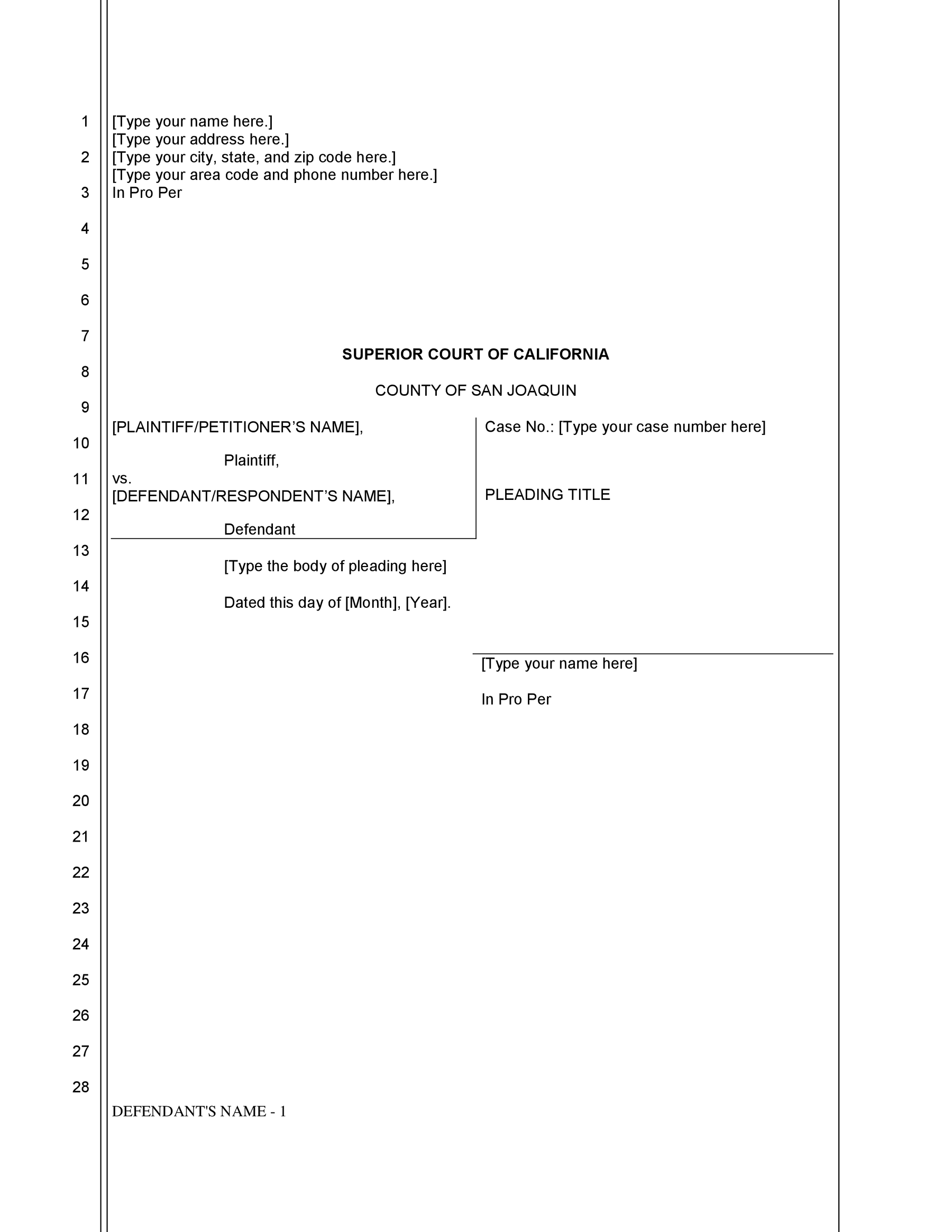
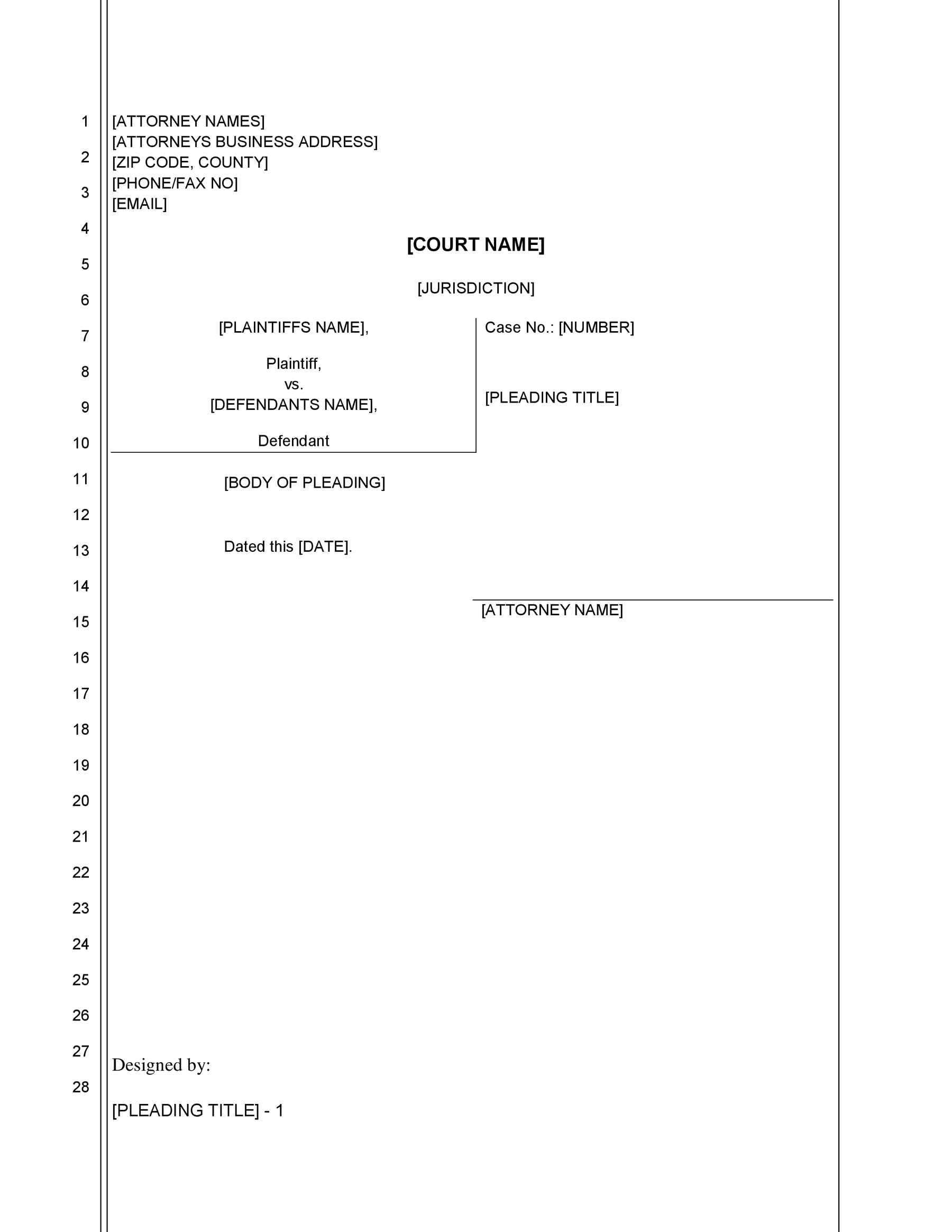
Numbered line system (1-28)
The first thing that caught your eye on the pleading paper is the numbered lines running down the left side, usually from 1 to 28. This is not just a random number; those numbers are intentionally here to help everyone in the courtroom for instantly referencing specific parts of your document (like “see line 12”).
Similarly, in many jurisdictions, especially the California courts, it is a must-have. If it’s missing or misaligned, your document can look unprofessional or worse, get rejected.
Caption section (top of page layout)
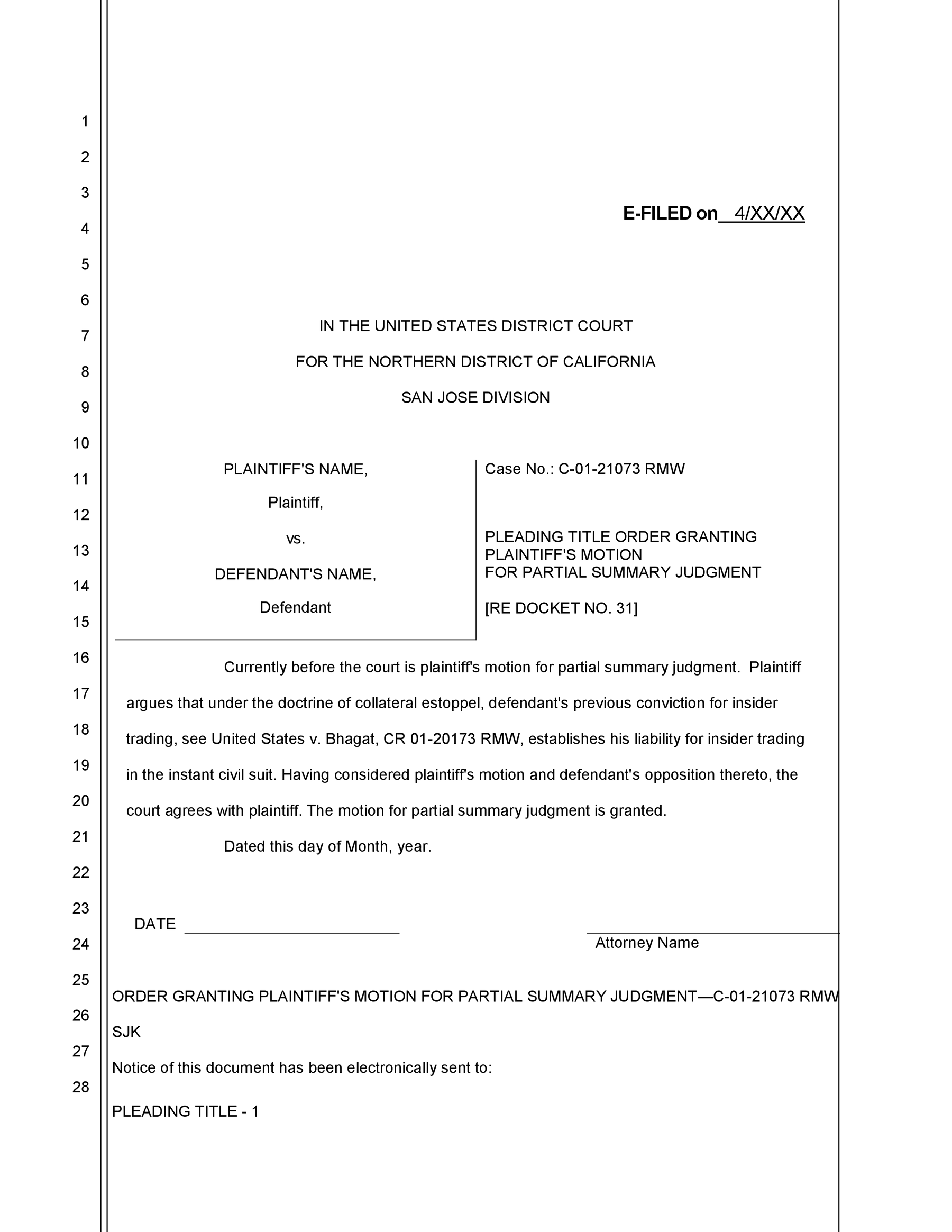
The caption refers to the top part of the template, which is where you will write all the basic details. Here, you will write the court name, the case title, and the case number. In simpler words, you can say this part of the document is for identification purposes. If this is not formatted correctly, it can confuse things fast, so that’s why getting this right is a big deal.
Body text formatting rules
The middle section, which is the body of the document, is where the actual content goes, but even here, rules matter. Most courts want a clean, readable text, usually in Times New Roman, somewhere between 12 and 14 point size.
Additionally, when it comes to spacing, it might vary depending on the court. Usually, most of the courts follow double spacing. Talking about margins, they are set to about 1 inch on all sides in federal court.
Footer/ document title placement
At the bottom, you will see the document title repeated, along with page numbers. Well, this is not a requirement for every court, but many templates include it as a standard practice. The main purpose of this is to keep the document organized, particularly in longer filings. You can take it as a small detail that adds a layer of professionalism and clarity to your document.
Quick note: Formatting is not the same for federal or state courts, so when you’re dealing with a document, make sure to check the specific requirements.
Federal vs State Pleading Paper Requirements
Not all courts play by the exact same rules. While the structure remains somewhat similar, small formatting differences between federal and state courts can make a big impact, so it’s important to know what goes for your case.
U.S. federal court format rules
The federal courts want things to be pretty standardized, but each district can have its own comprehensive rules. For instance, generally, documents must be on 8.5 x 11-inch paper, typed, and clearly readable. Margins and spacing are usually the same 12-14 point font, and 1 inch from all sides.
You can also refer to general federal formatting requirements here.
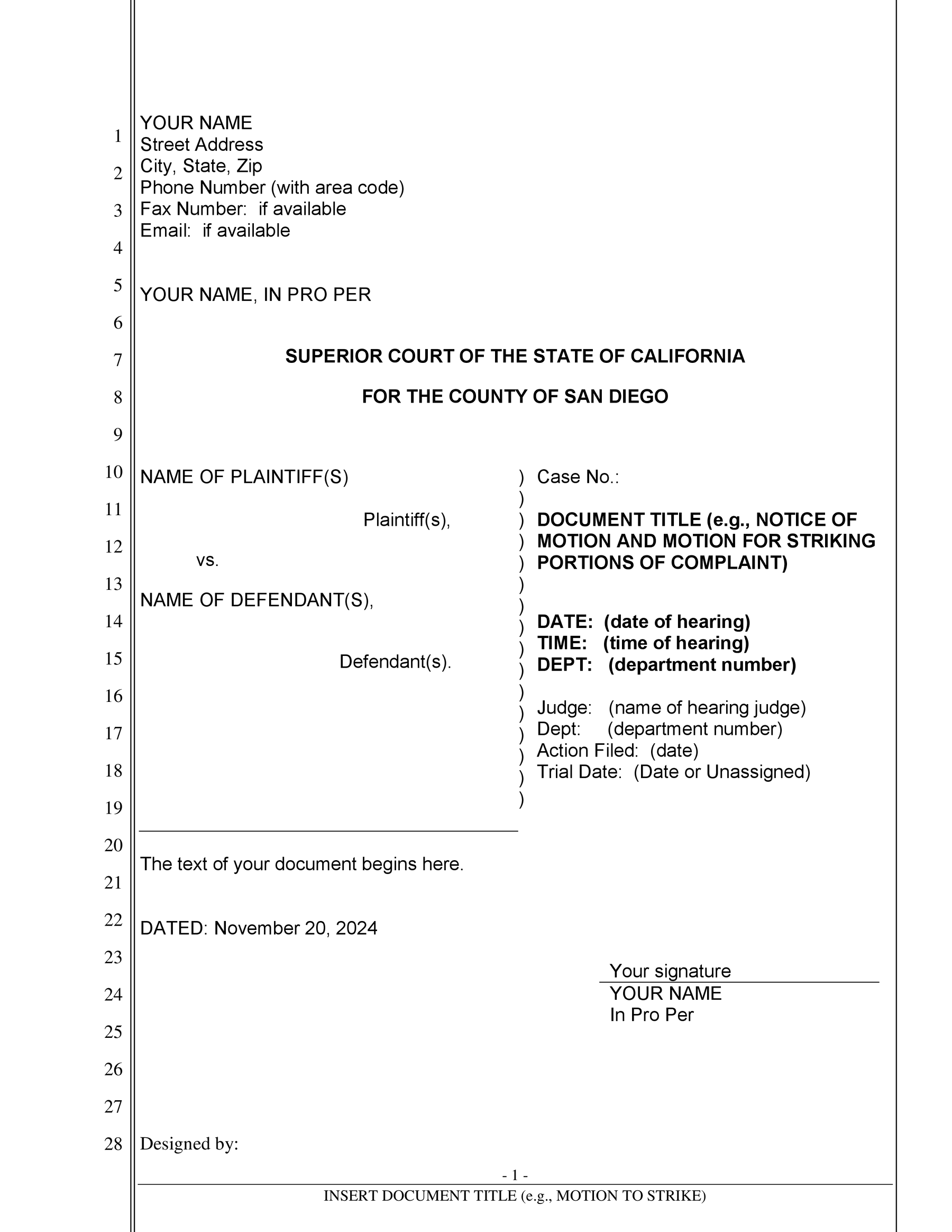
California pleading paper rules
California imposes more strict rules than most states when it comes to formatting. All courts demand pre-numbered pleading papers, and many documents follow Judicial Council-style formatting. Moreover, you need to be really serious with alignment, spacing, and first page layout because even small mistakes here can cause issues.
Other state variations (a brief overview)
Different courts, outside of federal and California, have varied requirements. Let’s say courts, like Oregon, demand double spacing and a strict 12-point font, and one-inch margins, along with proper page numbering and footers. For other states, it is always better to double-check your local court’s guidelines.
How to Use Our Pleading Paper Template
Now, come to the main point: is our template user-friendly or set in stone? Well, using our template is really simple once you know what to do. Start by downloading or opening a Word template, then change out the dummy text with your content.
Just make sure that all the details you’ve entered are accurate. Plus, don’t mess up with any section, spacing, margins, or line numbering as your document acceptance is all standing on them. Once everything from your side looks good, save the document in the required format (.docx or PDF), so it’s ready for filing.
Pleading Paper Template 01
Pleading Paper Template 02
Pleading Paper Template 03
Pleading Paper Template 04
Pleading Paper Template 05
Pleading Paper Template 06
Pleading Paper Template 07
Pleading Paper Template 08
Common Pleading Mistakes You Need to Take Care Of
Even small slip-ups can get your document rejected, so it’s worth knowing what to watch out for before you file.
- Changing Line Spacing Without Realizing It: Sometimes, when writing or editing in Word, you accidentally adjust spacing. This change might seem small, but it can throw off the entire format and make your document non-compliant with court rules.
- Skipping or Messing Up the Case Option: If you think “caption” is just a header, you’re wrong. It’s for inserting important case information, and if you do it wrong, you can confuse the filing and
- Using the Wrong Font or Font Size: It’s not about what font or size looks best; it’s what the court advises. If you switch or shrink text to fit more content, it can make your document a complete disaster.
- Misaligned or Broken Line Numbering: Most importantly, those numbered lines that appear on the side need to be perfectly aligned. If they shift or disappear, it defeats their purpose and may not meet court requirements, typically in states with strict regulations.
When Do You Need a Pleading Paper Instead of a Court Form?
The fact that you don’t need to file a pleading paper all the time, there are some circumstances, such as:
- When No Official Court Form Is Available: In case a court doesn’t issue a ready-made form for your situation, you need to draft your document using a proper pleading paper format.
- When Drafting Motions or Legal Arguments: These are sections that require custom writing, so when it comes to notions or detailed legal arguments, you need to follow a structured pleading format instead of filling blanks.
- When Filing a Civil Complaint: When someone starts a lawsuit, it involves creating a complaint from scratch, and that’s where pleading paper comes in.
- When Submitting Responses or Counterclaims: Moreover, there are no pre-made forms for giving replies, answers, and counterclaims, so for these reasons, pleading paper is also used.
- When a Custom Legal Document Is Required: Lastly, whenever you’re creating a document that needs a formal legal structure, without a preset template, you’ll need to rely on pleading paper formatting.
Final Thoughts: Mark The Checklist, Avoid Hassle
In conclusion, one tiny formatting slip can get your paper tossed out by the courts. While templates are a lifesaver for sure, you still need to nail the basics to stay on track: stick to the right paper size, keep those numbered lines intact, format your case caption properly, and don’t mess with fonts, margins, or spacing. Get these essential rights, and you’re already ahead of most filing errors.
Frequently Asked Questions
Do all US courts require pleading papers?
Well, not all require it, but most of them do, especially in cases where there’s no official form provided.
Can I create my own pleading paper?
Yes, of course! But it has proper formatting rules that are a must-have to follow. A small issue in this can lead to serious consequences, which is why most people prefer ready-made templates to avoid such hassle.
Is a pleading paper the same as a legal form?
Not at all, and this is where a lot of people get confused. A legal form is something you fill in, while this paper is just the format you use to write your own document.
About This Article