A prenuptial agreement is a legally binding contract between two partners before they enter into marriage. It is commonly known as a prenup.
It highlights how assets, debts, and other financial duties will be managed in the marriage or after separation or divorce.
Having access to ready-to-use and customizable templates simplifies the process of drafting a prenuptial agreement by providing a professional structure. It also allows partners and their lawyers to adapt the agreement to their unique requirements. This document is designed to be used by people preparing to marry, but to protect their interests, and attorneys who need a structured document to create enforceable agreements for their clients.
Why Use a Prenuptial Agreement Template?
Starting with a structured template ensures that you do not miss any crucial clauses, such as division of property, alimony, or debt responsibility. It also provides a clear framework that you can easily customize with advice from legal professionals to make it align with each couple’s personal and financial circumstances. Furthermore, using a template saves time and reduces costs as opposed to creating an agreement from scratch.
Core Components found in Prenuptial Agreement Templates
Prenuptial agreement templates contain key components that make them comprehensive, making sure they cover all the important details. These components are:
Parties and background
This is the first component on the template. This section identifies the people entering the agreement, which confirms their intent to marry and that they are doing so voluntarily. Include their personal information, such as full names, addresses, and background information, such as children, prior marriages, etc.
Definitions and terminologies
This section clearly defines all the legal terms and financial concepts used in the agreement, such as marital property, separate property, etc. Specify such terms so that partners involved have a consistent understanding.
Property and asset distribution
This is the section where you highlight how the property will be classified, i.e., marital and separate, and how it will be divided. Include what assets each partner brings into the marriage, how future assets will be managed, and rules concerning the assets.
Debt allocation
It specifies how existing debts will be handled and how future debts incurred will be shared. Such debts include student loans, mortgages, etc. Indicate who will be responsible for each debt to protect each partner from liability for the other person’s financial obligations.
Spousal support (Alimony)
This is important to avoid any disputes when the marriage ends. State whether alimony will be limited, waived, or determined by certain conditions in this section.
Estate and inheritance rights
It addresses what will happen to assets in the event of death. If applicable, you could include inheritance rights to children from previous marriages, and any beneficiaries for specific assets. You can also coordinate with any existing documents, such as wills.
Sunset clauses and duration
A sunset clause is a provision that states the agreement will expire after a particular time or when certain conditions are met, for example, the birth of a child. However, some couples prefer the agreement remain valid indefinitely.
Miscellaneous legal provisions
This is the last section of the component. It includes information on governing laws, dispute resolution methods, and standard clauses, such as termination and severance. Including this information makes the agreement legally enforceable.
Variations across templates
The contents of a prenuptial agreement vary depending on individual circumstances and the applicable legal jurisdiction. Key variations include:
Jurisdiction-specific differences
The structure and enforceability of prenuptial agreements depend on local laws. There are countries where marital property is divided equally, others divide assets according to need, and others according to each individual’s contribution. For example, in California, assets are divided equally, while in New York, fairness is considered.
Tailoring for specific cases
Templates can be customized to fit specific circumstances. For example, business owners would want to protect ownership stakes, future profits, and intellectual property. On the other hand, couples who have been previously married may include clauses that ensure children from prior marriages have inheritance rights. There are also international marriages that require the template to address cross-border assets.
Optional clauses
Couples may want to add additional clauses, such as limits on debt, how household expenses will be shared, child-rearing expenses, etc. These clauses may not be legally enforceable, but they will give clarity and understanding.
Downloadable Templates
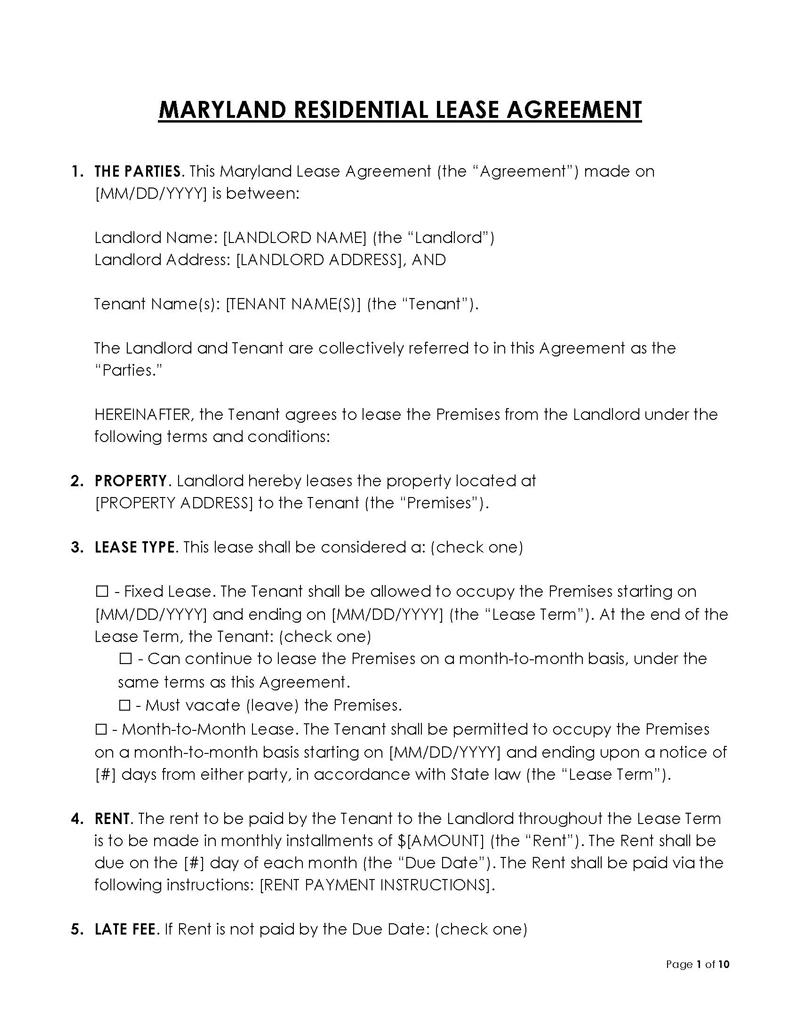
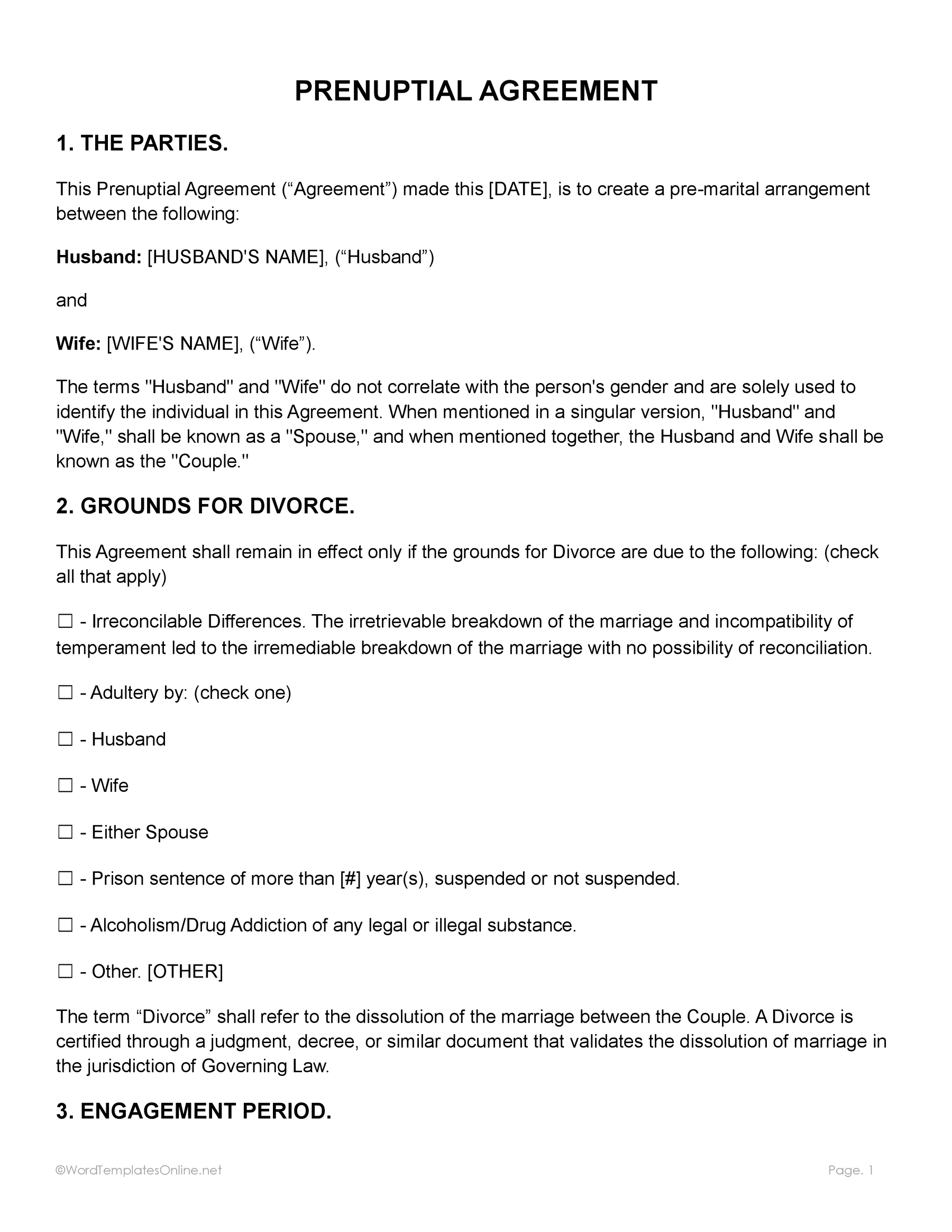
Prenuptial Agreement Template 01


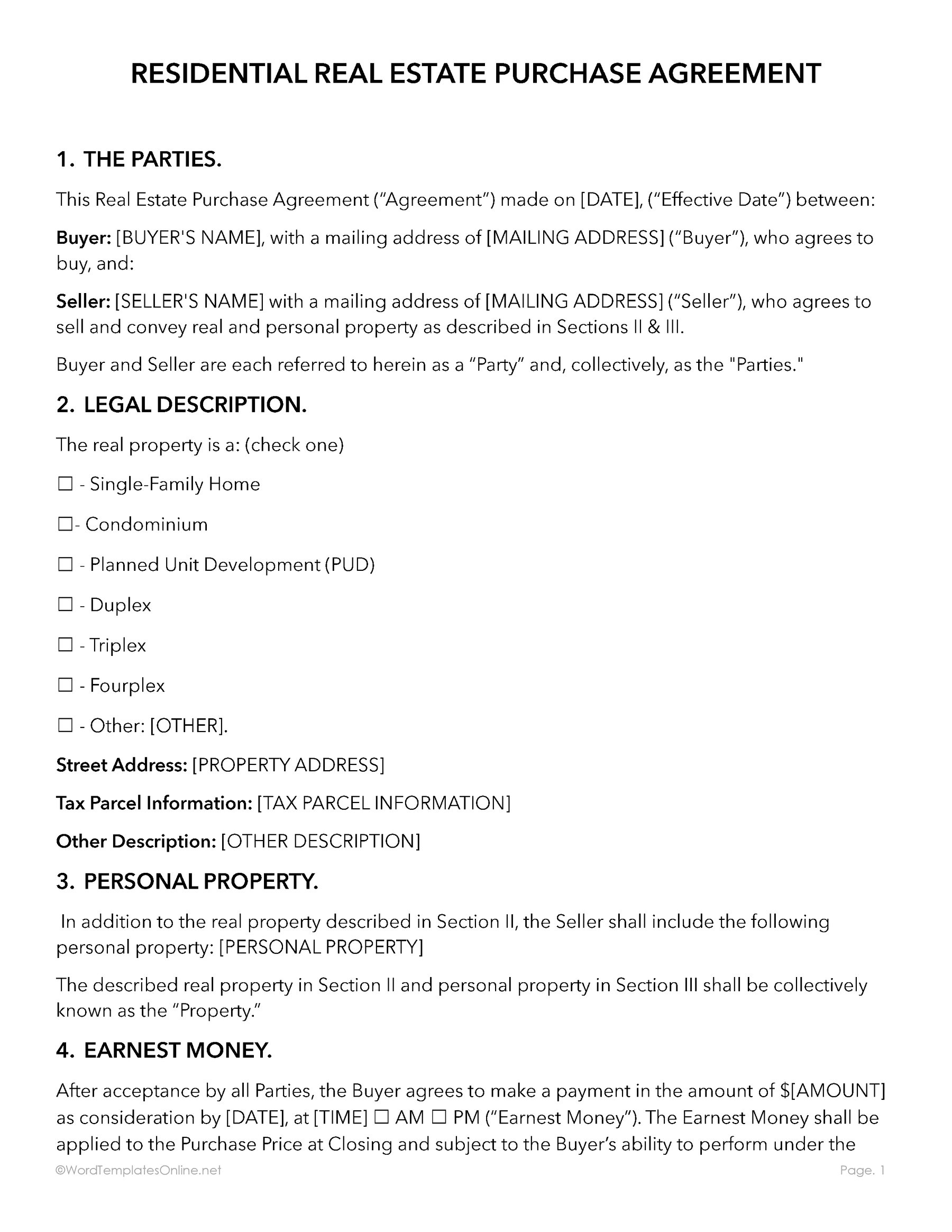
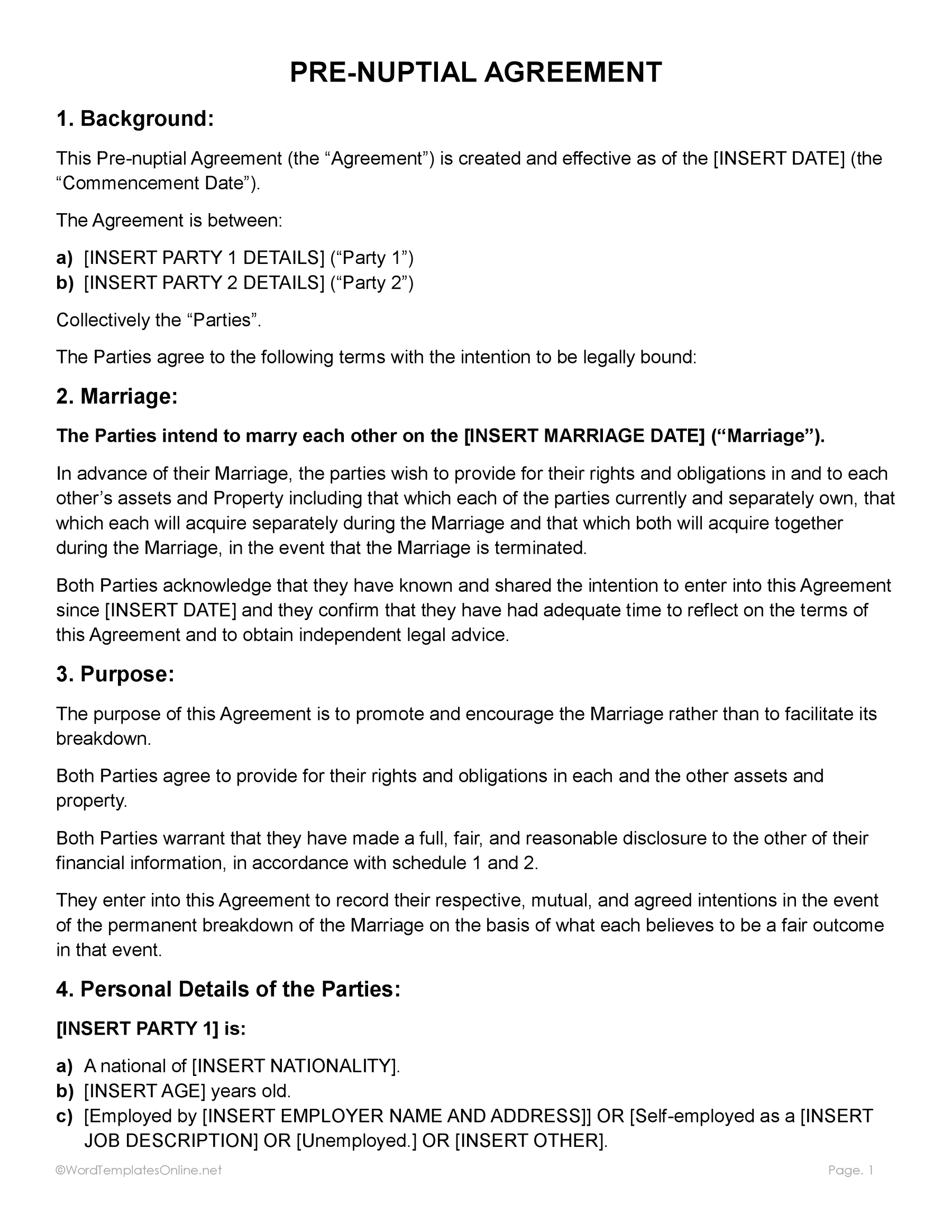
Prenuptial Agreement Template 02


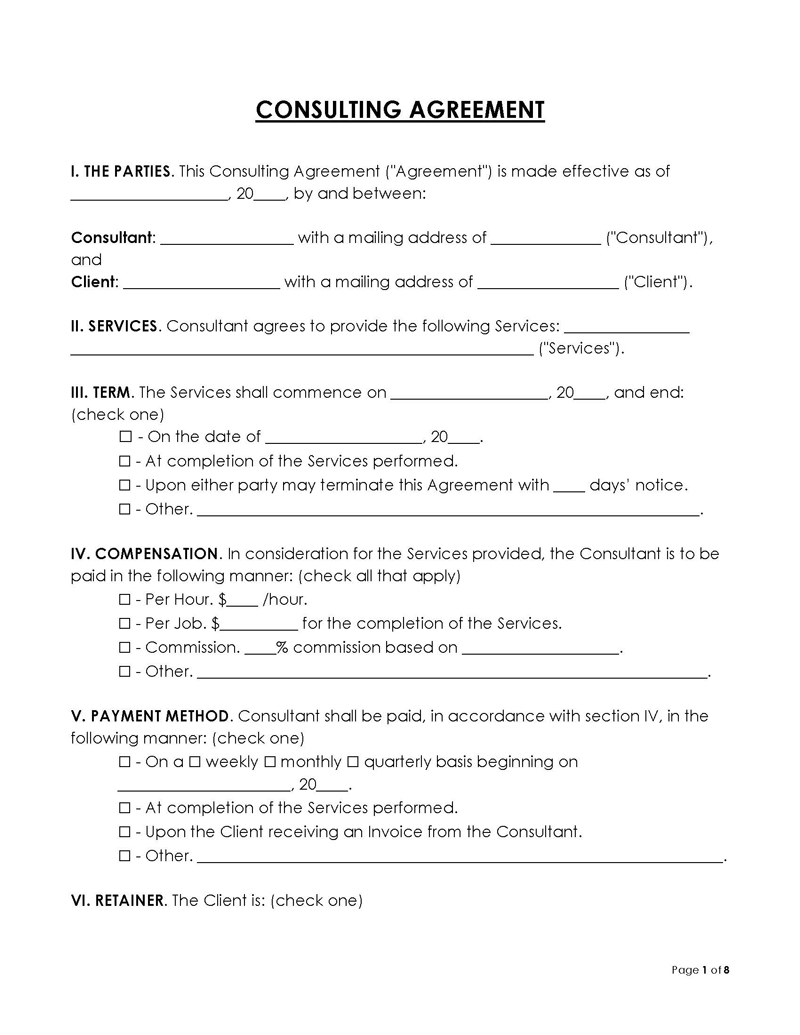
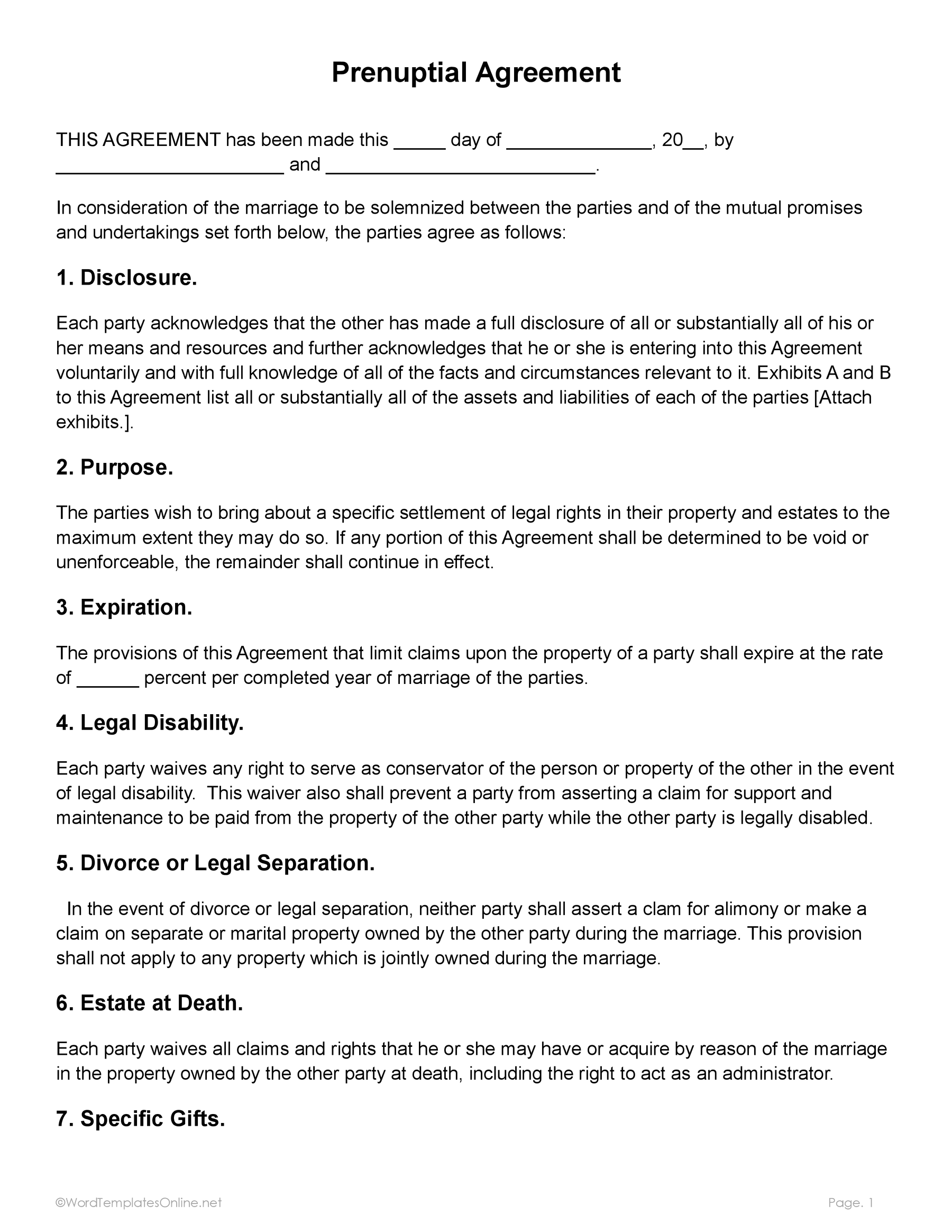
Prenuptial Agreement Template 03

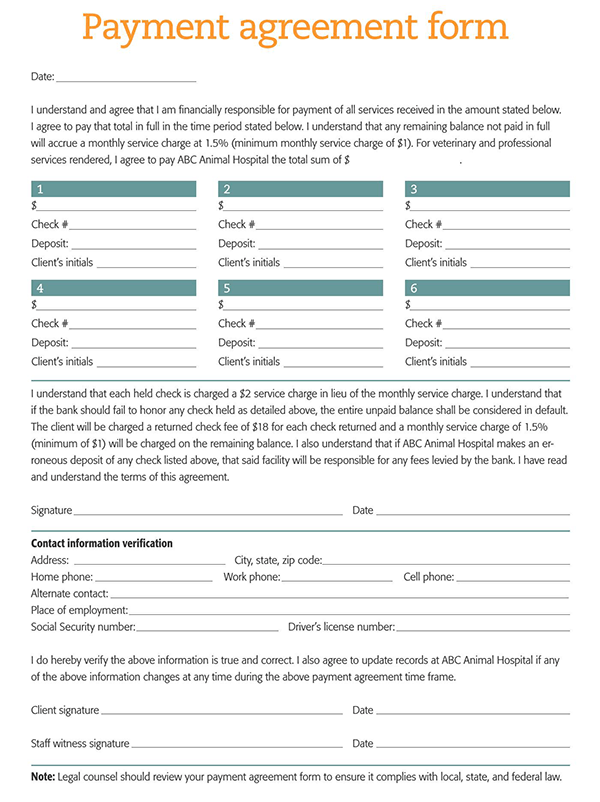
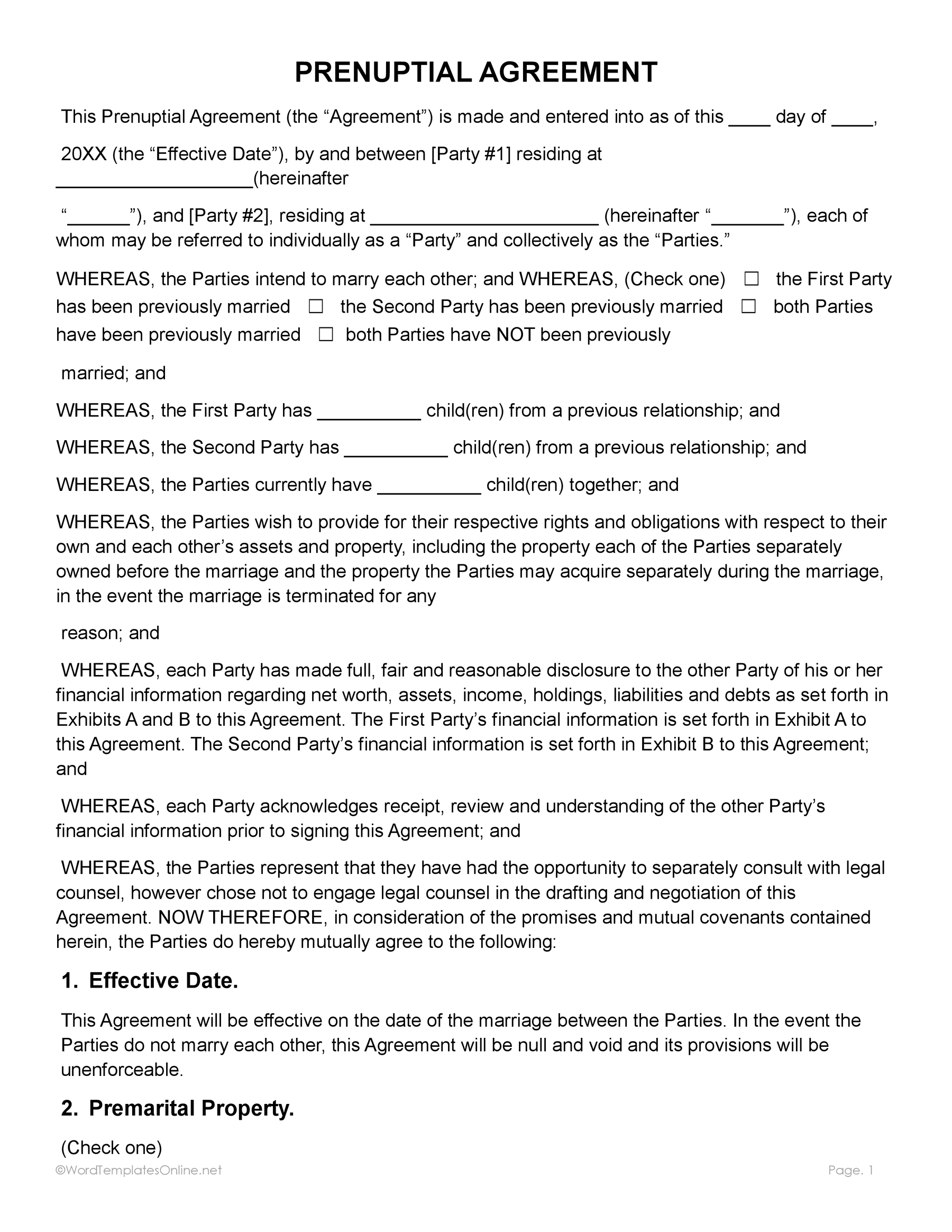
Prenuptial Agreement Template 04


Legal Worth of a Prenuptial Agreement Template
Enforceability basics
Courts often uphold prenuptial agreements that meet the three main requirements. They are:
- Full disclosure on each partner’s assets, debts, and current financial situation.
- Fairness in provisions to prevent exploitation.
- Voluntariness to make sure that no party was coerced into the agreement.
Template limitations
Templates only provide structure and a starting point. However, for the agreement to be enforceable, it needs to be tailored to a couple’s circumstances and comply with governing laws.
Jurisdictional considerations
Legal requirements vary from state to state. For example, some countries may require the agreement to be notarized and witnessed, while others may require each party to have independent legal counsel. Always seek advice from legal professionals in your area concerning regulations on prenuptial agreements.
Best practice
It is recommended that both parties go through the agreement with their legal counsel separately before signing. This makes sure that fairness was observed and no one has been coerced.
Bottom line
The template has legal worth only after completion and execution according to governing laws and after review by legal professionals. Otherwise, it may not be enforceable.
How to Use and Customize a Template
- Both parties should disclose all assets, liabilities, income, and future financial expectations for the agreement to be viewed as fair in a court of law.
- Customize the template to address specific issues relevant to your circumstances. For example, business owners may need to address ownership rights, profit sharing, etc.
- Get independent legal advice for each party to ensure fairness is observed and that both parties understand their rights and responsibilities before signing.
- Make the template enforceable by customizing it according to local state laws, such as notarization, witness signatures, etc.
Common Mistakes to Avoid
- Using a template without legal review can leave gaps, introduce inconsistencies, or render the document unenforceable.
- Failure to disclose all assets and debts could invalidate the agreement since courts require full disclosure for an agreement to be valid.
- Not considering state-specific laws. This can invalidate the agreement as prenuptial agreement laws differ by state.
- Signing the agreement too close to the wedding date. The courts may view this as coercion. The agreement should be finalized weeks or months in advance of the wedding to avoid claims of duress or undue influence.
Conclusion
Prenuptial agreement templates serve as a starting point for drafting a comprehensive agreement. However, for the agreement to be enforceable, always consult legal professionals in your area for reviews. This will also make sure that it meets local law requirements and that the agreement is fair. It is essential to note that each party should have independent legal counsel when customizing the template to ensure it meets their unique circumstances.
About This Article