When an employer asks you to submit biodata with a covering letter, the two documents have different jobs. Your biodata records your education, skills, and experience. The covering letter introduces your application and explains why some of those details matter for the position you’re applying for. It gives the employer a connection they might otherwise have to make themselves.
You don’t need to repeat your entire biodata in the letter. Instead, choose something relevant to the vacancy and explain what you’ve actually done. Keep in mind that employers may use the term biodata differently. Follow the application instructions and provide the documents they’ve requested.
The ten biodata covering letter templates below give you a starting layout for your letter. They’re available as Microsoft Word templates (DOTX), ODT files, and linked Google Docs versions. All use portrait US Letter pages with decorative borders. Some include sample paragraphs for particular occupations, while others have writing prompts or placeholder text for you to replace. Choose a layout that suits the employer’s requirements and leaves enough room for your finished letter.
Biodata Covering Letter 01
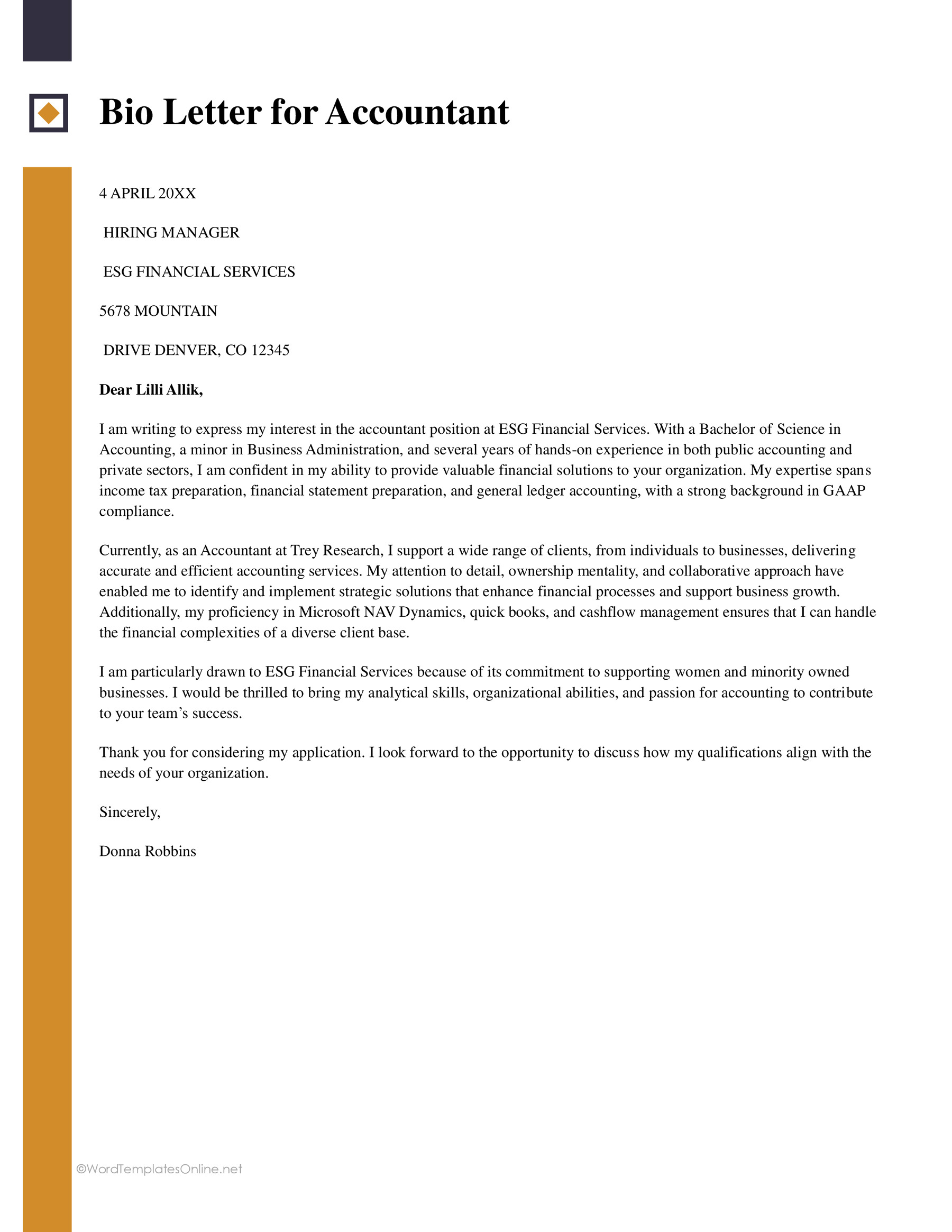
Biodata Covering Letter 02
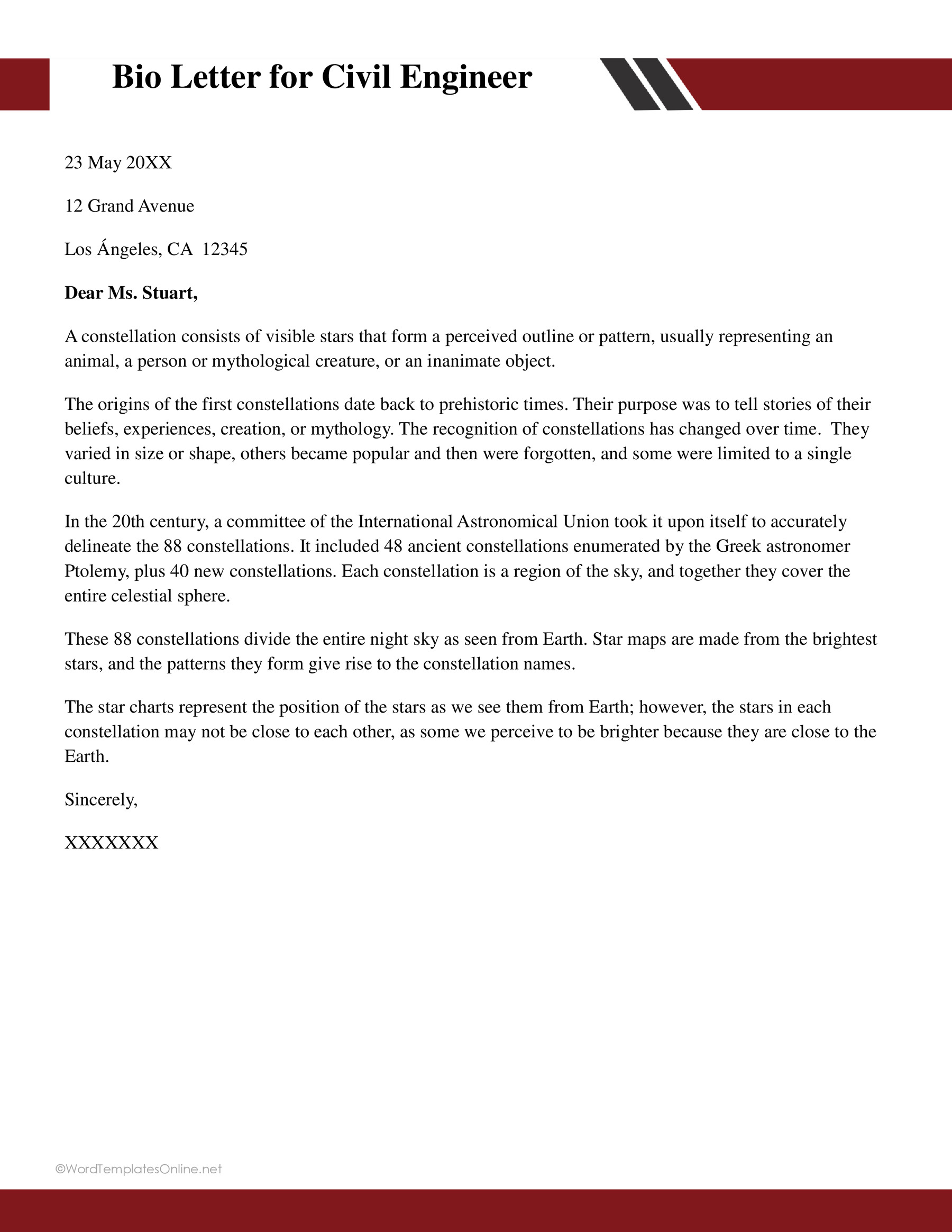
Biodata Covering Letter 03
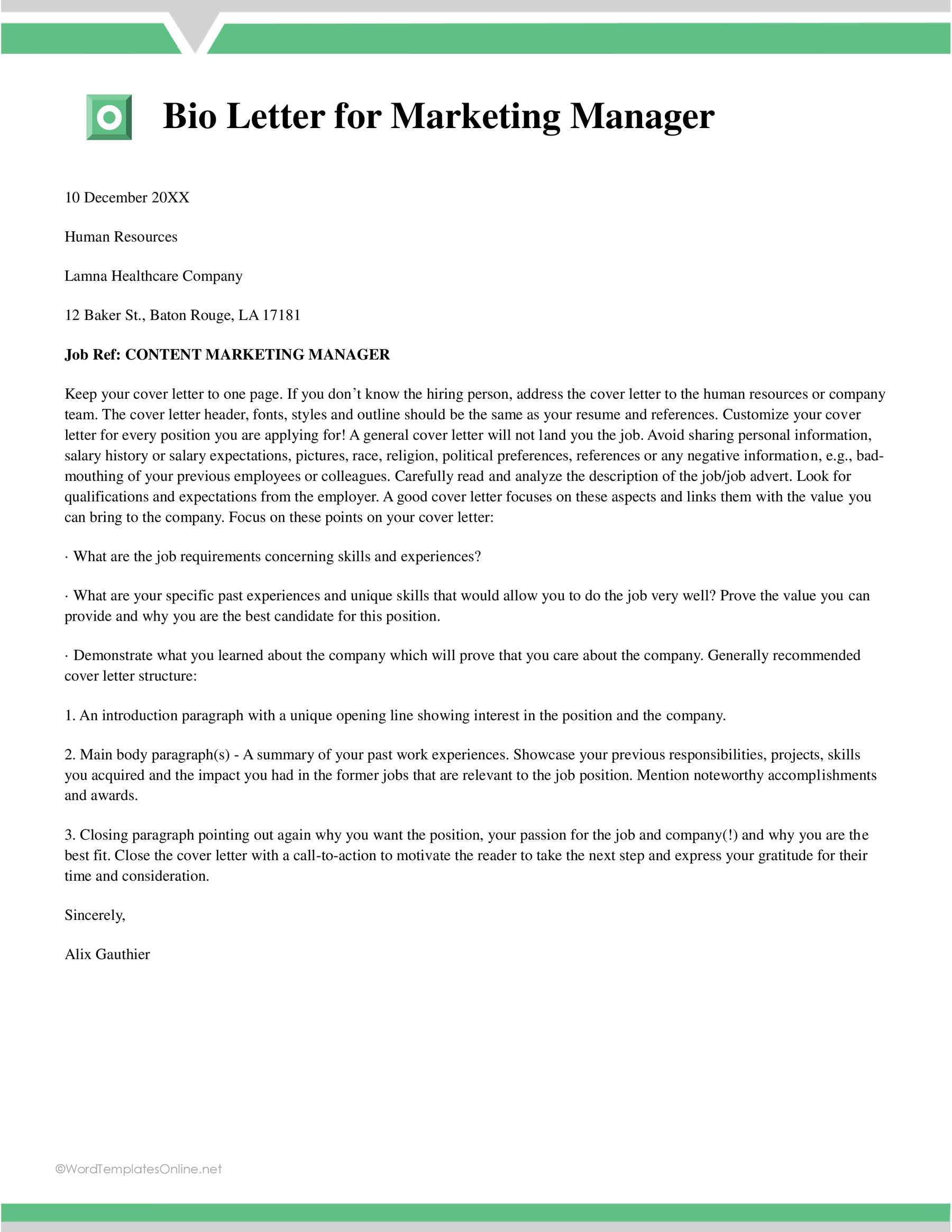
Biodata Covering Letter 04
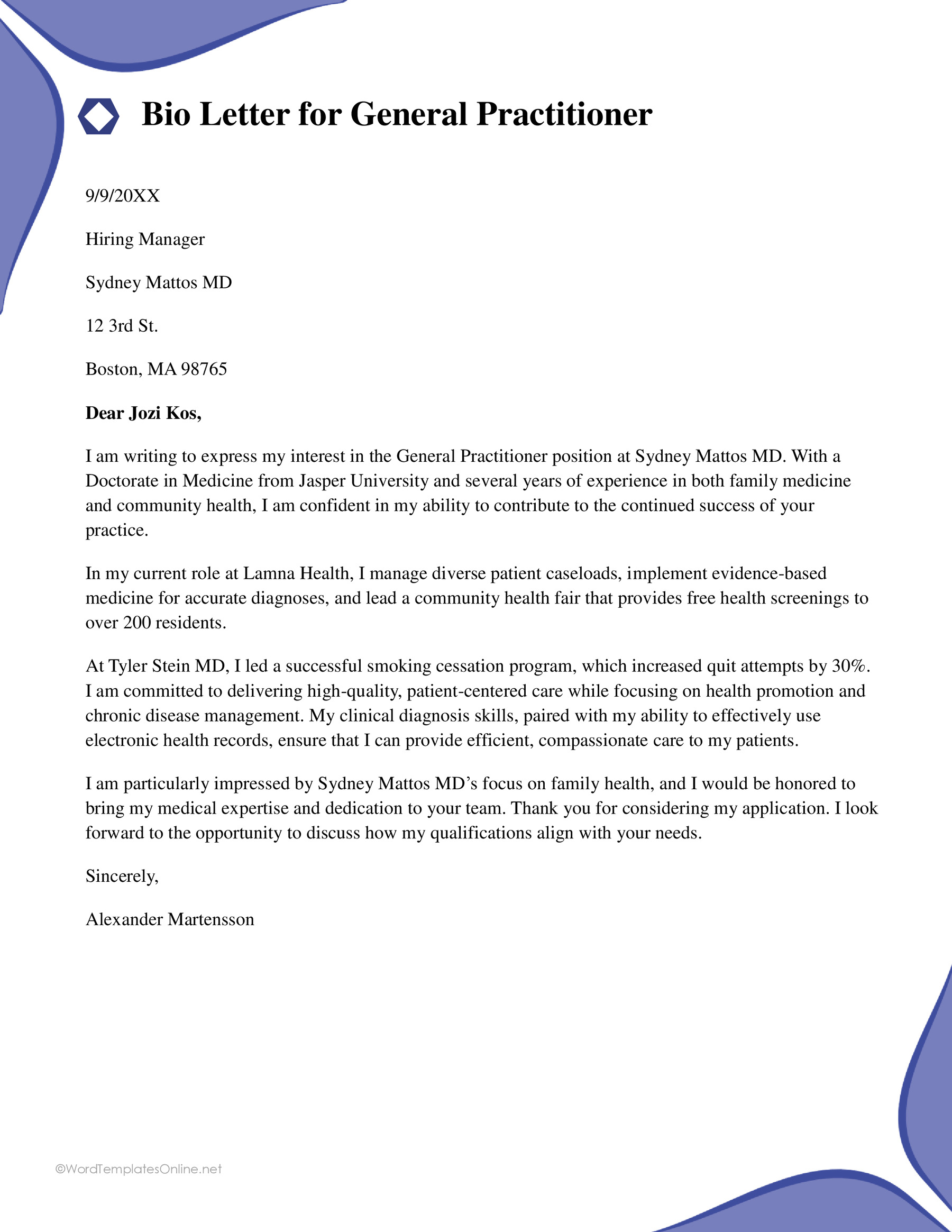
Biodata Covering Letter 05
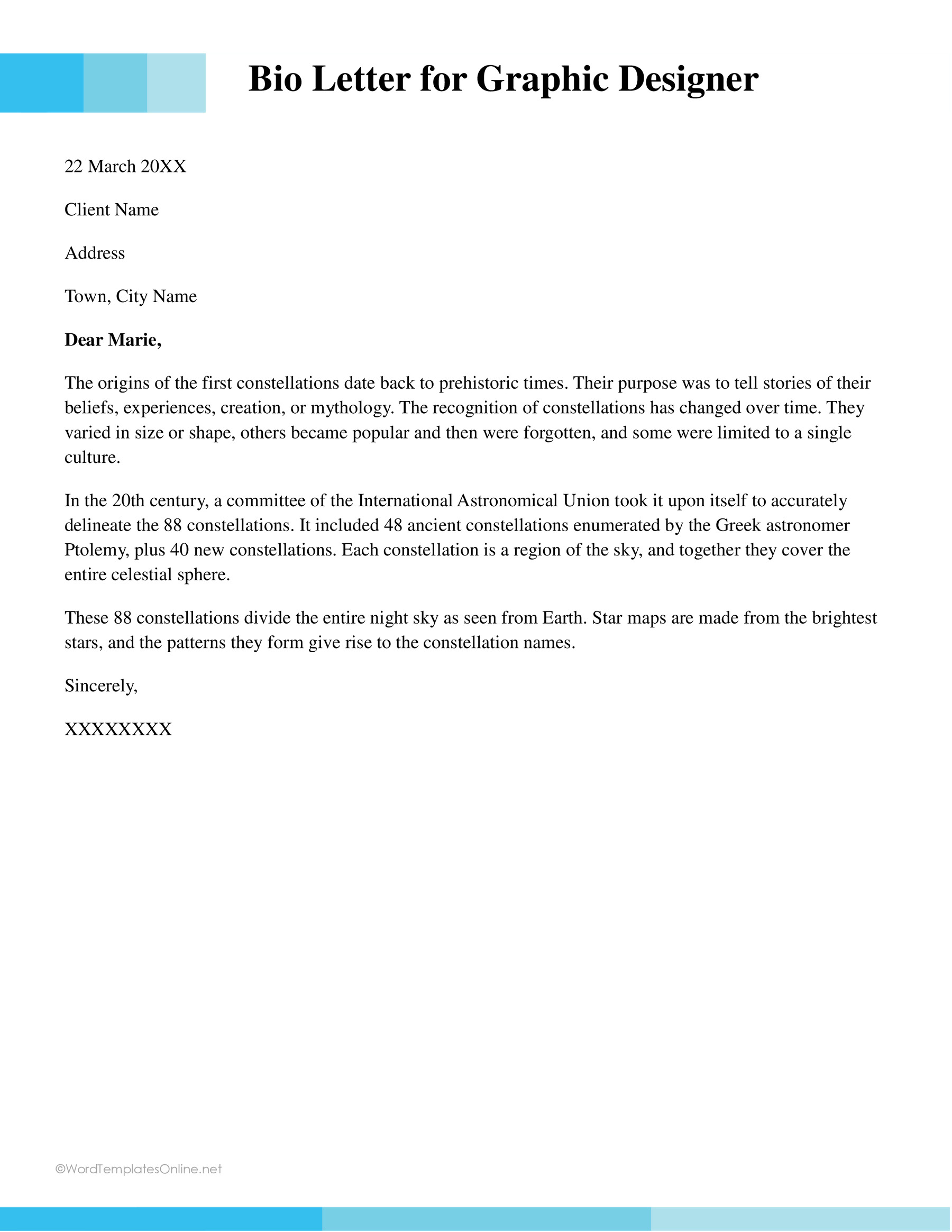
Biodata Covering Letter 06
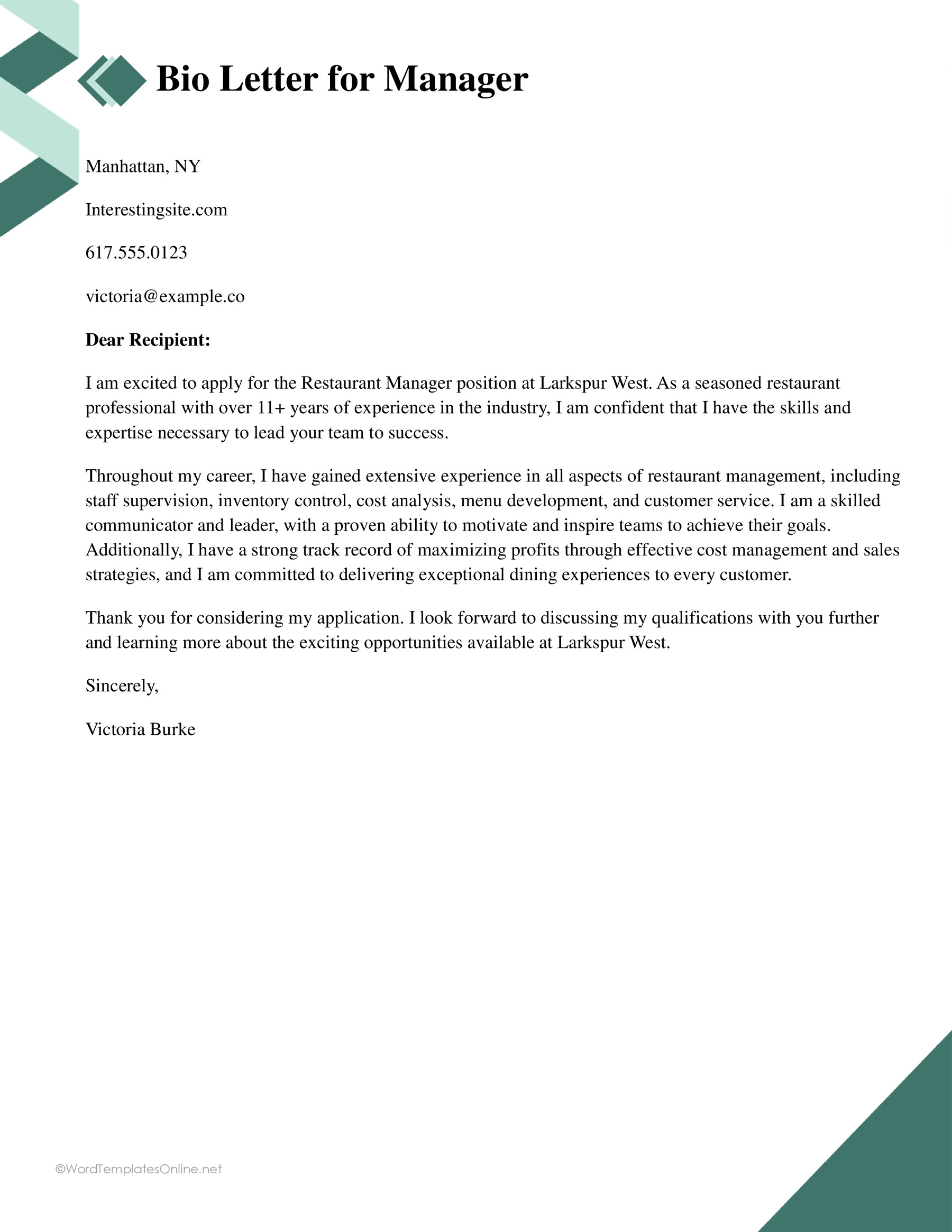
Biodata Covering Letter 07
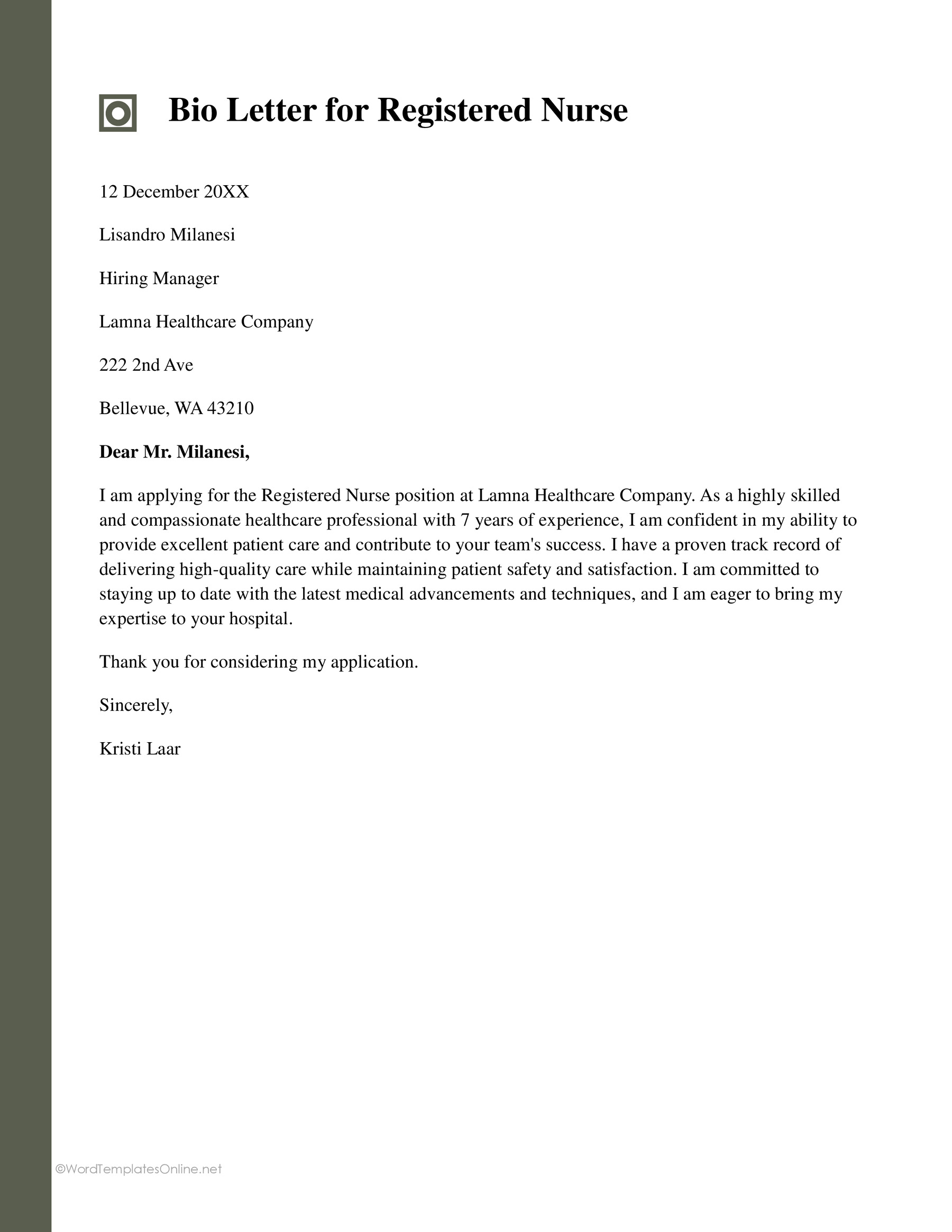
Biodata Covering Letter 08
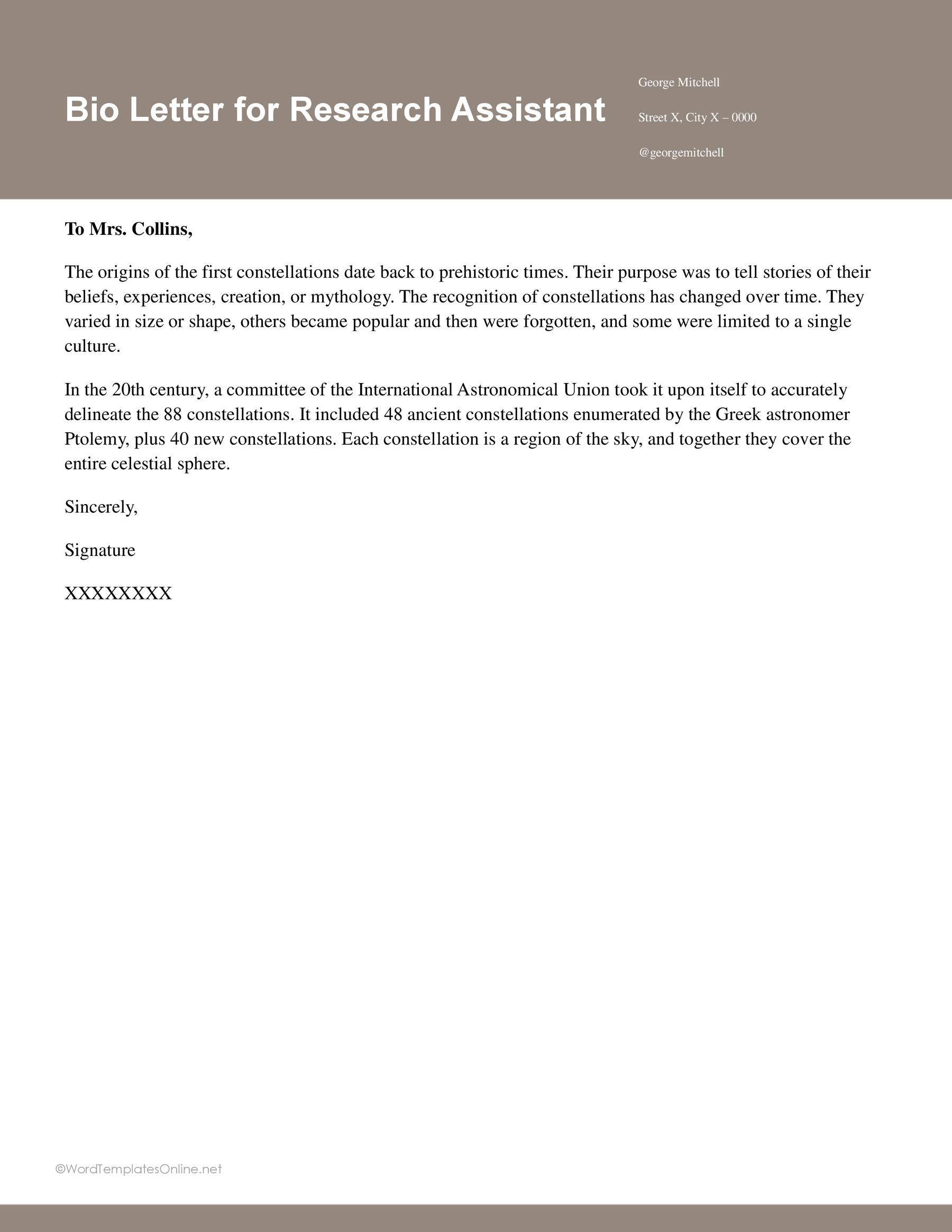
Biodata Covering Letter 09
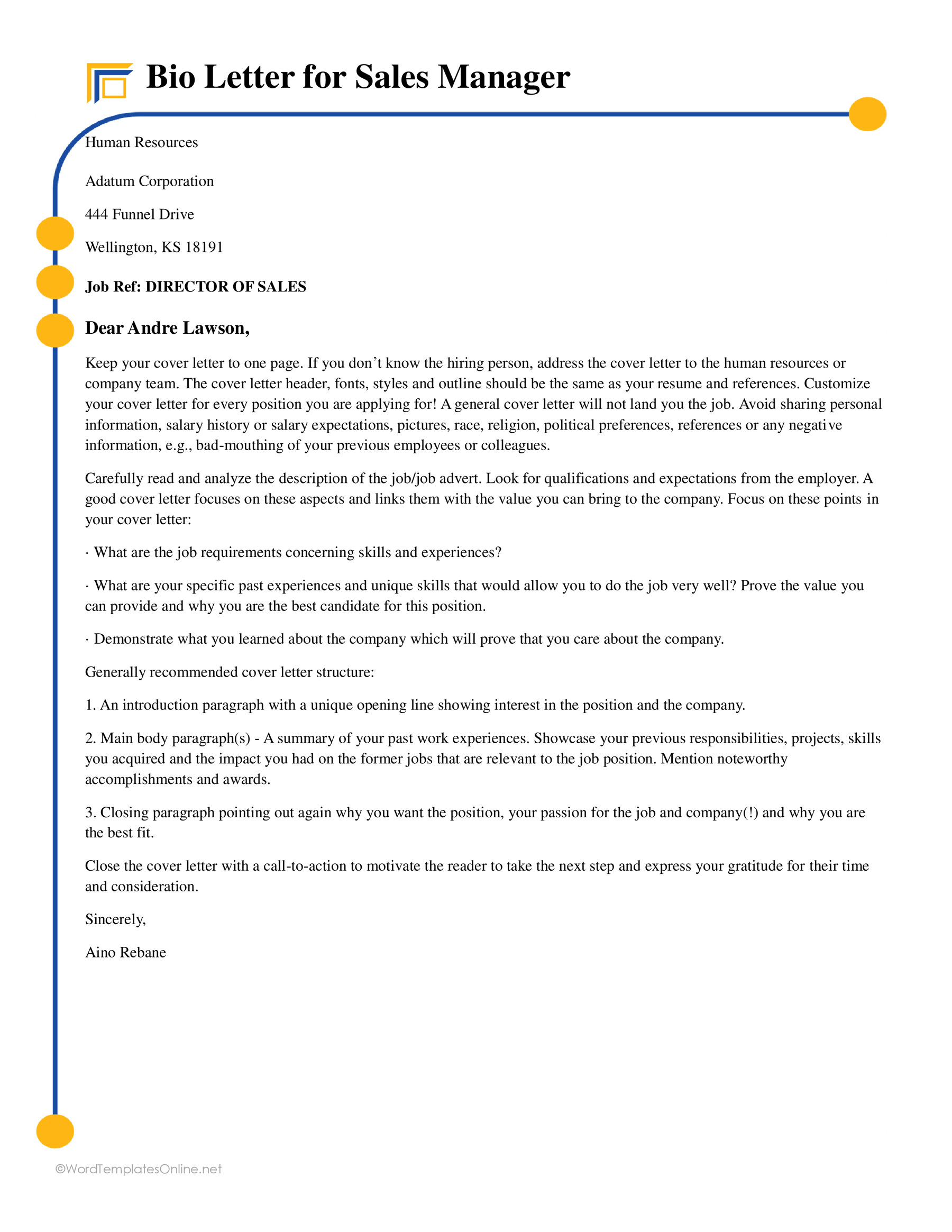
Biodata Covering Letter 10
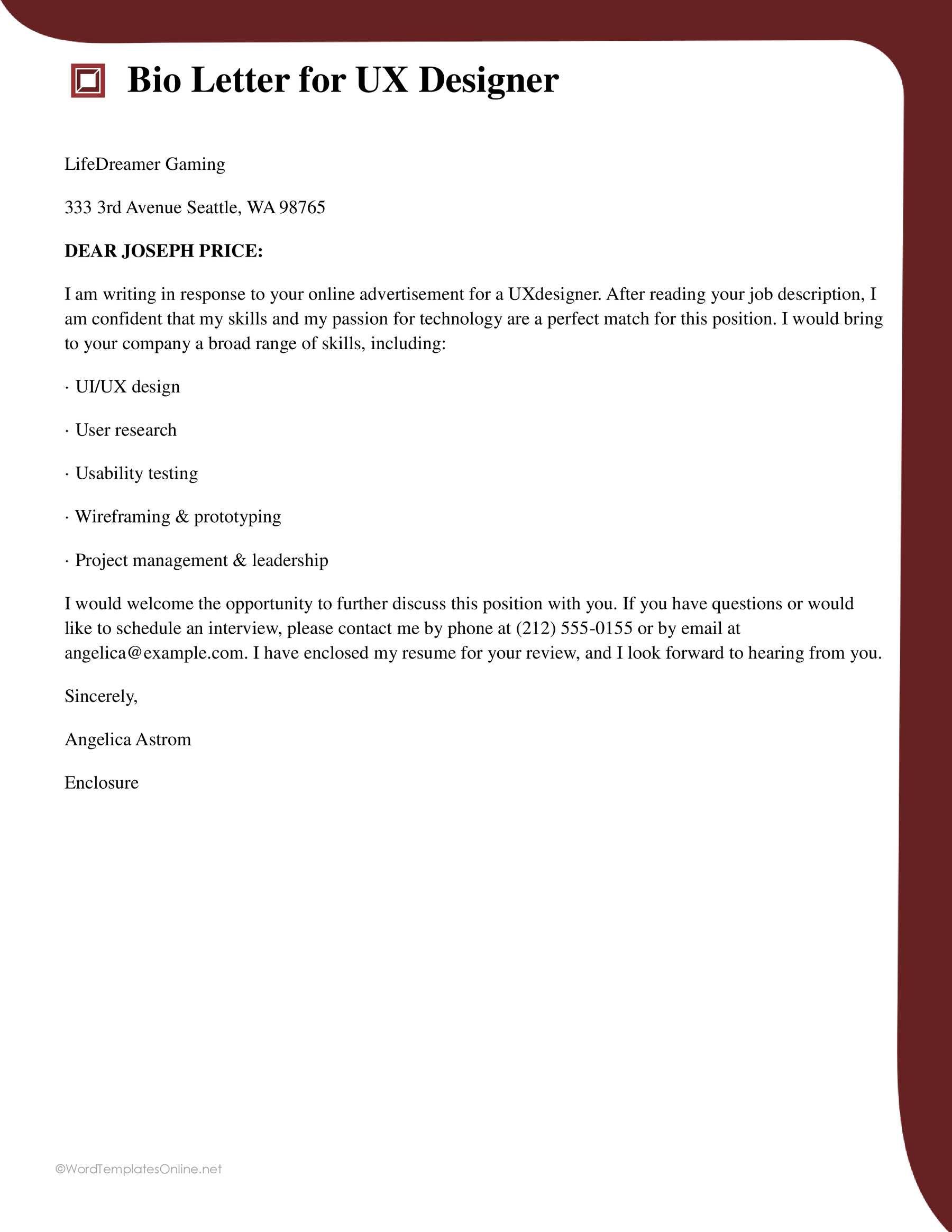
Start with the requirement you can actually support
Before writing your letter, put the job posting beside your biodata. Look at what the employer is asking for and identify a requirement you can support with something you’ve actually done. That experience might come from a previous job, a university project, volunteer work, or another relevant responsibility.
Don’t feel you have to address every requirement in the posting. One well-chosen example can tell the employer more about your background than several general claims about your abilities.
Imagine a vacancy that asks for someone who can maintain accurate records and coordinate arrangements. In this invented example, a student has listed membership in a university events society under extracurricular activities in their biodata.
Membership alone doesn’t explain the student’s responsibilities. Suppose they also helped maintain the society’s event booking list and confirmed arrangements with organizers. That gives them something relevant to discuss.
Consider the difference between these two statements:
Too general: “I am highly organized and have excellent teamwork skills.”
More specific: “I kept our society’s event booking list up to date and confirmed arrangements with event organizers.”
The second statement describes work the student actually performed. It also relates directly to the vacancy’s requirements without claiming professional experience the student doesn’t have.
This approach is consistent with the University of Michigan’s cover letter resources, which recommend drawing on relevant work, academic, volunteer, and other experiences to show how your background relates to a position.
The useful detail won’t always be your biggest achievement. It might be a responsibility you handled regularly or a problem you helped address. Think about what the employer needs to know, then find the most relevant evidence in your own background.
If you maintained records, explain what you were responsible for. If you helped with a project, describe your contribution rather than taking credit for everything the group accomplished. You don’t need impressive numbers when you don’t have them. An accurate explanation of your work is enough to give the employer something meaningful to consider.
Turn that connection into a short covering note
Once you’ve selected a relevant experience, you can build a short letter around it. Identify the position you’re applying for and explain your interest in the work. Then introduce the experience that relates to the employer’s requirements. Close by referring to your attached biodata and thanking the recipient for considering your application.
Here’s how the student from our invented example might write their letter. The bracketed details should be replaced with the applicant’s actual information.
Biodata covering letter example
[Date]
[Hiring Manager or Hiring Team]
[Organization Name]
Subject: Application for [Job Title] — [Job Reference, if provided]
Dear [Hiring Manager or Hiring Team],
I am applying for the [Job Title] position at [Organization Name]. I’m interested in the role because it involves recordkeeping and coordination, which I’ve gained some experience with through my university activities.
While helping my university society organize events, I maintained our booking list and confirmed arrangements with organizers. These responsibilities gave me experience in keeping records accurate and following up on important details.
I have attached my biodata for further information about my education and activities. Thank you for considering my application.
Sincerely,
[Full Name]
[Contact Information]
The letter identifies the vacancy and gives one example of relevant experience. It doesn’t need to cover every course the student completed or every activity listed in the biodata. Those details are available in the attached document.
The example also shows why it’s worth writing the letter with the job posting in front of you. Without that context, the student’s event work might seem like a small extracurricular detail. For a position involving records and coordination, it’s worth explaining.
If you haven’t held a paid job, don’t assume you have nothing useful to write about. A course project, volunteer responsibility, or group assignment may have involved tasks relevant to the vacancy. Describe what you personally contributed and keep the level of responsibility accurate. Helping coordinate a student project, for instance, isn’t the same as managing employees in a professional role.
Be particularly careful when applying for positions that require professional qualifications or licenses. Only mention credentials you actually hold. A training course or academic activity shouldn’t be presented as professional certification or licensed experience.
MIT’s guide to writing an effective cover letter also discusses connecting selected experiences to the position rather than repeating the information already found in a resume.
If you need help with general letter sections, greetings, or formatting, our guide to writing a cover letter for a resume covers those broader details. For this letter, concentrate on explaining what makes your attached biodata relevant to the vacancy.
Check the letter and biodata together before sending
With your wording ready, open a personal copy of your chosen template and replace the sample content with your own information.
Don’t assume a template is ready to send because its sample occupation matches yours. Some of the supplied layouts contain professional examples, while others include instructions or unrelated placeholder text. Read the entire letter and remove anything that doesn’t belong in your application.
Replace the sample names, dates, recipient details, job references, and contact information. Pay particular attention to qualifications and achievements in the example paragraphs. A claim printed in a template isn’t something you can use unless it accurately describes your own background.
Next, read your covering letter and biodata side by side. They should agree about your education and experience.
For example, if your biodata lists a university volunteer role, your covering letter shouldn’t describe it as paid employment. Check that job titles, dates, qualifications, and contact details match wherever they appear. If you’ve adapted a letter from an earlier application, check that the employer’s name and vacancy reference are current.
The employer’s submission instructions also matter. Confirm which documents are required and whether the organization has specified a file type or application method. Some employers may want the covering letter as a separate attachment, while others may ask for it in an application form or email. Follow the actual request rather than assuming the same format works everywhere.
The supplied templates use decorative borders and US Letter page layouts. They give your letter a designed appearance, but that doesn’t establish compatibility with every employer’s application system. A simpler layout may be more appropriate when the employer requests plain text or provides particular formatting instructions.
After adding your content, preview the finished letter in the form you intend to share. Longer paragraphs or contact details can affect the layout. Look for text extending into borders, awkward page breaks, or lettering that’s difficult to read. If you’re printing the letter, check its appearance at the intended paper size.
The original templates also contain source credits. Keep those in the template and select the intended application pages when preparing your final output.
Before sending, open the actual letter and biodata files you’re about to submit. Check that both documents display correctly and that you’ve attached the right versions. Confirm the recipient or application portal and any requested reference number.
The employer should be able to identify the position you’re applying for, understand the relevant experience you’ve highlighted, and find the supporting details in your biodata.
About This Article