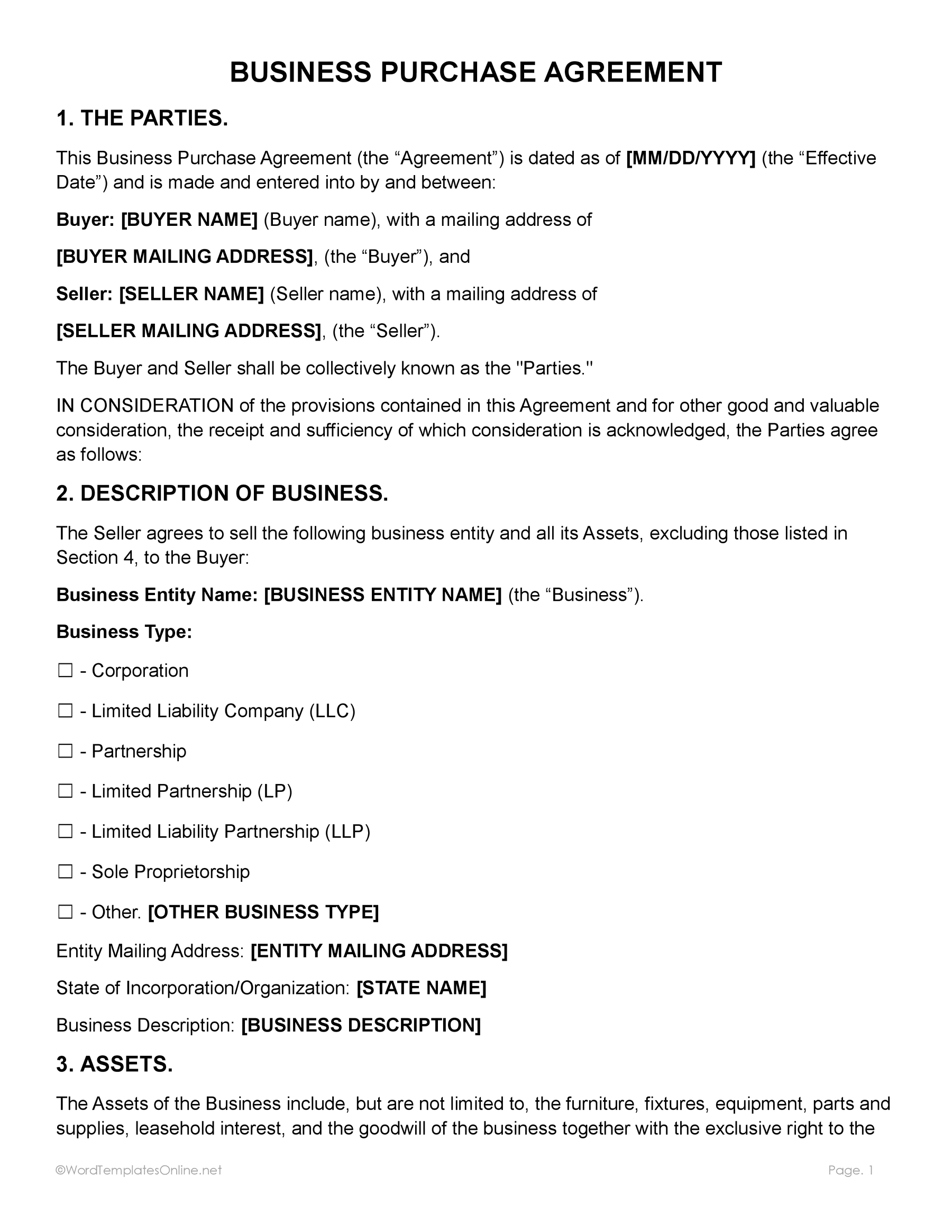
The term “certificate of incumbency” is not just a fancy and complicated legal word that only lawyers and large corporations use. In reality, it’s a pretty straightforward document that plays an important role in everyday business operations. In case you’re opening a bank account, cracking a deal, signing a contract, getting financing, or working with international partners, there’s a solid chance someone will ask for proof of who is actually authorized to represent the business.
That’s where you need a certificate of incumbency. It’s generally an official record that checks a company’s current officers, directors, or authorized representatives and confirms their authority to act on behalf of an organization. This is just a simple definition, but if you want to know when it’s used, what information it includes, and how a ready-made template can make the entire process quick, this blog is for you. Let’s get started:
Is a Certificate of Incumbency Just a Normal Corporate Document?
Not at all. It is basically an official list of a company’s officers, directors, or authorized members. This document literally takes away the hassle of maintaining multiple corporate records because it gives banks, investors, and third parties a quick verification of who is allowed to sign agreements, make decisions, or represent a company.
This certificate usually includes the company’s legal name, the names of current officers or directors, their official job titles, and the authority within the organization. Additionally, it may also include signature specimens and the date the information was certified.
One important thing is that it must be signed and issued by a corporate secretary, assistant secretary, or another authorized company officer who is responsible for maintaining corporate records. In some cases, a legal professional may help with preparing the document.
Why Companies Use This Official Legal Record
First of all, yes, it is considered an official corporate record because it is based on the company’s internal records and governance documents. Now, coming to the main question: why do companies use it? Well, the document is extremely important during financial, legal, and corporate transitions.
When a business is opening an account or applying for financial services, they need a certificate of incumbency. Usually, banks need to authenticate who is responsible for managing accounts, signing documents, and making financial decisions before giving access or approving transactions.
In addition to that, this document is frequently demanded during international business dealings, where foreign banks, investors, and partners may need proof of the company’s leadership before moving forward with agreements or investments.
Plus, it is equally useful when verifying authority for contracts, legal agreements, and other documents. Apart from legal and administrative purposes, the document develops a sense of trust with third parties by offering clear evidence that a company is represented by authentic individuals, making business transactions seamless and reliable.
Breaking Down a Certificate of Incumbency Template
A template may look formal at first, but it’s actually quite simple once you understand its sections. Each part has a specific purpose; let’s find out here.
1. Company and officer information section
This is that classic, standard section you’ll see at the top of pretty much every template, and it’s basically the company ID card. It packs in all the general details about the business and people running the show, and a quick overview of the current officers or directors. The whole point here is to easily verify the organization and double-check who is holding the keys to the big positions.
2. Authorized signatories table
Well, this is the most important part of the template, and it shouldn’t be missed. It is used to list the officers or members who are allowed to sign contracts, agreements, financial documents, and other official paperwork on behalf of the company. This allows partnerships to instantly verify who has decision-making authority.
3. Signature verification area
This part is to capture the signatures of authorized officers and may include specimen signatures for verification purposes. If you have recorded the signature, this helps banks, legal teams, and business partners authenticate the identity of individuals signing future documents.
4. Certification statement
If you see this section in a template, this is the part where a formal declaration is put in. It makes sure that the information given in the section is accurate and that the names mentioned and the representatives are valid for the companies. This section gives the document its official purpose and confirms the information being presented.
5. Date and execution section
This is the final section of the document, and it’s basically where things get official. It holds the exact date the certificate was handed out and the signature of the corporate secretary (or anyone authorized boss who’s in charge). Putting this at the end proves exactly when the document went live, making sure anyone reviewing it knows that information is credible and legit.
Choosing the Right Certificate of Incumbency Template
If you think you can grab one certificate and use it for literally every case, think again. It doesn’t work that way. Even though the basic structure looks the same, the specific one you need depends entirely on how you’re using it, how huge your company is, and how many corporate officers you need to jam onto one page.
Simple corporate verification templates
As the name suggests, these templates are best for businesses that only need to verify a few key officers or directors. They generally focus on important company details, officer information, and certification statements. Overall, the goal is to make a template that is a quick and simple option for routine business use.
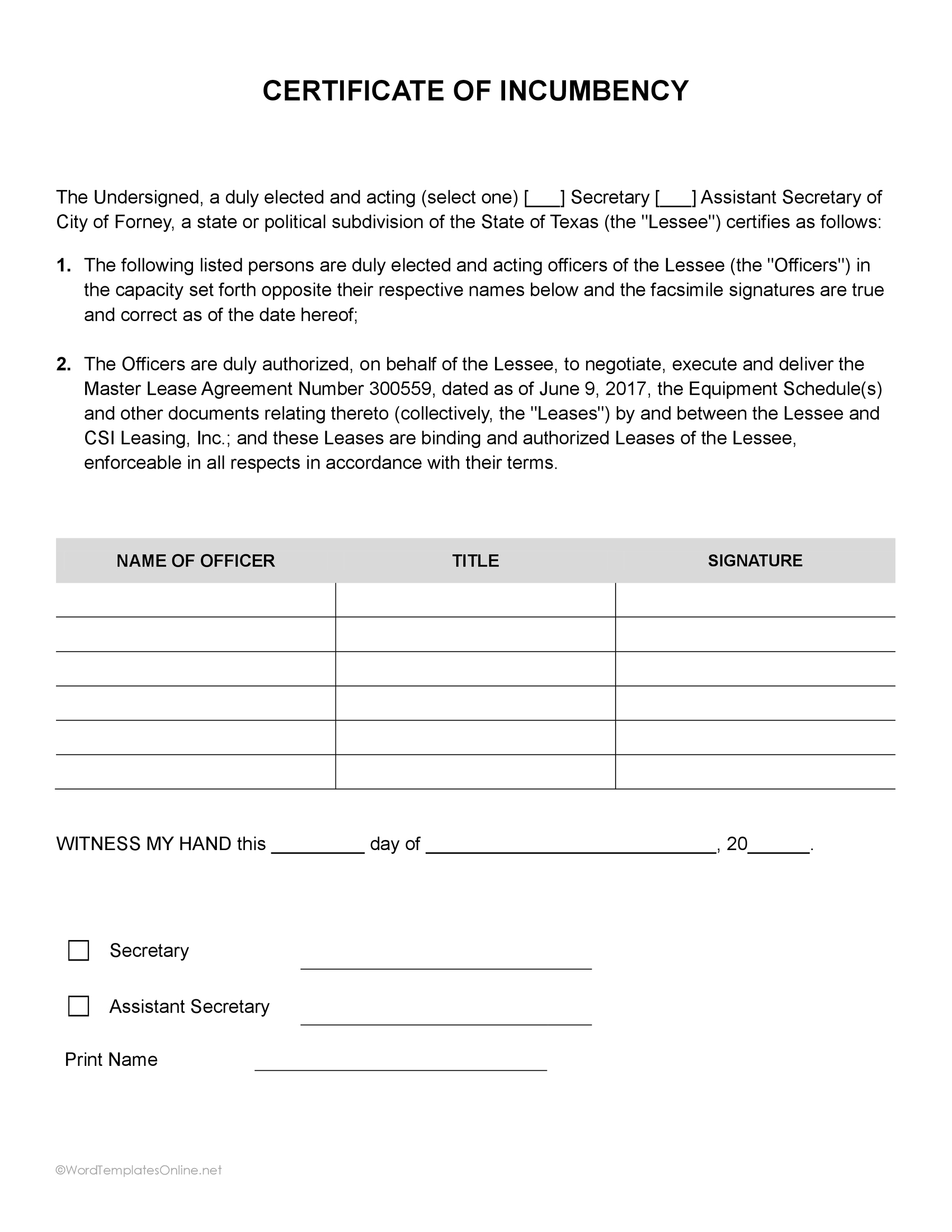
Certificate of Incumbency 01
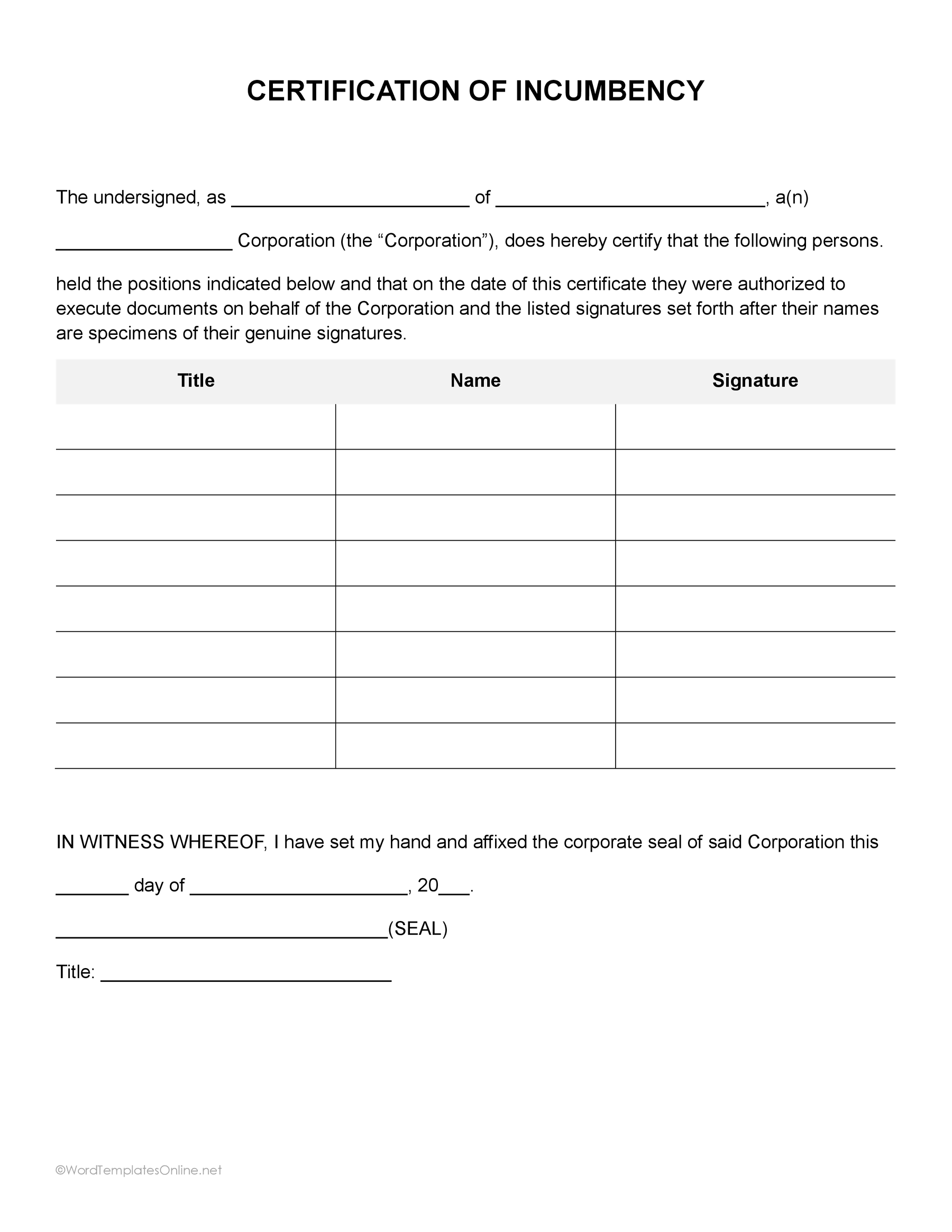
Certificate of Incumbency 02
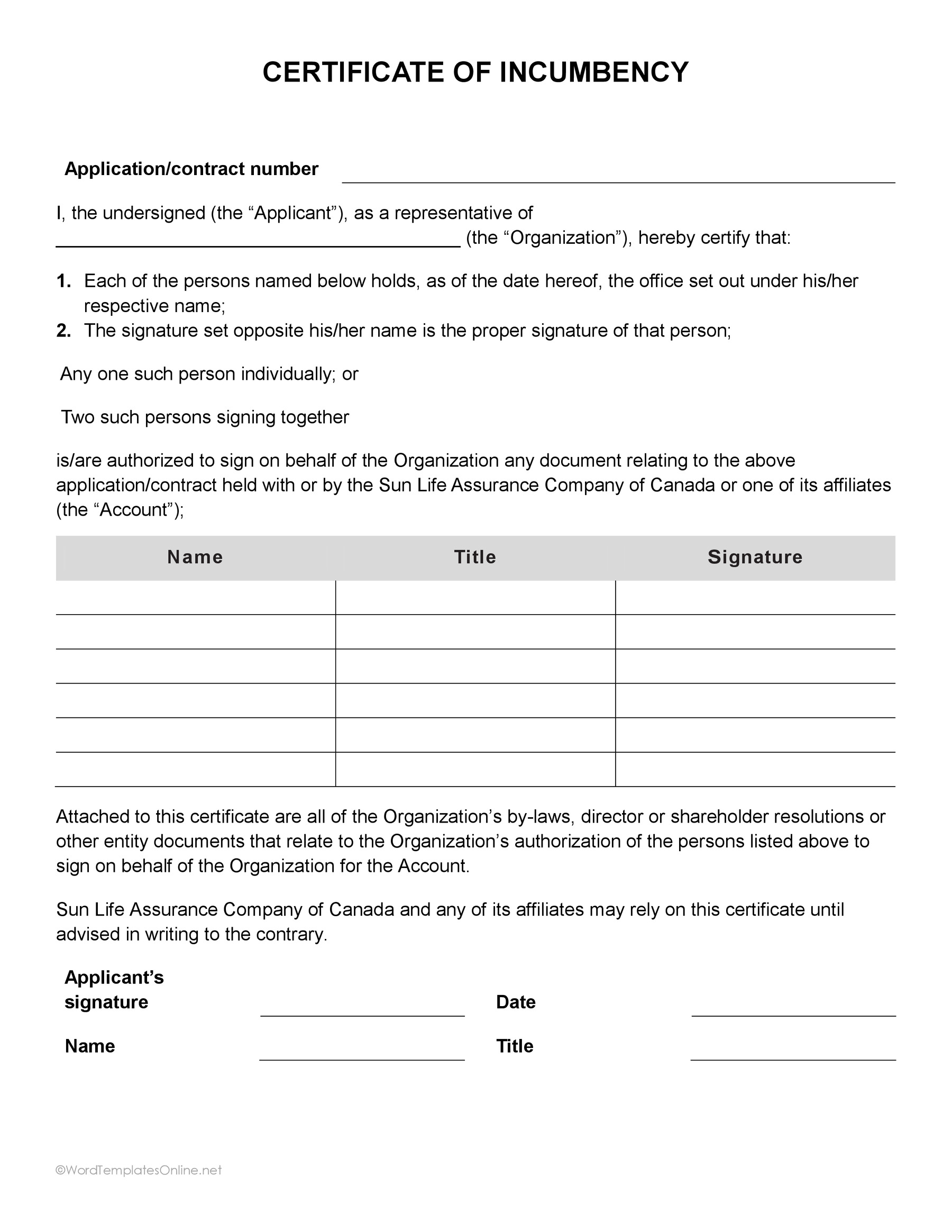
Multi-officer certificate formats
In a big corporation, there are generally multiple executives, directors, and authorized members who need to be added to the document. This template offers an additional space for listing several individuals, their titles, representatives, and signatures.
Certificate of Incumbency 03
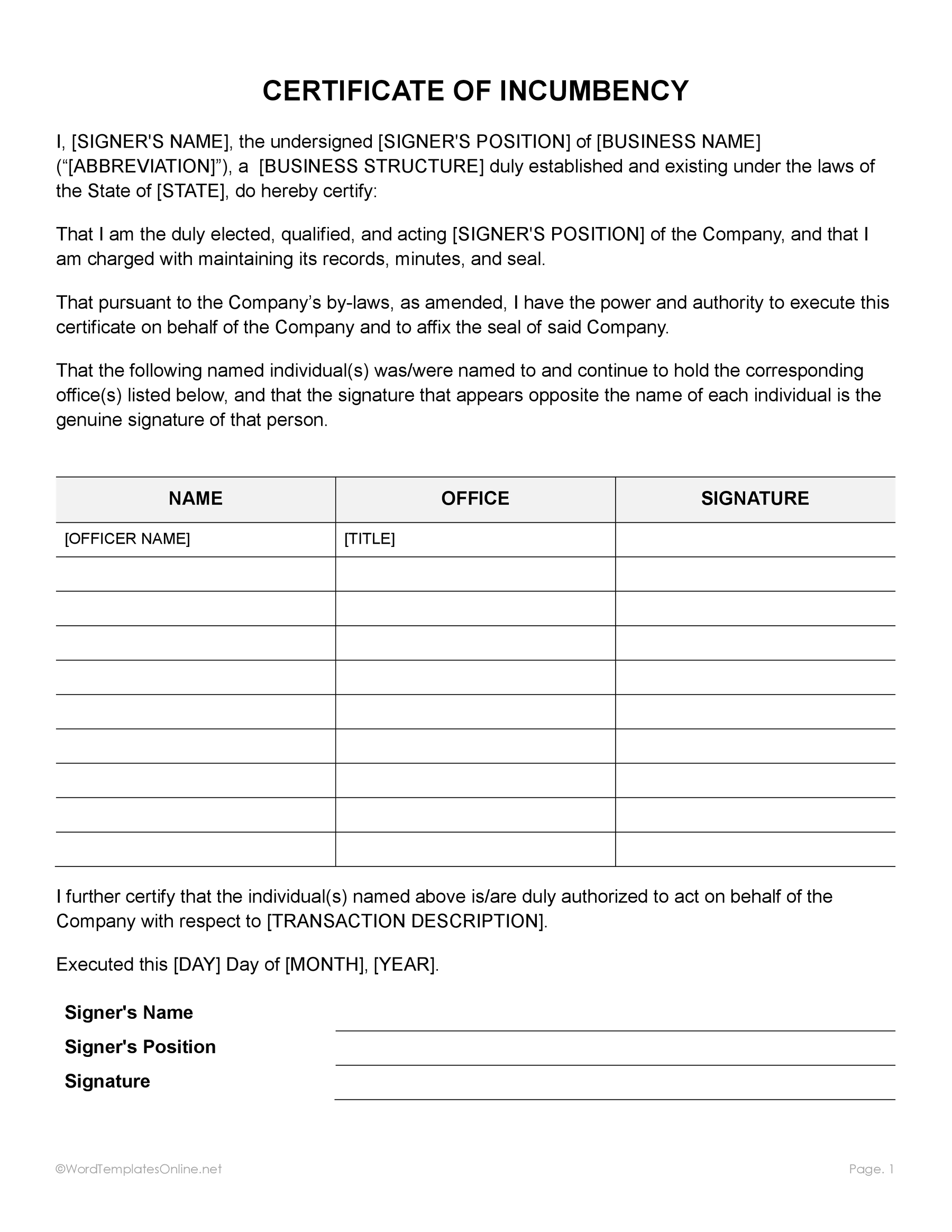
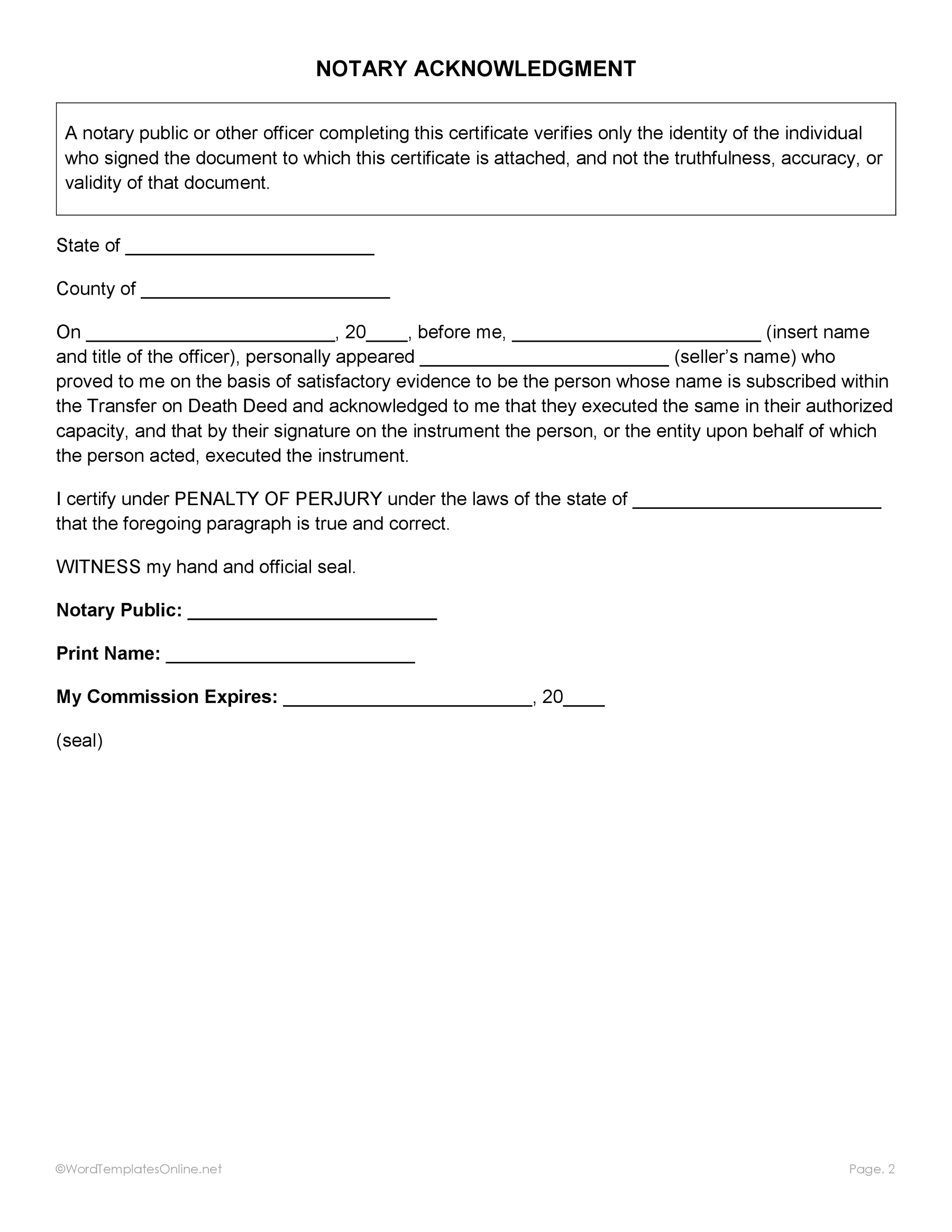
Certificate of Incumbency 04
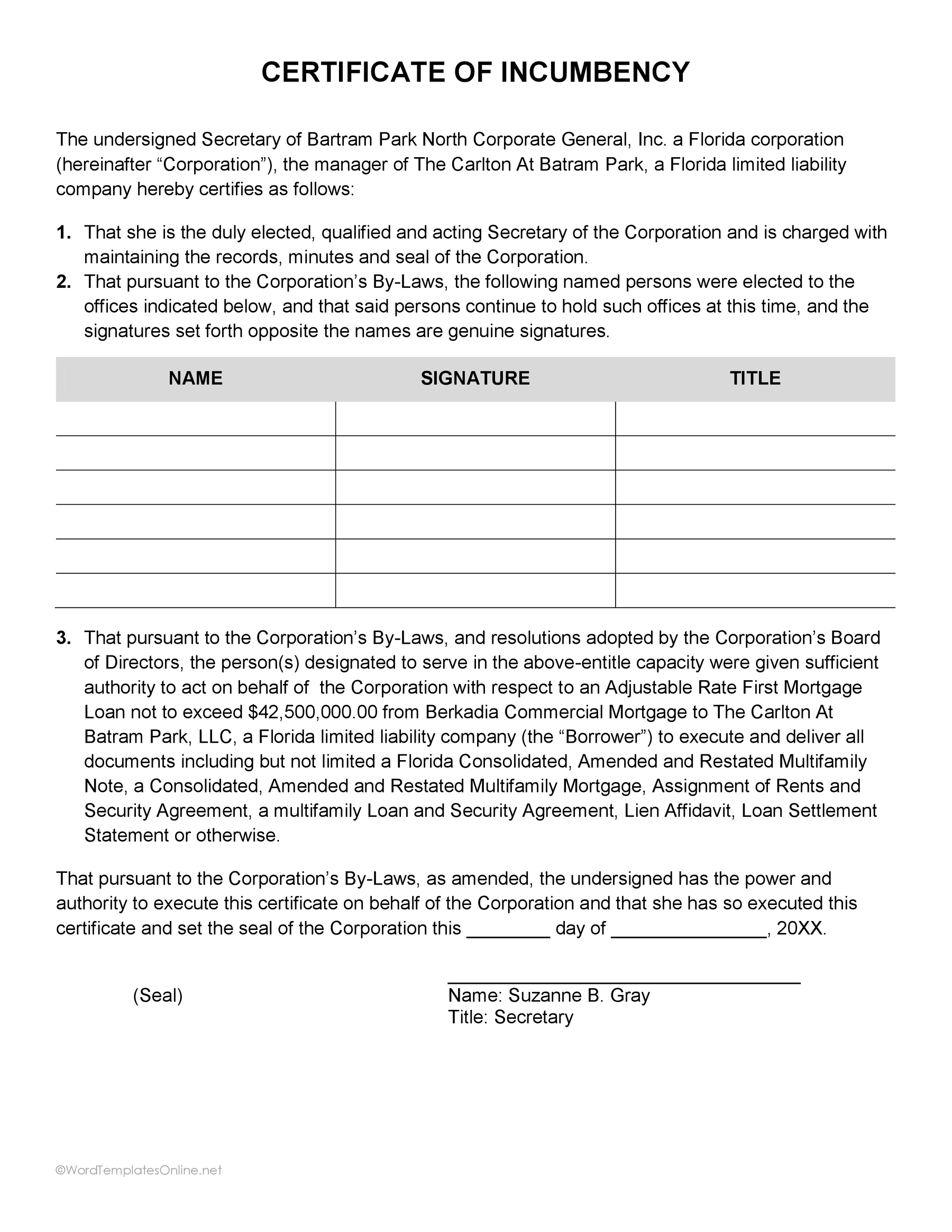
Certificate of Incumbency 05
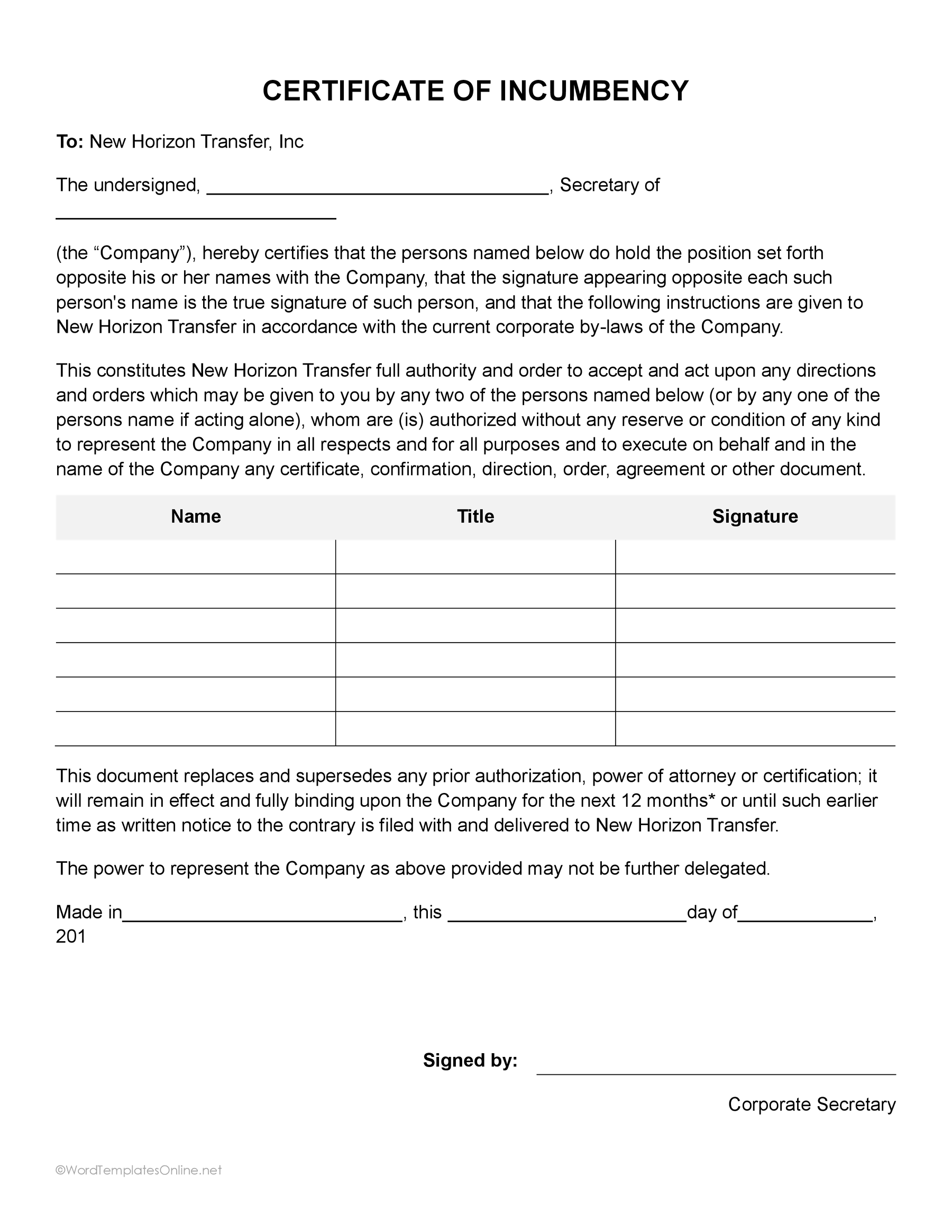
Certificate of Incumbency 06
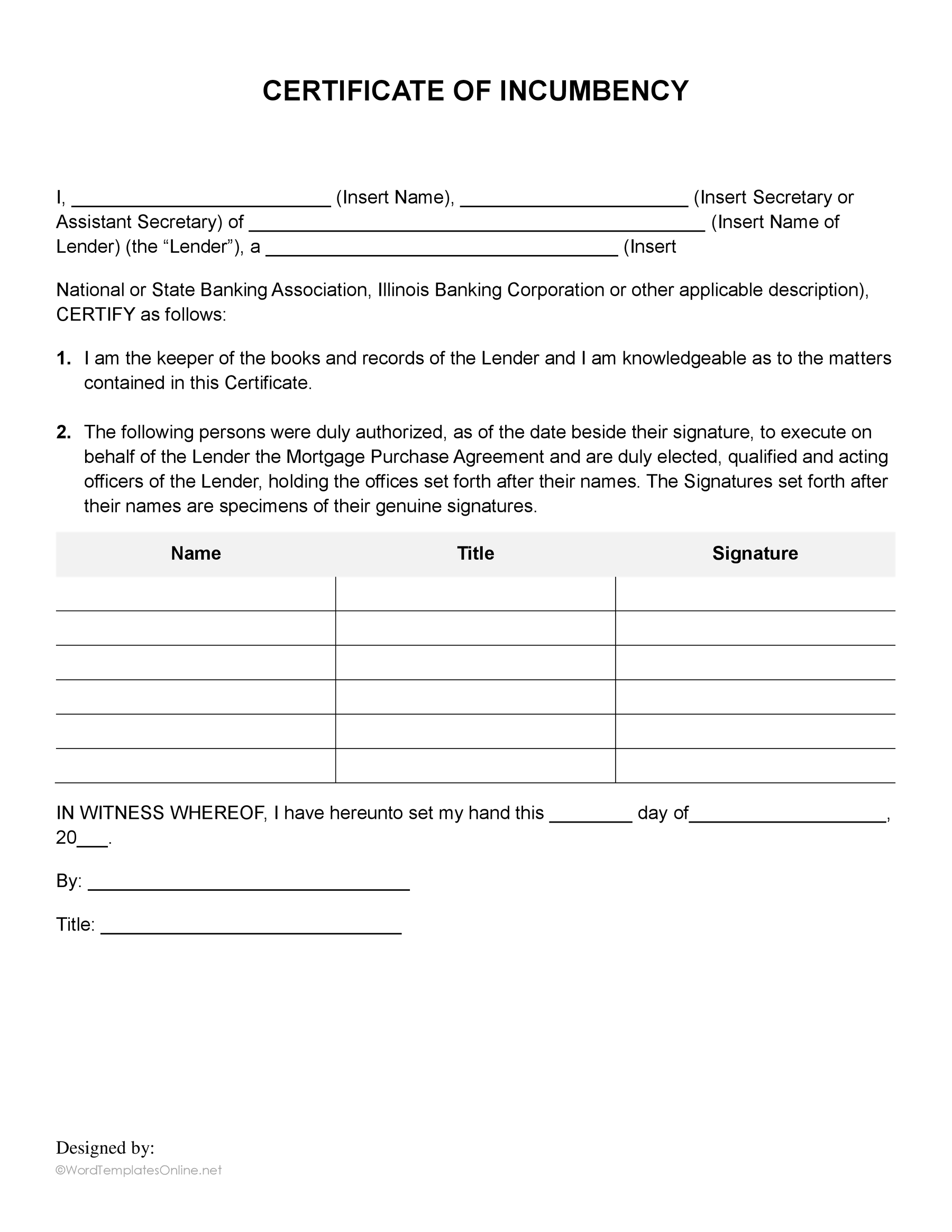
Certificate of Incumbency 07
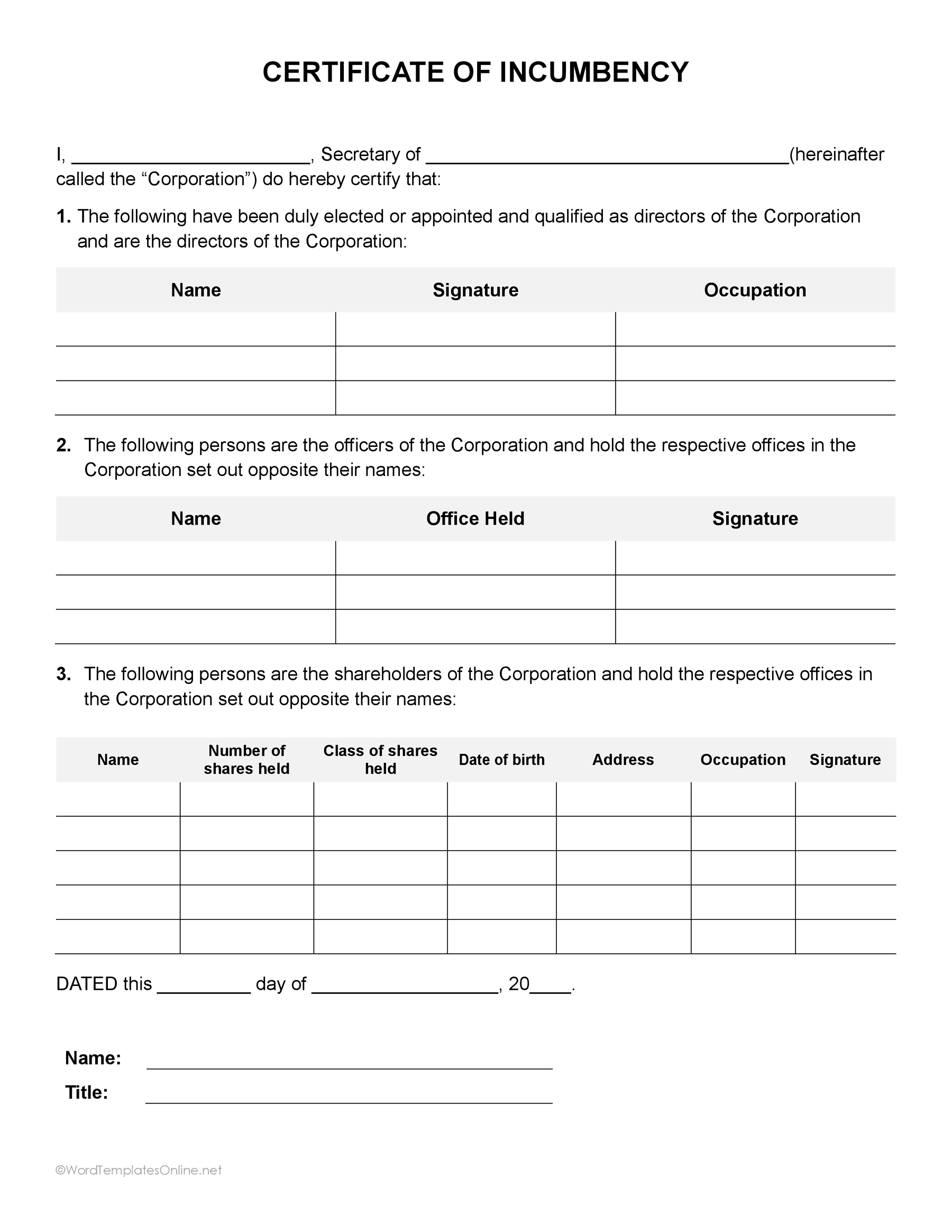
Certificate of Incumbency 08
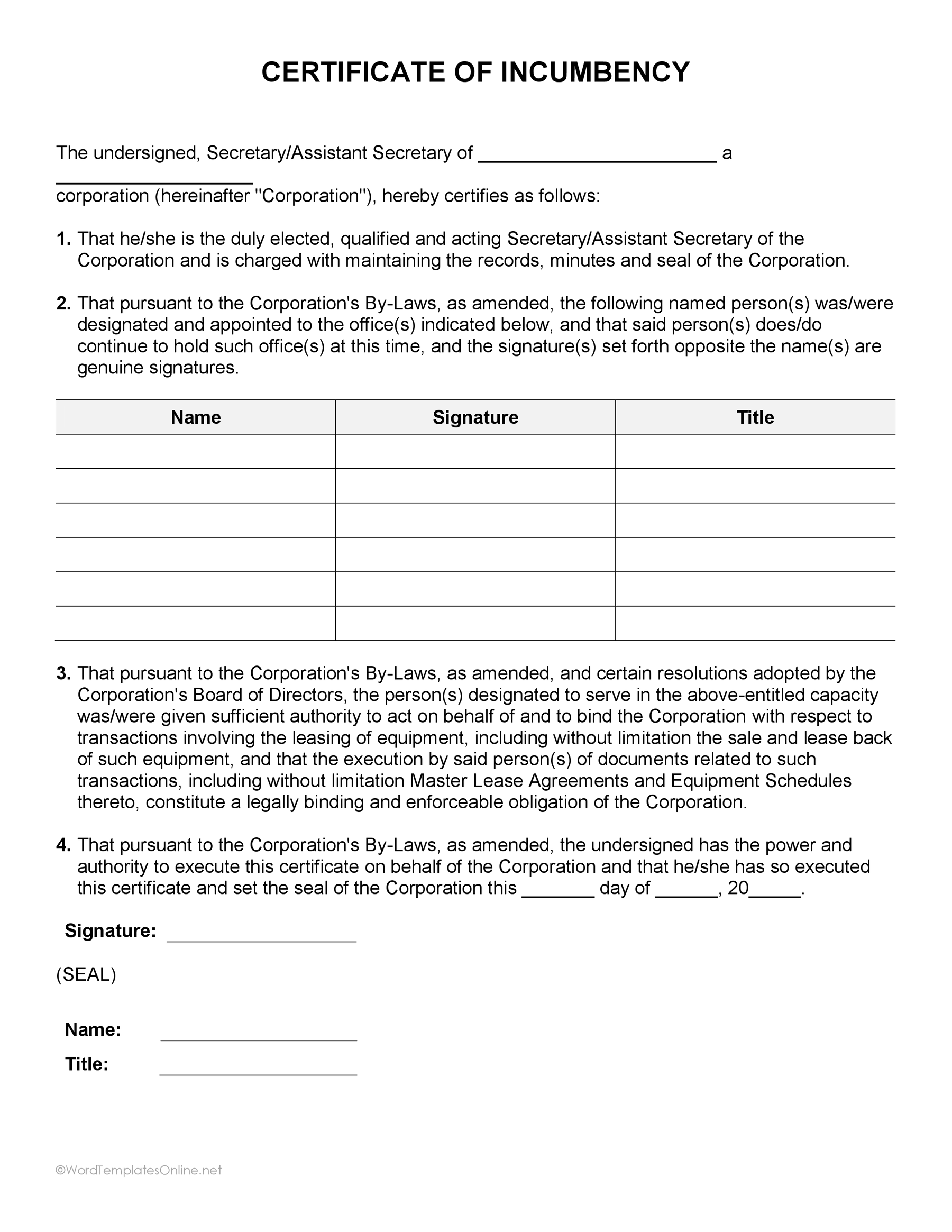
Certificate of Incumbency 09
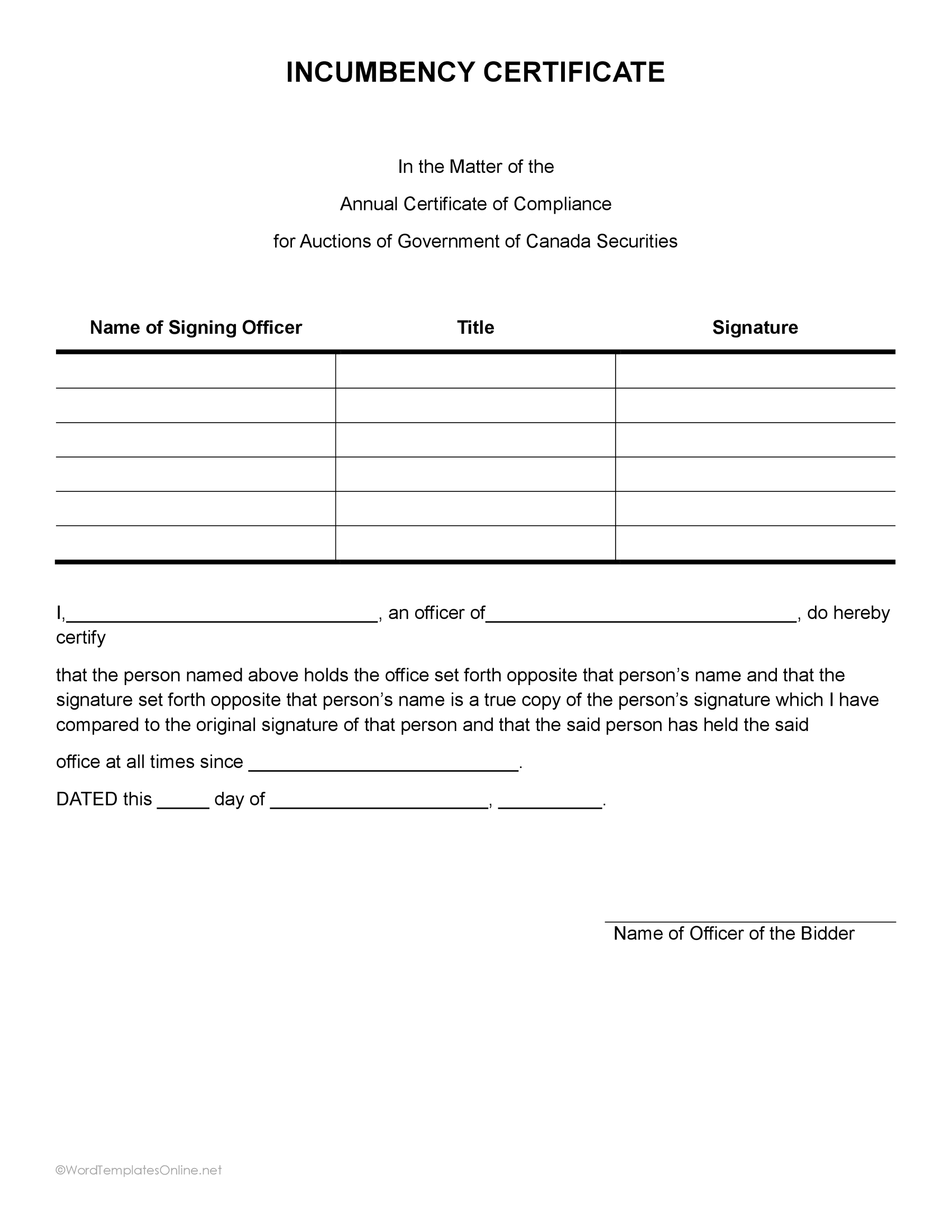
Certificate of Incumbency 10
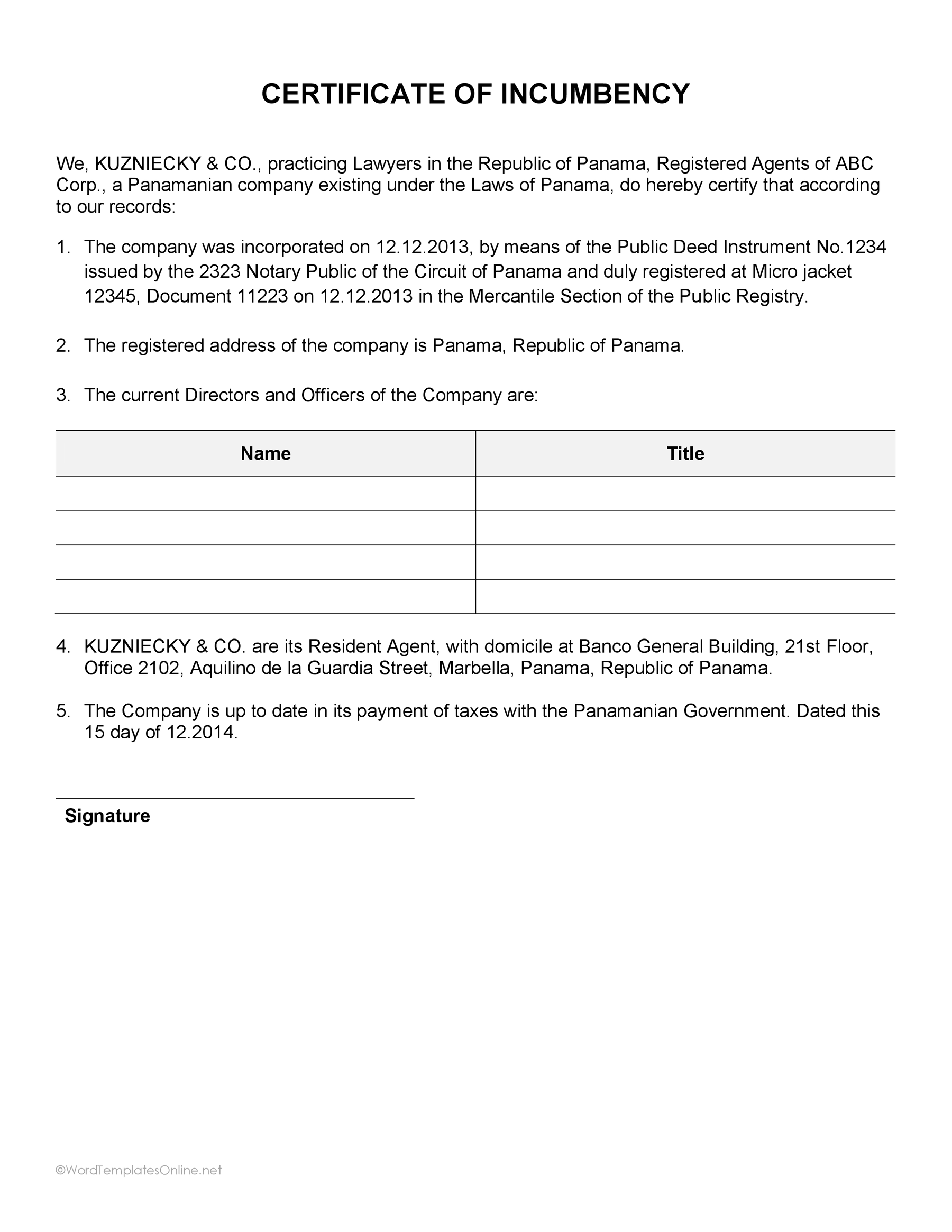
Certificate of Incumbency 11
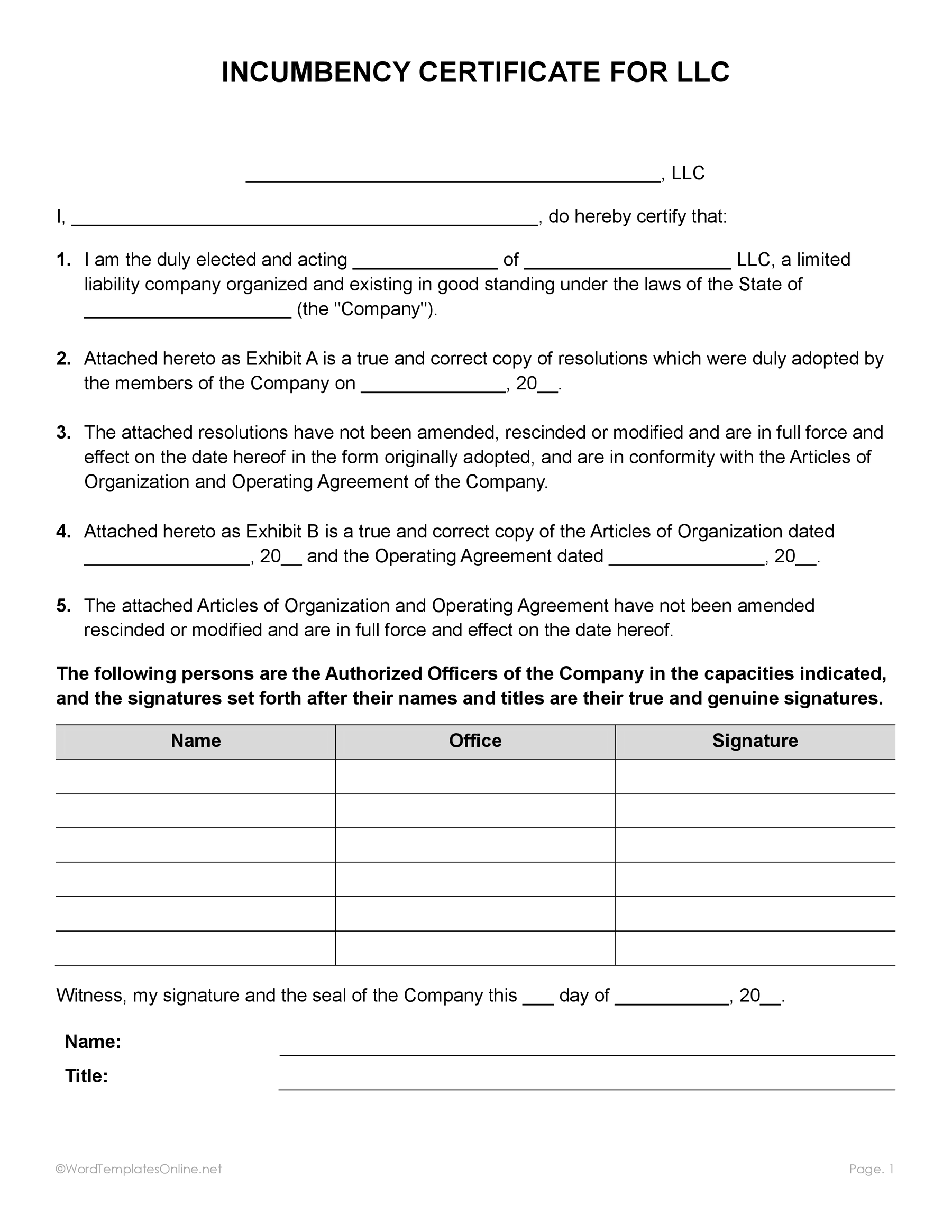
LLC certificate of incumbency template
This template is specifically designed for Limited Liability Companies. Well, the main purpose is to clearly identify LLC members, managers, and authorized delegates who have the authority to act on the company’s behalf. Such templates are commonly used for banking, financing, and contracts. Moreover, this type of template offers a simple and professional way to verify an LLC management structure while listing who is responsible for signing agreements and making business decisions.
Are templates etched in stone?
People might assume that templates are hard to edit, but this is just a myth. If you have a reliable template, using it is really easy. Suppose you explore our range of certificate of incumbency templates. You find the one that goes with your needs. The next step is to download it. The best thing is that these templates come in an editable file (Microsoft Word or Google Doc), which means you can add information or remove any section if needed. Once completed, the document is ready to use and share.
Certificate of Incumbency vs Other Corporate Documents
A lot of business documents look and sound somewhat the same, but they actually do completely different jobs. Well, to keep your head spinning and save you from mixing them up, let’s do a quick, painless breakdown of what’s what.
| Document | Purpose | What It Confirms | When It’s Used |
|---|---|---|---|
| Certificate of Incumbency | Corroborates current company officers and authorized members. | Names, titles, and authority of individuals who can act on behalf of the business. | Banking transactions, contracts, and international dealings. |
| Corporate Resolution | Records an official decision approved by the company. | Specific actions taken by directors, stakeholders, or members | Opening a bank account, approving loans, appointing officers, or verifying other business decisions |
| Articles of Incorporation | Confirms a corporation as a legal entity | Basic company details like name, purpose, and registered info. | Business formation and corporate registration with government entities |
| Certificate of Good Standing | Assures that the business is compliant with state requirements | The company has filed the required documents, paid fees, and remains active. | Applying for loans, expanding into other states, getting financing, or entering major contracts |
| Secretary Certificate | Checks the accuracy of corporate records and resolutions | Corporate resolutions, officer appointments, and company records are established by the secretary | Legal transactions, mergers, acquisitions, financing agreements, and corporate governance matters. |
Common Mistakes to Look Out For When Preparing the Document
The main purpose of the document of incumbency is to give accurate and up-to-date information about the company’s leadership. One small mistake and you’re welcoming delays, questions from partners, or even rejected applications. So, it’s better to check these mistakes beforehand:
- Listing former officers: Honestly, there’s no need to include the names of people who no longer hold positions within the company. If any member or director leaves the company, make sure you remove the name to avoid confusion and authorization issues.
- Using outdated corporate records: A certificate only holds true if it has reliable records. Making use of old company records can result in incorrect titles, outdated officer lists, or missing updates that no longer represent the current structure.
- Missing required signatures or details: A certificate is incomplete if it doesn’t have the right people’s signatures. Forgetting to include signatures of members or making it look inconsistent can create unnecessary questions and delays during verification.
- Forgetting to update the certificate: The fact that company leadership can change over time means the document should be checked and reviewed regularly. Using the outdated certificate can cause problems when carrying out transactions.
In conclusion…
The certificate of incumbency might not be the most talked-about document, but it is incredibly important when proving who has the authority to represent a company. Whether you’re making a transaction, opening a bank account, or making international deals, having an accurate and updated certificate is what you need, always. So, accuracy is the main criterion, which means any small mistake can affect its legitimacy. That’s why you need a reliable template that has everything a certificate should have. Your duty is to fill in the necessary information, and there you go.
Frequently Asked Questions
How should it be updated?
Well, there’s no sure-shot rule, but it’s a smart idea to update it whenever a change happens in company leadership, such as someone entering the company or leaving it. The goal is to keep the list of authorized representatives accurate.
Can an LLC use a certificate of incumbency?
Yes, for sure. We assume that the certificate is generally linked with large corporations, but it’s not the case; even LLCs can use them too. Usually, there is a specific certificate template for LLCs; you can use it.
About This Article