You own a small clothing brand, and all of a sudden, a retail store agreed to display your pieces in their store. Sounds like a dream come true?
But what if the shop owner says that he will only pay once the item sells? Now, your product is sitting on their racks, you still own them, and your earnings depend on how well those items move. Well, it sounds fair and square, but in reality, not so much.
Without having a clear written agreement, things can get messy fast. Questions start popping up: Who sets the final price? When exactly do you get your hard-earned money? Who is responsible if items get damaged or go missing? And what happens if the pieces go unsold?
A consignment agreement here makes all the difference and fairly explains how your goods will be stored, sold, and paid for. But how to write one? Let’s find out with this guide, plus how ready-made templates make this process really easy.
Inside a Consignment Agreement: What You Need to Know
Suppose you own the goods (the consignor) and a shop agreed to sell your product on its behalf (the consignee). Now, you both will do a written agreement that clearly explains that one party will supply the product, the other will sell it, and pay for the product only when the item is sold. This formal deal is now a consignment agreement.
Importantly, what makes this agreement different from a regular sales agreement is ownership. A common rule of thumb explains that the consignor keeps the ownership of the goods until they are actually sold. This arrangement is made to protect the supplier and transparently explains who is responsible if the items are damaged, lost, or returned while keeping payments and inventory crystal clear for both sides.
When you can use a consignment agreement
This agreement comes into play whenever businesses want to sell products through another seller without transferring ownership upfront. In other words, you can say it’s a smart, low-risk way of expanding reach while making sure your inventory is under control.
Often, a consignment document is used by retailers and clothing boutiques, artists, and handmade sellers to display their products at shops without needing the retailer to purchase stock first. Not only this, in large operations, manufacturers and distributors also use this agreement to place goods in a warehouse or retail location. This makes sellers stock inventory without stressing about upfront costs.
The Building Blocks of a Strong Consignment Agreement
A consignment agreement is not just a piece of paper; it is basically your safety net, only if the right terms and clauses are added. Here’s what you should always include:
1. Parties to the agreement
A reliable agreement always comes with this section, where you need to clearly identify the consignor and consignee roles. Moreover, here, you need to fill in basic but essential details such as full legal names, business details, and contact information. All of this is written to ensure there’s no confusion about who’s responsible for what.
2. Description of goods
Here, you will spell out exactly what is being consigned. If you don’t clearly list product types, quantities, SKUs, conditions, and any identifying information, confusion can break out at any moment. So, the more specific you are with your product listing, the more straightforward it is to check out inventory and prevent disputes.
3. Pricing and payment terms
This is where the money conversations get real. Who decides the selling price? What sale% does the seller keep? When does the consignor actually get paid (weekly, monthly, or after every sale)? Lay out the answers to these questions clearly.
When there is a lack of clarity about commissions, payment timelines, and transferring money, it’s easy for awkward conversions to step in.
4. Delivery and storage responsibilities
The other important clause, which every agreement should include, is logistic details. This part transparently pinpoints key details, such as who is taking care of shipping. Who’s paying for it? Once the good comes in, where are they stored, or are they being kept in proper condition?
Spelling out everything early makes the process transparent with no assumptions, surprises, and finger-pointing later.
5. Risk of loss and insurance
Every agreement comes with this clause that is intended to protect you. If anything gets damaged, stolen, or goes missing, who’s responsible? Though it is pretty sure that consumers keep ownership until the item sells, this part clearly says who covers the loss.
Additionally, it’s also a smart move to mention when insurance is required, and who’s footing the bill for it, so there’s no confusion if things miss the track.
6. Recordkeeping and reporting
There’s a common saying, “If you can’t track, you can’t trust it.” That’s the reason record-keeping plays a key role in sales. This section makes it clear how sales will be recorded, how often reports will be shared, and what kind of communication needs to be maintained. It totally depends on the parties what they require to stay on the same page, either weekly summaries or monthly statements.
7. Return of unsold goods
Let’s be honest, not every product is going to fly off the shelf. That’s where you need clear terms for unsold inventory, which is one of the non-negotiable elements of the agreement. When items can be returned. In what conditions? And who is responsible for the shipping costs? This part includes everything about the left articles.
8. Terminating and governing law
Most of the time, if one party wants to exist, it feels complicated, almost like looking for a loophole. For this reason, every agreement should have a clear exit strategy. Apart from the exit, it also specifies how much notice is required, 15 days, 30 days, or more, to end the deal. Everything should be written straightforwardly, so ending the agreement is just as smooth as starting it.
If you don’t know what to include in a consignment agreement, don’t worry, you can use a template to start the process right away!
Consignment Templates that are Designed For Your Ease!
Drafting an agreement from a blank page can be overwhelming, but what if we say, you don’t have to do it?
Our consignment agreement templates give you a ready-made foundation, so you can skip the stress and just plug in your details. Plus, they come with an easy-to-edit format so that you can take control of everything while creating a professional document in minutes.
Consignment Agreement Template
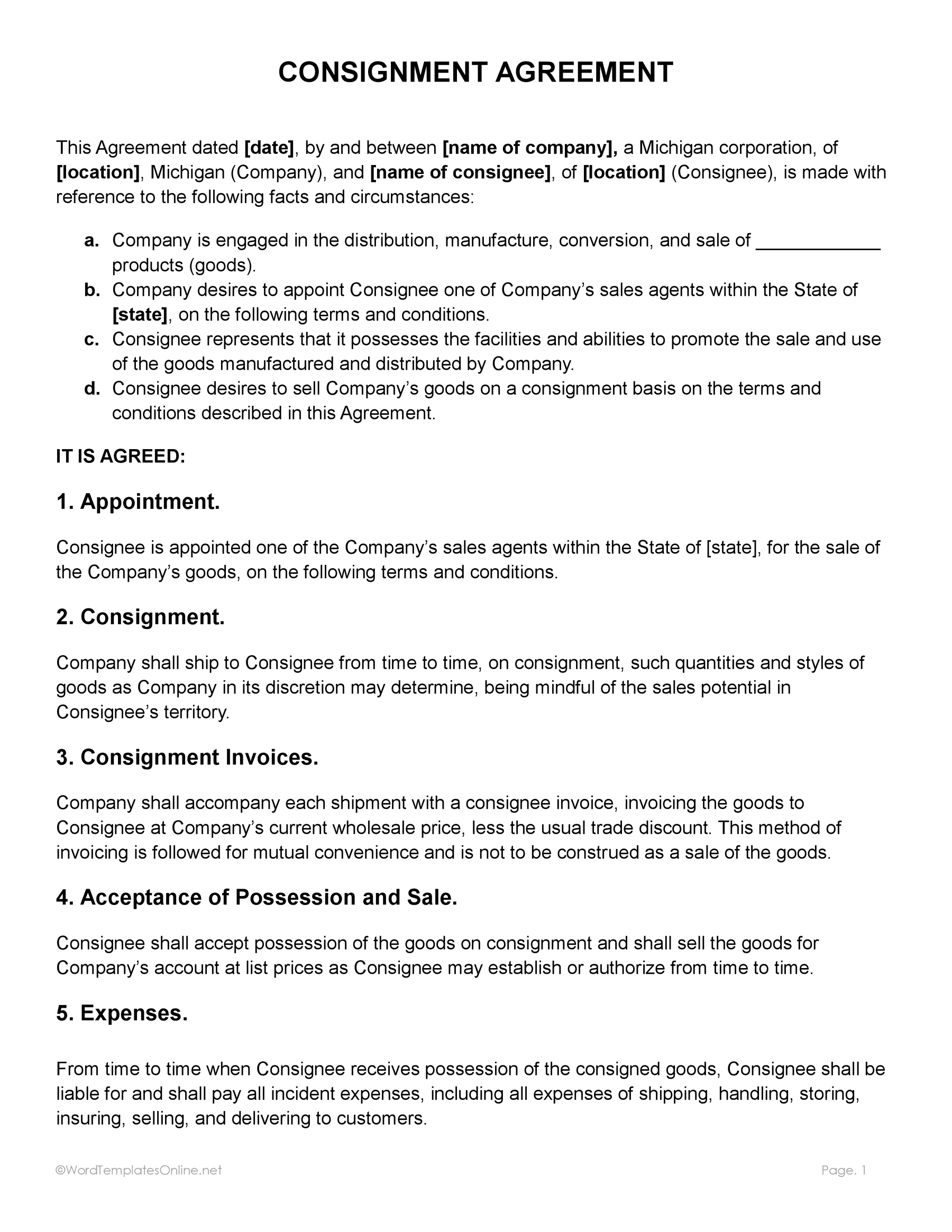
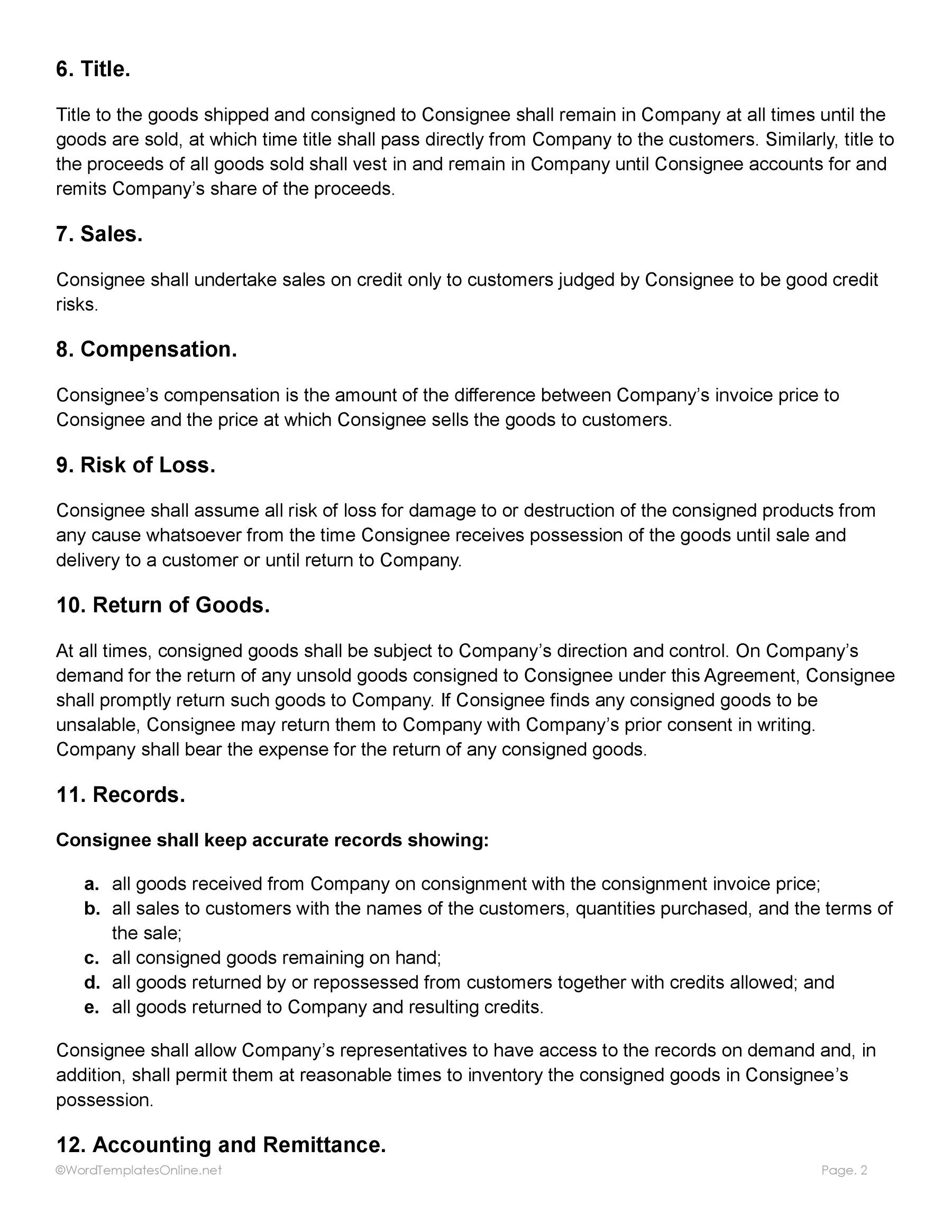
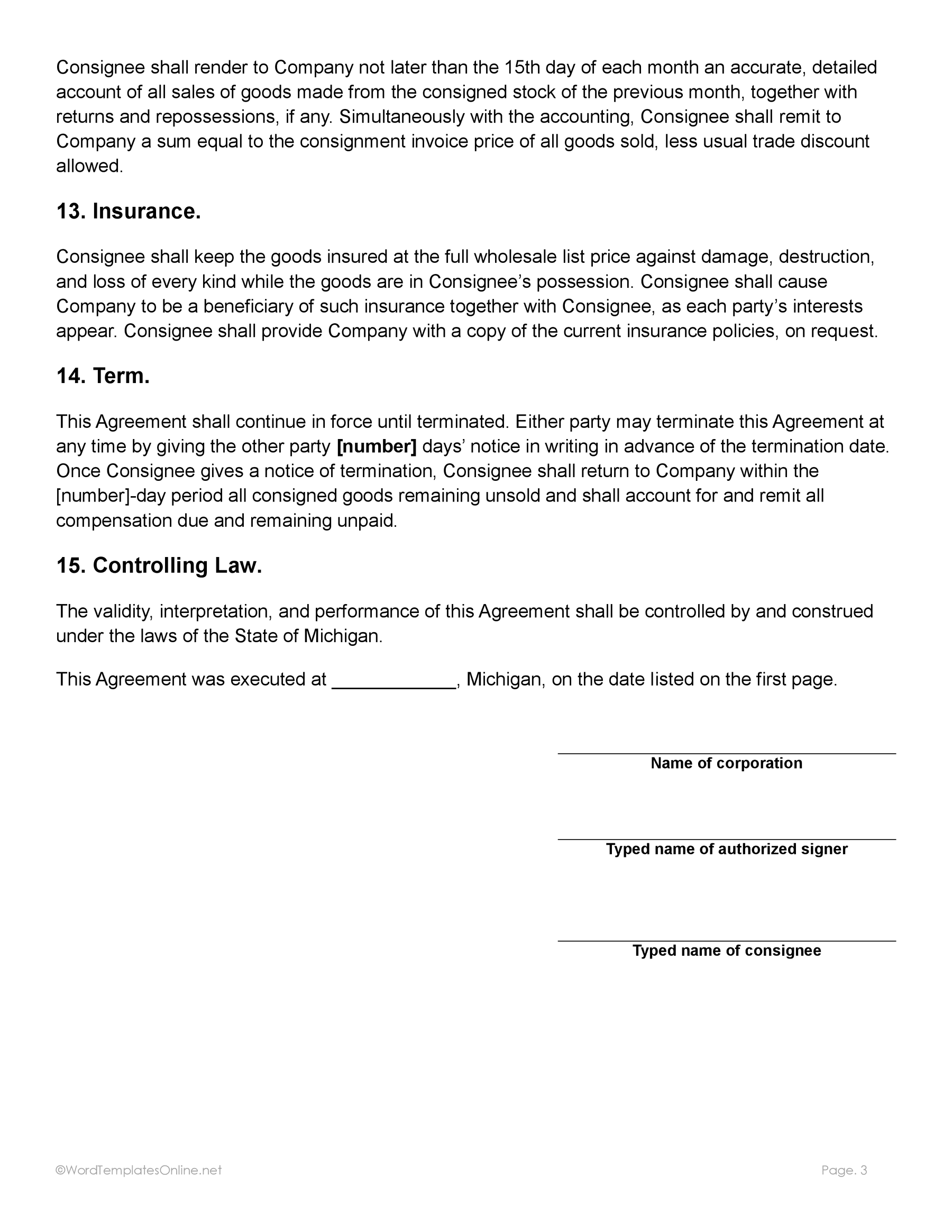
Consignment Agreement Template
How to Edit a Template?
Well, if you have an appropriate template, then it is very easy to edit it. The templates usually come with a standard legal format with pre-written clauses that cover key terms like payment, responsibilities, inventory, risk of loss, and termination.
Similarly, you’ll also find clear fill-in sections for party names, dates, and commission percentage, product details, and other important terms. All you need is to download the template (MS Word or Google Doc Version) and edit the section with the decided terms and conditions.
Who is this template designed for?
This is ideal for small businesses, boutique retailers, independent sellers, artists, and distributors who want to formalize a consignment agreement without hiring a lawyer for a basic draft.
5 Common Mistakes to Avoid in a Consignment Agreement
Even a simple agreement can become a firefight, and deals can go sideways if the details are not clear. Here are a few common mistakes you’ll want to dodge:
- Not setting clear pricing authority: If “who set’s final say on discounts or price changes” is unclear, profit margins instantly shrink. So, always define who controls pricing decisions.
- Ignoring damage and display standards: One of the few things that hurt your brand is “not accurately displaying products or handling them with care”. For this, make sure to outline basic display expectations and care standards beforehand.
- Overlooking payment frequency details: If you think deciding “payment after sale” is enough, and everything is off the hook? No, usually, not. Specifically entailed how payment will be made weekly, monthly, or after reaching a certain amount.
- Skipping dispute resolution terms: What if a disagreement arises later? Well, disagreements are common, and to make sure the issues don’t escalate unnecessarily, write a clear process of resolving disputes.
- Failing to document inventory conditions at delivery: Additionally, it is very important to record the actual condition of the product when it is delivered. If not, then it becomes difficult to determine responsibility later. A simple acknowledgment can save you from future conflicts.
Final Takeaway
A consignment arrangement, no doubt, can open doors to new markets, solid retail partnerships, and stable sales, only if the terms are clear. Without a written agreement, a small misunderstanding about payments, conditions, and inventory can instantly turn into costly disputes. That’s where a consignment agreement makes all the difference. It acts as a protective wall and safeguards your products, defines expectations, and keeps both parties accountable from day one.
Frequently Asked Questions
Is a consignment agreement legally binding?
Yes! It is, only if both parties sign it. Moreover, it also protects the rights of both sides as long as it has proper terms and conditions.
Do I need a lawyer to create a consignment agreement?
Usually, it’s not a requirement: you can draft an agreement yourself for simple and low-value transitions. Under basic contract law principles, a contract is legally enforceable if it includes key clauses and details.
Can I customize a consignment agreement template?
Absolutely! The templates are fully customizable, meaning you can adjust commission rates, payment terms, and other specific product details.
About This Article