Handling legal documents isn’t just sending them off and hoping for the best; you also need to prove they actually reached the right person. Imagine you handed your documents, only to hear that “they didn’t receive it in the first place.” What a nightmare!
If you want to keep away from those kinds of headaches, a proof of service is what you need. Well, think of it as your life saver that tracks what, who, and how you deliver your important documents. It might sound like a small detail, but it’s in reality what keeps your case legally valid and transparent. Without this, you’re basically welcoming unwanted disputes or delays.
Now, the main question is what actually comes in a proof of service? The good thing is, you don’t need to overcomplicate it. With the right template, you can instantly fill in the details and have a solid record in place. It’s one of those small steps that make the entire process easier and more reliable.
So, What’s a Proof of Service Template?
A POS template is a specific layout that includes everything a proof of service document should have. This kind of template is important in legal settings, such as court filings, official notices, and other formal communications, where proper delivery needs to be recorded. Other than that, it has a huge value in ensuring everything is done according to legal requirements and serves as written proof if there’s ever a question about whether documents were received.
Breaking Down the Essentials of Proof of Service: What’s Actually Inside
A solid template doesn’t compromise on essentials; it comes with a comprehensive format that makes documentation a breeze. Let’s find out what goes in a proof of service template:
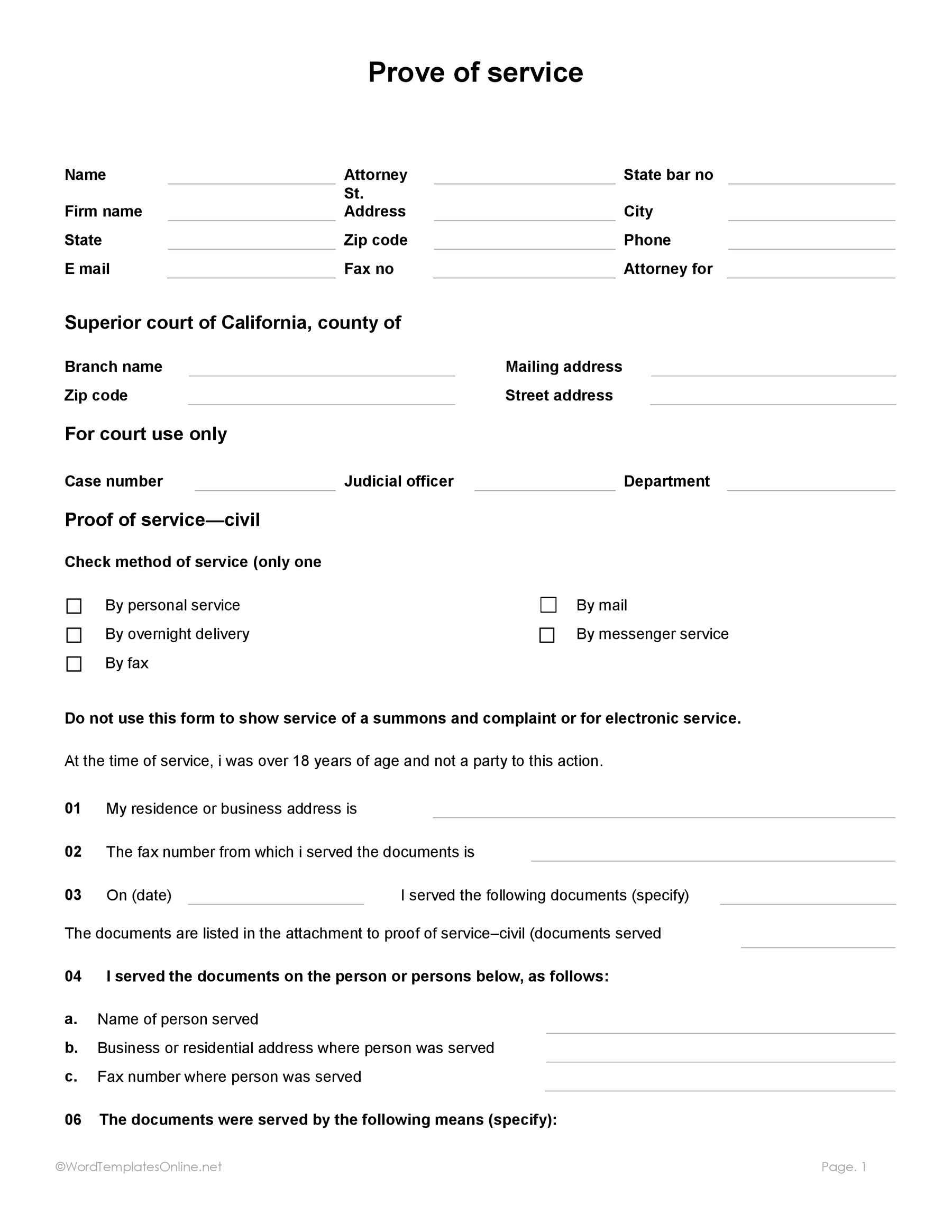
1. Personal and firm information
It’s all about the basics here. This section caters to your details, including name, firm name (if applicable), address, and contact details. Think of this section as your identification on the form, so accuracy matters here. Any mistake can lead to big-time confusion or even affect the validity of the document.
2. Attorney details
If a lawyer is involved, you need to put their name, state bar numbers, and contact details. Some templates have a different section for this, while some align it with the basic information section. These details are important as they connect the service to the correct legal representative and are particularly needed in formal cases.
3. Court details
This part of the proof of service template is all about mentioning court details such as name, country, and branch. These details make sure the document actually landed in the right hands. Without the correct jurisdiction listed, the court won’t be able to officially “see” or process your delivery, which is a headache no one ever wants.
4. Case information
Right below the court details, you need to fill out the case information, including case number, juridical officer, and department. Think of this section as the link that connects this form directly to a specific case, making sure there’s no mix-up with other filings.
5. Mailing and address details
Almost every proof of service document comes with this section, which separates the street address and mailing address fields. This section might seem extra, but it helps avoid confusion about where documents were sent versus where someone is officially located.
6. Service method selection
The template gives you checkboxes for different delivery methods. You need to choose only one from the options (by personal service, by mail, by overnight delivery, by message delivery, by fax) as it shows clearly how the documents were served.
7. Server eligibility statement
This is one of the most important clauses of the document. It ensures that the person serving this document is over 18 and not involved in any case. It’s a simple statement, but it’s really needed to make the service legally valid.
8. Service details
This part of the document is where you start inserting the actual delivery information, e.g., your address, the date of service, and a list of all documents that were served. If there are multiple documents, you can attach an extra list instead of writing everything in.
9. Recipient information
Every proof of service template has this section, where you write the name and address of the person who is going to receive the documents. If required or applicable, you can also include their fax number. DOUBLE CHECK this information to avoid disputes later.
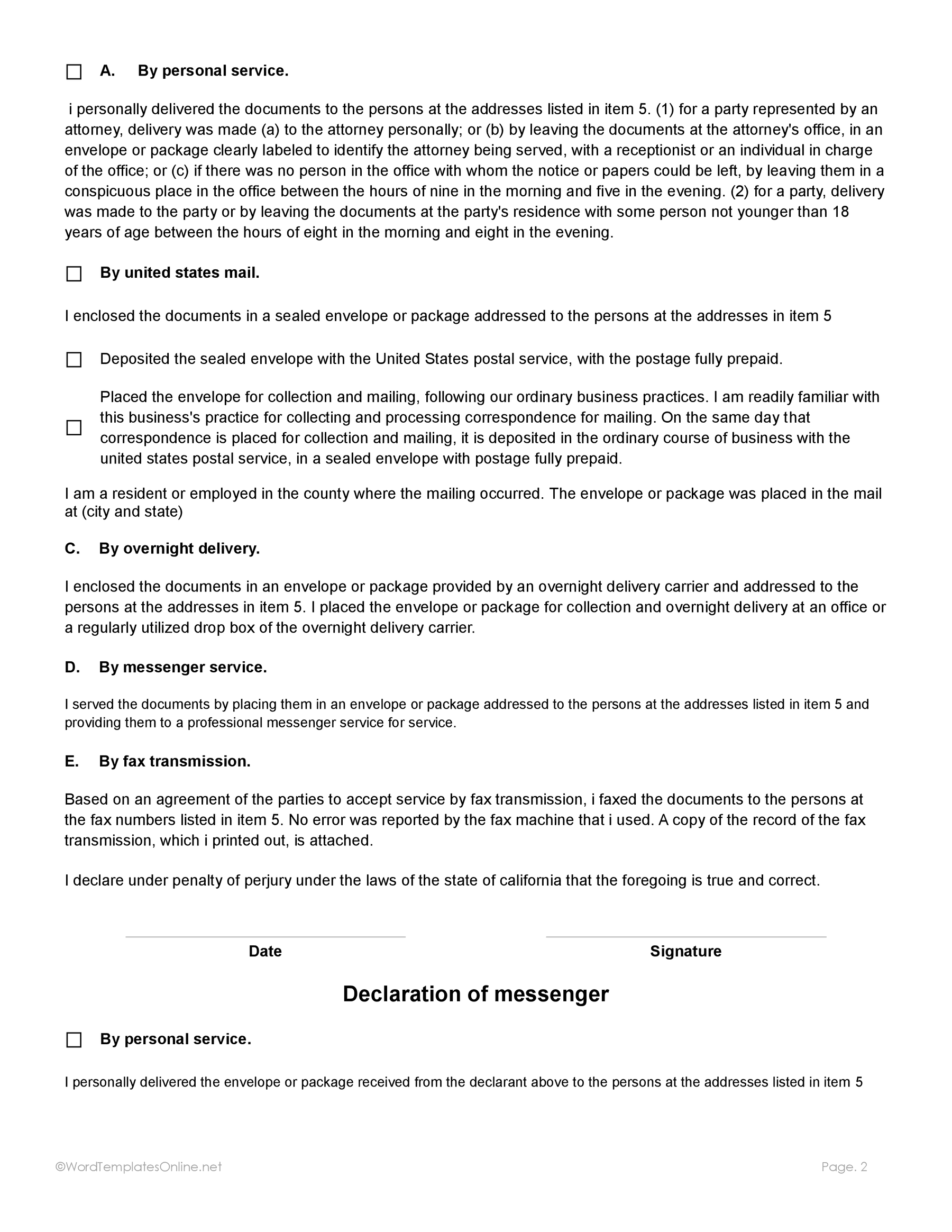
10. Method specific explanation
In our template, it is a number 6 clause, which implies how delivery actually happened based on the method you selected (6). Let’s say, if it’s personal service, it might involve handling the documents directly to the person, leaving them at an office, or giving them to a responsible person at a residence.
But if it’s through mail or courier, it includes details like packaging and delivery handling.
11. Declaration under penalty of perjury
Once all the information is in place, the server confirms that all the details given are true. This is not just a statement, but actually what gives the document a legal weight. So, don’t take it lightly!
12. Signature and date
At the end, the person who served the documents needs to sign and date the form. If this part is skipped, the proof of service is incomplete.
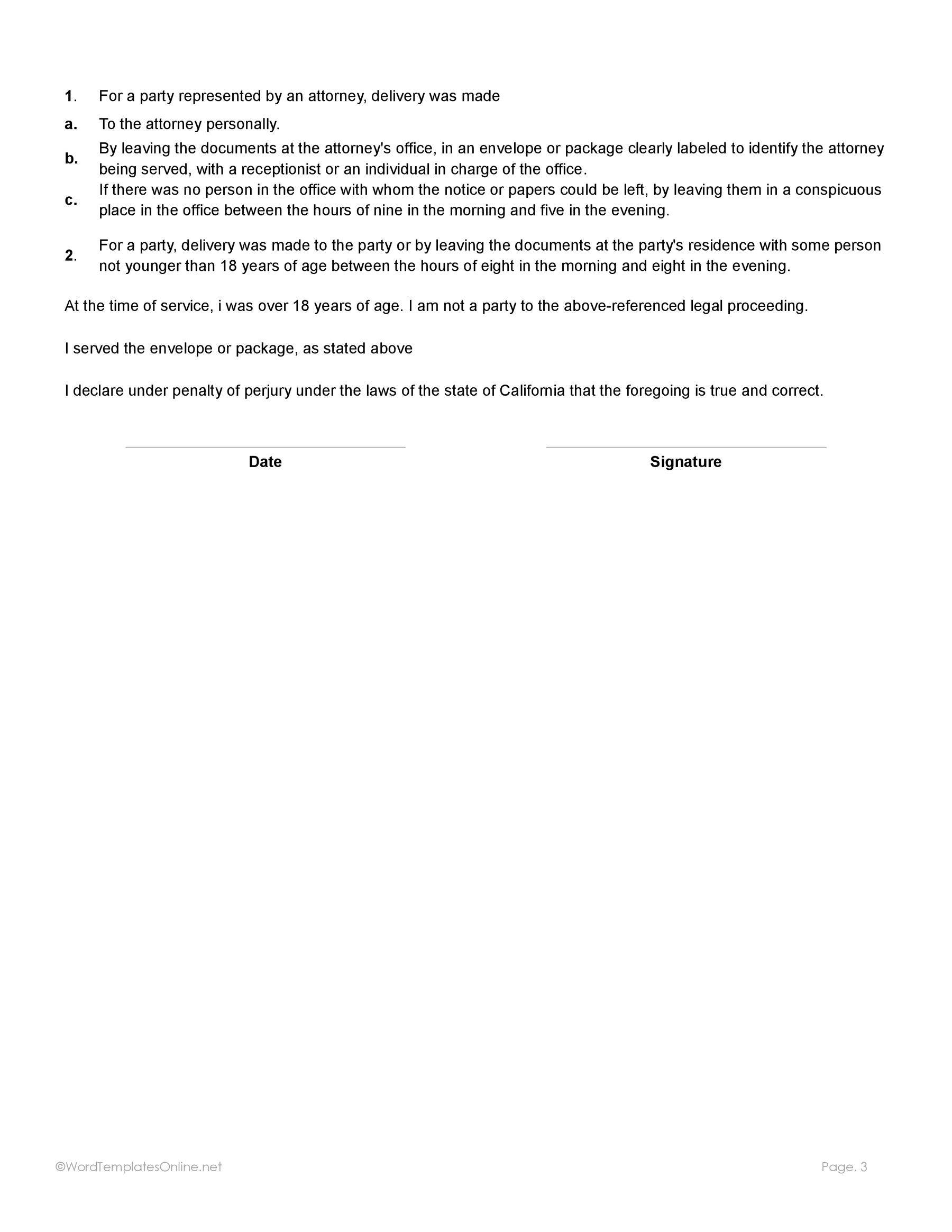
13. Declaration of messenger
The final part acts as an extra security layer, especially for personal delivery. It states that the document was physically handed over as described, adding an additional confirmation and accuracy of the entire form.
How to tweak proof of service template
Well, it’s really a straightforward procedure once you go step by step. Kick off by grabbing the Google Docs or MS Word version so you can actually get in there and edit. From here, everything is how you fill each section: walk through all one by one and complete the entries. Once you think you have given all the info, give it a quick “vibe check” for accuracy and consistency. To wrap it up, save it as a PDF to keep everything locked in place and print it if needed. Done and dusted!
Legal Requirements You Should Know
Before you submit or send over a proof of service document, you must know there are some legal requirements to do so. Failure to meet them can affect the validity of the document:
Must be completed by someone over 18
First and foremost, the person who is serving the documents must be at least 18 years old. This is the basic legal need that makes sure the process is handled by someone responsible and legally eligible to do so.
The server cannot be involved in the case
Another important thing is that someone who is serving the documents can not be related to the case. Moreover, the California Code of Civil Procedure reinforces the same rule that implies that service must be done by a non-party.
Accuracy and honesty are legally required
Well, honesty is always the best policy, and that’s actually what this rule explains. All the information provided in the document must be true and accurate. Since it contains a declaration under penalty of perjury, any fake or incorrect details lead to legal consequences.
Courts may have specific formatting rules
Even though all templates copy-paste the standard structure, some courts demand their own formatting or filling requirements. So, it’s always a good idea to check the official guidelines to make sure everything is accepted without issues.
Common Mistakes to Avoid When Using a Template
Even a solid proof of service document can be a miss if you don’t take care of the following mistakes:
- Skipping Required Fields: It happens more than anything because it’s easy to overlook a field when you’re in a hurry. However, even if you have missed one detail, it can make your form incomplete and invalid. So, always give it a check before moving on.
- Incorrect Case or Court Information: Mixing up case numbers and court details is very common. Be careful when you’re filling in such details because a small error here can lead to big-time confusion or even get your form rejected.
- Selecting the Wrong Service Method: If, somehow, you end up checking the wrong method that doesn’t match how the documents are actually delivered, it can be problematic. So, be consistent!
- Forgetting the Signature or Date: This one is simple but often missed. Without your signature and date, the form isn’t valid, so don’t skip the final step.
Quick Tips That Can Increase the Effectiveness of the Template
If you want your document to get fast approvals, then you must follow these simple yet powerful tips:
- Double-Check All Entries Before Submission: When you plan to submit this, take a minute to check all the entries. A little time here can save you from bigger issues later.
- Keep Copies for Your Record: A wise act is to keep a copy of the completed form for yourself. It’s helpful in case you need to refer back to it to prove some point later on.
- Keep it Clean with Clear Formatting: Believe it or not, nobody wants to squint through a messy document. Keeping your layout clean doesn’t just make it easy to read but also tells you that you know your stuff.
- Got Extras? Attach Away: If you’re juggling with different documents, don’t cram them all into one tiny box. Just attach an extra sheet that lists out everything. A tidy “see attached” page is better than a messy one that nobody can read.
So, in Conclusion….
What makes the proof of service an important document? Well, for some of you, it might seem like another form, but it actually plays a big role in keeping things on track. You can say it’s a written record for showing that everything was delivered the right way and on time. When done correctly, it keeps the delays away and keeps things clear for everyone involved. Just follow the right template, confirm your entries, and you’re good to go.
Frequently Asked Questions
Do I need a lawyer to fill out the template?
Not necessarily! If you know the basic legal requirements and how to proceed with it, you can fill it out yourself. Most templates are pretty generic so that everyone can handle them without legal help.
Do I need to notarize this form?
Well, in most cases, notarization isn’t the key requirement. The section “declaration under penalty of perjury” makes it legally valid, which overall discards the notary’s need.
What if I make a small mistake?
Honestly? Even a little slip-up, like typos or a missed signature, can throw away your document. A boring delay is always better than the court might toss your document entirely.
Is this template valid in all courts?
The core of all the documents, mostly, is pretty standard across the board; some courts can be picky about the printing and formatting. So, do a vibe check on your local court before you submit the document to be on the safer side.
About This Article