You know what the most annoying part of trying to stay healthy is? Well, it’s not the workouts, not even giving up on junk food. For most people, it’s keeping track of everything you eat.
Keeping an eye on calories, remembering what you had for lunch, and guessing portion sizes all feel like a chore. People start strong… then stop logging after a few days because it feels like too much work.
That’s why food diary templates come in and take all the guesswork. With this, you don’t need to overthink every meal; you just write it down in a simple, sorted way. Cherry on top? It does not involve any complicated apps, no mental math, just a clear space to track what you eat.
So in case you’re trying to lose weight, eat more mindfully, or just stop guessing your habits, a food fairy helps you see what’s actually going on. And once you see it, fixing it becomes way easier.
The Real Reason Food Diaries Work (It’s Not Just About Calories)
Well, many people have this wrong idea that food diaries are just about counting calories, but it’s not how it works. The reason that makes them worth it is “awareness”. Yes! When you see what you’re eating, you automatically start making healthy choices without forcing it.
Moreover, another reason that adds up is that a food diary makes you accountable. How? Let’s assume you are going to get random snacks, but you stop because you know you have to write them down, and it will give you a guilt trip later.
Apart from this, it lets you start spotting patterns over time, too, things like late-night snaking, stress eating, or that cycle of skipping meals only to overeat later. More than that, it’s not just about weight loss. Whether you want to eat cleaner, stay fit, or just check on your unhealthy habits, this is a total win for keeping your health goals on track.
Food diary vs food journal vs calorie tracker: a quick difference
If you think they’re all the same thing, you’re quite wrong. While they’re definitely linked to each other, each one has its own vibe:
When it comes to a food diary, think of this as your daily “what I eat.” It’s basically a strict food chart where you write everything you eat from breakfast to midnight snack. A food journal, on the other hand, gets a little more personal. It’s not just about the food, it’s about why. You’re tracking your moods, those random cravings, and how you felt after that extra slice of pizza. If you’re all about the numbers, a calorie tracker, then come to help. It’s strictly focused on numbers, counting your calories and macros so you know exactly where you stand.
Well, these three serve different purposes, but our template usually blends all three, so you get the best of everything without needing separate tools. And honestly, the main reason people prefer templates is? They remove friction. You don’t have to design anything yourself; everything comes on your plate.
A Look Inside a Well-Designed Food Diary Template
Though many templates have detailed or different versions, almost every template comes with these basic details:
1. Meal sections for keeping things in place
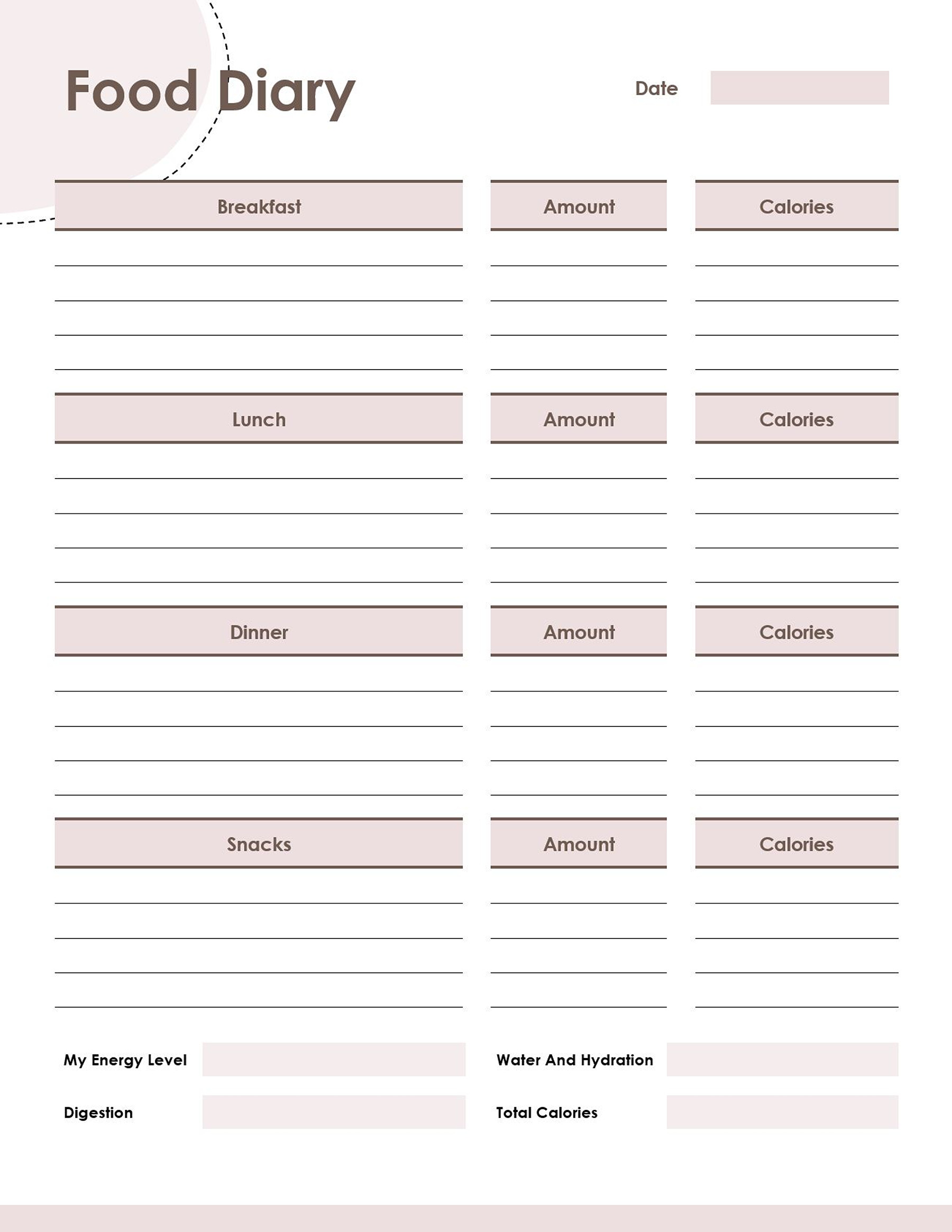
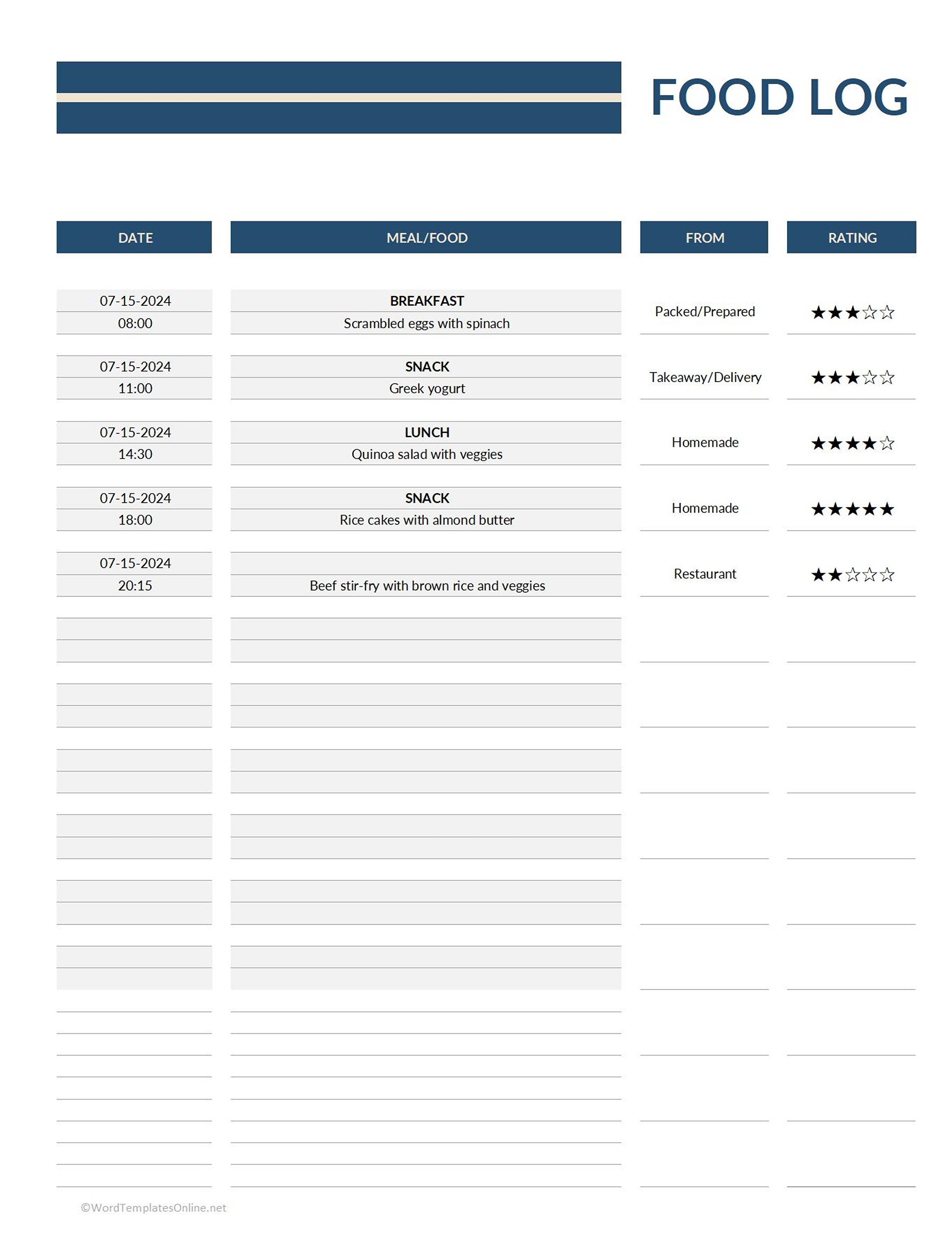
A solid template always comes with simple sections that break your day into breakfast, lunch, dinner, and snacks. It keeps things simple and really neat because you know exactly where to log things.
2. Space for portions and calories
A right template, on the other hand, makes sure to keep a dedicated space where you can jot down your portion sizes and total calories. This way, you can stay on top of your daily intake without any second-guessing.
3. Extra sections for specifics
Moreover, some templates go into a little detail where you can include more than just food, such as water intake, energy levels, or digestion notes. The idea of putting these details are simple: to understand how food affects you.
Not All Food Diaries Feel the Same (Pick One That Matches Your Style)
If you think all food diary templates are designed the same, you haven’t gotten the point yet. The basic categories remain the same, while extra or specific things can be varied. Let’s explore some different types of templates:
1. If you want a clean daily tracker
For people who are not into messy or over-the-top designs and just want a simple routine, this template is the BEST FIT. You can mention everything meal-by-meal, including portion size and calorie intake, so nothing goes missing. The best thing is we’ve kept these templates pretty straightforward, which means you don’t need to OVERTHINK, just start logging your eating habits.
Food Diary Template
Food Diary Log Template
2. If you want to spot your patterns
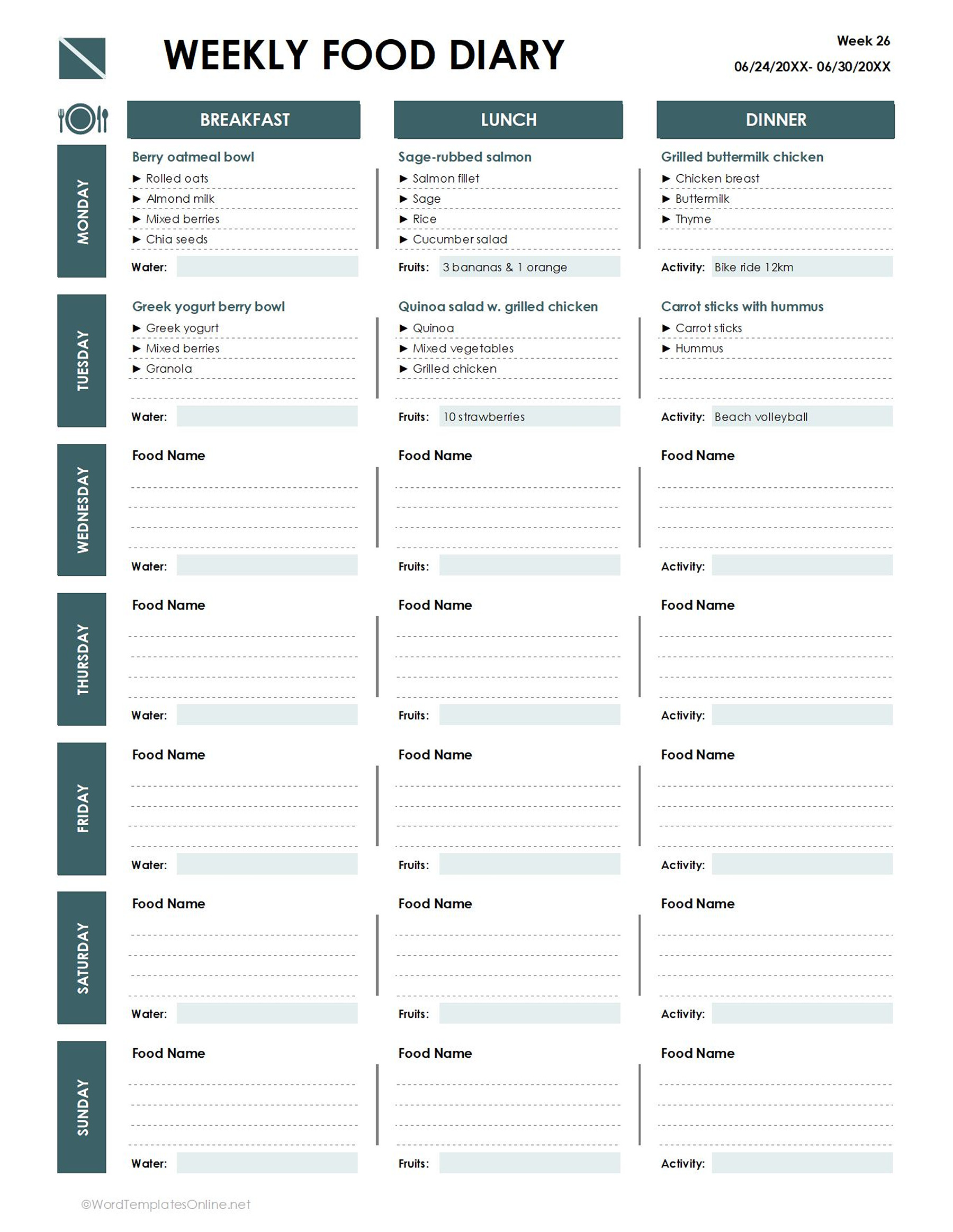
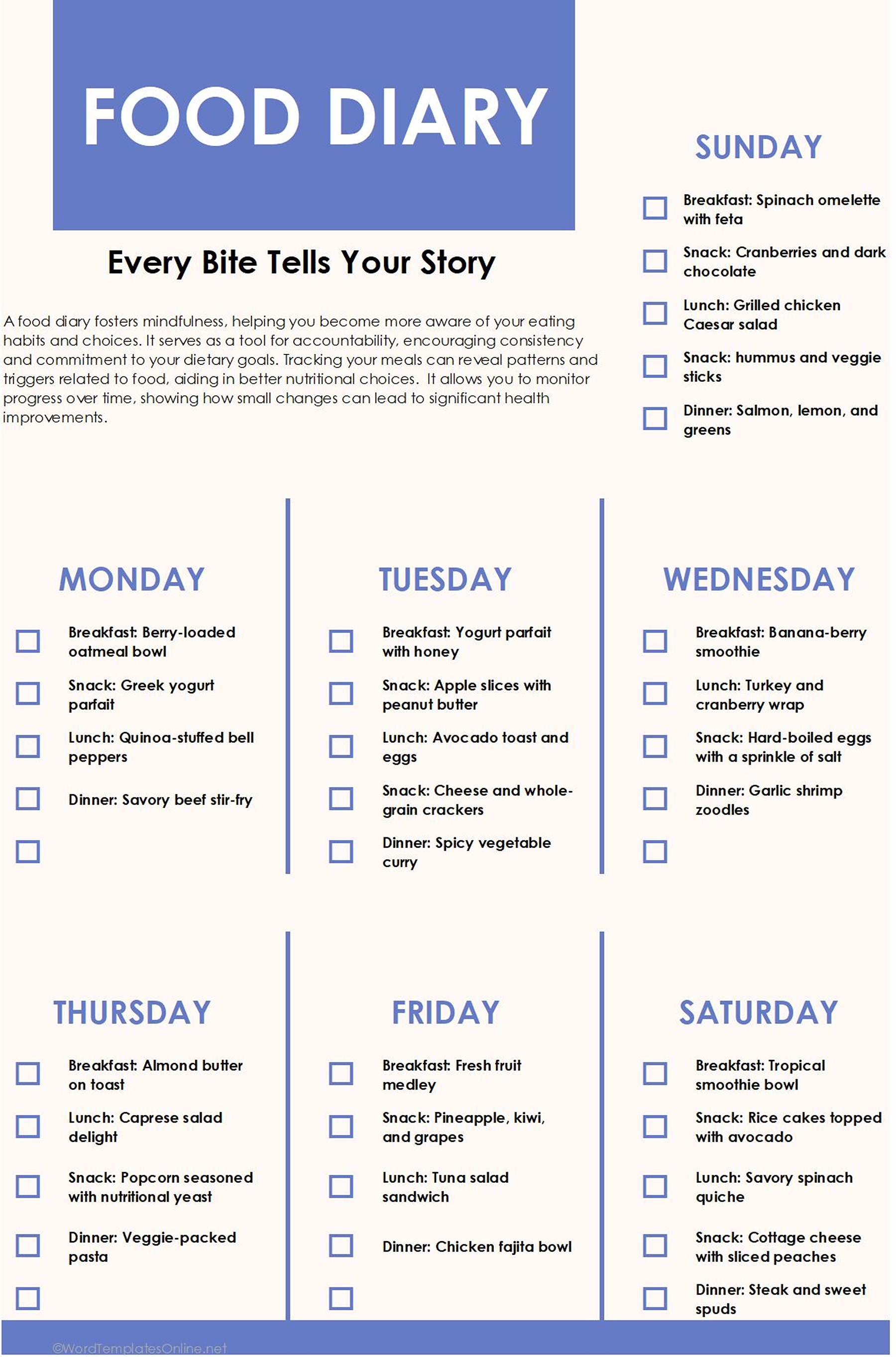
In case you are among people who feel day-to-day tracking is a total drag, these weekly layouts are a total game-changer and specifically designed for you. Best of all, you get a complete look at your habits like overeating, skipping meals, or stress eating without the everyday hassle. Overall, it’s the perfect type for anyone who wants to focus on their overall trends rather than obsessing over every little detail.
Weekly Food Tracker
Food Diary Template
3. If you want a detailed, number-focused diary
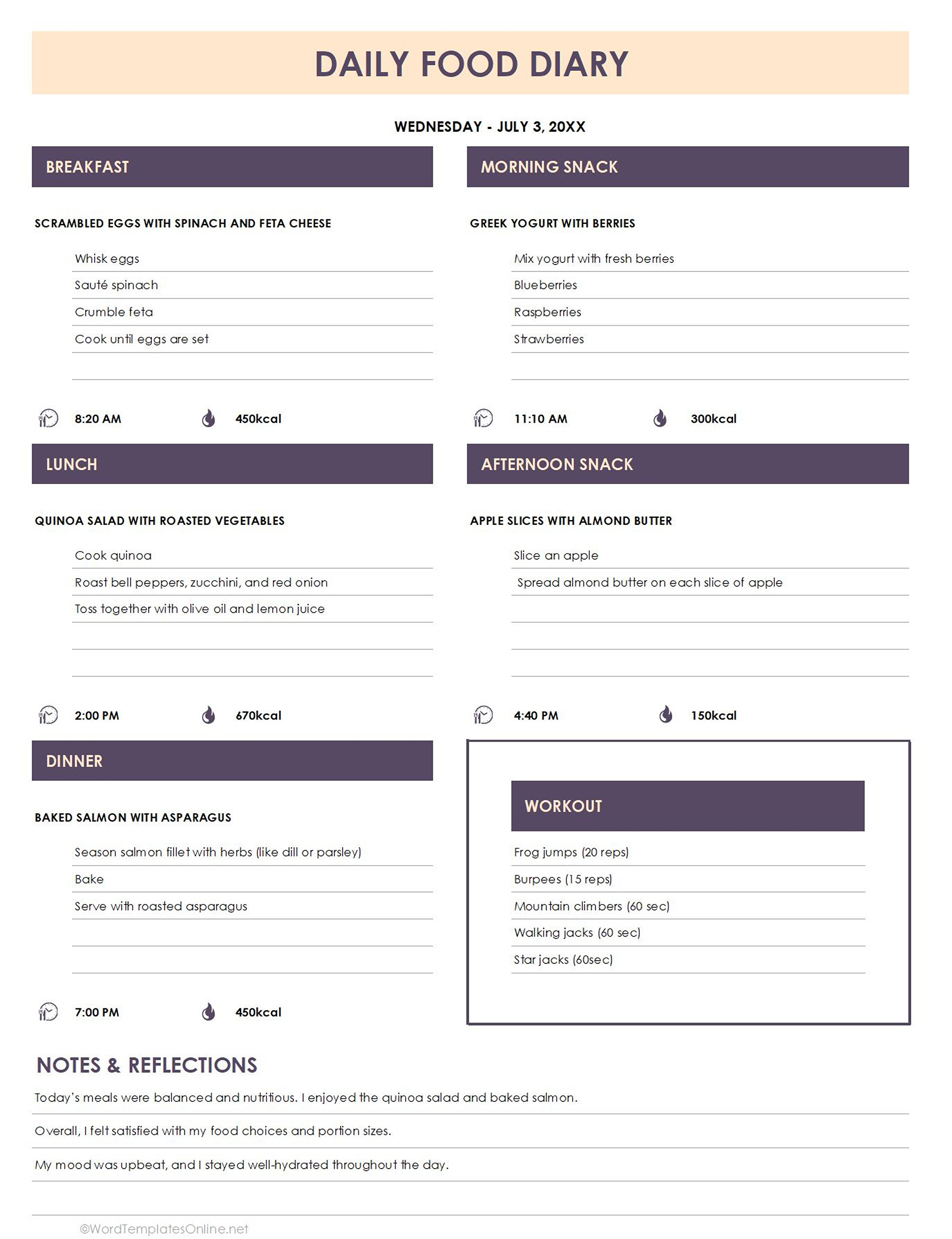
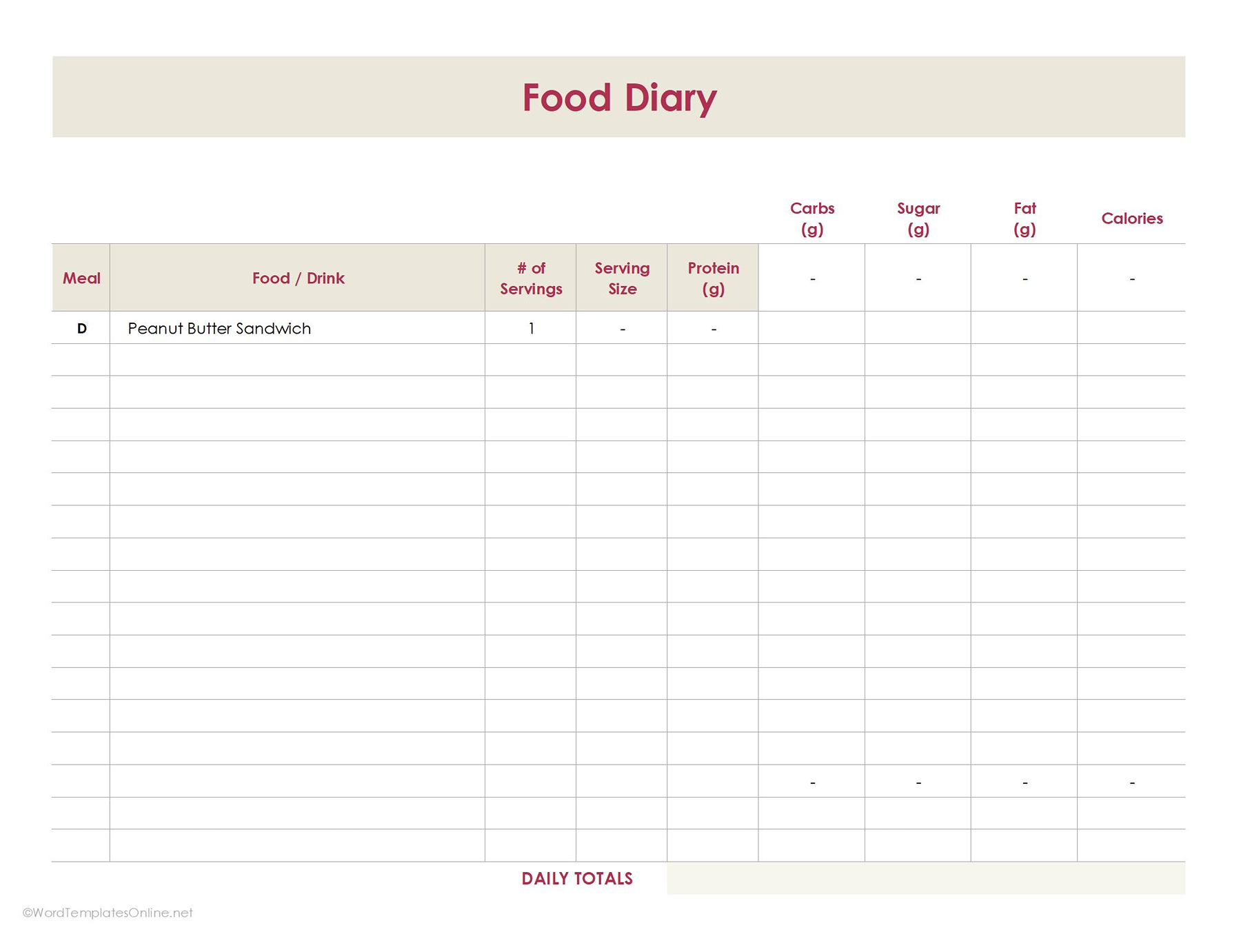
Well, you must choose these templates because they track things in detail. Such templates usually come in Excel versions, so you can track calories, macros, or even habits easily, and the sheet automatically gives you the total. Overall, if you enjoy numbers and breakdowns, these ones do a lot of work for you.
Daily Food Diary Template
Food Diary Template with Nutrient Details
4. Some users want a more personal “my food diary” feel, almost like journaling
For such people, we recommend using templates that are less about strict tracking and more about awareness. Along with the three-day meals, you can also mention your craving, mood, and how you felt after eating in a dedicated “notes” area. The goal here is to keep things flexible and understand the “why” behind your habits.
My Food Diary Template
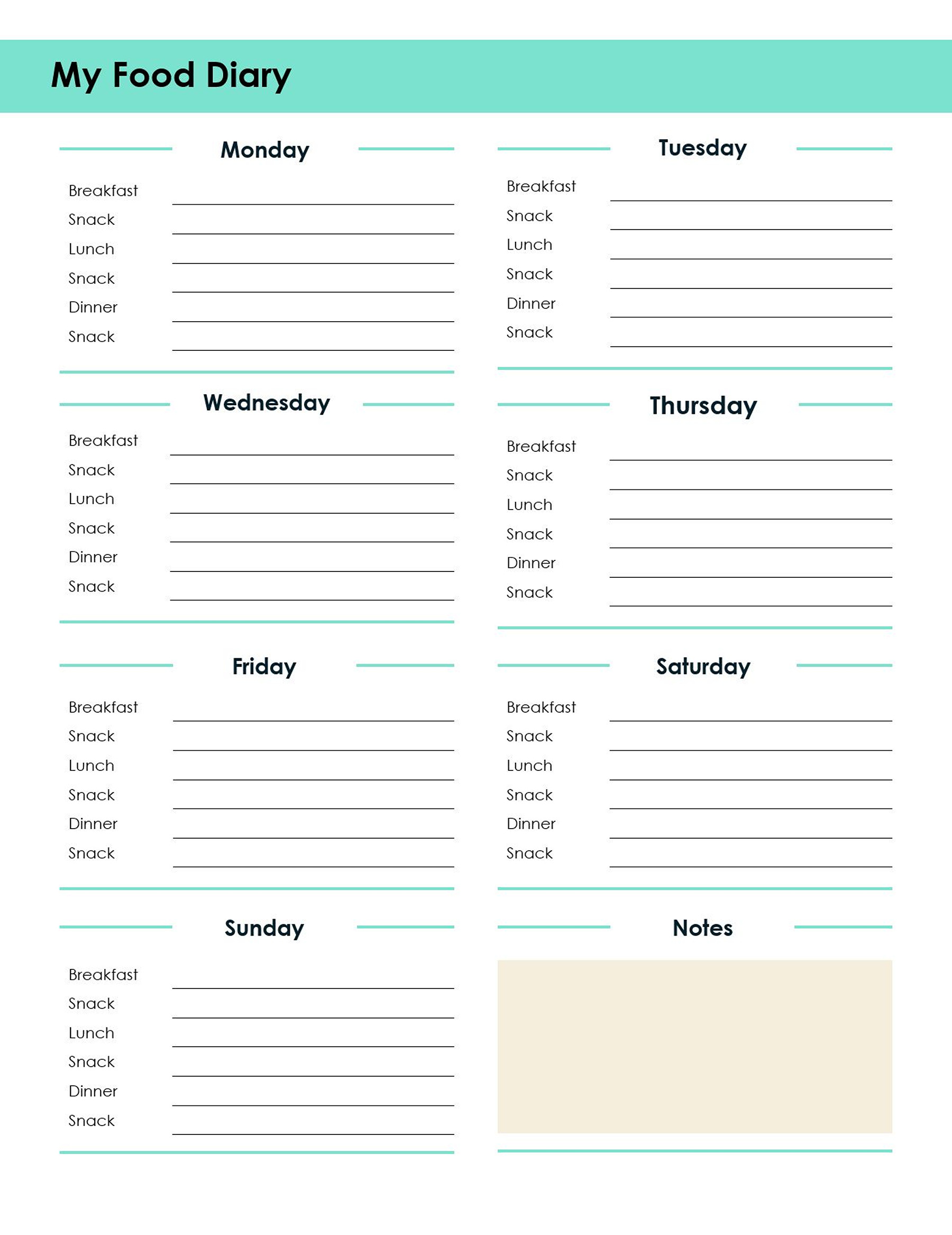
My Food Diary Template
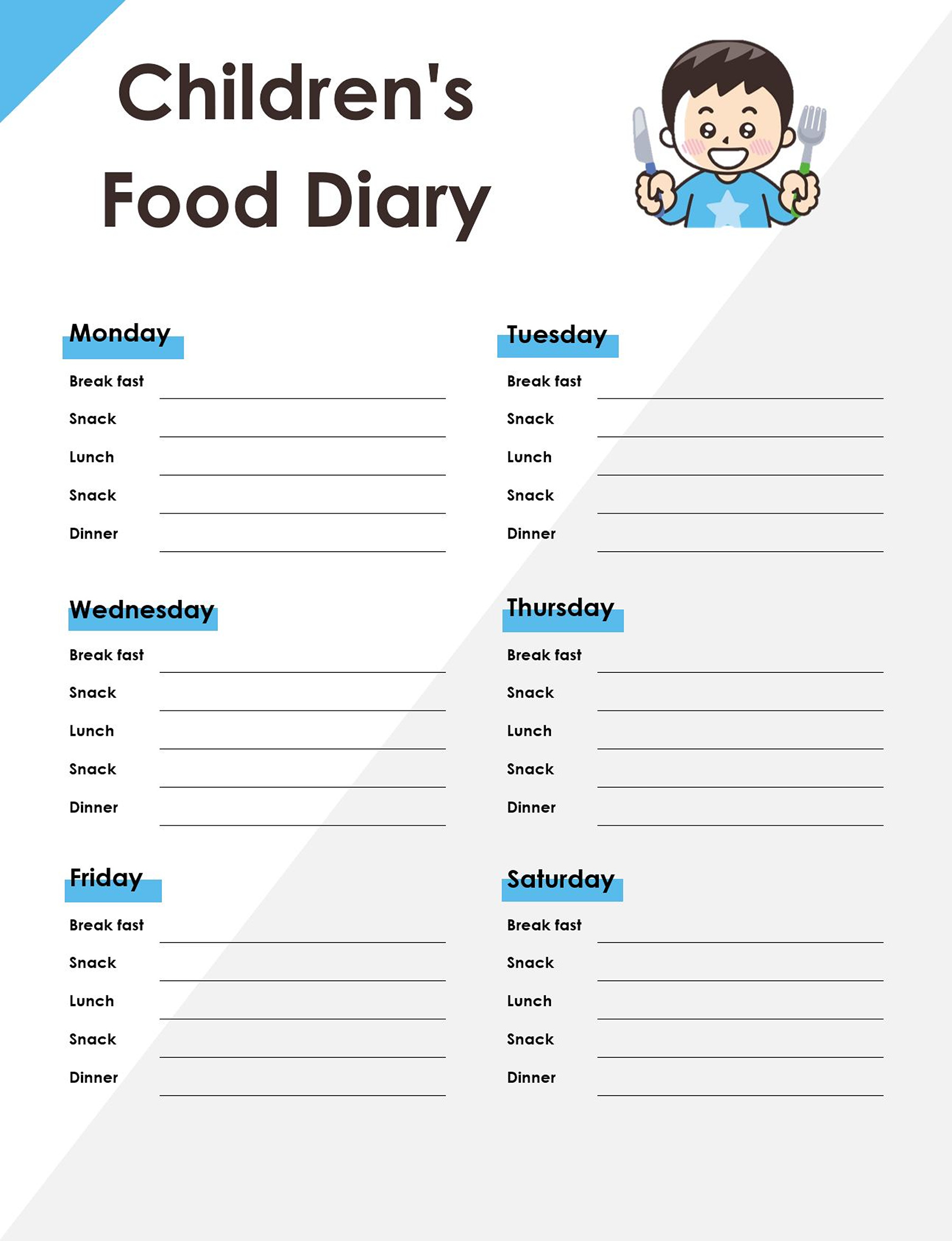
5. Parents who want to track kids’ habits
In such scenarios, we always prefer a simple version. These templates use clear sections, less text, and sometimes visuals to make tracking easy and quick. The goal isn’t strictly calorie counting, but making sure that the kid has taken timely meals without overwhelming parents.
Food Diary Template for Toddlers
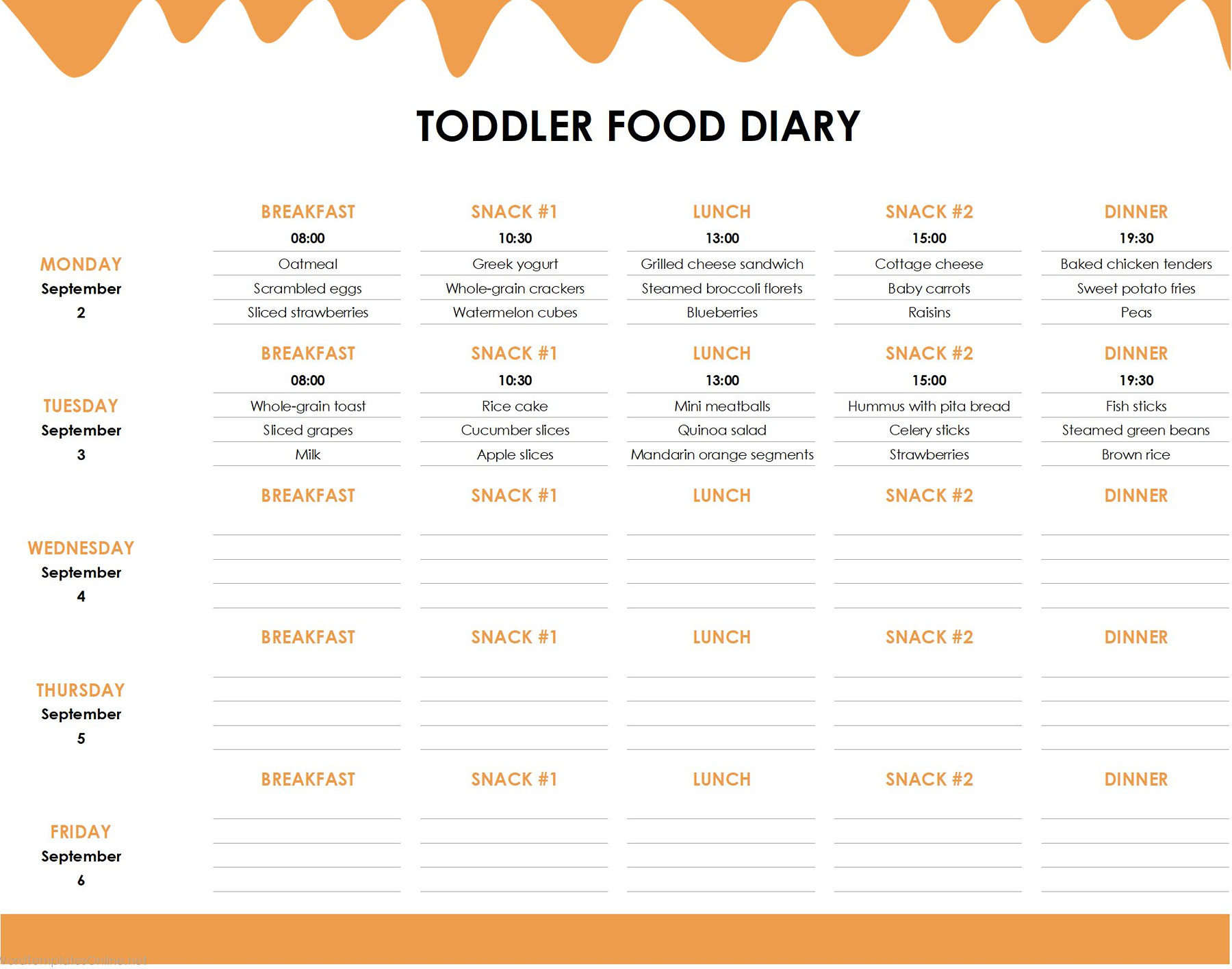
Food Diary Template for Children
6. If you need a diabetic-focused daily food tracker
Then, you must go for this template. This isn’t your average “what did I eat today” kinda diary. This layout goes all in for tracking specific things that matter for diabetic patients. Let’s say blood sugar levels, insulin, and timing, right along with the meals. Cherry on top? It’s super reliable because everything is in one spot, so you don’t need to bounce around different apps or notes.
Diabetic Food Diary Template
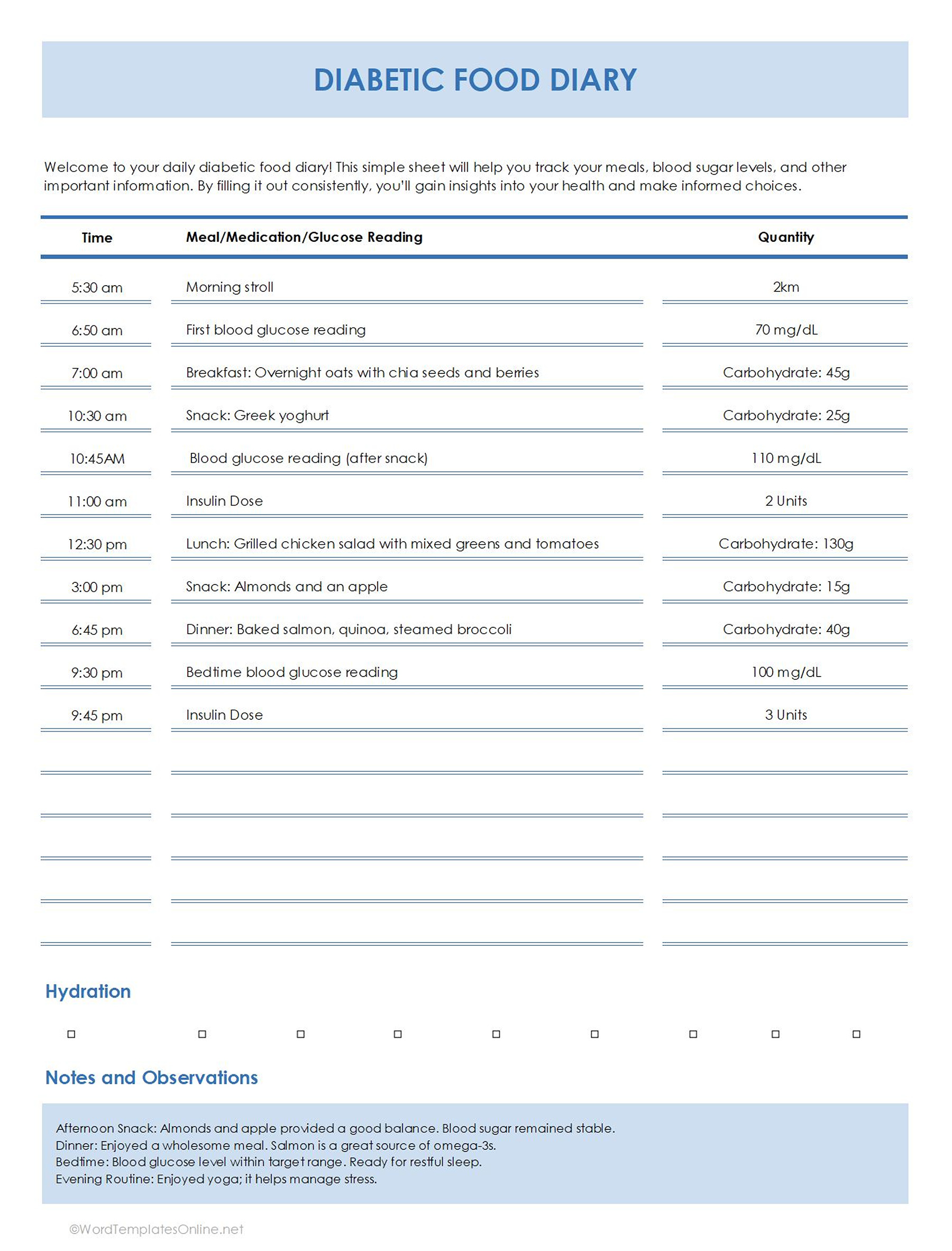
Diabetic Food Diary Template
How to Use a Food Diary Template Without Making It a Chore
If you think looking for the right template is what matters? Well, quite not. The real challenge is how long you stick with it. Honestly speaking, if the process feels like work, you’re going to quit.
Well, to stay on the roll, you need a setup that goes with your flow. Here’s the best way to make it work for you:
- Perfection Kills, Consistently Stays: If you chase perfection, it’s easy to get lost. What really matters is showing up daily, more than just getting every calorie right.
- Be Real About Portions (No Guessing Games): Well, honesty is the best policy, so always write what you actually ate, not what you think sounds better. Accurate tracking is what makes it useful.
- Use Notes Only If They Help You: The Notes section is given templates, in case you want to go into detail for mood, energy, and digestion. Use it if you find it helpful; there’s no need to turn it into extra work.
- Review Weekly, Not Obsessively: Most people look frequently to observe the pattern. However, this is not the right way; look back once a week to spot trends. If you start analyzing after every meal, it becomes hectic, and you may skip the tracking.
Common Mistakes That Quietly Ruin Food Tracking
The fact that people may see these mistakes as “not really mattering”, but they spoil your tracking without even giving you a hint. So, it is always better to check on them:
- “I’ll Log It Later” (Spoiler: You Won’t): If you want to lose interest and fall off track quickly, this is the way. Because if you’re not going now, it’s probably not going to get logged at all. So, always add meals on time.
- Forgetting Snacks and Drinks: Most people think the random snack at 2 a.m., or sugary drink in a gathering, does not count. Well, it counts. If you skip adding those “invisible snacks”, you’re basically looking at an incomplete picture of the day.
- Treating It Like a Diet Rather Than a Tool: If you consider a food diary a diet tracker, you get it wrong. It’s not about restricting what you eat; it’s about keeping you aware. The fix is to use it to understand your habits, not punish yourself.
- Going for a Template That Feels Too Complicated: What’s the point of picking a fancy template that feels like a burden after a day or two? If it takes too long to fill up, you’ll eventually stop using it. Simple always wins.
At the End of the Day….
A food diary only works if you use it. Don’t run for perfection. If you start counting every calorie or turn it into a strict routine, you’ll quit in a week. So, always take this as a friendly chart where you notice what you eat, find out trends, and make small, better choices over time. The best way is to pick a template that feels easy, and you can easily adjust with your lifestyle. The template will handle the REST!
Frequently Asked Questions
Can I customize a food diary template?
Yep, and you probably should. Our templates are super easy to use and edit; you can add sections or delete them according to your taste.
How long should I keep a food diary?
As long as you find it helpful. If you are observing patterns, give it a few weeks; however, if you want to clean eat, you can use it every day.
Are food diaries okay for kids?
Yes, absolutely, it is best for tracking kids’ meals only if they are not overpressuring parents. You can use them for awareness purposes, not for strict rules.
About This Article