The process of identifying possible risks and assessing their probability of happening, as well as the extent of harm, to identify controls or preventative measures that eliminate or lessen those risks, is known as risk assessment. In order to make well-informed decisions regarding risk mitigation and control, organizations carry out risk assessments. By offering a framework that will direct users through each step of the assessment process, using a risk matrix template increases efficiency and consistency. As a result, there are fewer mistakes and no omissions. A structured template also ensures that the risk matrix is carried out in accordance with industry and regulatory standards.
Why Use a Risk Matrix Template?
A well-structured risk matrix template improves the quality of the risk assessment process. It makes sure that risks are identified and analyzed, and documented in a standardized form, which provides consistency and prevents oversight. The template also supports compliance with industry-specific and international standards such as ISO 450001, ISO 31000, ISO 27005, and OSHA (Occupational Safety and Health Association).
Furthermore, using a template also improves efficiency by reducing repetitive tasks, which saves time and resources for organizations in the project management industry. Lastly, a template provides an organized format that improves communication, making it easier to interpret the findings to auditors and relevant users.
Core Components of a Risk Assessment Template
A risk matrix template is designed to include all the core components necessary for conducting an effective risk assessment. These elements are:
Project or activity information
This is the first section. It gives the context of the assessment. It contains details such as project scope, the individual responsible for the project, assessment date, and location. Include these details to provide traceability and to make sure that the assessment is clearly defined.
Hazard identification
This is where you identify potential hazards, such as operational, human-related, environmental, technical, etc. Record the risks systematically, which reduces the chances of oversight.
Risk analysis
In this section, you evaluate the potential hazards based on the likelihood of occurrence, exposure factors, and the severity of impact. This allows companies to make decisions on where to focus more resources to avoid wasting time on less likely hazards.
Risk evaluation matrix
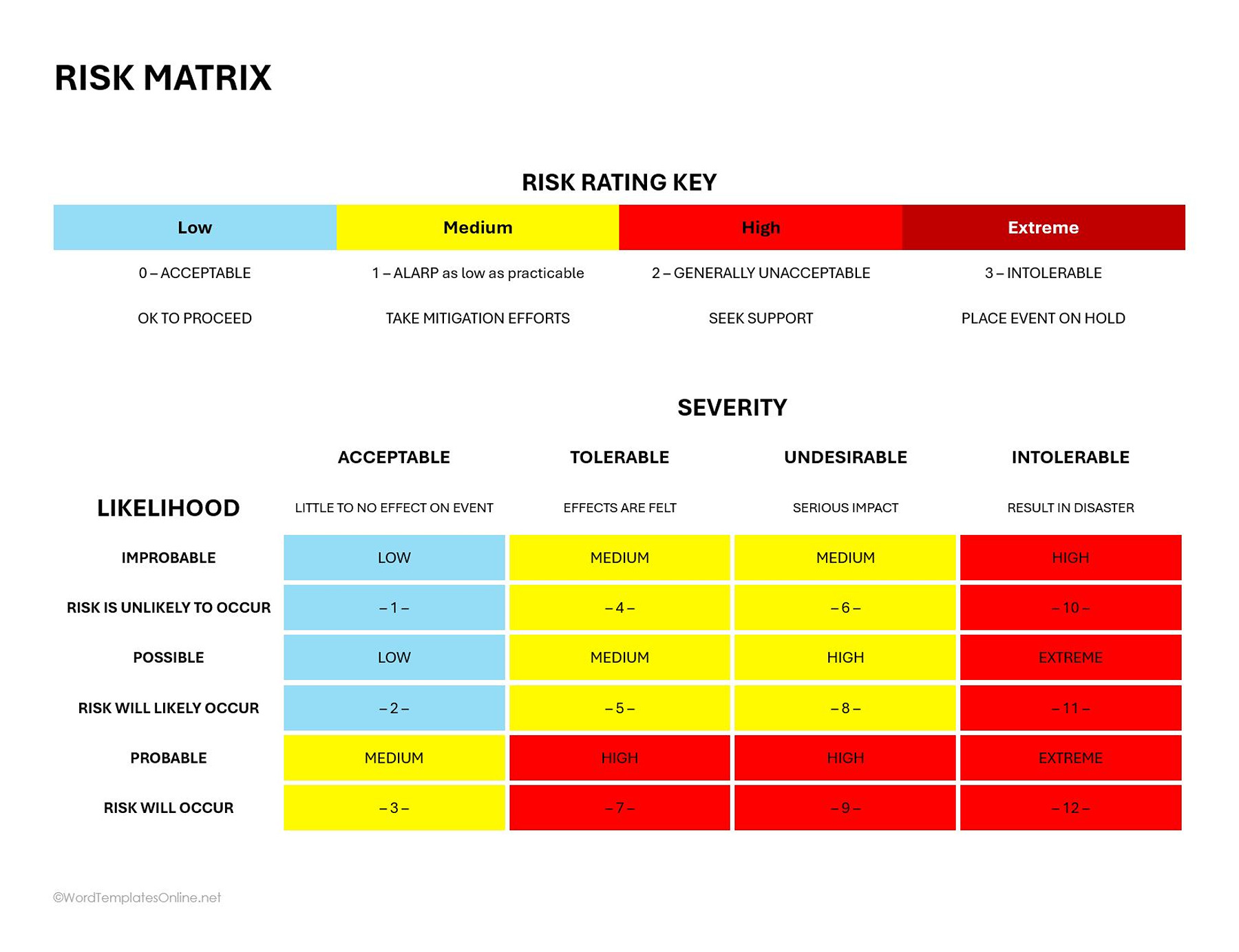
The evaluation matrix scores and grades the assessment results. It combines likelihood and severity ratings, which helps prioritize risks to show which require immediate attention and which can be monitored over time.
Mitigation/control measures
In this section, document the existing controls and planned corrective actions to make sure that risks are acknowledged and mitigated promptly. Thereafter, include measures in place designed to reduce their likelihood of occurrence or minimize impact.
Responsibility and ownership
In this section, the people who have been assigned to implement and monitor the assessment are identified. Write their names, tasks assigned to them, and the time given to complete. This promotes accountability and makes sure that risk management actions are effectively followed.
Review and monitoring
This is the last section of the template. It has provisions for conducting periodic reviews and continuous monitoring. This component also supports version control and continuous improvement, which guarantees that the risk assessment stays relevant and effective even when new risks emerge.
Best Practices of Risk Matrix Documentation
- Use unambiguous language to reduce the chances of overlooking potential hazards, which leads to the formulation of ineffective mitigation measures. Clear wording also enables users to easily interpret the assessment.
- Use quantitative ratings rather than vague descriptions. For example, you can give number ratings to likelihood and severity to give a more objective basis for making informed decisions.
- Document both initial and residual risk to show the effectiveness of the mitigation measures. This shows evidence that risks are being reduced and also acts as a record for future audits and reviews.
- Maintaining version control is important for compliance and audit purposes. Record each risk assessment update with a date, version number, and author for transparency and audit purposes.
- Encourage shareholder input during risk assessment to get different perspectives that could help identify potential risks that you may have missed or overlooked. Collaboration improves the accuracy of the assessment.
Related: 26 Professional Decision Matrix Templates (Word, Excel)
Benefits of Using Ready-Made Templates
- Templates are professionally structured to align with standards and maintain consistency and compliance across different projects.
- They reduce errors such as omissions that occur when starting from scratch by providing pre-defined fields.
- The templates are flexible and can be customized to fit various industries, company requirements, and project types.
- Using a matrix template lets you focus on risk assessment rather than structure, which saves valuable time, allowing companies to respond to risks on time.
Risk Matrix Template (Risk Rating)
Risk Analysis Matrix Template
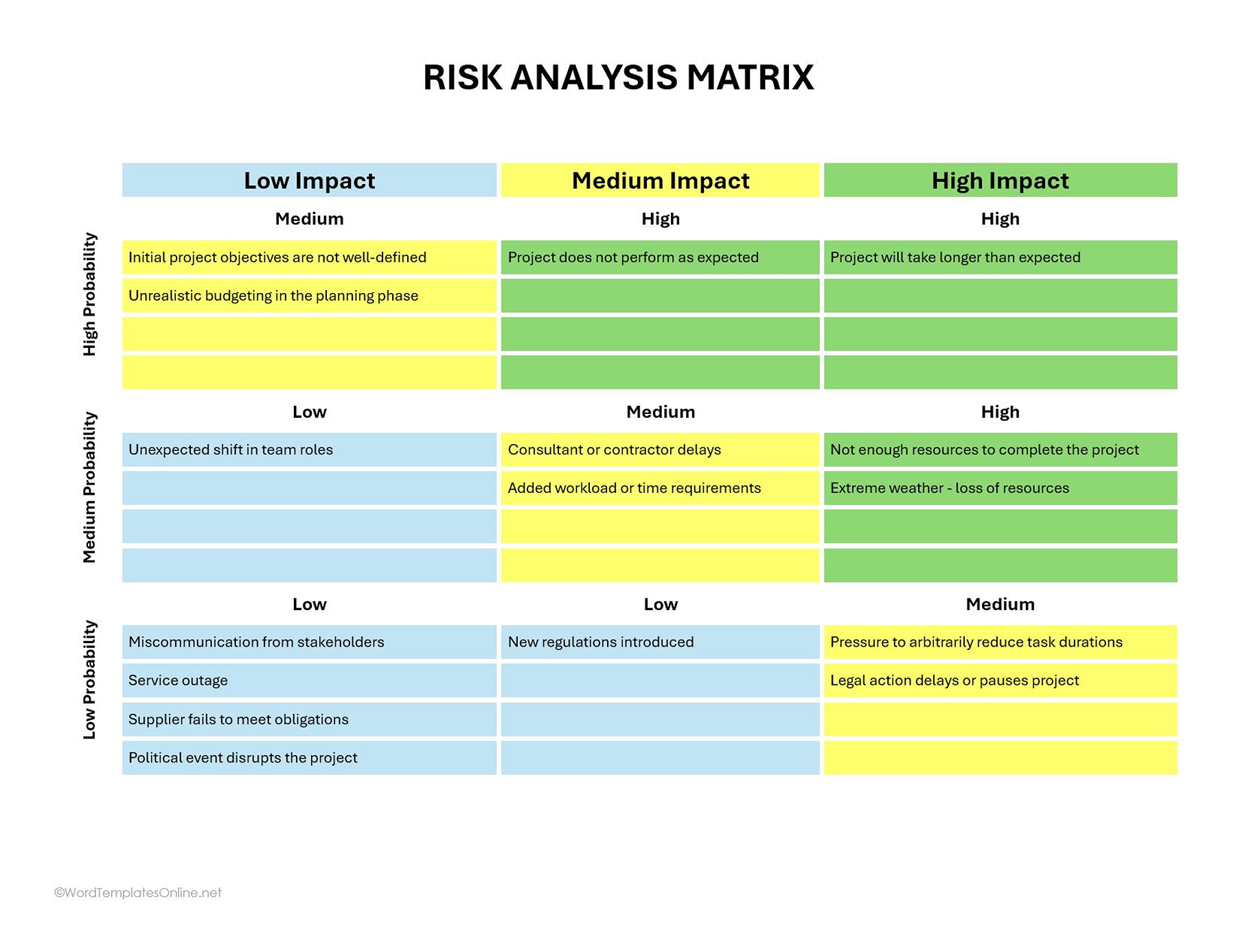
Risk Assessment Matrix Template

Construction Risk Assessment Template
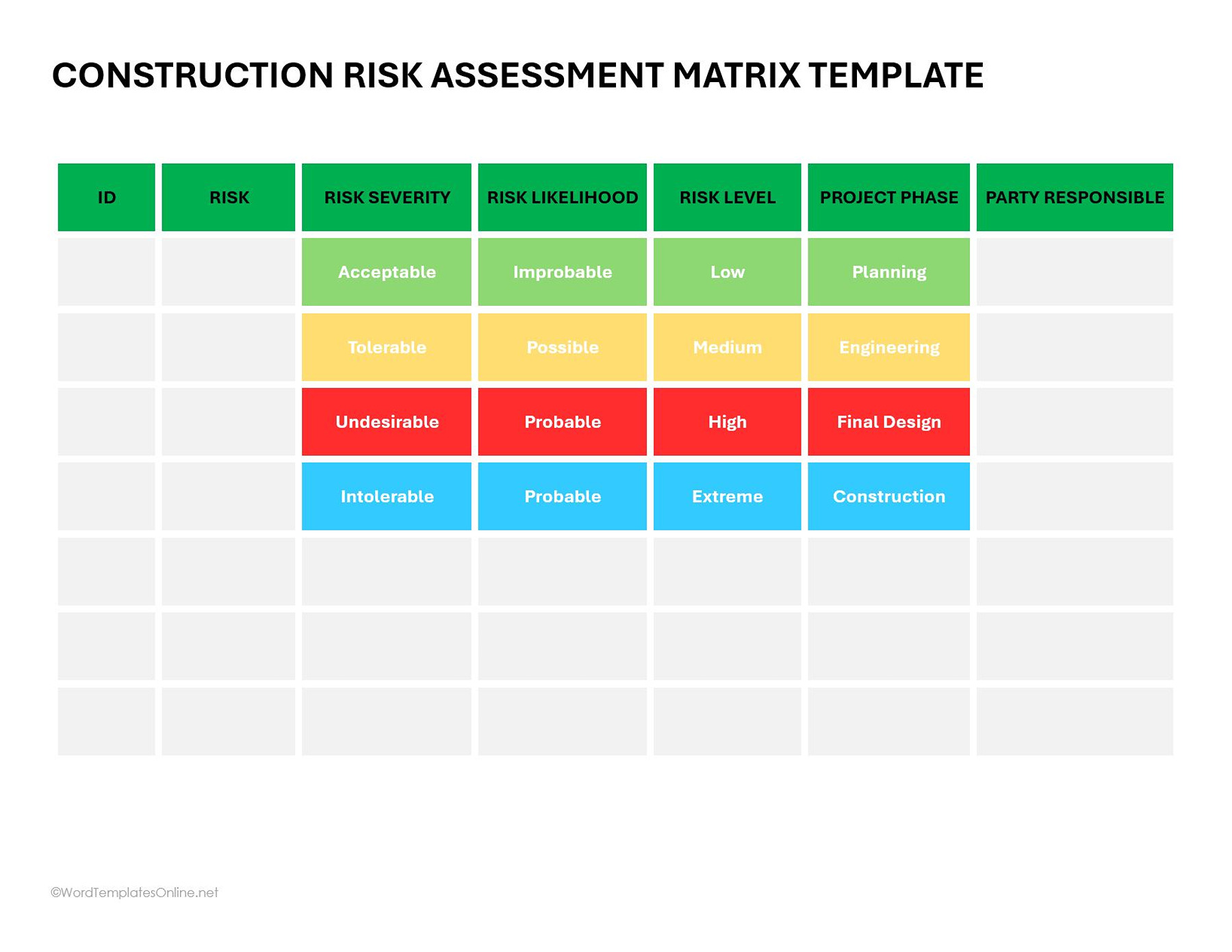
Business Risk Assessment Matrix Template

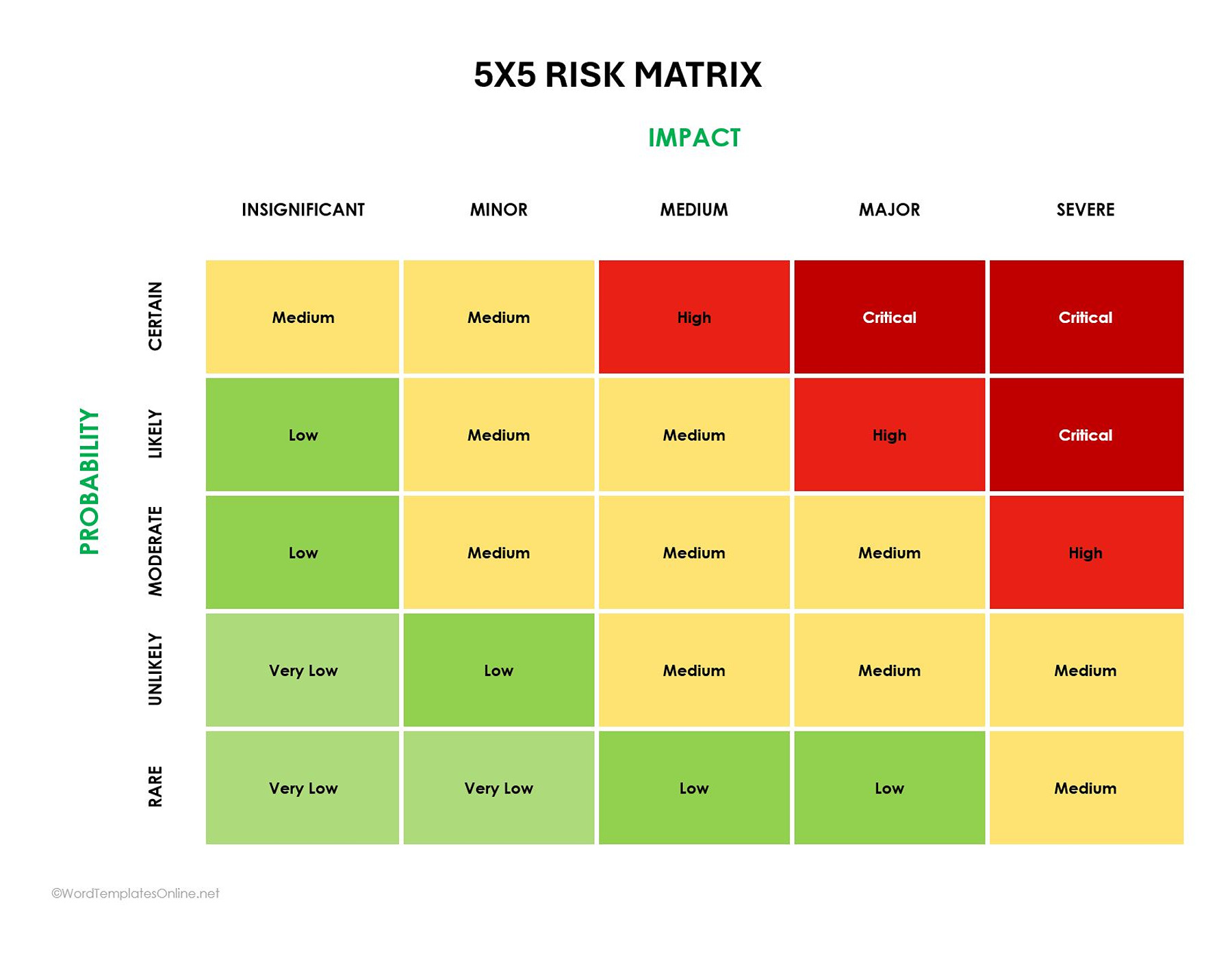
5×5 Risk Assessment Template
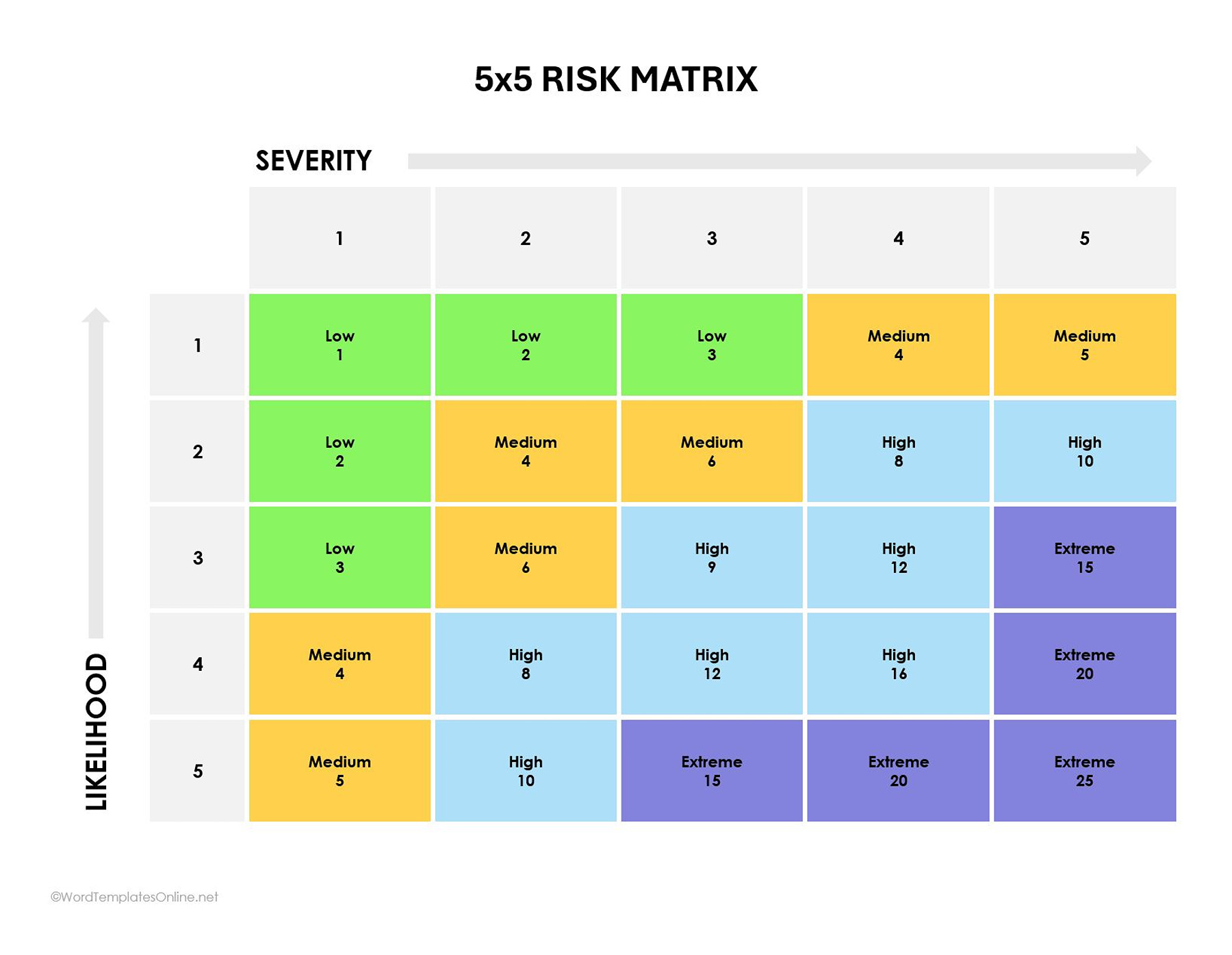
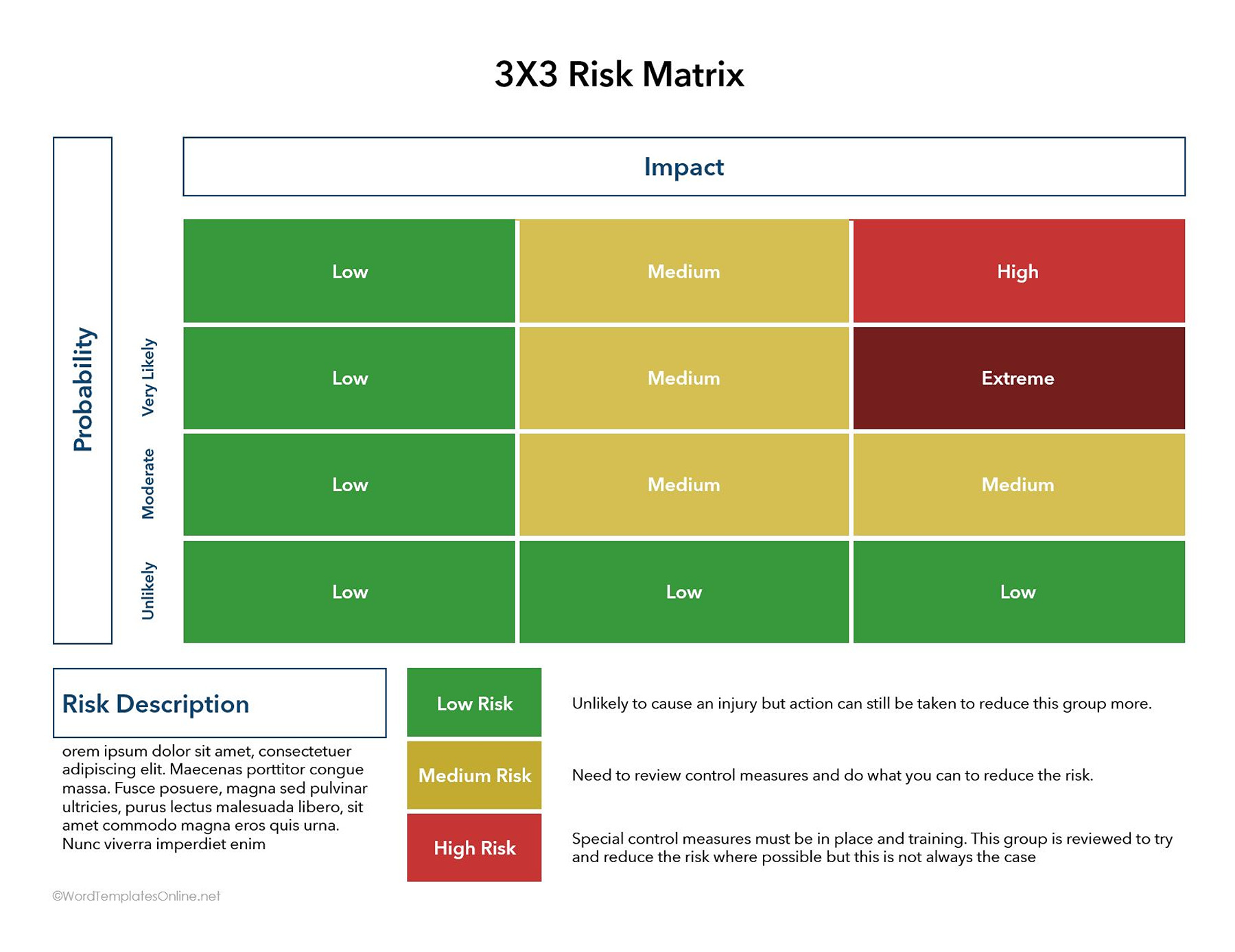
3×3 Risk Assessment Template
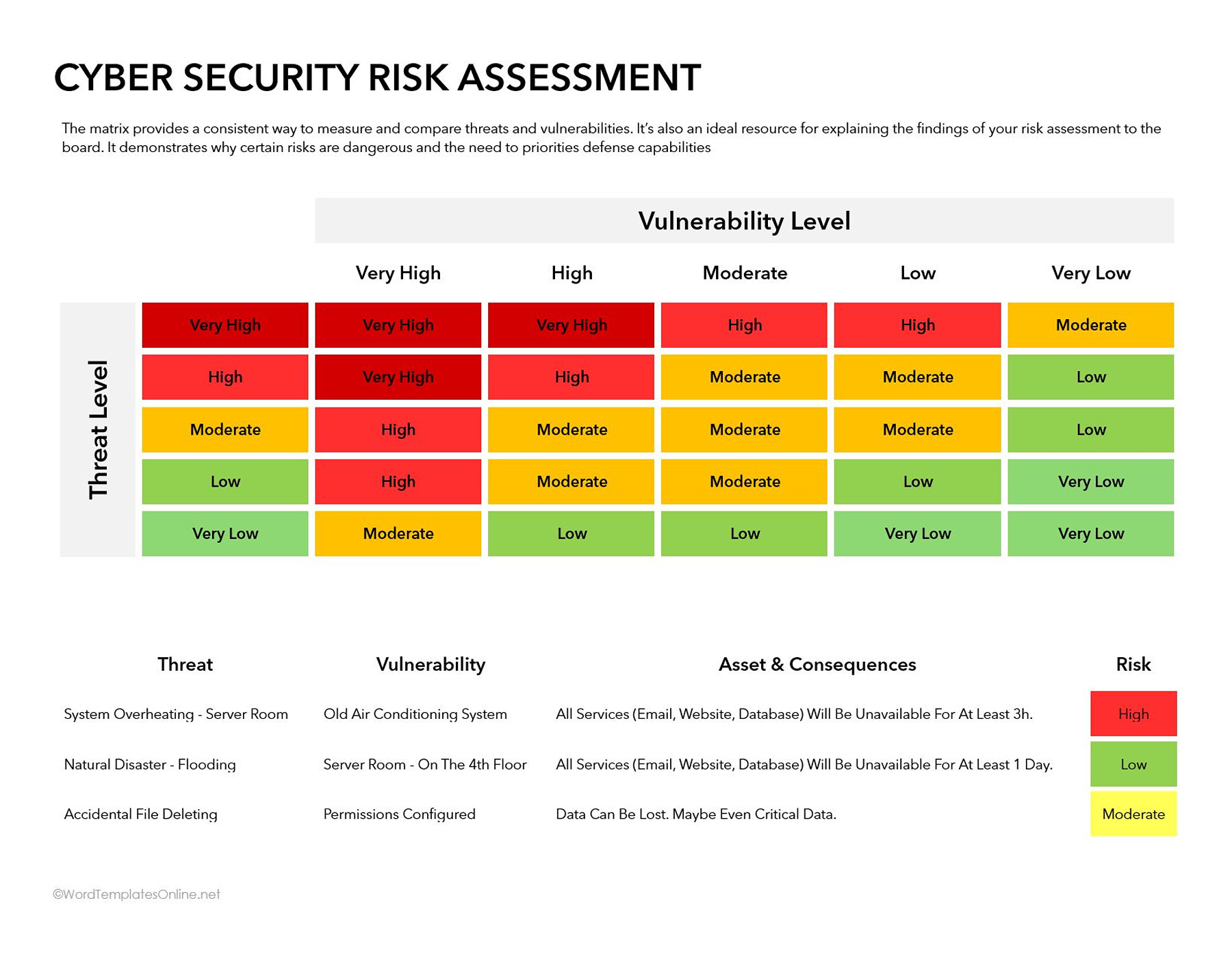
Cyber Security Risk Assessment Template
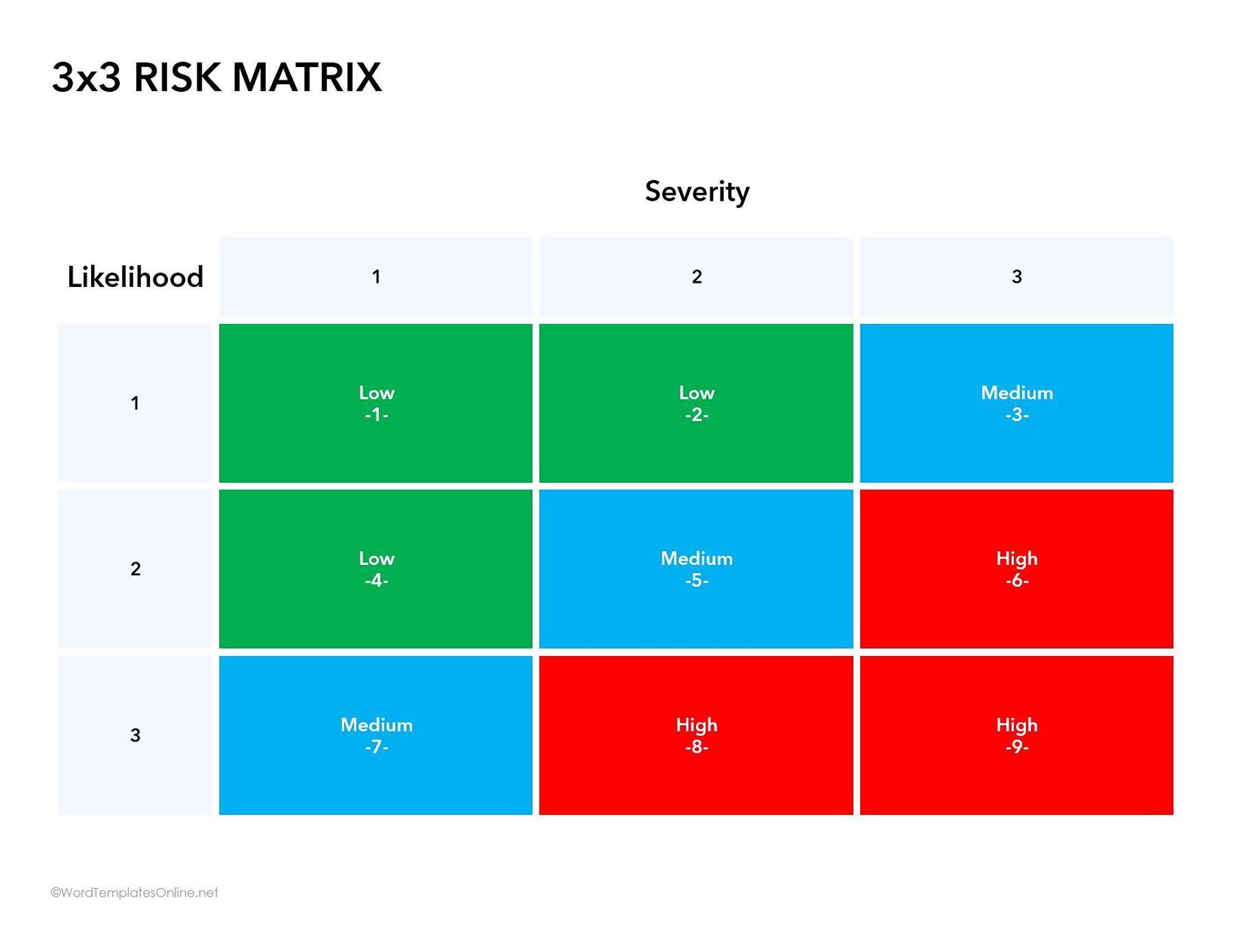
5×5 Risk Matrix Template
3×3 Risk Matrix Template
Conclusion
When an organization wishes to identify, assess, and rank possible risks in order to develop efficient mitigation and control strategies, structured risk assessment is crucial. Organizations can also adhere to industry and regulatory standards and make well-informed decisions by using a consistent framework.
Pre-made templates offer organization and adaptability, which saves time, lowers the possibility of mistakes, and produces a record that users can understand with ease. Above all, it enables people or groups to concentrate on risk management instead of formatting.
About This Article