A birth plan template is a structured form that expectant parents use to highlight their preferred labor, delivery, and postpartum care. It simplifies and organizes preferences for labor and delivery by:
- Providing a structured format that makes it easy for parents to organize their thoughts
- Helping parents document their preferences, i.e., use of painkillers, alternative birth methods such as C-section, etc.
- Offering flexibility where parents can customize the template to align with their values
- Communicating parents’ preferences to doctors, midwives, or nurses to avoid misunderstandings
- Allowing parents to make informed decisions by researching various options for service delivery
Timing and Application
The ideal time to use this template is the beginning of the third trimester, around the 28th—32nd week. This allows parents to consult healthcare providers to make informed decisions.
This template should be shared in or used by:
- Hospitals, maternity centers, or any other birth centers
- The delivery room team
- Midwives or obstetricians
- Spouse of the expectant
Core Components of the Template
Below are the common elements that are included in a birth plan template:
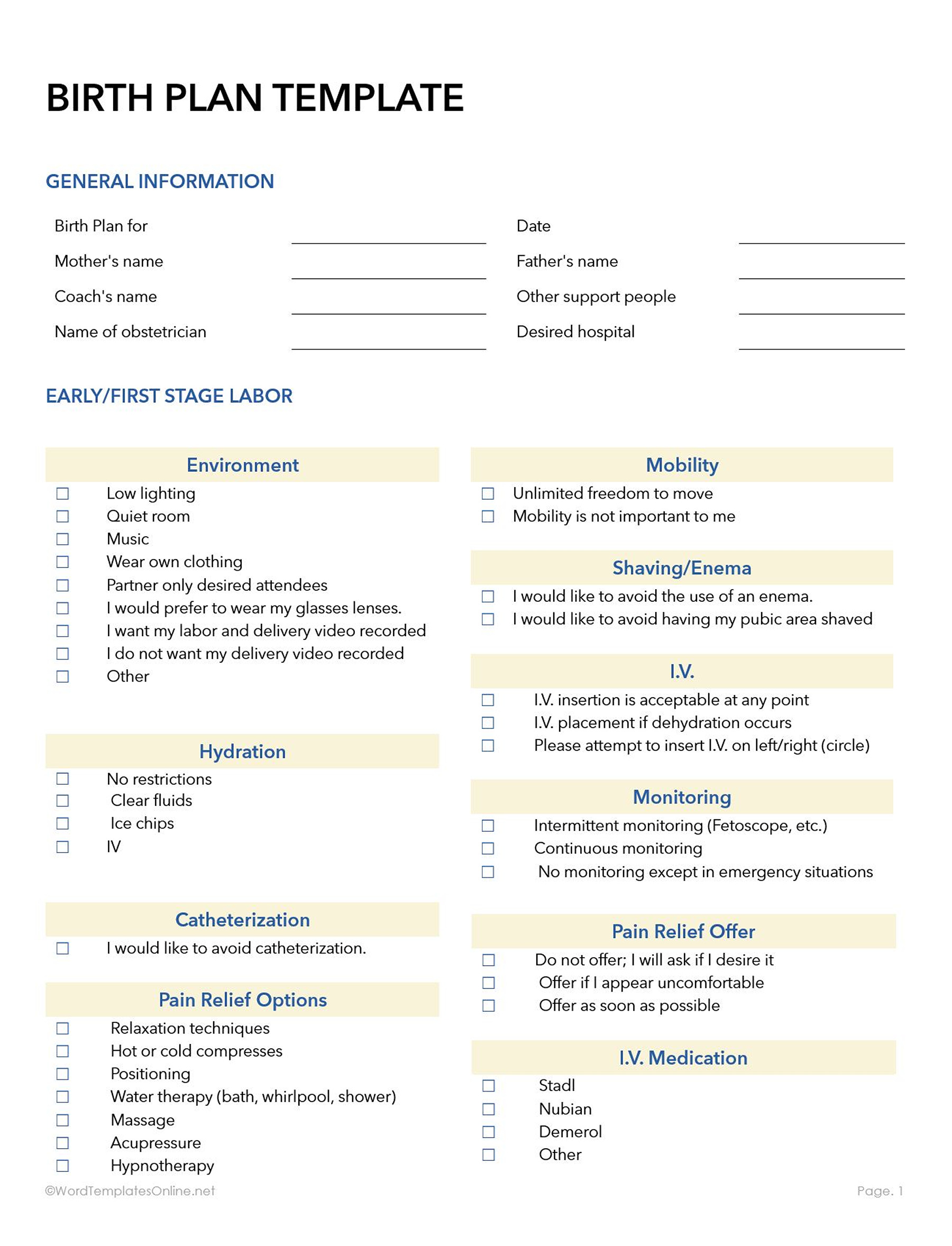
Basic information
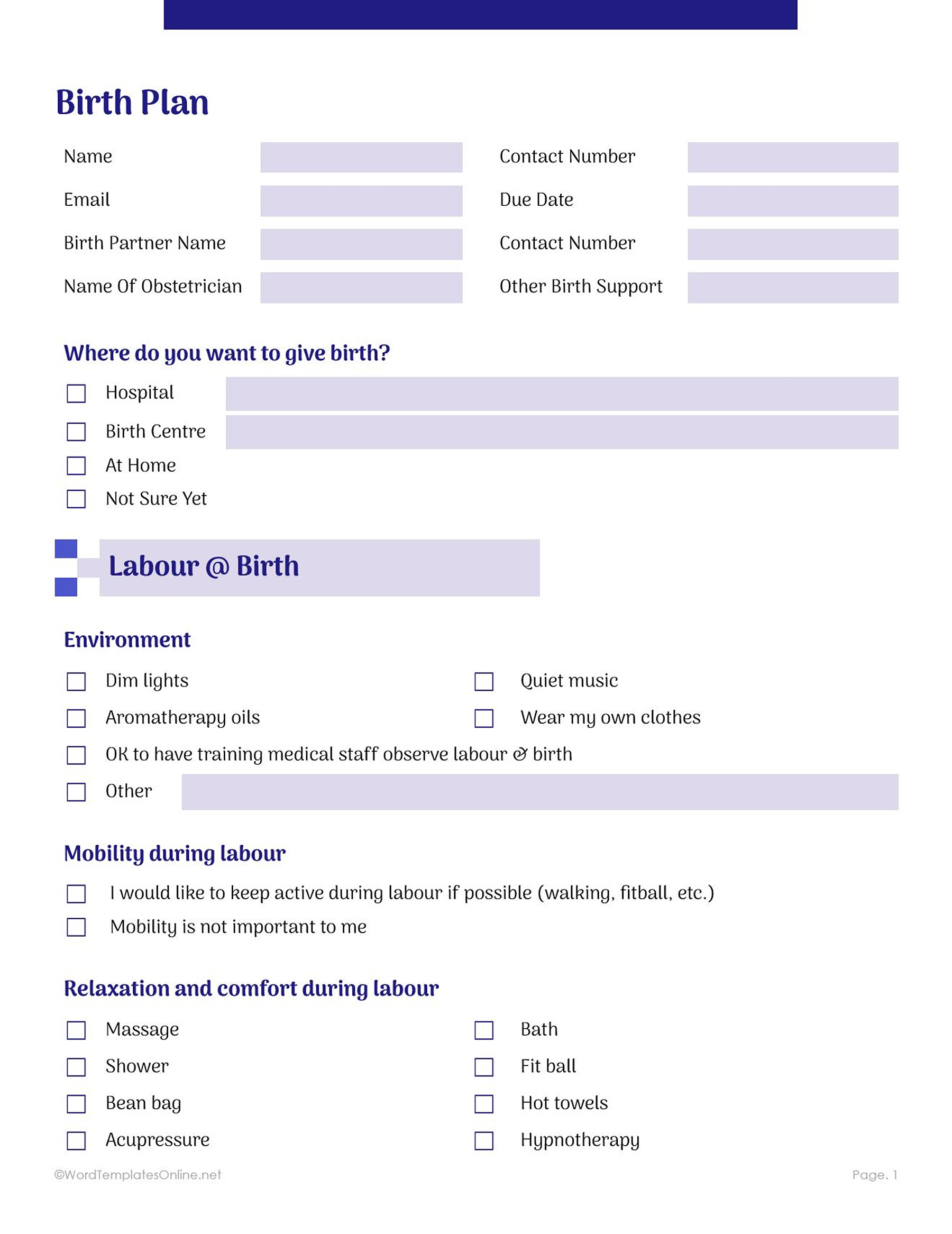
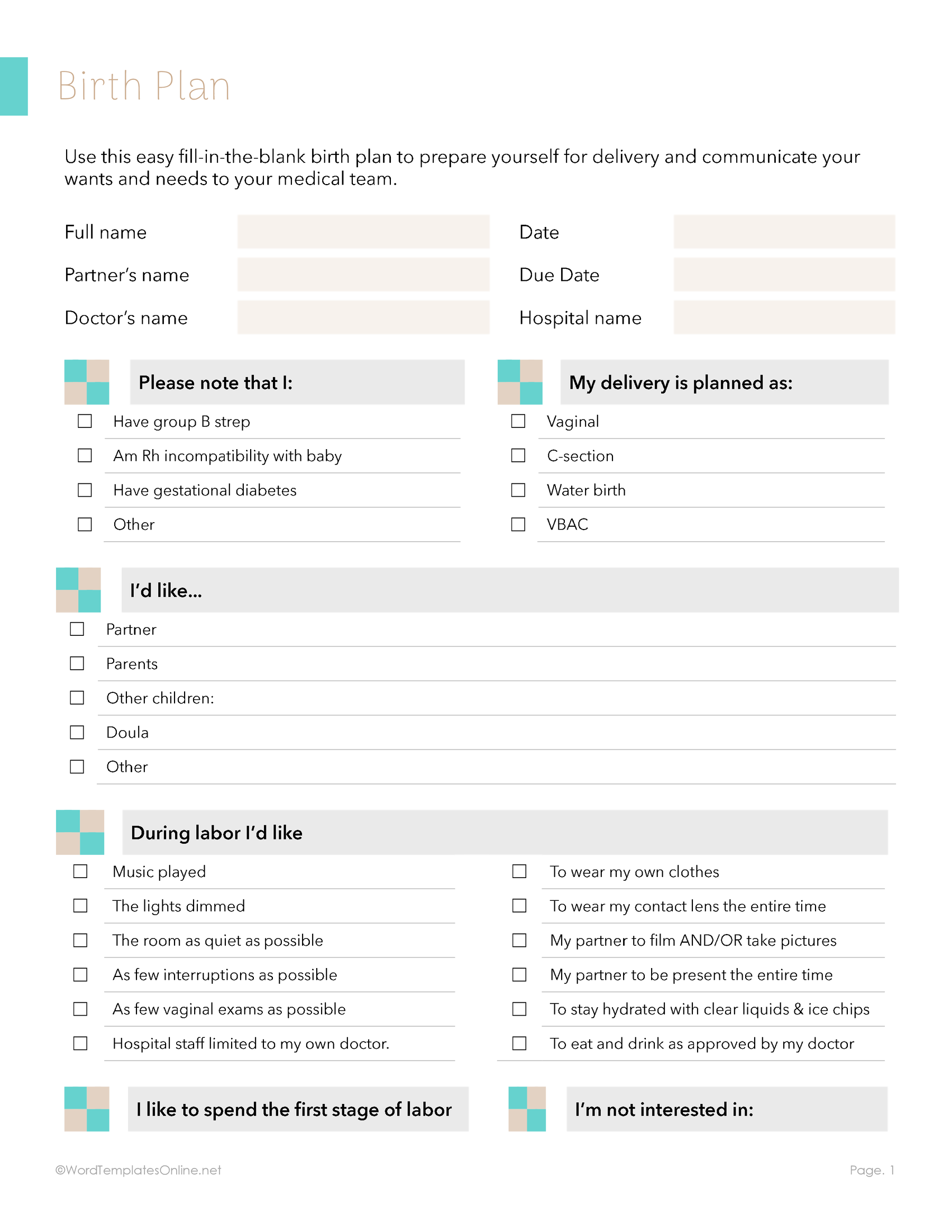
This is the first section of the template. It contains the basic information of the expectant parents such as full names, contacts, the due date and the name of the obstetrician. It is important for all parties involved so that they can be easily contacted when necessary.
Place of birth
In this section, the expectant parents indicate where birth will take place, for example hospital, home or birth center. This information will help service providers prepare resources and an appropriate location.
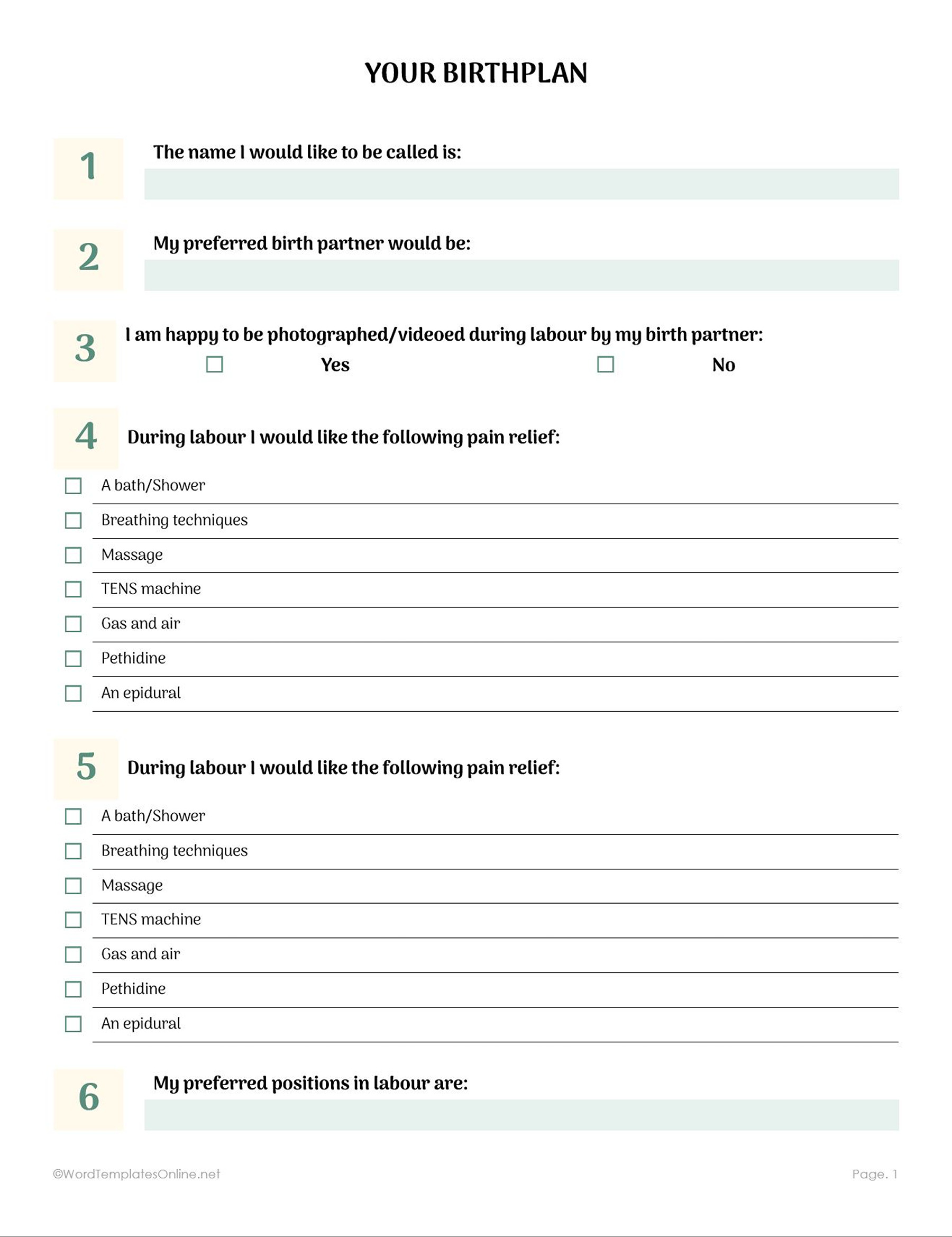
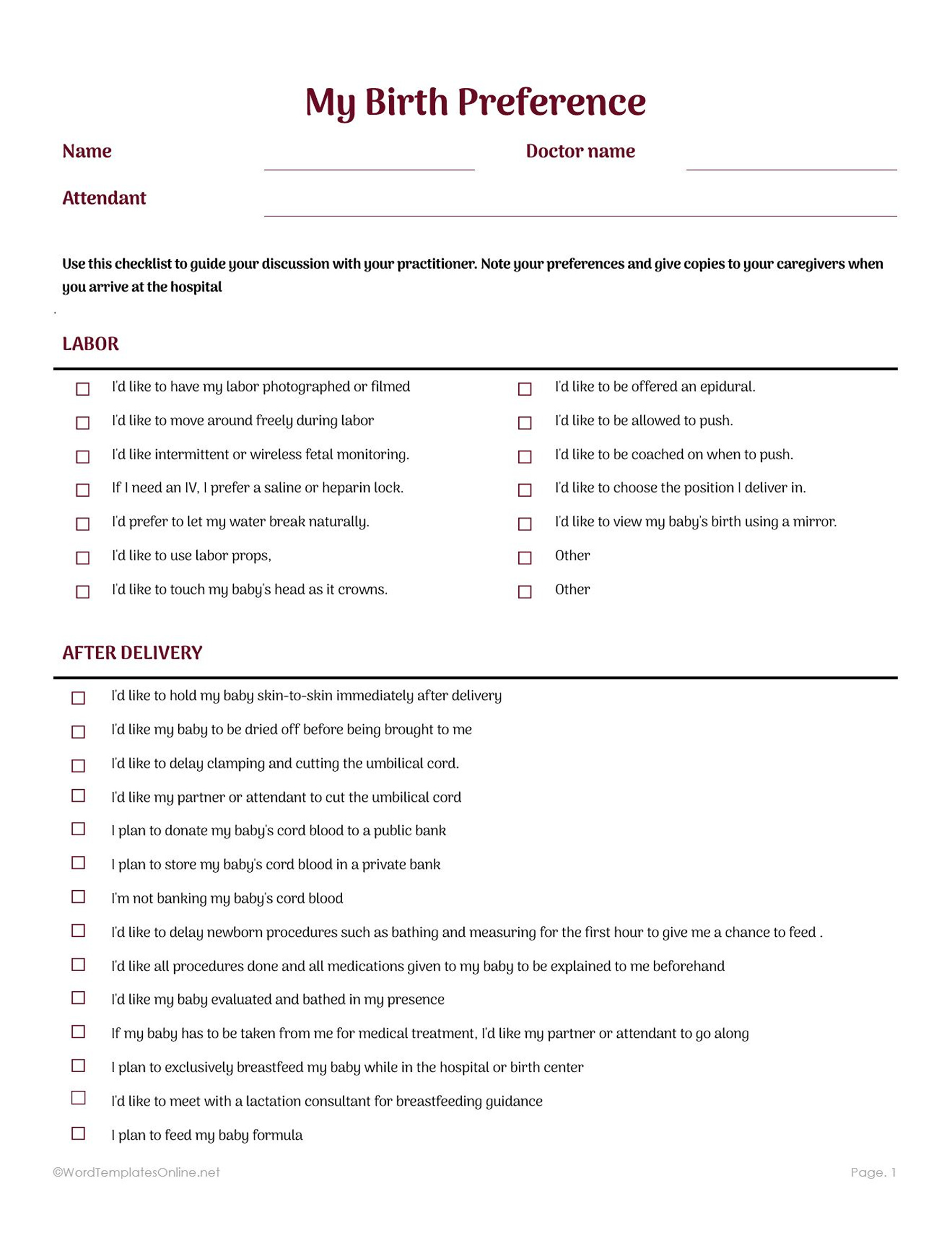
Labor and birth preferences
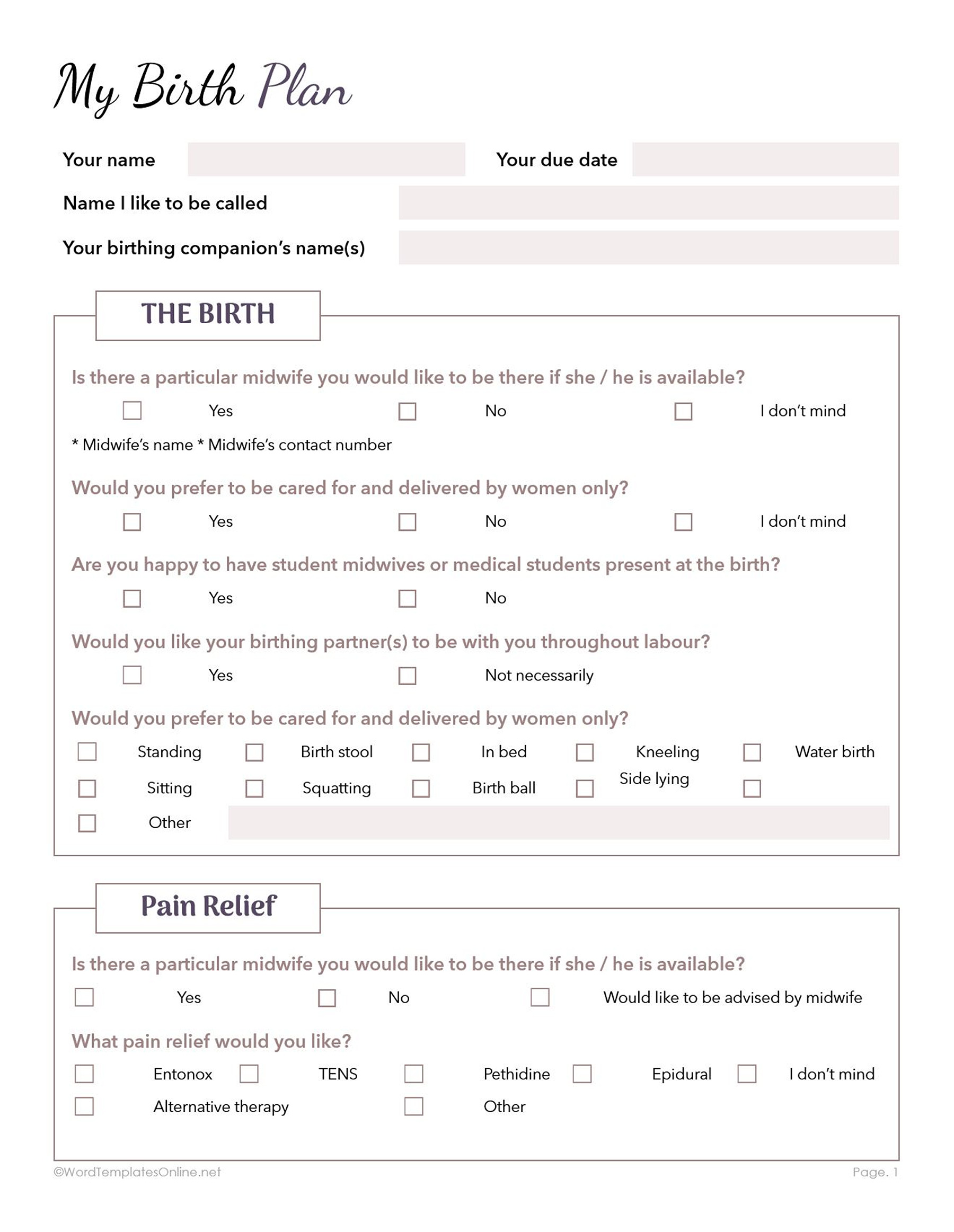
This is a wide section. It captures the following preferences:
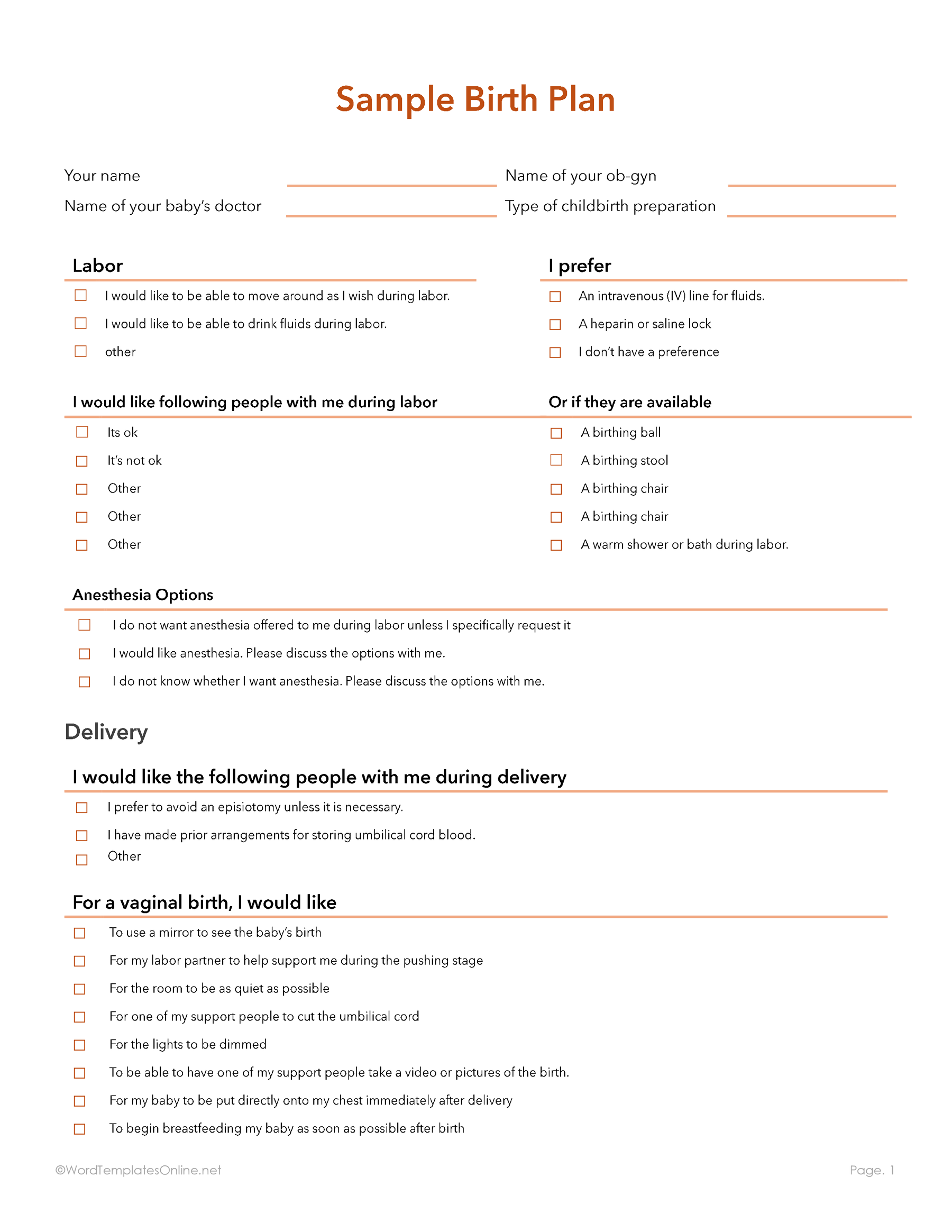
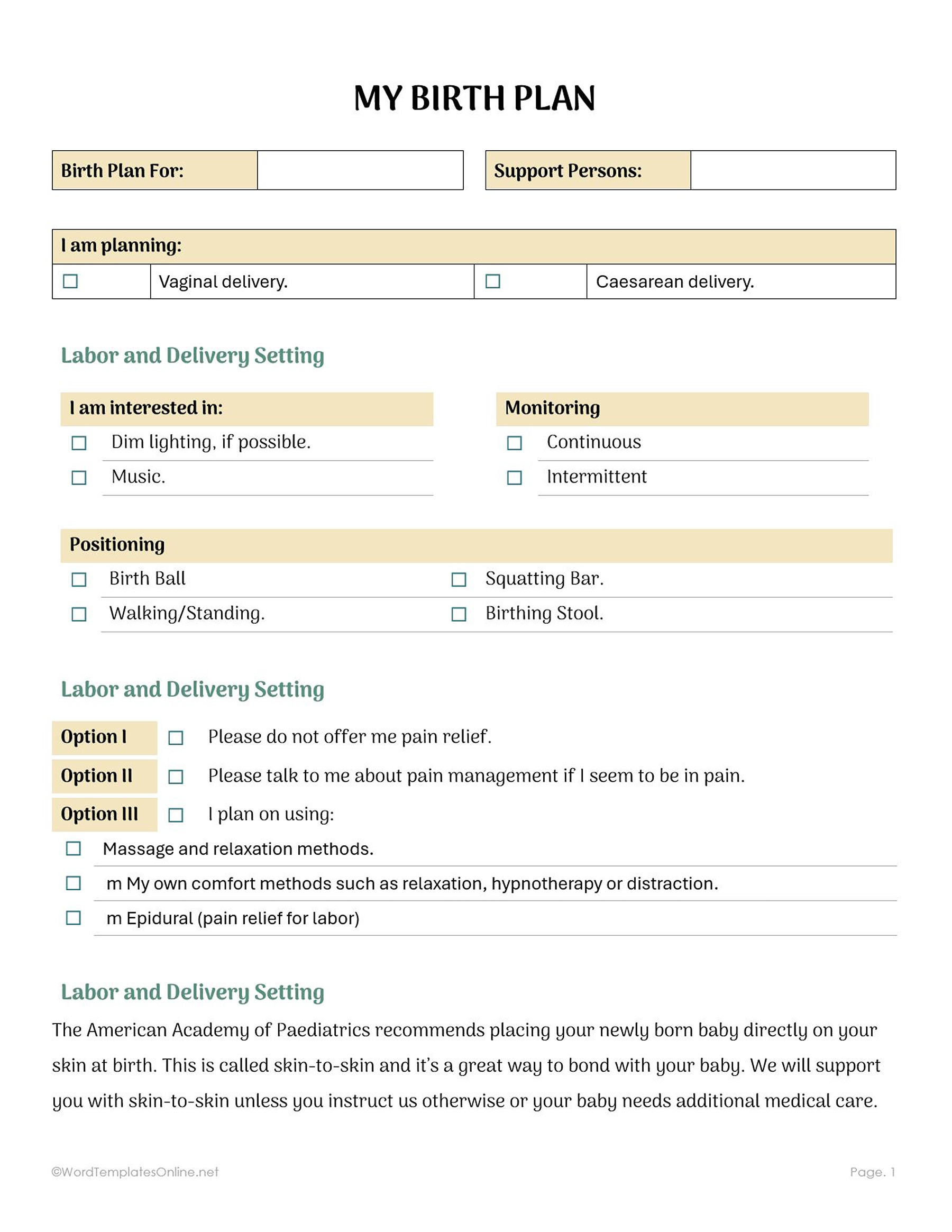
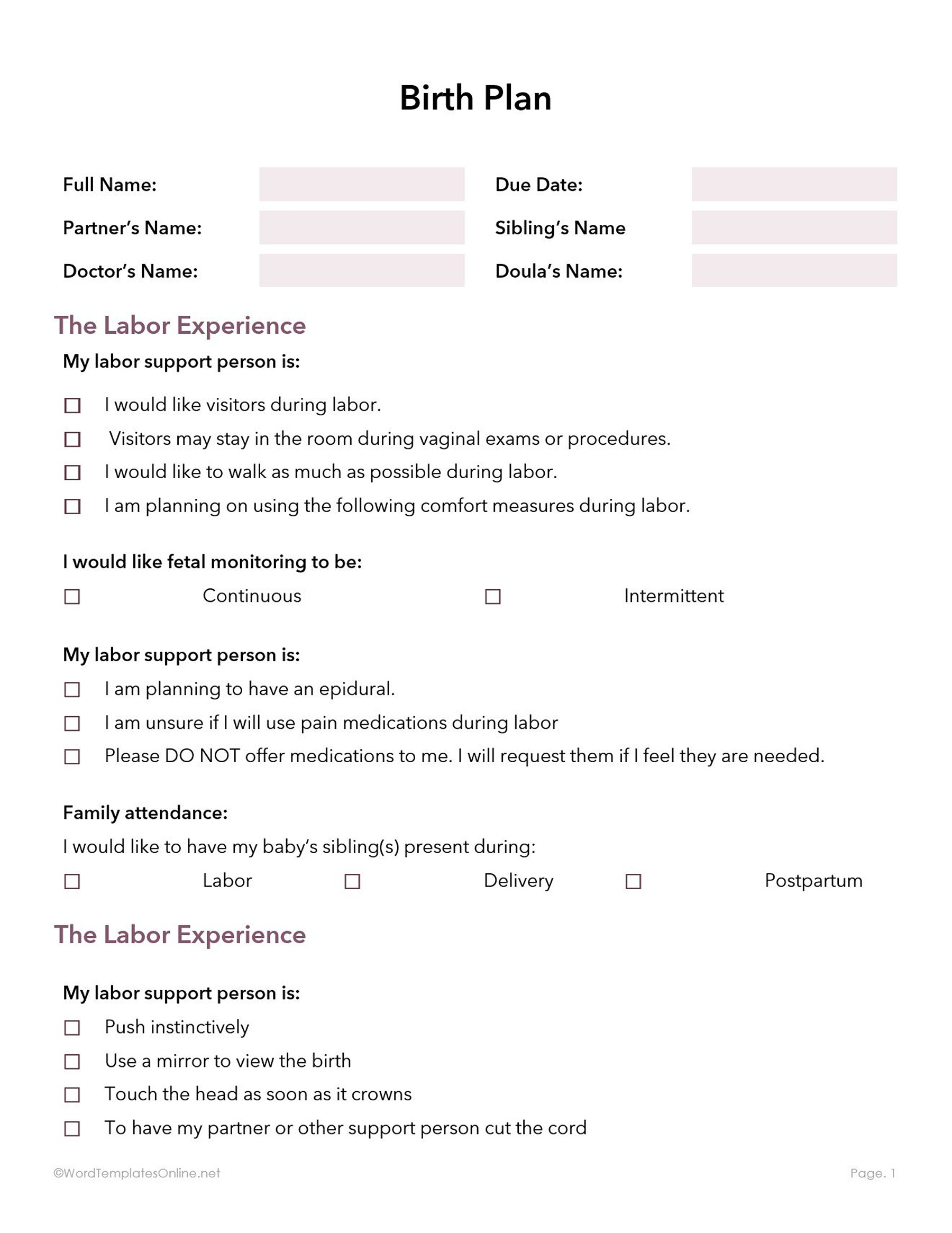
- Environment (lighting, whether you would like some music, individuals you would like to be present in the delivery room, etc.0
- Mobility (whether you would like to be active i.e. walking or if it is not important)
- Relaxation and comfort during labor (whether you would like massages, hot towels, acupressure, baths, etc.)
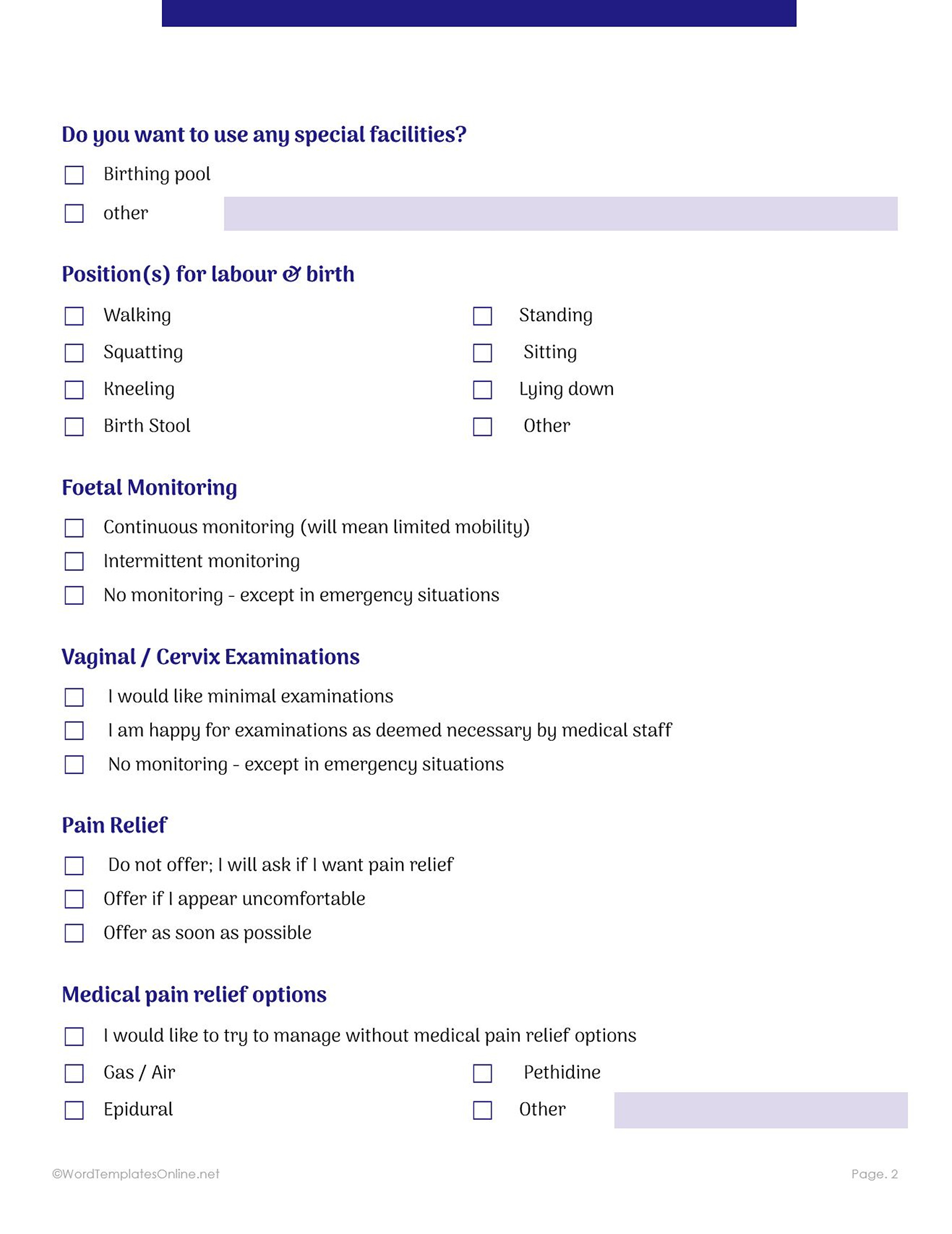
- Use of special facilities (whether you would like to use special facilities i.e. birthing pools or any other indicated facilities)
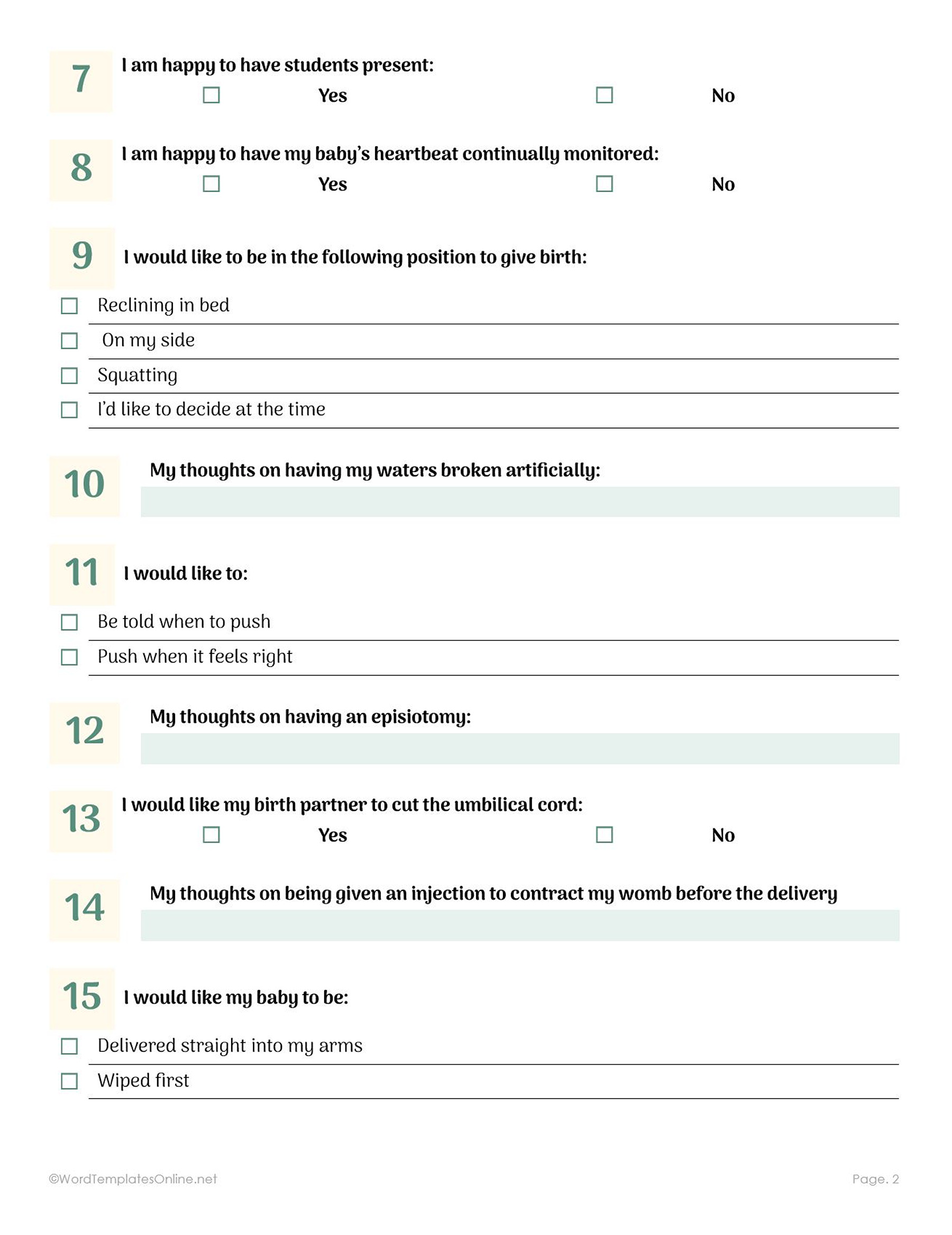
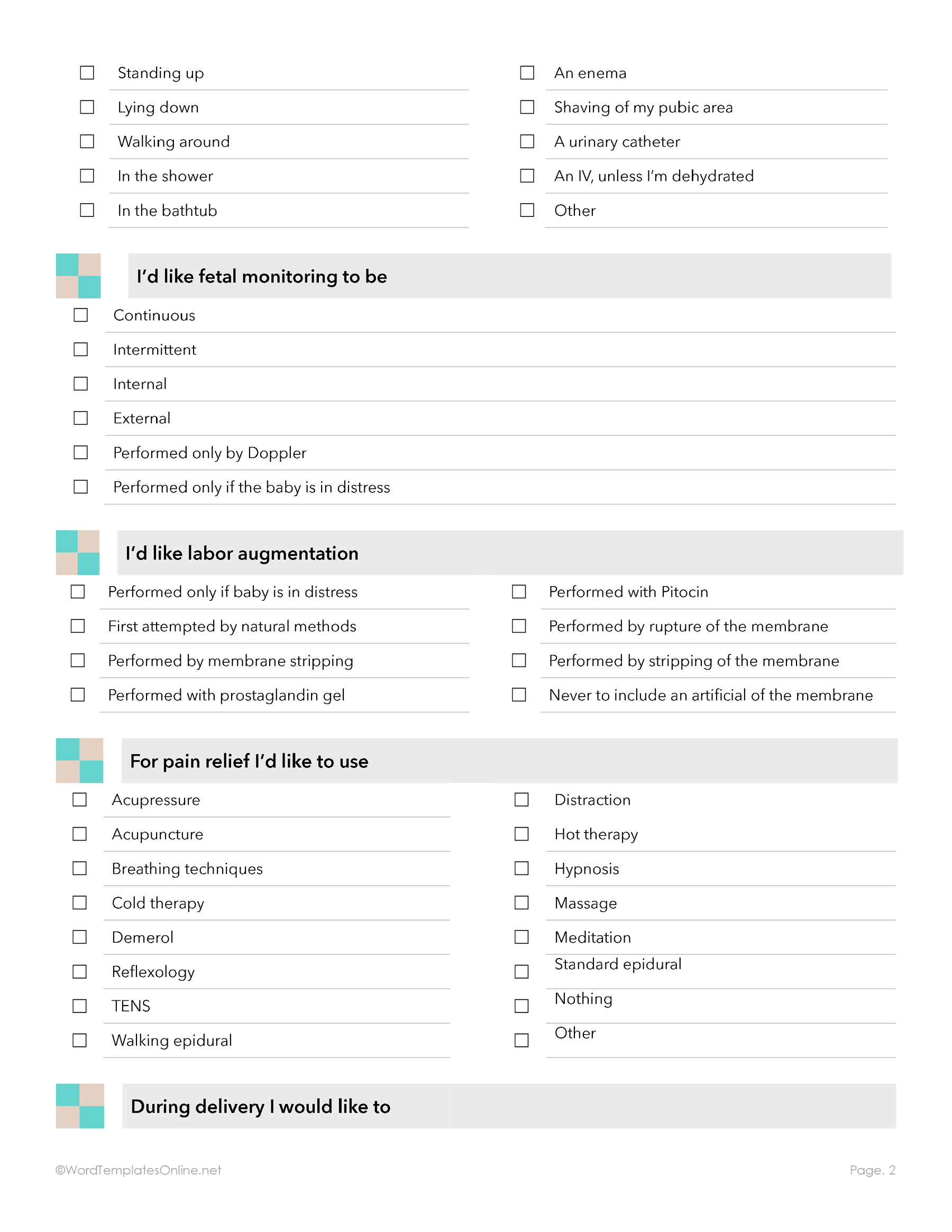
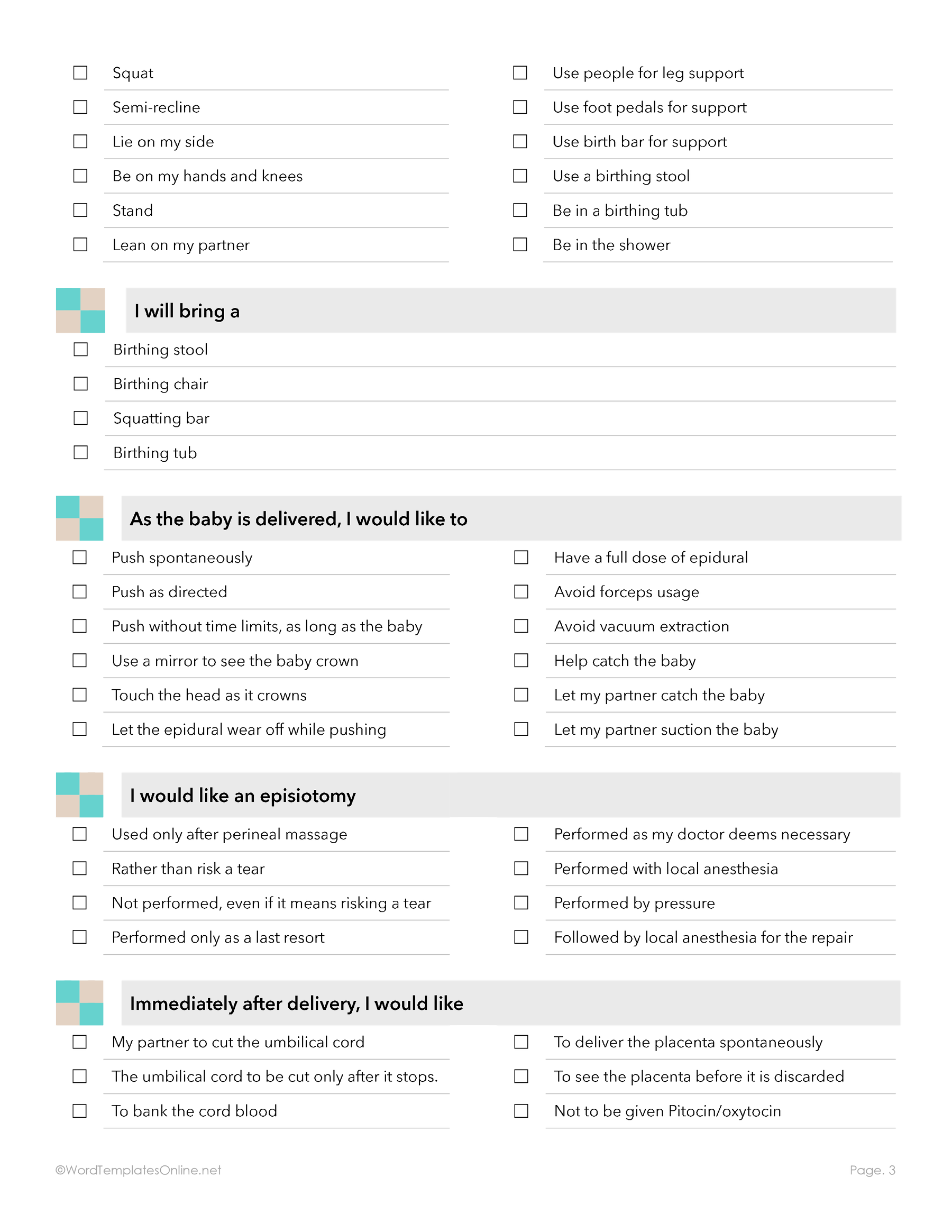
- Labor and birth positions (choose the positions you would want during labor and birth i.e. sitting, lying down, standing, walking, etc.)
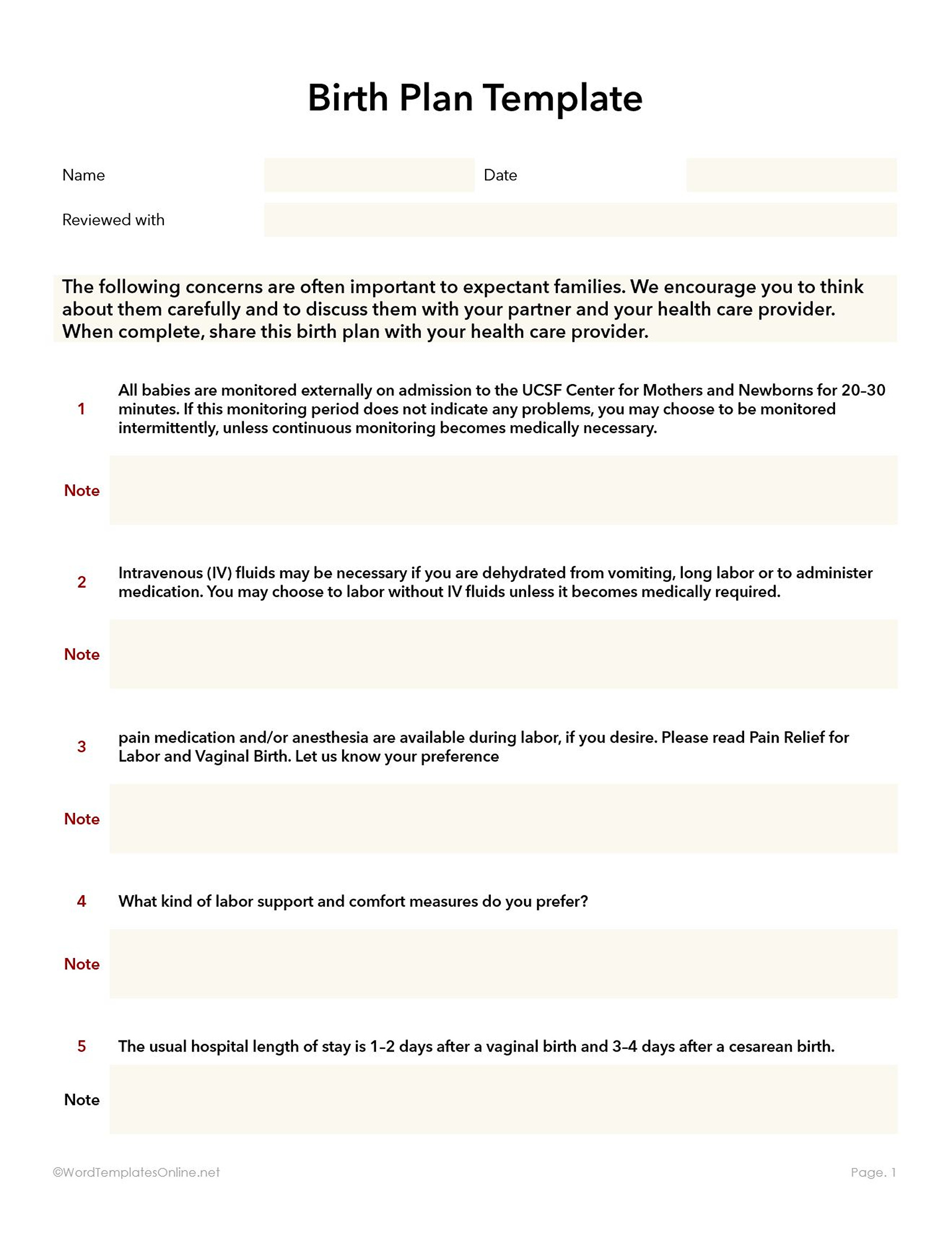
- Monitoring (your preferred choice of fetal monitoring i.e. continuous, intermittent or no monitoring)
- Vaginal/cervix examinations (Minimal, when necessity arises or no examination)
- Pain relief (specify when you would want to be given pain relief i.e. immediately, when requested or when uncomfortable)
- Medical pain relief options (choices include air, epidural, etc. or you could choose to proceed without relief options)
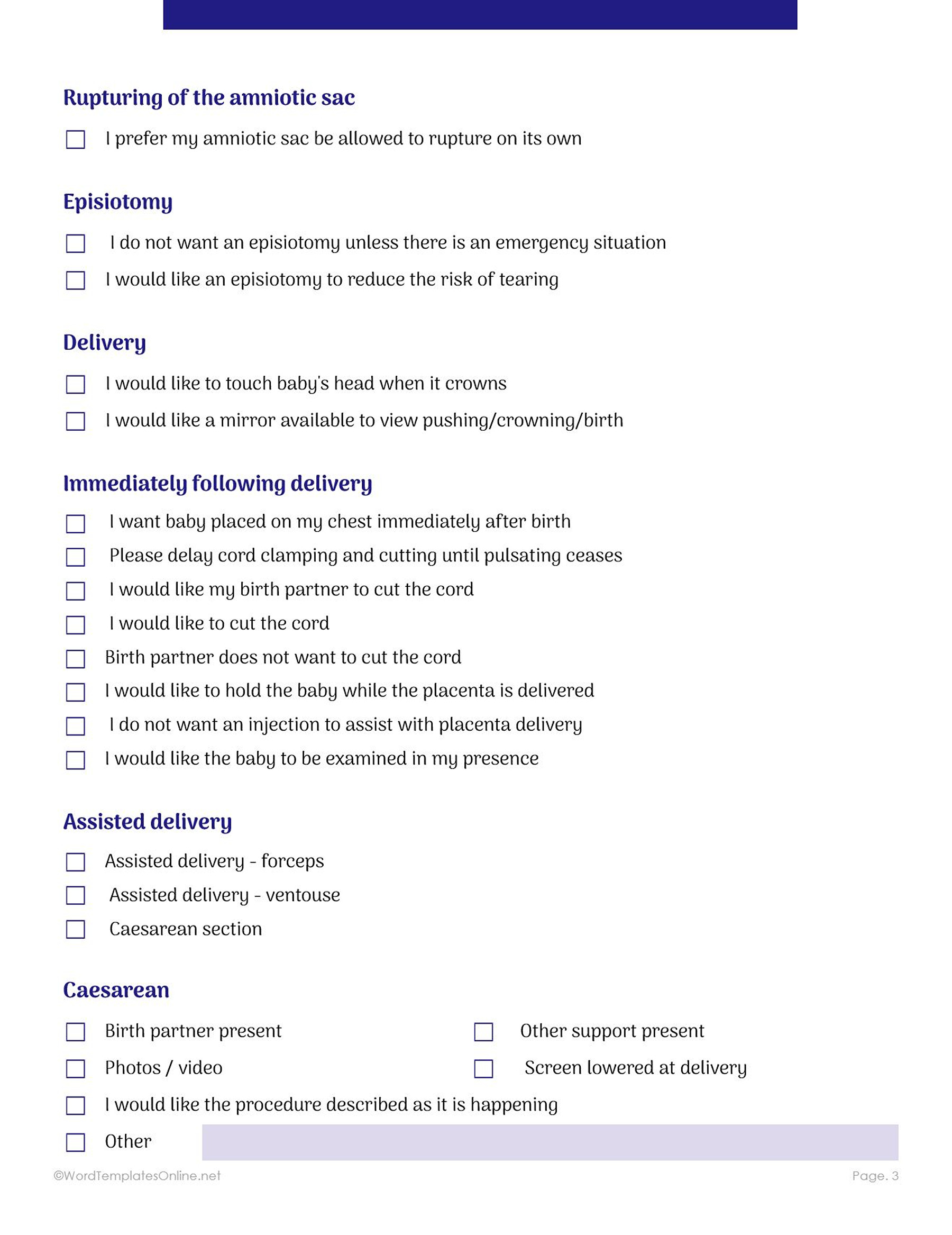
- Rupturing of the amniotic sac (choose whether you would like the amniotic sac should rupture on its own or you would like the doctors to intervene)
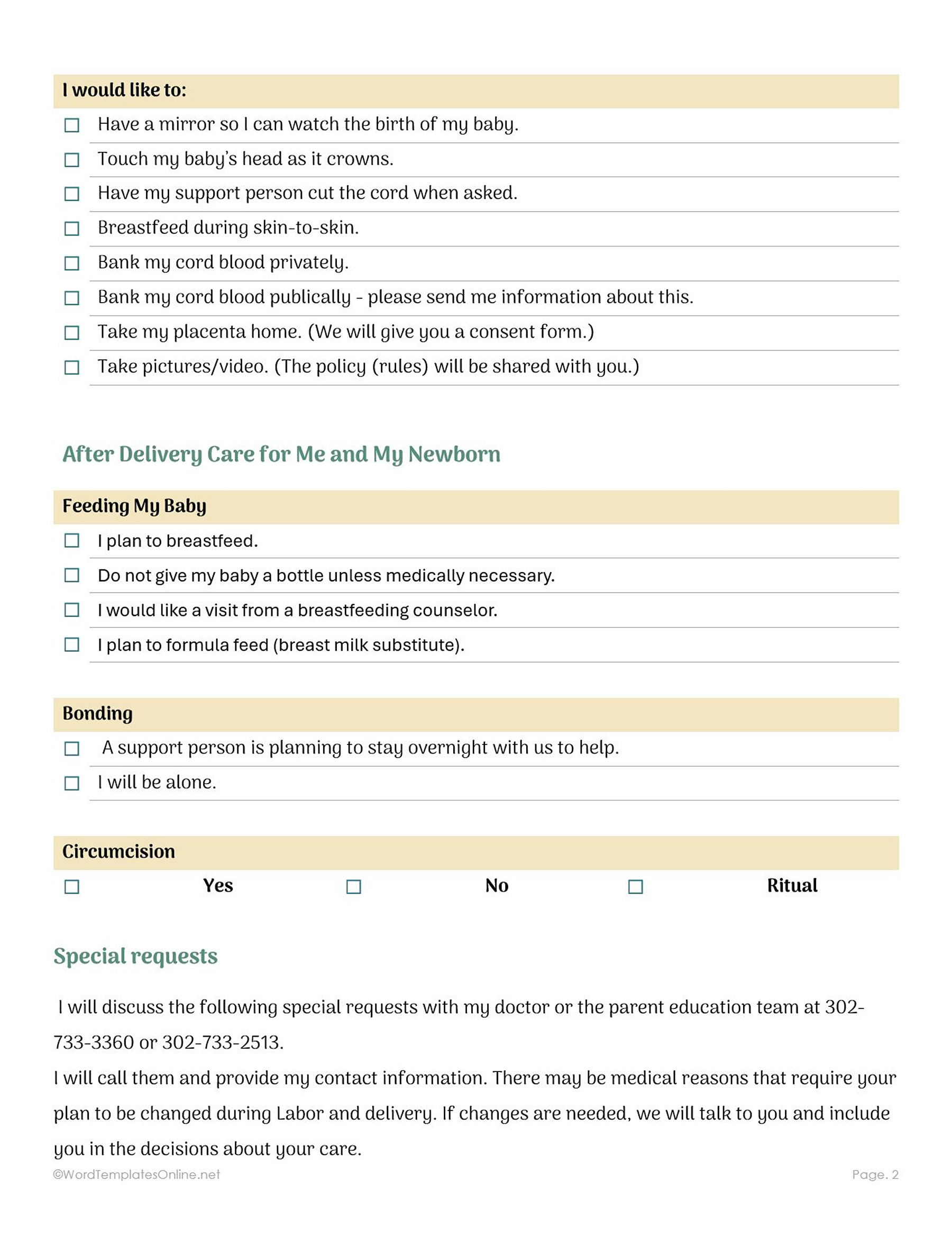
- Delivery (your personal delivery presence such as touching the child’s head, delayed cord clamping, etc.)
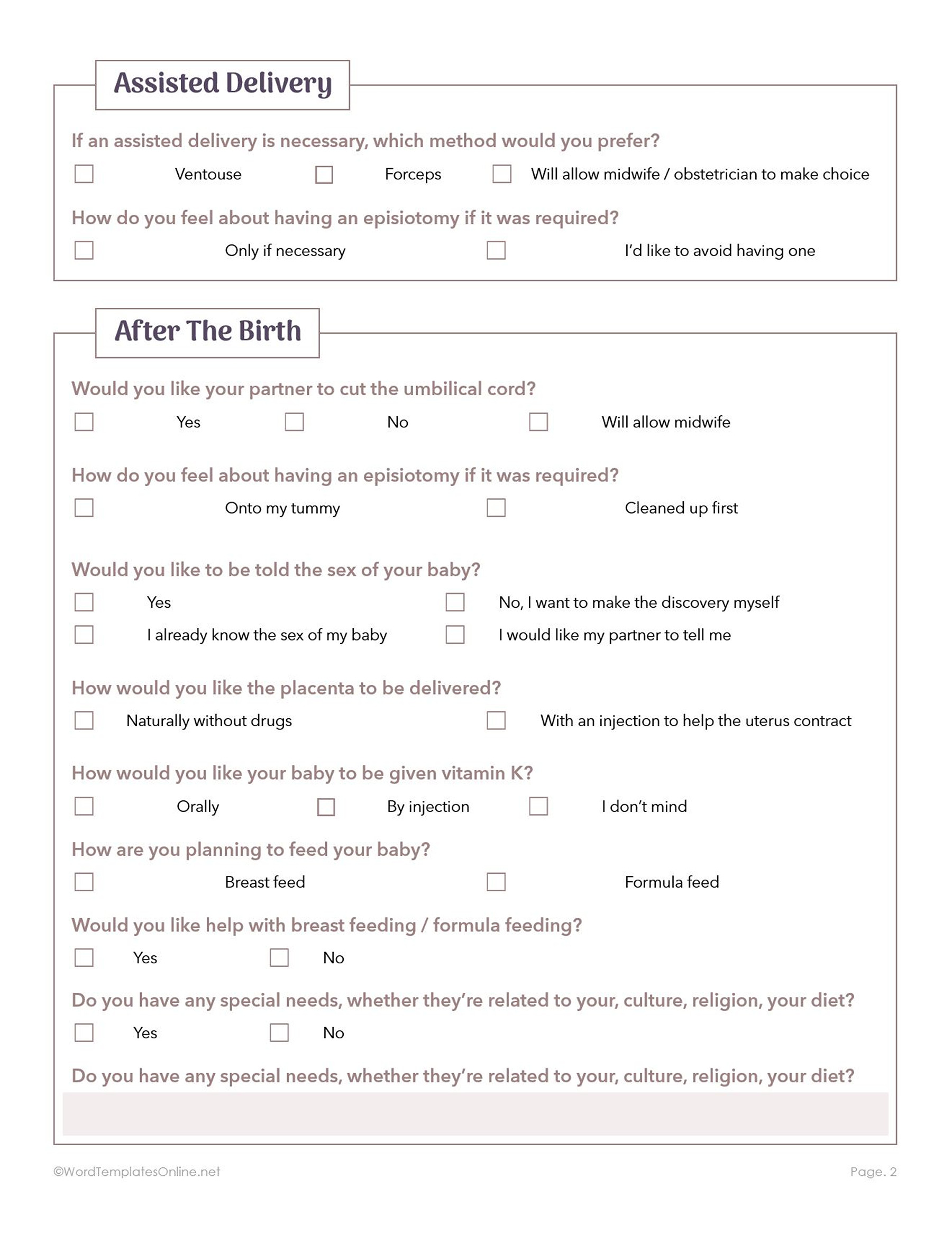
- Post-delivery (whether you would like to cut the cord, place the baby on your chest, whether you would like your partner to cut the cord, etc.)
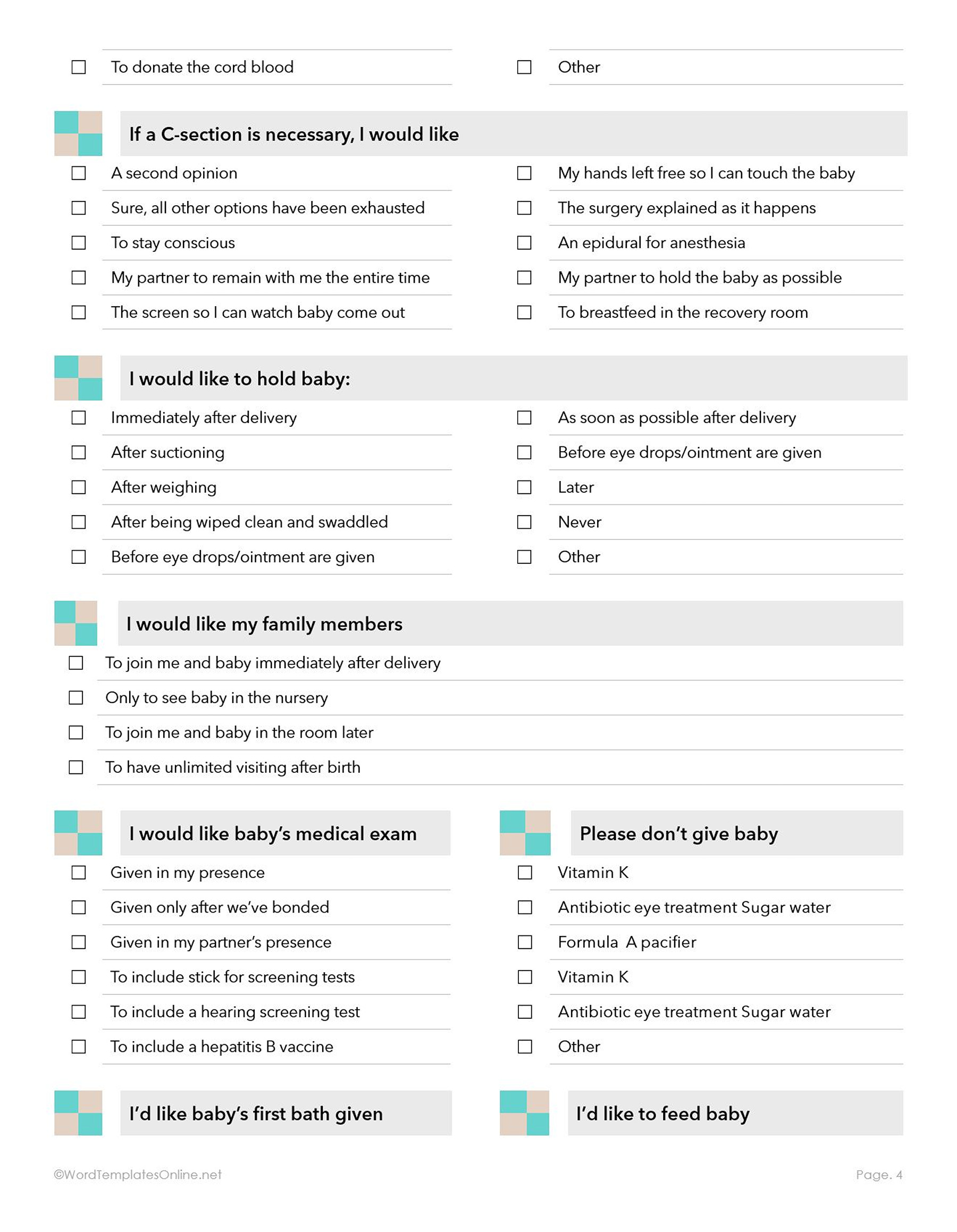
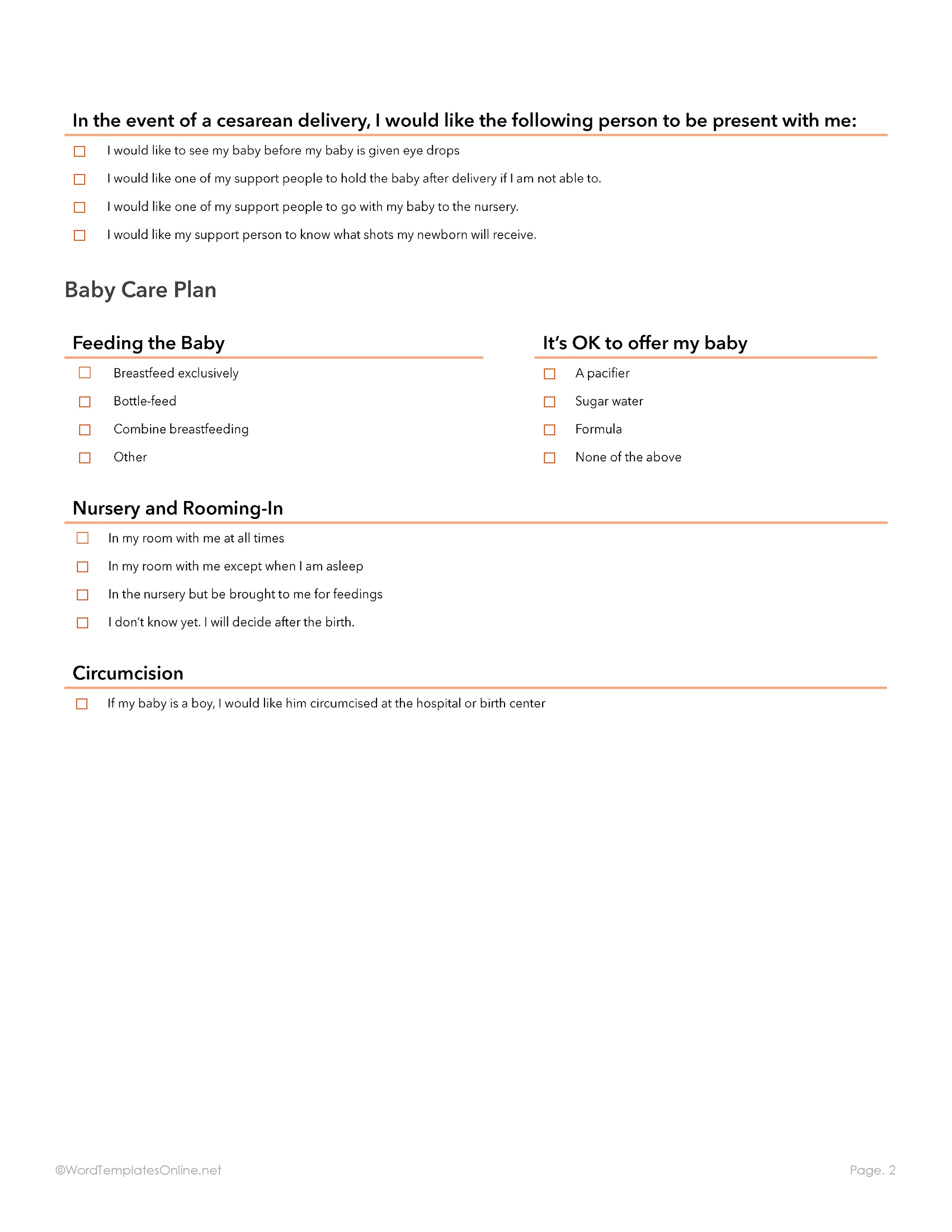
- Assisted delivery (when a situation necessitates caesarean section, you can choose if you want your partner to be present, or if you are comfortable with assisted delivery tools such as forceps)
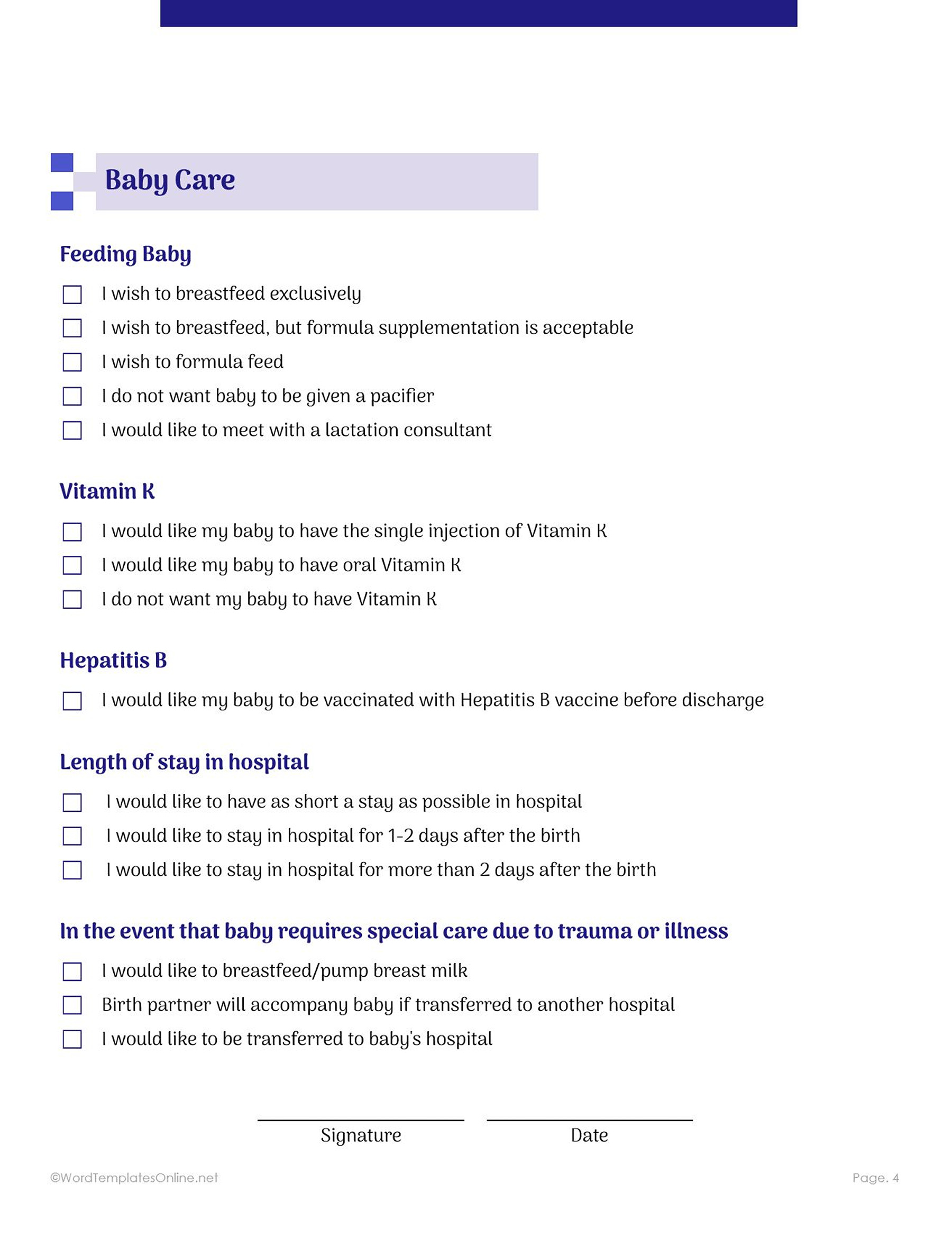
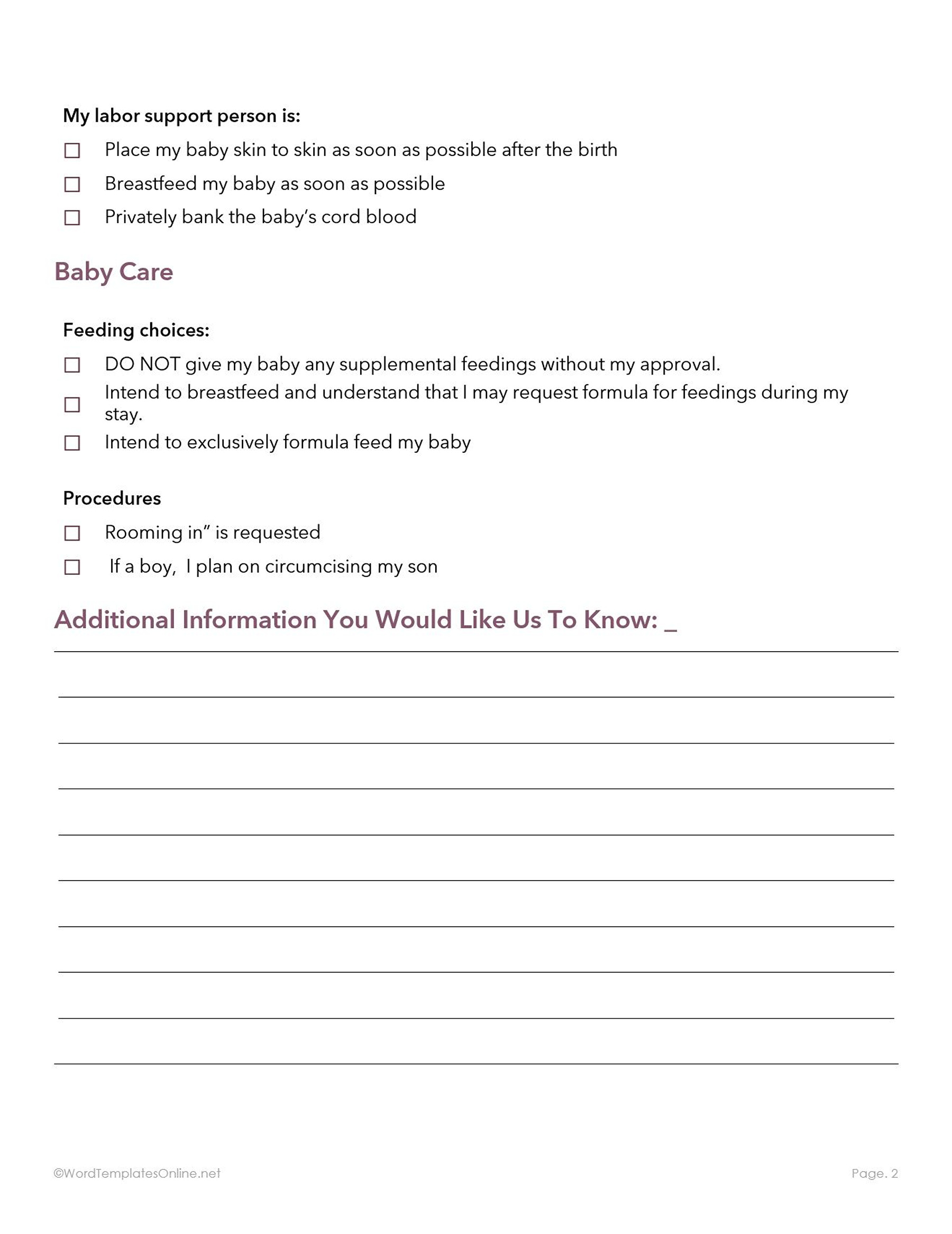
Baby care
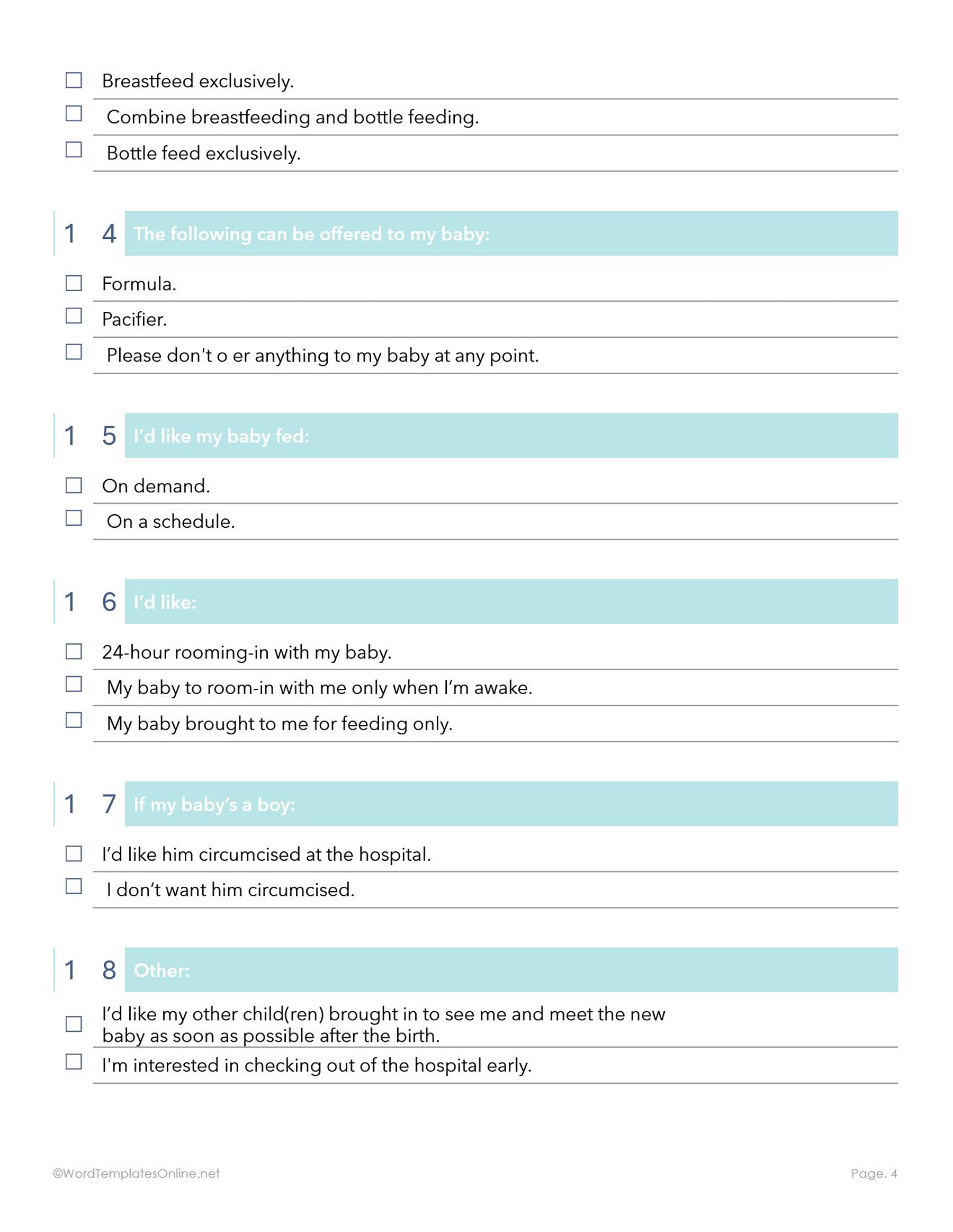
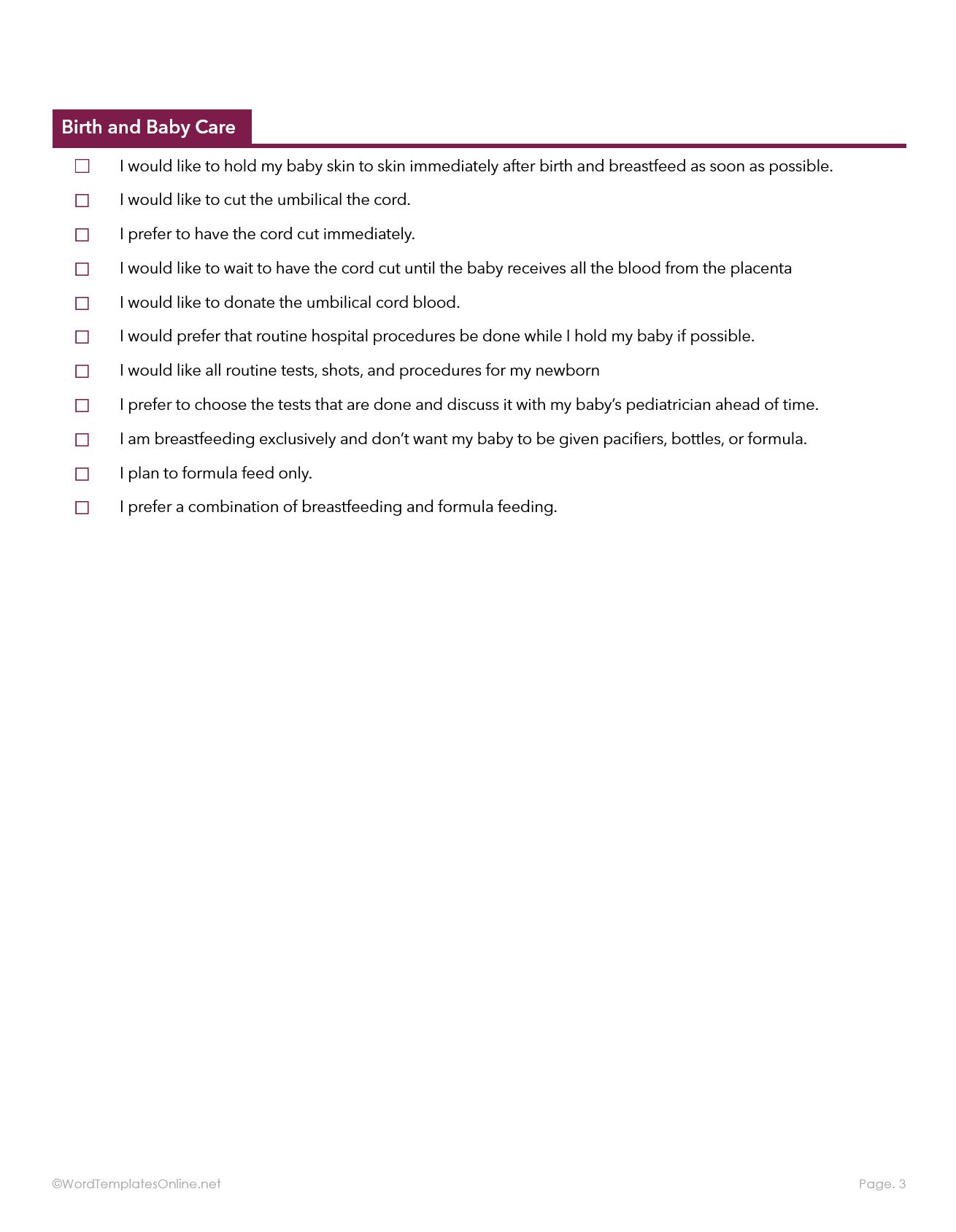
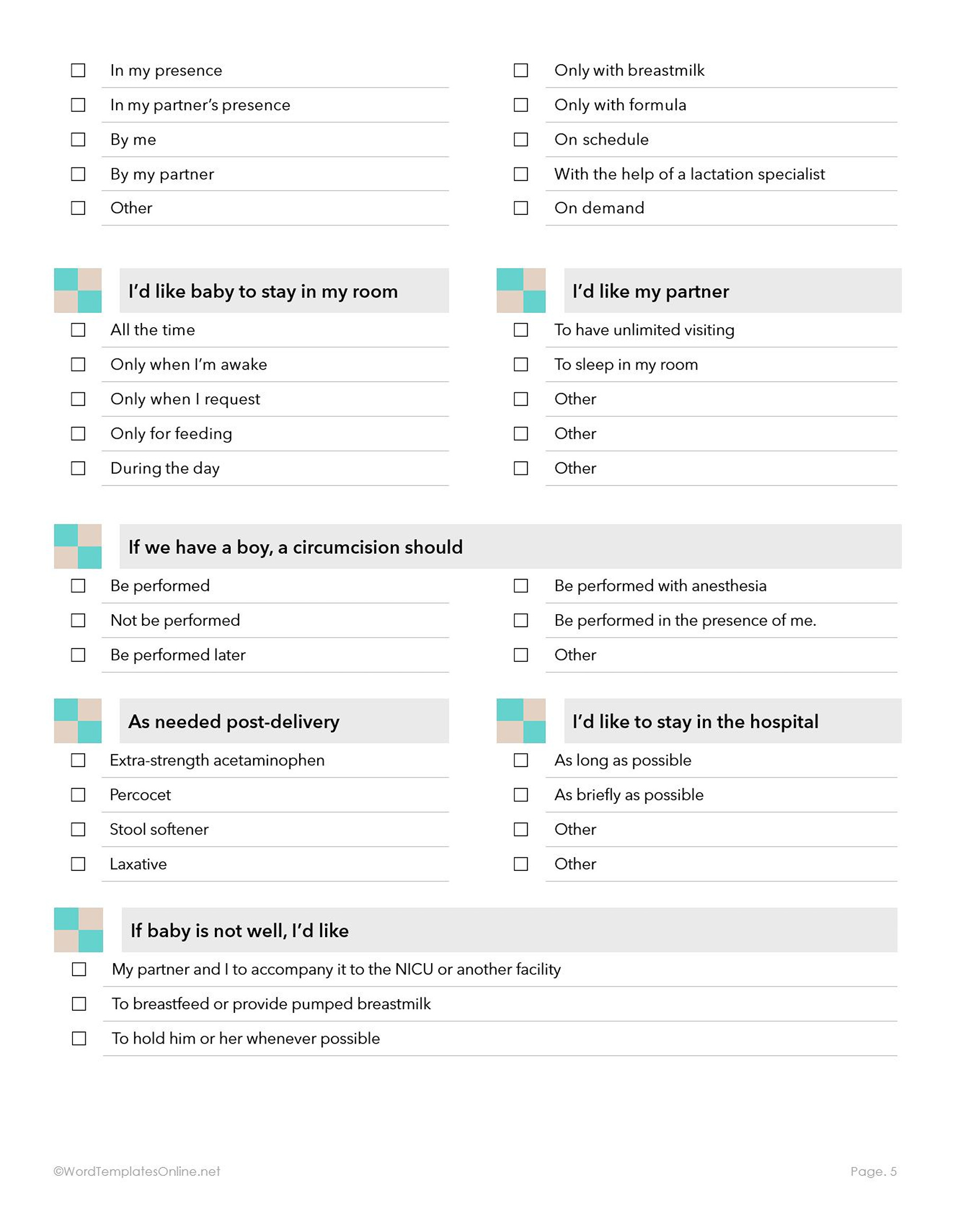
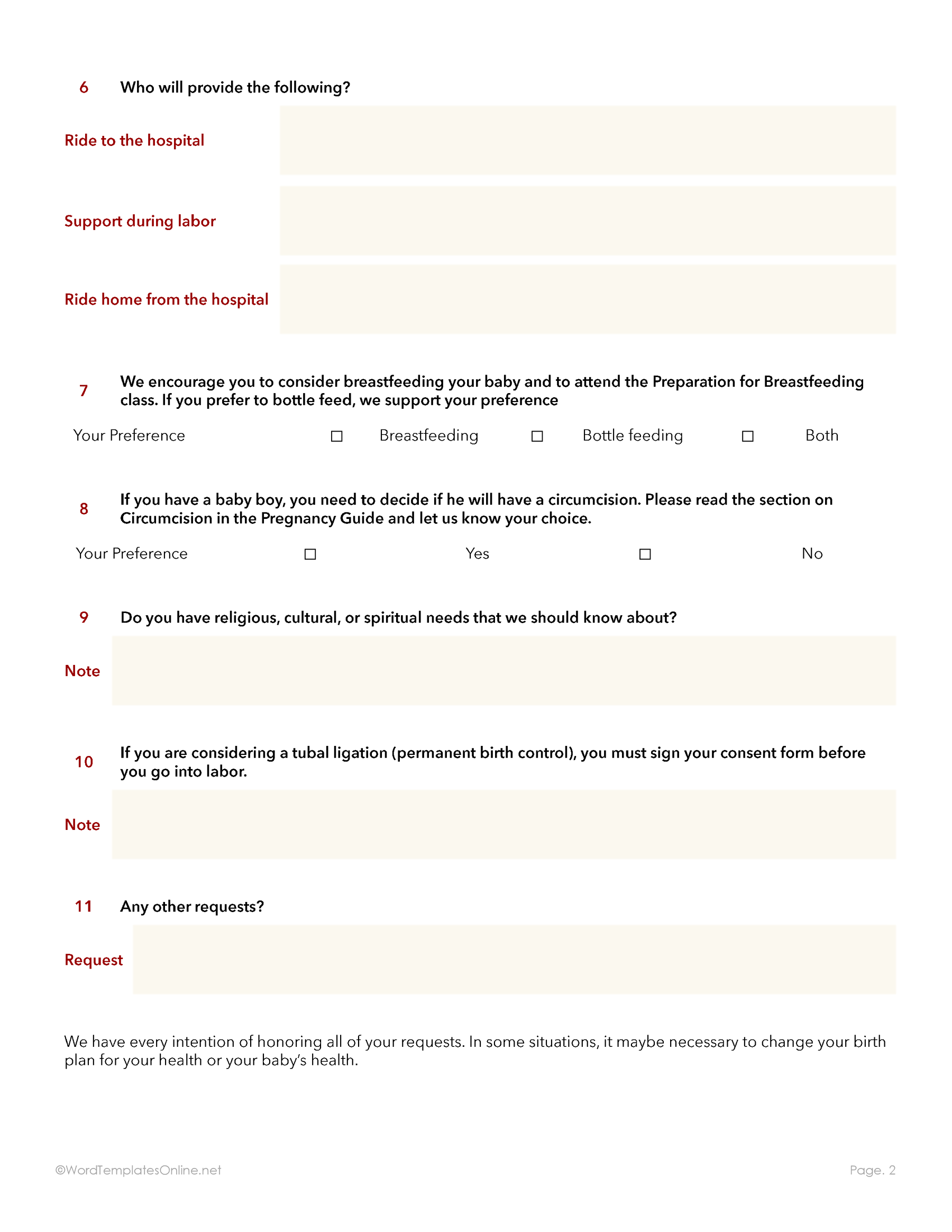
- Feeding the baby (whether you want to breastfeed the baby, use baby formula, etc.)
- Vitamin K and Hepatitis B (choose how you want vitamin K to be administered i.e. orally, injection or none and whether the child should be given the Hepatitis B vaccine)
- Hospital stays (state the duration you prefer to stay in the hospital i.e. as short as possible, 2 days, etc.)
- Special care (If a case arises whether the child needs special care, you can choose whether to transfer to another hospital)
Signature
This is the last section where the expectant parents and the healthcare provider sign the document to make it official
Free Birth Plan Templates
There are collections of professionally designed templates available that you can use to familiarize yourself with birth plans. You can also customize these templates to align with your needs which gives flexibility. Additionally, the templates are available across various formats such as online forms, PDFs and Word documents.
Birth Plan Template 01
Birth Plan Template 02
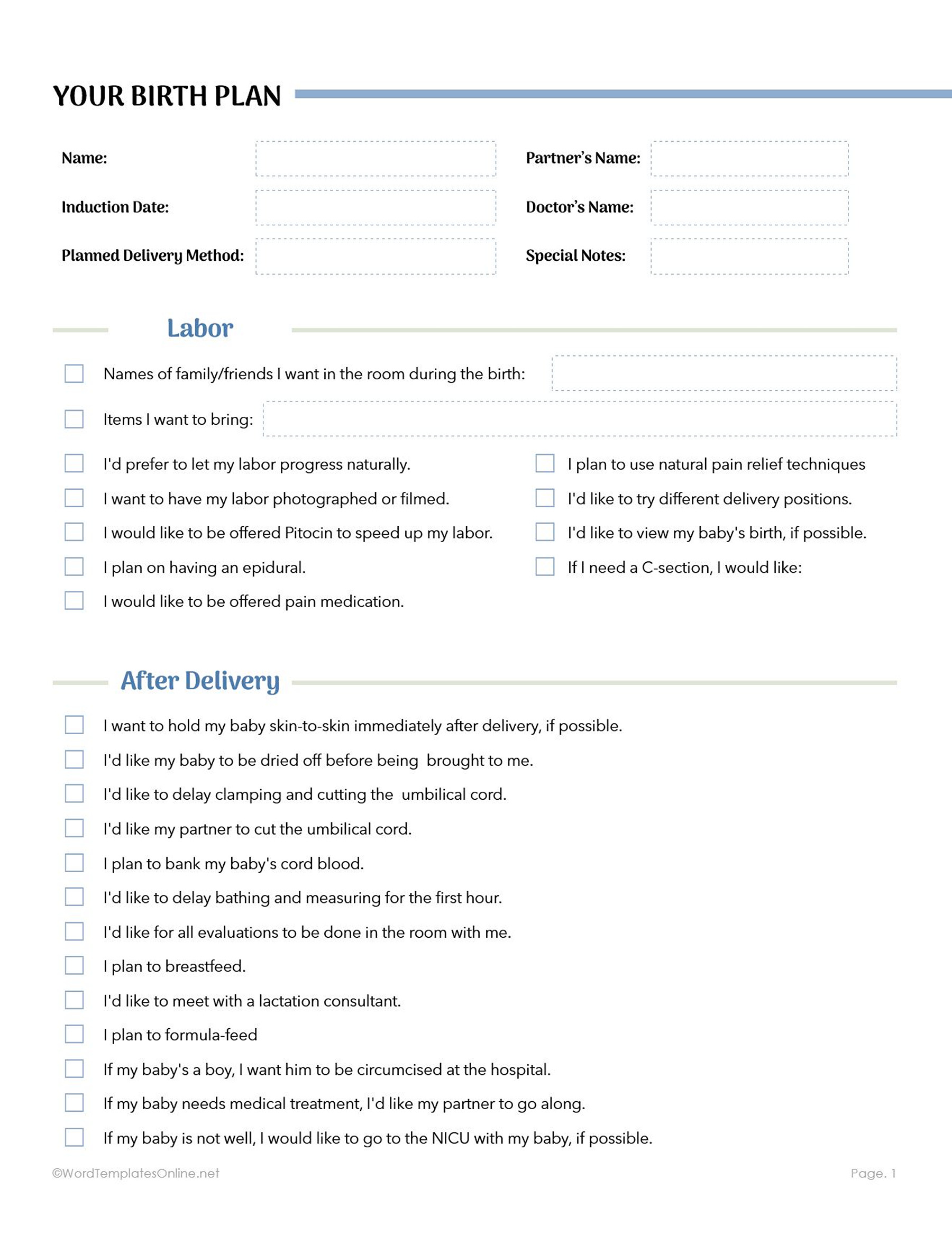
Birth Plan Template 03
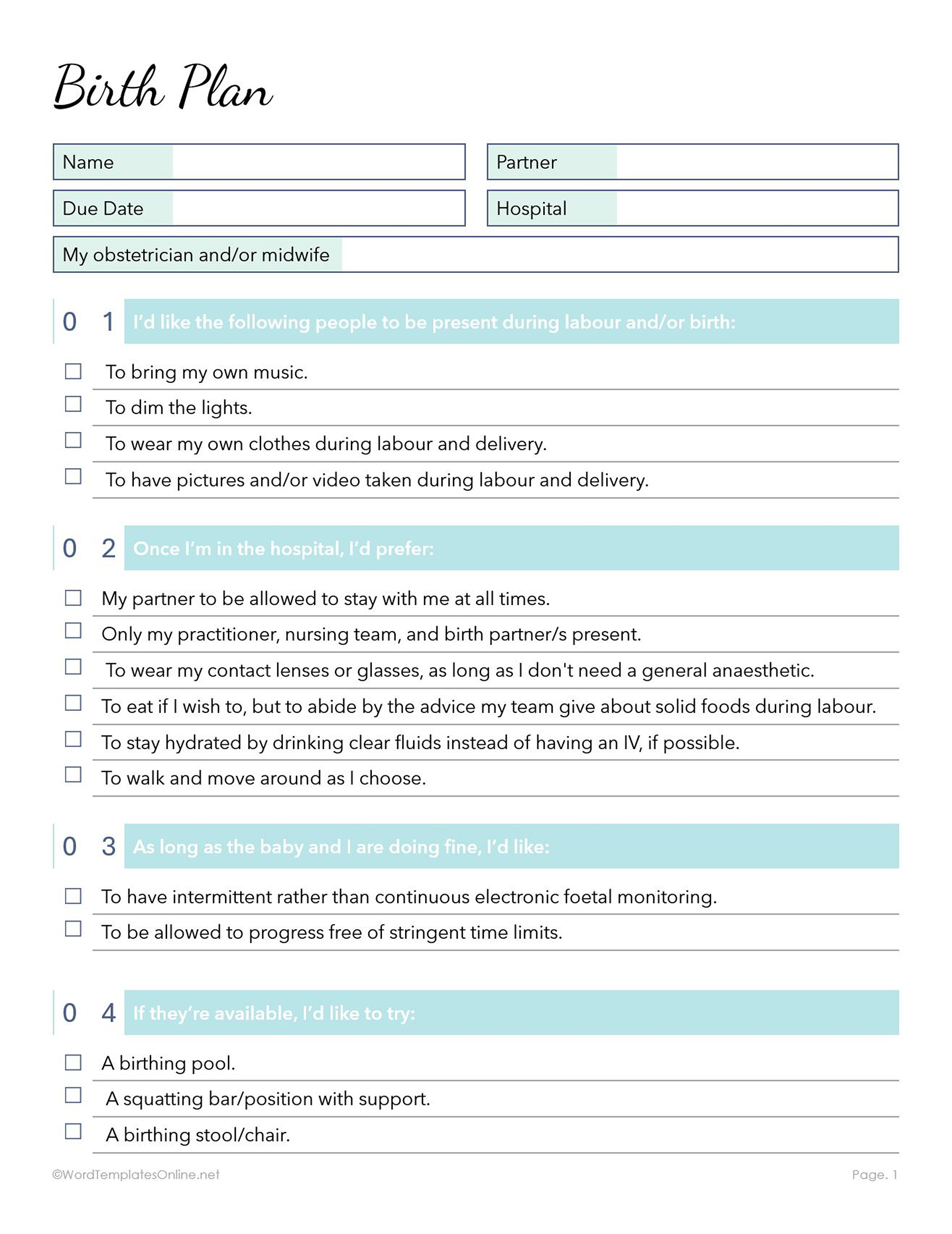
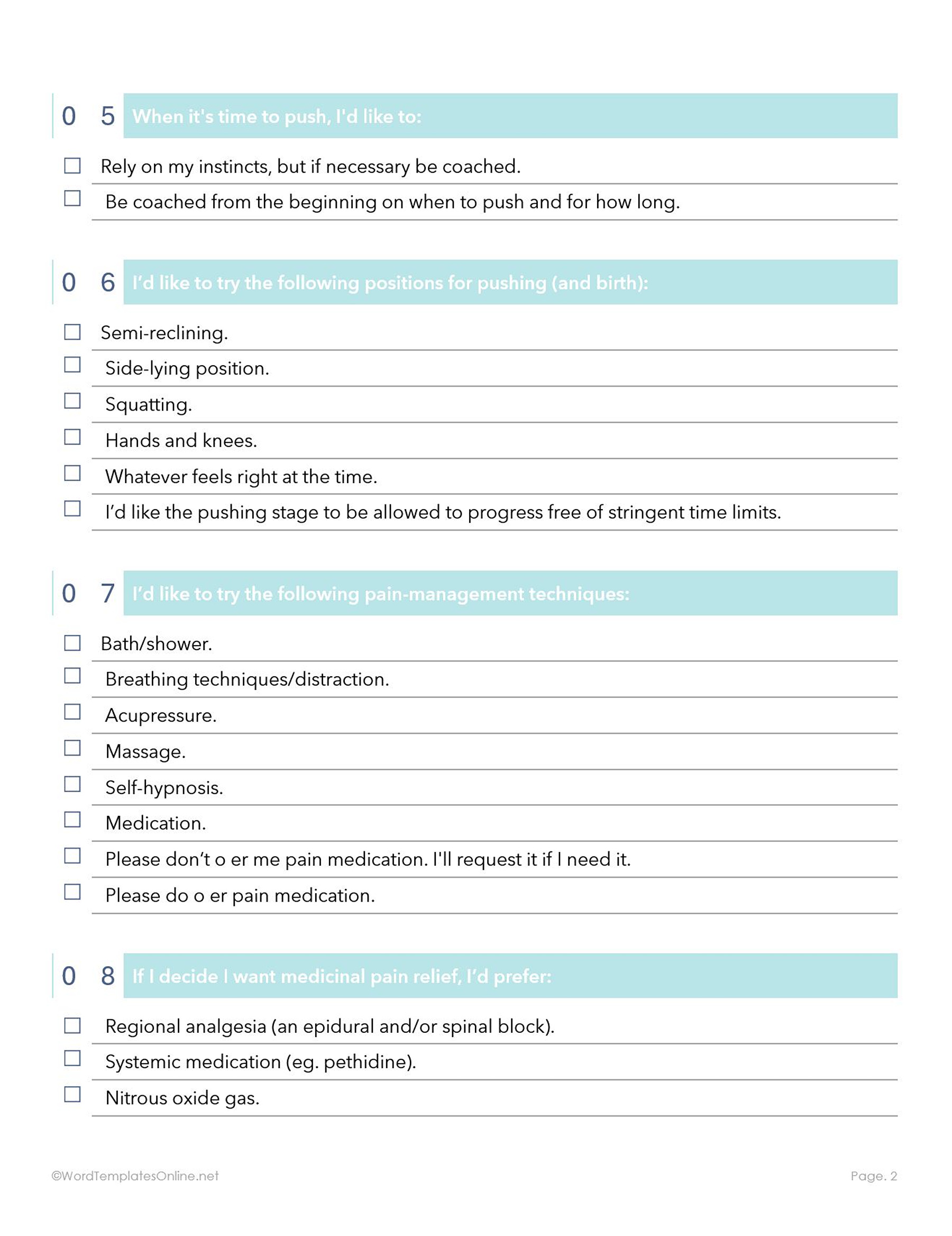
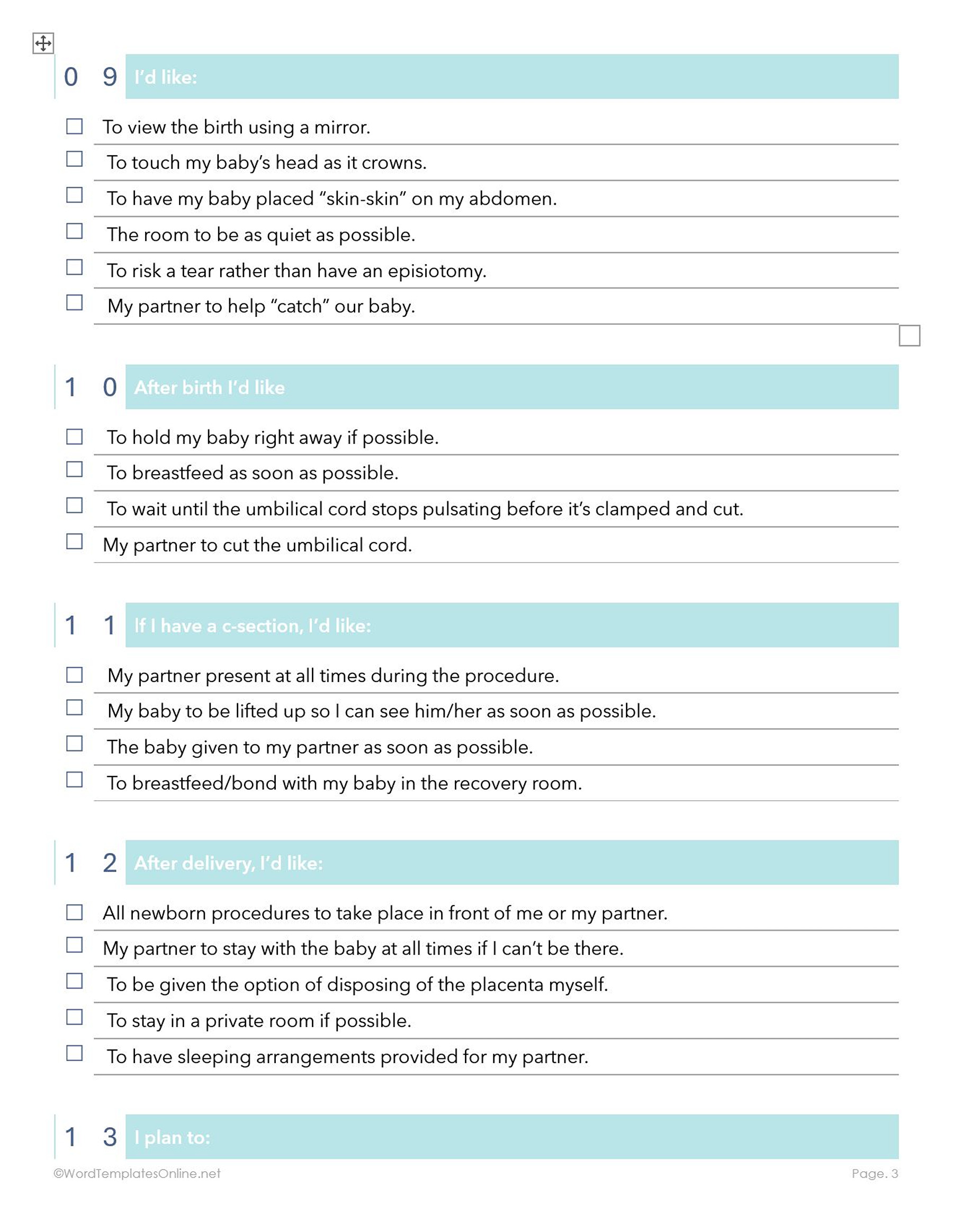
Birth Plan Template 04
Birth Plan Template 05
Birth Plan Template 06
Birth Plan Template 07

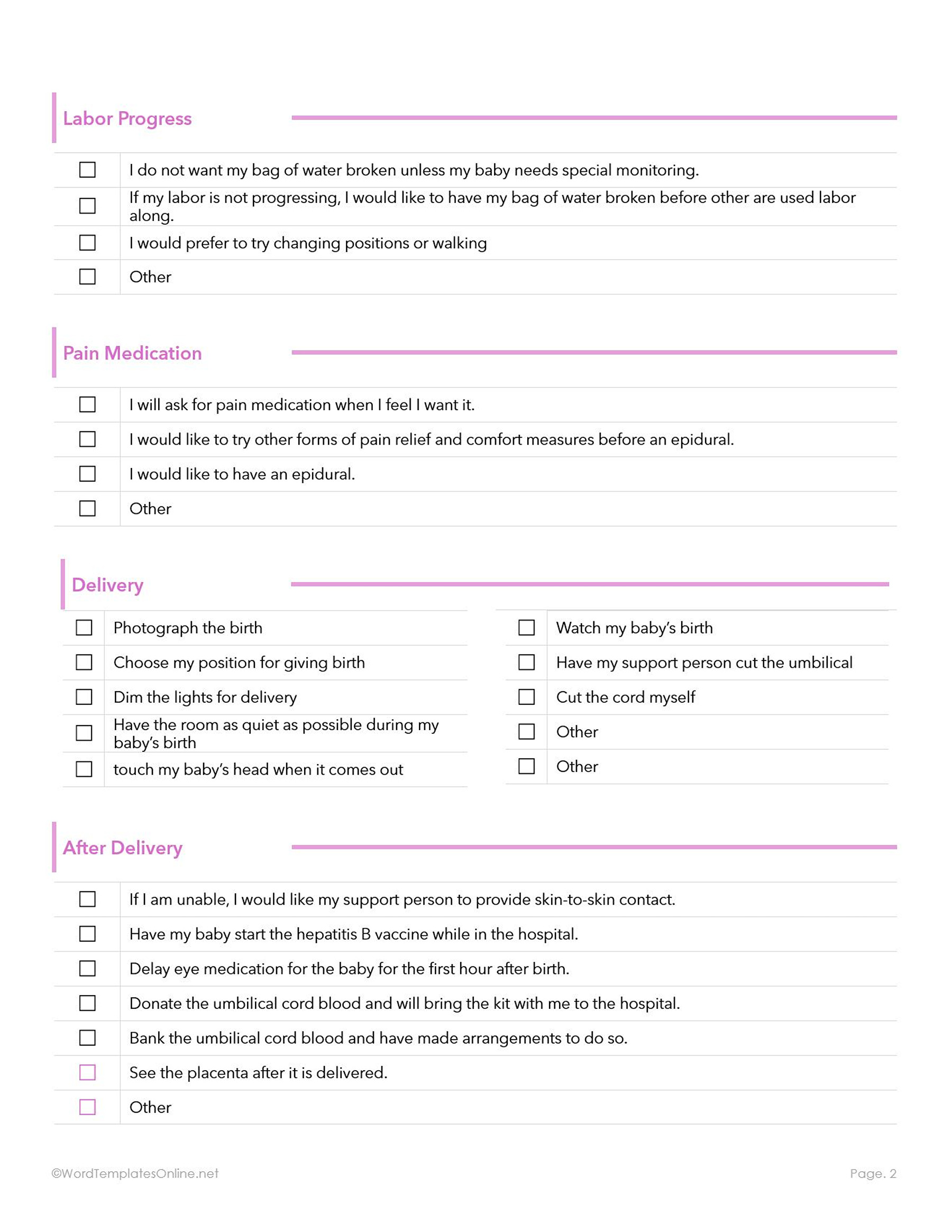
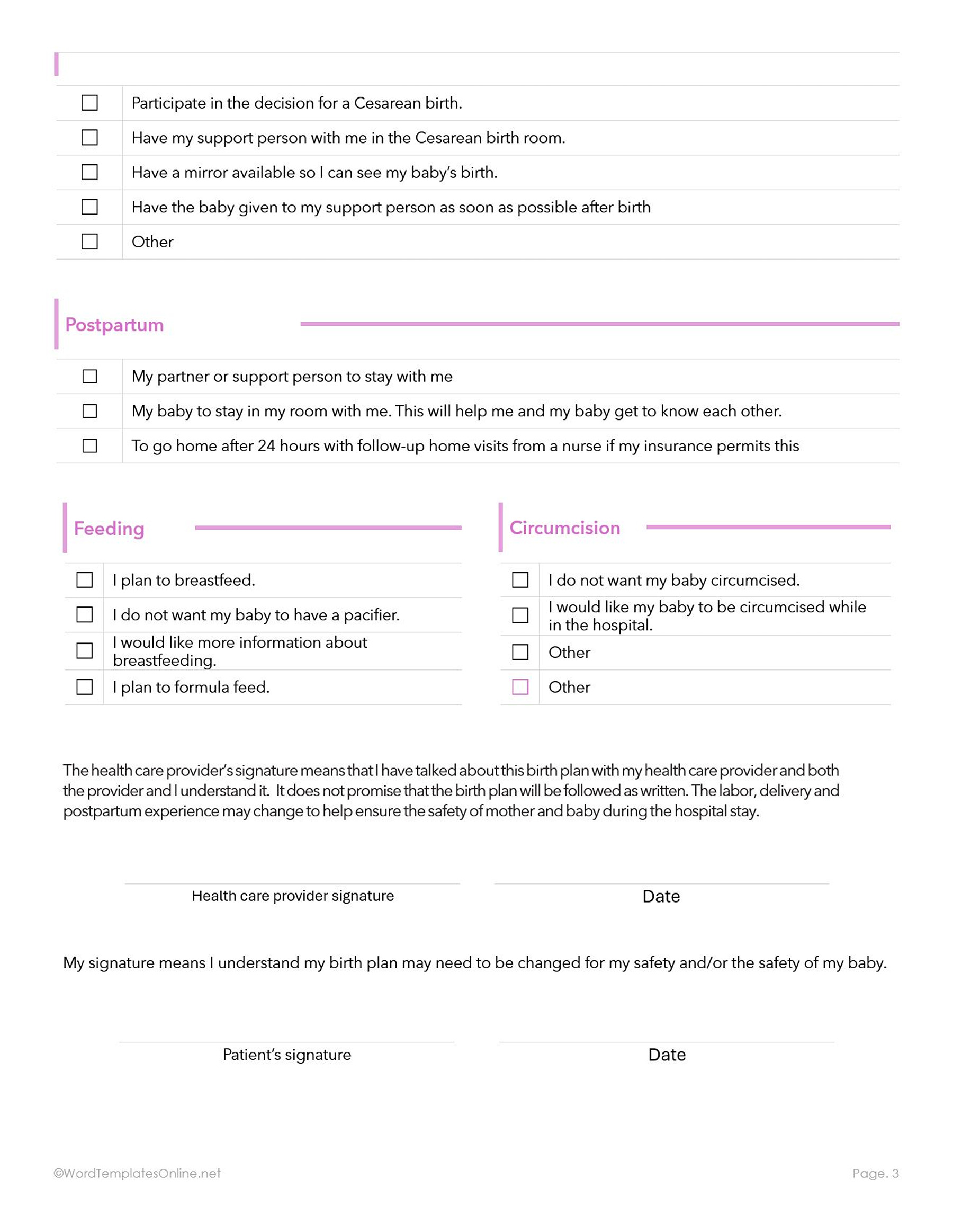
Birth Plan Template 08
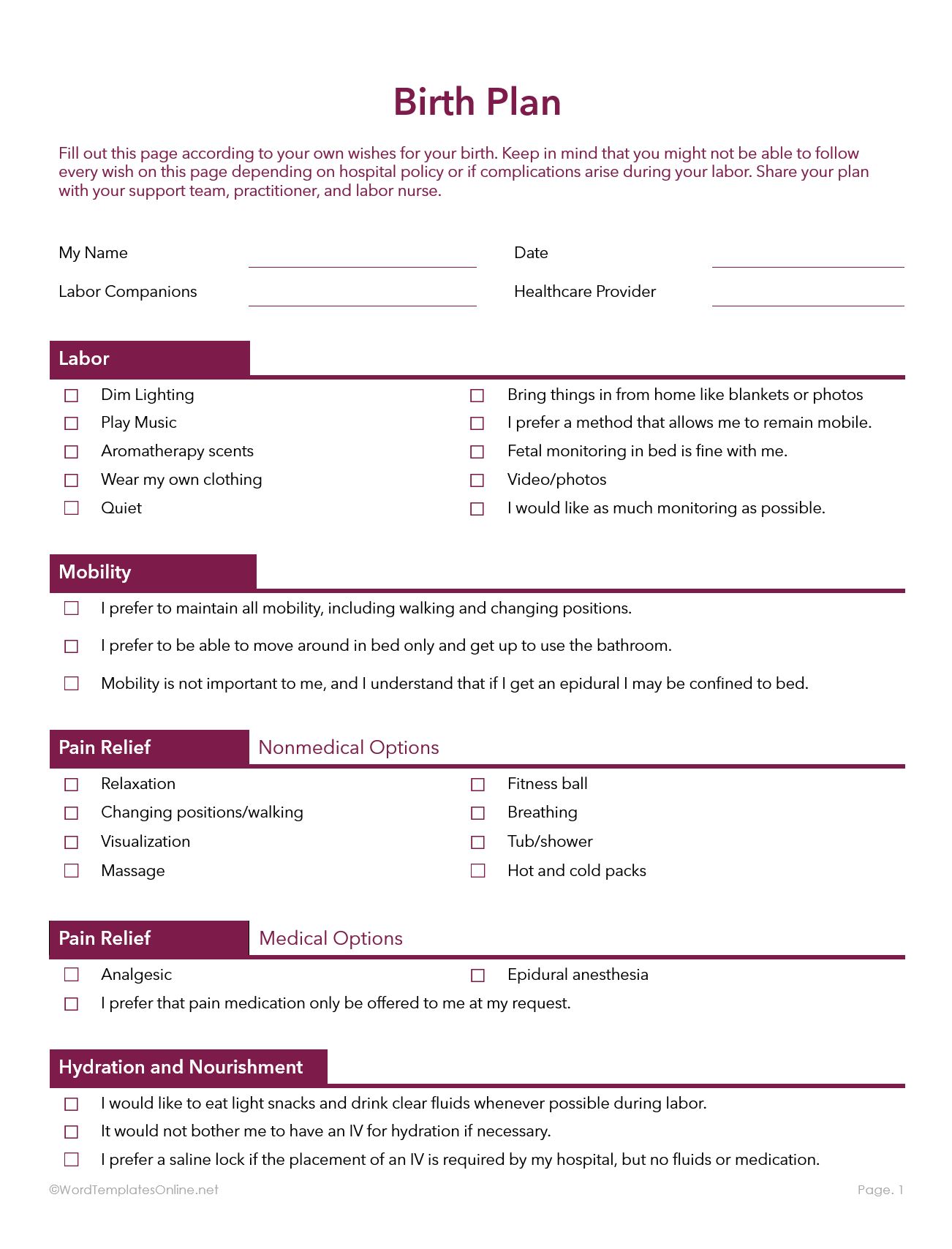
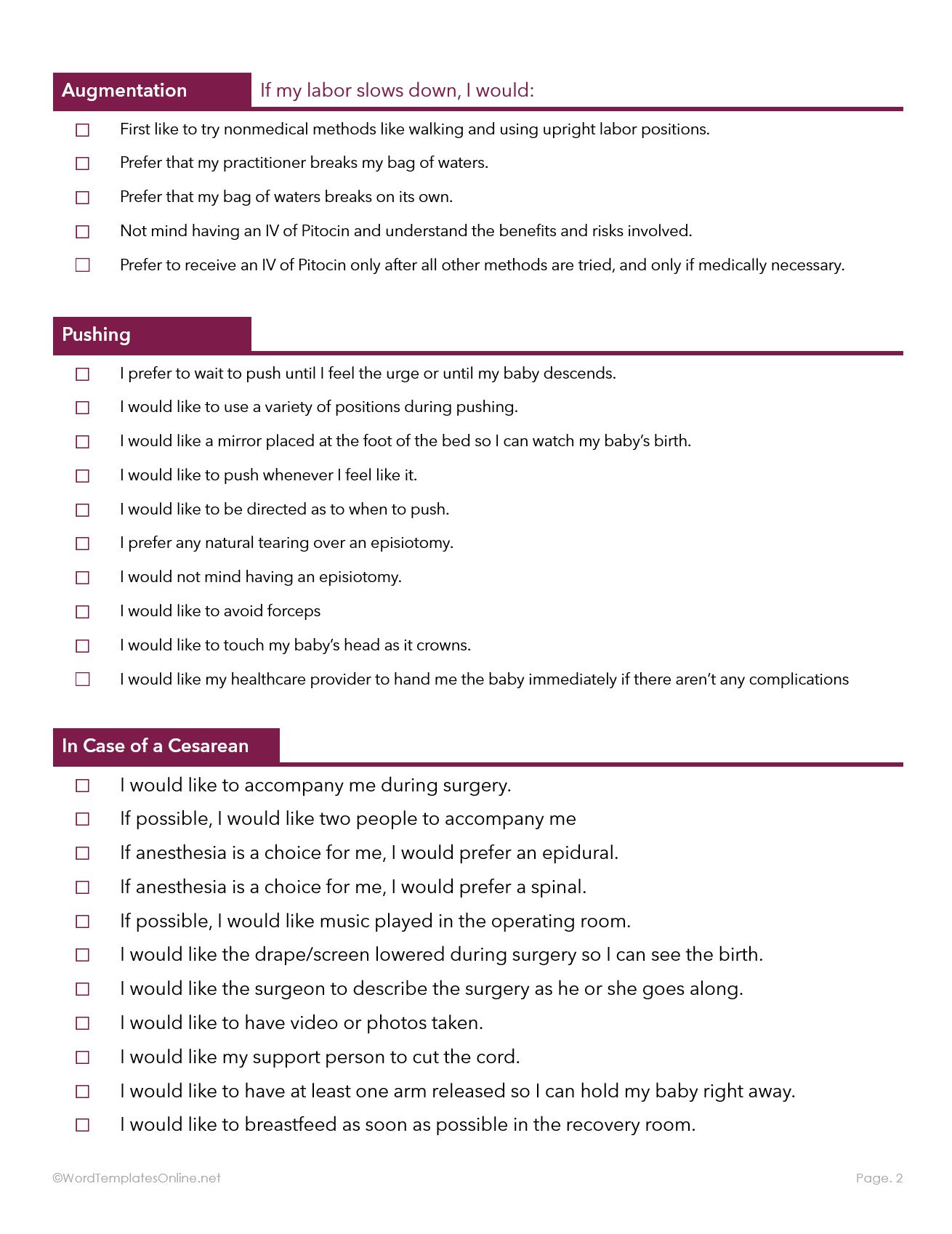
Birth Plan Template 09
Birth Plan Template 10
Birth Plan Template 11
Birth Plan Template 12
Birth Plan Template 13
Birth Plan Template 14
Benefits
Having a birth plan is important as it communicates the preferences and expectations of expectant parents concerning childbirth to healthcare providers. It also makes sure that your values and choices are respected. A birth plan helps you prepare for birth ahead of time by making decisions on pain management, baby care, delivery positions, etc.
Additionally, it helps:
- Prevent last-minute decision-making during labor
- Communicate your preferences to the healthcare provider, which makes it easy for them to support you
- Give you control over the environment where you give birth
Target Users
Expectant parents
These are the primary users. It helps them highlight their preferences and prepare emotionally and physically for childbirth.
Doulas
Doulas are non-medical professionals who support women during childbirth. They use birth plans to give specialized support according to a client’s needs.
Birth partners
If the expectant mother cannot communicate their preferences clearly especially during labor, birth partners use a birth plan to understand and advocate for their wishes.
Healthcare teams
They use birth plans to understand patient preferences and deliver services according to those preferences.
Related: Free Baby Shower Planner, Checklist, and Templates
Conclusion
A birth plan template is an important document for expectant parents. It allows them communicate their preference early, prepare ahead of time and clarify their values. Due to its flexibility, it guarantees shared understanding between expectant parents, healthcare providers, partners, etc. They also give practical value by making it easy to choose preferences which reduces stress, especially during labor pains. Lastly, you are welcome to explore available templates to familiarize yourself with the document and to design birth plans that align with your preferences.
About This Article