
An employment offer letter is a document given to a potential employee by an employer.
It outlines the terms of a job offer, and it is the first official communication between an employer and a new employee, making it a legally binding employment contract.
Using a structured template ensures the offer letter maintains a professional tone and gives clarity to both parties. It also ensures that it complies with labor laws, which gives a positive reflection on an employer’s brand. This article will help you understand more about the topic by looking at the purpose, components, variations, best practices, and common mistakes to avoid when crafting an employment offer letter. In addition, we have included free templates for reference.
Core Purpose of an Employment Offer Letter
An employment offer letter formally confirms the terms of employment agreed upon in the hiring process, which ensures mutual understanding between the employer and new employee. It also has compliance and legal value as it acts as a written record for the agreed-upon terms, which prevents disputes and shows that an employer is acting in good faith and according to employment regulations. Additionally, it bridges the gap between recruitment and onboarding, which marks the transition from prospect selection to welcoming a new employee.
Essential Components of an Employment Offer Letter
A well-drafted offer letter should include all key components to cover all the details of employment. Including these key components makes the letter comprehensive and clear. The components are:
Company information and candidate details
Start the letter by writing the employer’s information, i.e., company name, address, and contact information. Next is the employee’s information, i.e., full name, address, and contact information. This makes sure that the right people are entering into a contract.
Job title and role description
This component specifies the position being offered and describes the roles and responsibilities of the employee. Indicate the key duties, who they will report to, and the department they will be a part of to make sure they understand expectations.
Compensation and benefits
It specifies the salary amount, pay frequency, and payment methods. You can include additional benefits such as health insurance, retirement benefits, bonuses, performance incentives, etc. You can also include eligibility timelines for the benefits if applicable.
Working hours and location
It describes the working hours, for example, full-time, part-time, hybrid, shifts, etc. Include all these details along with the location, whether physical, remote, or hybrid. You can also include travel requirements if applicable.
Employment type and duration
This section specifies whether the employment is permanent, temporary, contract-based, or full-time. For fixed roles, you should indicate the length of the contract, renewal conditions, and if renewal depends on performance, completion, or funding.
Terms and conditions
It highlights important employment terms such as leave policies, code of conduct, probation period, termination conditions, and leave entitlement. The terms and conditions make sure that employees align with company policies.
Contingencies
It highlights the requirements a candidate should meet before starting employment. The requirements include background checks, proof of academic qualification, reference checks, medical tests, etc.
Acceptance section
This is the last section where the candidate signs and dates the document to confirm their acceptance of the agreed roles and stated terms of employment. For digital documents, fields for e-signing are provided.
Variations of Employment Letter Offers
Permanent employment offer
It is the most common type. It is given to candidates looking for full-time positions with no pre-set end date. Key components include compensation, benefits, company policies, career growth opportunities, etc.
Fixed-term/contract offer
It is used when employers are looking to hire employees for specific or time-limited roles. It contains the start and end date, renewal conditions, and typically includes a statement saying the employment ends when the contract ends unless extended.
Probationary/employment offer
It is issued when a candidate is working under a probation period, usually up to six months. It includes evaluation criteria, performance expectations, and the process for confirmation to proceed to permanent employment.
Part-time or internship offer
This letter is issued to candidates looking for roles with reduced working hours or internships. It normally includes working schedules, durations, allowances, or stipends. For internships, it could include learning objectives, and if the role could transition to permanent employment.
Executive offer letter
This is for senior management positions. It is more detailed and normally includes complex compensation structures such as stocks, profits, performance bonuses, etc. It could also include additional benefits to match the level of responsibility.
Best Practices When Drafting an Offer Letter
Use unambiguous language
Avoid using vague and complex legal terms, which may lead to misinterpretations. Instead, use plain, clear, and professional language for easier understanding.
Keep formatting professional and consistent
The format of the letter should reflect your company’s brand image. Use a consistent format with clear headings, consistent fonts, and bullet points for important details to show candidates that your company values professionalism.
Ensure compliance with labor laws
Always make sure your offer letters align with the local labor laws in your area, i.e., concerning wages, working hours, benefits, etc., to avoid disputes and penalties.
Customize templates for specific laws
Different roles have different requirements. Therefore, always customize the offer letter to fit the specific position that is being applied for. This also shows prospective candidates that you value them and what they can bring to the company.
Avoid overly binding legal terms
Overloading the letter with legal clauses such as complex dispute resolution terms may lead to confusion. Keep the letter simple unless it is designed to double as a contract as well.
Common Mistakes to Avoid
- Leaving out contingencies such as background checks, academic verifications, medical checks, etc., which exposes the company to risks if issues arise after employment starts.
- Using vague salary or benefits descriptions that leave room for misinterpretations. Always be specific.
- Not clarifying the employment type can lead to disputes. For example, an employee may assume a part-time role while the company intended a permanent role.
- Using overly generic language without context may lead to disputes in future. Always adhere to clarity when writing offer letters.
Free Employment Offer Letter Templates
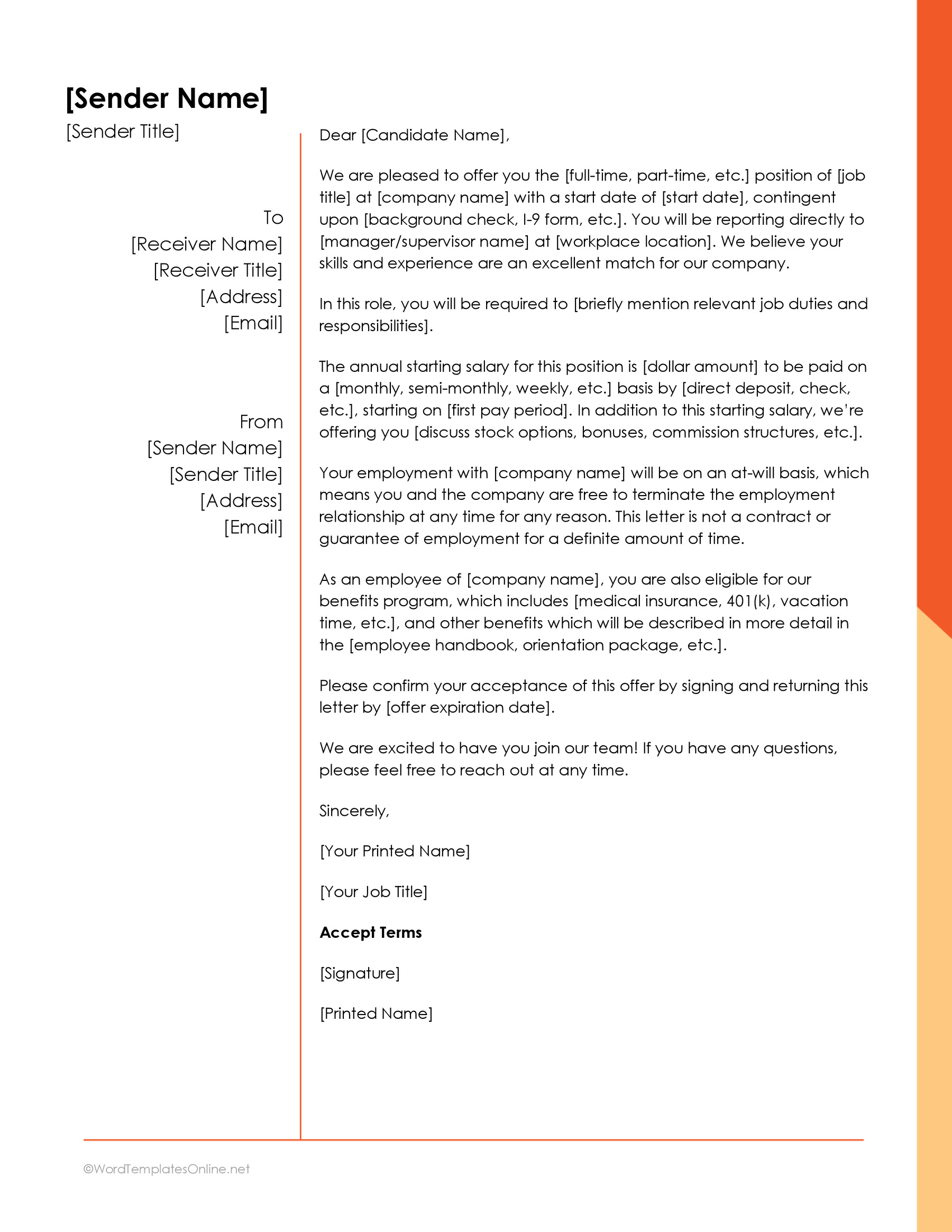
We are providing our readers with a collection of free, downloadable, and ready-to-use templates on our website to simplify the process of letter writing. The templates are editable, and you can customize them to fit unique requirements for different roles. The templates are available in Google Docs and Microsoft Word formats for easier editing and sharing.
Employment Offer Letter Template 01
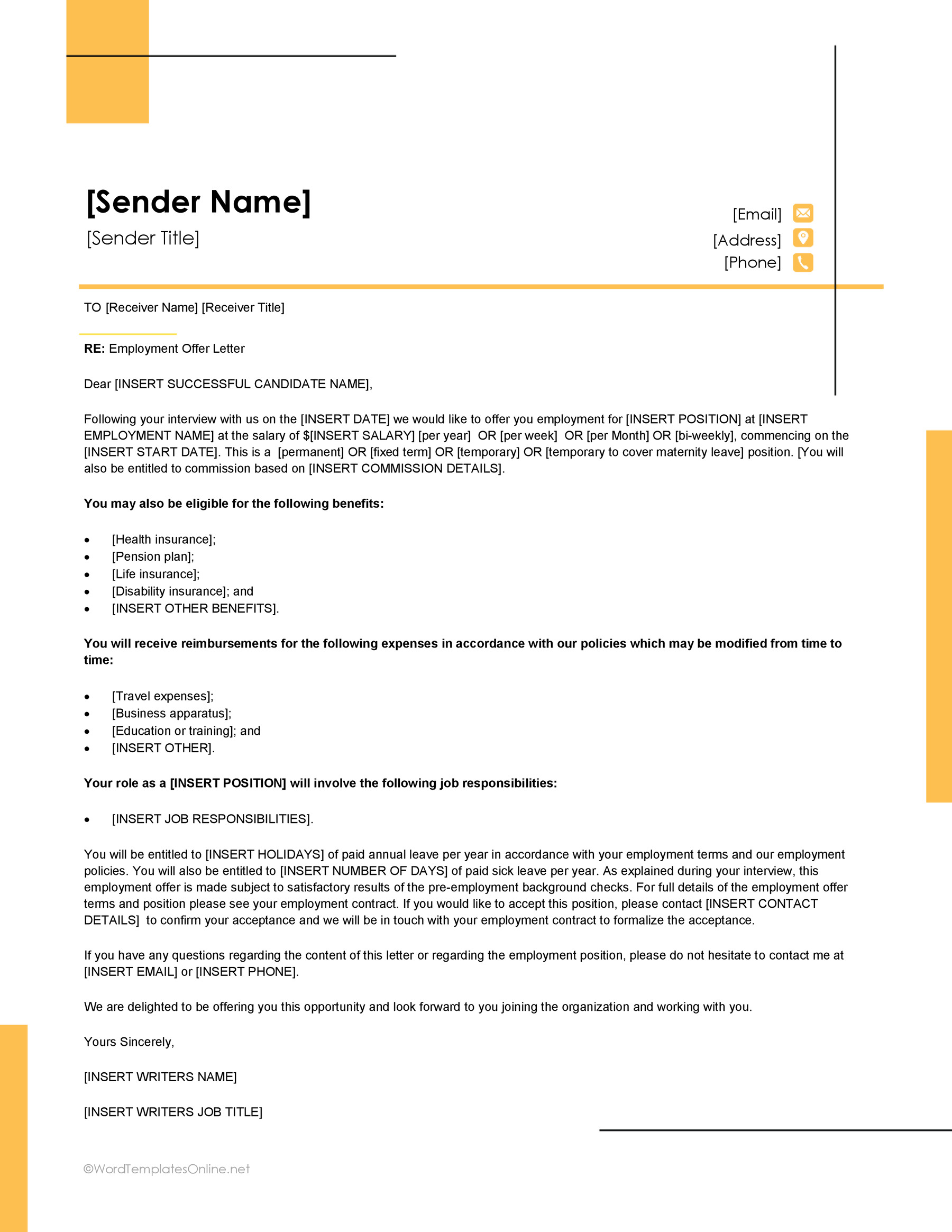
Employment Offer Letter Template 02
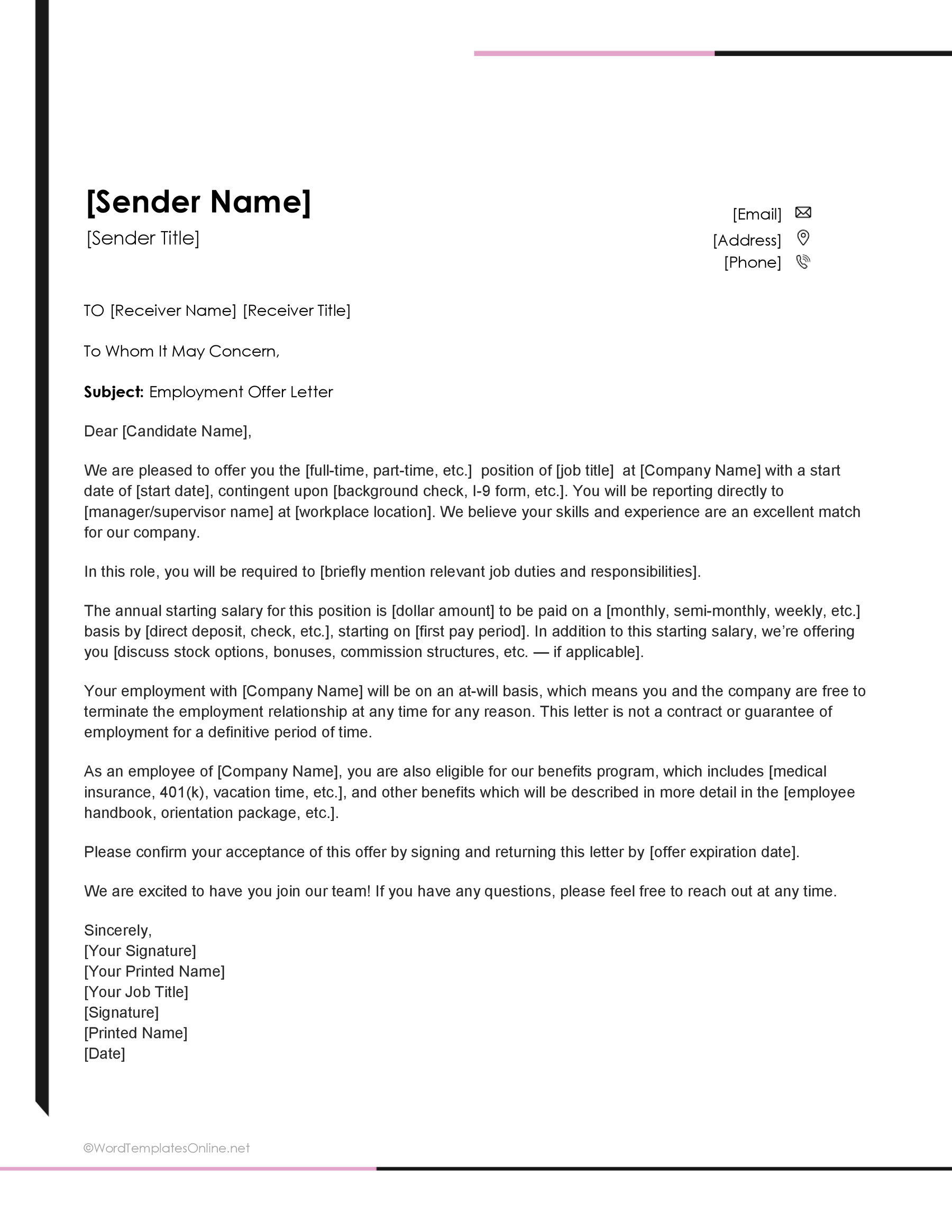
Employment Offer Letter Template 03
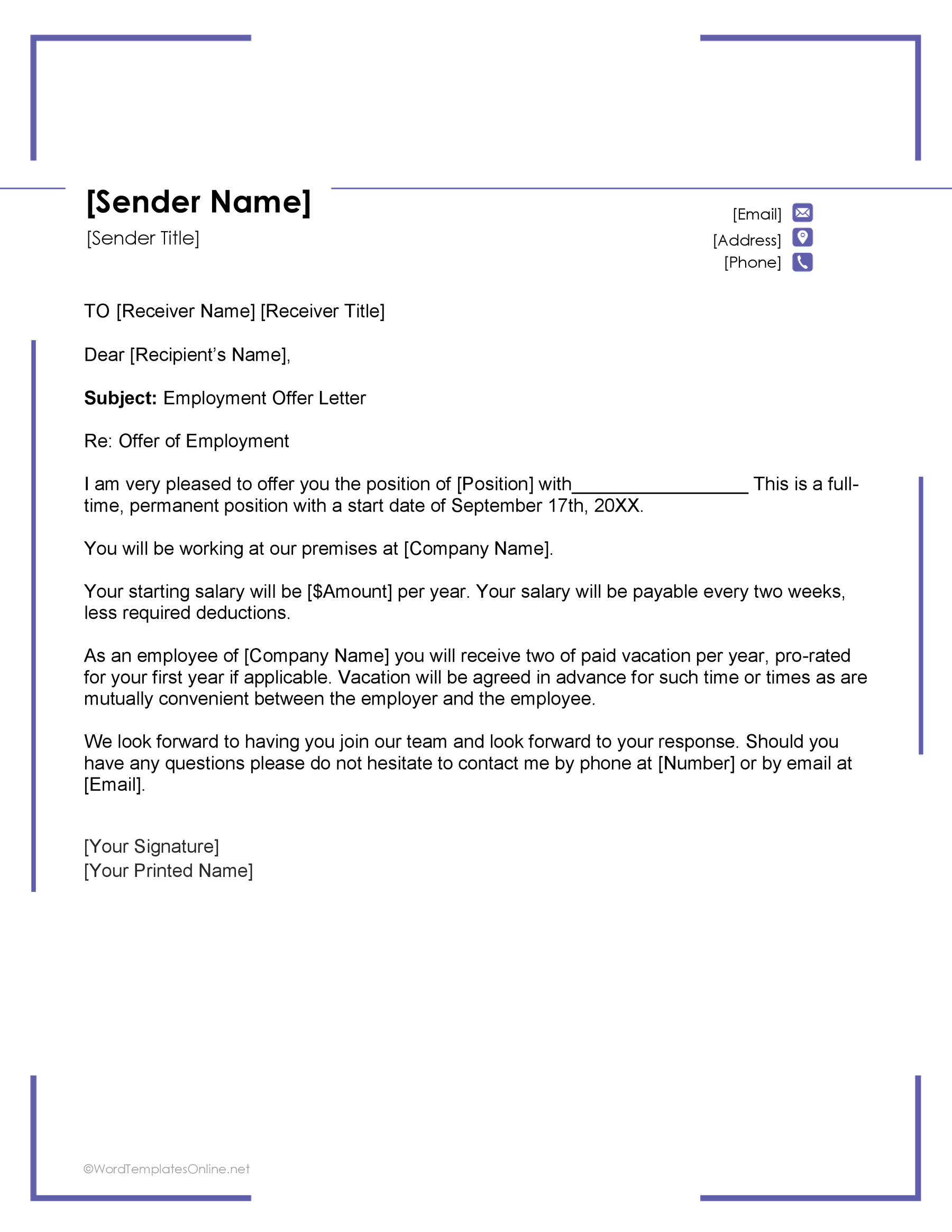
Employment Offer Letter Template 04
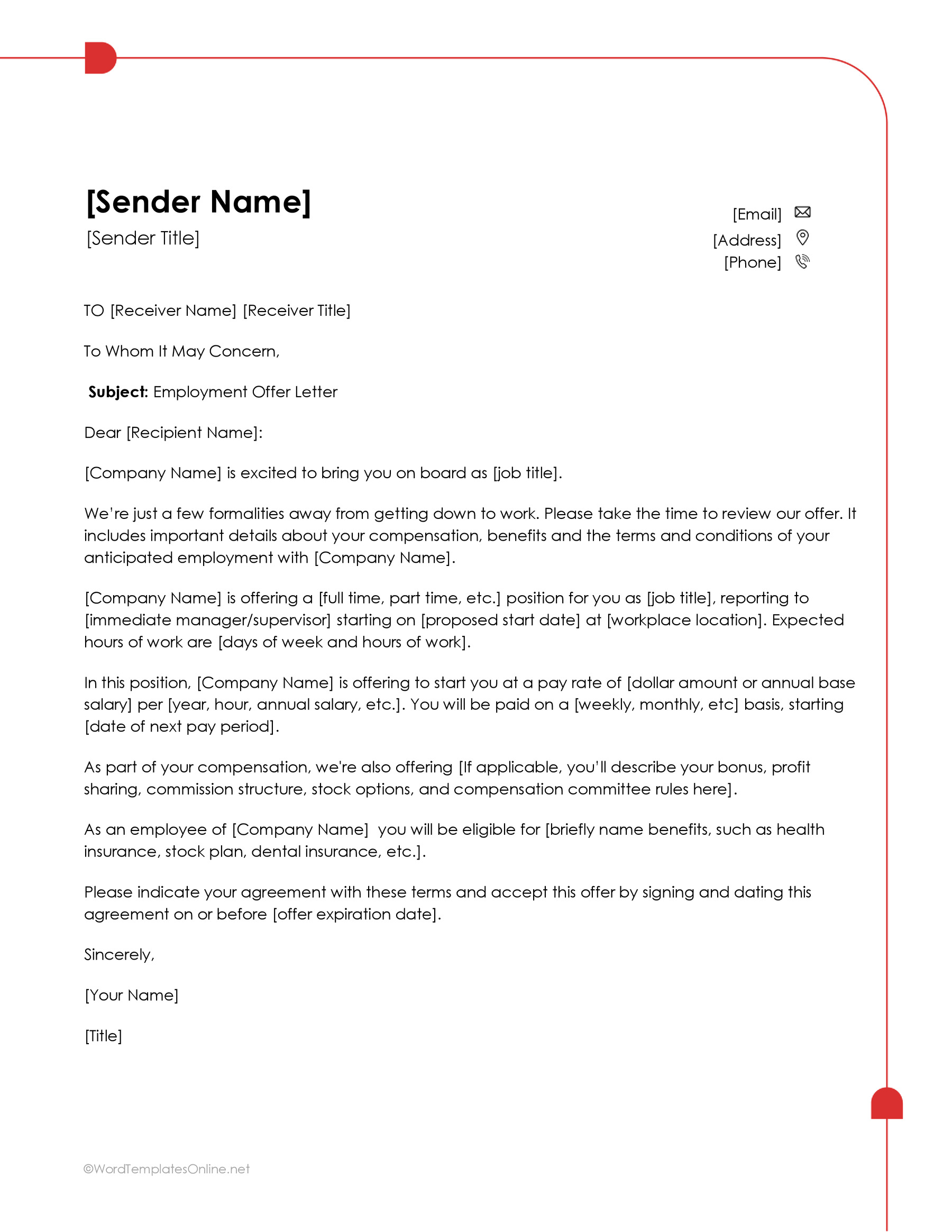
Employment Offer Letter Template 05
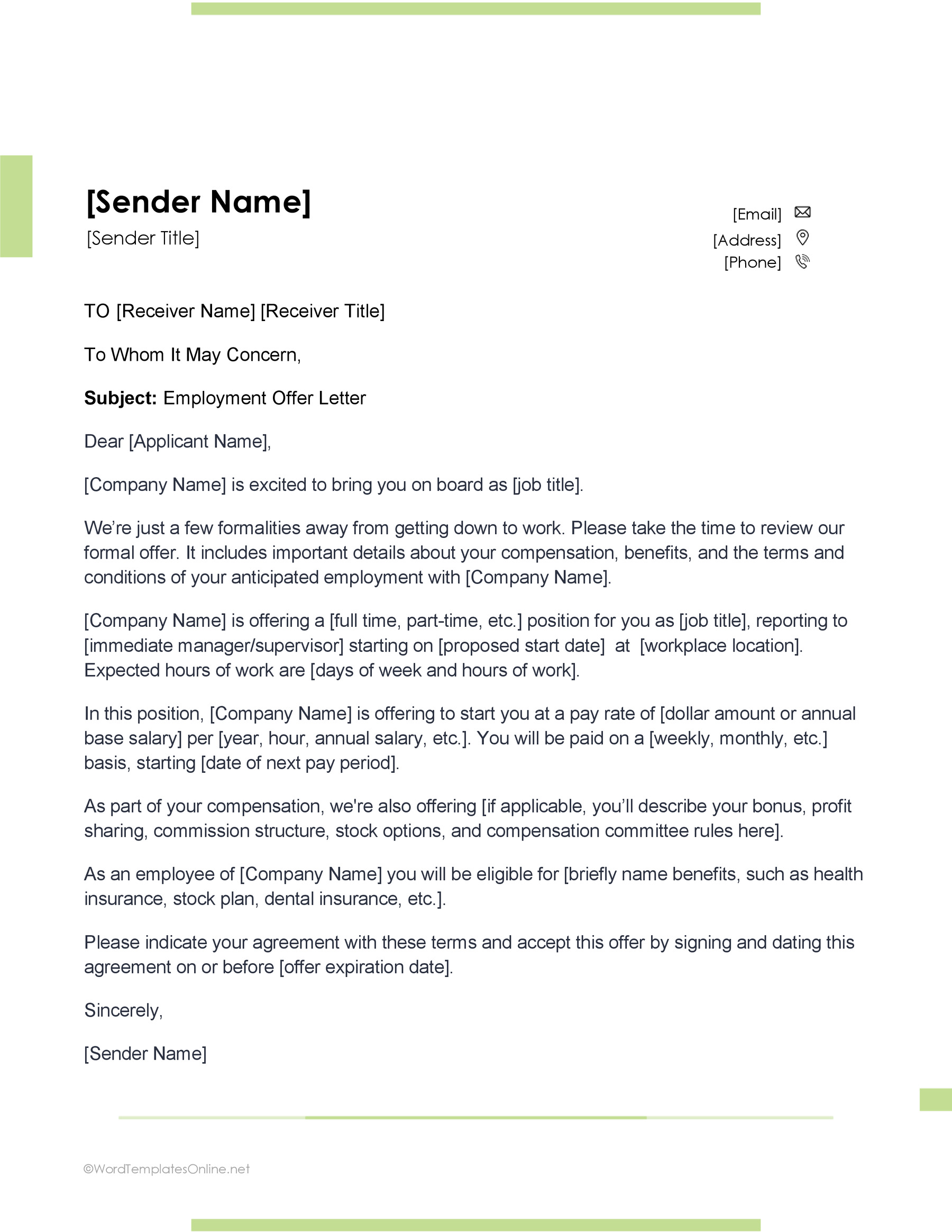
Employment Offer Letter Template 06
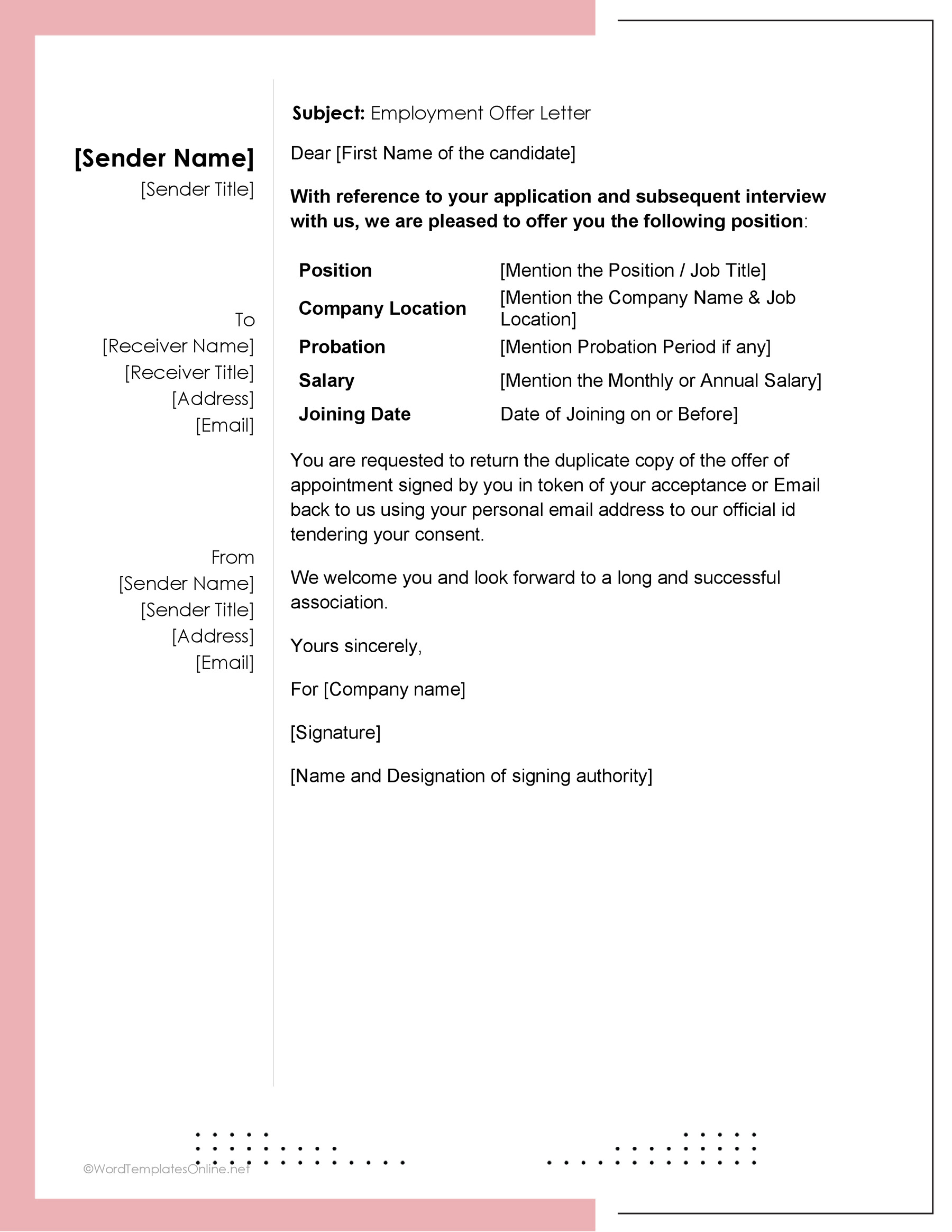
Employment Offer Letter Template 07
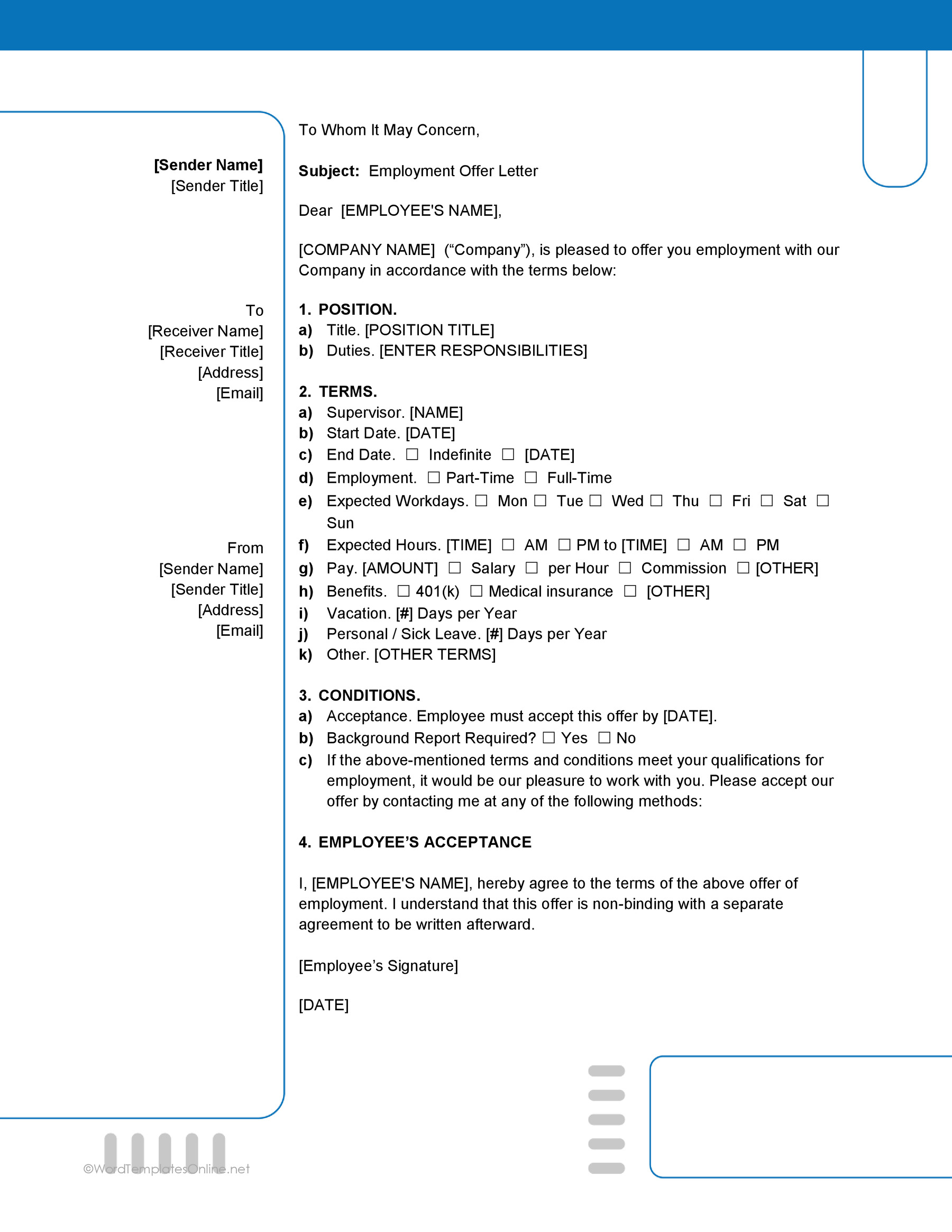
Employment Offer Letter Template 08
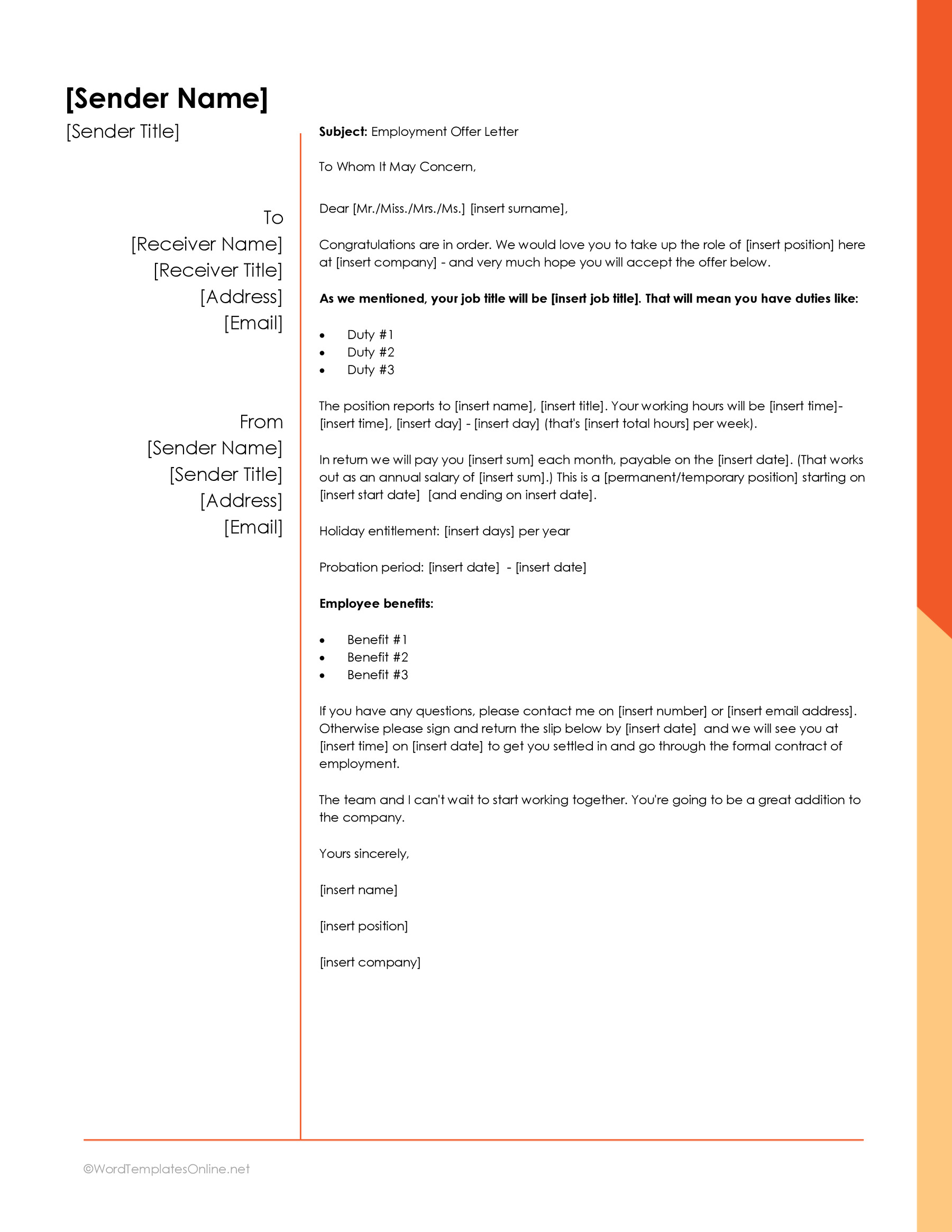
Employment Offer Letter Template 09
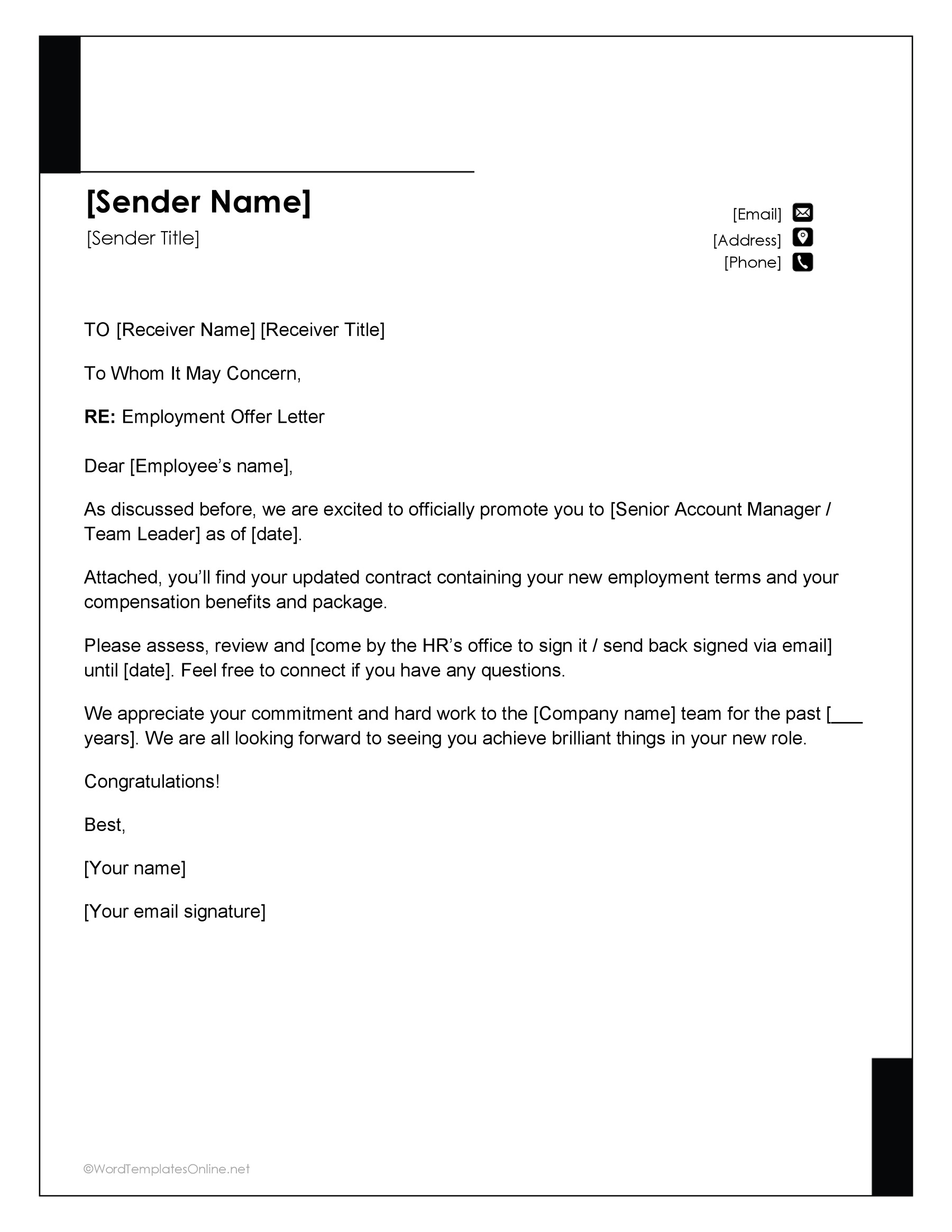
Employment Offer Letter Template 10
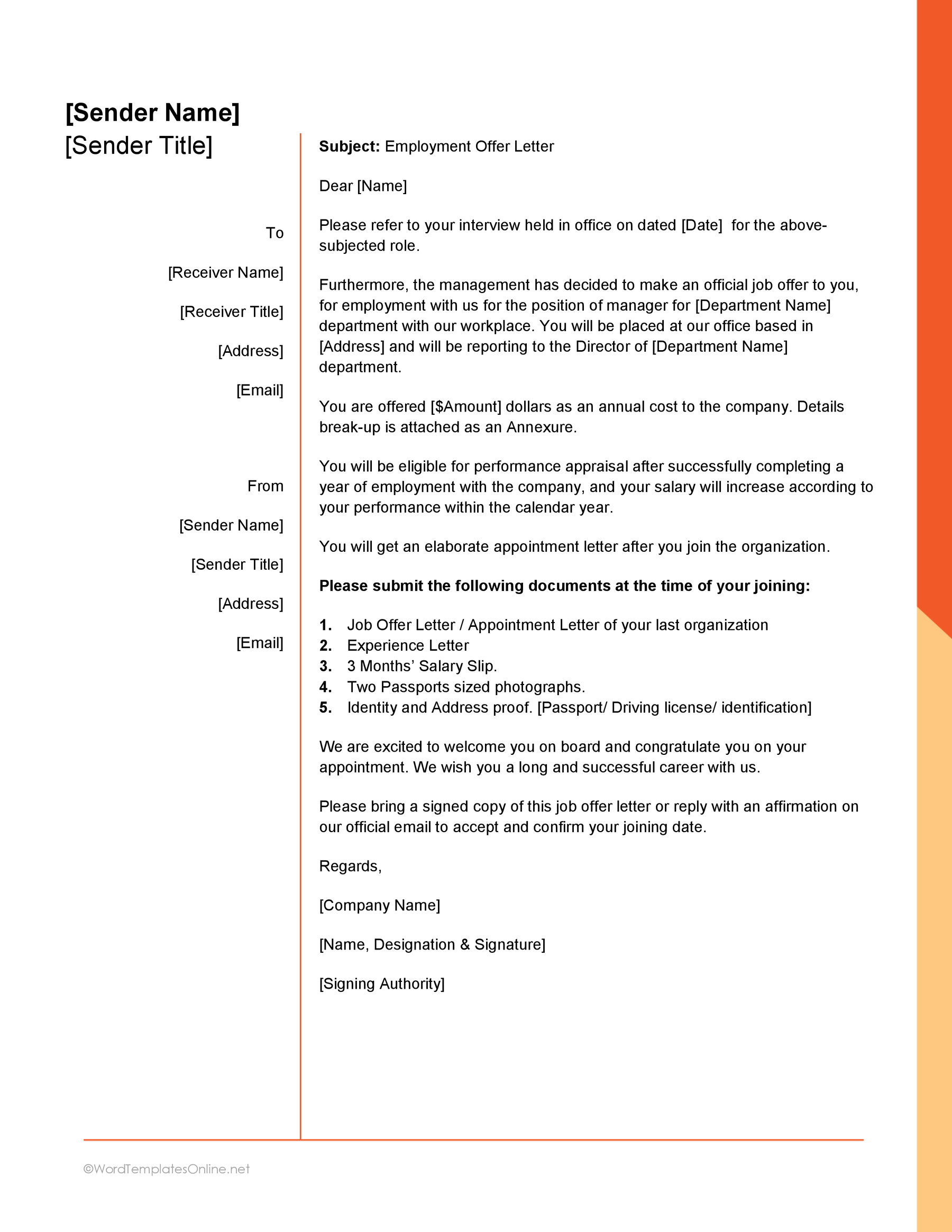
Employment Offer Letter Template 11
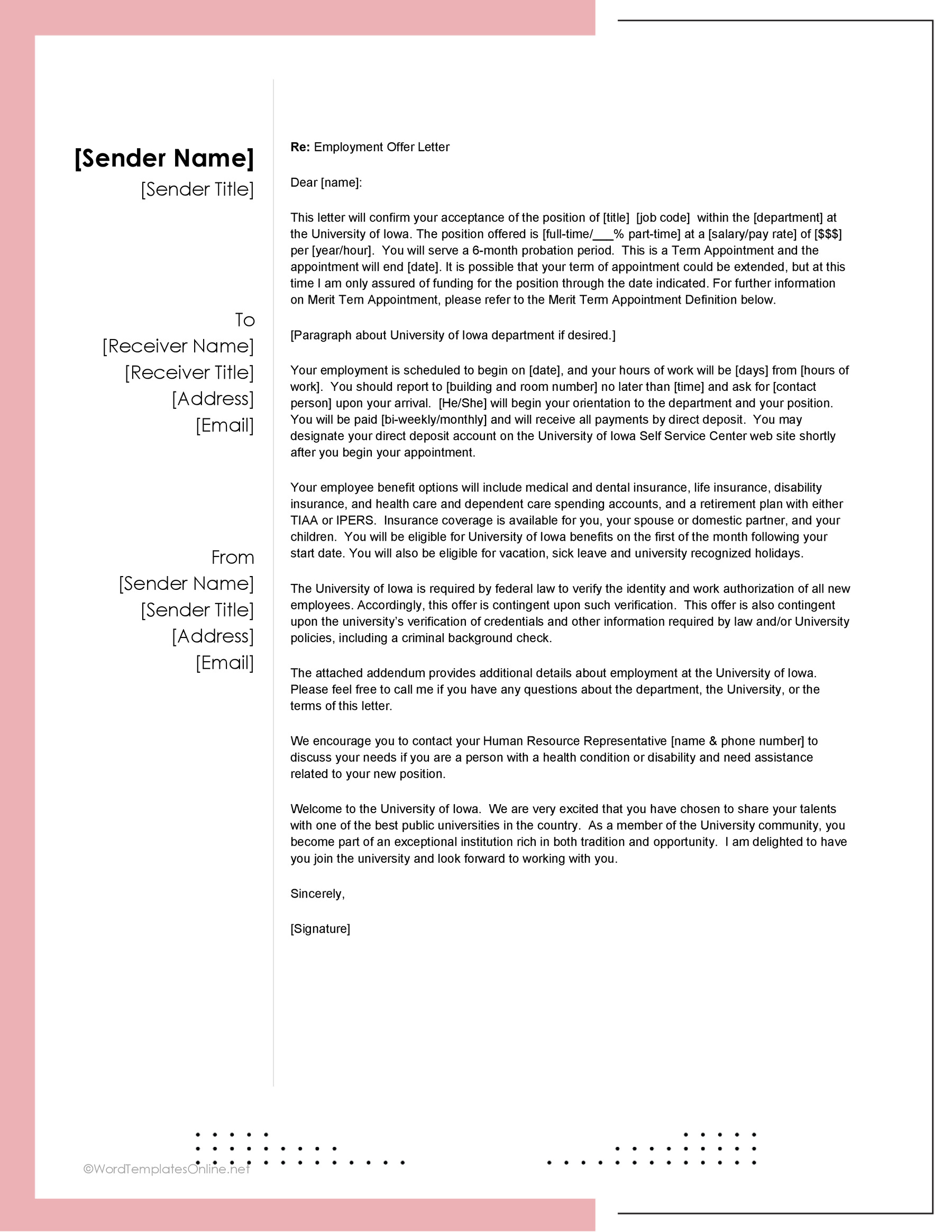
Employment Offer Letter Template 12
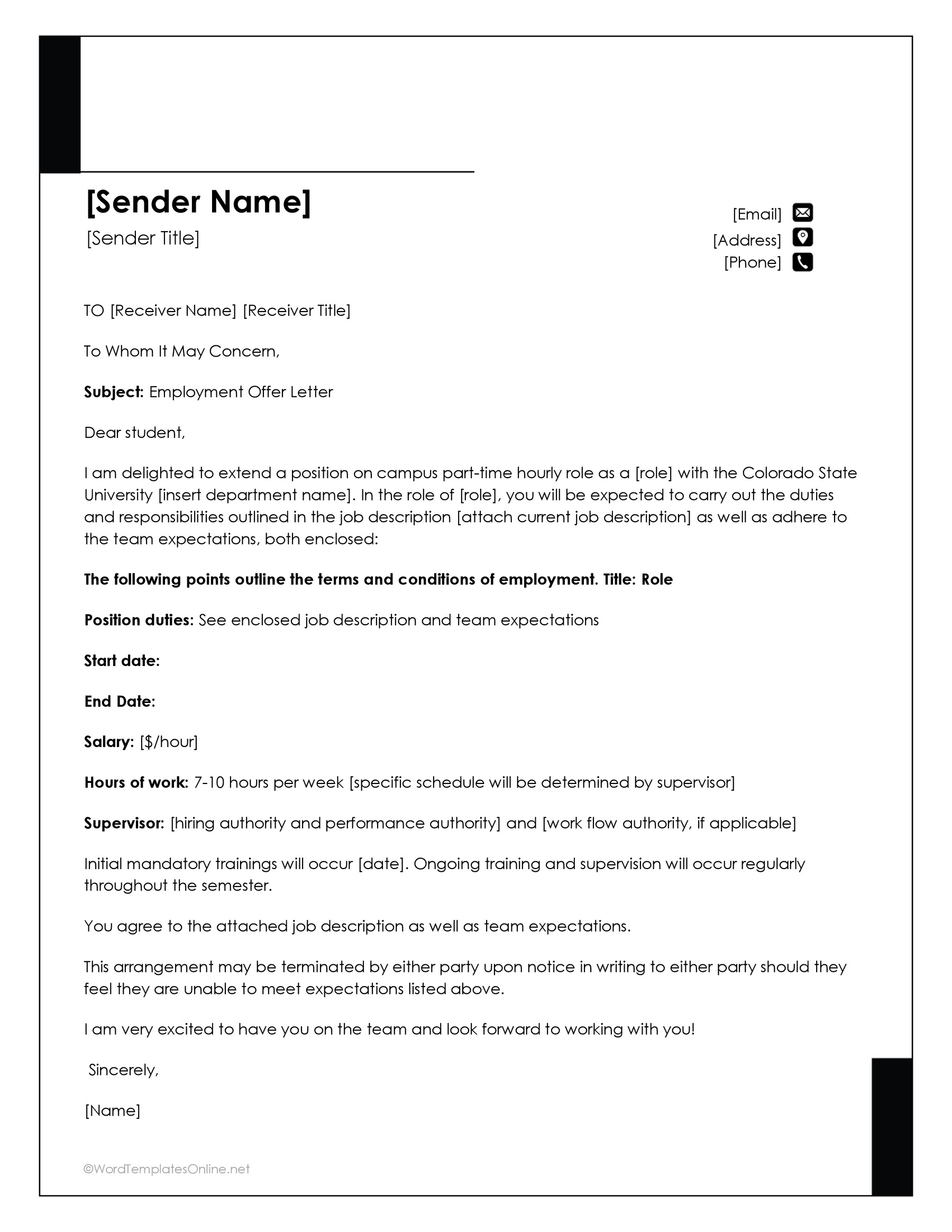
Employment Offer Letter Template 13
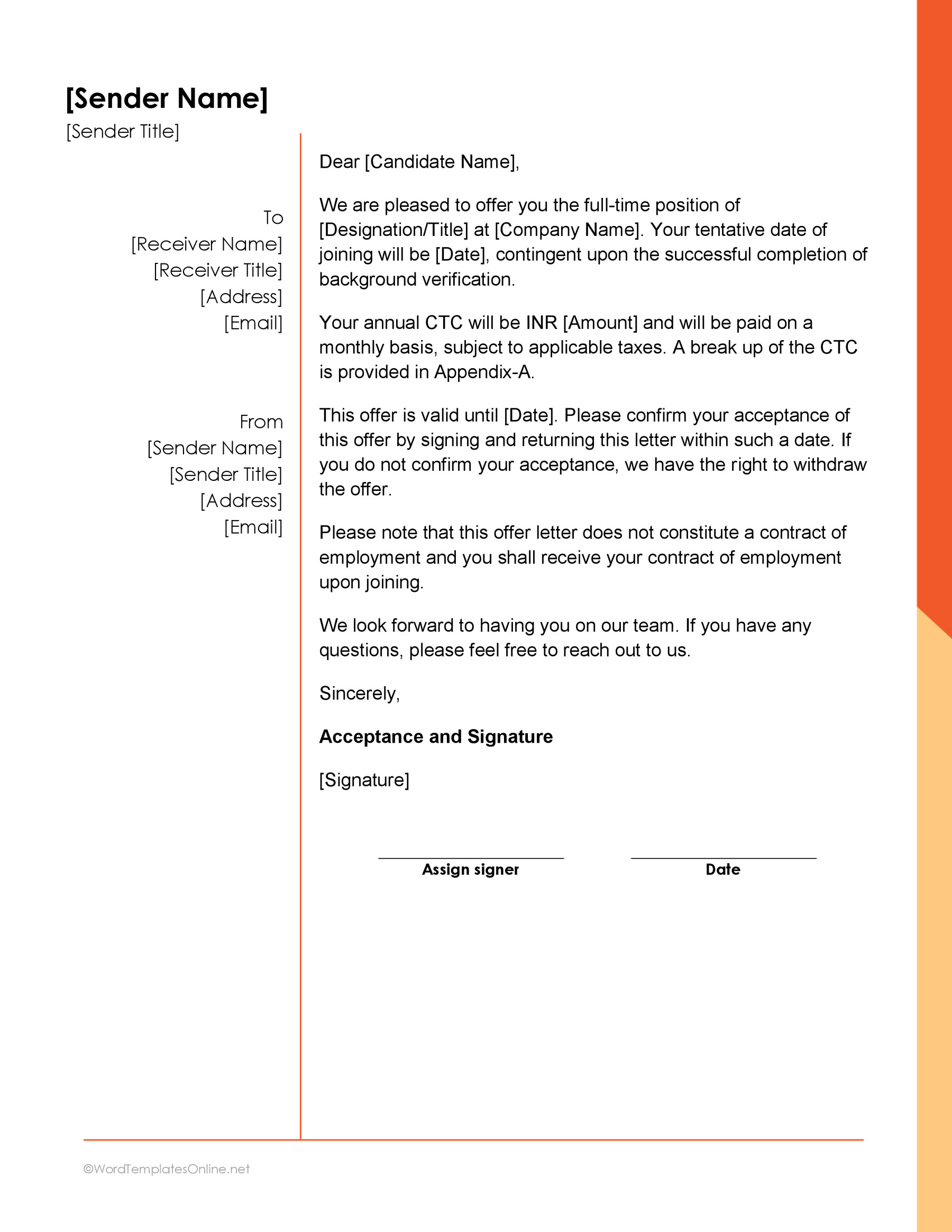
Employment Offer Letter Template 14
Related:
- Employment (Job) Confirmation Letter – Free Templates
- Formal Job Offer Letter Samples and Free Templates
- 42 Employment Verification Letter Samples & Templates
Conclusion
A well-structured offer letter sets the tone for a compliant, transparent, and professional working relationship between an employer and a prospective employee. It also outlines the terms and conditions of employment to avoid ambiguity, which may lead to disputes after employment begins.
About This Article