Most employers and HR managers usually wait until the termination day to draft a severance agreement. This isn’t just poor planning but corporate self-sabotage and often leads to agreements that are either unnecessarily ambiguous, legally insufficient, or strategically misaligned with the organizational goals. Issues such as wrongful termination or age discrimination may arise if the employee feels they were not accorded a fair severance package/benefits.
Using a severance agreement template is a smart and easy way to avoid all the issues that come with not having a proper document in place. However, while the template provides pointers to what the agreement should include, understanding the contents of each section is equally important.
In this guide, we will take you through real-world decisions the HR or Company representative must take, including what you should do before filling in the template, what clauses you should include and customize accordingly, the legal timing requirements you must adhere to, and the additional documents that you should keep for company records.
Before You Fill the Template: Questions You Should Answer Internally
One of the biggest mistakes most HR professionals make with severance agreement templates is going straight into completing the template without proper preparation. It is important to understand that each employee separation is unique each with its own set of circumstances, risks and strategic considerations. Taking time to work through a few things before filling the template can save you from costly revisions, legal complications or missed opportunities to properly protect your organization.
Here are a few questions that you should consider before filling the template:
- What is the business reason for offering severance (layoff, voluntary resignation, performance-related exit?) It is most probably mentioned in the termination letter.
- Is there any risk of legal claims from this employee?
- Is this part of a wider layoff that could trigger extra legal obligations (e.g., WARN Act)?
- Are you offering severance in exchange for a release of claims?
Key Clauses You Must Customize Thoughtfully
While the templates we provide structure for drafting the severance agreement, certain sections require careful customization and not a simple fill-in-the-blank completion. It is important to understand that certain clauses carry the highest legal and financial risk, and getting them wrong can expose your company to liabilities or make the agreement ineffective.
Here are some of the clauses that you should carefully customize:
- Termination Date: The dates of employment, i.e., hiring and termination, should be included in the document as well as any timelines for the benefits they are set to receive or other agreed-upon terms. It is important to align this date with the final working day, final processing and benefits cutoff dates to help avoid creating gaps in coverage and complicating the payroll system.
- Severance Pay Terms: This section should indicate the amount of severance pay availed to the employee whether in batch payments or lump sum. Information on how the employee will be compensated for any unused paid time off, vacation benefits, prorated bonuses, commissions etc., should also be indicated in this section.
- Waiver and Release Language: When completing this section, it is important to understand that missing key claim categories can leave you vulnerable to the exact lawsuits that you are trying to prevent. Make sure to include both federal and state-specific claims, with particular attention to ADEA and OWBPA requirements for employees over 40. Similarly, to protect yourself and the organization, make sure to include a clause indicating that the employee agrees not to pursue any legal action against you or your organization for issues like discrimination or wrongful termination as long as you (the employer) agree to and honour their part of the agreement.
- Non-Rehire Clause: This is unmistakably one of the most important clauses that you should consider before including in the severance agreement. This is because it permanently locks the door on future employment. Make sure that you only include it after considering the long-term HR impact and whether the circumstances might change, making re-employment beneficial to the company.
- Return of Property: The agreement should include clear details on how the employee should return any company-owned equipment or tangible information. When completing this section, it is important that the language you use is clear to avoid incomplete returns and potential security risks.
- Confidentiality Clauses: This clause is very important as it specifies what information an employee can or cannot disclose to others. In essence, it helps protect the company’s trade secrets and other sensitive information, such as customer data, and internal processes post-termination.
- Non-Solicit or Non-compete Terms: If you would like to prevent departing employee(s) from competing with you or your organization in the same industry for a given period, then you should include this clause. When including this clause, it is important to carefully craft it to help protect legitimate business interests without overreaching legal boundaries.
Legal Timing Requirements You Must Follow
Severance agreements are not just about getting the terms right – timing compliance can make or break the entire agreement’s enforceability. As an employer, you should pay close attention to the requirement that employees, depending on their age, be given enough time to decide whether to sign the severance agreement. It is important to adhere to this statutory requirement to help facilitate the release of claims as per the Age Discrimination in Employment Act (ADEA), as amended by the Older Workers Benefit Protection Act (OWBPA), to be enforceable.
For instance:
- 21-Day Consideration Period: Federal law under the Older Workers Benefits Protection Act (OWBPA) requires that employees who are aged 40 and above be given a minimum of 21 days to consider the agreement before signing, unless it is a mass layoff or group termination, in which case they must be given 45 days. It is important to note that this period cannot be waived or shortened, even if the employee wants to sign immediately.
- 7-Day Revocation Period: According to OWBPA, the employer must give the employee over the age of 40 up to 7 days after signing to revoke their acceptance of the agreement. As such, no severance payments or benefits should be made available to the employee until after the revocation period expires. This right to revoke applies in the context of both individual and group terminations.
- Final Pay Timing: Your severance payment schedule should align with state-specific final pay check laws, which vary significantly across jurisdictions. In some states, you may be required to make full payment of all outstanding amounts upon termination, while in others, you may be given an extended amount of time to do so. It is important to remain compliant with all Federal and State laws to avoid penalties and additional wage obligations.
- Time to Return Property: Depending on your company’s policy, you may require the employee to return all company equipment within 3-5 business days or as soon as practically possible. When drafting the severance agreement, make sure that you are clear on what constitutes “Company property” to avoid ambiguity, which may lead to confusion. Also, include any consequences for failure to comply, such as deducting replacement costs from final pay or pursuing legal action against them.
Handling High-Risk or Sensitive Exits
Regardless of the reason for termination, all matters surrounding the termination itself should be handled in a professional and ethical way, with measures taken to minimize risk to either party. However, not all employee terminations carry the same level of legal or business risk. Certain situations create an elevated exposure that requires a more strategic approach to help reduce vulnerabilities and potential cracks that may create room for litigation.
Some of these high-risk or sensitive exits include:
- If the employee has raised concerns about harassment, discrimination, retaliation, etc.
- If the employee is being let go during or after medical leave (ADA/FMLA risk)
- If the employee has access to trade secrets or client accounts
In these cases, and many more of such nature, it is recommended that you seek legal counsel and consider using a stringer release language. A legal counsel can help you draft a stronger release language that is targeted towards a specific claim, and they can also help recommend the most appropriate severance amounts that can support the validity of the release.
Additional Documents to Keep for Company Records
As an HR, Company Representative, or simply an Employer, proper and thorough documentation is your shield against future legal challenges and regulatory scrutiny. While the severance agreement in itself demonstrates compliance and provides evidence of fair dealing in the event of a dispute, there are other documents that can help back this up.
Here are some of the essential documents that should be included in your severance file:
- Signed copy of the severance agreement
- Proof that the employee was given the option to consult an attorney
- Exit checklist (property return, access revoked, benefits explained)
- Internal notes justifying the decision to offer severance (for audit or defence purposes)
Download a Severance Agreement Template from the Collection
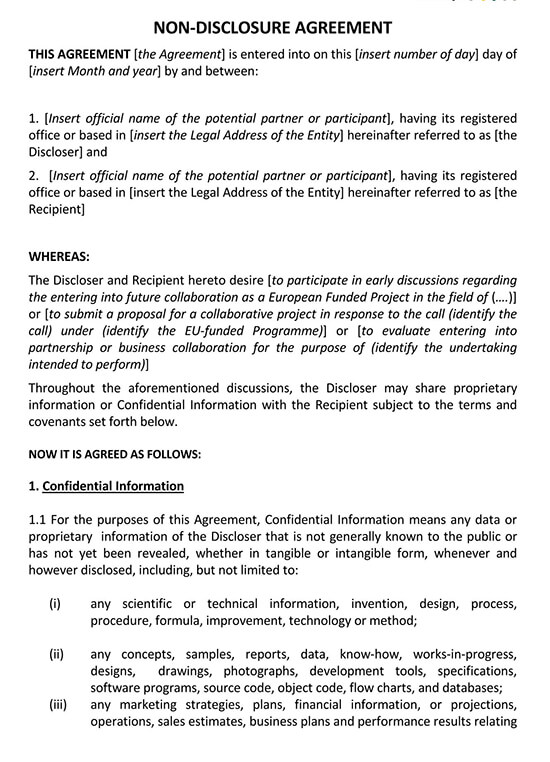
Our templates are designed to be simple and easy to use. They incorporate all the key elements discussed throughout this guide. They also provide the much-needed structure to help you draft a severance agreement that will help you handle separations professionally and compliantly.
Severance Agreement Template 01


Severance Agreement Template 02


Employment Severance Agreement Template 01


Employment Severance Agreement Template 02


HR FAQs for Using These Templates
Do I have to offer severance to every employee?
No. Offering severance is not mandatory for every employee. However, while some companies may choose to offer severance as a best practice, especially for involuntary terminations, it is generally not a legal requirement unless explicitly specified in the employment contract or collective bargaining agreement.
Is a release of claims valid without compensation?
No. A release of claims in a severance agreement is generally not valid without providing the employee with some form of consideration, typically financial compensation.
What’s the safest way to offer severance without admitting wrongdoing?
The easiest and safest way to offer severance without necessarily admitting wrongdoing is to include a non-admission clause in the severance agreement. A non-admission clause simply states that the employer is not admitting to any wrongdoing, liability, or unlawful behaviour by offering the severance package.
Should I offer more money in exchange for extra protection (e.g., longer non-solicit)?
Yes. For employees in roles where sensitive company information or customer data is being handled, it is generally acceptable and sometimes even strategically beneficial to offer more money for a longer or more restrictive non-solicit agreement in a severance package.
Can the employee sue me even after signing this?
Signing a severance agreement with a release of claims clause prevents an employee from suing the employer for claims covered by the agreement. However, in some cases, the employee may still be able to sue even after signing, such as for unpaid wages, statutory claims, or in the event that the agreement was signed under duress or fraud.
Closing
As an HR manager, having a severance agreement in place is important as it functions as both legal protection and a strategic business instrument. If properly drafted, this simple document can help shield you and your organization from potential litigation and also preserve your image and relationship with the dismissed employee.
Drafting one from scratch, however, may prove hard, especially if it is your first time doing so. A template, like the one we have provided, can act as an excellent foundation, reducing the time and cost associated with drafting the agreement from scratch. However, it is important to understand that the template will only be as valuable as the customization you apply based on factors such as the employee’s role, tenure, and departure circumstances.
It is also important to note that for anything that is beyond a simple, straightforward, low-risk exit, you should invest in legal review. This is because employment law is a complex and constantly evolving niche with significant variations between federal and state requirements. The cost that you will incur for legal consultation is minimal compared to the potential exposure from an inadequately drafted agreement or missed compliance requirements.
About This Article