Choose a worksheet for the skill you want to practice today. This collection includes ten short activities covering colors, numbers, days of the week, letters, spelling and language. You can use the Word, ODT or Google Docs version, with an additional Word document copy also available for each layout.
The activities vary in difficulty. A learner who can find the letter E may still need help with a tense sentence or division problem. Look through the questions first, choose an achievable task and work through one response together before handing over the page.
Start with the skill
| Practice area | Worksheets | What the learner does |
|---|---|---|
| Colors | 01 and 09 | Match color words or find them in a word-search grid. |
| Numbers and arithmetic | 02 and 04 | Work through arithmetic or write the numerals 1–9. |
| Days of the week | 03 | Practice the sequence from Sunday through Saturday. |
| Letters and spelling | 06, 08 and 10 | Add initial letters, find E or choose a picture’s spelling. |
| Language and writing | 05 and 07 | Identify tenses or use adjective prompts in writing. |
Choose by the individual questions rather than assigning the whole collection to one age or grade. You can use a single page for focused practice and save the others for a different lesson.
Explore the ten activities
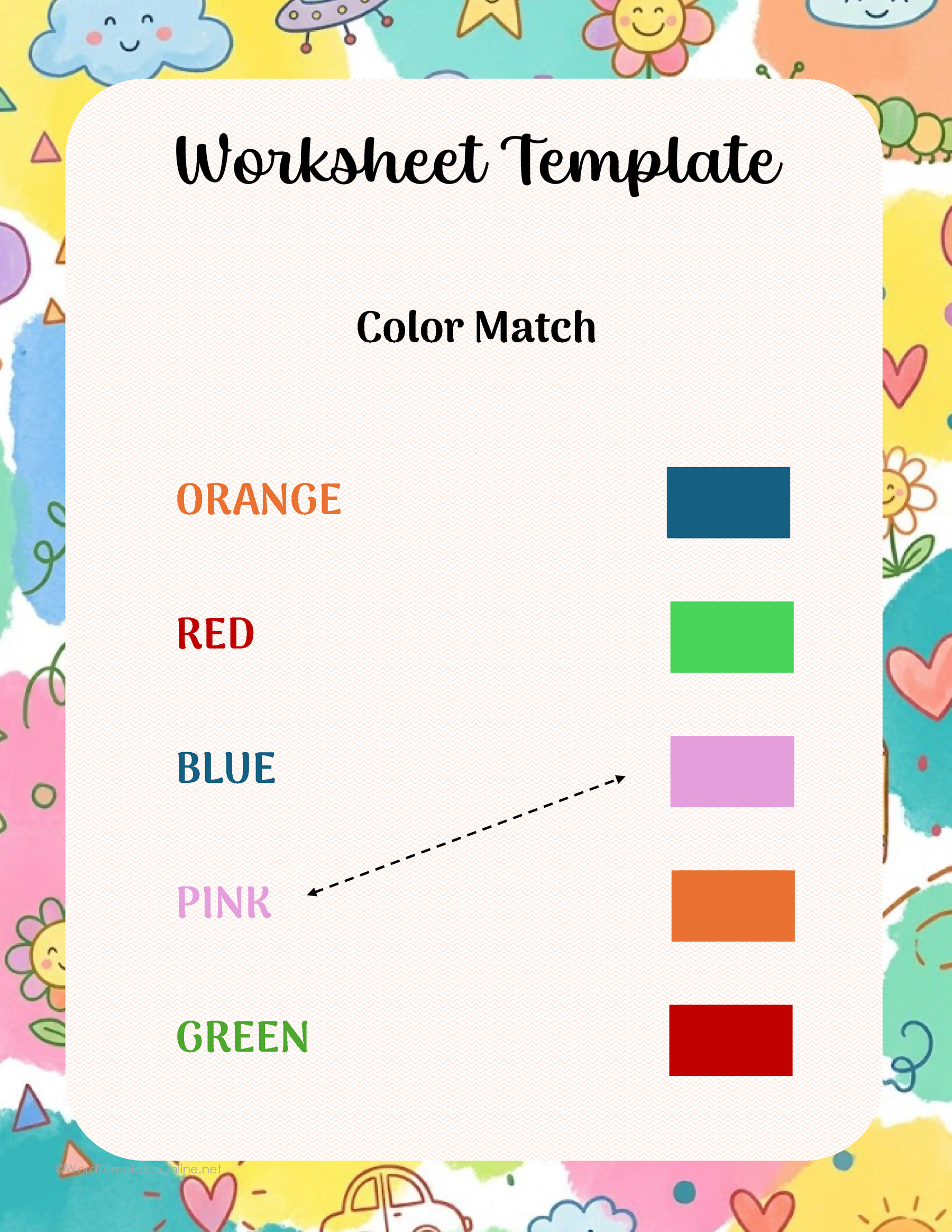
Worksheet 01 pairs the words orange, red, blue, pink and green with color matching. A dotted Pink example helps show the response. Use a color print or a clear color display so the learner can make the intended matches.
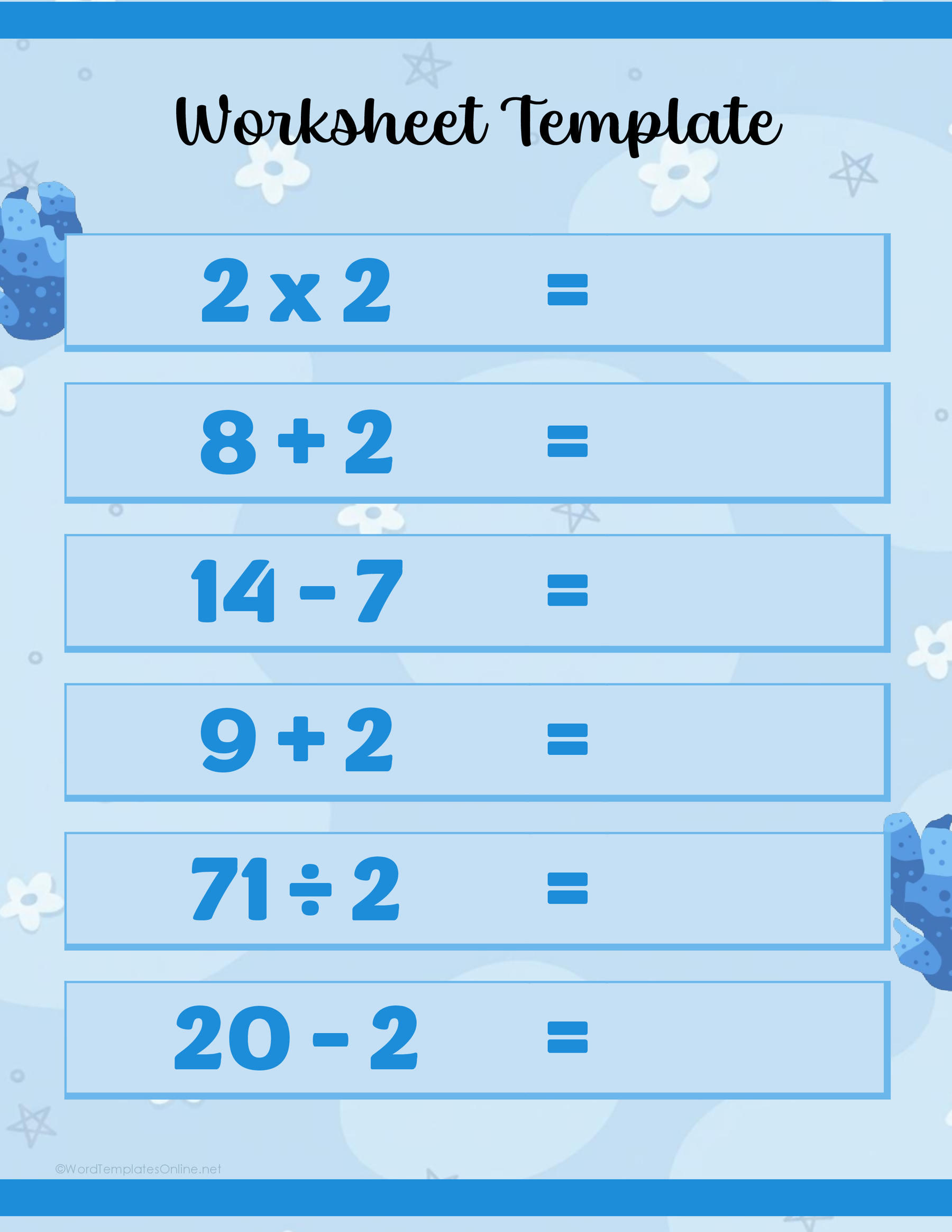
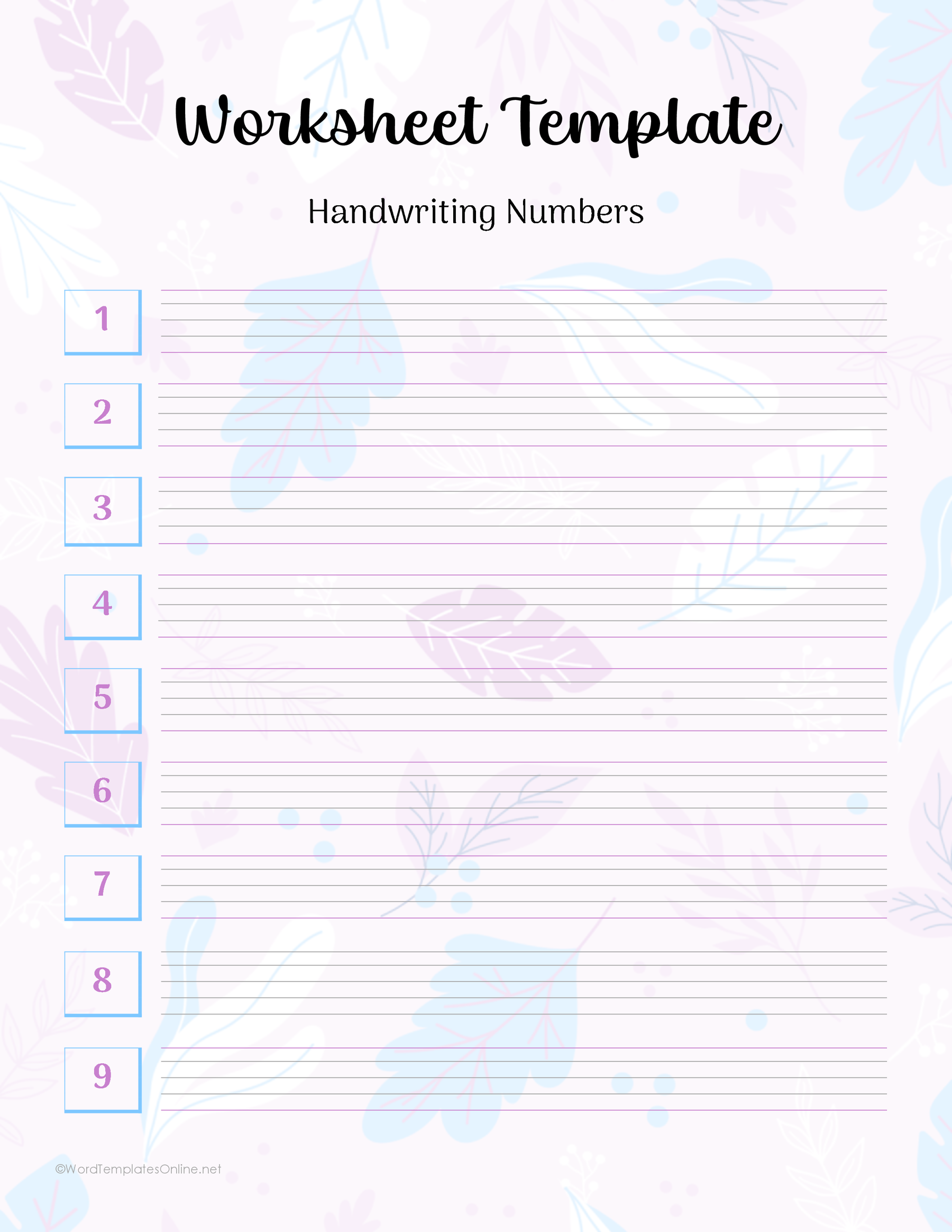
The two number activities ask for different kinds of work. Worksheet 02 has six arithmetic problems, including division; 04 provides the numerals 1–9 with ruled writing space. The latter can support numeral-writing practice without adding a calculation task.
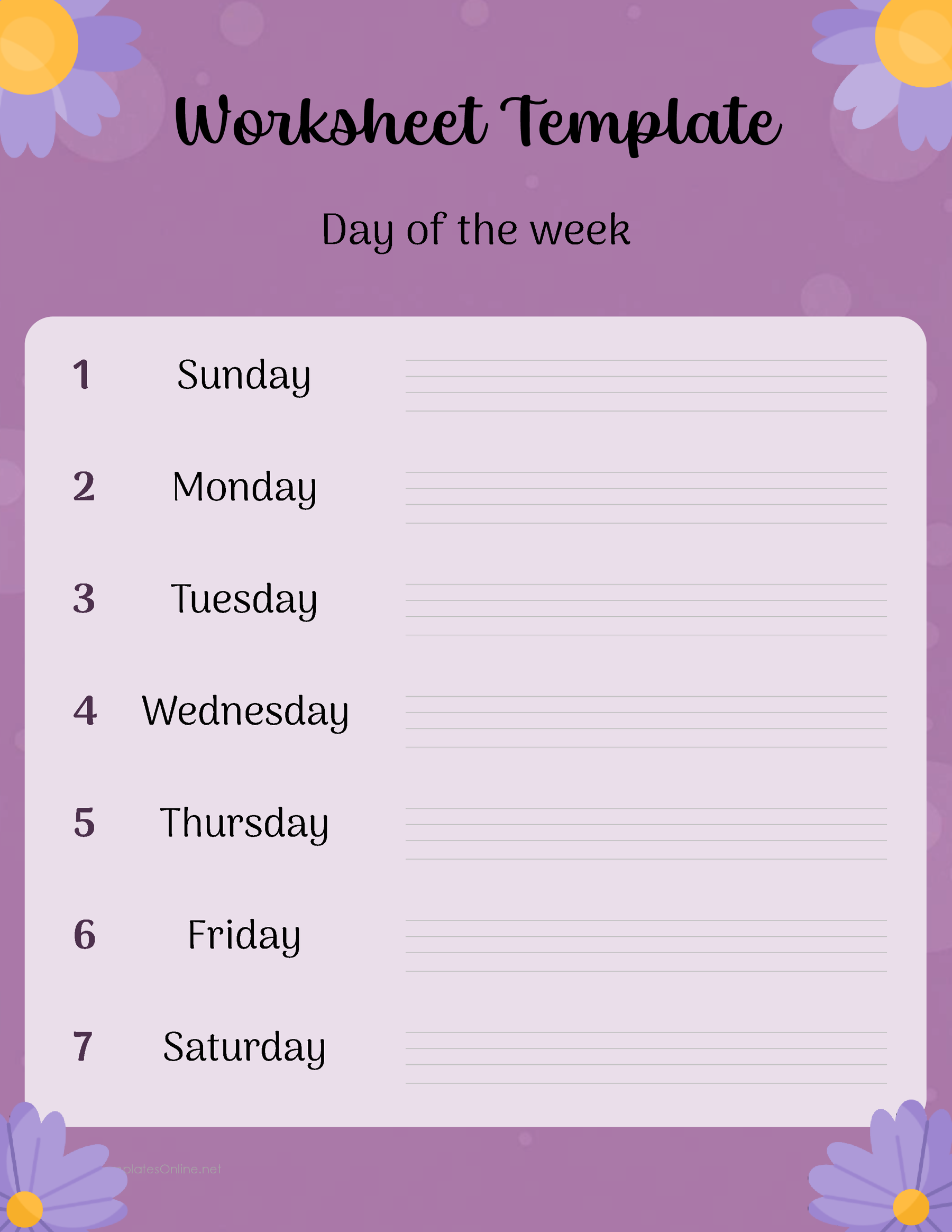
Worksheet 03 covers the seven days from Sunday to Saturday. Say the sequence together before asking the learner to work with the written words. In 05, eight sentences form a tense activity. Some sentences are more complex than a single short clause, so an adult should decide what response the lesson is looking for.
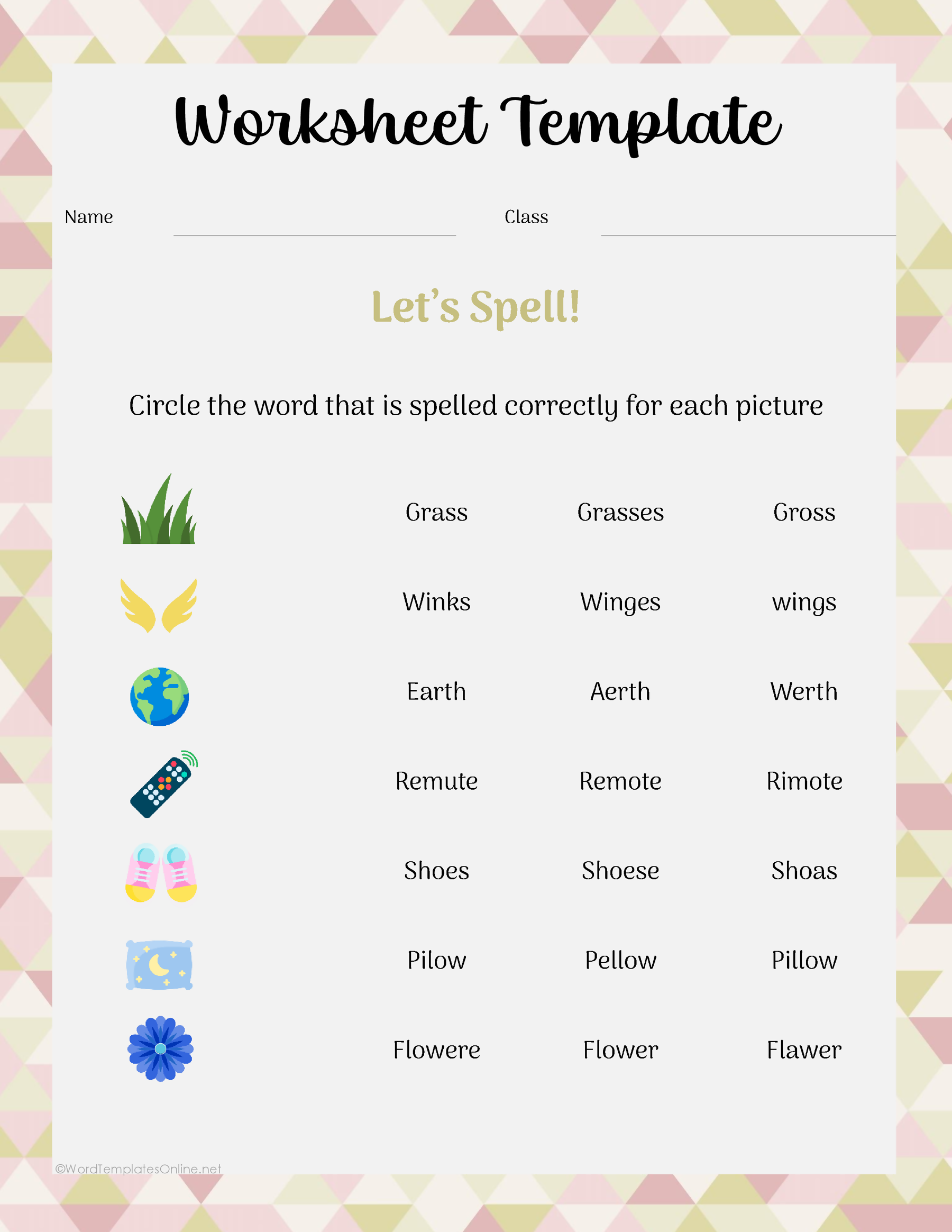
For picture-supported work, 06 shows eight fruits with spaces for initial letters. Say each fruit name aloud before writing its first letter. Worksheet 10 also uses pictures, but asks the learner to choose from three spellings for each of seven pictures. Have the learner read the choices instead of selecting only by how familiar a word looks.
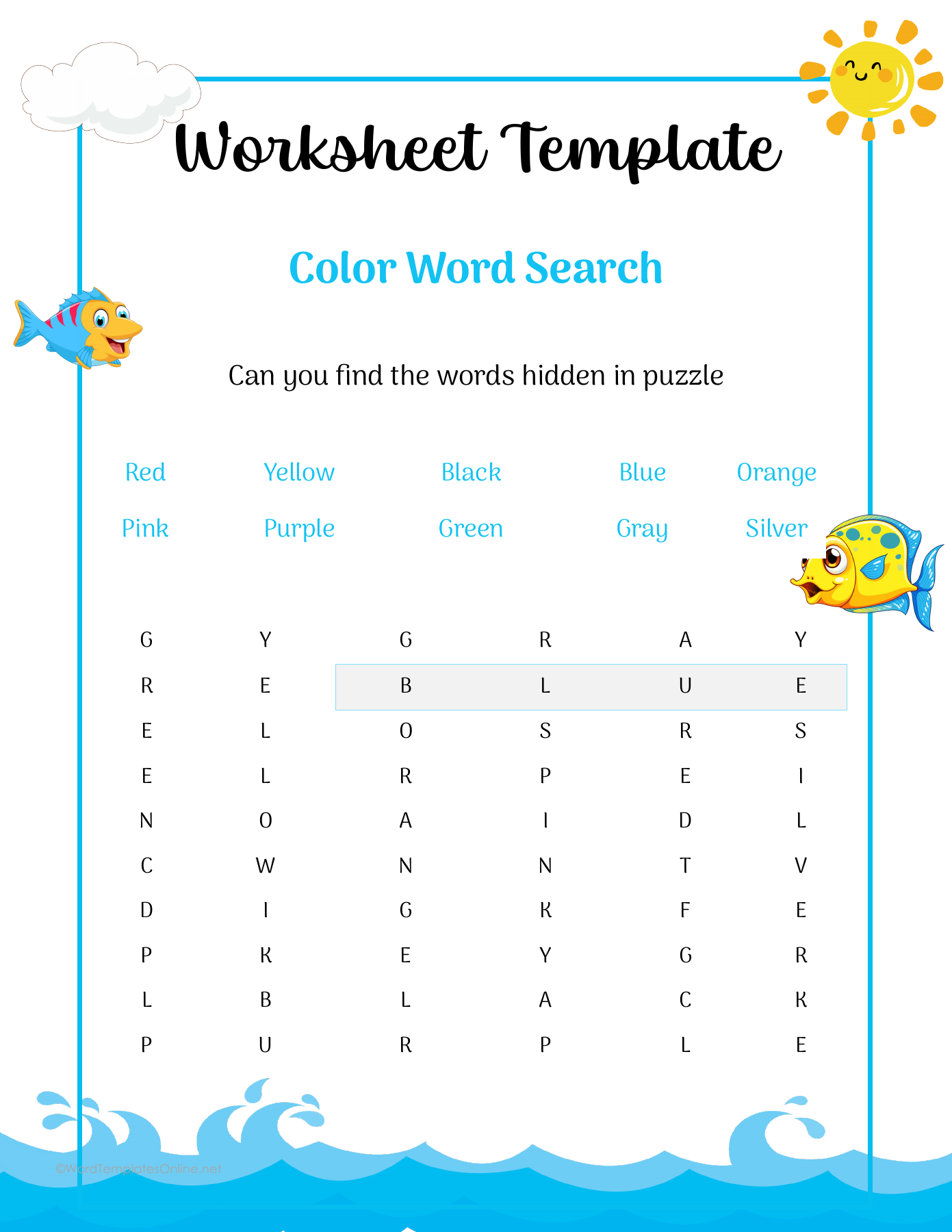
Worksheet 08 focuses on E, using an eggplant example and a letter grid. It’s a short recognition activity for that letter, rather than a complete alphabet exercise. Worksheet 09 expands the search task to ten color words in a ten-row, six-column grid.
Finally, 07 supplies twelve adjective words as prompts for paragraph writing. Talk through a few words before the learner writes. That gives the activity a purpose beyond fitting every prompt into a sentence.
Worksheet 01
Worksheet 02
Worksheet 03
Worksheet 04
Worksheet 05
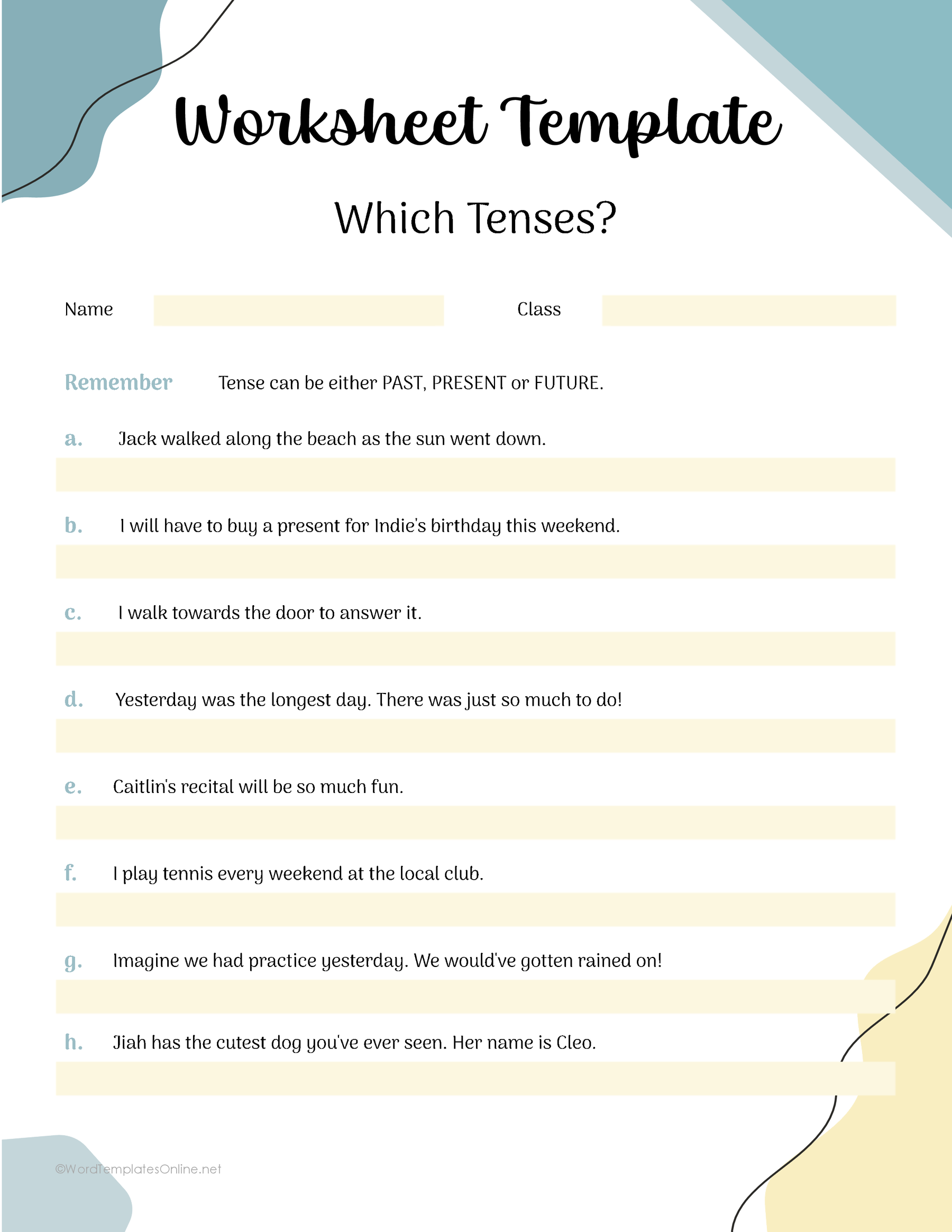
Worksheet 06
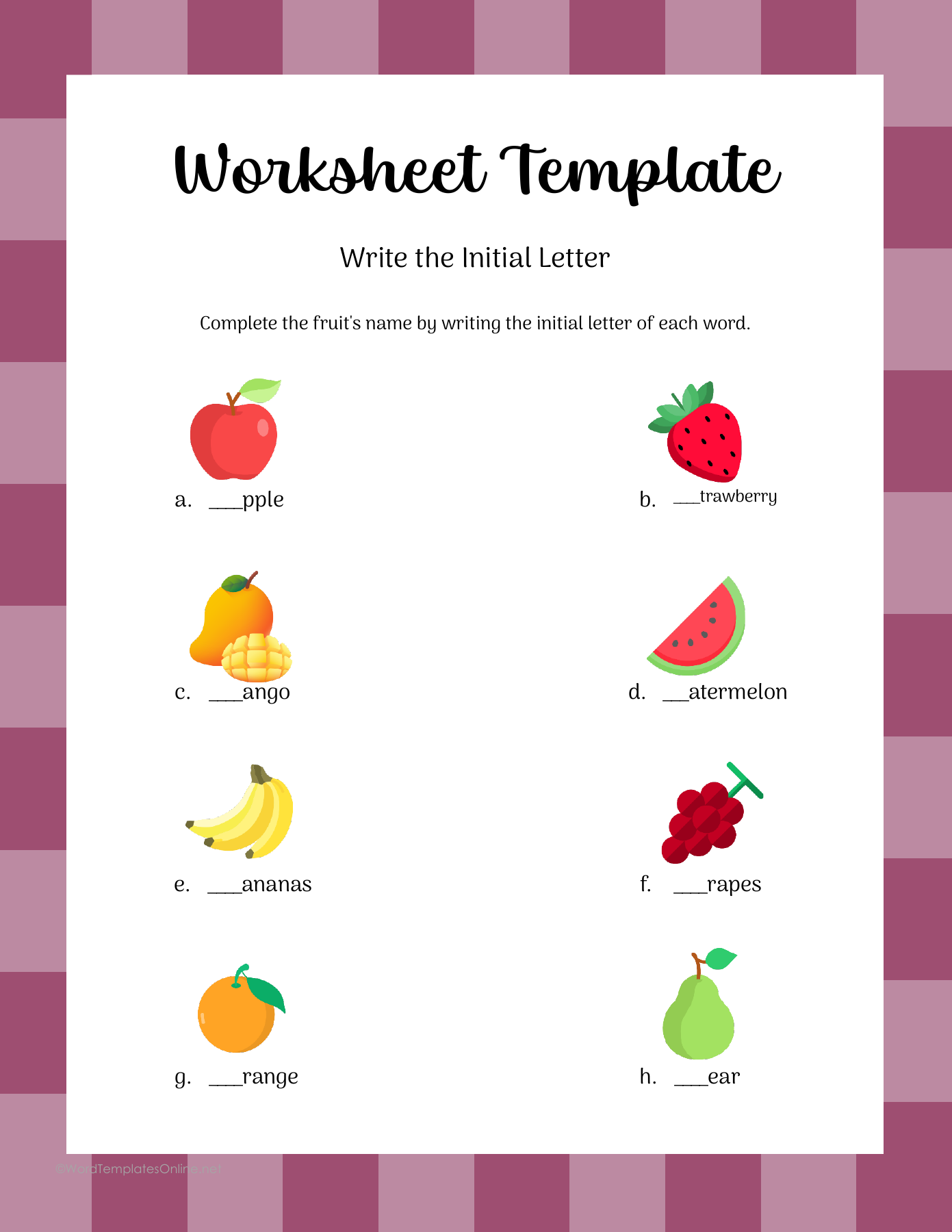
Worksheet 07
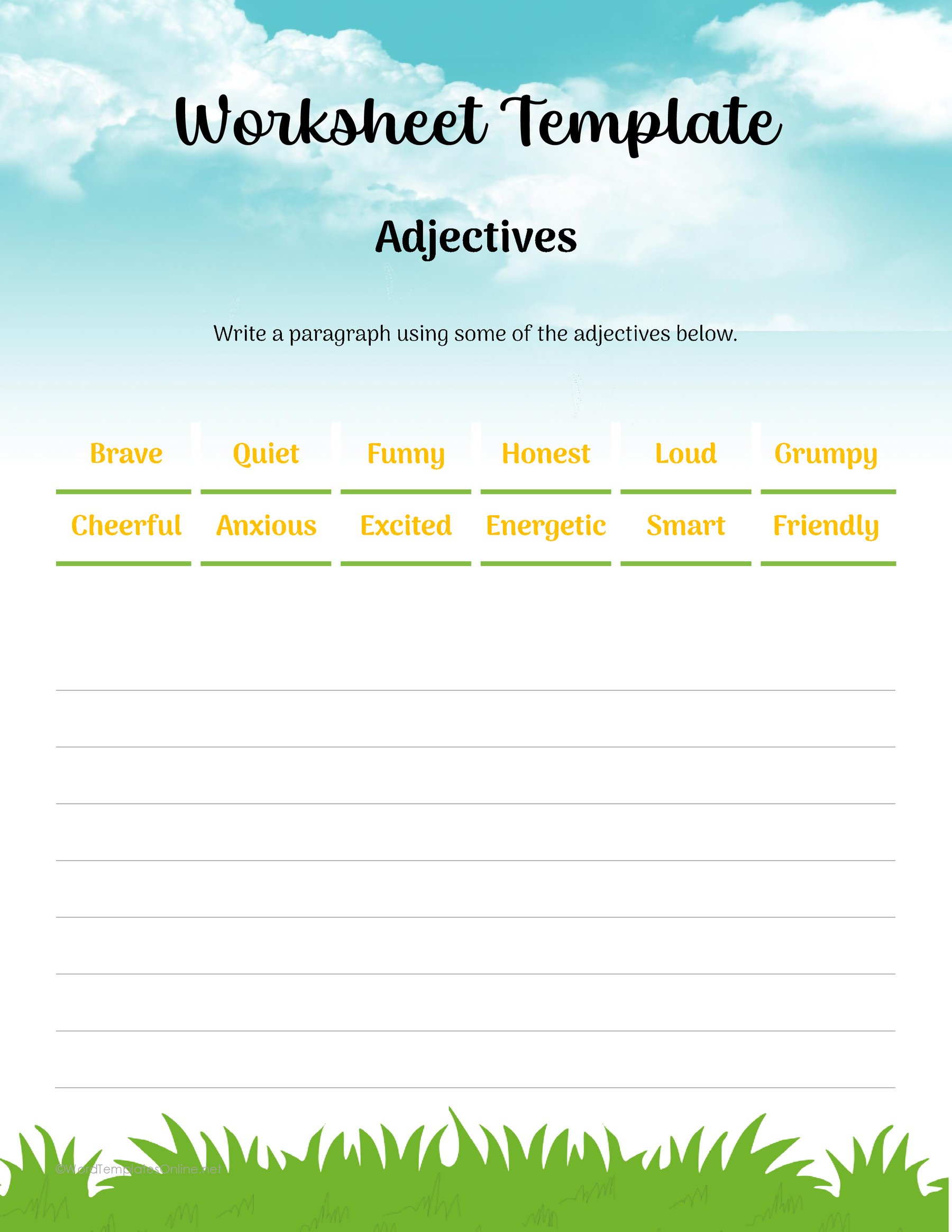
Worksheet 08
Worksheet 09
Worksheet 10
Check the prompt before the learner starts
Read the selected activity yourself and work out the expected responses. Keep a separate note of answers or acceptable alternatives if you’ll be helping more than one learner; an answer-key download isn’t included in this collection.
For the arithmetic sheet, decide whether you’re practicing whole-number answers, remainders or decimals. The problem 71 ÷ 2 can be written as 35 remainder 1 or 35.5, depending on the method being taught. Establish the expected notation before the learner begins. If division is the focus of your lesson, WTO’s division worksheet collection offers a separate set to explore.
For the tense activity, read each complete sentence and identify the word or clause you want discussed. If a question requires ideas the learner hasn’t met yet, set it aside for a guided lesson. The page is a prompt for practice, not a replacement for the explanation that makes the task understandable.
Model one response, then let the learner try
Keep the demonstration small. On worksheet 08, look across the first row together: E is in the second column. Say the letter, point to it and demonstrate how to mark it. Then pause so the learner can follow the same instruction independently.
For the color-word search, BLUE appears across the second row, from the third to the sixth column. Follow its letters in order and show how you would mark the whole word. You don’t need to solve the remaining words for the learner.
With the adjective prompts, you could offer this invented example: “The quiet library had a friendly librarian.” Discuss what quiet and friendly describe, then invite a different sentence or short paragraph. The aim is to connect a word with meaning, not to copy the example unchanged.
Letter recognition is one small part of learning to read. The Institute of Education Sciences’ foundational reading guidance also covers sound–letter relationships, decoding and reading connected text. Use these short worksheets alongside conversation, instruction and reading suited to the learner.
Prepare a working copy and print it
Open the format you intend to use and save your own working copy. Check the page after adding a name, changing directions or entering any text; pictures and line breaks may sit differently across applications. Avoid making an entire class set before checking one print.
Use a color proof for the color-matching activity. On the writing pages, check that the response spaces remain clear and large enough for the learner’s handwriting. For a Google Docs copy, use the document’s Print command and check the destination and page settings, following Google’s printing guidance if needed.
Once the page is ready, explain what the learner should do, model one response and let them attempt the next. Their response will help you decide whether to continue independently or work through the activity together.
About This Article